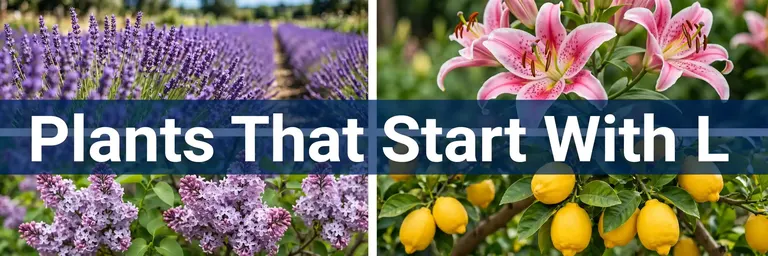
30 Plants That Start With L: Names, Pictures and Useful Facts
Looking for plants that start with L? The letter L might be the most fragrant letter in the plant world: lavender perfuming summer borders, lilac scenting spring air, lemon balm and lemongrass filling the herb garden, and lilies commanding attention wherever they bloom. Add the lucky bamboo thriving in a vase of water, the lemon tree fruiting on a sunny patio, lantana blazing through heat that defeats lesser plants, and the lily of the valley carpeting shady corners with bells — and you have one of the most versatile letters a gardener can grow. This guide covers 30 real plants that start with L, each with its botanical name, native region, bloom season, and practical growing advice. If blooms are your main interest, see also our companion guide to flowers that start with L.
Every entry lists the plant’s scientific name, light and water needs, and USDA hardiness zone. You will also find two comparison tables, growing tips, and answers to common questions about L-plants.
Quick Answer
Popular plants that start with L include Lavender, Lily, Lilac, Lantana, Lucky Bamboo, Lemon Tree, Lily of the Valley, Lamb’s Ear, Lupine, Lady’s Mantle, Loropetalum, Lenten Rose, Lemon Balm, Lemongrass, Larkspur, Liatris, Lime, and Lungwort. They span fragrant shrubs, shade perennials, houseplants, culinary herbs, fruit trees, cool-season annuals, and edible crops — covering USDA zones 3–11, so there is an L-plant for nearly every garden and windowsill.
Table of Contents
L-Plants at a Glance
Use this table to compare all 30 plants that start with L side by side, from botanical names to native regions.
| Plant name | Scientific name | Type | Light | Native region |
|---|---|---|---|---|
| Lavender | Lavandula angustifolia | Evergreen shrub | Full sun | Mediterranean |
| Lily | Lilium spp. and hybrids | Bulb | Full sun to part shade | Northern Hemisphere |
| Lilac | Syringa vulgaris | Deciduous shrub | Full sun | Balkan Peninsula |
| Lantana | Lantana camara | Shrub (perennial zones 8–11) | Full sun | Tropical Americas |
| Lucky Bamboo | Dracaena sanderiana | Houseplant | Bright indirect light | Central Africa |
| Lemon Tree | Citrus limon | Evergreen fruit tree | Full sun | Asia |
| Lily of the Valley | Convallaria majalis | Rhizomatous perennial | Part to full shade | Europe and Asia |
| Lamb’s Ear | Stachys byzantina | Herbaceous perennial | Full sun | Middle East |
| Lupine | Lupinus spp. | Herbaceous perennial | Full sun | North America |
| Lady’s Mantle | Alchemilla mollis | Herbaceous perennial | Part shade to full sun | Europe and Asia |
| Loropetalum | Loropetalum chinense | Evergreen shrub | Full sun to part shade | China and Japan |
| Lenten Rose | Helleborus × hybridus | Evergreen perennial | Part to full shade | Europe |
| Lemon Balm | Melissa officinalis | Herbaceous herb | Full sun to part shade | Mediterranean |
| Lemongrass | Cymbopogon citratus | Tropical grass | Full sun | Southeast Asia |
| Larkspur | Consolida ajacis | Cool-season annual | Full sun | Mediterranean |
| Liatris | Liatris spicata | Herbaceous perennial | Full sun | Eastern North America |
| Lungwort | Pulmonaria spp. | Herbaceous perennial | Part to full shade | Europe and Asia |
| London Pride | Saxifraga × urbium | Evergreen groundcover | Part to full shade | Europe |
| Leadwort | Ceratostigma plumbaginoides | Herbaceous groundcover | Full sun to part shade | China |
| Love-Lies-Bleeding | Amaranthus caudatus | Warm-season annual | Full sun | Andes (South America) |
| Lavatera | Lavatera trimestris | Annual / short-lived perennial | Full sun | Mediterranean |
| Maltese Cross | Silene chalcedonica | Herbaceous perennial | Full sun | Russia and Central Asia |
| Lovage | Levisticum officinale | Herbaceous herb | Full sun to part shade | Mediterranean |
| Lime | Citrus aurantiifolia | Evergreen fruit tree | Full sun | Southeast Asia |
| Lychee | Litchi chinensis | Subtropical fruit tree | Full sun | Southern China |
| Loquat | Eriobotrya japonica | Evergreen fruit tree | Full sun | China and Japan |
| Lettuce | Lactuca sativa | Cool-season annual | Full sun to part shade | Mediterranean / Middle East |
| Leek | Allium porrum | Biennial (grown as annual) | Full sun | Mediterranean |
| Lacebark Elm | Ulmus parvifolia | Deciduous shade tree | Full sun | China, Korea, Japan |
| Leatherleaf Viburnum | Viburnum rhytidophyllum | Evergreen shrub | Full sun to part shade | China |
Bloom Season, Water Needs & Hardiness Zones
This second table narrows in on the practical details: when each plant blooms, how much water it wants, which USDA zones it survives, and the one trait that makes it worth growing.
| Plant name | Bloom season | Water needs | USDA zones | Standout trait |
|---|---|---|---|---|
| Lavender | Summer | Low once established | 5–9 | Fragrant flowers and foliage; pollinator magnet |
| Lily | Summer | Moderate | 3–9 | Dramatic fragrant blooms; many colors |
| Lilac | Spring | Moderate | 3–7 | Iconic spring fragrance; needs winter chill |
| Lantana | Summer to frost | Low to moderate | 8–11 | Heat-proof color; multicolored flower clusters |
| Lucky Bamboo | Rarely indoors | Grows in water or moist soil | 10–11 (houseplant) | Thrives in just water; feng shui favorite |
| Lemon Tree | Year-round (flushes) | Moderate; even moisture | 9–11 | Fragrant flowers and edible fruit on one tree |
| Lily of the Valley | Spring | Moderate | 3–8 | Intensely fragrant bells for deep shade |
| Lamb’s Ear | Early summer | Low once established | 4–9 | Velvety silver foliage; drought-tough |
| Lupine | Late spring–early summer | Moderate | 3–8 | Towering pea-like flower spires |
| Lady’s Mantle | Early summer | Moderate | 3–8 | Chartreuse blooms; leaves bead rainwater |
| Loropetalum | Spring | Moderate | 7–10 | Burgundy evergreen foliage; fringe flowers |
| Lenten Rose | Late winter–spring | Moderate | 4–9 | Evergreen winter blooms when little else flowers |
| Lemon Balm | Summer | Moderate | 3–7 | Lemon-scented leaves for tea; vigorous grower |
| Lemongrass | Rarely in cultivation | Moderate | 10–11 | Citrus-flavored culinary stalks |
| Larkspur | Late spring–summer | Moderate | Annual (all zones) | Tall cool-season spires in blue, pink, white |
| Liatris | Summer | Low to moderate | 3–8 | Unique top-down blooming spikes; butterfly plant |
| Lungwort | Early spring | Moderate | 3–8 | Flowers shift pink to blue; spotted shade foliage |
| London Pride | Late spring | Moderate | 5–8 | Tough evergreen rosettes for dry shade |
| Leadwort | Late summer–fall | Low to moderate | 5–9 | Cobalt-blue fall flowers plus red autumn leaves |
| Love-Lies-Bleeding | Summer–fall | Moderate | Annual (all zones) | Two-foot crimson tassels; dramatic cut flower |
| Lavatera | Summer–fall | Low to moderate | Annual (all zones) | Fast hibiscus-like blooms from seed |
| Maltese Cross | Summer | Moderate | 3–8 | Brilliant scarlet cross-shaped flowers |
| Lovage | Summer | Moderate | 4–8 | Towering celery-flavored perennial herb |
| Lime | Year-round (flushes) | Moderate; even moisture | 9–11 | Key ingredient for drinks and cooking |
| Lychee | Spring | High when young | 9–11 | Sweet translucent fruit on a handsome tree |
| Loquat | Fall (fragrant) | Moderate | 7–10 | Spring fruit on an evergreen tree; very ornamental |
| Lettuce | — (harvested as leaves) | Moderate; consistent | Annual (all zones) | Fastest edible from seed to salad |
| Leek | — (harvested as stems) | Moderate | 5–9 | Sweet mild onion flavor; overwinters in ground |
| Lacebark Elm | Inconspicuous spring | Low to moderate | 4–9 | Exfoliating camouflage-pattern bark; disease resistant |
| Leatherleaf Viburnum | Spring | Moderate | 5–8 | Bold evergreen texture; berries for birds |
30 Plants That Start With L: The Complete List
Below is the full rundown — fragrant shrubs, shade perennials, houseplants, herbs, fruit trees, cool-season annuals, and edibles.
1. Lavender (Lavandula angustifolia)
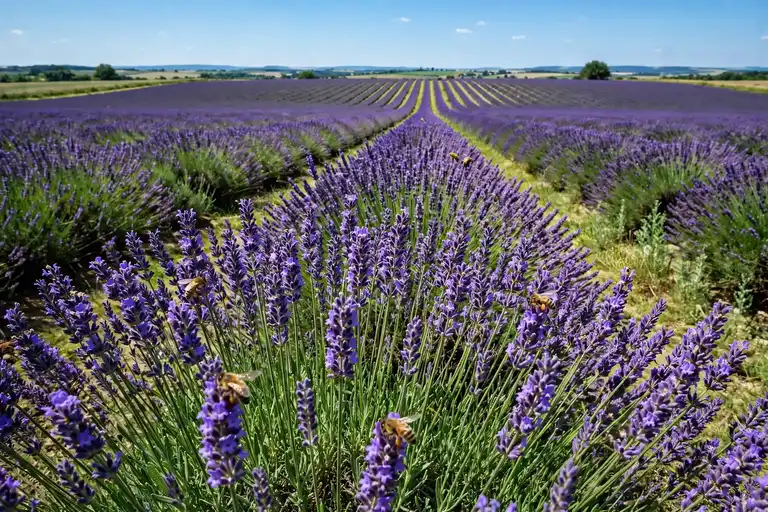
Few plants starting with L are as universally loved as lavender. Native to the Mediterranean, English lavender (Lavandula angustifolia) is a compact evergreen shrub, typically 1–3 feet tall, with narrow silver-green leaves and spikes of intensely fragrant blue-violet flowers in summer. Its essential oils make it a staple of perfumery and sachets, and the flowers are magnets for bees and butterflies. It is the hardiest of the lavenders — Spanish and French types only survive winters in zones 7–9.
Lavender’s one non-negotiable demand is drainage: wet winter soil kills more lavender than cold ever does. Plant it in full sun (6–8 hours daily) in lean, slightly alkaline soil, and water sparingly once established — mature plants need water only every two to three weeks. Shear plants back by about a third after flowering to keep them compact; never cut into old wood, which will not regrow. For step-by-step planting and harvest guidance, see the Old Farmer’s Almanac guide to growing lavender.
2. Lily (Lilium spp. and hybrids)
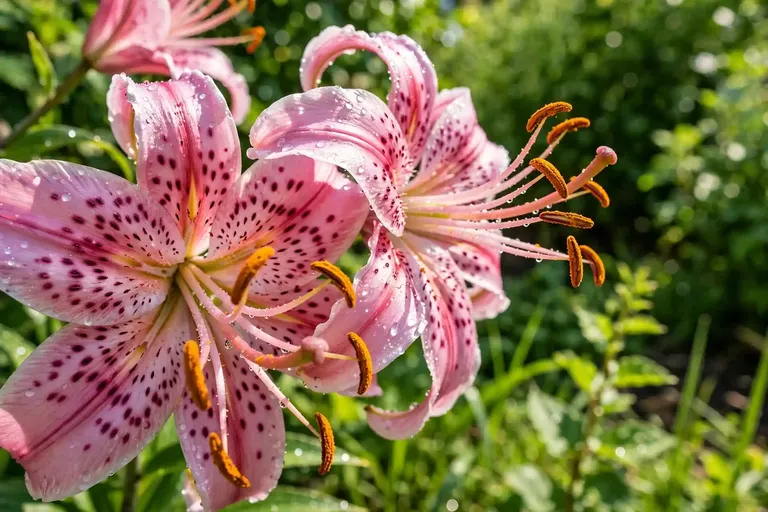
True lilies — the genus Lilium, not daylilies or calla lilies — are among the most dramatic summer bulbs in cultivation. Native across the Northern Hemisphere, the genus includes around 100 wild species, but most gardeners grow hybrids: Asiatic lilies (early, unscented), Oriental lilies (late, powerfully fragrant), and Orienpet crosses (tall, fragrant, vigorous). They reach 2–6 feet and bloom in nearly every color except true blue.
Plant lily bulbs in fall or early spring, 6 inches deep in well-drained soil enriched with compost, with the growing point up. Give them full sun to part shade — the classic advice is “heads in the sun, feet in the shade,” so mulch or low companion plants keep roots cool. Water moderately through the growing season and let foliage die back naturally to feed the bulb. One caution: all parts of true lilies are severely toxic to cats, so keep them away from feline households.
3. Lilac (Syringa vulgaris)
The common lilac, Syringa vulgaris, native to the Balkan Peninsula, defines spring fragrance for millions of gardeners. These large deciduous shrubs (8–15 feet) produce dense panicles of intensely perfumed flowers — purple, lavender, white, pink, and the prized deep magenta — for about two to three weeks in mid-spring. Hardy in zones 3–7, lilacs need a genuine winter chill to bloom well, which is why they struggle in the deep South.
Site lilacs in full sun with good air circulation; shade and crowding invite powdery mildew. They prefer neutral to slightly alkaline, well-drained soil and do not want rich feeding — excess nitrogen produces leaves at the expense of flowers. Prune immediately after flowering, cutting spent panicles back to a pair of side shoots, since next year’s buds form on summer growth. Suckers from the base can be removed or allowed to fill out the clump.
4. Lantana (Lantana camara)
Lantana is the plant you reach for when summer heat has defeated everything else. Native to tropical America, Lantana camara bears dense flat-topped clusters of tiny flowers that open one color and age to another — yellow to orange to red — so each cluster looks confetti-dusted. Hardy only in zones 8–11, it is grown as an annual elsewhere yet still blooms nonstop until frost. Butterflies adore it.
Give lantana the hottest, sunniest spot you have and soil that drains freely; it thrives on neglect once established and tolerates drought well. Deadheading is optional — new flowers keep coming — but shearing spent plants by a third in midsummer refreshes them. Two cautions: it is listed as invasive in frost-free regions like Florida and Hawaii, so choose sterile cultivars there, and the berries and foliage are toxic to pets and livestock.
5. Lucky Bamboo (Dracaena sanderiana)
Despite the name, lucky bamboo is not bamboo at all — it is Dracaena sanderiana, a Central African member of the asparagus family sold as straight or decoratively curled stalks. A feng shui staple symbolizing good fortune, it is the easiest “plant” many people will ever own: it grows happily in nothing but a vase of water and pebbles, tolerating low to bright indirect light and thriving for years with minimal care.
Keep stalks in a few inches of water, changing it every one to two weeks, and use filtered or rainwater if your tap water is heavily chlorinated or fluoridated — leaf-tip browning usually traces back to water quality. A drop of diluted liquid fertilizer monthly keeps growth green. If a stalk yellows, pull it out before rot spreads. Like many dracaenas it tolerates low light, making it a natural fit alongside our picks for the best terrarium plants, though it prefers an open container to a sealed one.
6. Lemon Tree (Citrus limon)
The lemon tree, Citrus limon, likely originated in Asia and has been cultivated for so long that its exact wild origins are lost. What matters to gardeners: it is an evergreen tree with glossy leaves, intensely fragrant white blossoms, and fruit that ripens over months — a single tree can carry flowers, green fruit, and ripe lemons simultaneously. It is one of the most rewarding fruit trees for containers in colder climates, and ‘Improved Meyer’ is the top choice for pots.
Citrus demands full sun — at least 8 hours — and soil that drains fast while staying evenly moist; a pot with drainage holes and a citrus or cactus mix works well. Feed with a citrus fertilizer through the growing season and bring containers indoors before the first frost, placing them by the brightest window available. For container specifics, the Gardening Know How guide to growing lemon trees in containers covers soil, watering, and overwintering in detail.
7. Lily of the Valley (Convallaria majalis)
Convallaria majalis is the answer to the hardest garden problem: what thrives in dry shade? This European and Asian woodland perennial spreads by rhizomes into a lush carpet of broad green leaves, and in mid-spring each stem arches with a row of nodding white bells whose perfume can fill a whole garden. It blooms for only a few weeks, but the foliage stays handsome until fall.
Plant rhizomes (“pips”) in fall, an inch deep, in humus-rich soil in part to full shade; it tolerates the dry shade under trees where little else survives. Give it room or a root barrier, because a happy colony spreads aggressively and is hard to remove. Important: every part of the plant — leaves, flowers, and the red fall berries — is highly toxic if eaten, so site it away from play areas and curious pets.
8. Lamb’s Ear (Stachys byzantina)
Native to the Middle East, Stachys byzantina earns its common name honestly: its broad, tongue-shaped leaves are covered in dense silvery hairs so soft they beg to be touched, making it a favorite in children’s and sensory gardens. The foliage forms a low mat about 6–8 inches tall, and in early summer fuzzy spikes rise 12–18 inches bearing small pink-purple flowers. It is nearly indestructible in the right conditions.
Lamb’s ear wants full sun and lean, fast-draining soil — rich, wet soil rots the crowns. It is genuinely drought-tolerant once established and needs no fertilizer. Many gardeners shear off the flower spikes to keep the foliage mat pristine, since the blooms can flop and look scruffy; others leave them for the bees. Divide crowded clumps in spring, and avoid overhead watering, which mats the woolly leaves.
9. Lupine (Lupinus spp.)
Lupines paint early summer in vertical strokes of color. The familiar garden lupine, derived largely from Lupinus polyphyllus of western North America (via the Russell hybrids), sends up dense spires 2–4 feet tall packed with pea-like flowers in blue, purple, pink, yellow, and bicolors. These cool-season perennials fix nitrogen in the soil like other legumes.
Lupines sulk in heat and humidity, so in warm climates give them afternoon shade and excellent drainage; in cool climates they want full sun. Sow seed directly where it is to grow — lupines resent transplanting because of their taproots — and do not bury seed deeply. Deadhead spent spikes promptly to encourage a second flush and prevent rampant self-seeding, since seed-grown offspring revert to muddy colors.
10. Lady’s Mantle (Alchemilla mollis)
Alchemilla mollis, native to Europe and western Asia, is the cottage garden’s perfect edging plant: mounds of softly scalloped, pleated leaves about a foot tall, topped in early summer with clouds of tiny chartreuse-yellow flowers. After rain or heavy dew, the leaves hold perfect sparkling beads of water — a phenomenon that fascinated medieval alchemists, who gave the plant its genus name. It combines beautifully with roses, delphiniums, and purple salvias.
Lady’s mantle is adaptable, thriving in full sun in cool climates and preferring part shade where summers are hot. It wants moderately moist, well-drained soil and tolerates clay better than many perennials. Cut flower stems back after blooming to keep the plant tidy and prevent self-seeding — it seeds enthusiastically. The flowers dry well and the foliage makes excellent filler in bouquets.
11. Loropetalum (Loropetalum chinense)
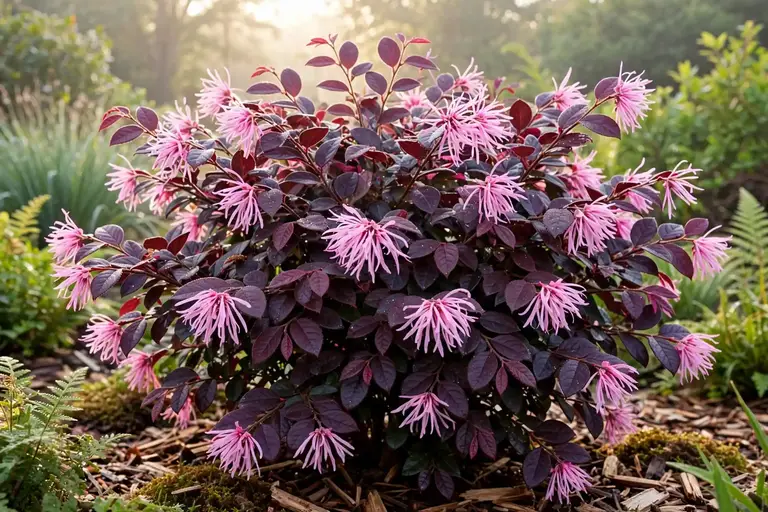
Also sold as Chinese fringe flower, Loropetalum chinense is one of the most useful evergreen shrubs for warm climates. Native to China and Japan, it offers what few shrubs do: deep burgundy-purple foliage year-round (on cultivars like ‘Ever Red’ and ‘Plum Delight’) plus a spring explosion of wispy, fringe-like pink or white flowers. It grows 4–8 feet depending on variety, with dwarf forms near 3 feet.
Plant loropetalum in full sun for the richest leaf color — purple types green out in too much shade — in acidic, well-drained soil enriched with compost. It needs moderate water while establishing and tolerates short dry spells after. Prune after spring flowering if shaping is needed, since it blooms on old wood. Avoid shearing into meatballs; its naturally layered habit is part of its charm.
12. Lenten Rose (Helleborus × hybridus)
When the garden is at its bleakest — late winter into early spring — the Lenten rose blooms. These hybrids of European Helleborus species are evergreen perennials with leathery, palmately divided leaves and nodding, cup-shaped flowers in white, pink, plum, near-black, and speckled picotee patterns. The flowers often open while snow is still on the ground and last for months.
Hellebores are shade plants: give them part to full shade in rich, well-drained soil with plenty of organic matter. Once established they resent disturbance, so choose the spot carefully and plant at the same depth as the nursery pot. Cut away tattered old foliage in late winter before the flower buds rise — this shows off the blooms and reduces disease. All parts are toxic if ingested, a trait that conveniently makes them deer-proof.
13. Lemon Balm (Melissa officinalis)
Lemon balm, Melissa officinalis, is the herb garden’s cheerful extrovert: a Mediterranean mint-family perennial with bright green, crinkled leaves that release a true lemon scent when crushed. It makes superb tea, flavors summer drinks and desserts, and bees work its small white summer flowers so enthusiastically that its genus name comes from the Greek word for honeybee. It returns reliably every year.
Like all mints, lemon balm spreads — by seed and by creeping roots — so many gardeners confine it to a pot or a bordered bed. It grows in full sun to part shade in average soil and needs only moderate water. Harvest by cutting stems back hard several times a season; it rebounds quickly and the fresh growth has the best flavor. Pinch off flower buds if you want to slow its self-seeding habit.
14. Lemongrass (Cymbopogon citratus)
Cymbopogon citratus, the lemongrass of Southeast Asian cooking, is a handsome tropical grass forming fountain-like clumps 3–5 feet tall of blue-green blades with a powerful citrus aroma. The thickened lower stalks are the culinary prize — essential in Thai curries, tom yum soup, and teas — but the plant is ornamental enough for a patio pot even if you never cook with it. In cold climates it is grown as an annual or overwintered indoors.
Lemongrass is a heat lover: full sun, rich moist soil, and regular water produce the thickest stalks. In cold climates, start with nursery plants after all frost danger, and before the first fall frost, dig up a few stalks to pot up for winter indoors in a sunny window. Harvest by twisting outer stalks from the base, peeling away the tough outer layers to reach the tender core.
15. Larkspur (Consolida ajacis)
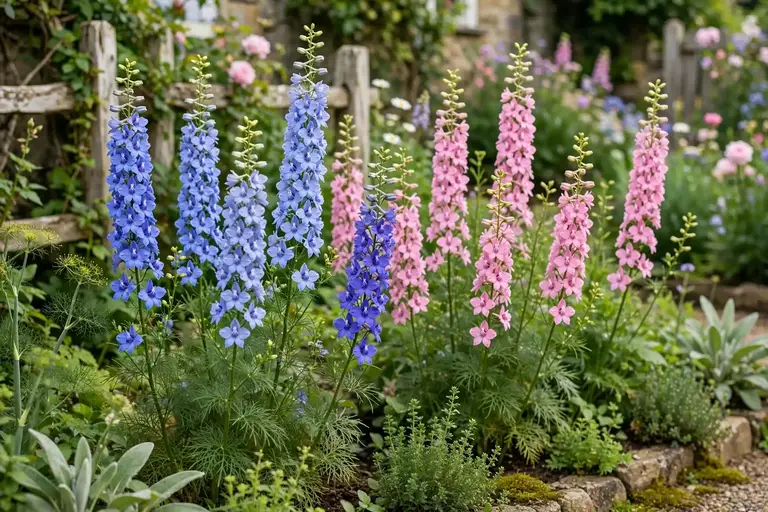
Larkspur, Consolida ajacis, is the cool-season answer to delphiniums: tall spires of blue, pink, lavender, and white flowers on ferny foliage, grown as an annual from seed. It blooms in late spring to early summer, and its airy spires are excellent cut flowers. Note that despite the similar look, it is a different genus from perennial delphinium.
Sow larkspur seed directly in the garden in fall (mild climates) or very early spring; it needs cool soil to germinate and resents transplanting. Thin seedlings to about a foot apart in full sun and average, well-drained soil. Stake tall varieties in windy sites, and let a few plants self-sow — volunteer seedlings are often the best crop. If you like spire-shaped annuals in bold colors, our purple annual flowers guide has more companions that pair well with larkspur’s blues.
16. Liatris (Liatris spicata)
Dense blazing star, Liatris spicata, is the rare flower that blooms from the top of the spike downward — a quirk that extends its show for weeks as color creeps down the stem. Native to moist meadows of eastern North America, it produces 2–4 foot wands of fluffy purple (or white in ‘Alba’) flowers in midsummer that butterflies, bees, and hummingbirds mob. It is also a superb cut flower that dries well.
Plant liatris corms in spring, 4 inches deep, in full sun and average to lean soil; rich soil makes stems floppy. It tolerates clay and occasional wet feet better than most prairie plants but also survives drought once established. Leave the seed heads standing for goldfinches in fall, then cut back in early spring. Clumps are long-lived and rarely need dividing.
17. Lungwort (Pulmonaria spp.)
Lungworts, chiefly Pulmonaria saccharata and its hybrids, solve two shade-garden problems at once: early spring color and handsome summer foliage. In early spring, clusters of buds open pink and mature to true blue on the same plant — a color shift caused by changing petal pH. The basal leaves, often splashed with silver spots, look good all season in dry shade where hostas struggle.
Give lungwort part to full shade in humus-rich, moisture-retentive soil; it wilts dramatically in dry spells but recovers with water. Mulch to keep roots cool, and cut back tattered foliage after flowering to encourage a fresh flush of leaves. Modern hybrids like ‘Blue Ensign’ and ‘Mrs. Moon’ offer cleaner foliage and stronger spotting than the species.
18. London Pride (Saxifraga × urbium)
London Pride is a tough little evergreen groundcover with an outsized reputation: a natural hybrid of two European Saxifraga species, it forms neat rosettes of spoon-shaped, scalloped leaves that spread into weed-suppressing mats. In late spring, airy sprays of tiny pink-flushed white flowers rise a foot above the foliage. It famously thrived in bombed-out London lots during WWII — hence the name.
This is a plant for difficult shade: dry shade under trees, north-facing walls, and poor soil where little else persists. It prefers part to full shade and tolerates drought once established, though it looks best with occasional water. Shear off spent flower stems for tidiness. Divide congested mats in spring or fall, replanting the outer rosettes.
19. Leadwort (Ceratostigma plumbaginoides)
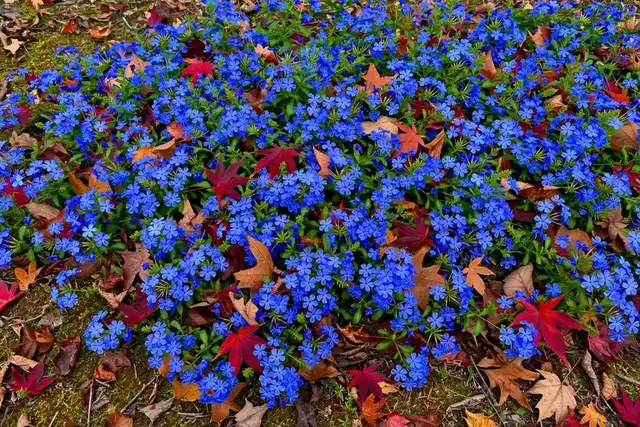
Ceratostigma plumbaginoides, the hardy blue leadwort from China, is one of the finest late-season groundcovers: from late summer into fall it covers itself in intense cobalt-blue flowers, and then the foliage turns brilliant red for a second show. It spreads by rhizomes into a 12–18 inch mat, filling the late-summer gap when many perennials have finished.
Leadwort is adaptable — full sun to part shade, average to poor soil — but it needs good drainage and dislikes winter wet. Space plants a foot apart; they knit together within two seasons. Cut the whole planting back to the ground in late winter before new growth emerges. Despite the name it is not related to true plumbago, and unlike its tender cousin it survives real winters.
20. Love-Lies-Bleeding (Amaranthus caudatus)
Few annuals make a bolder statement than Amaranthus caudatus, the love-lies-bleeding of the Andes. From midsummer to frost, each 3–5 foot plant trails multiple rope-like tassels of tiny crimson flowers, some two feet long, swaying in the breeze. It is an ancient grain crop in its native South America — the seeds are edible and nutritious — but most gardeners grow it purely for drama, in borders or as a cut flower that dries perfectly.
Sow seed directly after the last frost in full sun and average soil; amaranth germinates fast in warm soil and grows with almost weedy vigor. It tolerates heat, humidity, and poor soil, needing water only in real drought. Give plants room — crowded amaranths stay small. Let a few tassels mature and you will have self-sown seedlings (and edible seed) for years.
21. Lavatera (Lavatera trimestris)
Tree mallow, Lavatera trimestris, is the fast track to hibiscus-like flowers: this Mediterranean annual shoots from seed to 3–4 foot bushes covered in satiny pink, rose, or white blooms — each with a dark eye — in a single season. It flowers from midsummer until frost and, unlike true tropical hibiscus, asks for almost nothing. Modern dwarf series like ‘Silver Cup’ stay compact enough for containers.
Direct-sow lavatera after the last frost in full sun; it germinates in days and blooms about 10 weeks later. Average, well-drained soil is ideal — rich soil produces leafy giants with fewer flowers. Deadhead to prolong bloom, or leave seed heads for self-sowing. It shrugs off heat and drought, making it a reliable filler for new beds that need instant impact.
22. Maltese Cross (Silene chalcedonica)
The Maltese cross, Silene chalcedonica (long sold as Lychnis chalcedonica), is impossible to miss in June: dense, domed clusters of scarlet-orange flowers, each with four notched petals forming a perfect cross, atop stiff 2–3 foot stems. Native to Russia and Central Asia, it has been grown in cottage gardens for centuries, and its blazing color holds up even in harsh midday sun that bleaches lesser reds.
Plant Maltese cross in full sun and average, well-drained soil; it tolerates poor soil and clay better than many perennials. Stake in exposed positions, as the heavy flower heads can flop after rain. Deadhead for a possible second flush, and divide every few years to keep clumps vigorous. It pairs strikingly with blue delphiniums and silver artemisia.
23. Lovage (Levisticum officinale)
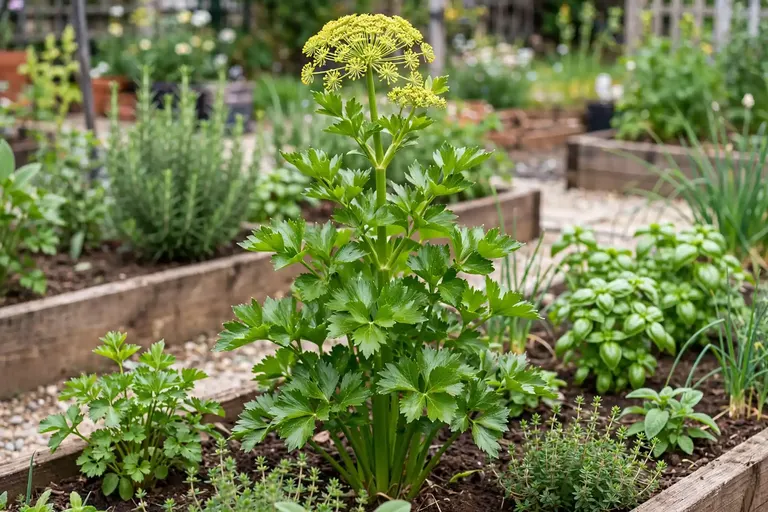
Lovage, Levisticum officinale, is the herb garden’s gentle giant: a Mediterranean perennial that returns every spring to form a 5–6 foot fountain of glossy, celery-flavored leaves. One plant supplies a household — the leaves season soups and stocks like intense celery, the hollow stems make conversation-piece straws for drinks, and the seeds flavor breads. It is nearly indestructible once established.
Give lovage full sun to part shade and deep, moisture-retentive soil; it sulks in drought. Plant it at the back of the herb bed where its height won’t shade neighbors, and cut flower stalks back if you want leaf production to continue. A single plant lives for many years, so choose its spot with permanence in mind. Divide old crowns in spring to rejuvenate them.
24. Lime (Citrus aurantiifolia)
The true or Key lime, Citrus aurantiifolia, hails from Southeast Asia and produces the small, thin-skinned, intensely aromatic fruit behind key lime pie and countless cocktails. Like lemons it is evergreen and can bloom and fruit nearly year-round in warm climates, but it is more cold-sensitive than lemon and happiest where winters stay above freezing. The more cold-tolerant ‘Bearss’ (Tahiti) lime is actually Citrus latifolia, worth knowing when you shop.
Culture mirrors the lemon tree: full sun, fast-draining but evenly moist soil, and regular citrus fertilizer. In containers, choose a large pot and move it indoors before frost, giving it the brightest spot available. Limes are heavy feeders when fruiting — yellowing leaves usually mean hunger, not thirst. Expect fruit within 1–2 years from a grafted nursery tree.
25. Lychee (Litchi chinensis)
The lychee, Litchi chinensis, has been cultivated in southern China for over 2,000 years, and its fruit — rough red skin peeling away from translucent, perfumed white flesh — remains one of the world’s great delicacies. The tree itself is handsome: a slow-growing evergreen to 30–40 feet with glossy leaves and bronze-red new growth. It needs subtropical conditions to fruit well.
Lychees demand patience and precision: full sun, acidic well-drained soil, consistent water while young, and — critically — a cool, dry winter rest to trigger flowering. Without that chill period, trees grow leaves but no fruit. Newly planted trees need wind protection and regular water for the first years. This is a long-term commitment tree, best for gardeners in Florida, Hawaii, and similar climates.
26. Loquat (Eriobotrya japonica)
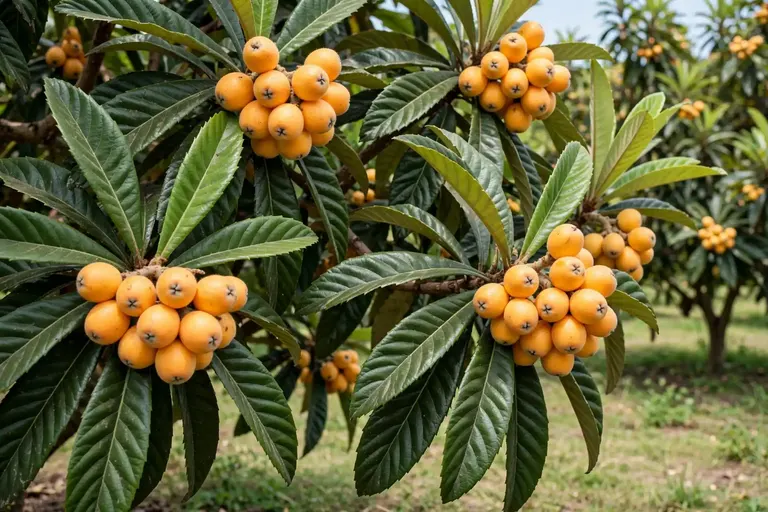
The loquat, Eriobotrya japonica, is the overachiever of the fruit world: an evergreen tree from China and Japan with huge, tropical-looking leaves that blooms — improbably — in fall, filling the autumn air with sweet fragrance, then ripens clusters of apricot-like golden fruit in spring. It is grown as much for ornament as for fruit, and its bold texture anchors subtropical-style plantings.
Plant loquats in full sun and well-drained soil; they tolerate a range of soils and are moderately drought-tolerant once established. Trees fruit best with regular water during fruit development and an annual feeding. Thin fruit clusters for larger loquats, and protect young trees from hard freezes. Even where fruit is marginal, the tree earns its place on looks alone.
27. Lettuce (Lactuca sativa)
Lettuce, Lactuca sativa, is the fastest reward in the vegetable garden: from tiny seed to salad bowl in as little as 30 days for loose-leaf types. Descended from wild Mediterranean lettuces, it comes in four main groups — crisphead, butterhead, romaine, and loose-leaf — in green, red, and speckled forms that make the vegetable bed genuinely beautiful. It is a cool-season annual everywhere.
Sow lettuce directly in early spring as soon as soil can be worked, barely covering the seed — it needs light to germinate. Give it full sun in spring and fall, but part shade in summer heat, plus consistent moisture; drought turns leaves bitter fast. Sow every two weeks for continuous harvest, and grow heat-tolerant varieties like ‘Jericho’ or ‘Muir’ for summer. Bolted plants can be left to self-sow.
28. Leek (Allium porrum)
The leek, Allium porrum, is the onion family’s mild-mannered giant: no bulb, just a long white shaft of sweet, tender layers topped by blue-green flags. A staple of Welsh and French cooking (think vichyssoise and cock-a-leekie soup), it is usually grown as an annual — and established plants often overwinter in the ground for spring harvest.
Start leeks indoors 8–10 weeks before the last frost and transplant pencil-thick seedlings into deep holes or trenches; as they grow, hill soil around the shafts to blanch them white and tender. They want full sun, rich soil, and steady water. Harvest from fall through winter — leeks sweeten after frost. Clean carefully: soil lodges between the layers.
29. Lacebark Elm (Ulmus parvifolia)
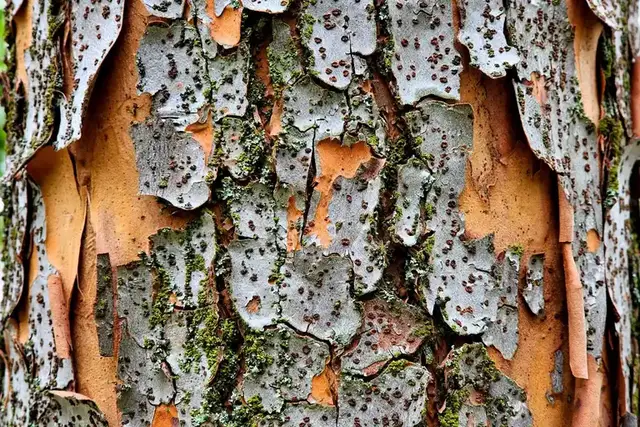
The lacebark elm, Ulmus parvifolia, native to China, Korea, and Japan, is the elm for the post–Dutch elm disease era: highly resistant to the disease that devastated American elms, it matures into a graceful 40–60 foot shade tree with a rounded crown. Its signature feature is the bark — mottled patches of gray, green, orange, and brown that exfoliate in puzzle-like pieces, making it a four-season tree.
Plant lacebark elm in full sun and almost any soil; it tolerates heat, drought, wind, and urban pollution with remarkable toughness. It needs little pruning beyond structural training when young. Note that it self-seeds readily in some regions, so check local guidance. For a smaller footprint, cultivars like ‘Allee’ offer a more upright, vase-shaped form.
30. Leatherleaf Viburnum (Viburnum rhytidophyllum)
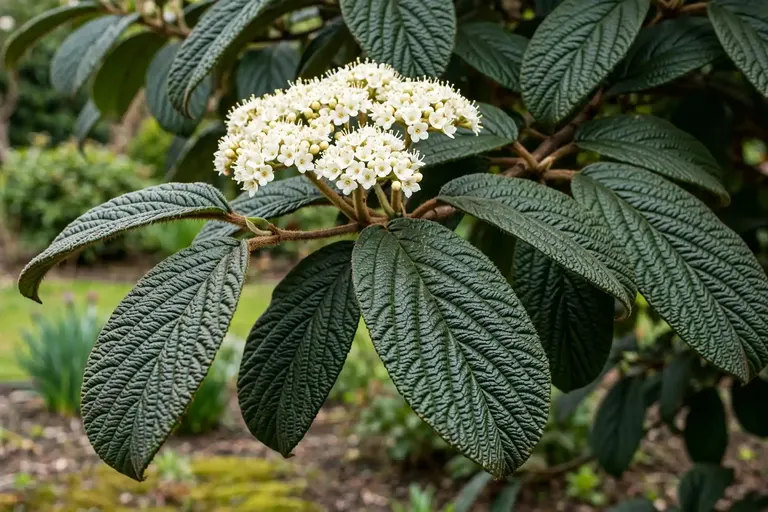
Closing the list is a shrub grown for sheer texture: the leatherleaf viburnum, Viburnum rhytidophyllum, from China, carries huge, deeply wrinkled evergreen leaves — up to 8 inches long — that look almost prehistoric. In spring it produces flat-topped clusters of creamy-white flowers, followed by berries that ripen from red to black and draw birds. It reaches 8–10 feet and brings bold structure to shady borders.
Give leatherleaf viburnum full sun to part shade and moist, well-drained soil; it appreciates shelter from harsh winter wind, which can scorch the big leaves. It needs no regular pruning — remove only dead or crossing branches after flowering. Plant it where its coarse texture contrasts with fine-textured companions like ferns or ornamental grasses.
Growing Tips for L-Plants
L-plants span nearly every garden situation. Match the plant to your winter. The tender members of this list — lantana, lemongrass, lemon and lime trees, lychee, and lucky bamboo — are hardy only in zones 8–11, so in colder climates grow them as annuals or in containers you can move indoors. The hardy backbone — lilac, lily, lupine, lungwort, Lenten rose, lily of the valley, and leadwort — sails through zone 4 winters and needs winter chill to perform.
Drainage decides more than anything else. Lavender, lamb’s ear, and larkspur all die in wet soil long before cold gets them; plant them high, amend heavy clay with grit or compost, and never let pots sit in saucers of water. Conversely, the shade perennials (lungwort, lily of the valley, London Pride, lady’s mantle) want soil that holds some moisture — mulch them and water during dry spells. Contain the spreaders. Lemon balm, lily of the valley, and love-lies-bleeding all self-sow or run enthusiastically; give them boundaries or deadhead faithfully. And if you are building out more of the alphabet, our guides to plants that start with K and plants that start with A follow the same format with the same level of growing detail.
Which L-Plants Will You Grow?
From the fragrance of lavender and lilac to the architecture of lupine spires and lacebark elm bark, the letter L covers just about every role a garden needs: focal shrubs, shade groundcovers, houseplants, herbs, fruit trees, and fast annual color. Start with the conditions you have — a sunny patio calls for lavender, lantana, and a potted lemon tree; a shady corner wants lily of the valley, lungwort, and Lenten rose — and let the tables above narrow the field. Keep exploring the series with plants that start with P, and if fall color is your thing, our mum care guide will keep your autumn display thriving alongside these L-plants.
Frequently Asked Questions
What are the most popular plants that start with L?
Lavender, lily, lilac, lantana, lucky bamboo, and lemon tree top the list for most gardeners. Lavender and lilac lead on fragrance, lilies on flower drama, lantana on heat-proof summer color, lucky bamboo as the easiest houseplant, and lemon trees for fruit you can actually eat.
Which plants starting with L are good for beginners?
Lucky bamboo (grows in plain water), lamb’s ear, leadwort, love-lies-bleeding, lavatera, and lettuce are nearly foolproof. Lavender is easy too, provided you give it full sun and sharp drainage — wet soil is the one mistake that kills it.
Which plants starting with L grow in shade?
Lily of the valley, lungwort, Lenten rose, London Pride, and lady’s mantle all thrive in part to full shade. Lily of the valley even handles dry shade under trees, while lungwort and Lenten rose want shade with decent soil moisture.
Are any L-plants toxic to pets?
Yes — take this seriously. True lilies (Lilium) are severely toxic to cats; lily of the valley, Lenten rose, and lantana berries are toxic to both cats and dogs. Lamb’s ear, leadwort, and most herbs on this list are generally considered safe, but always verify with your vet before planting around curious pets.
Can I grow a lemon or lime tree indoors?
Yes. Dwarf varieties like ‘Improved Meyer’ lemon grow well in large pots indoors if they get 8+ hours of bright light — a south window or grow light — and you keep the soil evenly moist but never soggy. Move the pot outside for summer and bring it in before the first frost.
Which plants starting with L are edible?
Lemon and lime trees, lychee, loquat, lettuce, leeks, and lovage are true food plants, while lemon balm, lemongrass, and lavender are culinary herbs. Love-lies-bleeding produces edible amaranth grain. Never eat ornamental plants like lily of the valley or Lenten rose — they are poisonous.