Plants that start with A: Names, Pictures and Useful Facts
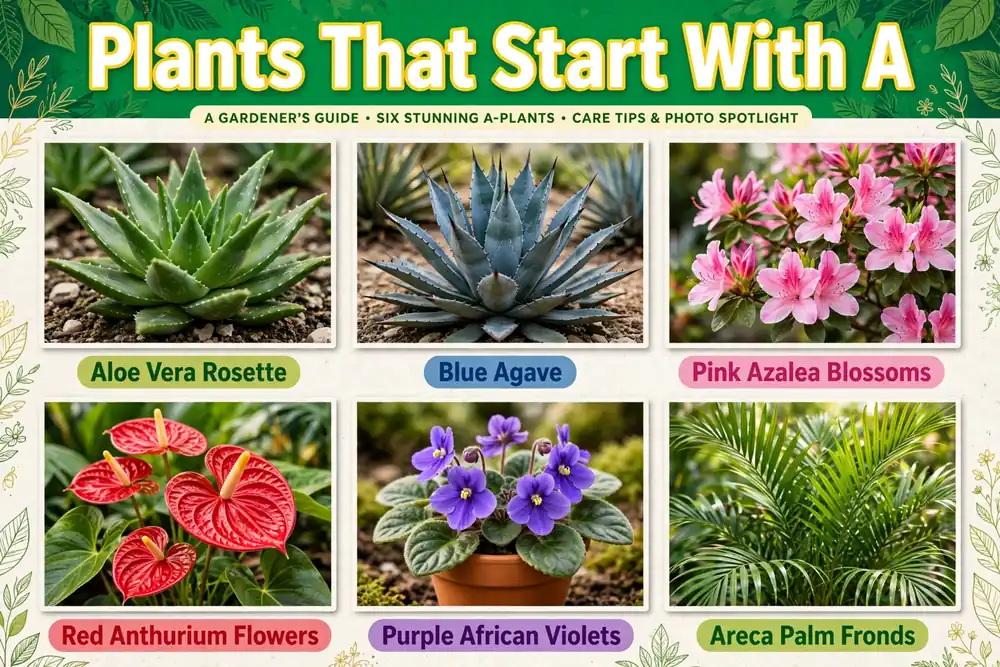
Looking for plants that start with A? The letter A opens the gardening alphabet with some of the most beloved plants on Earth — healing aloe vera, sculptural agaves, spring-blazing azaleas, glossy anthuriums and African violets that bloom indoors all year, and fruit trees like apple, avocado, and almond. Whether you are planting an alphabet garden, filling a shady border, or hunting for the perfect houseplant, here are 35 real A-plants with descriptions and growing advice. Continue the series with plants that start with C, plants that start with N, and plants that start with P.
Every entry lists scientific name, bloom season, light, water, and hardiness zone, so you can see at a glance which A-plants fit your garden — plus two comparison tables, growing tips, and FAQ answers. Let’s dig in.
Quick Answer
Popular plants that start with A include Aloe Vera, Agave, Azalea, Anthurium, African Violet, Areca Palm, Asparagus Fern, Amaryllis, Aster, Allium, Alyssum, Anemone, and Astilbe. They span healing succulents, spring shrubs, fall perennials, tropical houseplants, ornamental bulbs, and fruit trees — zones 2–12 plus indoors.
Table of Contents
A-Plants at a Glance
Compare all 35 A-plants side by side, from botanical names to native regions.
| Plant name | Scientific name | Type | Light | Native region |
|---|---|---|---|---|
| Aloe Vera | Aloe vera | Medicinal succulent | Full sun to part shade | Arabian Peninsula |
| Agave | Agave americana | Architectural succulent | Full sun | Mexico |
| Azalea | Rhododendron spp. | Flowering evergreen shrub | Part shade | Asia, North America |
| Anthurium | Anthurium andraeanum | Tropical houseplant | Bright indirect light | Colombia, Ecuador |
| African Violet | Saintpaulia ionantha | Flowering houseplant | Bright indirect light | Tanzania |
| Areca Palm | Dypsis lutescens | Tropical palm houseplant | Bright indirect light | Madagascar |
| Asparagus Fern | Asparagus setaceus | Feathery foliage houseplant | Bright indirect light | South Africa |
| Amaryllis | Hippeastrum hybrids | Winter-flowering bulb | Bright indirect light | Hybrid (South American parentage) |
| Aster | Symphyotrichum novae-angliae | Fall-blooming perennial | Full sun | North America |
| Allium | Allium giganteum | Ornamental flowering bulb | Full sun | Central Asia |
| Alyssum | Lobularia maritima | Fragrant edging annual | Full sun to part shade | Mediterranean region |
| Anemone | Anemone blanda | Spring-flowering bulb | Part shade | Southeastern Europe, Turkey |
| Astilbe | Astilbe × arendsii | Shade-loving perennial | Part to full shade | Hybrid (Asian parentage) |
| Ajuga | Ajuga reptans | Evergreen ground-cover perennial | Part shade | Europe, Asia |
| Artemisia | Artemisia schmidtiana ‘Nana’ | Silver-foliage perennial | Full sun | Japan |
| Arrowhead Plant | Syngonium podophyllum | Trailing tropical houseplant | Bright indirect light | Central and South America |
| Alocasia ‘Polly’ | Alocasia × amazonica | Elephant-ear houseplant | Bright indirect light | Hybrid (tropical Asian parentage) |
| Angel’s Trumpet | Brugmansia suaveolens | Fragrant tender shrub | Full sun to part shade | South America |
| Autumn Crocus | Colchicum autumnale | Fall-flowering bulb | Full sun to part shade | Europe, North Africa |
| Apple | Malus domestica | Deciduous fruit tree | Full sun | Central Asia |
| Avocado | Persea americana | Evergreen fruit tree | Full sun | Mexico, Central America |
| Almond | Prunus dulcis | Flowering nut tree | Full sun | Middle East, South Asia |
| Arborvitae | Thuja occidentalis | Evergreen conifer | Full sun to part shade | North America |
| Acacia | Acacia dealbata | Fragrant flowering tree | Full sun | Australia |
| Amaranthus | Amaranthus caudatus | Ornamental annual | Full sun | South America |
| Ageratum | Ageratum houstonianum | Bedding annual | Full sun to part shade | Mexico, Central America |
| Aubrieta | Aubrieta deltoidea | Rock-garden perennial | Full sun | Southern Europe to Central Asia |
| Armeria | Armeria maritima | Evergreen cushion perennial | Full sun | Coastal Europe |
| Monkshood | Aconitum napellus | Tall summer perennial | Part shade | Europe |
| Alstroemeria | Alstroemeria hybrids | Cut-flower perennial | Full sun to part shade | Hybrid (South American parentage) |
| Agapanthus | Agapanthus africanus | Summer-blooming perennial | Full sun to part shade | South Africa |
| Air Plant | Tillandsia ionantha | Soilless epiphyte | Bright indirect light | Mexico, Central America |
| Anise Hyssop | Agastache foeniculum | Pollinator perennial | Full sun | North America |
| Arabian Jasmine | Jasminum sambac | Fragrant tropical shrub | Full sun to part shade | South and Southeast Asia |
| American Holly | Ilex opaca | Evergreen tree / shrub | Full sun to part shade | Eastern North America |
Bloom Season, Water Needs & Hardiness Zones
This second table shows when each A-plant blooms, how much water it wants, and the USDA zones where it grows outdoors year-round.
| Plant name | Bloom season | Water needs | Hardiness zone | Mature size |
|---|---|---|---|---|
| Aloe Vera | Winter to spring (mature plants) | Low; let soil dry between waterings | Houseplant (10–12 outdoors) | 1–2 ft tall |
| Agave | Rarely; blooms once, then dies | Very low; extremely drought tolerant | 8–11 | 3–6 ft tall, 6–10 ft wide |
| Azalea | Spring | Regular; keep soil evenly moist | 5–9 | 3–6 ft tall |
| Anthurium | Year-round indoors | Average; keep evenly moist | Houseplant (11–12 outdoors) | 1–2 ft tall |
| African Violet | Year-round indoors | Average; water from below | Houseplant | 6–8 in tall |
| Areca Palm | Rarely indoors | Average; keep evenly moist | Houseplant (10–11 outdoors) | 6–8 ft indoors |
| Asparagus Fern | Summer (tiny white flowers) | Average; keep evenly moist | Houseplant (9–11 outdoors) | 2–3 ft tall |
| Amaryllis | Winter (forced bulbs) | Average; reduce after bloom | Houseplant (8–10 outdoors) | 1–2 ft tall |
| Aster | Late summer to fall | Average | 4–8 | 3–5 ft tall |
| Allium | Late spring to early summer | Average; needs dry summer dormancy | 4–9 | 3–4 ft tall |
| Alyssum | Spring to frost | Average | Grown as annual (5–9 perennial) | 4–8 in tall |
| Anemone | Early spring | Average; keep moist in spring | 4–8 | 4–6 in tall |
| Astilbe | Summer | Regular; loves moisture | 4–9 | 2–4 ft tall |
| Ajuga | Spring | Average | 3–9 | 4–6 in tall |
| Artemisia | Summer (insignificant flowers) | Low; very drought tolerant | 4–9 | 8–12 in tall |
| Arrowhead Plant | Rarely indoors | Average; keep evenly moist | Houseplant (10–12 outdoors) | 3–6 ft trailing |
| Alocasia ‘Polly’ | Rarely indoors | Regular; needs high humidity | Houseplant (10–12 outdoors) | 1–2 ft tall |
| Angel’s Trumpet | Summer to fall | Regular; heavy feeder | 9–11 (annual elsewhere) | 6–15 ft tall |
| Autumn Crocus | Fall | Average; needs dry summer dormancy | 4–9 | 4–8 in tall |
| Apple | Spring (fruit ripens in fall) | Regular; about 1 inch per week | 3–8 | 8–25 ft tall |
| Avocado | Spring | Regular; sensitive to drought and flooding | 9–11 | 30–60 ft tall |
| Almond | Early spring | Average; drought tolerant once established | 7–9 | 15–25 ft tall |
| Arborvitae | Non-flowering conifer | Average | 2–7 | 10–60 ft tall |
| Acacia | Late winter to spring | Low; drought tolerant | 9–11 | 20–40 ft tall |
| Amaranthus | Summer to fall (tassels) | Average | Grown as annual | 3–5 ft tall |
| Ageratum | Summer to frost | Average | Grown as annual (10–11 perennial) | 6–12 in tall |
| Aubrieta | Spring | Average; needs sharp drainage | 4–8 | 4–6 in tall |
| Armeria | Late spring to early summer | Low; drought tolerant | 4–8 | 6–12 in tall |
| Monkshood | Summer | Regular; prefers moist soil | 3–7 | 3–5 ft tall |
| Alstroemeria | Summer to fall | Average | 6–10 | 2–4 ft tall |
| Agapanthus | Summer | Average; drought tolerant once established | 8–11 | 2–4 ft tall |
| Air Plant | Winter to spring (red blush) | Mist 2–3 times per week | Houseplant (9–11 outdoors) | 2–4 in tall |
| Anise Hyssop | Summer | Average; drought tolerant | 4–8 | 2–4 ft tall |
| Arabian Jasmine | Summer to fall | Regular | 9–11 (houseplant elsewhere) | 3–6 ft tall |
| American Holly | Spring (red berries in winter) | Average | 5–9 | 15–30 ft tall |
35 Plants That Start With A: The Complete List
The full rundown of A-plants, ordered by popularity, with real growing advice for each one.
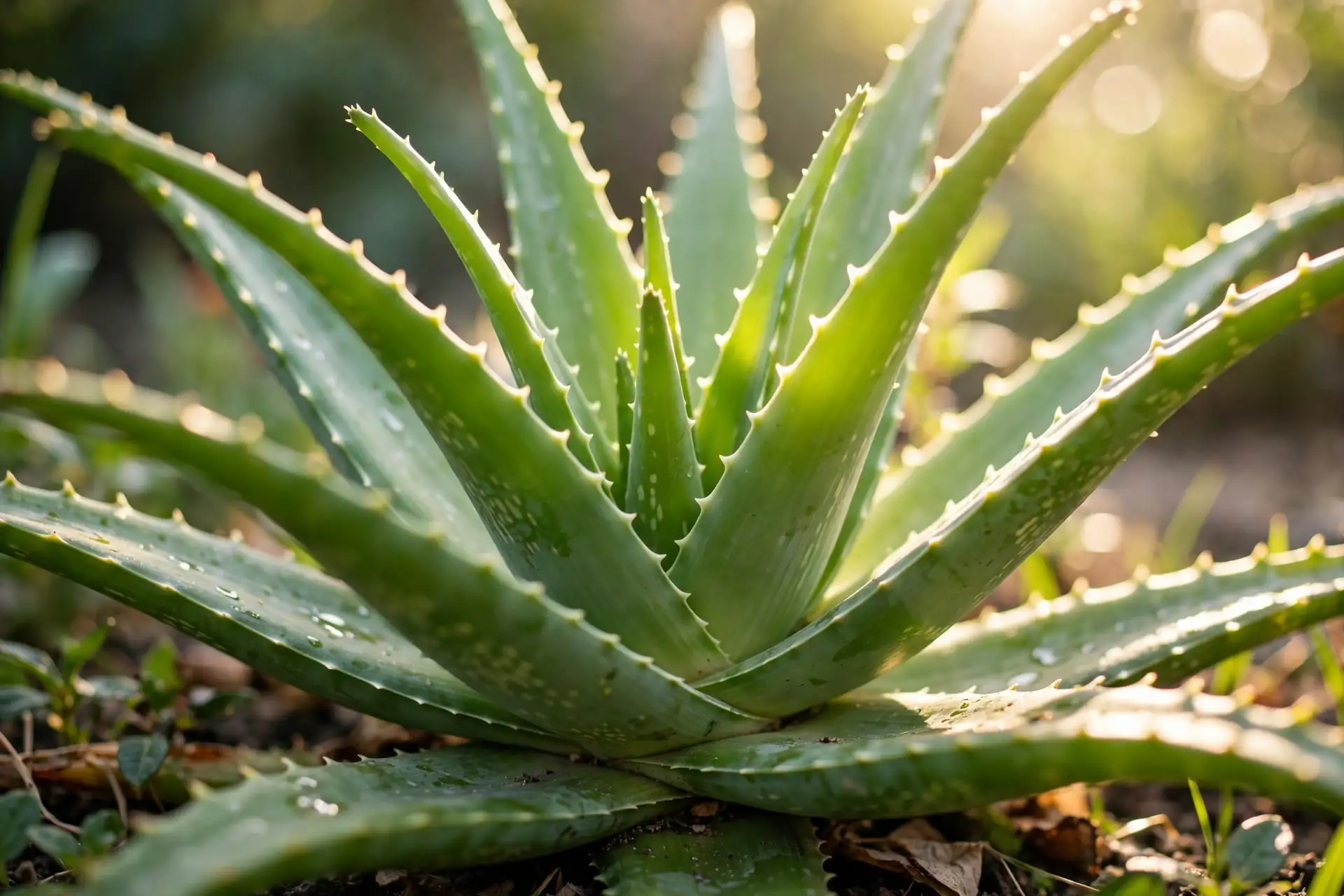
1. Aloe Vera (Aloe vera)
Aloe vera is the world’s most famous healing plant — a rosette of thick, fleshy, blue-green leaves storing a clear gel used for centuries on burns, sunburn, and dry skin. Native to the Arabian Peninsula, it is one of the easiest houseplants ever: it thrives on neglect, and mature plants produce offsets (“pups”) to share.
Give aloe vera your brightest spot and gritty cactus soil in a pot with drainage holes. Water deeply only when soil is completely dry — overwatering is the classic beginner mistake. Hardy outdoors only in zones 10–12; mature outdoor plants send up tall spikes of tubular orange-yellow flowers in winter and spring.
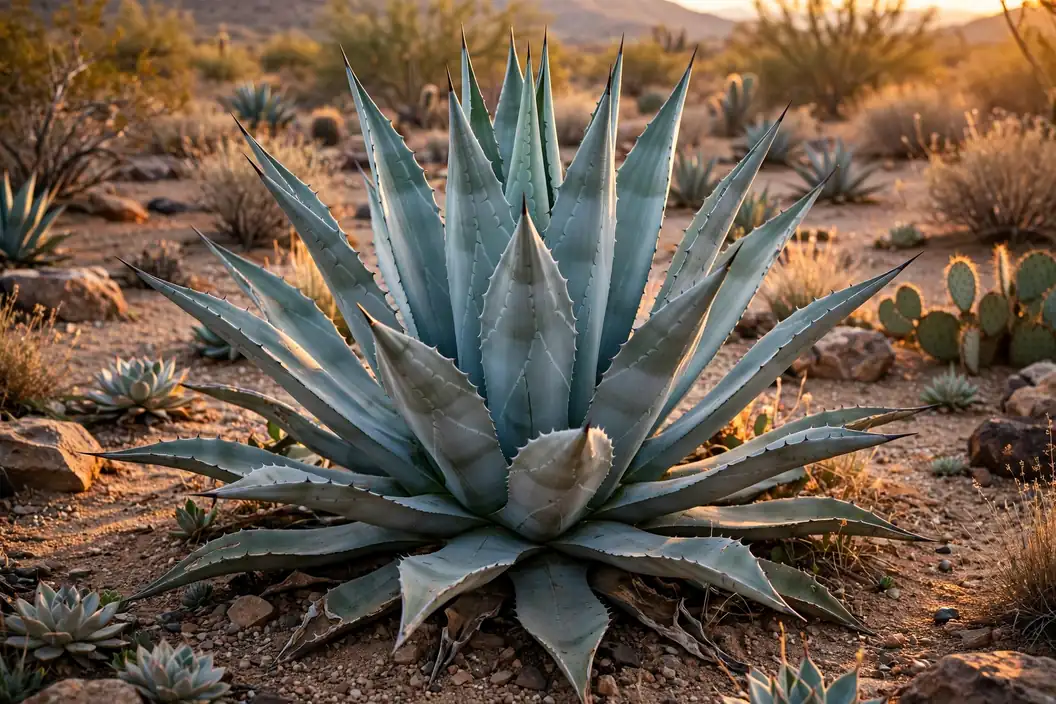
2. Agave (Agave americana)
The century plant is desert drama: a massive, symmetrical rosette of blue-gray, sword-like leaves edged with fierce teeth and a needle-sharp tip, often 6–10 feet wide. After 10–30 years it sends up a spectacular 15–30 foot flower stalk, then dies, leaving pups to carry on.
Plant agave in full, blazing sun in zones 8–11, in sharply drained, even rocky soil. Once established it needs almost no water or fertilizer — pampering kills it faster than neglect. Give it generous space away from paths and play areas, and wear thick gloves when handling it.
3. Azalea (Rhododendron spp.)
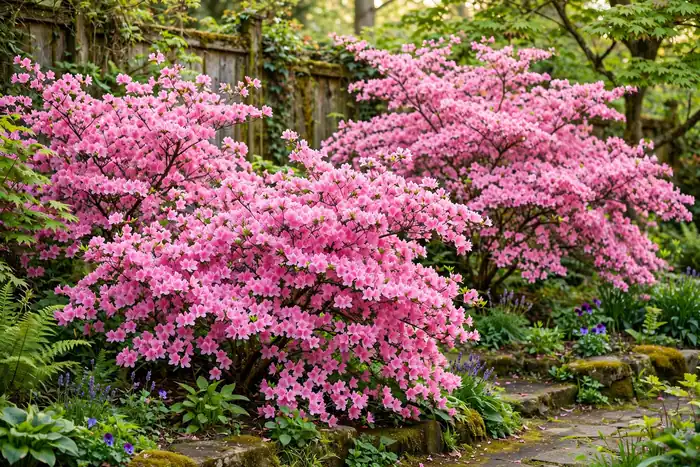
Azaleas are spring’s loudest celebration — dense clouds of pink, red, white, orange, and purple trumpet flowers that can completely hide the foliage. Native to Asia and North America, they are the backbone of southern and woodland gardens, and reblooming Encore types flower again in fall. A mature azalea hedge in full bloom is unforgettable.
Plant azaleas in part shade — morning sun with afternoon protection is ideal — in zones 5–9, in rich, acidic, well-drained soil (pH 4.5–6.0). They are shallow-rooted, so mulch with pine bark and never cultivate deeply around them. Prune right after flowering, since next year’s buds form in summer. Note: all parts are toxic if eaten.
4. Anthurium (Anthurium andraeanum)
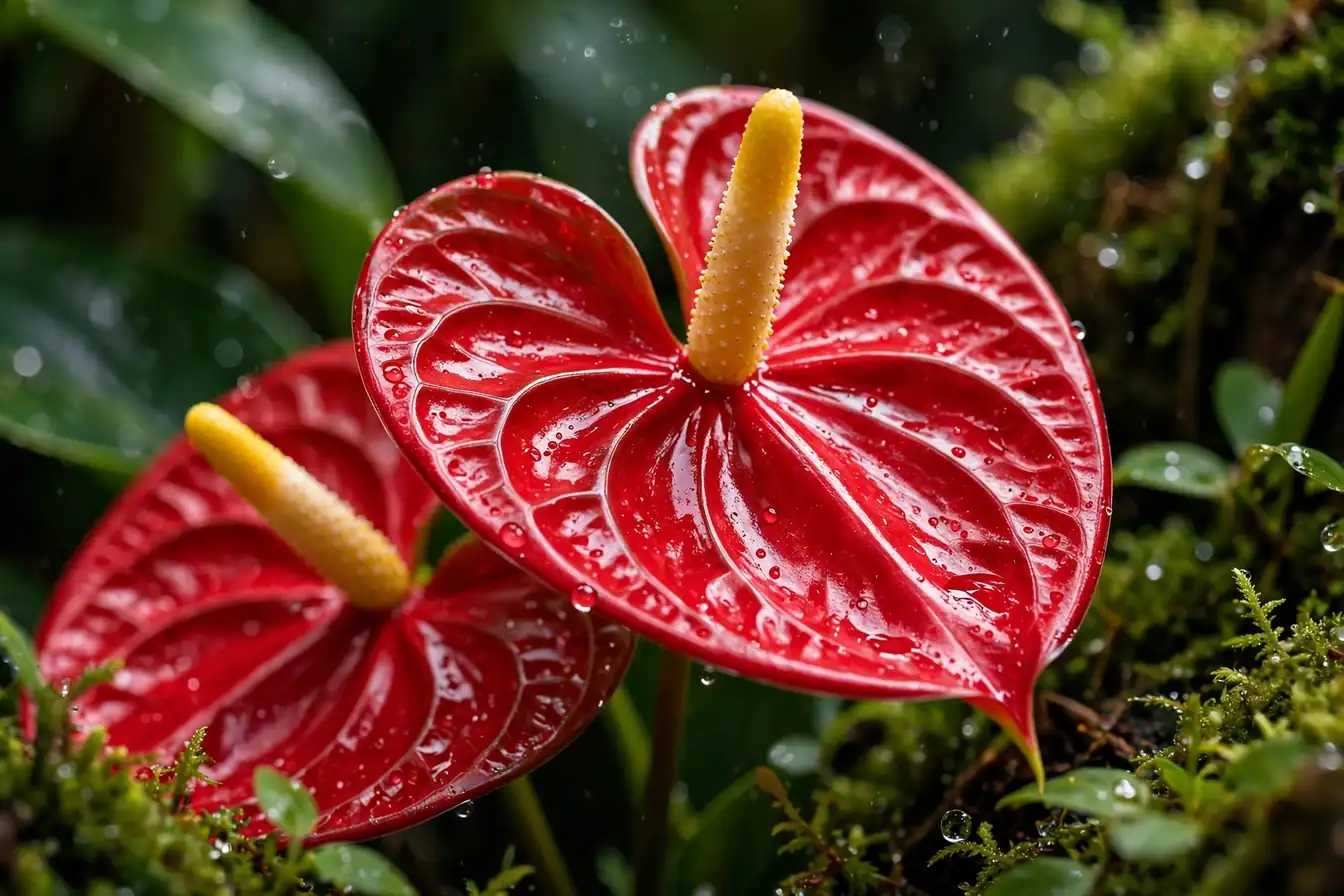
The flamingo flower is the houseplant that never takes a day off: glossy, heart-shaped red, pink, or white spathes rising above dark green leaves, blooming nearly year-round indoors. This Colombian and Ecuadorian rainforest native brings permanent tropical color to rooms, and the blooms make excellent cut flowers.
Give anthurium bright indirect light — direct sun scorches the leaves — in a chunky, orchid-like mix that drains freely. Water when the top inch of soil dries, and boost humidity with a pebble tray. Hardy outdoors only in zones 11–12. Keep it from pets and children: it contains irritating calcium oxalate crystals.
5. African Violet (Saintpaulia ionantha)
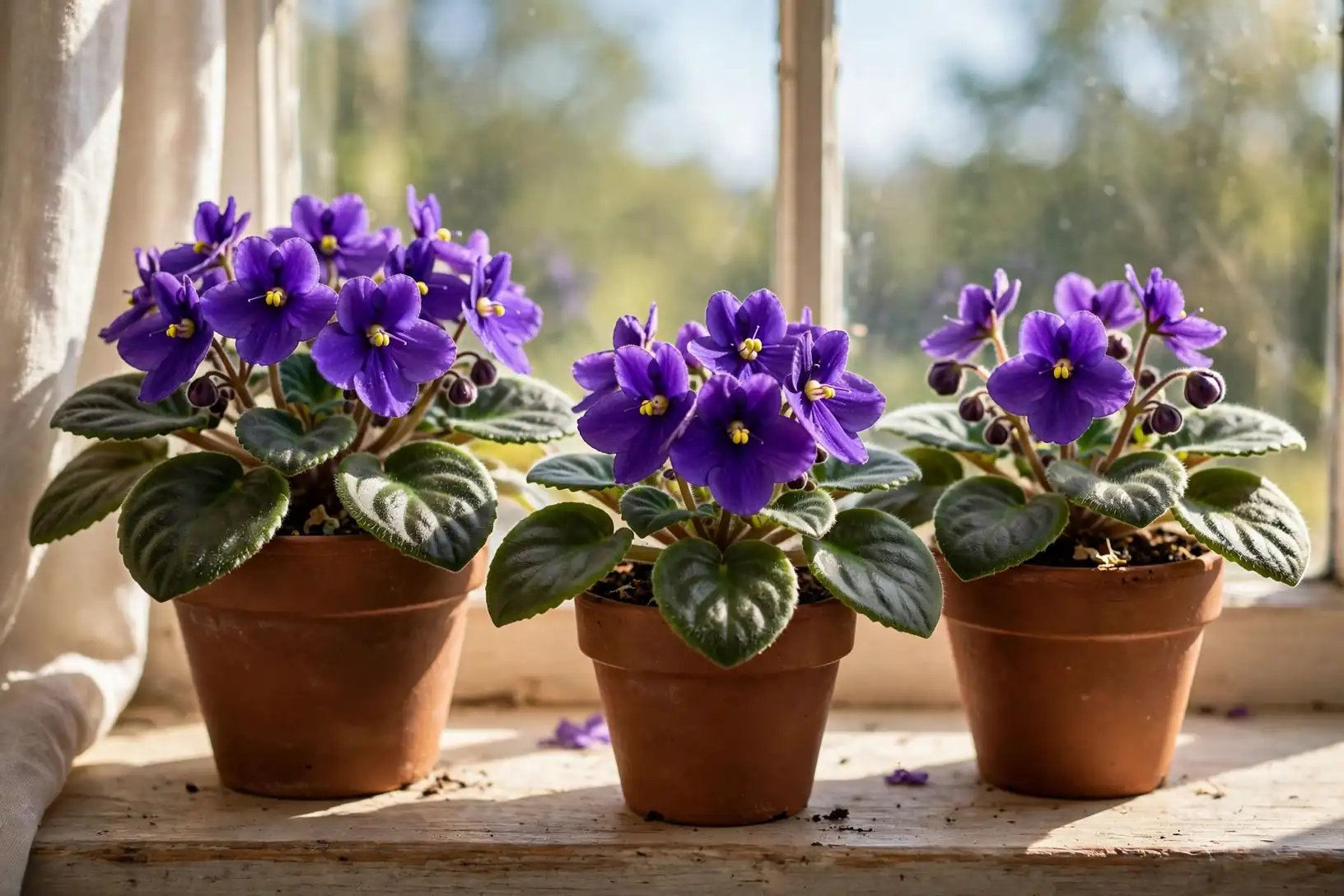
The African violet is the classic windowsill plant, still going strong: velvety rosettes topped with clusters of purple, pink, blue, or white flowers that can bloom ten months a year. Discovered in Tanzanian mountains in the 1890s, it became one of history’s most popular houseplants, with ruffled, double, and bicolored modern varieties.
African violets want bright indirect light (an east window is perfect) and consistent moisture — but never let cold water sit on the fuzzy leaves or brown spots appear. Water from below or use room-temperature water, and feed lightly with African violet fertilizer. They hate cold drafts and sub-60°F temperatures; repot yearly in fresh mix.
6. Areca Palm (Dypsis lutescens)
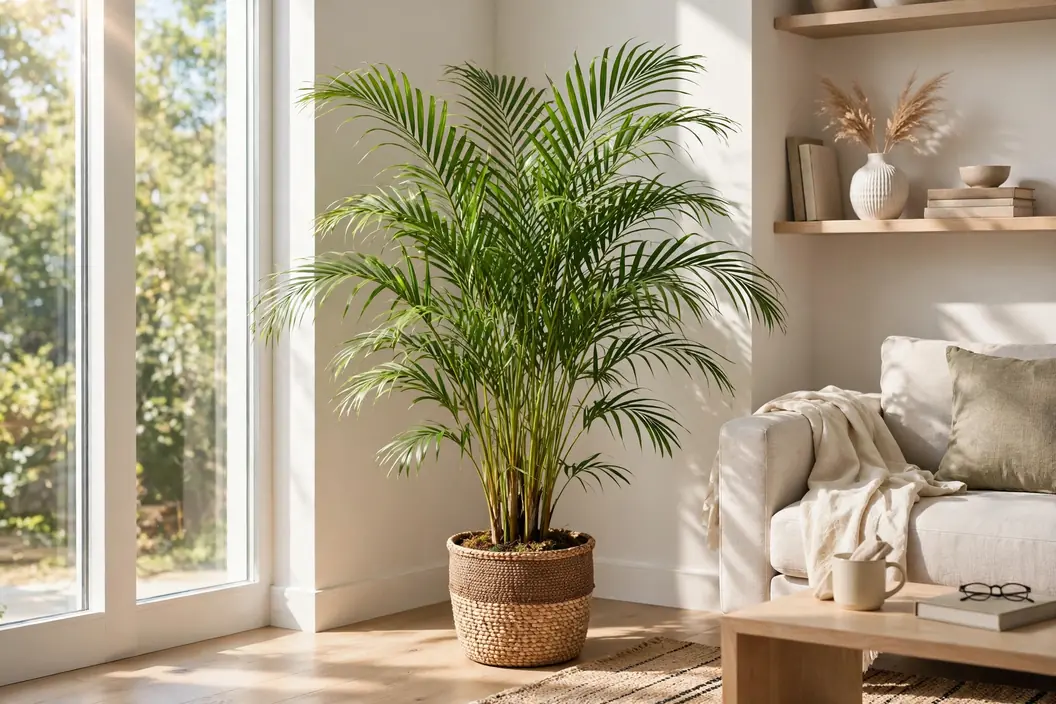
The areca palm — also sold as butterfly palm — is the feathery palm that makes any room feel like a tropical resort: multiple slender, bamboo-like stems, each crowned with long, pinnate fronds in fresh yellow-green. It is also one of the few palms considered non-toxic to cats and dogs, which is why it tops every pet-safe houseplant list — pair it with peace lilies and more in our plants that start with P guide.
Give areca palm bright indirect light and keep the soil evenly moist but never soggy; it sulks in both drought and waterlogged pots. It appreciates humidity and monthly feeding in spring and summer. Indoors it reaches 6–8 feet; outdoors in zones 10–11 it becomes a 20-foot clumping palm. Brown tips usually mean dry air — try misting or filtered water.
7. Asparagus Fern (Asparagus setaceus)
Despite its name, the asparagus fern is neither a true fern nor edible asparagus — it is a South African member of the lily family grown for its impossibly delicate, feathery, emerald-green foliage. It cascades beautifully from hanging baskets, fills mixed containers with airy texture, and its tiny white summer flowers are followed by decorative red berries.
Grow it in bright indirect light in rich, evenly moist potting soil — it dislikes both drought and soggy roots. Climbing forms can be trained up a trellis, while compact types stay in tidy mounds. Outdoors (zones 9–11) it can self-seed and turn weedy in warm climates — deadhead the berries. The berries are mildly toxic to pets.
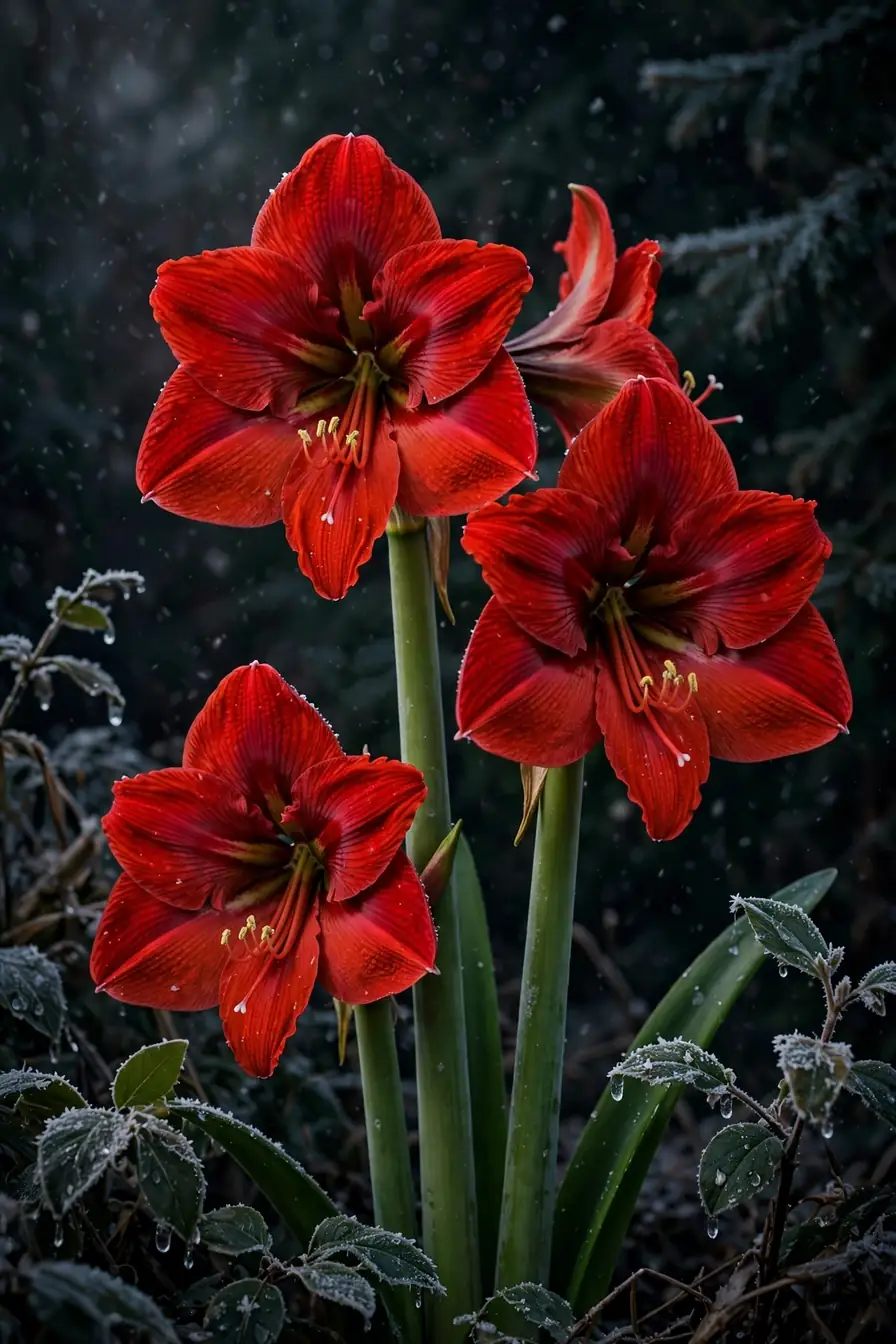
8. Amaryllis (Hippeastrum hybrids)
Amaryllis is winter’s blockbuster: from a fat, onion-like bulb planted in fall, it rockets up a thick stalk topped with 3–6 enormous trumpet flowers up to 8 inches across — red, pink, white, orange, or striped — just in time for the holidays. The bulbs sold as “amaryllis” are technically Hippeastrum hybrids from South America — and stars of our guide to flowers that start with A — delivering unmatched indoor drama for minimal effort.
Plant the bulb with its top third above the soil in a pot just 1–2 inches wider than the bulb, water once, then keep it barely moist until growth appears. Bright indirect light and 65–75°F produce the strongest stalks; stake tall stems. After blooming, cut the flower stalk but keep the leaves growing all summer, then give the bulb an 8–10 week cool, dry rest to trigger rebloom. Hardy outdoors in zones 8–10.
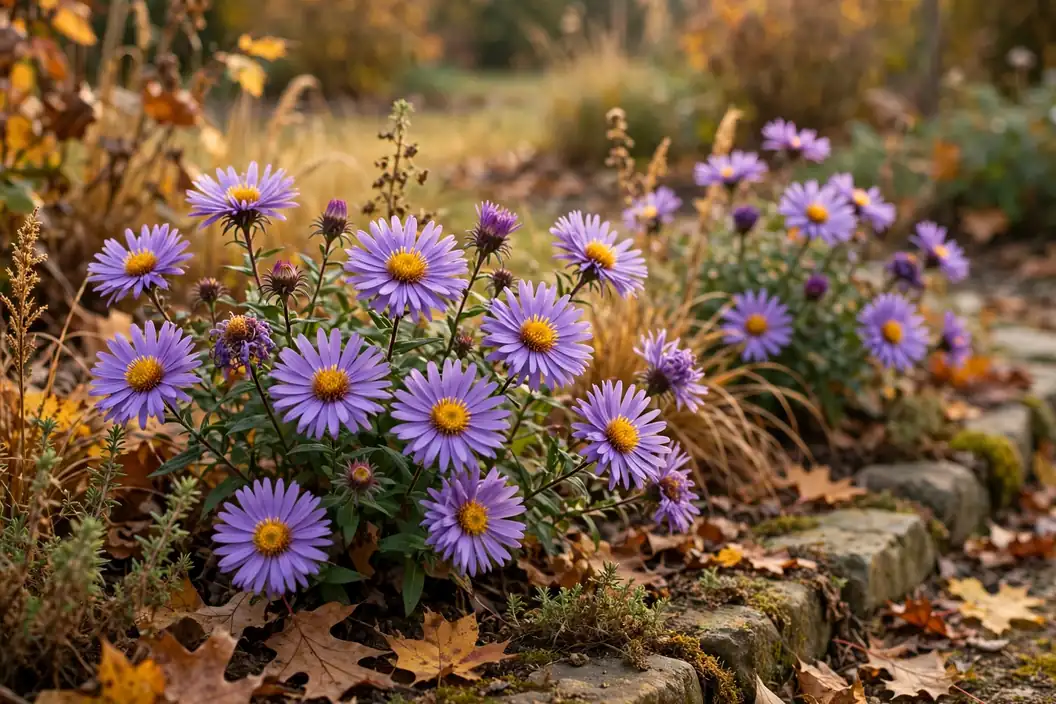
9. Aster (Symphyotrichum novae-angliae)
New England aster is the grand finale of the perennial border — 3–5 foot clouds of violet-purple, daisy-like flowers with golden centers, blooming from late summer deep into fall when almost everything else has quit. Native to North American meadows, it is a magnet for migrating monarch butterflies and late-season bees, and its seed heads feed birds through winter. Like its cousin the chrysanthemum (see our mum care guide), it is a short-day bloomer that shines in fall.
Plant asters in full sun in zones 4–8, in average, well-drained soil — they are tougher than they look and tolerate clay. For a long-season fall border, pair them with daylilies and Shasta daisies from our plants that start with D guide. Pinch the stems back by a third in early summer for bushier, flop-proof plants. Divide crowded clumps every 2–3 years. Choose mildew-resistant cultivars like ‘Purple Dome’.
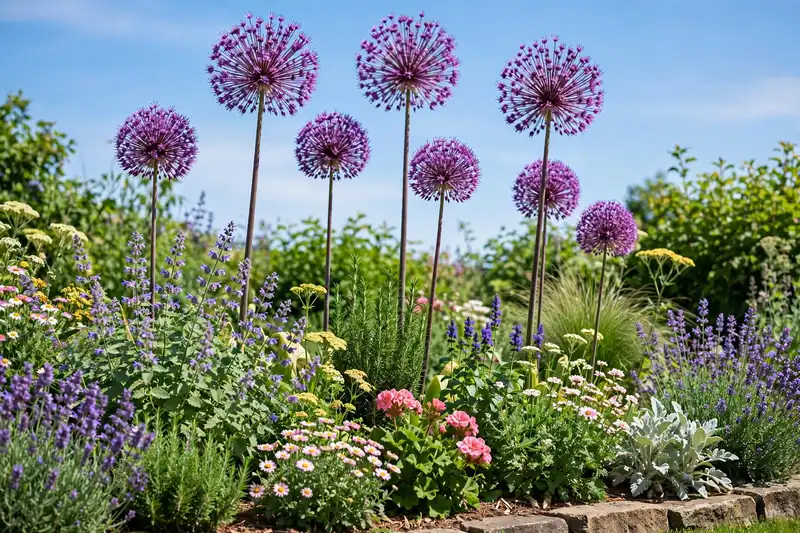
10. Allium (Allium giganteum)
Giant allium is the exclamation point of the late-spring border: a 3–4 foot leafless stalk topped with a perfect, softball-sized sphere of dozens of tiny lilac-purple star flowers. A member of the onion family native to Central Asia, its architectural seed heads stay handsome for months, and drifts look like purple fireworks frozen mid-burst.
Plant bulbs 6–8 inches deep in fall, in full sun and well-drained soil — wet winters are their main enemy. Hardy in zones 4–9 and, like all alliums, blissfully deer and rodent resistant. Let the foliage die back naturally after bloom and leave the seed heads standing; plant alliums behind lower perennials to hide the tatty basal leaves.
11. Alyssum (Lobularia maritima)
Sweet alyssum is the tiny flower with the outsized perfume: low, spreading mounds smothered in thousands of miniature white, pink, or lavender blossoms that release a sweet, honey-like fragrance, especially in the evening. Native to the Mediterranean, it blooms from spring to frost, edges paths and containers beautifully, and self-sows politely.
Grow alyssum in full sun to light shade in any average, well-drained soil; it is usually grown as an annual, though it can perennialize in zones 5–9. Shear plants back by a third in midsummer when they get leggy, and they will flush back into bloom. Hoverflies and beneficial wasps flock to the flowers, helping control nearby aphids.
12. Anemone (Anemone blanda)
Grecian windflower is one of spring’s sweetest surprises: 4–6 inch plants that carpet the ground with daisy-like blue, pink, or white flowers, each with a golden center, opening in early spring just as the snow retreats. Native to southeastern European and Turkish woodlands, it naturalizes into shimmering drifts under deciduous trees.
Plant the small, knobby tubers in fall, 2–3 inches deep, in part shade and humus-rich soil that stays moist in spring — soaking the tubers overnight before planting improves sprouting. Hardy in zones 4–8, it naturalizes with no care once established. Mark the spot so you do not dig the dormant tubers in summer.
13. Astilbe (Astilbe × arendsii)
Astilbe is the shade garden’s answer to summer fireworks: feathery, plume-like flower heads in pink, red, lavender, and white rising above fern-like foliage from early to late summer. These Asian hybrids transformed damp, dark corners into showpieces; dried plumes catch winter frost like tiny sculptures.
Give astilbe part to full shade in zones 4–9 and — the non-negotiable part — consistently moist, humus-rich soil. It tolerates wet feet and even boggy edges, but crisps and sulks in dry soil. Divide congested clumps every 3–4 years in spring, and leave the seed heads standing for winter interest.
14. Ajuga (Ajuga reptans)
Bugleweed is the ground cover that works as hard as it looks good: a fast-spreading carpet of glossy, evergreen, often bronze-purple leaves, studded in spring with short spikes of blue-violet flowers that bees mob. Native to Europe and Asia, it knits shady banks, fills gaps under trees, and suppresses weeds in zones 3–9.
Plant ajuga in part shade in average, well-drained soil; it tolerates full shade but colors best with some sun. It spreads by runners, so edge it firmly — in rich, moist soil it can be enthusiastic. Shear off spent flower spikes after bloom to keep the carpet tidy, and avoid planting it where crown rot has been an issue.
15. Artemisia (Artemisia schmidtiana ‘Nana’)
Silver mound artemisia is grown for foliage so soft and silvery it begs to be touched: a dense, dome-shaped cushion of finely cut, luminous silver leaves, just 8–12 inches tall, glowing in the border from spring to frost. Native to Japan, it cools hot-colored plantings, edges paths in silver, and shrugs off heat, drought, and poor soil.
Plant silver mound in full sun in zones 4–9, in lean, sharply drained soil — rich, wet soil makes it floppy and short-lived. Shear it back by half in midsummer if the center opens up, and it will flush fresh silver growth. The tiny yellow summer flowers are insignificant; most gardeners clip them off to keep the focus on the foliage.
16. Arrowhead Plant (Syngonium podophyllum)
The arrowhead plant is the chameleon of easy houseplants: young plants produce classic arrow-shaped leaves, but as they mature the leaves morph into multi-lobed forms and the stems start to climb or trail. Native to the rainforests of Central and South America, it comes in dozens of varieties — deep green, pink, cream-splashed, near-white — and tolerates the low light and irregular watering of real homes.
Give arrowhead plant bright indirect light (it survives medium light but colors best brighter) and water when the top inch of soil dries. Pinch stem tips to keep it bushy, or add a moss pole for dramatic climbing leaves. Hardy outdoors only in zones 10–12. The sap is irritating, so keep it from pets and children that chew plants.
17. Alocasia ‘Polly’ (Alocasia × amazonica)
Alocasia ‘Polly’ — the African mask plant — looks like it was designed by a jeweler: dramatic, arrow-shaped leaves in deep, glossy green, etched with bold white veins and wavy edges, held aloft on stiff stems. This compact hybrid stays just 1–2 feet tall — the most manageable elephant ear and a striking focal point.
Give ‘Polly’ bright indirect light, warmth above 60°F, and high humidity — a pebble tray keeps the leaf edges from browning. Water when the top inch of soil dries, and never let it sit in water. Like all alocasias it goes semi-dormant in winter, sometimes dropping leaves; reduce watering and wait for spring regrowth rather than assuming it is dead. All parts are toxic if chewed.
18. Angel’s Trumpet (Brugmansia suaveolens)
Angel’s trumpet is pure tropical theater: a large shrub hung with dozens of huge, pendulous, trumpet-shaped flowers — 8–12 inches long — in white, pink, peach, or yellow, releasing an intoxicating sweet perfume on summer evenings. Native to South America, it can reach 6–15 feet in one warm season, or grow as a jaw-dropping container specimen elsewhere.
Plant angel’s trumpet in full sun to part shade in zones 9–11; in colder climates, grow it in a large pot and overwinter it dormant in a cool, dark garage. It is a heavy feeder and drinker — rich soil, regular fertilizer, and deep watering produce the most flowers. Handle with respect: all parts are highly toxic if ingested, so site it away from children and pets.
19. Autumn Crocus (Colchicum autumnale)
The autumn crocus is fall’s delightful rule-breaker: while every other bulb is settling in for winter, its large, goblet-shaped pink-lavender flowers push straight out of bare ground in September and October — no leaves at all. The strap-like foliage appears the following spring, photosynthesizes, and vanishes by summer. Native to meadows of Europe and North Africa, it naturalizes into enchanting drifts.
Plant the corms in late summer, 3–4 inches deep, in full sun to part shade and well-drained soil that stays dry in summer — wet summer soil rots them. Hardy in zones 4–9, it needs no care once established. Caution: all parts are highly toxic (colchicine) — wear gloves and never plant where children or pets dig.
20. Apple (Malus domestica)
The apple is the world’s most planted fruit tree — and one of the most rewarding: fragrant white-pink blossoms in spring, crisp fruit in fall, and varieties for every climate from ‘Honeycrisp’ to ‘Granny Smith’ to ancient heirlooms. Domesticated in the mountains of Central Asia thousands of years ago, apples grow in home orchards across zones 3–8, and a single dwarf tree can produce bushels of fruit.
Plant apples in full sun in well-drained soil — and plant two compatible varieties for cross-pollination, since most apples are not self-fertile. Choose disease-resistant varieties on dwarf rootstocks for small yards and earlier fruit. Prune annually in late winter to open the canopy, and thin young fruitlets to one per cluster for larger, better apples.
21. Avocado (Persea americana)
The avocado went from obscure tropical fruit to global obsession in a single generation — and the tree behind it is a handsome evergreen worth growing for its glossy foliage alone. Native to Mexico and Central America, its creamy fruit follows spring flowers, and in zones 9–11 a backyard tree can yield hundreds a year.
Plant avocados in full sun in zones 9–11, in deep, fast-draining soil — they hate wet feet but also resent drought, so deep, infrequent watering with mulch is the sweet spot. Protect young trees from frost. Note the leaves, bark, and pits contain persin, toxic to many animals (the fruit flesh is fine for humans). Grafted trees fruit in 3–4 years; seed-grown trees can take a decade.
22. Almond (Prunus dulcis)
Almond trees earn their place twice: in early spring they erupt in clouds of pale pink-white blossom — among the earliest flowering trees — and by late summer those flowers have become the world’s most popular tree nut. Native to the Middle East and South Asia, almonds thrive in warm, dry climates; home gardeners in zones 7–9 can grow them too.
Plant almonds in full sun in well-drained soil in zones 7–9; they need hot summers to ripen nuts and are drought tolerant once established. Most varieties need a second almond or compatible pollinator nearby. Prune to an open vase shape, and harvest when hulls split in late summer. Self-fertile ‘All-in-One’ simplifies home growing.
23. Arborvitae (Thuja occidentalis)
Arborvitae — Latin for “tree of life” — is North America’s workhorse evergreen: dense, soft, scale-like foliage in flat sprays, naturally forming tidy pyramids that make perfect hedges, privacy screens, and foundation plantings. Cultivars range from the 60-foot species to 15-foot ‘Emerald Green’ to globe dwarfs, evergreen through zone 2–7 winters.
Plant arborvitae in full sun to part shade in moist, well-drained soil, spacing hedge plants 3–4 feet apart. Water deeply through the first two years and during dry spells — winter burn from dry, windy conditions is the most common problem, so mulch well and water before the ground freezes. Shear lightly in early summer, but never cut into old, leafless wood, which will not regrow.
24. Acacia (Acacia dealbata)
Silver wattle is winter’s golden surprise: in late winter and early spring, this fast-growing Australian tree covers itself in masses of fluffy, intensely fragrant, bright-yellow pompom flowers, weeks before most trees dare to bloom. Its feathery, silvery-blue foliage looks soft from a distance; golden wattle is Australia’s national floral emblem.
Plant silver wattle in full sun in zones 9–11, in any well-drained soil — it tolerates poor, dry ground and needs no fertilizer (as a legume, it fixes its own nitrogen). It grows up to 3 feet a year, so give it room to reach 20–40 feet. Prune after flowering to control size, and be aware it self-seeds freely in warm climates.
25. Amaranthus (Amaranthus caudatus)
Love-lies-bleeding is the annual that stops traffic: 3–5 foot plants draped in long, rope-like tassels of tiny crimson flowers that cascade like botanical dreadlocks from summer to fall. Native to South America and sacred to the Incas, it is as easy as it is dramatic — sow once and it self-sows forever.
Sow amaranthus directly in the garden after the last frost in full sun and average soil; it dislikes transplanting and needs no pampering. Thin seedlings to 12–18 inches apart for the biggest tassels. The young leaves are edible (like spinach) and the seeds are a nutritious ancient grain — but most gardeners grow it purely for the show. Deadhead to limit self-sowing.
26. Ageratum (Ageratum houstonianum)
Flossflower fills the one color gap every garden has: true blue. Its fluffy, powder-puff flower clusters in sky blue, lavender, pink, or white bloom nonstop from summer to frost on tidy 6–12 inch mounds. Native to Mexico and Central America, ageratum is a bedding-plant staple for edging, containers, and the front of borders — and butterflies visit it constantly.
Grow ageratum as an annual (perennial only in zones 10–11) in full sun to part shade and average, well-drained soil. It needs no deadheading to keep blooming, though shearing tired plants rejuvenates them. Keep it watered in dry spells — drought stress stops the flowers. Note that all parts are toxic if eaten.
27. Aubrieta (Aubrieta deltoidea)
Aubrieta — false rockcress — turns stone walls into waterfalls of color: low, trailing mats that spill over rocks and wall tops, smothered in small, vivid purple, pink, or blue flowers every spring. Native to rocky slopes from southern Europe to Central Asia, it is tailor-made for rock gardens and wall tops.
Plant aubrieta in full sun in zones 4–8, in sharply drained, even gritty, alkaline soil — wet winter soil is its nemesis. Shear plants back hard right after flowering to keep them compact and encourage a second flush. It dislikes hot, humid summers, so in warm climates give it afternoon shade and excellent drainage.
28. Armeria (Armeria maritima)
Sea thrift is the tough little perennial that laughs at salt spray: tight, evergreen cushions of grass-like foliage topped in late spring with round, lollipop-like flower heads in pink, rose, or white on wiry 6–12 inch stems. Native to coastal cliffs of Europe, it is built for wind, salt, poor soil, and drought — perfect for seaside gardens, rockeries, and path edges.
Plant sea thrift in full sun in zones 4–8, in sharply drained, even sandy or gravelly soil; it rots in heavy, wet ground. Deadhead spent flower heads to encourage rebloom and keep the cushions neat. Divide congested clumps every few years. It is remarkably long-lived, asking almost nothing beyond good drainage.
29. Monkshood (Aconitum napellus)
Monkshood is the Gothic beauty of the summer border: 3–5 foot spires of deep, hooded, violet-blue flowers — shaped like a monk’s cowl, hence the name — blooming in mid to late summer when few tall perennials are at their peak. Native to European mountains, it brings vertical drama and one of the truest blues in the garden to partly shaded borders.
Plant monkshood in part shade in zones 3–7, in rich, consistently moist soil — it dislikes hot, dry conditions. Stake tall stems in windy sites. Critical: all parts are highly toxic if eaten — wear gloves, and never plant where children or pets play.
30. Alstroemeria (Alstroemeria hybrids)
Peruvian lily is the cut flower that refuses to quit: exotic, azalea-like blooms streaked and speckled in pink, orange, yellow, purple, and white, held on 2–4 foot stems from summer to fall — and a single stem can last two weeks in a vase. Native to the cool mountains of South America, modern hybrids are far tougher and longer-blooming than the species.
Plant alstroemeria in full sun to part shade in zones 6–10, in rich, well-drained soil, setting the fleshy roots 6–8 inches deep. Mulch well — the roots resent disturbance and cold. Pull (don’t cut) stems from the base to stimulate more blooms. In colder zones, grow it in large pots and overwinter indoors.
31. Agapanthus (Agapanthus africanus)
Agapanthus — lily of the Nile, though it comes from South Africa — is summer elegance in plant form: bold straps of evergreen foliage sending up 2–4 foot stalks crowned with great umbels of blue or white trumpet flowers. It is the signature plant of Mediterranean-style gardens, lining driveways in drifts that bloom for weeks.
Plant agapanthus in full sun to light shade in zones 8–11, in well-drained soil. It blooms best when slightly crowded, so resist the urge to divide often. Drought tolerant once established, it flowers more generously with regular water. In colder climates, grow deciduous types in pots and overwinter them frost-free.
32. Air Plant (Tillandsia ionantha)
Air plants are the ultimate low-maintenance curiosity: true plants that grow with no soil at all, absorbing water and nutrients through silvery scales on their leaves. Tillandsia ionantha, native to Mexico and Central America, forms a spiky 2–4 inch rosette that blushes brilliant red when it blooms, then produces offsets. In glass globes or on driftwood, they turn plant-keeping into living sculpture, and they rank among our best terrarium plants.
Give air plants bright indirect light and good air circulation — stagnant, soggy conditions kill them. Mist 2–3 times weekly, or soak 20–30 minutes weekly, then shake off excess water and dry upside down — trapped crown water causes rot. Hardy outdoors in zones 9–11, where they can live mounted on trees.
33. Anise Hyssop (Agastache foeniculum)
Anise hyssop is the pollinator garden’s secret weapon: 2–4 foot spikes of lavender-blue flowers from midsummer to fall, absolutely mobbed by bees, butterflies, and hummingbirds, on plants whose crushed leaves smell deliciously of licorice and mint. Native to the North American prairie, its leaves also make a wonderful tea.
Plant in full sun, zones 4–8, in average well-drained soil; drought tolerant once established, it dislikes wet winter soil. Deadhead to extend bloom or leave the seed heads for goldfinches. It is short-lived (3–4 years) but self-sows so freely you will never be without it.
34. Arabian Jasmine (Jasminum sambac)
Arabian jasmine is fragrance royalty: a tropical shrub producing intensely sweet, white, star-shaped flowers from summer to fall — the blooms used for jasmine tea and leis, and the national flower of the Philippines and Indonesia. Native to South and Southeast Asia, its evening perfume is one of gardening’s great pleasures, and it flowers generously in containers.
Grow in full sun to part shade, zones 9–11; elsewhere, keep as a houseplant moved outdoors for summer. It wants rich, well-drained soil, regular water, and monthly feeding in the growing season. Prune after flowering to shape it, and bring it inside before temperatures drop below 40°F.
35. American Holly (Ilex opaca)
American holly is the classic Christmas evergreen — and a superb native tree: glossy, spiny, dark-green leaves year-round, and on female plants, clusters of brilliant red berries that persist through winter, feeding birds when little else is available. This eastern North American native grows 15–30 feet into a handsome pyramid for zones 5–9.
Plant American holly in full sun to part shade in moist, acidic, well-drained soil. You need a male pollinator nearby for berries — one male serves several females. Mulch to keep roots cool and water young trees through dry spells. Prune in late winter if needed; it shears well into hedges. The berries are toxic to humans and pets — admire, do not eat.
Growing Tips for A-Plants
Match the plant to your zone first. A-plants span zones 2–12 — from the ultra-hardy arborvitae (zone 2) to tropical anthuriums and Arabian jasmine (zones 9–11). Check the tables before choosing a plant that cannot survive your winter — tender ones make excellent houseplants.
Stop overwatering the succulents. Aloe vera, agave, and artemisia want sharp drainage and a real dry-out between waterings. When in doubt, wait — underwatering is a slow, fixable stress, while rot from soggy soil is usually fatal.
Give the acid-lovers their soil. Azaleas demand acidic soil (pH 4.5–6.0) and shallow planting with mulch. If your soil is alkaline, grow them in containers with ericaceous compost rather than fighting your ground.
Respect the shade specialists. Astilbe, anemone, and monkshood scorch in hot afternoon sun — tuck them under trees or on the north side of the house, with consistently moist soil.
Deadhead for more flowers. Alyssum, ageratum, armeria, and alstroemeria bloom far longer when spent flowers are removed. A midsummer shear of alyssum and ageratum triggers a fresh flush to frost.
Watch the toxic ones. Angel’s trumpet, autumn crocus, and monkshood are dangerously toxic; azalea, anthurium, alocasia, arrowhead plant, and holly berries are toxic too. Enjoy them, but site them away from vegetable beds, curious toddlers, and pets that chew plants.
Which A-Plants Will You Grow?
From windowsill aloe vera to towering desert agaves, from spring azaleas to fall asters, A-plants cover every season, style, and nearly every hardiness zone. If you are just starting out, try the nearly indestructible trio of aloe vera, ajuga, and sweet alyssum. If you want drama, try angel’s trumpet or a giant allium drift. And if you garden indoors, an anthurium or African violet brings the letter A to your living room in permanent bloom.
Pick three A-plants that suit your light and zone, plant them this season, and watch the alphabet’s first letter become your garden’s hardest worker. Happy planting!
Frequently Asked Questions
What are the most popular plants that start with A?
The most popular A-plants are aloe vera, agave, azalea, anthurium, African violet, areca palm, asparagus fern, amaryllis, aster, allium, alyssum, and astilbe — all widely available at garden centers.
What plants starting with A are good for beginners?
Aloe vera, ajuga, sweet alyssum, areca palm, arrowhead plant, and ageratum are nearly indestructible — tolerating imperfect soil, missed waterings, and varied light.
Which A-plants bloom in spring?
Spring-blooming A-plants include azaleas, anemone (Grecian windflower), aubrieta, ajuga, armeria, almond and apple blossom, and acacia (late winter). Combine early, mid, and late bloomers for months of continuous color.
What plants that start with A grow in shade?
Shade-tolerant A-plants include astilbe, anemone, ajuga, monkshood (part shade), and as houseplants, anthurium, African violet, areca palm, arrowhead plant, and alocasia. Most prefer dappled light or morning sun.
Are agaves and aloe vera the same plant?
No — they are different genera that look similar because both evolved thick, water-storing leaves for dry climates. Aloe vera (Aloe vera) is from the Arabian Peninsula and has medicinal gel; agave (Agave americana) is from Mexico, grows much larger, and is the source of agave syrup and tequila.
Which plants starting with A are toxic to pets?
Several A-plants are toxic if chewed or eaten: angel’s trumpet, autumn crocus, and monkshood (highly toxic), plus azalea, anthurium, alocasia, arrowhead plant, asparagus fern berries, American holly berries, and ageratum. If you have pets that chew plants, choose pet-safe options like areca palm, African violet, or air plants.