30 Plants That Start With R: Names, Pictures and Useful Facts
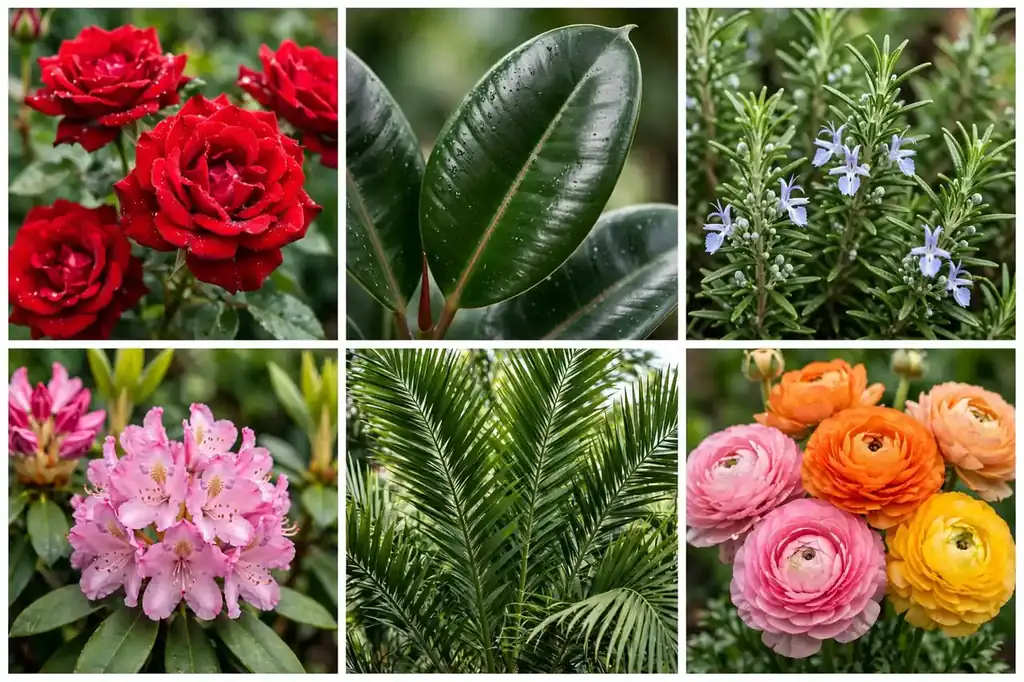
Looking for plants that start with R? The letter R is a genuine powerhouse in the plant world. It gives us the rose — the most celebrated flower in cultivation — the rubber plant towering in bright living rooms, rosemary perfuming herb gardens, the rhododendron lighting up spring shade, the redbud throwing magenta blossoms onto bare branches, and the royal palm swaying over tropical streets. From houseplants and herbs to flowering trees, bulbs, and edible crops, this guide covers 30 real plants that start with R, each with its botanical name, native region, bloom season, and practical growing advice. If you are mainly after blooms, see also our companion guide to flowers that start with R.
Every entry below lists the plant’s scientific name, light and water needs, and USDA hardiness zone, so you can tell at a glance which R-plants suit your home or garden. You will also find two comparison tables, growing tips, and answers to common questions about R-plants.
Quick Answer
Popular plants that start with R include Rose, Rubber Plant, Rosemary, Rhododendron, Rhipsalis, Rex Begonia, Rieger Begonia, Royal Palm, Eastern Redbud, Red Maple, Russian Sage, Red Buckeye, Rose of Sharon, Ranunculus, Rudbeckia (Black-Eyed Susan), Rain Lily, Rhubarb, and Rattlesnake Plant. They span houseplants, flowering trees, fragrant herbs, drought-tough perennials, spring bulbs, and edible crops — covering USDA zones 2–11, so there is an R-plant for nearly every garden and windowsill.
Table of Contents
R-Plants at a Glance
Use this table to compare all 30 plants that start with R side by side, from botanical names to native regions.
| Plant name | Scientific name | Type | Light | Native region |
|---|---|---|---|---|
| Rose | Rosa spp. and hybrids | Flowering shrub / climber | Full sun | Northern Hemisphere (widespread) |
| Rubber Plant | Ficus elastica | Houseplant / tropical tree | Bright indirect | South and Southeast Asia |
| Rosemary | Salvia rosmarinus | Evergreen herb | Full sun | Mediterranean region |
| Rhododendron | Rhododendron spp. | Evergreen / deciduous shrub | Part shade | Asia (Himalayas), North America |
| Rhipsalis | Rhipsalis baccifera | Epiphytic cactus | Bright indirect | Tropical Americas, Africa, Sri Lanka |
| Rex Begonia | Begonia rex-cultorum | Foliage houseplant | Bright indirect | Garden hybrid (Himalayan species origins) |
| Rieger Begonia | Begonia × hiemalis | Flowering houseplant | Bright indirect | Garden hybrid |
| Royal Palm | Roystonea regia | Palm tree | Full sun | Florida, Caribbean, Central America |
| Eastern Redbud | Cercis canadensis | Flowering tree | Full sun to part shade | Eastern North America |
| Royal Poinciana | Delonix regia | Flowering tree | Full sun | Madagascar |
| Red Maple | Acer rubrum | Shade tree | Full sun to part shade | Eastern North America |
| Red Twig Dogwood | Cornus sericea | Deciduous shrub | Full sun to part shade | North America |
| Russian Sage | Salvia yangii | Perennial | Full sun | Central Asia |
| Red Buckeye | Aesculus pavia | Flowering tree / large shrub | Part shade | Southeastern USA |
| Coast Redwood | Sequoia sempervirens | Evergreen conifer | Full sun to part shade | California and Oregon coast |
| Rose of Sharon | Hibiscus syriacus | Deciduous shrub | Full sun | China, India |
| Rockrose | Cistus spp. | Evergreen shrub | Full sun | Mediterranean region |
| Red Bottlebrush | Callistemon citrinus | Evergreen shrub | Full sun | Australia |
| Red Bird of Paradise | Caesalpinia pulcherrima | Tropical shrub | Full sun | Tropical Americas |
| Ranunculus | Ranunculus asiaticus | Tuberous perennial / annual | Full sun | Mediterranean, Southwest Asia |
| Rudbeckia | Rudbeckia hirta | Perennial | Full sun | North America |
| Rose Campion | Silene coronaria | Biennial / short-lived perennial | Full sun | Europe, Asia |
| Red Valerian | Centranthus ruber | Perennial | Full sun | Mediterranean region |
| Rosy Periwinkle | Catharanthus roseus | Tender perennial / annual | Full sun | Madagascar |
| Rain Lily | Zephyranthes candida | Bulbous perennial | Full sun to part shade | South America |
| Red Spider Lily | Lycoris radiata | Bulbous perennial | Full sun to part shade | China, Korea, Japan |
| Rattlesnake Plant | Goeppertia insignis | Foliage houseplant | Bright indirect | Brazil |
| Rabbit’s Foot Fern | Davallia fejeensis | Fern houseplant | Bright indirect | Fiji, South Pacific |
| Rose Moss | Portulaca grandiflora | Succulent annual | Full sun | Argentina, Brazil, Uruguay |
| Rhubarb | Rheum rhabarbarum | Vegetable (grown for stalks) | Full sun | Siberia, Asia |
Bloom Season, Water Needs & Hardiness Zones
This second table focuses on practical care: when each R-plant blooms, how much water it wants, and the USDA zones where it survives winter outdoors.
| Plant name | Bloom season | Water needs | USDA hardiness |
|---|---|---|---|
| Rose | Late spring to fall | Medium — deep, regular watering | 3–10 (varies by type) |
| Rubber Plant | Rarely indoors | Medium — let top dry out | 10–11 |
| Rosemary | Spring (small blue flowers) | Low once established | 7–10 |
| Rhododendron | Spring | Medium — evenly moist | 4–9 |
| Rhipsalis | Spring (small white flowers) | Medium — more than desert cacti | 10–11 |
| Rex Begonia | Grown for foliage | Medium — evenly moist, not soggy | 10–11 |
| Rieger Begonia | Fall to winter (indoors) | Medium — let surface dry | 10–11 |
| Royal Palm | Summer (flowers), then fruit | Medium-high — likes moisture | 10–11 |
| Eastern Redbud | Early spring | Medium | 4–9 |
| Royal Poinciana | Late spring to summer | Low-medium once established | 10–11 |
| Red Maple | Early spring (inconspicuous) | Medium-high — tolerates wet soil | 3–9 |
| Red Twig Dogwood | Late spring (white flowers) | Medium-high — tolerates wet soil | 2–8 |
| Russian Sage | Summer to early fall | Low — drought tolerant | 4–9 |
| Red Buckeye | Spring | Medium | 4–8 |
| Coast Redwood | Non-flowering (conifer) | High — needs consistent moisture | 7–10 |
| Rose of Sharon | Summer to early fall | Medium | 5–9 |
| Rockrose | Late spring to summer | Low — drought tolerant | 7–10 |
| Red Bottlebrush | Spring to summer | Medium | 8–11 |
| Red Bird of Paradise | Summer to fall | Low-medium — drought tolerant | 9–11 |
| Ranunculus | Spring | Medium — consistent while growing | 8–10 (annual elsewhere) |
| Rudbeckia | Summer to fall | Medium — drought tolerant once established | 3–9 |
| Rose Campion | Summer | Low-medium | 4–8 |
| Red Valerian | Summer | Low — drought tolerant | 5–8 |
| Rosy Periwinkle | Summer to frost | Low-medium | 9–11 (annual elsewhere) |
| Rain Lily | Summer to fall (after rains) | Medium — blooms follow water | 7–10 |
| Red Spider Lily | Early fall | Medium — dry summer dormancy | 6–10 |
| Rattlesnake Plant | Rarely indoors | Medium-high — keep evenly moist | 10–11 |
| Rabbit’s Foot Fern | Non-flowering (fern) | Medium-high — humidity lover | 10–11 |
| Rose Moss | Summer to frost | Low — succulent leaves | 10–11 (annual elsewhere) |
| Rhubarb | Grown for stalks (remove flower heads) | Medium — consistent | 3–8 |
30 Plants That Start With R: The Complete List
Below is the full rundown — houseplants, trees, shrubs, perennials, bulbs, and edibles — with the growing details that matter for each one.
1. Rose (Rosa spp. and hybrids)
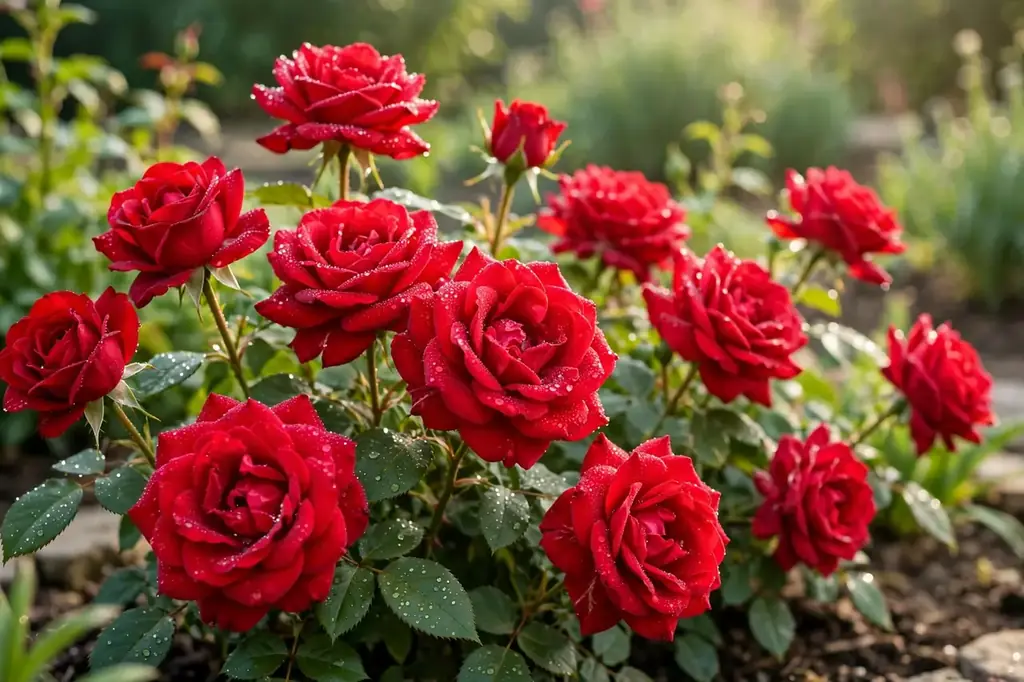
No plant starting with R — or any letter — carries more cultural weight than the rose. The genus Rosa holds some 300 wild species and tens of thousands of cultivated varieties, from hybrid teas and floribundas to David Austin shrub roses and rugged landscape types. Wild roses are native across the Northern Hemisphere, and breeders have spent two centuries turning them into repeat-blooming machines in every color except true blue. Most garden roses are hardy in zones 3–10, though the exact range depends on the type.
Give roses at least six hours of direct sun, rich well-drained soil, and deep weekly watering aimed at the roots rather than the foliage. Prune in late winter or early spring, removing dead wood and shaping for airflow, which prevents black spot and mildew. For a thorough primer on siting, planting, and ongoing care, see the Gardening Know How guide to starting a rose garden.
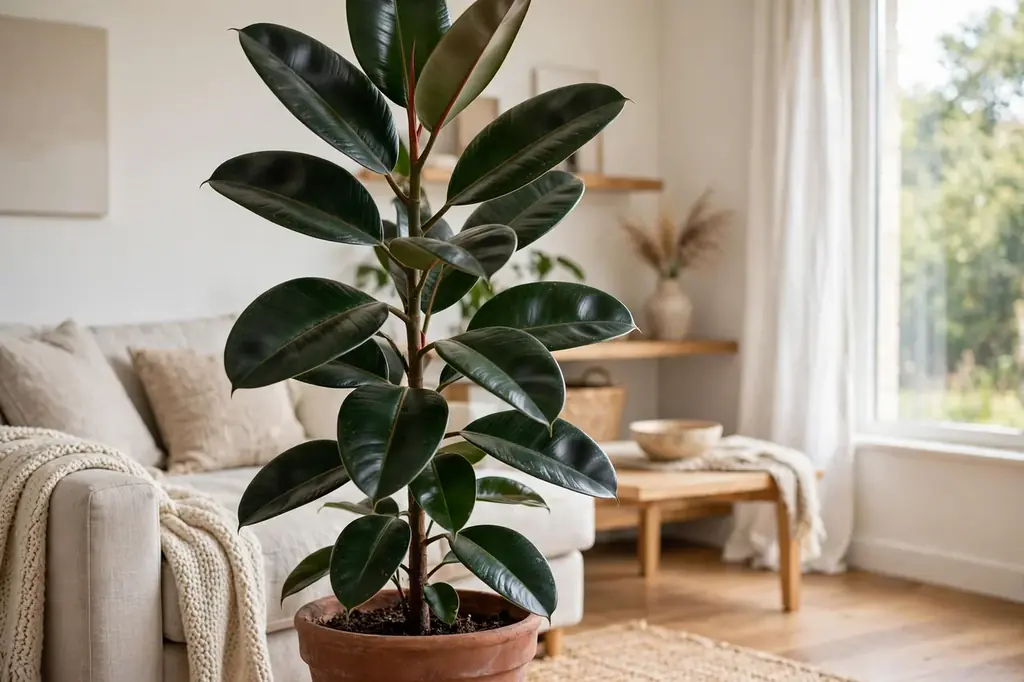
2. Rubber Plant (Ficus elastica)
Native to the rainforests of South and Southeast Asia — from India through Malaysia to Java — the rubber plant is a genuine giant in the wild, reaching 100 feet or more. Indoors it becomes a stately, upright houseplant with thick, glossy, oval leaves on sturdy stems, and it tolerates the dry air and moderate light of real homes far better than most tropicals. Outdoors it survives only in zones 10–11.
Provide bright indirect light — variegated types need more light to hold their color — and water when the top inch or two of soil dries out. It hates wet feet, so a pot with drainage and a chunky mix are essential. Wipe the broad leaves clean so they can photosynthesize, and note the milky latex sap: it can irritate skin and is toxic to pets, so wash hands after pruning and keep it from curious cats.
3. Rosemary (Salvia rosmarinus)
Rosemary — reclassified by botanists from Rosmarinus into Salvia, though nurseries still use the old name — is the evergreen Mediterranean herb behind roast lamb, focaccia, and a thousand garden borders. Its needle-like leaves are intensely aromatic. It is a woody subshrub, hardy in zones 7–10, and in the right climate it lives for decades, slowly becoming a fragrant 3–4-foot shrub.
Full sun and sharp drainage are everything: rosemary dies in winter-wet soil long before cold gets it. Plant it in sandy or gritty soil, a raised bed, or a terracotta pot, and water only when dry — established plants are genuinely drought-tolerant. In colder zones, grow it in a container and overwinter indoors near a bright window, cutting back on water. Harvest sprigs freely; regular picking keeps the plant bushy. The Old Farmer’s Almanac rosemary growing guide covers varieties and overwintering in detail.
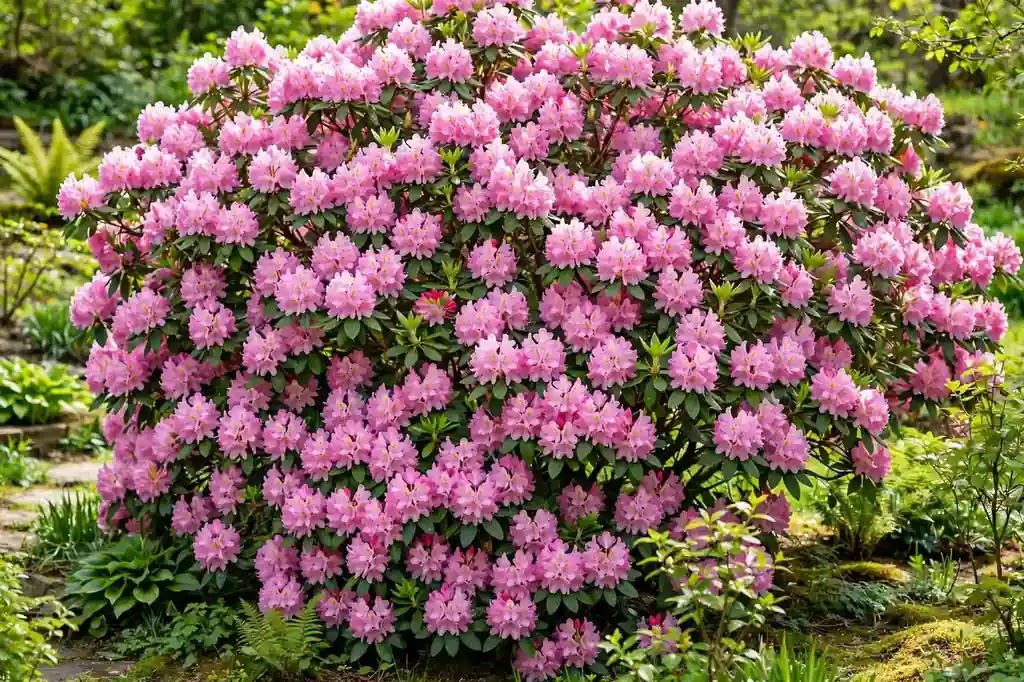
4. Rhododendron (Rhododendron spp.)
With more than a thousand species — from Himalayan giants to the native rhododendrons of the Appalachians — this genus is the undisputed king of spring-flowering shade shrubs. Trusses of bell-shaped blooms in pink, red, purple, white, and yellow open over glossy foliage. Hardy roughly in zones 4–9 depending on the species, rhododendrons anchor woodland gardens and foundation plantings where little else flowers so lavishly in shade.
The one non-negotiable is acidic soil, pH roughly 4.5–6.0; in alkaline ground the leaves yellow with iron chlorosis no matter how much you feed. Plant shallow — rhododendrons root near the surface — in part shade with protection from harsh afternoon sun and winter wind, and mulch with pine needles or bark. Water consistently the first year; established plants handle normal rainfall. Note that all parts contain grayanotoxin and are toxic if eaten, so site them away from grazing animals. The RHS rhododendron plant search is a reliable place to compare species and cultivars.
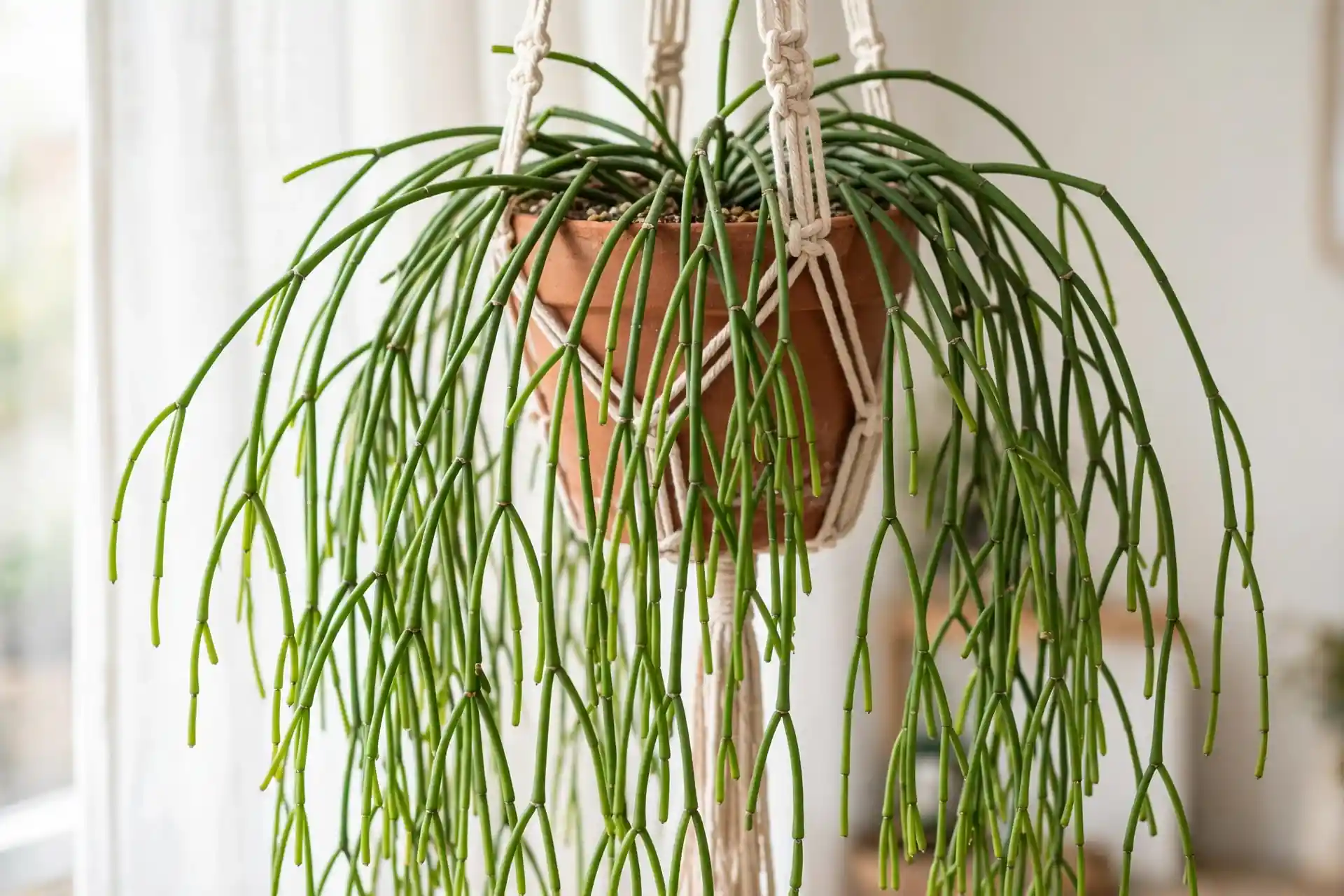
5. Rhipsalis (Rhipsalis baccifera)
Rhipsalis, the mistletoe cactus, is the oddball of the cactus family: an epiphyte that grows on tree branches in tropical rainforests rather than in deserts, with soft, spineless, pencil-like stems that cascade gracefully. It also holds a botanical distinction — it is the only cactus genus found naturally outside the Americas, occurring in Africa, Madagascar, and Sri Lanka (likely carried across the Atlantic by birds). Small white spring flowers are followed by mistletoe-like berries. Hardy only in zones 10–11, it is grown almost everywhere as a hanging houseplant.
Forget desert-cactus rules: rhipsalis wants bright indirect light, regular watering when the top inch dries, and humidity — it thrives in bathrooms and terrariums. For more enclosed-garden ideas, see our guide to the best terrarium plants. Use a light, barky epiphyte mix rather than heavy potting soil, and feed lightly through the growing season. It is non-toxic to pets, a rare virtue among cacti.
6. Rex Begonia (Begonia rex-cultorum)
Grown purely for foliage, rex begonias offer some of the most extravagant leaves in the houseplant world: spiraled, ruffled, and splashed with silver, burgundy, pink, and near-black in metallic patterns that look painted on. They descend from Himalayan species, chiefly Begonia rex, refined by generations of hybridization. Compact and rhizomatous, they stay under 18 inches and suit tabletops and shelves. Like all begonias they are tropical, hardy only in zones 10–11 outdoors.
Bright indirect light keeps the colors vivid — too much sun scorches, too little dulls. Keep the soil evenly moist but never soggy, and boost humidity with a pebble tray or grouping rather than misting, which spots the leaves. Water from below or at the soil line to keep foliage dry.
7. Rieger Begonia (Begonia × hiemalis)
Where rex begonias are all leaves, Rieger begonias are all flowers. This hybrid group — a cross between wax and tuberous begonias developed in Germany — produces masses of rose-like blooms in red, pink, orange, yellow, and white, often from fall into winter when indoor color is scarce. Sold as gift plants and seasonal color, they are compact, bushy, and genuinely floriferous. Outdoors they are hardy only in zones 10–11.
Give them bright indirect light and let the soil surface dry between waterings; they rot quickly in soggy mix. Deadhead spent flowers to keep new buds coming, and pinch stems to encourage branching. After the main bloom, many gardeners discard them, but you can cut the plant back, keep it barely moist through a short rest, and bring it back into growth for another season.
8. Royal Palm (Roystonea regia)
Few trees say “tropics” like the royal palm: a smooth, light-gray trunk rising 50–70 feet to a crown of long, feathery fronds above a distinctive green crownshaft. Native to southern Florida, the Caribbean, Mexico, and Central America, it lines boulevards and resorts across the world’s warmest cities and is the national tree of Cuba. It is one of the fastest-growing large palms, and its tidy self-cleaning habit — old fronds drop on their own — makes it low-maintenance for its size. Hardy only in zones 10–11.
Plant in full sun with consistently moist, fertile soil; young palms appreciate regular water and feeding until established. Give it room — the canopy spreads 20 feet or more — and never top a palm or cut the central spear, which kills the tree.
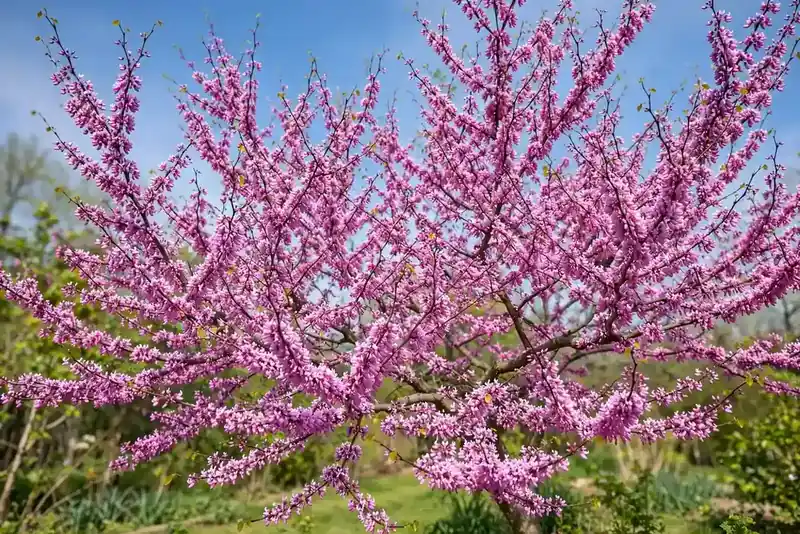
9. Eastern Redbud (Cercis canadensis)
Before its leaves appear, the eastern redbud covers its bare branches — trunk included — with clusters of small magenta-pink, pea-like flowers, one of spring’s most startling displays. This small native tree of eastern North America then leafs out in heart-shaped foliage that turns clear yellow in fall, and its flat seed pods dangle through winter. At 20–30 feet it fits modern lots, and as a legume family member it tolerates poor soil. Hardy in zones 4–9.
Plant in full sun to part shade; flowering is heaviest in sun, but afternoon shade suits it in hot climates. It prefers well-drained soil and resents transplanting, so choose the spot carefully and plant young nursery stock. Prune only right after flowering if shaping is needed — it blooms on old wood — and leave the picturesque branching alone otherwise.
10. Royal Poinciana (Delonix regia)
Also called the flamboyant tree, royal poinciana is the most spectacular flowering tree of the tropics: a broad, umbrella canopy smothered in scarlet-orange blossoms in late spring and summer. Native to Madagascar, where it is now endangered in the wild, it has been planted across every frost-free region on earth and can reach 40 feet tall and 60 feet wide. Hardy only in zones 10–11, it is a true zone-pusher’s dream tree.
Give it full sun, room to spread, and well-drained soil; established trees are quite drought-tolerant. It is fast-growing but brittle — plant away from structures and power lines, and expect large woody seed pods to drop. Prune young trees to establish strong scaffold branches, since the wide limbs can split in storms.
11. Red Maple (Acer rubrum)
Named for its red spring flowers, red leaf stalks, and brilliant scarlet fall foliage, the red maple is one of eastern North America’s most adaptable native trees. It grows from swamps to dry ridges, tolerates urban pollution and compacted soil, and puts on fast growth to 40–60 feet. In autumn it is the tree that sets whole hillsides ablaze. Hardy in zones 3–9, it is among the most-planted shade trees in America.
Plant in full sun to part shade with average soil; it tolerates wet ground better than almost any maple, making it a good choice for low spots where other trees drown. Water deeply the first two years, then leave it alone. Give the roots room — surface roots can lift sidewalks planted too close.
12. Red Twig Dogwood (Cornus sericea)
Grown less for its late-spring white flowers than for winter, red twig dogwood (syn. C. stolonifera) is a native North American shrub whose young stems glow coral-red against snow. Left alone it reaches 6–9 feet in a thicket-forming mound, with white berries in late summer that birds strip quickly. Hardy in zones 2–8, it is a four-season workhorse for cold climates, equally at home in rain gardens and foundation plantings.
Plant in full sun for the reddest stems — shade turns them dull — in soil that stays at least moderately moist; it even tolerates seasonal flooding. The rejuvenation secret: cut one-third of the oldest stems to the ground each early spring, since only young wood colors up vividly.
13. Russian Sage (Salvia yangii)
Botanists recently moved this Central Asian native from Perovskia into Salvia — DNA showed it was a sage all along — but nurseries and gardeners still say “Russian sage.” Whatever the label, it is one of the finest airy perennials for hot, dry gardens: silver-white stems carry clouds of lavender-blue flowers from summer into fall above aromatic, silvery foliage. At 3–4 feet it weaves through roses and grasses, and deer and rabbits leave it alone. Hardy in zones 4–9.
Full sun and sharp drainage are mandatory; in rich, wet soil it flops and sulks. Do not overwater or overfeed — lean conditions make the strongest plants. Cut stems back hard in early spring (not fall, since the silvery winter skeletons are ornamental) and it will rebound vigorously.
14. Red Buckeye (Aesculus pavia)
A southeastern US native, red buckeye is the hummingbird tree of spring woodlands: upright panicles of tubular red flowers open in April and May, weeks before most shrubs bloom, right when migrating hummingbirds arrive hungry. It grows as a large shrub or small tree to 15–25 feet with handsome palmate leaves, and in fall its glossy brown buckeye seeds split from spiny husks. Hardy in zones 4–8, it is an outstanding understory native.
Plant in part shade with rich, moist, well-drained soil — it scorches in hot afternoon sun. It is naturally multi-stemmed; prune only to remove dead wood. Important caution: the seeds and other parts contain compounds toxic to people, pets, and livestock if eaten, so admire the buckeyes rather than handling them around children.
15. Coast Redwood (Sequoia sempervirens)
The tallest trees on earth belong to this species: coast redwoods of California and Oregon routinely top 300 feet and can live 2,000 years. Their thick fibrous bark and ability to sprout from burls make them survivors of fire and logging. In cultivation they are fast-growing and imposing, hardy in zones 7–10, and best suited to large properties or park-scale plantings rather than small lots.
Redwoods demand consistent moisture and deep, fertile soil — they evolved in fog-belt forests where summer fog supplies water their roots never could. Plant in full sun to part shade with room to grow (they reach 60–100 feet in gardens), water deeply through dry spells, and mulch widely.
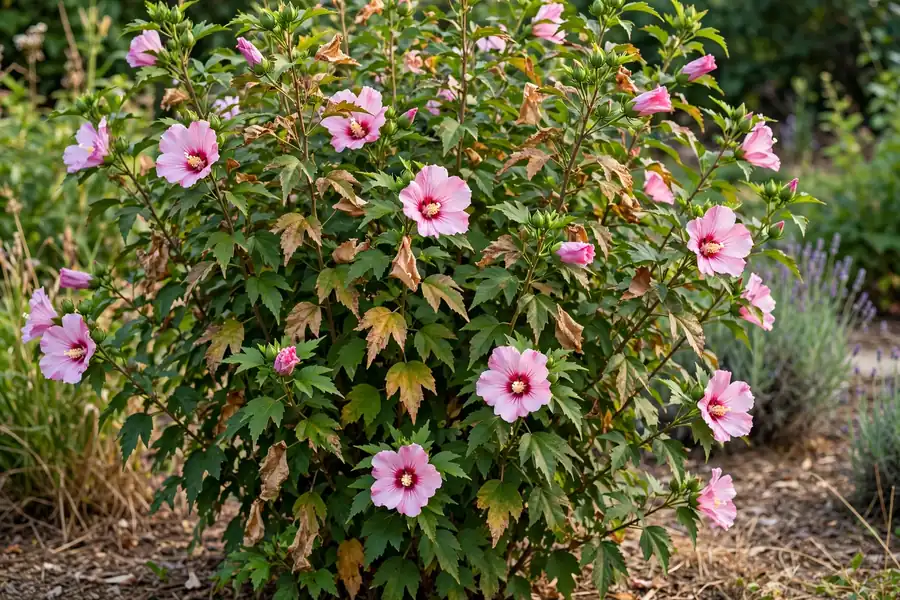
16. Rose of Sharon (Hibiscus syriacus)
Despite the biblical-sounding name, rose of Sharon is native to China and India and is the national flower of South Korea. This deciduous hibiscus carries large, tropical-looking blooms — white, pink, red, lavender, or blue, often with a contrasting eye — from midsummer into fall, exactly when most shrubs have finished. It grows 8–12 feet as a vase-shaped shrub, is hardy in zones 5–9, and shrugs off heat, drought, and urban conditions.
Plant in full sun with average well-drained soil; it flowers on new wood, so prune in late winter to shape and encourage bigger blooms. Deadhead if you want to limit self-seeding — older varieties seed prolifically — or choose sterile modern cultivars like the Chiffon and Satin series.
17. Rockrose (Cistus spp.)
Rockroses are the evergreen shrubs of Mediterranean hillsides, where their papery, crepe-like flowers — white or pink, often with a dark blotch at each petal’s base — open for a single day but in such numbers that the shrub glows for weeks in late spring. The resinous, aromatic foliage is gray-green and drought-proof. Most are hardy in zones 7–10, with Cistus × purpureus (orchid rockrose) among the showiest.
Recreate the Mediterranean: full sun, poor to average soil with excellent drainage, and no summer water once established — irrigation shortens their lives. Plant in spring from small containers; rockroses resent root disturbance, so avoid bare-root stock. Shear lightly after flowering to keep them compact, but never cut into old bare wood, which rarely resprouts.
18. Red Bottlebrush (Callistemon citrinus)
Native to Australia, red bottlebrush earns its name from stiff spikes of crimson stamens that look exactly like the tool — each “brush” a cluster of hundreds of tiny flowers. Blooming mainly in spring and summer, it is a hummingbird and bee magnet, and the narrow leaves release a lemon scent when crushed (hence citrinus). It grows 6–12 feet as an evergreen shrub, hardy in zones 8–11.
Full sun and well-drained soil suit it; it tolerates drought once established but flowers best with occasional deep watering. Prune lightly after flowering to shape — avoid hard cuts into old wood. In zone 8, plant against a warm wall for winter protection. The woody seed capsules that follow the flowers are ornamental in their own right and feed seed-eating birds.
19. Red Bird of Paradise (Caesalpinia pulcherrima)
Not to be confused with the bird-of-paradise flower (Strelitzia), this tropical shrub — also called Pride of Barbados, its national flower — carries flamboyant clusters of orange-red petals with long red stamens and a splash of yellow, blooming from summer into fall. Native to the tropical Americas, it grows 6–10 feet in frost-free climates (zones 9–11) and is a staple of desert and subtropical landscaping alike.
Plant in blazing full sun with well-drained soil; it is genuinely drought-tolerant and heat-proof once established. In zone 9 it may freeze to the ground in hard winters — cut back the dead top growth in spring and it usually resprouts from the roots. Wear gloves when pruning: the branches carry sharp thorns. In colder zones it makes a spectacular summer container plant brought indoors before frost.
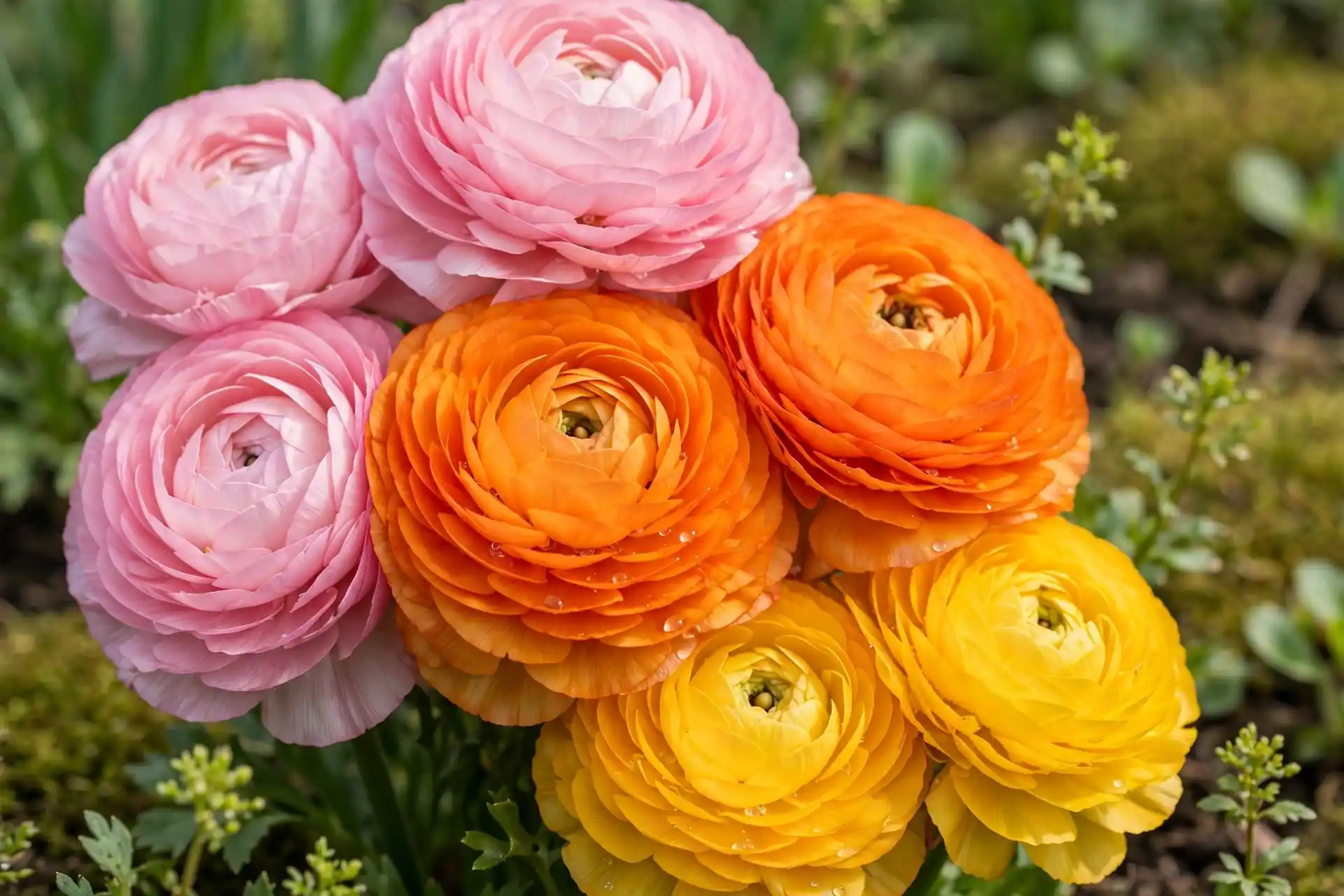
20. Ranunculus (Ranunculus asiaticus)
The Persian buttercup is the florist’s spring darling: layer upon layer of tissue-thin petals in saturated pinks, oranges, reds, yellows, and whites, on stems perfect for cutting. Native to the eastern Mediterranean and Southwest Asia, it grows from claw-like corms planted in fall, blooms through spring, then goes dormant as heat arrives. Hardy in zones 8–10; elsewhere it is grown as a cool-season annual.
Soak corms for a few hours before planting, claws down, in rich, well-drained soil in full sun. Keep them consistently moist while growing — drought aborts the buds — and feed lightly. In warm zones, mulch through winter; in cold zones, lift corms after the foliage yellows and store dry for fall replanting.
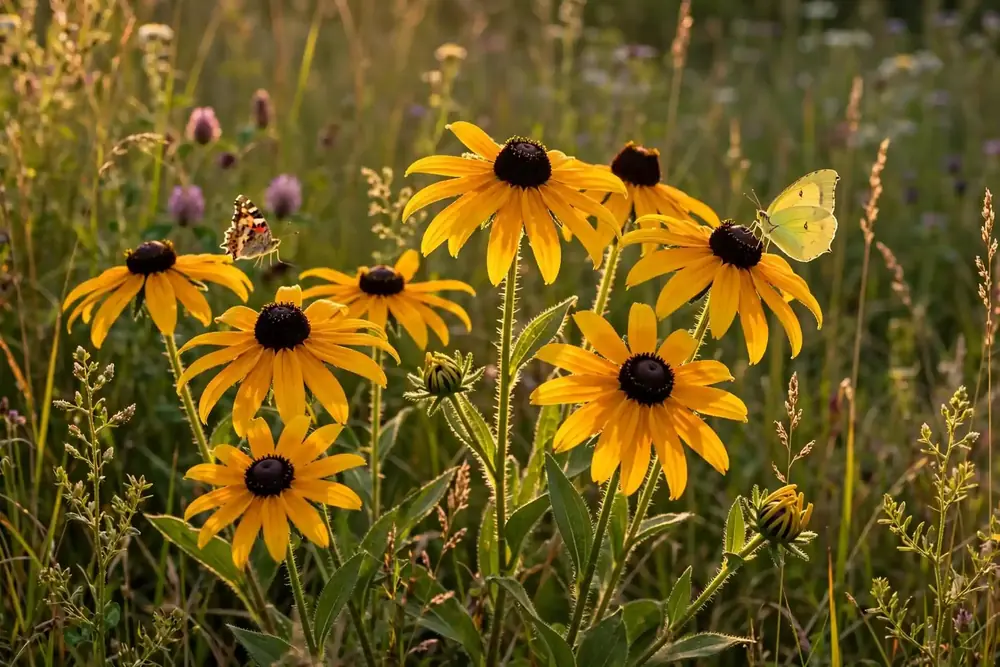
21. Rudbeckia (Rudbeckia hirta)
Black-eyed Susan is the cheerful workhorse of the North American native garden: golden-yellow rays around a dark chocolate cone, blooming from midsummer into fall on sturdy 2–3-foot stems. Technically a short-lived perennial often grown as a biennial, it self-sows freely enough to feel permanent. Hardy in zones 3–9, it feeds bees and butterflies in summer and goldfinches in fall, when the seed heads become a bird buffet.
Full sun and average soil are all it asks — it tolerates drought, clay, and neglect that kill fussier perennials. Deadhead for more blooms, or leave the seed heads standing for winter interest and wildlife. It pairs beautifully with ornamental grasses and purple coneflower, and for autumn container color that extends the season after rudbeckia fades, see our mum care guide.
22. Rose Campion (Silene coronaria)
From Europe and Asia comes one of the most striking foliage-and-flower combinations in the cottage garden: magenta, glowing blooms held above rosettes of silver-felted leaves. Rose campion (still sold as Lychnis coronaria) is a biennial or short-lived perennial that seeds itself around politely, so a single planting can persist for years. Hardy in zones 4–8, it blooms the second year from seed.
Give it full sun and average to poor, well-drained soil — rich ground makes it floppy. The felted leaves are the point even out of bloom, so site it where the silver shows against darker neighbors. Deadhead to prolong flowering or let it self-sow; seedlings transplant easily when small.
23. Red Valerian (Centranthus ruber)
A Mediterranean native that has naturalized across old walls and sunny banks worldwide, red valerian carries dense clusters of tiny crimson (also pink or white) flowers from early summer on, over blue-green foliage. It is famously tough — thriving in rubble, chalk, and drought where little else survives — and butterflies mob it. Hardy in zones 5–8, it reaches 2–3 feet in loose, airy clumps.
Plant in full sun with well-drained, even alkaline soil; it positively likes lime. Deadhead after the first flush for a second round of bloom, and cut back hard in midsummer if it gets leggy. It self-sows enthusiastically — charming in cottage gardens, so remove spent heads promptly if you want to contain it. Despite the name it is unrelated to medicinal valerian.
24. Rosy Periwinkle (Catharanthus roseus)
This Madagascar native is one of the most consequential plants on this list: from its leaves scientists derived vincristine and vinblastine, alkaloids that revolutionized chemotherapy for childhood leukemia and Hodgkin lymphoma. In the garden it is simply a superb heat-lover — glossy evergreen leaves and five-petaled pink, rose, or white flowers blooming nonstop from summer to frost. Hardy in zones 9–11; everywhere else it is grown as an annual.
Plant in full sun after all frost danger has passed, in well-drained soil — it despises wet feet and cool, soggy springs. Once warm, it needs little: occasional water and it blooms relentlessly. Note that all parts are toxic if eaten, despite the medicinal compounds — this is a look-but-don’t-taste plant, and worth keeping from pets. Space plants a foot apart; they fill in fast in heat.
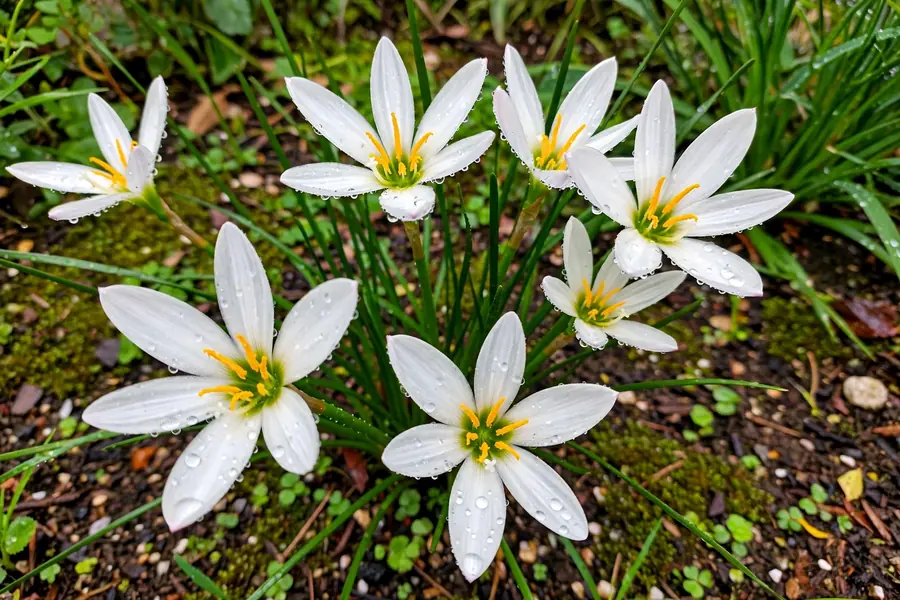
25. Rain Lily (Zephyranthes candida)
Native to the Río de la Plata region of South America, the rain lily does exactly what its name promises: after a summer rain, grass-like clumps suddenly push up white, crocus-like flowers on 6-inch stems, sometimes within days. The show is brief but magical, repeating with each soaking through summer and fall. Hardy in zones 7–10, it is a charming edging bulb for beds, rock gardens, and containers.
Plant bulbs 2 inches deep in full sun to part shade with well-drained soil, and water normally — the “rain” trigger works best on plants that are otherwise kept a little on the dry side. Clumps multiply steadily; divide every few years in early spring if flowering declines. Combine with red spider lily (entry 26) for a fall bulb sequence.
26. Red Spider Lily (Lycoris radiata)
One of fall’s great surprises, red spider lily sends up bare 18-inch stalks in September crowned with spidery crimson flowers — the strap-like leaves appear afterward and persist through winter, the reverse of normal bulb behavior. Native to China, Korea, Japan, and Nepal, it has naturalized across the American Southeast, where it is also called hurricane lily for its storm-season timing. Hardy in zones 6–10.
Plant bulbs in late summer with their necks at the soil surface, in full sun to part shade with good drainage, then leave them strictly alone — spider lilies resent disturbance and may sulk for a year after moving. They need a dry summer dormancy to set buds, so avoid irrigating the bed in July and August. All parts contain the toxic alkaloid lycorine; plant where pets will not dig.
27. Rattlesnake Plant (Goeppertia insignis)
A Brazilian rainforest native still widely sold under its old name Calathea lancifolia, the rattlesnake plant is grown for its long, wavy, lance-shaped leaves — pale green with dark-green blotches like a rattlesnake’s markings, and rich purple undersides. Like all prayer plants it folds its leaves upright at night. It is strictly tropical (zones 10–11 outdoors) and one of the most rewarding foliage houseplants when its needs are met.
Bright indirect light, consistent moisture, and humidity above 50 percent are the recipe; brown leaf edges almost always mean dry air or hard tap water — try filtered water and a humidifier or pebble tray. Keep it warm (above 60°F) and out of drafts. It is non-toxic to pets.
28. Rabbit’s Foot Fern (Davallia fejeensis)
From Fiji and the South Pacific, rabbit’s foot fern earns its common name from thick, furry, tan rhizomes that creep over the pot’s edge like little paws above finely divided green fronds. In nature it grows epiphytically on trees, so it is perfectly adapted to hanging baskets, where the rhizomes dangle decoratively. Hardy only in zones 10–11, it is an easy, long-lived houseplant.
Bright indirect light and humidity suit it — kitchens and bathrooms are ideal — and water when the top inch of soil dries. Never bury the furry rhizomes; they need air and light. It tolerates normal room humidity better than most ferns, which is why beginners succeed with it where maidenhairs fail.
29. Rose Moss (Portulaca grandiflora)
Native to Argentina, southern Brazil, and Uruguay, rose moss — also called moss rose — is the succulent annual for impossible spots: hot pavement edges, poor sandy soil, and blazing full sun. Its needle-like succulent leaves store water, and its satiny, rose-like blooms in neon pink, orange, yellow, red, and white open only in sunshine, closing on cloudy days. Hardy in zones 10–11; grown as an annual elsewhere.
Sow or transplant after frost into the poorest, sunniest spot you have — rich soil and shade produce leaves but few flowers. Water sparingly; it rots in soggy ground. Deadheading is unnecessary since the blooms are self-cleaning, and it often self-sows for next year. For containers, let it spill over edges where its trailing habit shows best.
30. Rhubarb (Rheum rhabarbarum)
Rhubarb is the vegetable that behaves like a fruit: huge, architectural leaves on thick stalks that are tart enough to demand sugar and a custard pairing. Native to Siberia and northern Asia, it needs real winter chill and is hardy in zones 3–8, where a single crown can produce for a decade or more. Modern cultivars like ‘Canada Red’ and ‘Victoria’ offer sweeter, redder stalks.
Plant crowns in early spring in full sun with deep, fertile, well-drained soil, buds just at the surface, and — critically — do not harvest the first year while the crown establishes. Thereafter, pull (don’t cut) the largest stalks from spring into early summer, and always remove flower heads to keep energy in the stalks. The leaves contain oxalic acid and are poisonous; only the stalks are eaten, and they should be cooked, not raw.
Growing Tips for R-Plants
Match the zone before you fall in love. The R-list spans zones 2 to 11, and the tropical headliners — royal palm, royal poinciana, rex begonia, rattlesnake plant, red bird of paradise — will not survive a frost. In cold climates, grow them in containers and overwinter indoors, or enjoy royal poinciana and red bird of paradise as summer container specimens. Conversely, red maple, red twig dogwood, and rhubarb demand winter chill and sulk in zone 10 heat.
Drainage decides more fates than fertilizer. Rosemary, rockrose, Russian sage, red valerian, rose campion, and rose moss all evolved in dry, lean ground and die in winter-wet soil long before cold gets them. When in doubt, plant high — mound the soil, use raised beds, or add grit. The succulents on this list want mineral, fast-draining mixes in pots with drainage holes.
Feed the acid-lovers correctly. Rhododendrons (and their azalea cousins) need acidic soil and fertilizers formulated for acid-loving plants; standard garden fertilizer plus alkaline soil equals yellow leaves. Roses, ranunculus, and rhubarb are the opposite camp — hungry plants that reward rich soil and regular feeding.
Prune on the plant’s schedule. Spring bloomers on old wood — redbud, red buckeye, rhododendron — get pruned right after flowering, if at all. Summer bloomers on new wood — roses, rose of Sharon — get cut back in late winter for bigger displays. Red twig dogwood is the special case: cut the oldest stems to the ground each spring to keep the winter color coming. Pruning a spring bloomer in fall removes next year’s flowers.
Plan for all four seasons. R-plants make this easy: redbud and rhododendron open spring, roses carry early summer, rose of Sharon blooms through heat, red spider lily surprises in fall, and red twig dogwood’s stems carry winter. For autumn container color after the summer perennials fade, our mum care guide pairs well with this list.
Which R-Plants Will You Grow?
Thirty plants, one letter — and the range is remarkable. Start indoors with a rubber plant or rex begonia if you are new to houseplants; plant a redbud or red maple if you want a tree that earns its keep for decades; sow rose moss or rudbeckia if you want color this season for almost no effort.
Keep exploring the alphabet with our guides to plants that start with A, plants that start with C, plants that start with N, and plants that start with P — or browse flowers that start with R if blooms are your main pursuit. Pick three R-plants that fit your light and zone, get them in the ground this season, and watch the letter R earn its keep. Happy planting!
Frequently Asked Questions
What are the most popular plants that start with R?
The most popular R-plants are rose, rubber plant, rosemary, rhododendron, royal palm, eastern redbud, red maple, Russian sage, rose of Sharon, ranunculus, rudbeckia (black-eyed Susan), and rhubarb. Together they cover houseplants, herbs, trees, shrubs, perennials, bulbs, and edibles, all widely available at nurseries.
Which plants starting with R are good for beginners?
Rubber plant, rhipsalis, rabbit’s foot fern, and rex begonia are forgiving houseplants; outdoors, rudbeckia, rose campion, red valerian, rose moss, and Knock Out-type shrub roses tolerate imperfect conditions; and rosemary and rhubarb are nearly indestructible once established. Match plants to your light and hardiness zone and most of this list is easy.
Which plants starting with R are safe for pets?
Pet-safe choices include rhipsalis, rattlesnake plant, rabbit’s foot fern, and (in normal garden contexts) the edibles like rosemary. Use caution with rubber plant (irritating sap), rhododendron, red buckeye seeds, red spider lily bulbs, rosy periwinkle, and rhubarb leaves — keep these from pets that chew plants.
What plants that start with R grow in shade?
Rhododendron is the classic shade shrub on this list and blooms best in part shade; red buckeye thrives as an understory tree; and indoors, rex begonia, rattlesnake plant, rabbit’s foot fern, and rhipsalis all prefer bright indirect light over direct sun. Eastern redbud also flowers well in part shade.
Can I grow rosemary indoors year-round?
Yes, with the right setup: a south-facing window giving at least six hours of sun (or a grow light), a terracotta pot with fast-draining cactus-style mix, and sparse watering — indoor rosemary dies from overwatering far more often than drought. Keep nights cool (60–65°F) and ensure good air circulation to prevent mildew.
Which plants starting with R are edible?
Rosemary flavors countless dishes; rhubarb stalks (cooked, never the leaves) make classic pies and crumbles; redbud flowers are edible with a tangy bite; rose hips and petals are used in teas and preserves; and rose moss’s cousin purslane is the edible one — not rose moss itself.