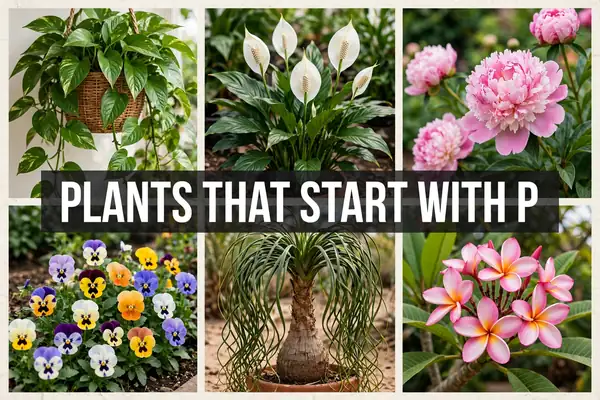
Plants that start with P: Names, Pictures and Useful Facts
Looking for plants that start with P? The letter P is one of the most generous letters in the gardening alphabet, covering everything from the pothos trailing over your bookshelf and the peace lily brightening a dark corner, to the peonies that anchor a spring border and the prickly pears of the desert Southwest. Whether you garden indoors or out, grow herbs, succulents, or shade perennials, this guide covers 35 real plants that start with P — each with its scientific name, a vivid description, and practical growing advice you can actually use. If blooms are your main goal, see also our companion guide to flowers that start with P.
Every entry below lists the plant’s botanical name, bloom season, light needs, water needs, and USDA hardiness zone, so you can tell at a glance which P-plants fit your home or garden. You will also find two comparison tables, practical growing tips, and answers to the questions gardeners ask most about plants starting with P.
Quick Answer
Popular plants that start with P include Pothos, Peace Lily, Heartleaf Philodendron, Peony, Prayer Plant, Chinese Money Plant, Ponytail Palm, Parlor Palm, Pansy, Petunia, Garden Phlox, and Purple Coneflower. They span tropical houseplants, desert succulents, fragrant vines, spring perennials, and cool-season annuals — covering USDA zones 3–12, so there is a P-plant for nearly every garden and every windowsill.
Table of Contents
P-Plants at a Glance
Use this table to compare all 35 plants that start with P side by side, from botanical names to native regions.
| Plant name | Scientific name | Type | Light | Native region |
|---|---|---|---|---|
| Pothos | Epipremnum aureum | Trailing tropical houseplant | Bright indirect; tolerates low | Mo’orea, French Polynesia |
| Peace Lily | Spathiphyllum wallisii | Tropical flowering houseplant | Medium to bright indirect | Colombia, Venezuela |
| Heartleaf Philodendron | Philodendron hederaceum | Vining tropical houseplant | Bright indirect; tolerates low | Caribbean, Central & South America |
| Prayer Plant | Maranta leuconeura | Tropical foliage houseplant | Bright indirect | Brazilian rainforest |
| Chinese Money Plant | Pilea peperomioides | Compact tropical houseplant | Bright indirect | Yunnan Province, China |
| Ponytail Palm | Beaucarnea recurvata | Succulent caudex plant | Full sun to bright indirect | Eastern Mexico |
| Parlor Palm | Chamaedorea elegans | Small palm houseplant | Low to bright indirect | Mexico, Guatemala |
| Pygmy Date Palm | Phoenix roebelenii | Dwarf ornamental palm | Full sun to part shade | Southeast Asia |
| Pinstripe Calathea | Goeppertia ornata | Tropical foliage houseplant | Bright indirect | Colombia, Venezuela |
| Polka Dot Plant | Hypoestes phyllostachya | Colorful foliage houseplant | Bright indirect | Madagascar |
| Watermelon Peperomia | Peperomia argyreia | Compact foliage houseplant | Bright indirect | Northern South America (Brazil) |
| Prickly Pear | Opuntia humifusa | Cold-hardy cactus | Full sun | Eastern & central North America |
| String of Pearls | Curio rowleyanus | Trailing succulent | Bright indirect to some sun | Southwest South Africa |
| Panda Plant | Kalanchoe tomentosa | Fuzzy succulent | Bright light | Madagascar |
| Pencil Cactus | Euphorbia tirucalli | Succulent shrub | Full sun | Tropical & southern Africa |
| Pink Quill | Tillandsia cyanea | Bromeliad (epiphyte) | Bright indirect | Ecuador |
| Persian Shield | Strobilanthes dyerianus | Tropical foliage plant | Bright indirect to part shade | Myanmar |
| Poinsettia | Euphorbia pulcherrima | Holiday flowering houseplant | Bright indirect | Mexico, Central America |
| Plumeria | Plumeria rubra | Tropical flowering tree | Full sun | Mexico, Central America, Caribbean |
| Princess Flower | Tibouchina urvilleana | Tropical flowering shrub | Full sun | Brazil |
| Passionflower | Passiflora incarnata | Hardy flowering vine | Full sun | Southeastern United States |
| Pink Jasmine | Jasminum polyanthum | Fragrant flowering vine | Full sun to part shade | China, Myanmar |
| King Protea | Protea cynaroides | Evergreen flowering shrub | Full sun | South Africa (Cape region) |
| Peony | Paeonia lactiflora hybrids | Herbaceous perennial | Full sun | Asia (China, Siberia, Japan) |
| Garden Phlox | Phlox paniculata | Herbaceous perennial | Full sun to part shade | Eastern United States |
| Creeping Phlox | Phlox subulata | Evergreen groundcover | Full sun | Eastern & central United States |
| Purple Coneflower | Echinacea purpurea | Herbaceous perennial | Full sun | Central & eastern United States |
| Penstemon | Penstemon digitalis | Herbaceous perennial | Full sun | Eastern & central United States |
| Primrose | Primula vulgaris | Shade perennial | Part shade | Europe, western Asia |
| Pincushion Flower | Scabiosa columbaria | Herbaceous perennial | Full sun | Europe, Asia, Africa |
| Oriental Poppy | Papaver orientale | Herbaceous perennial | Full sun | Caucasus, Turkey, Iran |
| Persian Buttercup | Ranunculus asiaticus | Tuberous cool-season perennial | Full sun | Eastern Mediterranean |
| Pansy | Viola × wittrockiana | Cool-season annual / biennial | Full sun to part shade | Hybrid (European breeding) |
| Petunia | Petunia × atkinsiana | Tender annual | Full sun | Hybrid (South American parentage) |
| Pot Marigold | Calendula officinalis | Cool-season annual | Full sun to part shade | Southern Europe |
Bloom Season, Water Needs & Hardiness Zones
Planning your garden calendar? This second table shows when each P-plant blooms, how much water it wants, and the USDA zones where it grows outdoors year-round.
| Plant name | Bloom season | Water needs | Hardiness zone | Mature size |
|---|---|---|---|---|
| Pothos | Rarely blooms indoors | Low to average; let dry between waterings | Houseplant (10–12 outdoors) | Trails 6–10 ft indoors |
| Peace Lily | Spring; sporadic year-round indoors | Average; keep evenly moist | Houseplant (10–12 outdoors) | 1–4 ft tall |
| Heartleaf Philodendron | Rarely blooms indoors | Low to average; let dry between waterings | Houseplant (10–12 outdoors) | Vines 6+ ft indoors |
| Prayer Plant | Spring (small white flowers) | Average; needs humidity | Houseplant (10–12 outdoors) | 10–12 in tall, spreading |
| Chinese Money Plant | Rarely blooms indoors | Average; let top inch dry | Houseplant (9–11 outdoors) | About 12 in tall and wide |
| Ponytail Palm | Rarely blooms indoors | Low; drought tolerant | Houseplant (9–11 outdoors) | 3–4 ft indoors; 30 ft in the wild |
| Parlor Palm | Rarely blooms indoors | Average; avoid soggy soil | Houseplant (10–12 outdoors) | 2–6 ft tall |
| Pygmy Date Palm | Spring (small, inconspicuous) | Average; regular deep watering | 9–11 | 6–10 ft tall |
| Pinstripe Calathea | Rarely blooms indoors | Average; high humidity essential | Houseplant (10–12 outdoors) | About 2 ft tall |
| Polka Dot Plant | Summer (small lilac spikes) | Average; keep evenly moist | Houseplant (10–12 outdoors) | 1–3 ft tall |
| Watermelon Peperomia | Summer (greenish spikes) | Low to average; let dry between waterings | Houseplant (10–12 outdoors) | 6–8 in tall |
| Prickly Pear | Late spring to summer (yellow) | Low; very drought tolerant | 4–9 | 6–12 in tall, spreading clumps |
| String of Pearls | Winter to spring (fragrant white) | Low; drought tolerant succulent | Houseplant (9–12 outdoors) | Trails 2–3 ft |
| Panda Plant | Rarely blooms indoors | Low; drought tolerant succulent | Houseplant (9–11 outdoors) | 1–2 ft tall |
| Pencil Cactus | Rarely (insignificant) | Low; very drought tolerant | 10–12 | 2–6 ft indoors; 30 ft outdoors |
| Pink Quill | Spring (pink bracts, violet flowers) | Average; mist or soak regularly | Houseplant (10–12 outdoors) | 8–10 in tall |
| Persian Shield | Summer (pale blue; usually pinched off) | Average; keep evenly moist | 10–12 (annual elsewhere) | 3–4 ft tall |
| Poinsettia | Winter (colorful bracts) | Average; never let sit in water | 9–11 | 1–3 ft indoors |
| Plumeria | Summer to fall (fragrant) | Low to average; dry winter rest | 10–12 | 15–25 ft tall |
| Princess Flower | Summer to fall (royal purple) | Average; regular watering | 9–11 | 10–15 ft tall |
| Passionflower | Summer (exotic purple-white) | Average | 5–9 (species P. incarnata) | Vines 10–20 ft |
| Pink Jasmine | Late winter to spring (intensely fragrant) | Average | 8–11 | Vines 10–20 ft |
| King Protea | Spring to summer (giant blooms) | Low; extremely drought tolerant | 9–11 | 3–5 ft tall and wide |
| Peony | Late spring to early summer | Average; deep weekly watering | 3–8 | 2–3 ft tall and wide |
| Garden Phlox | Summer | Average to regular; mulch well | 4–8 | 2–4 ft tall |
| Creeping Phlox | Spring (carpet of color) | Low to average; drought tolerant | 3–9 | 6 in tall, 2 ft spread |
| Purple Coneflower | Summer | Low to average; drought tolerant | 3–9 | 2–4 ft tall |
| Penstemon | Late spring to summer | Low to average; hates wet feet | 3–8 | 2–3 ft tall |
| Primrose | Early spring | Average to moist; never dry out | 4–8 | 6–9 in tall |
| Pincushion Flower | Summer | Average | 3–8 | 1–2 ft tall |
| Oriental Poppy | Late spring to early summer | Average; dry summer dormancy | 3–7 | 2–3 ft tall |
| Persian Buttercup | Spring (cool season) | Average; consistent moisture | 8–11 (grown as annual elsewhere) | 1–2 ft tall |
| Pansy | Fall to spring (cool season) | Average; keep evenly moist | Grown as annual | 6–9 in tall |
| Petunia | Summer to frost | Average; containers need daily watering | Grown as annual | 6–18 in tall, spreading |
| Pot Marigold | Spring to fall | Average | Grown as annual | 1–2 ft tall |
35 Plants That Start With P: The Complete List
Here is the full rundown of P-plants, from living-room classics to garden showstoppers, with real growing advice for each one.
1. Pothos (Epipremnum aureum)
The pothos is the world’s most forgiving houseplant — a trailing vine of heart-shaped green leaves, often splashed with gold or cream variegation, that survives low light, missed waterings, and total beginner neglect. Native to the island of Mo’orea in French Polynesia, where it climbs trees as a giant, it is perfectly happy cascading from a hanging basket in your living room, and it roots effortlessly in water.
Give pothos bright indirect light for the best variegation, though it tolerates surprisingly dim corners (leaves just turn greener). Water when the top 1–2 inches of soil are dry; overwatering is the one reliable killer. It is hardy outdoors only in zones 10–12, where it can become invasive — never plant it outside in warm climates. Keep it away from cats and dogs: the leaves contain calcium oxalate crystals that irritate mouths and stomachs if chewed. Small cuttings also root happily in closed terrariums — see our picks for the best terrarium plants.
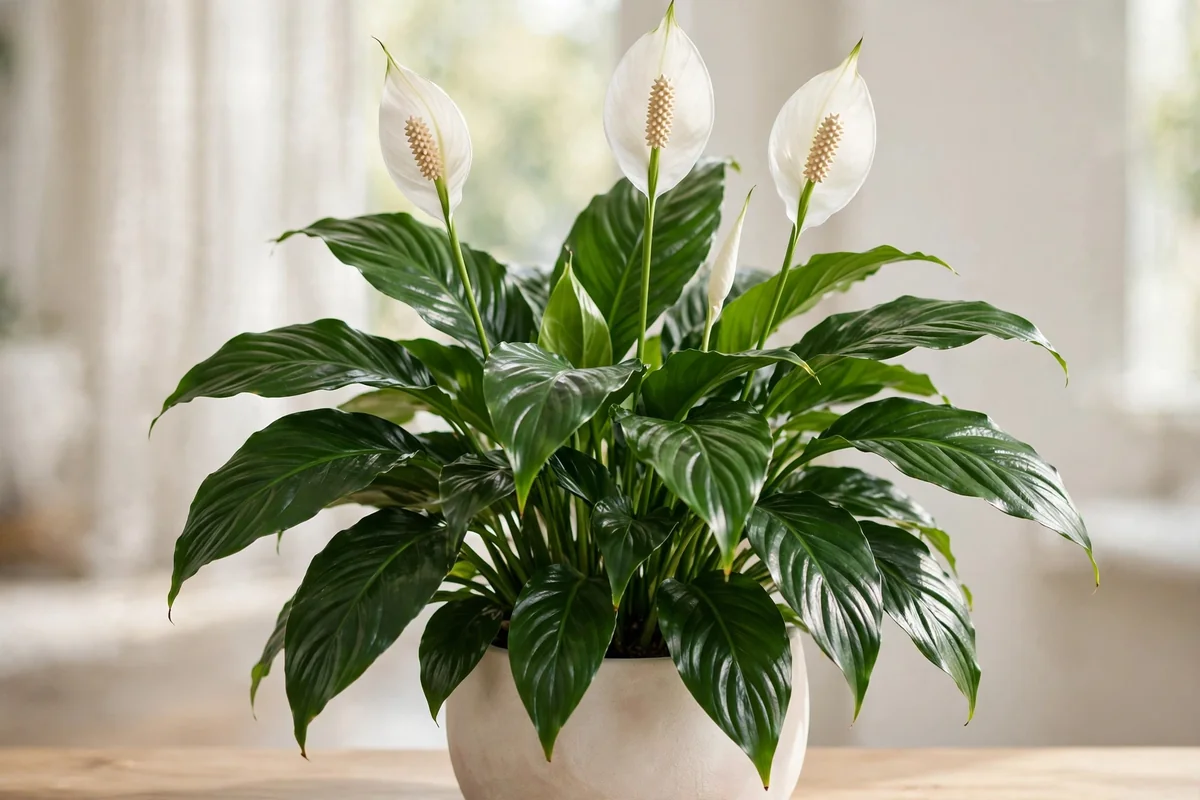
2. Peace Lily (Spathiphyllum wallisii)
The peace lily is the elegant bloomer of the houseplant world: glossy, deep-green leaves topped with sculptural white “flowers” that are actually modified leaves called spathes wrapped around a central spadix. Unlike most flowering houseplants, it blooms in relatively low light, which is why it has graced offices, lobbies, and dim apartments for decades.
Grow peace lilies in medium to bright indirect light; too little light means lush leaves but no flowers. Keep the soil evenly moist but never soggy, and feed lightly once a month in spring and summer to encourage blooms. Wipe the broad leaves occasionally to keep them dust-free. It is hardy outdoors in zones 10–12 only. Like pothos, it is toxic to pets if chewed, so keep it out of reach of curious cats.
3. Heartleaf Philodendron (Philodendron hederaceum)
The heartleaf philodendron is pothos’s close cousin and nearly its equal in toughness: a vining tropical with perfectly heart-shaped, glossy green leaves on slender stems that trail beautifully from shelves or climb when given support. Native to the Caribbean and the rainforests of Central and South America, it adapts to almost any indoor condition and asks for almost nothing in return.
Care is nearly identical to pothos: bright indirect light is ideal, but it tolerates low light; water when the top couple of inches dry out. Prune leggy vines to encourage bushier growth, and root the cuttings in water for free new plants. Do not confuse it with the much larger split-leaf varieties — this is the classic small-leaf trailer. Toxic to pets if ingested, so hang it high if you share your home with a plant-chewing cat.
4. Prayer Plant (Maranta leuconeura)
The prayer plant earns its common name from a charming nightly ritual: its oval, patterned leaves fold upward at dusk like hands in prayer, then flatten again by morning. The leaves themselves are little artworks — deep green with herringbone-patterned veins in red or lime. Native to the Brazilian rainforest floor, it is one of the few showy houseplants considered non-toxic to cats and dogs.
Prayer plants want bright indirect light, consistent moisture, and humidity — the classic trio that makes them slightly fussier than pothos. Never let the soil dry out completely, and mist regularly or run a humidifier nearby, since dry air browns the leaf edges. They dislike cold drafts and fluoride-heavy tap water; rainwater or filtered water keeps the foliage happiest. Keep it warm (above 60°F) and it will reward you with years of living, moving foliage.
5. Chinese Money Plant (Pilea peperomioides)
The Chinese money plant is the houseplant world’s great comeback story: discovered in China’s Yunnan Province, carried to Norway by a missionary in the 1940s, and passed hand-to-hand among plant lovers for decades before nurseries caught on. Its perfectly round, coin-shaped leaves on long petioles look like a mobile of tiny lily pads, and it constantly produces baby offsets — the “pass-it-on plant” that built its fame through sharing.
Give it bright indirect light and rotate the pot weekly, since the leaves lean strongly toward the light. Water when the top inch of soil dries out; it tolerates a missed watering better than a soggy pot. Remove the offsets when they are a couple of inches tall, pot them up, and share them — that is the whole point of this plant. Hardy outdoors in zones 9–11, but almost everyone grows it as an indoor treasure.
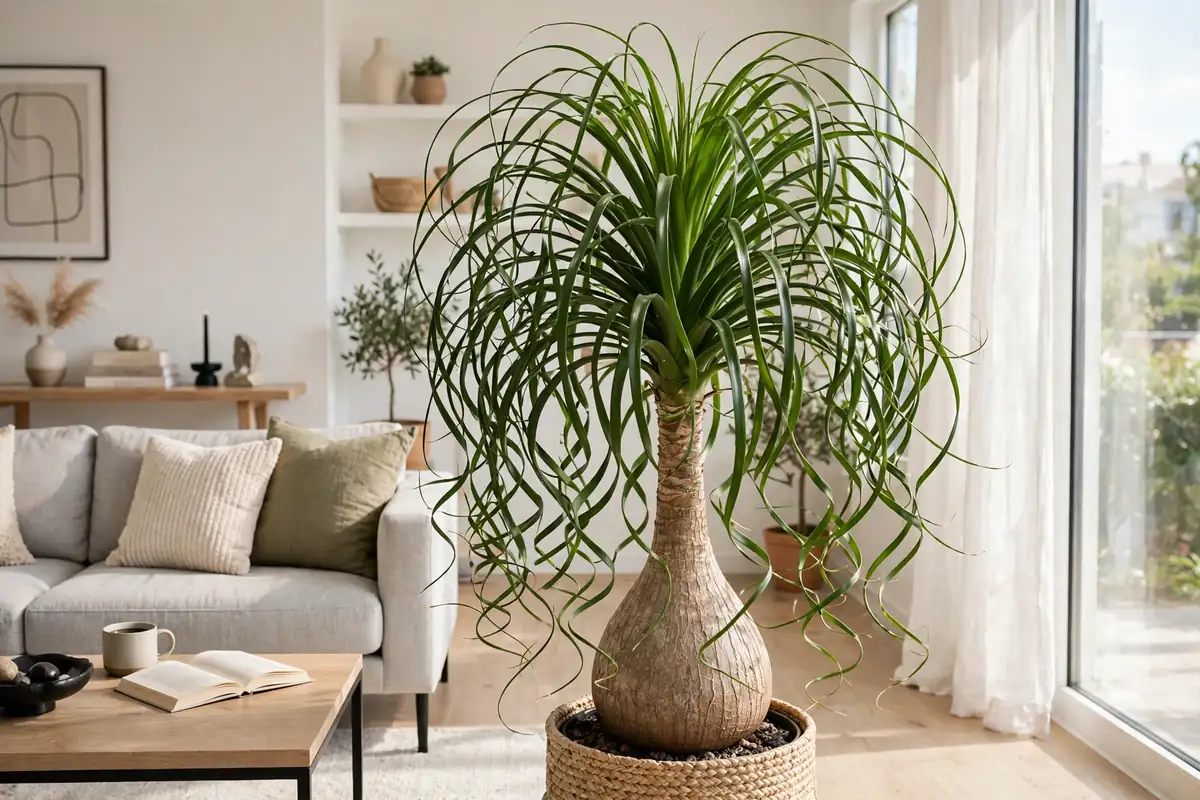
6. Ponytail Palm (Beaucarnea recurvata)
Despite its name, the ponytail palm is neither a palm nor particularly palmy — it is a succulent from eastern Mexico with a massively swollen, water-storing trunk base (the caudex) topped by a fountain of long, curly, grass-like leaves. That bottle-shaped base stores months of water, making the ponytail palm one of the most drought-tolerant houseplants you can own.
Treat it like a succulent, not a tropical: give it the brightest light you have and water deeply but infrequently, letting the soil dry out completely between waterings. In winter, water barely at all. The swollen base rots fast in soggy soil, so use a cactus mix and a pot with drainage. It is hardy outdoors in zones 9–11, where over many decades it can reach 30 feet. Bonus: it is non-toxic to cats and dogs.
7. Parlor Palm (Chamaedorea elegans)
The parlor palm has been the classic indoor palm since Victorian times, when it graced drawing rooms that received almost no natural light. This slow-growing Mexican and Guatemalan native produces graceful, feathery fronds on slender stems, staying a manageable 2–6 feet indoors for many years. It is one of the very few palms that genuinely thrives in low light, and it is non-toxic to pets.
Plant parlor palms in well-draining potting mix and water when the top inch feels dry; they dislike both soggy soil and complete drought. Low to medium indirect light is ideal — direct sun scorches the fronds. They appreciate occasional misting and a monthly feeding in the growing season. Outdoors it is hardy in zones 10–12. Be patient: this is a slow grower, so buy the size you want rather than waiting for it to fill out.
8. Pygmy Date Palm (Phoenix roebelenii)
The pygmy date palm is the palm for small spaces: a true date palm in miniature, with a slender, gracefully curved trunk and a crown of soft, feathery fronds, topping out at just 6–10 feet. Native to Southeast Asia, it is one of the most popular landscape palms in warm climates and a striking container plant everywhere else — equally at home flanking a front door or anchoring a patio corner.
Plant pygmy date palms in full sun to part shade in zones 9–11, in rich, well-drained soil. Water deeply and regularly, especially while establishing; they are thirstier than many palms. Watch for potassium and magnesium deficiencies (yellowing fronds), which a palm-specific fertilizer prevents. The leaf bases carry sharp spines, so wear gloves when pruning old fronds.
9. Pinstripe Calathea (Goeppertia ornata)
The pinstripe calathea looks hand-painted: large oval leaves in deep green striped with thin, precise pinkish-white lines, like pinstripes on a fine suit, with rich burgundy undersides. Native to the rainforests of Colombia and Venezuela, it is one of the most photogenic foliage plants ever sold. Like its prayer-plant relatives, it folds its leaves upward at night.
This is a plant for attentive owners: bright indirect light, consistently moist (never soggy) soil, and humidity above 50% — a humidifier or pebble tray is almost mandatory in dry homes. Brown, crispy leaf edges are the classic complaint and almost always mean dry air or hard tap water; use filtered or rainwater. It is hardy outdoors only in zones 10–12. Non-toxic to pets, which is some consolation for the extra effort.
10. Polka Dot Plant (Hypoestes phyllostachya)
The polka dot plant is pure confetti: soft green leaves splattered with spots of pink, red, or white, like an artist flicked a paintbrush across them. Native to Madagascar, it is grown as a cheerful houseplant or a shade-bedding annual, and it stays compact and bushy with regular pinching. Few plants deliver this much color from foliage alone, and it is non-toxic to cats and dogs.
Give polka dot plants bright indirect light — too little light fades the spots back to plain green. Keep the soil evenly moist and pinch the stem tips regularly; left alone, it grows leggy and tries to flower. Outdoors it is hardy in zones 10–12 and works beautifully as a summer bedding plant in part shade.
11. Watermelon Peperomia (Peperomia argyreia)
The watermelon peperomia is named perfectly: its round, fleshy leaves are striped in alternating bands of dark and silvery green, exactly like a watermelon rind. This compact Brazilian native stays under 8 inches tall, making it ideal for desks, small shelves, and terrariums — a jewel-box plant that draws the eye from across the room. Like most peperomias, it stores water in its thick leaves and forgives forgetful watering.
Grow it in bright indirect light in a small pot with well-draining mix; peperomias have modest root systems and hate oversized pots. Water when the top couple of inches dry out, and avoid getting water trapped in the leaf crowns. It is hardy outdoors only in zones 10–12, and it is considered non-toxic to pets.
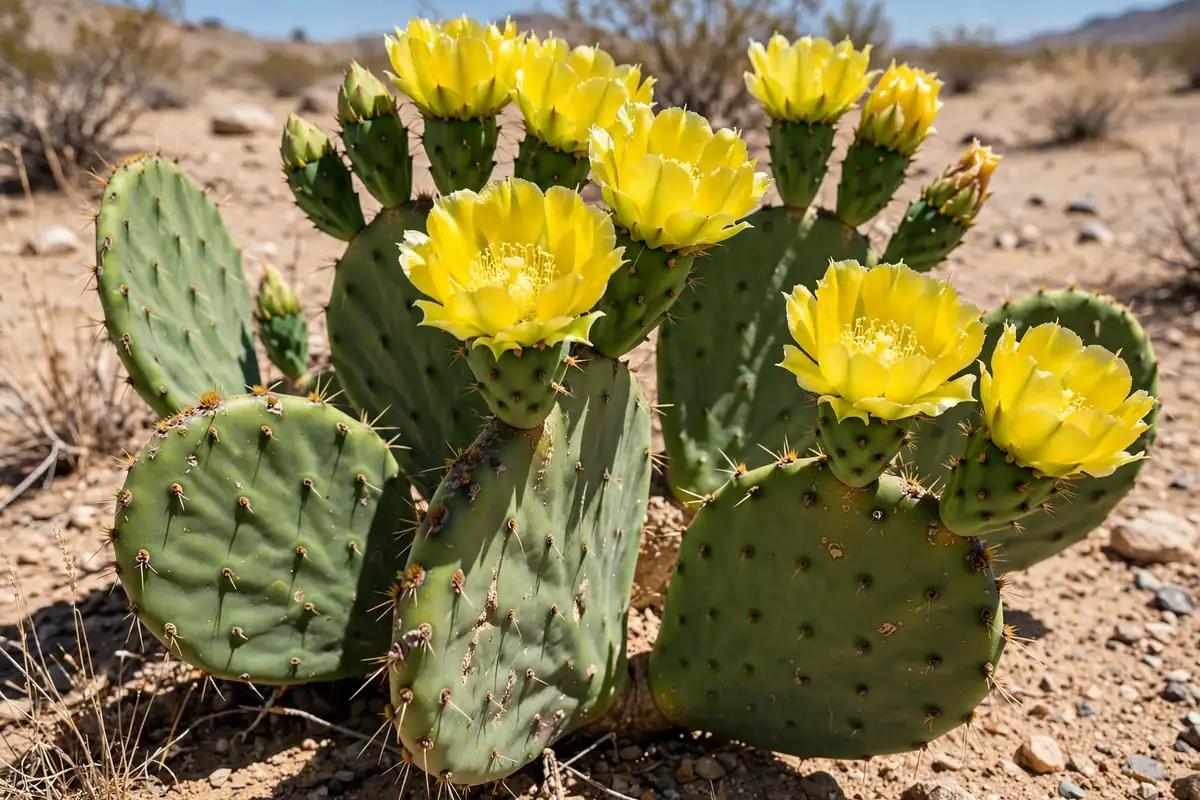
12. Prickly Pear (Opuntia humifusa)
The prickly pear proves cacti are not just for deserts: this is the cold-hardy cactus of eastern North America, with flat, paddle-shaped pads that survive winters down to zone 4. In late spring it produces spectacular waxy yellow (sometimes red-centered) flowers, followed by edible reddish fruits called tunas. Native Americans and early settlers ate both the pads (nopales) and the fruits, and it remains a foraging favorite.
Plant prickly pear in full blazing sun in the leanest, grittiest, best-drained soil you have — wet winter soil kills more plants than cold does. Water established plants only in prolonged drought. Handle with thick gloves and tongs: the tiny hair-like glochids detach at a touch and itch fiercely.
13. String of Pearls (Curio rowleyanus)
String of pearls is the succulent that launched a thousand hanging baskets: impossibly slender stems strung with perfectly round, pea-like leaves that cascade 2–3 feet over the edge of a pot. Native to the dry regions of southwest South Africa, where the bead-leaves store water against drought, it is a sculptural trailer — and mature plants occasionally produce small white flowers with a surprising cinnamon scent.
Give it bright indirect light with a little direct morning sun; the crown of the plant must see light or the top beads shrivel. Water thoroughly only when the soil is completely dry and the beads start to soften slightly — overwatering rots the shallow roots fast. Use a gritty succulent mix and a shallow pot. Hardy outdoors in zones 9–12. Note: it is toxic to pets, so hang it well out of reach.
14. Panda Plant (Kalanchoe tomentosa)
The panda plant is the succulent you cannot resist touching: thick, spoon-shaped leaves in blue-green felted with silvery hairs, each edged with chocolate-brown spots like a panda’s markings. Native to Madagascar, it stays a compact 1–2 feet on sunny windowsills and asks for almost nothing.
Grow panda plants in the brightest light you have indoors, in gritty cactus mix. Water deeply but rarely, letting the soil dry out fully between waterings, and keep water off the fuzzy leaves to avoid rot spots. It is hardy outdoors in zones 9–11. Like many kalanchoes, it is toxic to pets if chewed in quantity, so keep it on a high shelf if your cat samples the greenery.
15. Pencil Cactus (Euphorbia tirucalli)
The pencil cactus looks like a bundle of green pencils: a succulent shrub of smooth, cylindrical, finger-thick stems with almost no leaves, forming an architectural, almost coral-like structure. Native to tropical and southern Africa, it is a dramatic large houseplant (or a 30-foot tree outdoors in zones 10–12) that thrives on the same neglect as a cactus. The firestick cultivar turns brilliant orange-red in sun and drought.
Give it full sun and extremely well-drained soil, and water only when completely dry — established outdoor plants need almost no supplemental water. Handle with serious caution: the milky latex sap is a skin irritant and can cause temporary blindness if it gets in eyes, so wear gloves and eye protection when pruning.
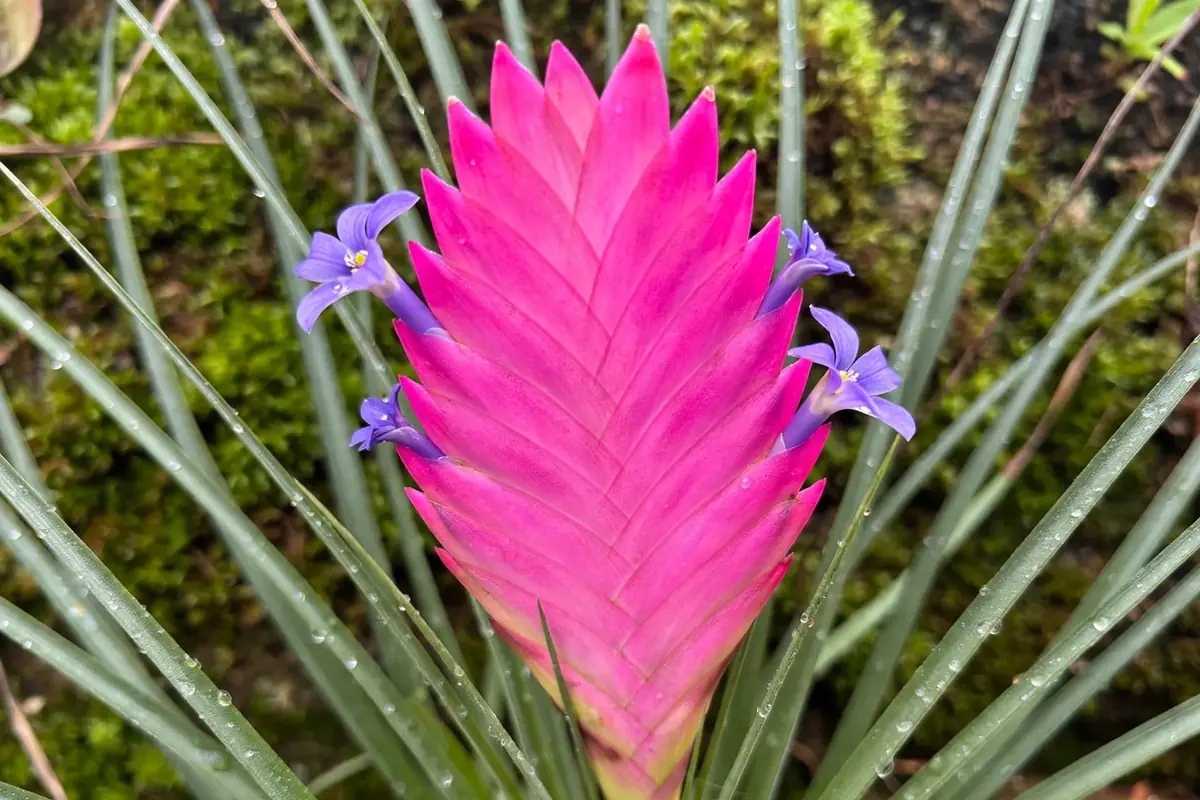
16. Pink Quill (Tillandsia cyanea)
The pink quill is the bromeliad that flowers like a feather: a flattened, paddle-shaped spike in vivid pink from which small violet-blue flowers emerge one after another for months. Native to the rainforests of Ecuador, where it grows as an epiphyte on trees, it needs no soil at all — just bright indirect light, regular misting, and something to perch on.
Mount pink quill on bark or driftwood, or pot it in loose orchid bark — never in regular soil. Mist 2–3 times a week or soak briefly, then let it dry; the central cup should hold a little water but never go stagnant. After flowering, the mother plant slowly declines but produces offsets (“pups”) at its base — separate them when they are a third of the parent’s size. Hardy outdoors in zones 10–12 in humid, shaded spots.
17. Persian Shield (Strobilanthes dyerianus)
Persian shield has the most unreal foliage in the plant kingdom: large, lance-shaped leaves in shimmering iridescent purple with dark green veins and a silvery sheen, looking almost metallic in the right light. Native to Myanmar, it is grown as a tropical shrub in zones 10–12 and as a spectacular summer annual everywhere else.
The secret to the most intense purple is bright indirect light or morning sun; in deep shade the leaves fade toward green. Keep the soil evenly moist and pinch young plants to encourage bushy growth — unpinched stems get leggy. It may produce small pale-blue flowers in late season; pinch them off to keep the energy in the foliage. Overwinter cuttings indoors before frost if you want to keep a favorite plant going.
18. Poinsettia (Euphorbia pulcherrima)
The poinsettia is the undisputed star of the holiday season: a Mexican native whose upper leaves turn brilliant red (or pink, white, marbled, or burgundy in modern cultivars) in response to shortening days. Those colorful parts are bracts, not flowers — the true flowers are the tiny yellow nubs in the center. With proper care it is not a throwaway decoration but a perennial shrub that can rebloom for years.
Keep poinsettias in bright indirect light, water when the top inch dries, and never let the pot sit in water — the foil wrapper is the number-one killer. To rebloom it, give the plant 14 hours of uninterrupted darkness nightly for 8–10 weeks starting in fall. Hardy outdoors in zones 9–11, where it becomes a large shrub.
19. Plumeria (Plumeria rubra)
Plumeria — the frangipani of Hawaiian leis — is the tropical tree with the world’s most intoxicating flowers: waxy, five-petaled blooms in white, yellow, pink, and rainbow blends, with a sweet perfume that carries across the garden on warm evenings. Native to Mexico, Central America, and the Caribbean, it is a small deciduous tree 15–25 feet tall.
Plumerias demand full sun and heat — they sulk in cool summers. Plant in very well-drained soil in zones 10–12, water regularly in the growing season, and keep nearly dry in winter when dormant and leafless. In colder climates, grow in a large pot and overwinter the bare plant indoors in a cool, dark spot. Propagate from cuttings in spring; they root readily and bloom within a couple of years.
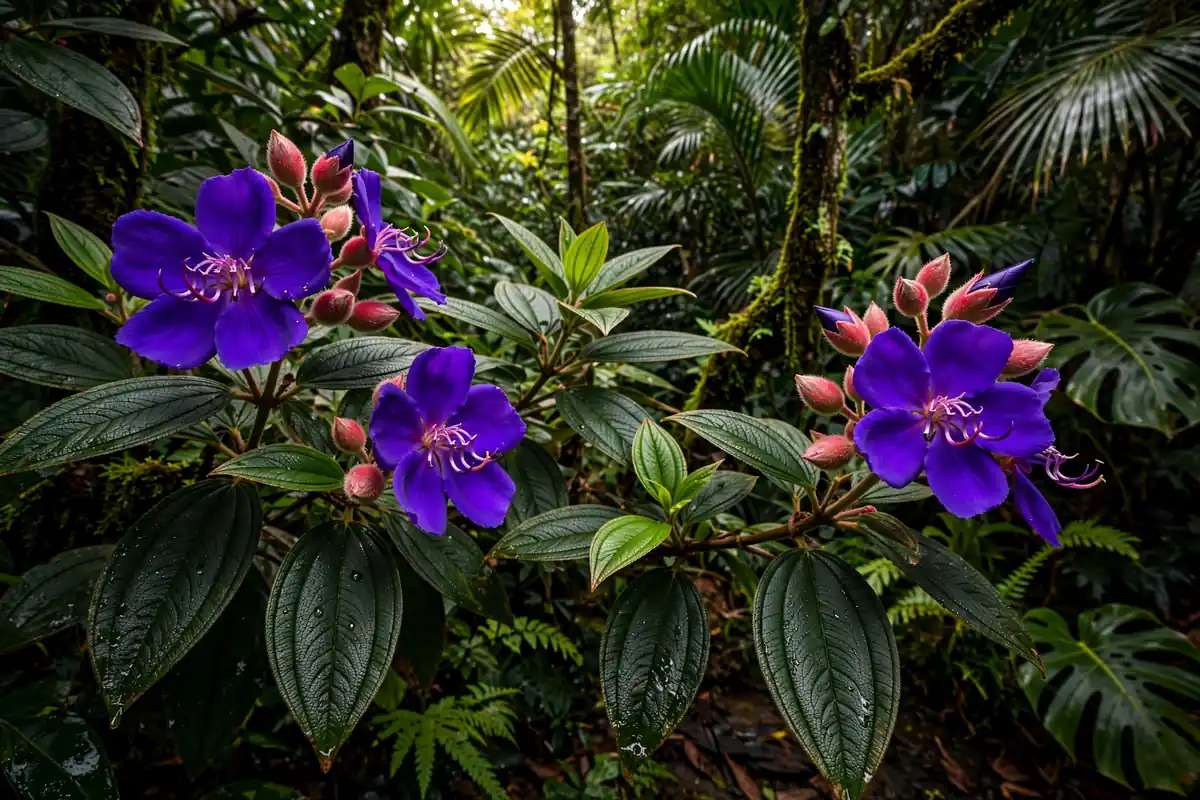
20. Princess Flower (Tibouchina urvilleana)
The princess flower wears royal purple like no other shrub: huge, velvety, 3–4 inch blooms in the richest violet-purple, opening over many months against dark green, softly hairy leaves with prominent veins. Native to Brazil, it grows as a sprawling 10–15 foot shrub in zones 9–11 and as a spectacular container plant elsewhere.
Give princess flower full sun for the heaviest bloom, in rich, well-drained, slightly acidic soil. Water regularly — it wilts fast in drought — and feed monthly in the growing season. Prune after flowering to control its sprawling habit; it blooms on new growth, so a hard spring cutback means more flowers. In frost zones, overwinter a large pot indoors in bright light.
21. Passionflower (Passiflora incarnata)
The hardy passionflower is the vine that looks designed by aliens: intricate 3-inch flowers with fringed purple-and-white coronas, followed by egg-sized edible fruits called maypops. This southeastern US native dies back to the ground each winter and roars back in spring, climbing 10–20 feet over trellises and fences in a single season.
Plant passionflower in full sun in zones 5–9, in average well-drained soil — it is tougher than it looks and tolerates poor soil and drought once established. Give it a sturdy trellis and be ready to manage its enthusiastic spreading by suckers; site it where it can roam. The fruits ripen in fall and make excellent jelly. Note that tropical passionflower species are far less hardy, so check the species if you garden north of zone 8.
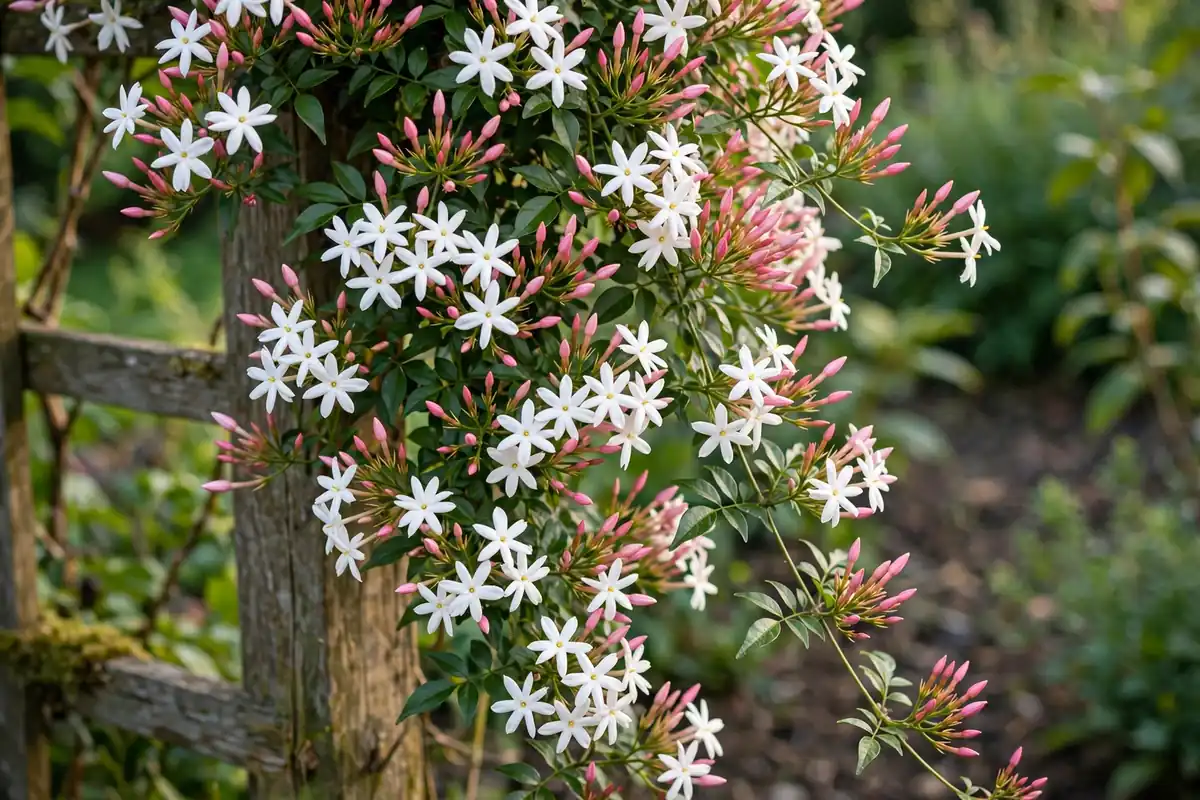
22. Pink Jasmine (Jasminum polyanthum)
Pink jasmine is the houseplant that perfumes an entire home: a vigorous twining vine whose clusters of pink buds open into intensely fragrant white star-flowers in late winter and spring. Native to China and Myanmar, it is most often grown as a seasonal indoor plant or a landscape vine in zones 8–11.
Grow pink jasmine in bright light (a cool, sunny window is ideal for indoor bloom) and keep the soil evenly moist. After flowering, prune hard — it blooms on the previous season’s growth, so shape it right after the show. Outdoors in zones 8–11, give it a trellis in full sun to part shade; it can reach 10–20 feet. A cool winter rest (around 50–55°F) encourages the heaviest flowering.
23. King Protea (Protea cynaroides)
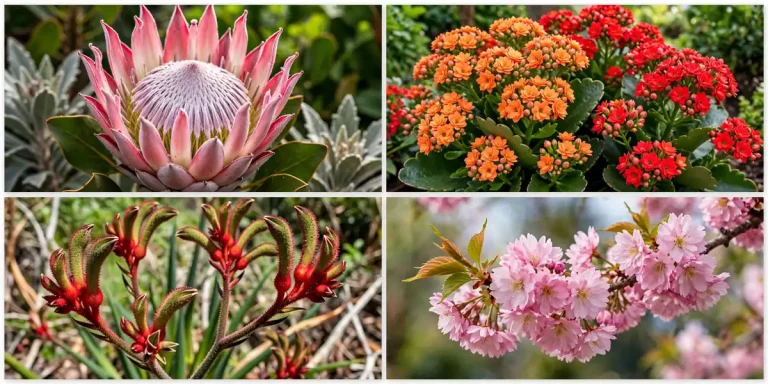
The king protea is South Africa’s national flower and one of the most dramatic blooms on Earth: a single flower head up to 12 inches across, ringed with silky pink bracts around a fuzzy central dome. This evergreen shrub from the Cape region is built for poor soils and drought. As a cut flower it lasts for weeks.
Proteas demand what most garden plants hate: extremely well-drained, acidic, nutrient-poor soil — and absolutely no phosphorus fertilizer, which is toxic to them. Plant in full sun in zones 9–11, water deeply but infrequently once established, and never amend the planting hole with rich compost. They are slow to establish but then nearly indestructible. In colder climates, grow in a pot with protea mix and overwinter frost-free.
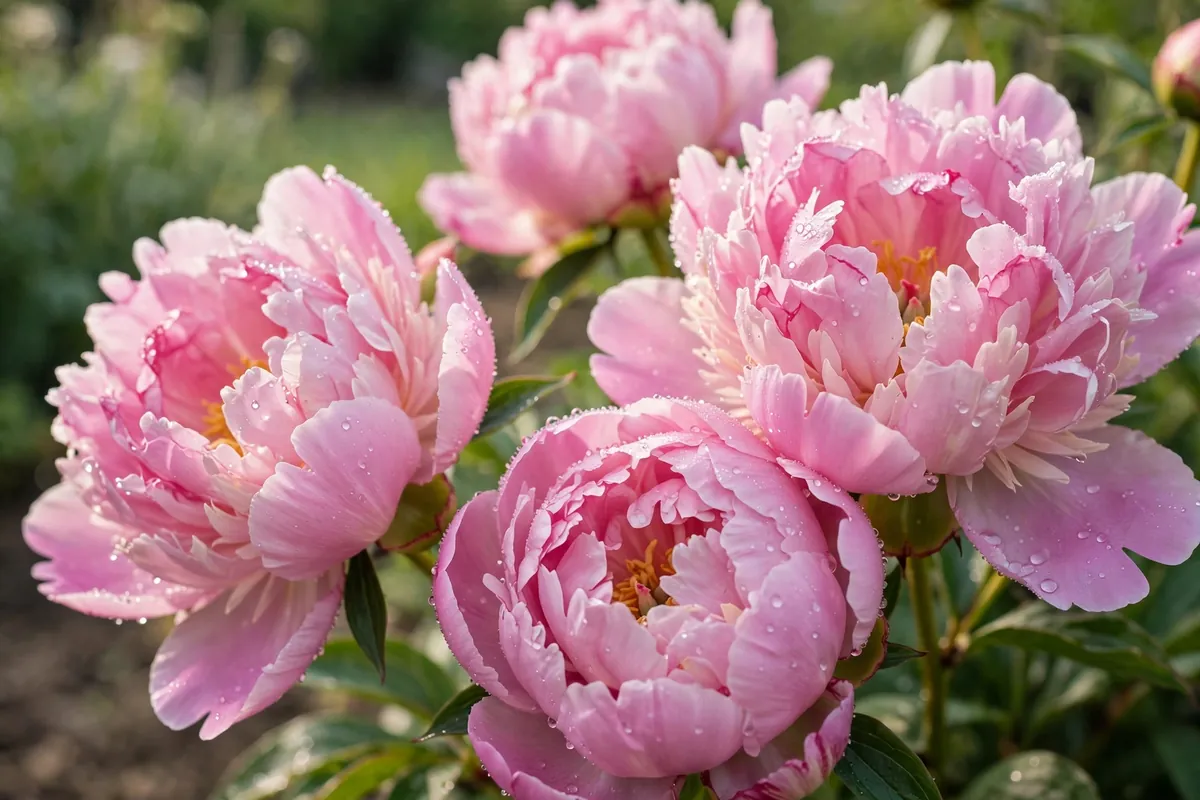
24. Peony (Paeonia lactiflora hybrids)
The peony is the queen of the spring border: enormous, blowsy, deliciously fragrant blooms in blush pink, white, crimson, and coral, on sturdy 2–3 foot plants that can live and bloom for 50 years or more in the same spot. Native to Asia, garden peonies are famously long-lived and low-maintenance once established.
Plant peonies in full sun in zones 3–8, in rich, well-drained soil — and plant them at exactly the right depth, with the buds (“eyes”) no more than 1–2 inches below the surface, or they will refuse to bloom. Never move an established peony unless you must; they resent disturbance. Stake heavy double-flowered varieties before the buds open, and cut the foliage to the ground after frost in fall.
25. Garden Phlox (Phlox paniculata)
Garden phlox is the backbone of the midsummer border: tall, 2–4 foot clumps topped with big, domed clusters of fragrant flowers in pink, lavender, white, red, and bicolor, blooming for weeks when little else dares. This eastern US native is a butterfly and hummingbird magnet, and modern mildew-resistant cultivars have solved the one flaw that used to plague it.
Plant garden phlox in full sun to light shade in zones 4–8, in rich, moisture-retentive soil — drought stress invites powdery mildew, so mulch well and water in dry spells. Space plants for good air circulation and choose resistant varieties like ‘David’ or the Flame series. Deadhead spent trusses to extend bloom, and divide congested clumps every 3–4 years in spring or fall.
26. Creeping Phlox (Phlox subulata)
Creeping phlox turns spring hillsides into rivers of color: a low, evergreen mat of needle-like foliage that erupts in a solid carpet of pink, purple, white, or blue flowers. Native to the eastern and central US, it is the classic plant for rock gardens, wall tops, slopes, and path edges.
Plant creeping phlox in full sun in zones 3–9, in well-drained soil — it tolerates poor, sandy, even rocky ground. Water new plantings until established, then leave it alone; it is genuinely drought tolerant. Shear the mats lightly after flowering to keep them dense and encourage a possible light rebloom. Divide or take cuttings in summer if you want to spread the carpet further.
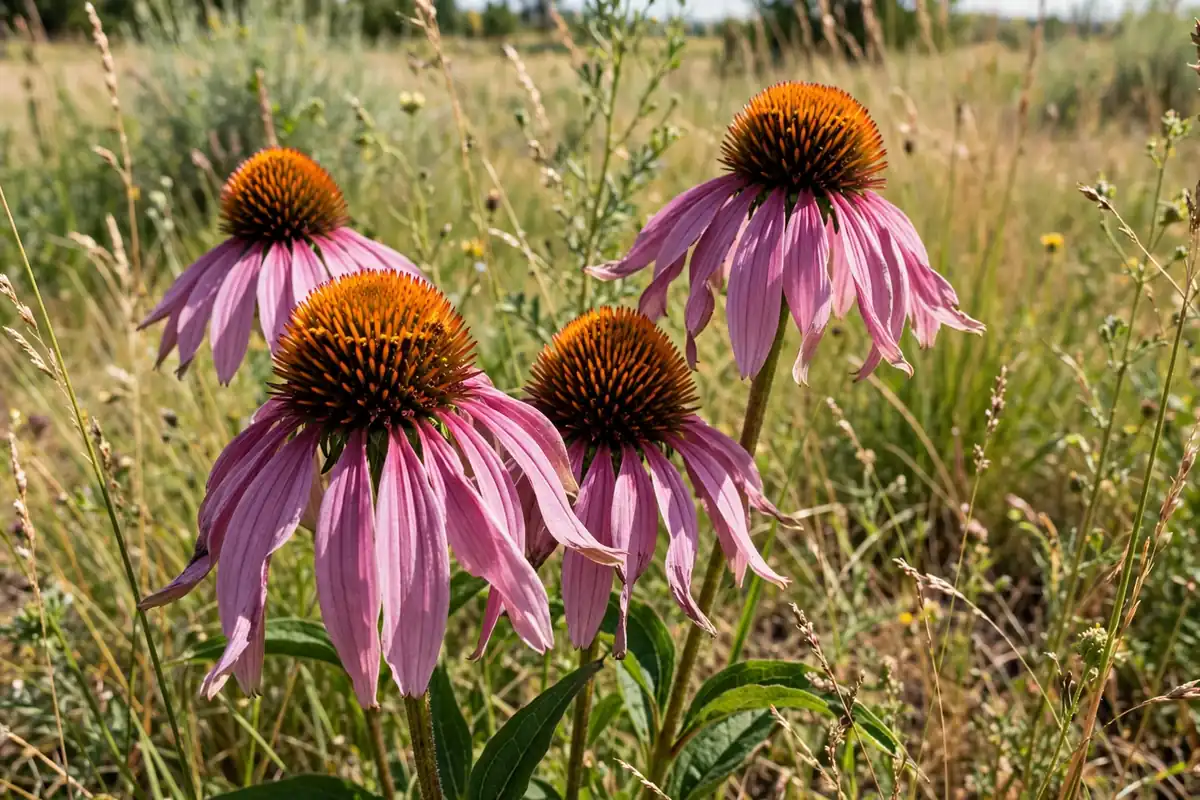
27. Purple Coneflower (Echinacea purpurea)
The purple coneflower is the native perennial that conquered the gardening world: bold daisy-like flowers with drooping purple-pink petals around a spiky orange cone, blooming all summer on sturdy 2–4 foot stems. Native to the prairies and open woods of central and eastern North America, it feeds bees and butterflies all summer and goldfinches all winter — if you leave the seed heads standing.
Plant coneflowers in full sun in zones 3–9, in average to lean, well-drained soil — rich soil and excess water make them floppy and short-lived. They are deeply drought tolerant once established. Deadhead for tidiness or leave the cones for winter birds; either way, divide or let self-sown seedlings refresh the planting every few years, since individual plants are not immortal.
28. Penstemon (Penstemon digitalis)
Penstemon — the beardtongues — are the aristocrats of the native perennial border: elegant spikes of tubular white (or in western species, red, pink, and purple) flowers that hummingbirds find irresistible. Penstemon digitalis, the foxglove beardtongue of eastern North America, is the easiest and most garden-worthy, with clean white blooms on 2–3 foot stems and attractive basal foliage that looks good all season.
The golden rule for penstemons is drainage: they demand full sun and lean, sharply drained soil, and they rot in wet winter ground. Plant in zones 3–8, water only to establish, then back off. Do not cut back the basal foliage in fall; it protects the crown.
29. Primrose (Primula vulgaris)
The common primrose is spring’s first proper wildflower in much of Europe: low rosettes of crinkled green leaves studded with pale-yellow, sweetly scented flowers, often blooming while snow still lingers in the shadows. Native to woodlands and hedgerows from Europe to western Asia, it is the perfect plant for shady corners, woodland edges, and damp spots where little else flowers so early — and it naturalizes gently into drifts.
Plant primroses in part shade in zones 4–8, in humus-rich soil that stays consistently moist — they sulk in dry shade. Top-dress with compost each spring. Deadhead to prevent unwanted self-sowing or leave the seed heads for naturalizing.
30. Pincushion Flower (Scabiosa columbaria)
The pincushion flower earns its name honestly: domed, pincushion-like blooms studded with tiny florets, in soft lavender-blue, pink, or white, floating on wiry stems above neat mounds of foliage all summer. Butterflies adore them, and they make exceptional cut flowers with a wonderfully long vase life. Native across Europe, Asia, and Africa, this is one of the most graceful long-blooming perennials for sunny borders.
Grow pincushion flower in full sun in zones 3–8, in average, well-drained soil — it dislikes winter wet. Deadhead religiously and the bloom season stretches from early summer to frost. Divide every 3–4 years in spring to maintain vigor.
31. Oriental Poppy (Papaver orientale)
The Oriental poppy produces the most extravagant flowers of late spring: huge, crepe-paper blooms up to 6 inches across in blazing orange-scarlet, salmon, pink, or white, each with a dramatic dark basal blotch. Native to the Caucasus, Turkey, and Iran, it dominates the garden for its brief but unforgettable two-week show — then goes completely dormant by midsummer.
Plant Oriental poppies in full sun in zones 3–7, in deep, well-drained soil — they form long taproots and hate being moved, so choose the spot once. Water in spring, then leave them dry through their summer dormancy; the disappearing foliage is normal, not death. Plant late-summer companions like grasses nearby to cover the gap. Divide only in late summer, and only if you must.
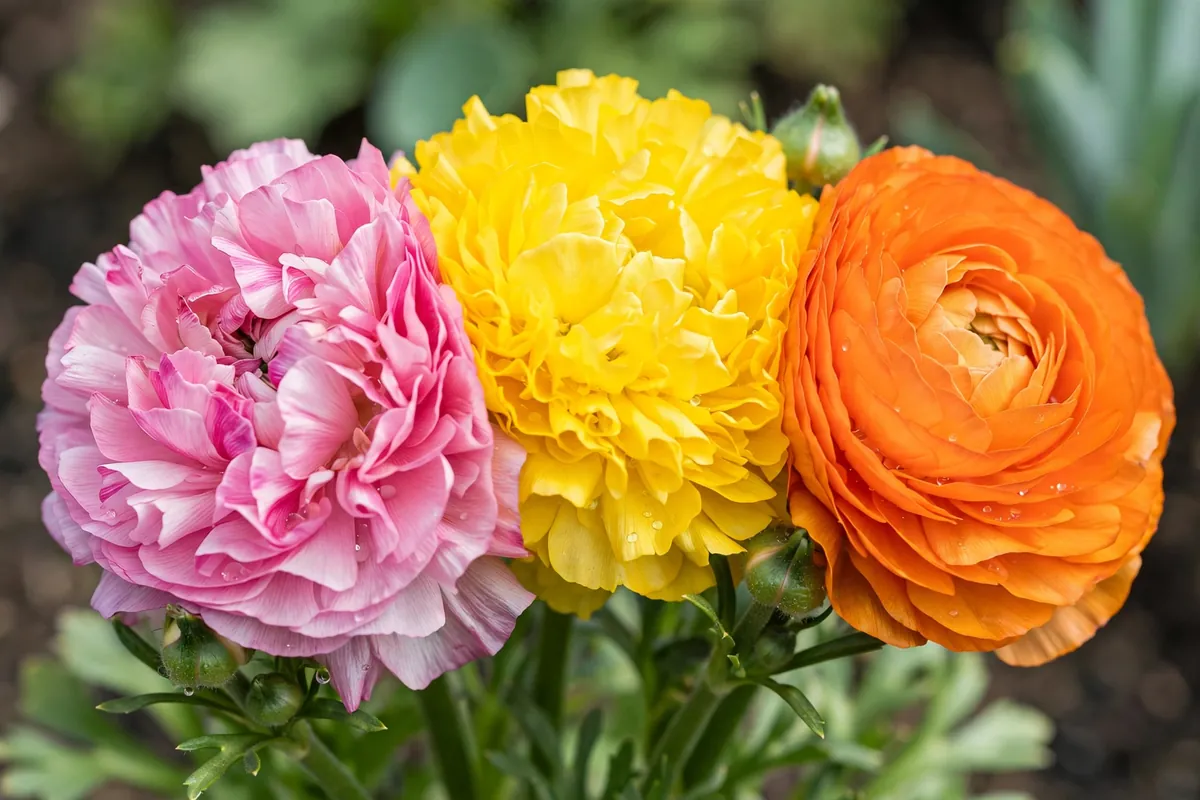
32. Persian Buttercup (Ranunculus asiaticus)
The Persian buttercup is the florist’s spring miracle: layer upon layer of tissue-thin petals in every color from butter-yellow to hot pink, white, orange, and red, packed into lush 3–5 inch blooms on 1–2 foot stems. Native to the eastern Mediterranean, it is technically a tuberous perennial (hardy in zones 8–11) but grown as a cool-season annual almost everywhere.
Soak the claw-like tubers for a few hours before planting, then set them claws-down in rich, well-drained soil in full sun. Keep evenly moist through the cool growing season; heat ends the show, so plant early. In zones 8–11 the tubers can stay in the ground; elsewhere, lift and store them dry like dahlias, or simply replant fresh tubers each year for the most reliable display.
33. Pansy (Viola × wittrockiana)
The pansy is the cool-season color workhorse: cheerful, flat-faced flowers with their unmistakable “faces,” in every color imaginable, blooming when almost nothing else will — through fall, winter in mild climates, and early spring. Bred in Europe from wild violets, modern pansies shrug off frosts that kill lesser annuals.
Plant pansies in fall for winter color (zones 6+) or in early spring in cold climates, in full sun to part shade with rich, well-drained soil. Keep them evenly moist and deadhead spent blooms to prevent seed formation, which shuts down flowering. In hot climates they fade by late spring — pull them and plant heat-lovers. For the longest show, choose trailing or “cool wave” types for baskets and edges. For even more P-letter color, browse our guide to more flowers that start with P.
34. Petunia (Petunia × atkinsiana)
The petunia is the undisputed queen of summer containers: masses of trumpet-shaped flowers in every color except true blue, on trailing or mounding plants that bloom nonstop from planting until hard frost. Bred from South American wild species, modern petunias — especially the Wave and Supertunia series — are self-cleaning, weather-tolerant, and so vigorous that a few plants can fill an entire hanging basket by midsummer.
Petunias demand full sun — at least six hours — and rich, well-drained soil. In containers, water daily in hot weather and feed every week or two; hungry petunias stall. Spreading types need no deadheading, but a midsummer haircut revives leggy plants for a strong fall show.
35. Pot Marigold (Calendula officinalis)
The pot marigold is the cheerful, useful annual every garden should grow: bright daisy-like flowers in sunny yellows and oranges (plus apricot and cream in modern cultivars) from spring to hard frost, on 1–2 foot plants that ask for almost nothing. Native to southern Europe, its petals are edible — a classic salad and rice garnish — and it has centuries of herbal use for skin salves. Bees love it, and it self-sows freely.
Sow pot marigold directly in the garden in early spring (or fall in mild climates) in full sun to part shade; it tolerates poor soil and even light frost. Deadhead regularly for continuous bloom, or let it self-sow for next year’s volunteers. In hot climates it flags in midsummer heat — shear it back and it rebounds when fall cools.
Growing Tips for P-Plants
Match the plant to your zone first. P-plants span zones 3–12 — from the ultra-hardy purple coneflower and peony (zone 3) to tropical plumeria and princess flower (zones 10–12). Check the tables above before falling in love with a plant that cannot survive your winter; half this list is happiest as houseplants.
Water succulents and tropicals differently. The P-list splits cleanly: ponytail palm, prickly pear, string of pearls, panda plant, and pencil cactus want to dry out completely between waterings, while peace lily, prayer plant, calathea, and pink quill want consistent moisture and humidity. Grouping plants by water need is the single easiest way to keep them all alive.
Give humidity lovers real humidity. Prayer plant, pinstripe calathea, and pink quill come from rainforests and show crispy brown edges in dry indoor air. A small humidifier or a pebble tray with water beats misting, which evaporates in minutes.
Respect dormancy and dieback. Oriental poppy foliage vanishes by midsummer, plumeria drops its leaves all winter, and peony tops die to the ground each fall. All of these are normal — mark their spots and resist the urge to dig up “dead” plants.
Watch the toxic ones. Pothos, peace lily, heartleaf philodendron, string of pearls, pencil cactus sap, and poinsettia sap can irritate or harm pets and people if chewed. Pet-safe standouts on this list include parlor palm, prayer plant, polka dot plant, watermelon peperomia, and ponytail palm.
Deadhead for more flowers. Pansies, petunias, pincushion flower, pot marigold, and garden phlox all bloom far longer when spent flowers are removed regularly. A five-minute deadheading walk every few days keeps the color coming until frost.
Which P-Plants Will You Grow?
From the pothos on your bookshelf to the peonies in your border, plants that start with P cover every corner of the gardening world — tropical houseplants, desert succulents, fragrant vines, native perennials, and cool-season annuals, across nearly every hardiness zone. If you are just starting out, you cannot go wrong with the bulletproof trio of pothos, peace lily, and parlor palm indoors, or purple coneflower, garden phlox, and pot marigold outdoors.
And the alphabet does not stop here — continue the series with our guides to plants that start with A, plants that start with D, and plants that start with S.
Pick three P-plants that suit your light and zone, plant them this season, and watch the letter P become the hardest-working letter in your garden. Happy planting!
Frequently Asked Questions
What are the most popular plants that start with P?
The most popular P-plants are pothos, peace lily, heartleaf philodendron, peony, prayer plant, Chinese money plant, ponytail palm, parlor palm, pansy, petunia, garden phlox, and purple coneflower. These twelve cover houseplants, succulents, perennials, and annuals, and all are widely available at garden centers and nurseries.
Which plants starting with P are good for beginners?
Pothos, heartleaf philodendron, peace lily, and parlor palm are nearly indestructible houseplants for beginners, while purple coneflower, garden phlox, pot marigold, and prickly pear are forgiving outdoor choices. All tolerate imperfect conditions — just match each plant’s light and water needs and they will thrive.
Which P-plants bloom in spring?
Spring-blooming P-plants include peony, creeping phlox, primrose, Persian buttercup, Oriental poppy, pink jasmine (late winter to spring), pansy, and prickly pear (late spring). Plant a mix of early, mid, and late spring bloomers for two to three months of continuous color.
What plants that start with P grow in shade?
Excellent shade-tolerant P-plants include peace lily, prayer plant, heartleaf philodendron, parlor palm, pinstripe calathea, polka dot plant, primrose, and Chinese money plant. Most prefer bright indirect light or dappled shade rather than deep darkness — even “low light” plants bloom and color up better with more light.
Are pothos and peace lilies toxic to pets?
Yes — pothos, peace lilies, and heartleaf philodendrons all contain calcium oxalate crystals that irritate the mouth and stomach if chewed by cats or dogs. String of pearls and pencil cactus sap are also problematic. Pet-safe alternatives from this list include parlor palm, prayer plant, polka dot plant, watermelon peperomia, and ponytail palm.
How do I get my peace lily to bloom?
Peace lilies bloom when they get bright indirect light (not dim corners), are slightly root-bound, and receive light feeding in spring and summer. Most plants need to be a year or two old before flowering. If yours makes only leaves, move it closer to a window and feed monthly — white spathes usually follow within a season.