
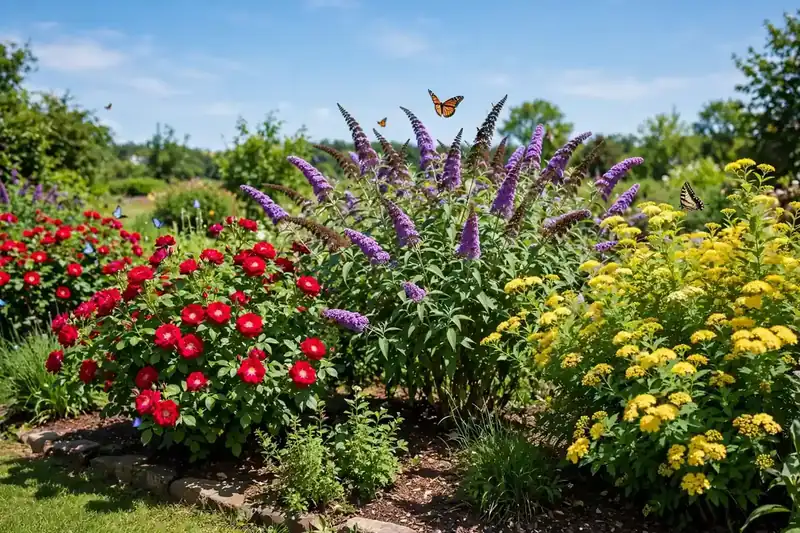
Best Shrubs for Sun: Hardy Picks for Sunny Spots
A shrub planted in the wrong light does not die dramatically. It declines by inches — fewer flowers each year, leggy growth reaching for sun it cannot find, mildew on leaves that never fully dry. Full sun is the one condition most flowering shrubs actually want, and a south- or west-facing border that bakes all afternoon is prime real estate if you choose from the shrubs bred and built for it: thick or waxy leaves, deep roots, and flowers that open in heat rather than despite it.
The twelve shrubs below are the proven core for sunny borders in zones 4–10. Each entry gives the mature size (the number that matters), the hardiness range, and the honest downside, because every shrub on this list has one — a pruning demand, a spreading habit, a regional warning. Match the shrub to your zone and your space, give it one season of regular water, and a sunny border becomes the lowest-effort part of the garden.
Quick Answer
The best shrubs for sun are butterfly bush, panicle hydrangea, crape myrtle, Knock Out roses, Japanese spirea, potentilla, caryopteris, and vitex — all flower heavily in six or more hours of direct sun and tolerate summer heat that scorches shade-bred shrubs. For most gardens, panicle hydrangea is the safest first choice: hardy in zones 3–8, unbothered by hot summers, and covered in white-to-pink cones from midsummer to fall. In hot southern gardens (zones 8–10), crape myrtle and vitex take over as the longest-blooming options. Whatever you plant, water deeply through the first full growing season — “drought-tolerant” on a label describes an established shrub in year three, not a new plant in its first August.
Table of Contents
What Counts as Full Sun for a Shrub?
Full sun means six or more hours of direct, unfiltered sunlight a day, and for the shrubs on this list, more is welcome — eight to ten hours is where butterfly bush and crape myrtle do their best work. One qualification matters in hot climates: in zones 8–10, afternoon sun is significantly more punishing than morning sun, and a shrub that takes “full sun” happily in Ohio may want a little late-day relief in Texas. Panicle hydrangea is the classic example — full sun in the north, grateful for afternoon shade at the hot end of its range.
Also read past the label’s promises. “Drought tolerant” and “heat tolerant” describe established plants with root systems two or three years in the ground. Every shrub below needs consistent water its first season, and most need a deep drink weekly in their second summer too. Pairing shrubs with tough companions from our full sun perennials guide — coneflowers, salvias, daylilies — fills the border at ground level while the shrubs mature.
Best Shrubs for Sun at a Glance
| Shrub | Zones | Mature Size | Bloom Season | Water (Established) |
|---|---|---|---|---|
| Butterfly bush | 5–9 | 4–10 ft (dwarfs 2–3 ft) | Summer–fall | Low |
| Panicle hydrangea | 3–8 | 4–8 ft (dwarfs 2–3 ft) | Midsummer–fall | Medium |
| Crape myrtle | 7–10 | 3–25 ft by variety | Summer, 60–100 days | Low |
| Knock Out rose | 5–10 | 3–4 ft | Spring–frost | Medium |
| Japanese spirea | 4–8 | 2–4 ft | Late spring–summer | Low |
| Potentilla | 2–7 | 2–3 ft | Summer–fall | Low |
| Caryopteris | 5–9 | 2–3 ft | Late summer–fall | Low |
| Vitex | 7–9 (6 with dieback) | 8–20 ft | Summer | Low |
| Abelia | 6–9 | 3–6 ft | Summer–fall | Low–medium |
| Rosemary | 8–10 | 2–4 ft | Winter–spring (mild climates) | Very low |
| Russian sage | 4–9 | 3–4 ft | Midsummer–fall | Very low |
| St. John’s wort | 5–8 | 2–4 ft | Summer | Low |
The 12 Best Shrubs for Full Sun
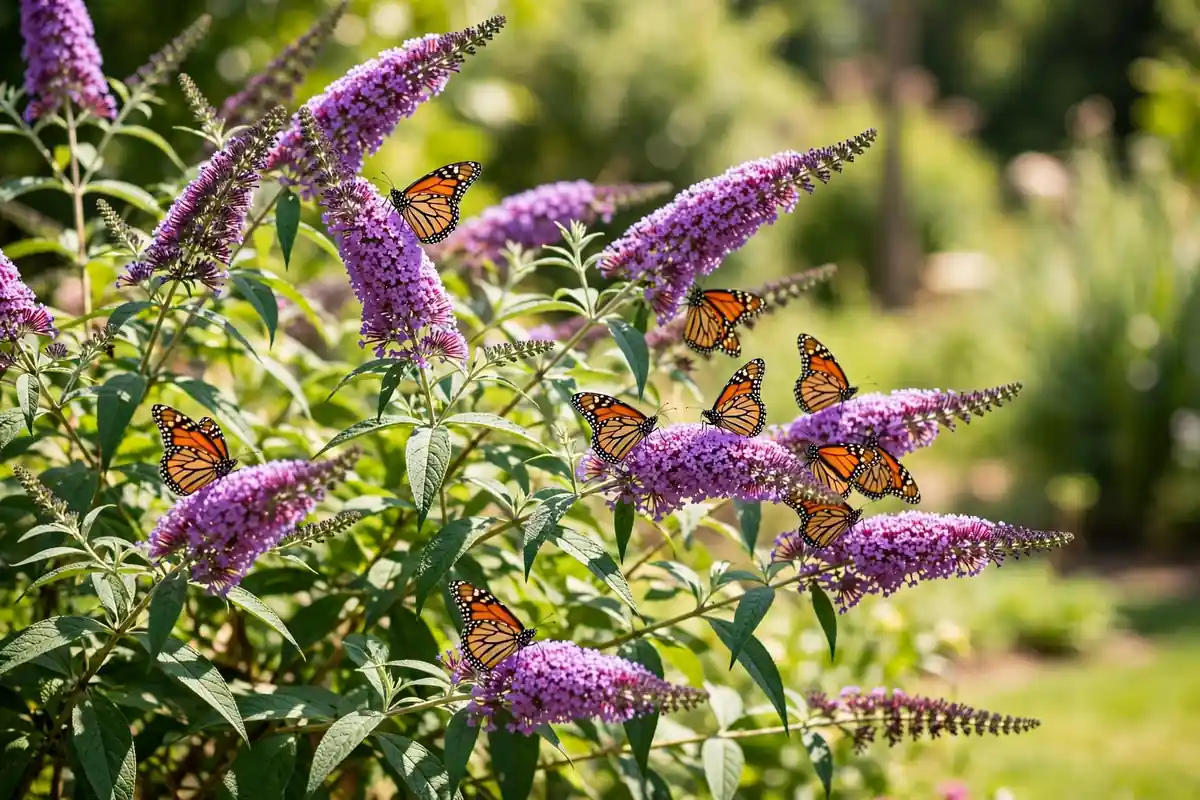
1. Butterfly bush (Buddleja davidii). Long purple, pink, or white flower spikes from summer to frost, and the name is accurate — few plants pull in butterflies and hummingbirds like a buddleja in August. The honest warnings: the species self-seeds aggressively and is listed as invasive in parts of the Pacific Northwest and mid-Atlantic, so plant a sterile or near-sterile cultivar (‘Lo & Behold’ series, ‘Miss Molly’, ‘Pugster’ dwarfs at 2–3 ft) and deadhead spent spikes. In zones 5–6 it dies back to the ground in winter and regrows — cut the dead wood down in spring, not fall.
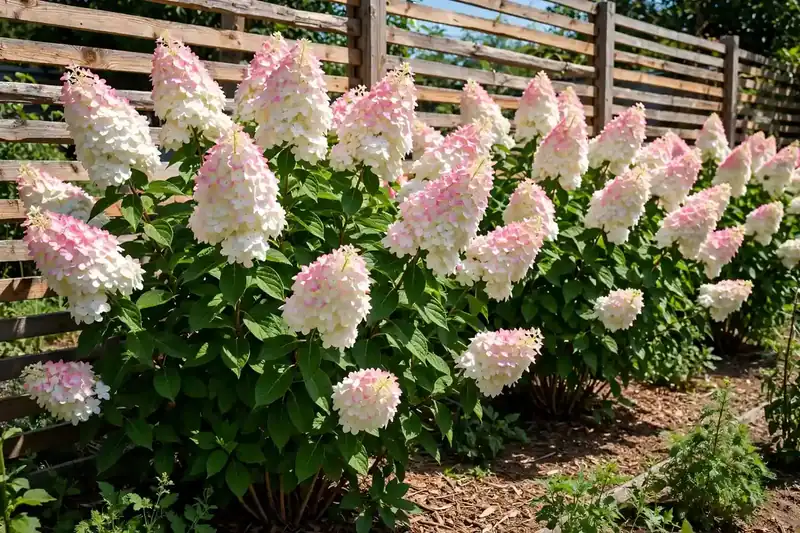
2. Panicle hydrangea (Hydrangea paniculata). The hardiest hydrangea by a wide margin and the only one that genuinely prefers sun. Cones open white in midsummer and age through pink to burgundy. ‘Limelight’ (6–8 ft) is the standard; ‘Little Lime’ and ‘Bobo’ stay 3 ft for small gardens. It blooms on new wood, so a late-winter prune to a framework is all the skill required. The full hydrangea clan, including the shade-tolerant species, is filed under flowers that start with H.
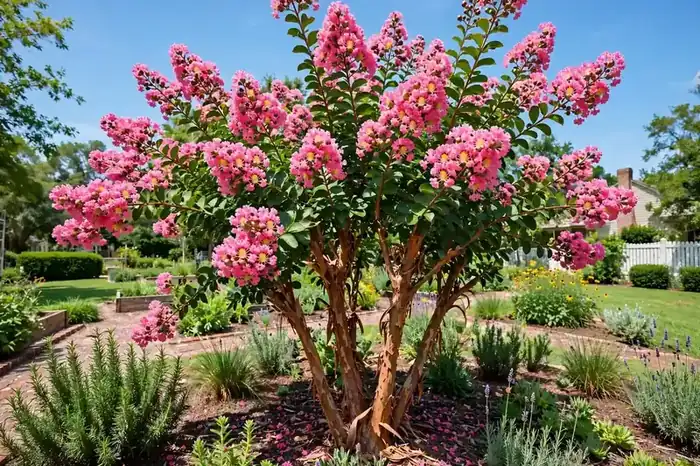
3. Crape myrtle (Lagerstroemia indica). The southern summer tree-shrub: 60–100 days of crinkled pink, red, purple, or white blooms, plus peeling cinnamon bark and fall color. Sizes run from 3 ft dwarfs to 25 ft trees — read the cultivar tag, because planting a tree-form against a one-story house is a twenty-year pruning sentence. Its one famous abuse is “crape murder,” the topping of branches into ugly knuckles; prune lightly in late winter, removing crossing wood only. Hardy zones 7–10, root-hardy in zone 6.
4. Knock Out rose (Rosa ‘Knock Out’ family). Bred specifically to end the spray schedule: these landscape roses flower from spring to frost with strong resistance to black spot. They are not fragrant and the blooms are simple — that is the trade for a rose you can ignore. Compare the other landscape and shrub types in our rose types and names guide if you want scent as well as stamina. Cut back by a third in early spring; deadheading is optional.
5. Japanese spirea (Spiraea japonica). A tidy 2–4 ft mound with pink summer flowers and, in cultivars like ‘Magic Carpet’ and ‘Goldflame’, foliage that earns its keep when the blooms finish. Shear lightly after the first flush for a second round. Nearly indestructible in zones 4–8, but it can self-seed in some regions — deadhead where that is a concern.
6. Potentilla (Dasiphora fruticosa). The cold-climate answer: hardy to zone 2, flowering yellow, white, or soft orange from June to fall on a dense 2–3 ft shrub. It sulks in hot, humid southern summers, so gardeners in zones 8+ should take caryopteris instead.
7. Caryopteris (Caryopteris × clandonensis). Blue flowers in late summer when blue is scarce, on aromatic gray-green foliage bees work constantly. Treat it as a cutback subshrub: in cold zones it dies to the crown and returns; prune to 6 inches every spring regardless. Needs sharp drainage — wet winter soil is its main killer.
8. Vitex (Vitex agnus-castus). A small tree or large shrub with lilac-like purple spikes through summer, beloved by bees. In zones 7–9 it is a 10–20 ft specimen; at its zone 6 edge it behaves like a perennial, dying back and flowering on new growth. Give it room or choose the compact ‘Blue Diddley’ (3–6 ft).
9. Abelia (Abelia × grandiflora). Glossy semi-evergreen foliage and small blush-white, lightly fragrant flowers from summer into fall — one of the longest bloom runs on this list. ‘Kaleidoscope’ adds variegated foliage that shifts color by season. Graceful arching habit; prune by removing whole old stems at the base, never by shearing into a ball.
10. Rosemary (Salvia rosmarinus). In zones 8–10 a flowering evergreen shrub and a kitchen herb in one — ‘Arp’ is the hardiest cultivar, surviving to zone 7 in sheltered, well-drained spots. Demands drainage above all; in clay, grow it in a raised bed or large pot and overwinter the pot in colder zones.
11. Russian sage (Salvia yangii, formerly Perovskia). Airy lavender-blue spires and silver stems from midsummer to fall, thriving in heat, drought, and poor soil that would embarrass most shrubs. The compact ‘Lacey Blue’ (18–24 in.) suits small borders. Cut to the ground in early spring; it is late to leaf out, so mark its spot before you assume it died.
12. St. John’s wort (Hypericum ‘Hidcote’). Golden cup-shaped flowers with a boss of stamens all summer on a dense 2–4 ft shrub that also works as a flowering groundcover on sunny banks. Unlike the weedy groundcover species, ‘Hidcote’ is a sterile, well-behaved hybrid. Seldom bothered by deer.
Best Sunny Shrubs by Situation
- Fast privacy hedge: vitex (warm zones), crape myrtle tree forms, or panicle hydrangea ‘Limelight’ in a staggered row.
- Small gardens and foundation beds: dwarf butterfly bush (‘Pugster’), ‘Bobo’ hydrangea, spirea, potentilla — all under 3 ft at maturity.
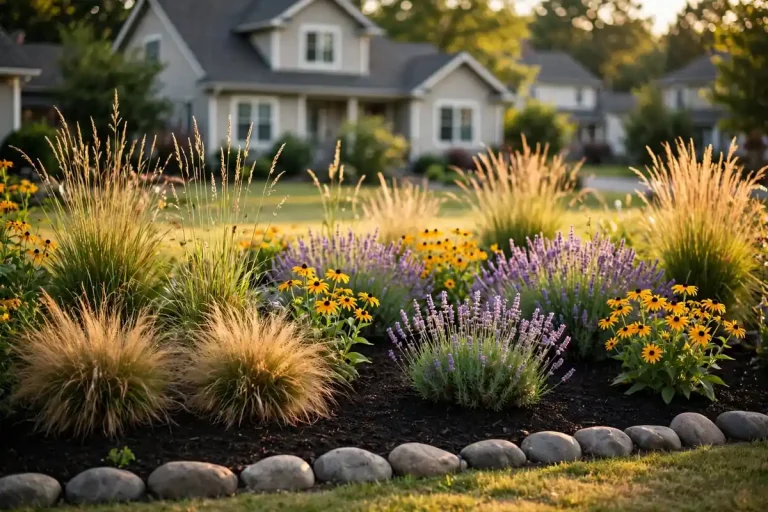
- Pollinator border: butterfly bush, caryopteris, vitex, and Russian sage back to back give bees and butterflies a June-to-October run; flowering shrubs pair well with the fall performance of mums — see our mum care guide for keeping the show going to frost.
- Hottest, driest corner: rosemary, Russian sage, and caryopteris, mulched with gravel rather than bark.
- A specimen with winter interest: crape myrtle for bark, or a small tree-form panicle hydrangea; for a flowering small tree in spring instead, consider the weeping eastern redbud.
Planting and Care in Hot, Sunny Sites
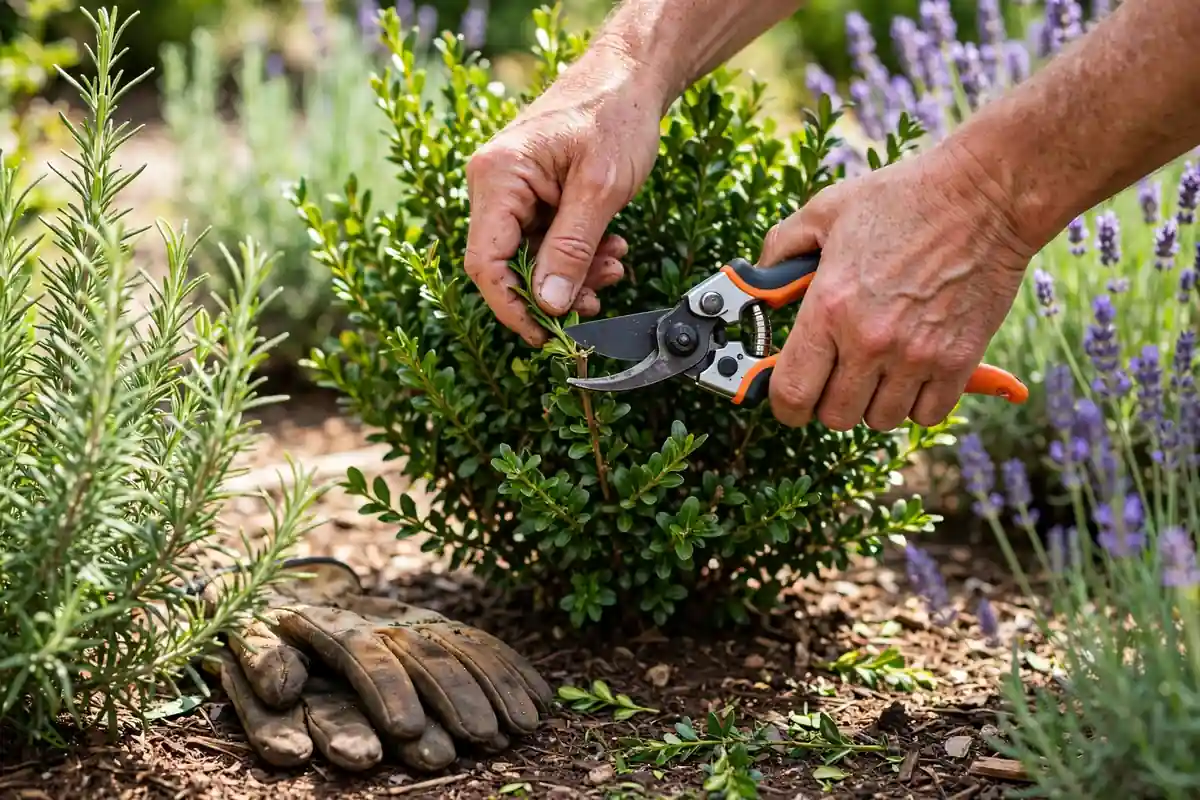
Plant in fall where winters allow. In zones 7–10, fall planting gives roots a cool season to establish before the first summer test. In colder zones, plant in spring after frost. Dig the hole twice as wide as the pot and no deeper — a shrub set too deep in hot soil suffocates slowly.
Water like you mean it, for one season. A deep soak two or three times a week the first summer, delivered at the base in the morning, beats a daily sprinkle. Mulch 2–3 inches of bark (or gravel for the Mediterranean group) keeps roots cool and moisture in, kept clear of the stems.
Prune on the shrub’s schedule, not yours. Everything on this list except abelia and spirea blooms on new or current-season wood and takes its main prune in late winter or early spring — butterfly bush, panicle hydrangea, crape myrtle, caryopteris, Russian sage, roses. Shear spirea after flowering. If you are unsure, the safe question is “does it bloom before or after midsummer?” — spring bloomers are the ones pruned right after flowering, and there are deliberately none on this sun list to trip you up.
Feed lightly or not at all. A compost top-dressing in spring is enough for most of these. Heavy nitrogen on butterfly bush and vitex buys leafy growth at the expense of flowers.
Common Mistakes With Sun-Loving Shrubs
Buying the mature size you wish for, not the one on the tag. A crape myrtle or vitex in a gallon pot looks innocent. Five years later it is eating the path. Every shrub above lists its real size — plant for that number.
Declaring a shrub “not drought tolerant” in August of year one. The label describes year three. Skipped establishment watering is the top killer of new shrubs in sunny beds, ahead of winter cold.
Topping crape myrtles. Cutting branches back to stubs (“crape murder”) produces weak, whippy regrowth and ruins the bark-and-branch structure that is half the plant’s value. Remove crossing or dead wood; leave the architecture.
Planting the seeding butterfly bush where it is invasive. Use sterile cultivars and deadhead; in regions where Buddleja davidii is listed, the sterile series is not optional politeness, it is the responsible choice. Gardeners who want zero risk can get a similar effect from vitex and caryopteris.
Ignoring drainage for the Mediterranean group. Rosemary, caryopteris, and Russian sage die of wet winter soil far more often than of cold. If water stands after rain, mound the planting or choose hydrangea and spirea instead.
Frequently Asked Questions
What is the fastest-growing shrub for full sun?
Vitex and crape myrtle, in warm zones — both can put on 2–3 feet a year once established and make a flowering screen in two to three seasons. In colder zones, panicle hydrangea ‘Limelight’ is the fast option, reaching 6–8 feet in about four years.
Which sun shrubs bloom the longest?
Knock Out roses flower from spring until frost — the longest run on this list. Abelia blooms from summer deep into fall, and crape myrtle’s 60–100 days is the longest single-season display among the larger shrubs. Staggering all three gives flowers from April to November in warm zones.
What is the best low-maintenance shrub for a sunny front yard?
Panicle hydrangea for zones 3–8: one late-winter prune, no spraying, no deadheading required, and dried flower heads that look good into winter. In zones 8–10, dwarf crape myrtle or abelia takes the role with even less water.
Can hydrangeas really take full sun?
Panicle hydrangeas can — they are the exception in the family. Bigleaf hydrangeas (Hydrangea macrophylla) scorch and wilt in all-day sun in hot climates and belong in morning sun with afternoon shade. Check the species name, not just “hydrangea,” before buying for a sunny border; more sun-shy and sun-loving flowering shrubs are compared among the unusual and beautiful flowers worth knowing.
Do sun-loving shrubs need fertilizer?
Rarely much. A spring mulch of compost suits most of this list. Roses are the hungriest and appreciate a granular rose feed in spring and again after the first flush. Over-fertilizing butterfly bush, vitex, and caryopteris produces leaves instead of flowers, so when in doubt, skip it.
References
- Buddleja davidii — NC State Extension Gardener Plant Toolbox (zones, size, and the self-seeding warning for butterfly bush)
- Hydrangea paniculata — NC State Extension Gardener Plant Toolbox (sun tolerance, pruning on new wood, and cultivar sizes)

One Comment