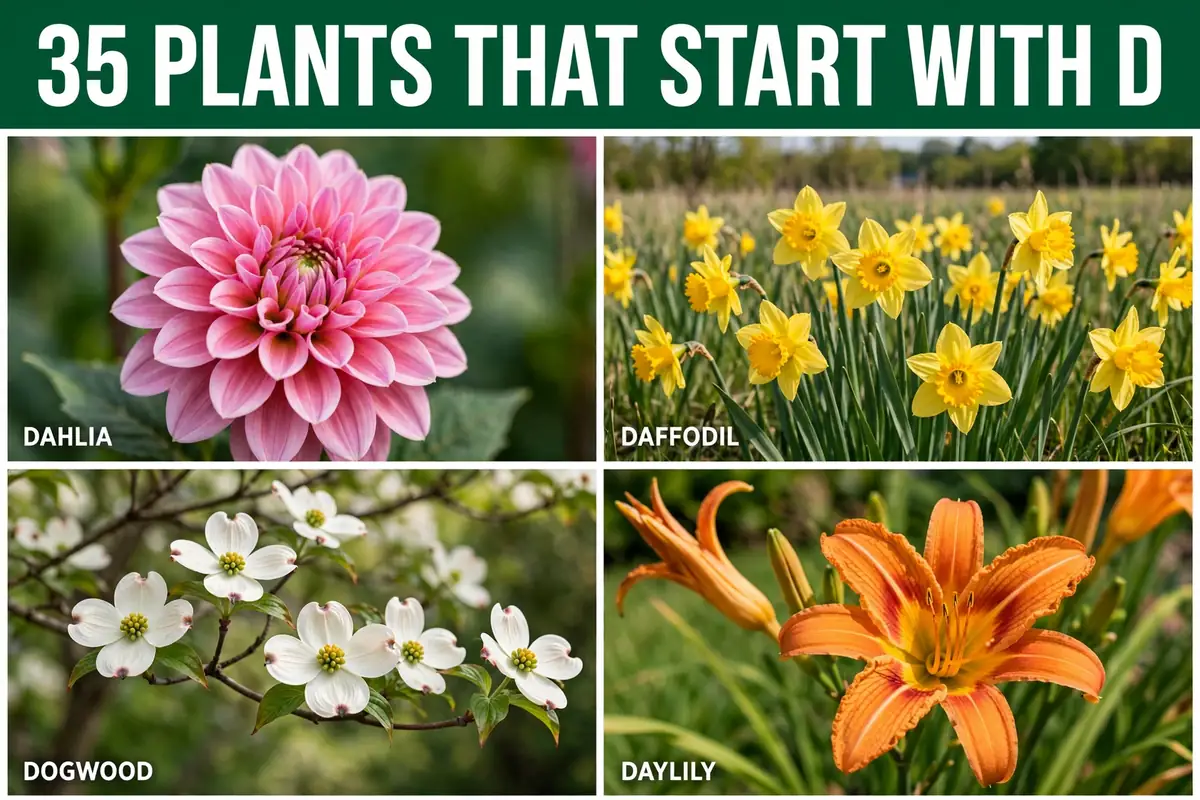
35 Plants That Start With D: Names, Pictures & Growing Tips
Looking for plants that start with D? You have come to the right place. The letter D is one of the richest letters in the gardening alphabet, covering everything from the towering dinner-plate dahlias that steal every late-summer border and the cheerful daffodils that announce spring, to the elegant flowering dogwood trees, the indestructible daylilies, and the dragon trees that thrive in living rooms with almost no attention. Whether you are filling a sunny border, planting an alphabet garden with kids, or just curious about plant names that begin with D, this guide covers 35 real plants that start with D, each with a vivid description and practical growing advice.
Every entry below lists the plant’s scientific name, bloom season, light needs, water needs, and USDA hardiness zone, so you can tell at a glance which D-plants fit your garden. You will also find two handy comparison tables, practical growing tips, and answers to the questions gardeners ask most about plants starting with D. Let’s dig in.
Quick Answer
Popular plants that start with D include Dahlia, Daffodil, Shasta Daisy, Flowering Dogwood, Delphinium, Daylily, Dianthus, Daphne, Bleeding Heart (Dicentra), Desert Rose, Dracaena, and Dusty Miller. They span spring bulbs, summer perennials, fragrant shrubs, flowering trees, tropical houseplants, and even a deciduous conifer — covering USDA zones 2–12, so there is a D-plant for nearly every garden on Earth.
Table of Contents
D-Plants at a Glance
Use this table to compare all 35 plants that start with D side by side, from botanical names to native regions.
| Plant name | Scientific name | Type | Light | Native region |
|---|---|---|---|---|
| Dahlia | Dahlia × pinnata hybrids | Tender tuberous perennial | Full sun | Mexico, Central America |
| Dahlia ‘Bishop of Llandaff’ | Dahlia ‘Bishop of Llandaff’ | Tender tuberous perennial | Full sun | Hybrid (UK breeding) |
| Shasta Daisy | Leucanthemum × superbum | Herbaceous perennial | Full sun to part shade | Hybrid (European/American parentage) |
| Daffodil | Narcissus spp. and hybrids | Spring-flowering bulb | Full sun to part shade | Europe, North Africa, West Asia |
| Dwarf Daffodil ‘Tête-à-tête’ | Narcissus ‘Tête-à-tête’ | Spring-flowering bulb | Full sun to part shade | Hybrid (UK breeding) |
| Madagascar Dragon Tree | Dracaena marginata | Tropical houseplant / small tree | Bright indirect light | Madagascar |
| Corn Plant | Dracaena fragrans ‘Massangeana’ | Tropical houseplant | Bright indirect light | Tropical Africa |
| Flowering Dogwood | Cornus florida | Deciduous flowering tree | Part shade | Eastern North America |
| Kousa Dogwood | Cornus kousa | Deciduous flowering tree | Full sun to part shade | Japan, Korea, China |
| Delphinium | Delphinium elatum hybrids | Herbaceous perennial | Full sun | Europe, Asia (hybrid breeding) |
| Larkspur | Consolida ajacis | Hardy annual | Full sun | Mediterranean region |
| Carnation | Dianthus caryophyllus | Herbaceous perennial | Full sun | Mediterranean region |
| Sweet William | Dianthus barbatus | Biennial / short-lived perennial | Full sun to part shade | Southern Europe to Asia |
| Daylily | Hemerocallis hybrids | Herbaceous perennial | Full sun to part shade | East Asia (hybrid breeding worldwide) |
| Daylily ‘Stella d’Oro’ | Hemerocallis ‘Stella d’Oro’ | Herbaceous perennial | Full sun to part shade | Hybrid (US breeding) |
| Dusty Miller | Jacobaea maritima | Silver-foliage perennial (grown as annual) | Full sun | Mediterranean region |
| Winter Daphne | Daphne odora | Evergreen shrub | Part shade | China, Japan |
| Bleeding Heart | Lamprocapnos spectabilis | Herbaceous perennial | Part to full shade | Siberia, northern China, Korea, Japan |
| Fringed Bleeding Heart | Dicentra eximia | Herbaceous perennial | Part to full shade | Eastern North America |
| Desert Rose | Adenium obesum | Succulent shrub | Full sun | Sub-Saharan Africa, Arabia |
| Dumb Cane | Dieffenbachia seguine | Tropical houseplant | Bright indirect light | Tropical Americas (Caribbean, Brazil) |
| Dwarf Alberta Spruce | Picea glauca ‘Conica’ | Dwarf evergreen conifer | Full sun to part shade | Cultivar (Canada — Alberta) |
| Dutchman’s Pipe | Aristolochia macrophylla | Deciduous climbing vine | Full sun to part shade | Eastern North America |
| Slender Deutzia | Deutzia gracilis | Deciduous shrub | Full sun to part shade | Japan |
| Angel’s Fishing Rod | Dierama pulcherrimum | Cormous perennial | Full sun | South Africa |
| Dogtooth Violet | Erythronium dens-canis | Spring bulb (ephemeral) | Part shade | Europe |
| Shooting Star | Primula meadia | Herbaceous perennial (ephemeral) | Part shade | Central and eastern North America |
| Dame’s Rocket | Hesperis matronalis | Biennial / short-lived perennial | Full sun to part shade | Eurasia |
| Dill | Anethum graveolens | Annual herb | Full sun | Mediterranean, West Asia |
| Desert Willow | Chilopsis linearis | Deciduous small tree | Full sun | Southwestern US, northern Mexico |
| Dendrobium Orchid | Dendrobium nobile | Tropical epiphytic orchid | Bright indirect light | Himalayas, Southeast Asia |
| Dappled Willow | Salix integra ‘Hakuro Nishiki’ | Deciduous shrub | Full sun to part shade | Cultivar (Japan, Korea origin) |
| Dawn Redwood | Metasequoia glyptostroboides | Deciduous conifer tree | Full sun | Central China |
| Dragon Arum | Dracunculus vulgaris | Tuberous perennial | Part shade | Mediterranean (Greece, Balkans) |
| Dwarf Iris | Iris reticulata | Early-spring bulb | Full sun to part shade | Caucasus, Turkey, Iran |
Bloom Season, Water Needs & Hardiness Zones
Planning your garden calendar? This second table shows when each D-plant blooms, how much water it wants, and the USDA zones where it grows outdoors year-round.
| Plant name | Bloom season | Water needs | Hardiness zone | Mature size |
|---|---|---|---|---|
| Dahlia | Summer to first frost | Regular; 1 inch per week | 8–11 (tubers lifted in colder zones) | 1–5 ft tall |
| Dahlia ‘Bishop of Llandaff’ | Summer to first frost | Regular; mulch to retain moisture | 8–11 | 3 ft tall, 18 in wide |
| Shasta Daisy | Early to late summer | Average; drought tolerant once established | 5–9 | 2–3 ft tall |
| Daffodil | Early to mid spring | Average; keep soil moist during growth | 3–8 | 6–18 in tall |
| Dwarf Daffodil ‘Tête-à-tête’ | Early spring | Average | 4–8 | 6 in tall |
| Madagascar Dragon Tree | Rarely indoors | Low; let soil dry between waterings | Houseplant (10–12 outdoors) | 6 ft indoors; 20 ft outdoors |
| Corn Plant | Rarely indoors | Low to average; avoid overwatering | Houseplant (10–12 outdoors) | 4–6 ft indoors |
| Flowering Dogwood | Mid spring | Average; water young trees deeply | 5–9 | 15–30 ft tall |
| Kousa Dogwood | Late spring to early summer | Average | 5–8 | 15–25 ft tall |
| Delphinium | Early to midsummer | Regular; consistent moisture | 3–7 | 4–6 ft tall |
| Larkspur | Late spring to early summer | Average | Grown as annual | 1–4 ft tall |
| Carnation | Late spring to summer | Average; good drainage essential | 5–9 | 1–2 ft tall |
| Sweet William | Late spring to early summer | Average | 3–9 | 1–2 ft tall |
| Daylily | Early summer to fall (varies) | Average; tolerates drought | 3–9 | 1–4 ft tall |
| Daylily ‘Stella d’Oro’ | Late spring to frost (reblooming) | Average | 3–9 | 12–18 in tall |
| Dusty Miller | Summer (flowers usually removed) | Low; very drought tolerant | 8–10 (annual elsewhere) | 1–2 ft tall |
| Winter Daphne | Late winter to early spring | Average; dislikes wet feet | 7–9 | 3–4 ft tall and wide |
| Bleeding Heart | Mid to late spring | Regular; humus-rich moist soil | 3–9 | 2–3 ft tall |
| Fringed Bleeding Heart | Late spring to fall | Regular | 3–9 | 1–1.5 ft tall |
| Desert Rose | Spring to fall | Low; drought tolerant succulent | 10–12 | 3–9 ft (bonsai-like in pots) |
| Dumb Cane | Rarely indoors | Average; keep evenly moist | Houseplant (10–12 outdoors) | 3–6 ft indoors |
| Dwarf Alberta Spruce | Non-flowering conifer | Average | 2–8 | 10–13 ft tall (very slow) |
| Dutchman’s Pipe | Late spring | Average | 5–8 | 20–30 ft vine |
| Slender Deutzia | Late spring | Average | 5–8 | 2–4 ft tall |
| Angel’s Fishing Rod | Summer | Average; tolerates wet soil | 7–9 | 4–6 ft tall arching stems |
| Dogtooth Violet | Early to mid spring | Average; keep moist in spring | 3–7 | 4–8 in tall |
| Shooting Star | Mid to late spring | Average to moist | 4–8 | 1–2 ft tall |
| Dame’s Rocket | Late spring to early summer | Average | 3–8 | 2–4 ft tall |
| Dill | Summer (small yellow umbels) | Average | Grown as annual | 2–4 ft tall |
| Desert Willow | Late spring to fall | Low; very drought tolerant | 7–9 | 15–25 ft tall |
| Dendrobium Orchid | Late winter to spring | Average; let dry slightly between waterings | Houseplant (9–11 outdoors) | 1–3 ft tall |
| Dappled Willow | Spring (catkins, grown for foliage) | Average to moist | 4–9 | 4–6 ft tall (pruned) |
| Dawn Redwood | Non-flowering conifer | Average to moist | 4–8 | 50–80 ft tall |
| Dragon Arum | Late spring | Average; dry summer dormancy | 7–9 | 2–3 ft tall |
| Dwarf Iris | Very early spring | Average; needs dry summer dormancy | 5–9 | 4–6 in tall |
35 Plants That Start With D: The Complete List
Here is the full alphabetical-by-popularity rundown of D-plants, with real growing advice for each one.
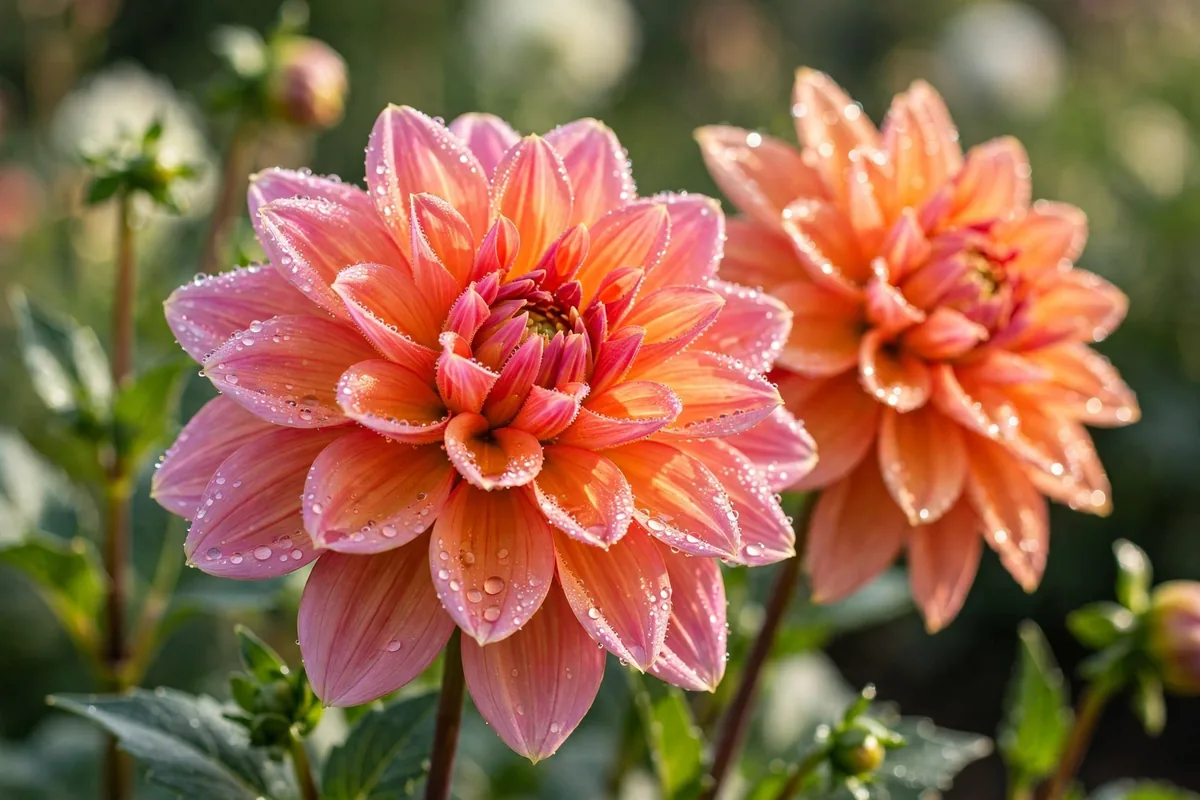
1. Dahlia (Dahlia × pinnata hybrids)
Few plants starting with D command a summer border like the dahlia. Native to the mountains of Mexico, these tuberous perennials produce some of the largest and most intricate blooms in the garden world, from dinner-plate giants a foot across to petite pompons and spiky cactus forms. Flowers come in virtually every color except true blue, and the more you cut them for bouquets, the more they bloom — a steady harvest from midsummer until the first hard frost.
Dahlias demand full sun and rich, well-drained soil. Plant tubers 4–6 inches deep after all frost danger has passed, spacing them 12–18 inches apart, and stake tall varieties at planting time so you never pierce the tubers later. They are hardy in zones 8–11; in colder climates, dig the tubers after the first light frost, dry them, and store them in a cool, frost-free spot over winter. Water deeply once a week and deadhead spent blooms to keep the show going.
2. Dahlia ‘Bishop of Llandaff’ (Dahlia ‘Bishop of Llandaff’)
The ‘Bishop of Llandaff’ is arguably the most famous dahlia cultivar ever bred, and it earns its fame twice over. Its semi-double, velvety scarlet-red flowers are stunning enough on their own, but the near-black, bronze-purple foliage behind them creates a contrast no other dahlia can match. Bees and butterflies adore the open-centered blooms, and the dark leaves make every neighboring plant’s flowers look brighter by comparison.
Grow it exactly like other dahlias: full sun, fertile soil, and consistent moisture. At about 3 feet tall it needs only light staking, and it works beautifully in mixed borders or large containers. Introduced in 1924 and named for the Bishop of Llandaff in Wales, it has won the RHS Award of Garden Merit — a century-old proof that great breeding never goes out of style.
3. Shasta Daisy (Leucanthemum × superbum)
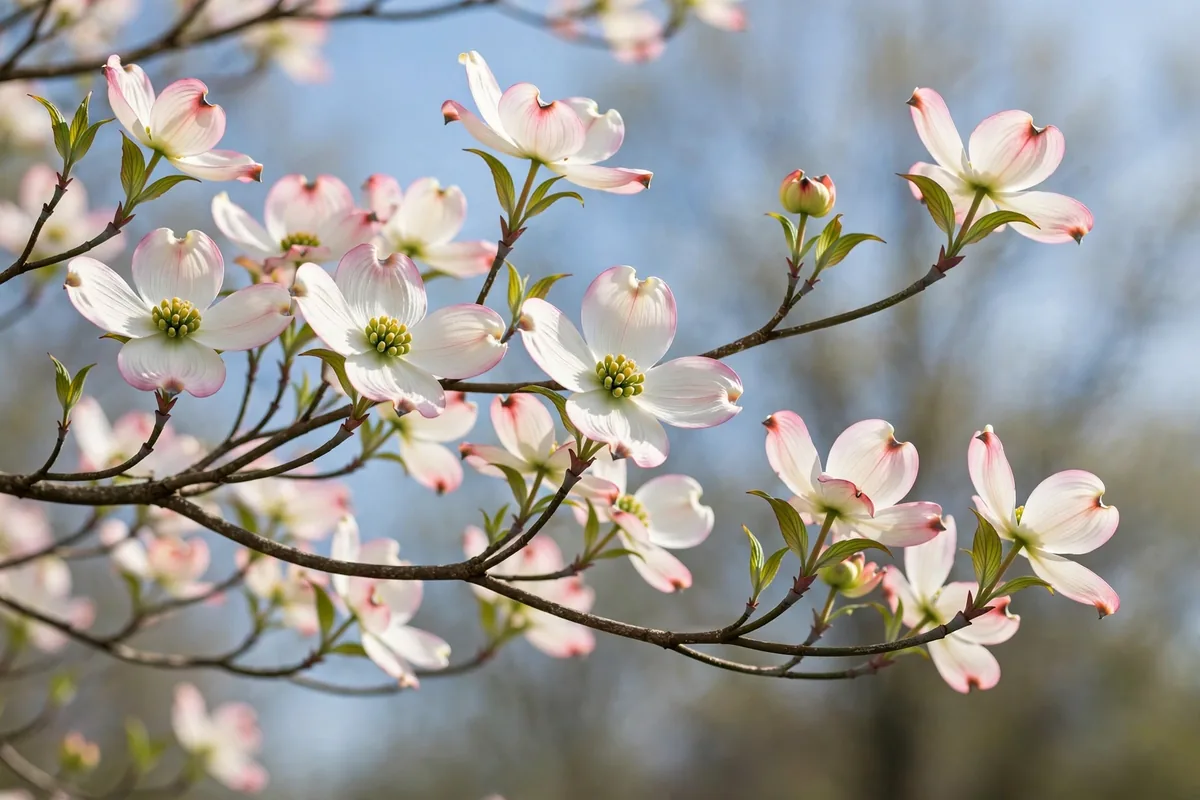
The Shasta daisy is the classic white daisy of cottage gardens — cheerful white petals around a golden-yellow center, blooming in generous waves from early to late summer. Created by plant breeder Luther Burbank in the early 1900s and named after the snow-white peak of Mount Shasta, it is tougher and longer-blooming than the wild oxeye daisy it was bred from, with sturdy stems that hold up well in wind and rain.
Plant Shasta daisies in full sun to light shade in zones 5–9, in average garden soil with decent drainage. Deadhead spent flowers to trigger repeat blooms, and divide crowded clumps every 2–3 years in spring or fall to keep them vigorous. They are deer resistant and excellent cut flowers — cut stems early in the morning for the longest vase life.
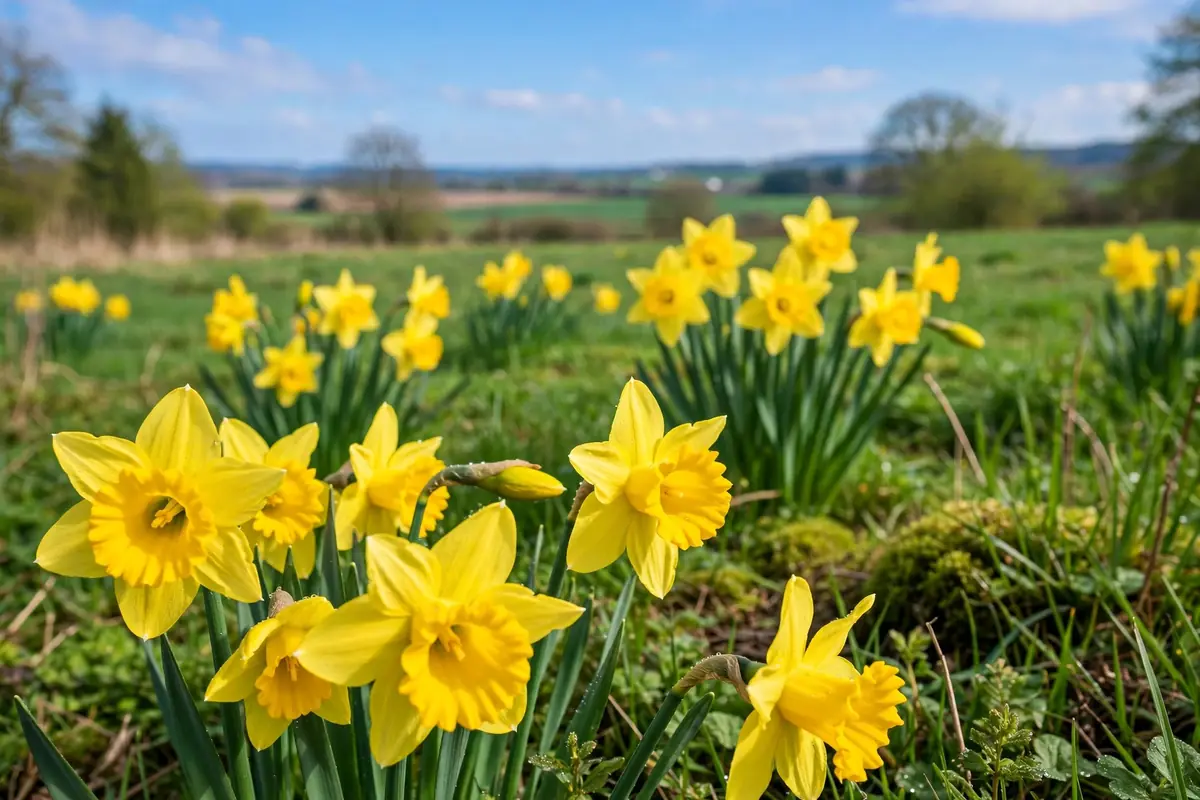
4. Daffodil (Narcissus spp. and hybrids)
No spring garden is complete without daffodils. These cheerful trumpet-shaped bulbs are among the most reliable plants on Earth: plant them once in fall, and they will return bigger and better for decades, naturalizing into drifts that multiply on their own. Beyond the classic yellow trumpet, daffodils come in white, cream, orange, pink, and double forms, with early, mid, and late varieties that can stretch the season to two months.
Plant bulbs in fall, 3 times as deep as the bulb is tall (about 6 inches), in full sun to part shade. Daffodils are famously deer, rabbit, and rodent resistant — the bulbs contain toxic alkaloids that pests avoid. After flowering, let the foliage die back naturally for at least six weeks; the leaves are recharging the bulb for next year. They thrive in zones 3–8 and ask for almost nothing else.
5. Dwarf Daffodil ‘Tête-à-tête’ (Narcissus ‘Tête-à-tête’)
‘Tête-à-tête’ is the miniature daffodil that conquered the gardening world — just 6 inches tall, with one to three sweetly fragrant yellow blooms per stem. It flowers weeks before most daffodils, often pushing through late-winter snow, and its small scale makes it perfect for rock gardens, path edges, window boxes, and forcing indoors in pots for winter color.
Plant the tiny bulbs 4 inches deep in fall, in clumps of a dozen or more for real impact. Like all daffodils it is hardy in zones 4–8 and needs no special care beyond letting the foliage ripen after bloom. If you have only ever grown standard daffodils, try ‘Tête-à-tête’ — its early, honey-scented flowers are the first real promise of spring.
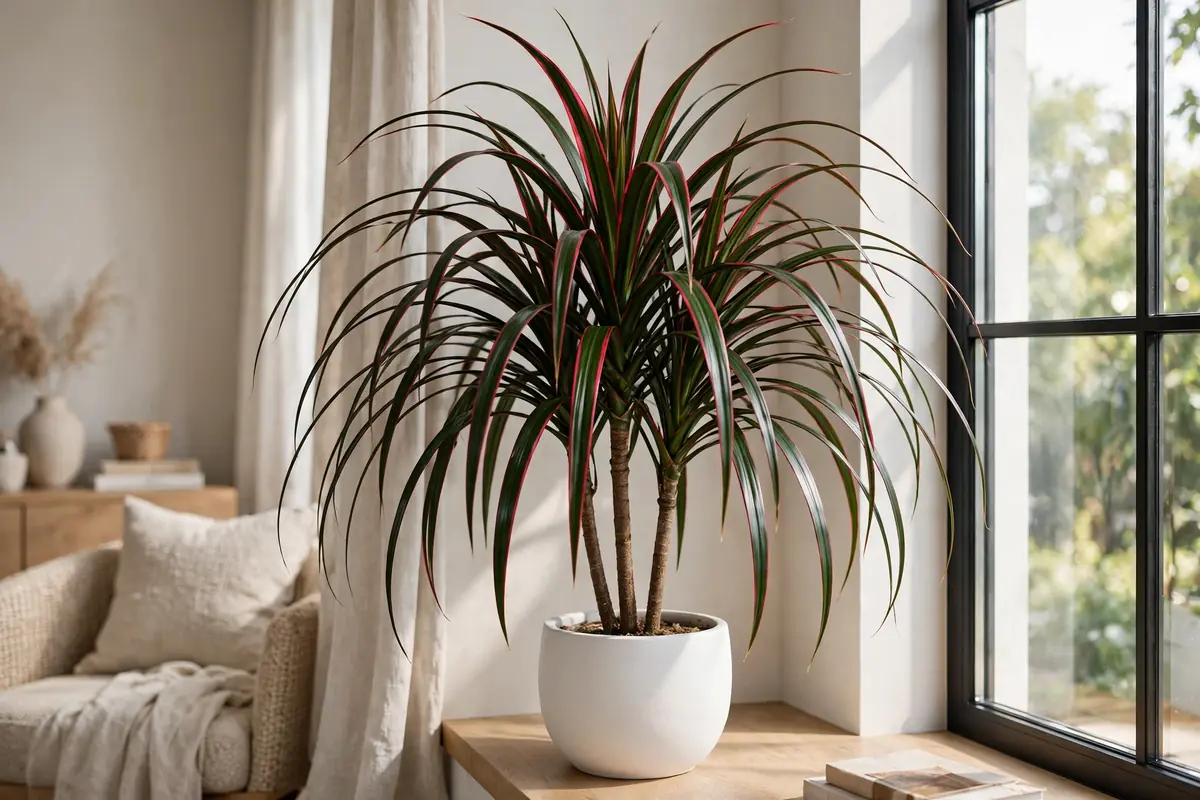
6. Madagascar Dragon Tree (Dracaena marginata)
The Madagascar dragon tree is the houseplant world’s great survivor: a sculptural cluster of slender canes topped with fountains of narrow, arching green leaves edged in red. It tolerates low light, missed waterings, dry indoor air, and beginner mistakes that would kill fussier plants — which is exactly why it has anchored living rooms and offices for decades.
Give it bright indirect light for the richest red leaf margins, though it adapts to medium light. Water only when the top 2 inches of soil are dry; overwatering is the one reliable way to kill it. It is hardy outdoors only in zones 10–12, where it can reach 20 feet, but indoors it grows slowly to about 6 feet and can be pruned to branch. Keep it away from cats and dogs — the leaves are mildly toxic if chewed.
7. Corn Plant (Dracaena fragrans ‘Massangeana’)
The corn plant — named for its broad, corn-like leaves with a central lime-green stripe — is the quintessential easy-care floor plant. A single stalk can rise 4–6 feet indoors, crowned with a lush rosette of arching foliage, and mature plants occasionally surprise their owners with sprays of intensely fragrant white flowers on warm nights.
Like its dragon-tree cousin, the corn plant wants bright indirect light and a strict no-overwatering policy: soggy soil causes brown leaf tips and stem rot. It tolerates fluorescent office light and irregular watering, making it a top pick for workplaces. Wipe the broad leaves occasionally to keep them dust-free and glossy. Outdoors it is hardy in zones 10–12, where in its native tropical Africa it becomes a genuine tree.
8. Flowering Dogwood (Cornus florida)
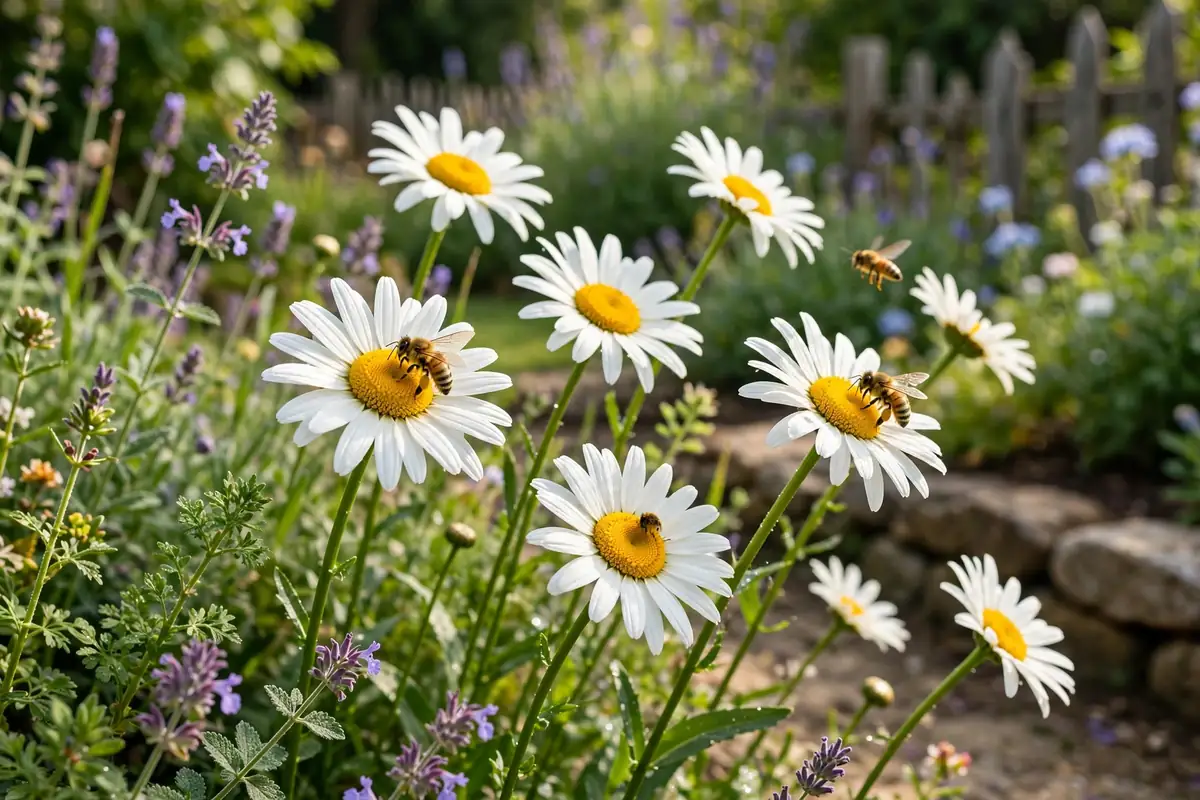
The flowering dogwood is eastern North America’s signature spring tree — a graceful, layered small tree that erupts in clouds of white or pink “flowers” (actually showy bracts) in mid-spring, followed by glossy red berries that birds devour and crimson-purple fall foliage. It is a four-season tree that anchors woodland gardens like nothing else.
Plant dogwoods in part shade with morning sun, in moist, acidic, well-drained soil rich in organic matter — they are understory trees and resent hot, dry, exposed sites. Mulch widely to keep roots cool, and water young trees deeply through dry spells. Hardy in zones 5–9 and reaching 15–30 feet, the flowering dogwood rewards patience: it is slow to establish but then performs for a century.
9. Kousa Dogwood (Cornus kousa)
If the native flowering dogwood is a spring poem, the Kousa dogwood is its summer sequel. This Asian cousin blooms 2–3 weeks later, with creamy-white pointed bracts that sit atop the foliage like little stars, followed by striking raspberry-like red fruits that birds and gardeners both enjoy. Its exfoliating bark and excellent disease resistance — it shrugs off the anthracnose that troubles native dogwoods — make it the smarter choice in many regions.
Kousa dogwood is more sun-tolerant than its American relative, thriving in full sun to part shade in zones 5–8. Give it the same moist, well-drained, slightly acidic soil, and expect a vase-shaped tree maturing at 15–25 feet. Plant it where you can admire the late-spring bloom show and the unusual strawberry-like fruits in late summer.
10. Delphinium (Delphinium elatum hybrids)
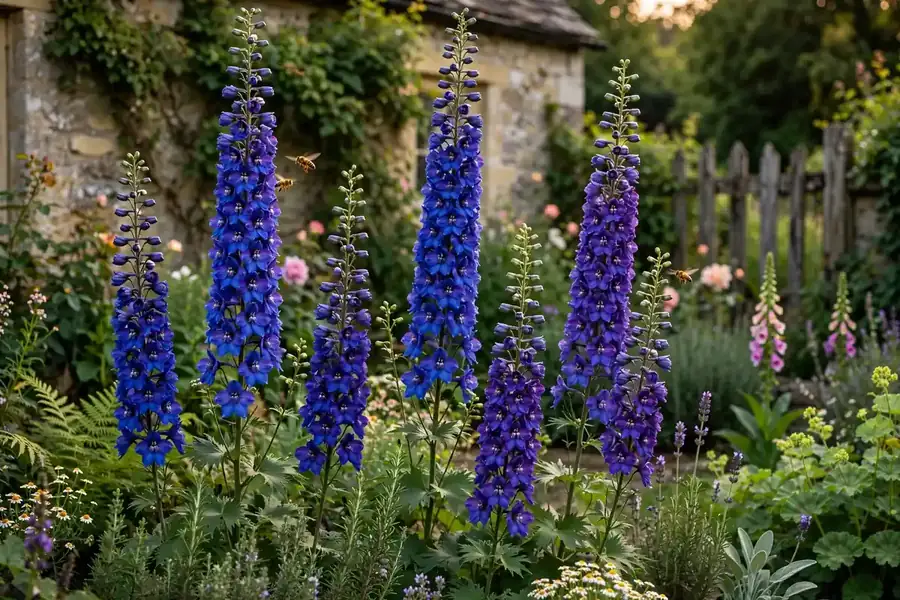
Delphiniums are the skyscrapers of the perennial border — towering 4–6 foot spires of blue, purple, pink, and white that no other plant can imitate. There is no true-blue flower more intense than a delphinium spire, and hummingbirds, bees, and butterflies queue up to visit. In cool-summer climates they can be the single most spectacular plant in the garden.
The catch: delphiniums demand cool summers and will sulk or die in hot, humid climates. Plant them in full sun in zones 3–7, in rich, moisture-retentive but well-drained soil, and stake the tall spires before they flop. Cut flowered spikes back hard after the first flush and many varieties will rebloom. All parts are toxic if eaten, so site them away from vegetable gardens and curious pets.
11. Larkspur (Consolida ajacis)
Larkspur is delphinium’s easygoing annual cousin — the same romantic spires of blue, pink, lavender, and white, but from seed sown directly in the garden each year. It self-sows freely, so one planting often becomes a permanent colony, and its feathery foliage looks good even before the flowers arrive. Florists love it as a tall filler in summer bouquets.
Sow seeds in fall or very early spring where they are to grow, since larkspur hates transplanting — it needs cold to germinate well. Give it full sun and average soil in any zone (it is grown as an annual everywhere), and deadhead for a longer show or leave seed heads for next year’s volunteers. Like delphiniums, the seeds are toxic, so keep packets away from children.
12. Carnation (Dianthus caryophyllus)
The carnation is one of humanity’s oldest cultivated flowers — grown for over 2,000 years for its ruffled, clove-scented blooms. Modern garden carnations come in an astonishing range of colors, including striped and picotee forms, and their spicy-sweet fragrance is unmatched among cut flowers. As a border perennial in zones 5–9, they bloom from late spring into summer with steady deadheading.
Carnations insist on full sun and sharply drained, slightly alkaline soil; wet winter soil kills more carnations than cold does. Plant them where air circulates freely, deadhead regularly, and shear plants lightly after the main flush. They make superb, long-lasting cut flowers — a vase of home-grown carnations can perfume an entire room.
13. Sweet William (Dianthus barbatus)
Sweet William brings the carnation’s charm to the biennial border: dense, flat-topped clusters of small, often two-toned flowers in reds, pinks, whites, and purples, many with a delicious clove scent. It flowers in late spring to early summer of its second year, bridging the gap between spring bulbs and summer perennials, and butterflies find it irresistible.
Sow seeds in early summer for blooms the following year, in full sun to light shade in zones 3–9. Sweet William tolerates a wide range of soils and often self-sows into permanent drifts. Cut the flower heads back after blooming and some plants will behave as short-lived perennials, returning for a third year.
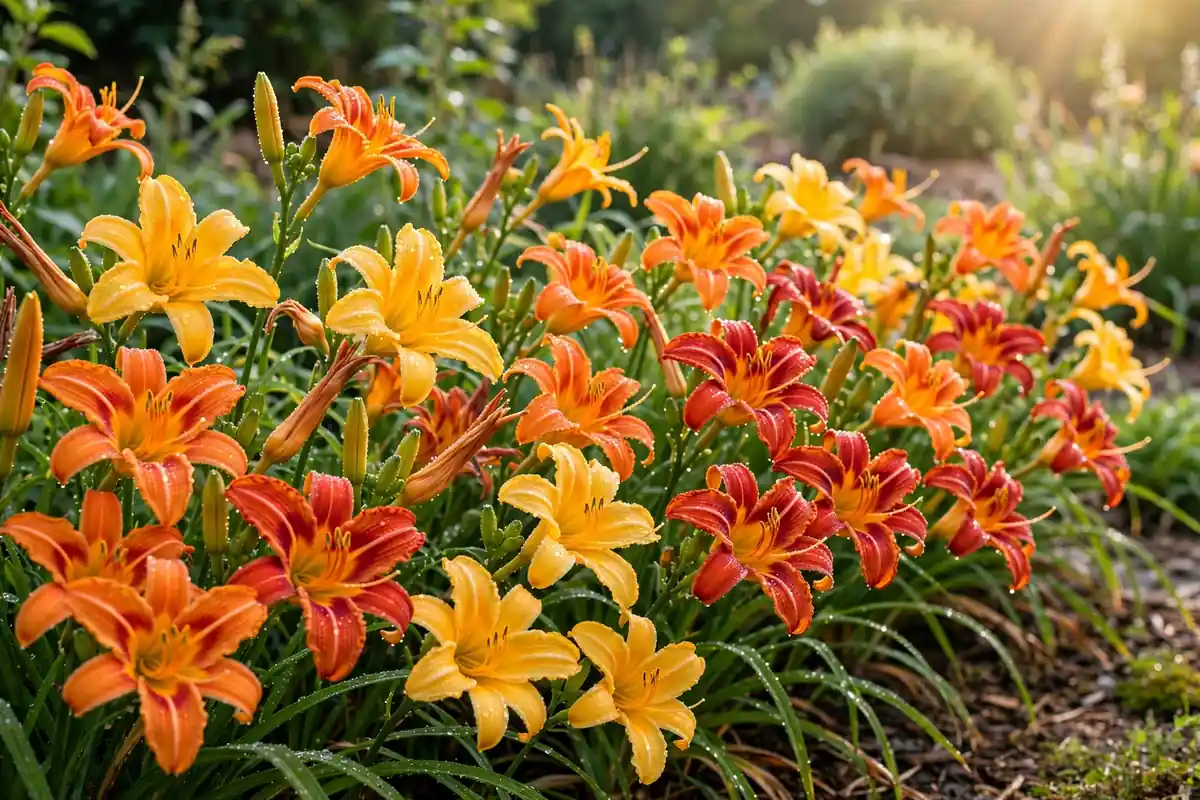
14. Daylily (Hemerocallis spp.)
The daylily might be the most forgiving perennial ever bred — each flower lasts just one day, but a healthy clump produces hundreds of buds over a season that can stretch from early summer to fall. Modern hybrids come in nearly every color imaginable, from near-white to near-black purple, in forms ranging from delicate spiders to ruffled doubles. They thrive on neglect that would kill lesser plants.
Plant daylilies in full sun to part shade in zones 3–9, in almost any soil — they tolerate clay, drought, and even roadside conditions once established. Divide congested clumps every 3–4 years to keep bloom production high. Note that daylilies are highly toxic to cats, so cat owners should choose another D-plant or keep them strictly outdoors.
15. Daylily ‘Stella d’Oro’ (Hemerocallis ‘Stella d’Oro’)
‘Stella d’Oro’ is the daylily that changed everything. Bred in 1975, this compact, golden-yellow dwarf was one of the first truly reblooming daylilies — it flowers from late spring all the way to frost if deadheaded, a performance unheard of at the time. It went on to become one of the best-selling perennials in history, and it still anchors commercial landscapes worldwide.
Grow it like any daylily — full sun to part shade, zones 3–9, average soil — but give it a little extra water and regular deadheading to maximize the rebloom. At just 12–18 inches tall it fits path edges, containers, and small gardens where full-size daylilies would overwhelm. A genuinely historic plant you can buy for the price of a coffee.
16. Dusty Miller (Jacobaea maritima)
Dusty Miller is grown for its foliage, not its flowers: deeply lobed, felted leaves in luminous silver-white that glow in moonlight and make every neighboring flower color pop. It is the classic edging and container filler, tracing elegant silver lines around bedding displays and cooling down hot-colored borders. In warm zones it is a perennial; everywhere else it is grown as an annual.
Give dusty miller full sun and lean, well-drained soil — it hates wet feet and rich soil makes it floppy. It is extremely drought and heat tolerant once established. Pinch off the small yellow flower heads if they appear, since they distract from the foliage show. Hardy in zones 8–10, it is a workhorse in summer containers from Maine to Miami.
17. Winter Daphne (Daphne odora)
Winter daphne is the shrub that makes gardeners gasp in February: clusters of intensely fragrant pink-and-white flowers opening on bare stems in the dead of winter, scenting the whole garden when almost nothing else dares to bloom. Its glossy evergreen leaves look good year-round, and the variegated form ‘Aureomarginata’ adds golden-edged foliage to the show.
Plant daphne in part shade in zones 7–9, in moist but sharply drained, humus-rich soil — it famously resents being moved, so choose the spot carefully and plant it once. Never let it sit in waterlogged soil, but do not let it dry out completely either. All parts are toxic, but its winter fragrance alone justifies a sheltered spot near a door or path.
18. Bleeding Heart (Lamprocapnos spectabilis)
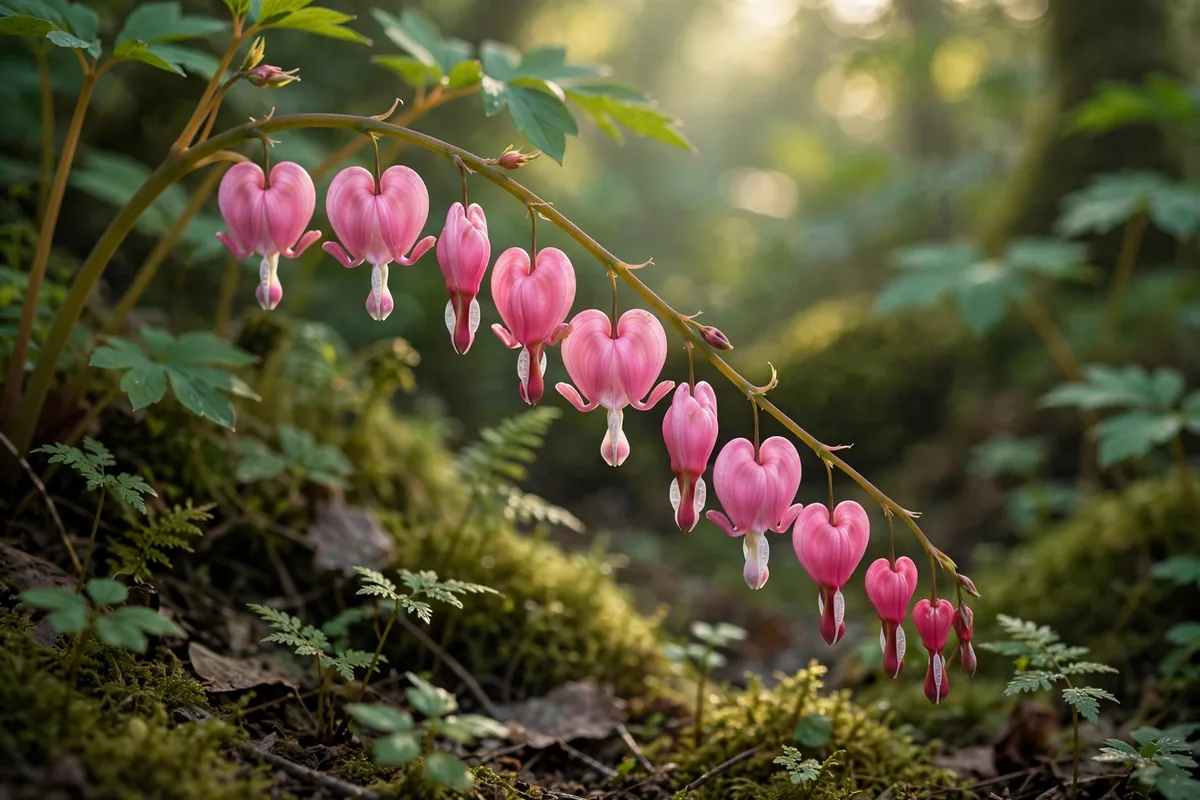
The old-fashioned bleeding heart is the most romantic plant in the shade garden: arching stems strung with rows of pink, heart-shaped lockets, each tipped with a white “drop,” dangling in mid-spring like a botanical chandelier. Native to woodlands of Siberia, northern China, Korea, and Japan, it thrives in cool, moist shade where few showy plants dare.
Plant it in part to full shade in zones 3–9, in rich, moisture-retentive soil. The foliage naturally goes dormant and disappears by midsummer — this is normal, not death — so plant ferns or hostas nearby to fill the gap. Do not overwater dormant roots. Handle with care: the sap can irritate skin, and all parts are toxic if eaten.
19. Fringed Bleeding Heart (Dicentra eximia)
The native fringed bleeding heart improves on its Asian cousin in one crucial way: it blooms far longer. Where the old-fashioned bleeding heart flowers for a few spring weeks then vanishes, this eastern North American native produces delicate pink, heart-shaped blooms from late spring into fall, on finely cut, fern-like blue-green foliage that stays attractive all season.
Give it the same rich, moist, shady conditions in zones 3–9, and it will even self-sow gently into a colony. It is an excellent choice for native-plant shade gardens and woodland edges. The wild form has pink flowers; look for the white-flowered ‘Alba’ or the deeper rose ‘Luxuriant’ for variety.
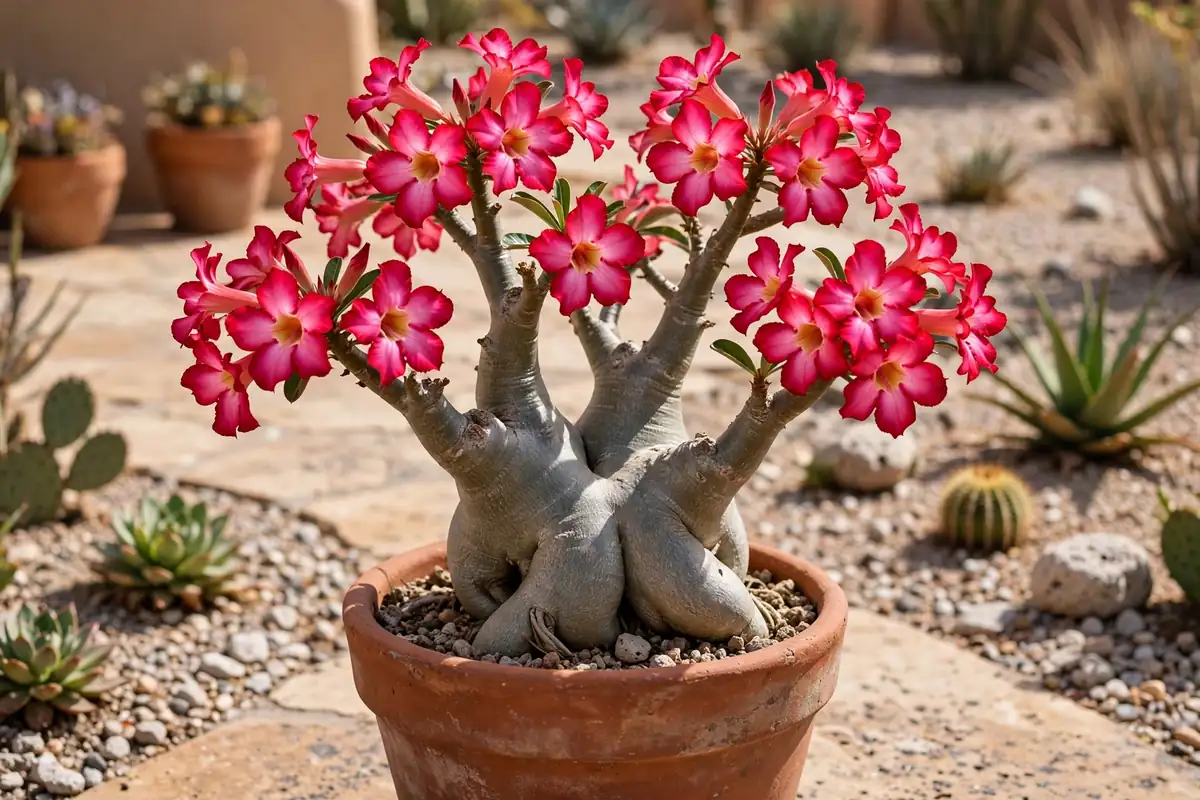
20. Desert Rose (Adenium obesum)
The desert rose looks like a plant from another planet: a grotesquely beautiful swollen gray trunk (the caudex) that stores water, topped with a crown of glossy leaves and clusters of vivid pink-red trumpet flowers. In the wilds of sub-Saharan Africa and Arabia it becomes a small tree; in pots it makes a spectacular living sculpture that blooms for months.
Give desert rose the sunniest, hottest spot you have — full blazing sun — in extremely well-drained cactus soil. Water deeply but infrequently, letting the soil dry completely between waterings, and keep it nearly dry in winter. Hardy only in zones 10–12, it spends winters indoors in most climates. Wear gloves when pruning: the milky sap is toxic and was historically used as arrow poison.
21. Dumb Cane (Dieffenbachia seguine)
Dumb cane earns its place among houseplant royalty with bold, paddle-shaped leaves splashed and streaked in cream, white, and yellow-green. A mature plant makes a dramatic 3–6 foot statement in a bright corner, and dozens of cultivars offer different variegation patterns. Its odd common name comes from the sap’s effect: chewing the stems causes painful swelling of the mouth and throat, historically rendering victims temporarily speechless.
Grow dumb cane in bright indirect light in average potting soil, keeping it evenly moist but never soggy. It appreciates humidity and regular feeding in the growing season. Keep it strictly away from children and pets due to the toxic sap, and wear gloves when pruning. Outdoors it is hardy only in zones 10–12.
22. Dwarf Alberta Spruce (Picea glauca ‘Conica’)
The dwarf Alberta spruce is the perfect miniature Christmas tree that never needs decorating: a naturally dense, conical evergreen with soft, bright-green needles, growing just 2–4 inches per year. Discovered as a witch’s broom mutation in Alberta, Canada, in 1904, it stays a tidy 10–13 feet after many decades, making it ideal for foundation plantings, rock gardens, and large containers.
Plant it in full sun to part shade in zones 2–8, in moist, well-drained, slightly acidic soil. The biggest threat is spider mites, which love the dense foliage — hose the tree down periodically and watch for browning interior needles. Its extremely slow growth means it almost never outgrows its space, a rare virtue in an evergreen.
23. Dutchman’s Pipe (Aristolochia macrophylla)
Dutchman’s pipe is grown for two marvels: huge, heart-shaped leaves that create instant tropical shade, and bizarre curved flowers shaped exactly like old-fashioned meerschaum pipes. This vigorous eastern North American vine can cloak a pergola or unsightly fence in a single season, and it is the essential host plant for the spectacular pipevine swallowtail butterfly — plant it and they will come.
Give it full sun to part shade and average, moist soil in zones 5–8, with a sturdy support — a mature vine reaches 20–30 feet and gets heavy. Prune in late winter to control size. Note that all Aristolochia species contain aristolochic acids, toxic to humans; enjoy the flowers and butterflies, but never ingest any part.
24. Slender Deutzia (Deutzia gracilis)
Slender deutzia is the small shrub with an outsized spring show: in late spring, its arching 2–4 foot stems disappear under clusters of fragrant, pure-white bell flowers. Native to Japan, it is refined rather than flashy, perfect for the front of a shrub border, foundation plantings, or a low hedge. The cultivar ‘Nikko’ is even more compact, topping out under 2 feet.
Plant deutzia in full sun to part shade in zones 5–8, in average well-drained soil. Prune right after flowering, since it blooms on the previous year’s wood — a late-summer haircut removes next spring’s flowers. It is largely pest-free and deer resistant, asking little beyond an annual trim.
25. Angel’s Fishing Rod (Dierama pulcherrimum)
Angel’s fishing rod is one of the most graceful plants you can grow: 4–6 foot arching stems that rise from grassy clumps and dangle dozens of silvery-pink bell flowers, swaying in the slightest breeze like fishing lines with tiny catches. Native to the grasslands of South Africa, it brings an ethereal, almost wildflower-meadow quality to summer borders and pond edges.
Plant the corms in full sun in zones 7–9, in moisture-retentive soil — it tolerates clay and even boggy edges. Established clumps resent disturbance, so plant it where it can stay for years. Leave the seed heads standing through winter for their architectural beauty, and divide only when the clump becomes congested. Hummingbirds visit the bells in regions where their ranges overlap.
26. Dogtooth Violet (Erythronium dens-canis)
Despite its name, the dogtooth violet is neither a violet nor dog-related — it is a European spring ephemeral bulb named for the tooth-shaped corm. Its mottled, trout-lily-like leaves emerge in early spring, followed by nodding pink-lilac flowers with swept-back petals. It carpets deciduous woodlands in its native Europe, going dormant by early summer after the canopy leafs out.
Plant bulbs 4 inches deep in fall in part shade, in humus-rich soil that stays moist in spring — under deciduous trees and shrubs is ideal. Hardy in zones 3–7, it needs no care once established and will slowly naturalize. Never dig dormant bulbs in summer; mark the spot and let the colony expand undisturbed.
27. Shooting Star (Primula meadia)
The shooting star is a native wildflower of such elegance that it looks designed: in mid-spring, sturdy stems rise above rosettes of basal leaves, each topped with a cluster of white, pink, or lavender flowers whose petals sweep backward like a meteor’s tail. Bees pollinate them by buzz pollination, vibrating the flowers to release pollen.
Formerly classified as Dodecatheon meadia, this central and eastern North American native wants part shade and humus-rich, consistently moist soil in zones 4–8 — think woodland edges and prairie swales. Like many ephemerals it goes dormant in summer heat, so pair it with ferns. It self-sows politely where it is happy and is a jewel of native-plant gardens.
28. Dame’s Rocket (Hesperis matronalis)
Dame’s rocket perfumes the evening garden like almost nothing else: tall spikes of purple, pink, or white four-petaled flowers that release an intoxicating sweet scent at dusk. This Eurasian biennial has naturalized across North America along roadsides and woodland edges, where its clouds of spring bloom look utterly romantic. Butterflies and evening moths flock to it.
Sow seeds in summer for flowers the following spring, in full sun to part shade in zones 3–8. It self-sows enthusiastically — deadhead if you want to limit its spread, since it is considered invasive in some regions. Grow it near patios and bedroom windows where the evening fragrance can be enjoyed.
29. Dill (Anethum graveolens)
Dill proves that D-plants are not all ornamentals: this feathery annual herb is a kitchen essential, flavoring pickles, fish, salads, and sauces with its distinctive anise-like tang. Its airy blue-green foliage is beautiful enough for the flower border, and its flat umbels of tiny yellow flowers are magnets for beneficial insects — and the essential host plant for black swallowtail butterfly caterpillars.
Sow dill directly in the garden in full sun after the last frost, since it dislikes transplanting. It grows fast to 2–4 feet, so succession-sow every few weeks for a continuous harvest. Let some plants flower and set seed for next year’s volunteers — and for the swallowtails. Harvest the feathery leaves before flowering for the best flavor.
30. Desert Willow (Chilopsis linearis)
The desert willow is not a true willow, but this southwestern US native earns the comparison with its long, willow-like leaves and graceful form. From late spring to fall it produces masses of trumpet-shaped flowers in pink, lavender, and white with yellow throats — blossoms that hummingbirds find irresistible. It is one of the toughest flowering trees for hot, dry climates, thriving where pampered ornamentals fry.
Plant desert willow in full blazing sun in zones 7–9, in any well-drained soil — it handles poor, rocky, alkaline ground with ease. Water deeply but infrequently once established; it is extremely drought tolerant. Prune in late winter to shape its naturally multi-trunked form into a small tree 15–25 feet tall.
31. Dendrobium Orchid (Dendrobium nobile)
The noble dendrobium is the orchid for people who think they cannot grow orchids: cane-like stems lined with leathery leaves, erupting in late winter into sprays of fragrant white, pink, or purple flowers that last for weeks. Native to the Himalayas and Southeast Asia, it is far more cold-tolerant than tropical orchids and reblooms reliably with the right seasonal rhythm.
Grow it in bright indirect light in coarse bark mix. The secret to reblooming is a cool, dry winter rest: from fall to early spring, give it bright light, temperatures of 50–60°F at night, and very little water until new growth appears. Then resume normal watering and feeding. It is hardy outdoors only in zones 9–11, where it can grow mounted on trees.
32. Dappled Willow (Salix integra ‘Hakuro Nishiki’)
The dappled willow is grown purely for its astonishing foliage: new leaves emerge splashed in pink, cream, and green, like a watercolor painting, maturing to dappled white and green through summer. This Japanese cultivar of a shrubby willow is a living focal point — no flowers needed. Cut it back hard each spring and it responds with a flush of the brightest pink variegation.
Plant it in full sun to part shade in zones 4–9, in average to moist soil — it loves water and tolerates wet spots. Prune ruthlessly in early spring (down to a foot or two) for the most colorful new growth, and shear lightly in summer if it gets leggy. Keep it watered in dry spells; drought causes leaf scorch on the variegated foliage.
33. Dawn Redwood (Metasequoia glyptostroboides)
The dawn redwood is a genuine living fossil — a deciduous conifer known only from fossils until living trees were discovered in a remote Chinese valley in the 1940s. Unlike most conifers it drops its soft, feathery needles each fall, turning brilliant copper-orange first. It grows astonishingly fast, shooting up 2–4 feet per year, and becomes a majestic 50–80 foot specimen with shaggy, buttressed bark.
Plant dawn redwood in full sun in zones 4–8, in deep, moist, well-drained soil — it loves water and tolerates wet ground. Give it room: this is a park or large-property tree, not a foundation planting. Once established it is virtually pest-free and maintenance-free, a prehistoric survivor that asks only for space and moisture.
34. Dragon Arum (Dracunculus vulgaris)
The dragon arum is the plant you grow to shock your gardening friends: in late spring, a 2–3 foot stalk unfurls a huge, velvety, deep-maroon spathe wrapped around a near-black spadix — looking like something from a fantasy film. It is pollinated by flies, and on the first day of bloom it releases a powerful carrion stench to attract them (mercifully, the smell lasts only a day).
Plant the large tubers 4–6 inches deep in part shade in zones 7–9, in rich, well-drained soil that stays dry in summer when the plant goes dormant. Site it away from patios and windows — or right beside the path of a neighbor you enjoy startling. All parts are toxic if eaten, but as a conversation piece it has no equal among D-plants.
35. Dwarf Iris (Iris reticulata)
The dwarf or reticulated iris is winter’s farewell gift: just 4–6 inches tall, its jewel-like blue, purple, or yellow flowers often open in late winter, weeks before daffodils, with a sweet violet fragrance. Native to the rocky slopes of the Caucasus, Turkey, and Iran, it is built for cold and demands sharp drainage — the perfect rock garden and trough plant.
Plant bulbs 3–4 inches deep in fall in full sun to light shade, in gritty, well-drained soil. The critical requirement is a dry summer dormancy — wet summer soil rots the bulbs. Hardy in zones 5–9, it naturalizes slowly into drifts. Plant it near paths and doorways where its tiny, early blooms will not be missed.
Growing Tips for D-Plants
Match the plant to your zone first. D-plants span zones 2–12 — from the ultra-hardy dwarf Alberta spruce (zone 2) to tropical desert rose and dracaenas (zones 10–12). Check the tables above before falling in love with a plant that cannot survive your winter.
Give sun-lovers real sun. Dahlias, daylilies, delphiniums, dusty miller, and desert rose all bloom best with at least six hours of direct sun. Shade specialists like bleeding heart, winter daphne, and shooting star will scorch in hot afternoon sun — tuck them under trees or on the north side of the house.
Respect dormancy. Many D-plants disappear on schedule: daffodil and dogtooth violet foliage ripens by early summer, bleeding heart vanishes by July, and dragon arum sleeps through summer. Mark their spots and plant summer companions nearby rather than digging “dead” bulbs.
Lift tender tubers in cold zones. Dahlias are hardy only to zone 8. North of there, dig tubers after the first light frost, cure them for a week, and store them in barely moist peat or vermiculite at 40–50°F over winter.
Deadhead for more flowers. Shasta daisies, daylilies (especially ‘Stella d’Oro’), sweet William, and dahlias all rebloom far longer when spent flowers are removed regularly. Carry pruners on your evening garden walk and make it a habit.
Watch the toxic ones. Dumb cane, desert rose sap, delphinium, larkspur, daphne, and bleeding heart are all toxic if ingested. Enjoy them, but site them away from vegetable beds, curious toddlers, and pets that chew plants.
Which D-Plants Will You Grow?
From the dinner-plate dahlias of late summer to the snow-pushing dwarf irises of late winter, plants that start with D cover every season, every garden style, and nearly every hardiness zone. If you are just starting out, you cannot go wrong with the bulletproof trio of daffodils, daylilies, and Shasta daisies. If you want drama, try the dragon arum or a flowering dogwood. And if you garden indoors, a Madagascar dragon tree or dumb cane brings the letter D to your living room.
Pick three D-plants that suit your light and zone, plant them this season, and watch the letter D become the hardest-working letter in your garden. Happy planting!
Frequently Asked Questions
What are the most popular plants that start with D?
The most popular D-plants are dahlia, daffodil, Shasta daisy, flowering dogwood, delphinium, daylily, carnation, sweet William, dusty miller, and dracaena. These ten cover spring bulbs, summer perennials, flowering trees, and houseplants, and all are widely available at garden centers.
What plants starting with D are good for beginners?
Daylilies, daffodils, Shasta daisies, dusty miller, Madagascar dragon tree, and corn plant are nearly indestructible and perfect for beginners. They tolerate imperfect soil, missed waterings, and a wide range of light conditions while still blooming or looking great.
Which D-plants bloom in spring?
Spring-blooming D-plants include daffodils and dwarf daffodils, flowering dogwood, bleeding heart, winter daphne (late winter), dame’s rocket, dogtooth violet, shooting star, dwarf iris, and sweet William. Plant a mix of early, mid, and late spring bloomers for two to three months of continuous color.
What plants that start with D grow in shade?
Excellent shade-tolerant D-plants include bleeding heart, fringed bleeding heart, winter daphne, flowering dogwood (part shade), shooting star, dogtooth violet, and dumb cane and dracaena as houseplants. Most prefer the dappled light under deciduous trees rather than deep, dark shade.
Are dahlias perennials or annuals?
Dahlias are tender tuberous perennials, hardy in USDA zones 8–11. In colder zones they are grown as annuals: plant the tubers in spring after frost, enjoy blooms until fall, then dig and store the tubers indoors over winter to replant the following year.
Which plants starting with D are toxic to pets?
Several D-plants are toxic if chewed or eaten: dumb cane (dieffenbachia), daylilies (highly toxic to cats), delphinium, larkspur, daphne, bleeding heart, desert rose sap, and daffodil bulbs. If you have pets that chew plants, choose pet-safe options like Shasta daisies, and keep toxic species out of reach or outdoors only.