
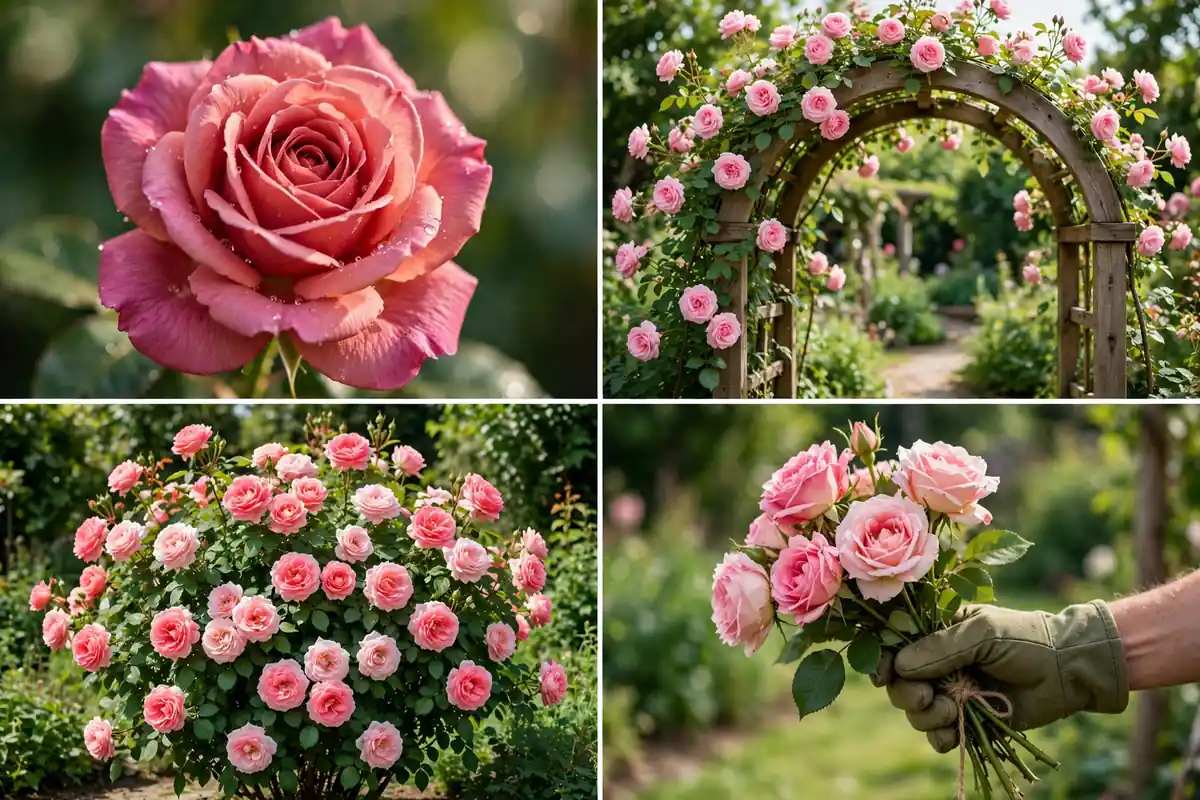
Rose Types and Names: The Complete Guide to Every Rose Variety
Walk into any garden center and the rose section looks like a foreign language: hybrid teas, floribundas, grandifloras, climbers, ramblers, shrubs, landscape roses, miniatures. Yet every one of those labels is actually a map — it tells you how the plant grows, how big the flowers are, how much work it needs, and where it belongs in your garden.
This guide covers every major rose type with famous named varieties, honest growing notes, and the warnings nurseries sometimes skip: which ones actually get black spot, which need a trellis, and which will punish you for planting them in the shade. Whether you are searching for the name of the big roses you saw at a wedding or choosing your first rose bush, start here. Roses, of course, sit at the top of every list of flowers that start with R — and for good reason: few plants offer this much variety in one genus.
Quick Answer
The big roses most people picture are called grandiflora roses — the name literally means “large-flowered.” Grandifloras were bred as a cross between hybrid teas and floribundas to combine large, elegant blooms with the clustered, repeat-flowering habit of the bushier types. The most famous grandiflora is ‘Queen Elizabeth’, the very first of its class, introduced in 1954.
That said, the single largest individual blooms belong to hybrid tea roses (like ‘Peace’ and ‘Mister Lincoln’) — the long-stemmed roses florists use. So if you mean “tall bush with big clustered blooms,” the answer is grandiflora; if you mean “one enormous perfect bloom on a long stem,” the answer is hybrid tea.
Table of Contents
- What Are Big Roses Called? (Grandiflora Explained)
- Rose Types at a Glance
- Hybrid Tea Roses
- Floribunda Roses
- Grandiflora Roses
- Climbing Roses
- Rambler Roses
- Shrub Roses & David Austin English Roses
- Knock Out & Landscape Roses
- Miniature Roses
- Polyantha Roses
- Tree Roses (Standards)
- Species & Wild Roses
- Fragrance, Care & Disease Resistance Compared
- How to Choose the Right Rose Type
- Planting & Care Basics
- Frequently Asked Questions
- References
What Are Big Roses Called? (Grandiflora Explained)
When someone searches “big roses called,” they are almost always describing one of two sights: a towering bush covered in large, showy blooms, or a single dinner-plate bloom on a long stem. Both have precise names in the rose world, and knowing them changes how you shop.
Grandiflora roses are the literal “big roses.” The class was effectively invented for a single variety — ‘Queen Elizabeth’ — introduced in 1954 as a cross between the hybrid tea ‘Charlotte Armstrong’ and the floribunda ‘Floradora’. Breeders wanted the elegant, pointed buds and large blooms of hybrid teas combined with the vigorous, cluster-flowering habit of floribundas. The result: plants that routinely reach 5 to 7 feet, carrying full, large flowers both singly on long stems and in clusters. The United States recognizes grandiflora as a separate class; internationally, they are often grouped with hybrid teas as “large-flowered” roses.
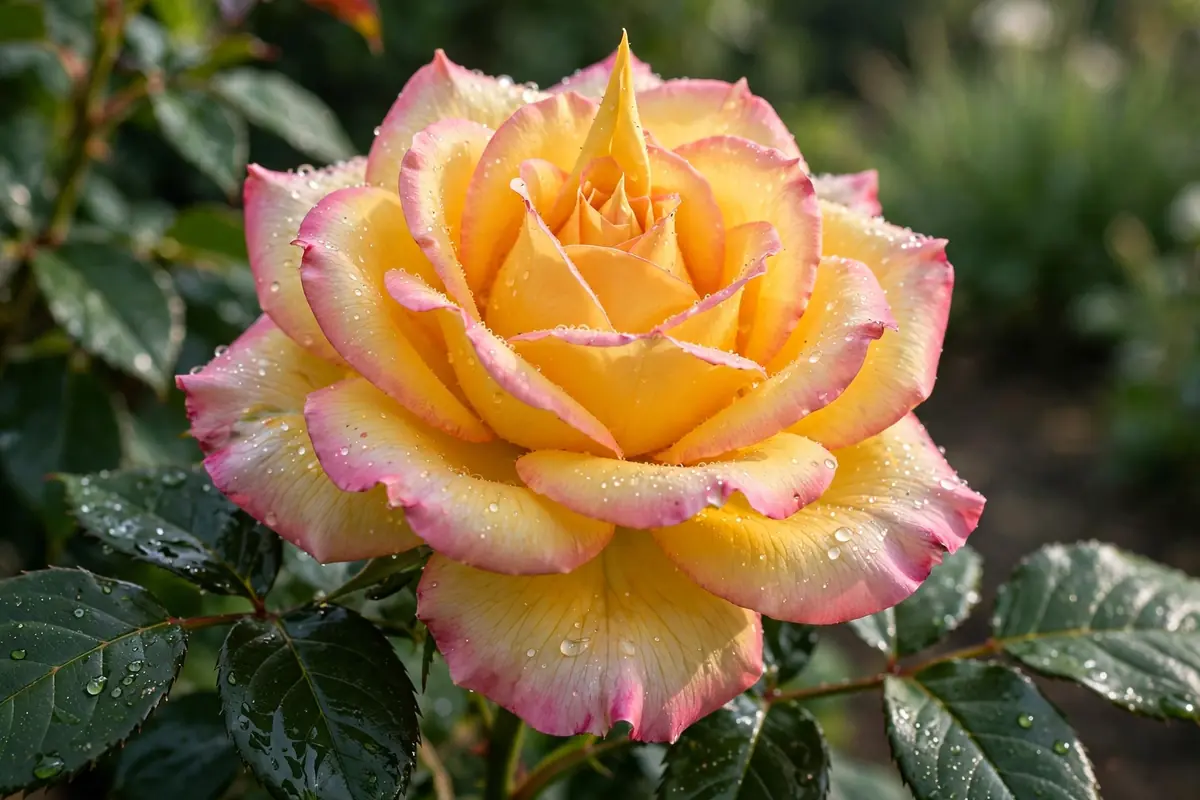
Hybrid teas hold the record for the biggest single blooms. These are the florist roses — one large, high-centered bloom per stem, bred for form rather than flower count. Varieties like ‘Peace’ (the most famous rose of the 20th century) and ‘Mister Lincoln’ (the classic fragrant red) produce blooms 5 to 6 inches across on long cutting stems. If the “big rose” in your memory was a single perfect bloom in a vase, that was a hybrid tea.
So here is the simple rule to remember: grandiflora = big plant with lots of large blooms (best for garden display), hybrid tea = the biggest individual blooms (best for cutting). Both need full sun and good airflow — large, densely petaled blooms in humid, still air are an invitation to black spot, the fungal disease that is the number-one enemy of these showy types.
Rose Types at a Glance
Before the deep dive, here is the cheat sheet. Bookmark it for your next nursery trip:
| Rose Type | Bloom Size | Growth Habit | Best Use |
|---|---|---|---|
| Hybrid Tea | Very large (5–6 in), single blooms | Upright bush, 3–5 ft | Cut flowers, formal beds |
| Floribunda | Medium (2–4 in), in clusters | Bushy shrub, 2–4 ft | Mass color in borders |
| Grandiflora | Large (4–5 in), single or clustered | Tall upright, 5–7 ft | Back of border, cutting |
| Climbing | Medium to large | Long canes, 8–20 ft, needs support | Arbors, trellises, walls |
| Rambler | Small, in huge trusses | Vigorous arching canes, 15–30 ft | Covering walls, trees, pergolas |
| Shrub (incl. David Austin) | Medium to large, often fragrant | Full bushy shrub, 3–6 ft | Mixed borders, hedges |
| Landscape (Knock Out, Drift) | Small to medium | Compact bushy, 1.5–4 ft | Low-maintenance mass planting |
| Miniature | Tiny (1–2 in) | Compact, 8 in–2 ft | Containers, edging, indoors |
| Polyantha | Small (1–2 in), in large clusters | Compact bushy, 2–3 ft | Edging, mass bedding |
| Tree (Standard) | Varies by grafted variety | Lollipop on a trunk, 3–5 ft | Formal focal points, pots |
| Species/Wild | Single, simple, 2–4 in | Arching shrub, 3–8 ft | Naturalized areas, hips, wildlife |
Hybrid Tea Roses
The hybrid tea is the rose most people draw when asked to draw a rose: one large, perfectly formed bloom with a pointed bud and high-centered swirl of petals on a long, straight stem. The class dates to 1867 (‘La France’), and it has dominated the cut-flower world ever since because no other type produces such flawless individual flowers.
Famous varieties to know:
- ‘Peace’ (1945) — the most famous rose of the 20th century. Huge golden-yellow blooms edged in pink, famously introduced as World War II ended. Mildly fragrant, vigorous, and still one of the best garden hybrid teas.
- ‘Mister Lincoln’ (1964) — the benchmark fragrant red rose. Deep velvety-red, intensely perfumed blooms on tall plants. If you want one red rose for scent, this is it — but it is famously black-spot prone, so plan on a spray program or accept some defoliation.
- ‘Double Delight’ (1977) — cream petals edged in strawberry red (the red edge intensifies in sun), with one of the strongest sweet fragrances of any modern rose. A must for scent gardens.
- ‘Fragrant Cloud’ (‘Duftwolke’) — coral-red and powerfully scented; a good pick if ‘Mister Lincoln’ struggles in your climate.
Honest growing notes: Hybrid teas are the prima donnas of the rose world. They demand at least 6 hours of direct sun, rich well-drained soil, regular feeding, and — this is the part nurseries undersell — vigilant disease management. Black spot and powdery mildew hit hybrid teas harder than most types because their large, densely petaled blooms hold moisture. Space plants for airflow, water at the base (never overhead), and remove spotted leaves promptly. Prune hard in late winter/early spring, cutting canes back to 6–12 inches to force strong new flowering wood. In cold climates (below zone 6), mound mulch or soil around the base for winter protection.
Floribunda Roses
If hybrid teas are the soloists, floribundas are the choir. “Floribunda” means “many-flowering,” and that is exactly what you get: clusters of medium-sized blooms that cover the bush in waves from early summer to frost. The individual flowers are smaller than a hybrid tea’s, but the total flower power per plant is far greater — which is why floribundas are the workhorse of public plantings and home borders.
Famous varieties to know:
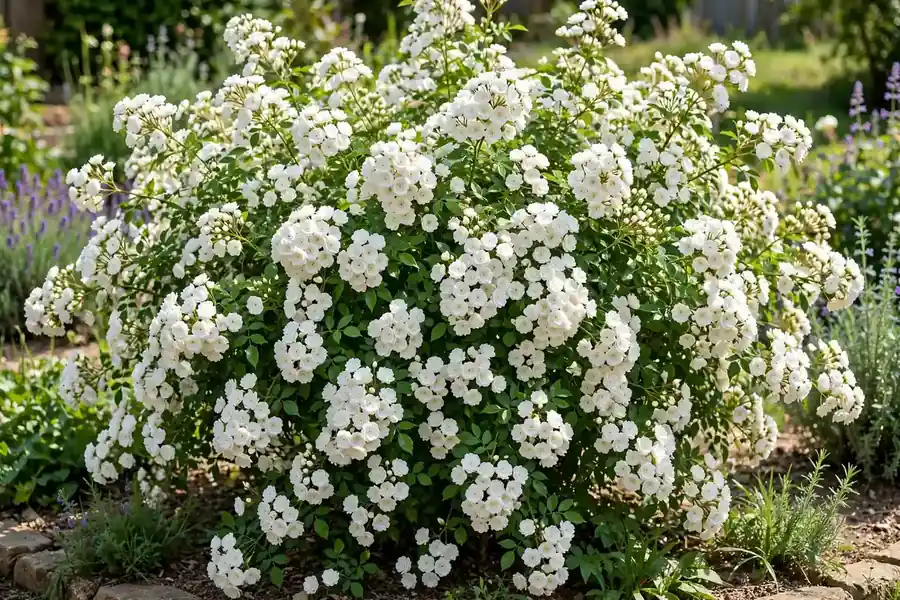
- ‘Iceberg’ (1958) — the white floribunda against which all others are judged. Masses of pure white, lightly fragrant blooms on a vigorous, nearly thornless bush. One honest warning: in humid climates ‘Iceberg’ can suffer black spot, and its blooms ball (fail to open) in prolonged wet weather.
- ‘Julia Child’ (2004) — buttery-yellow, licorice-scented blooms on a compact, disease-resistant bush. Named for the chef, and a genuinely excellent modern floribunda for beginners.
- ‘Europeana’ — dark red clusters, very disease-resistant, and a good cold-climate choice (hardy to zone 4).
- ‘Sexy Rexy’ — yes, really — soft pink, ruffled, exceptionally floriferous. A favorite for sheer flower count.
Honest growing notes: Floribundas are easier than hybrid teas but not carefree. Deadhead spent clusters (cut back to the first five-leaflet leaf) to keep the waves coming — left alone, many will pause blooming to set hips. They are generally bushier and hardier than hybrid teas, making them better landscape shrubs. Modern varieties like ‘Julia Child’ were specifically bred for disease resistance, so if you are a low-spray gardener, choose post-2000 introductions over 1960s classics.
Grandiflora Roses
As covered above, grandifloras are the “big roses” of the search query — tall, vigorous plants carrying large blooms both singly and in clusters. The class exists because ‘Queen Elizabeth’ (1954) did not fit anywhere else: too tall and cluster-flowered for a hybrid tea, too large-flowered for a floribunda.
Famous varieties to know:
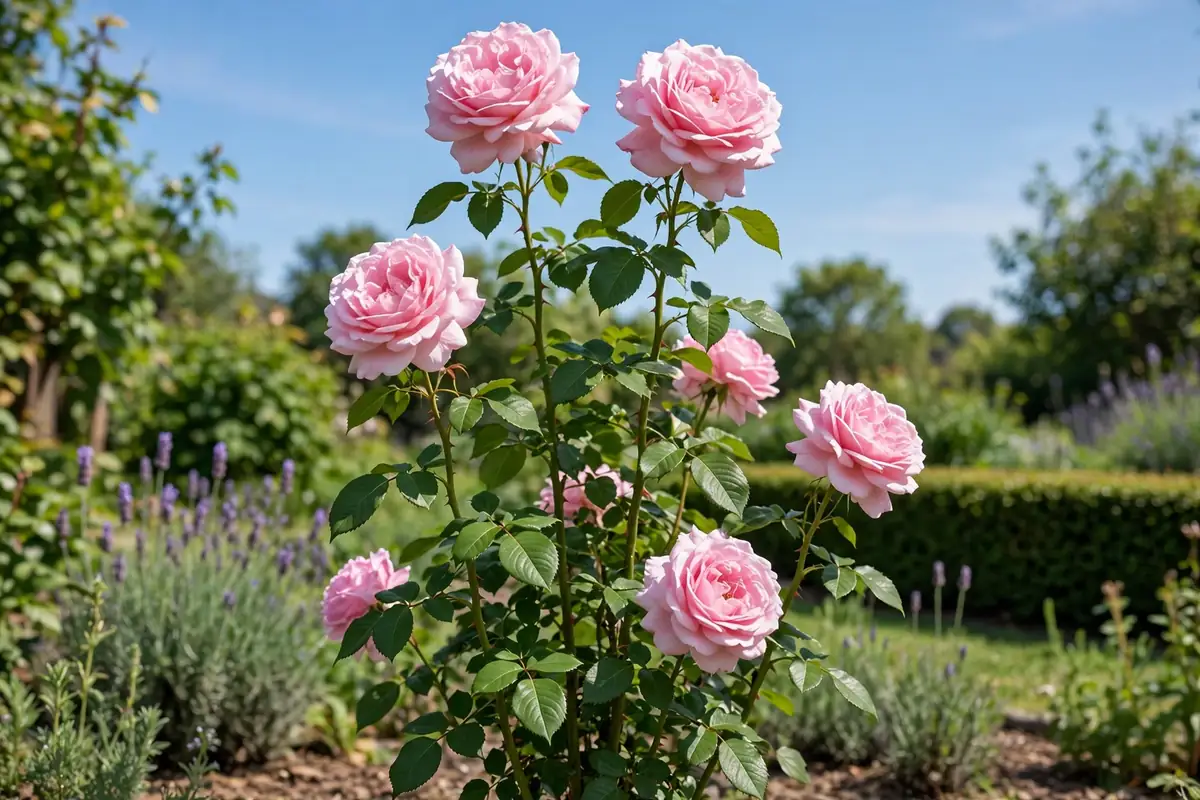
- ‘Queen Elizabeth’ (1954) — the original grandiflora. Clear pink, tall (6–7 ft), vigorous, and remarkably disease-tolerant for its era. Still widely grown 70+ years later, which tells you everything about its garden merit.
- ‘Gold Medal’ (1982) — golden-yellow blooms blushed with pink and orange, nearly thornless, and a strong performer in hot climates. A good pick for southern gardens where many roses fry.
- ‘Tournament of Roses’ — pink blend, vigorous, and one of the most reliable repeat bloomers in the class.
- ‘Love’ — red with a silver reverse, striking in the garden though not the most disease-resistant.
Honest growing notes: Grandifloras want the back of the border — they are too tall and leggy for the front. Their height is their charm and their problem: tall canes catch wind, so plant in a sheltered spot or stake in exposed sites. Prune like hybrid teas but slightly less hard (they bloom on new wood too). Because they flower in flushes rather than continuously, deadhead promptly after each flush to speed the next one.
Climbing Roses
Climbing roses do not climb on their own — they have no tendrils or suckers. They produce long, stiff canes that you must tie to a support. What they give in return is unmatched vertical drama: a single plant can cover an arch, pergola, or wall with hundreds of blooms.
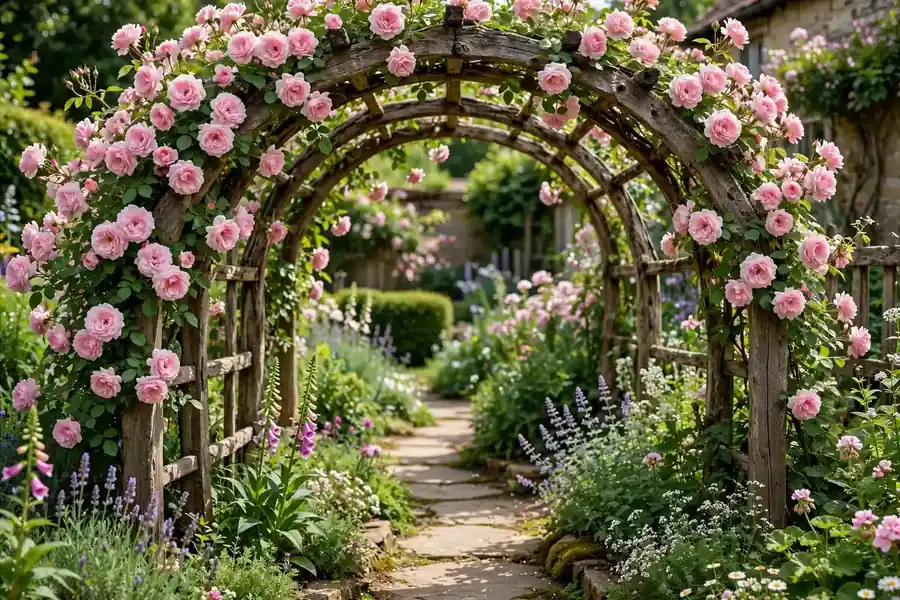
Famous varieties to know:
- ‘New Dawn’ (1930) — the classic blush-pink repeat-blooming climber. Vigorous (15–20 ft), fragrant, and exceptionally disease-resistant. If you plant one climber, this is the safest choice in most climates.
- ‘Eden’ (a.k.a. ‘Pierre de Ronsard’, 1985) — the romantic French climber with huge, cupped, cream-and-pink old-rose-style blooms. Breathtaking — but be honest with yourself: it is a shy rebloomer (one big spring flush, then scattered flowers) and can be black-spot prone. Plant it for the spring show, not season-long color.
- ‘Blaze’ / ‘Blaze Improved’ — bright red, vigorous, and one of the few truly repeat-blooming red climbers.
- ‘Climbing Iceberg’ — the climbing sport of the famous floribunda; clouds of white on a 10–12 ft plant.
Honest growing notes: The number-one beginner mistake is planting a climber and expecting it to climb. You must tie canes to the support — and tie them as horizontally as possible, because horizontal canes produce far more flowering laterals than vertical ones. Never prune a climber hard in its first 2–3 years; let it build its framework. After that, prune only dead wood and spent laterals each spring. Note that many “climbing” versions of bush roses (e.g., ‘Climbing Peace’) are sports that bloom mostly on old wood and flower less freely than true climbers — ‘New Dawn’ is the genuine repeat-blooming article.
Rambler Roses
Ramblers are the wild cousins of climbers: even more vigorous (15–30 ft canes), with flexible stems that produce enormous trusses of small blooms — often hundreds in a single cluster. The trade-off is that most ramblers flower only once per season, typically in early summer, in one unforgettable explosion.
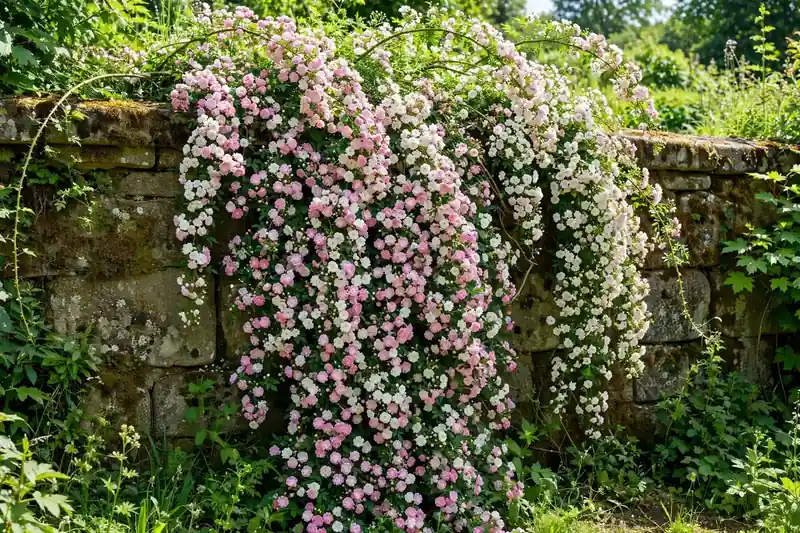
Famous varieties to know:
- ‘Albertine’ (1921) — coppery-pink buds opening to soft pink, intensely fragrant. A classic for pergolas — but mildew-prone, so give it full sun and airflow.
- ‘Rambling Rector’ — small white fragrant flowers in huge trusses, followed by masses of orange hips. Excellent for covering an ugly shed or scrambling through a tree.
- ‘Veilchenblau’ (1909) — the famous violet-purple rambler, nearly thornless, sweetly scented. One of the few truly purple ramblers.
- ‘Paul’s Himalayan Musk’ — can reach 30+ ft; tiny pink musk-scented blooms. Plant only where you have room — it will eat a small trellis for breakfast.
Honest growing notes: Buy a rambler only if you have the space and accept one bloom season. They need the sturdiest possible support — a flimsy arch will collapse under a mature rambler. Prune right after flowering (they bloom on the previous year’s wood), removing a third of the oldest canes at the base. Neglect this and you get a tangled, thorny thicket that flowers only at the top. Ramblers are fantastic for wildlife: their dense growth shelters birds, and many produce showy hips.
Shrub Roses & David Austin English Roses
“Shrub rose” is the broadest category — essentially any full, bushy rose that does not fit the hybrid tea/floribunda mold. It includes tough modern landscape shrubs and the romantic old-rose types. The stars of this group are the David Austin English roses, bred since the 1960s to combine the cupped, rosette, intensely fragrant blooms of old garden roses with the repeat-flowering habit of modern ones.
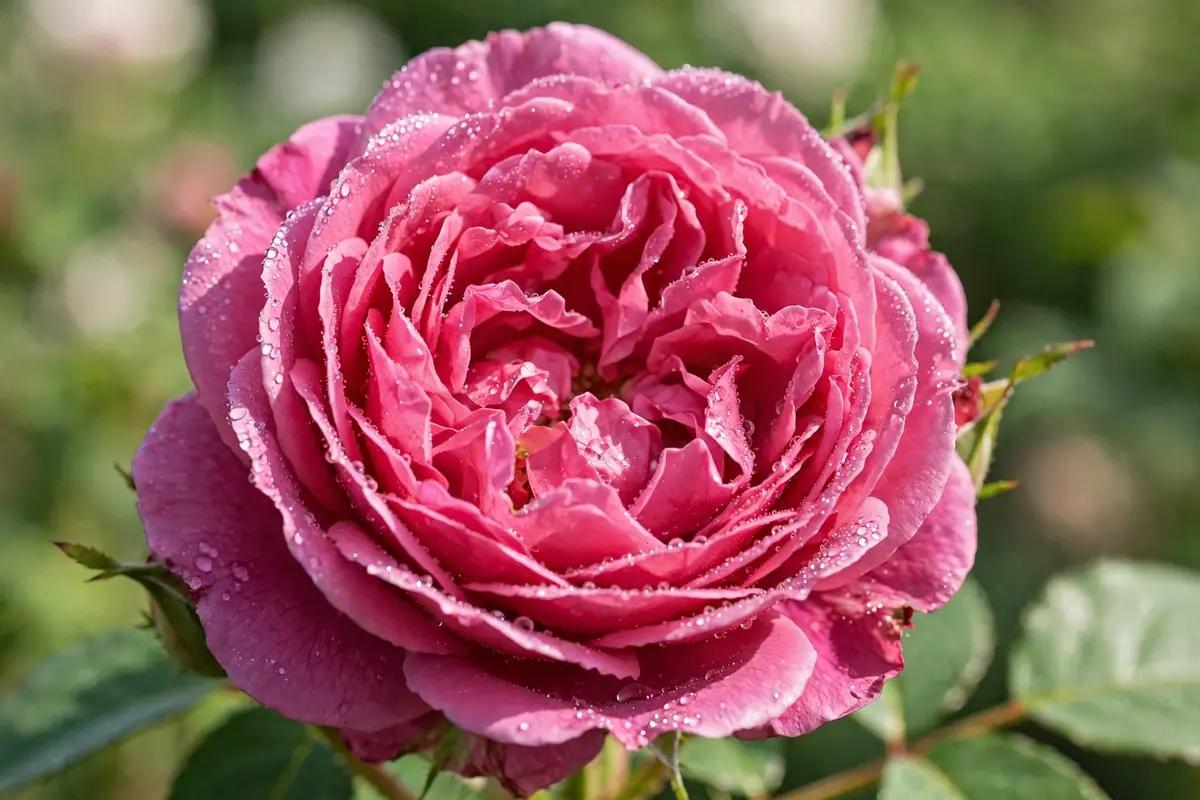
Famous varieties to know:
- ‘Gertrude Jekyll’ (1986) — David Austin’s flagship. Rich pink rosettes with the quintessential “old rose” fragrance — strong, sweet, and unmistakable. Vigorous and thorny; superb but can get leggy, so prune firmly.
- ‘Graham Thomas’ (1983) — rich yellow cupped blooms with a tea fragrance, named for the great plantsman. One of the best yellow English roses, though the color fades in strong sun.
- ‘Heritage’ — blush-pink, lemon-scented, elegant. A refined choice for formal borders.
- ‘Teasing Georgia’ — yellow, vigorous, and one of the more disease-resistant Austins; can be trained as a short climber.
- ‘Bonica’ (1982) — technically a modern shrub, not an Austin, but worth knowing: pink, nearly indestructible, and one of the great beginner roses.
Honest growing notes: English roses are bred for beauty and scent, not for spray-free toughness — in humid climates many Austins do get black spot, and their heavy, many-petaled blooms can ball in rain. Site them in morning sun (which dries dew fast) with generous spacing. They pair beautifully with purple perennial flowers like salvias and catmint, which echo their romantic style while filling gaps between flushes. Prune English roses by about a third in late winter, shaping for an open, vase-like framework.
Knock Out & Landscape Roses
Landscape roses are bred for one job: maximum flowers with minimum effort. They are the roses for people who do not want to be rose gardeners — disease-resistant, self-cleaning (no deadheading needed), and blooming continuously from spring to frost.
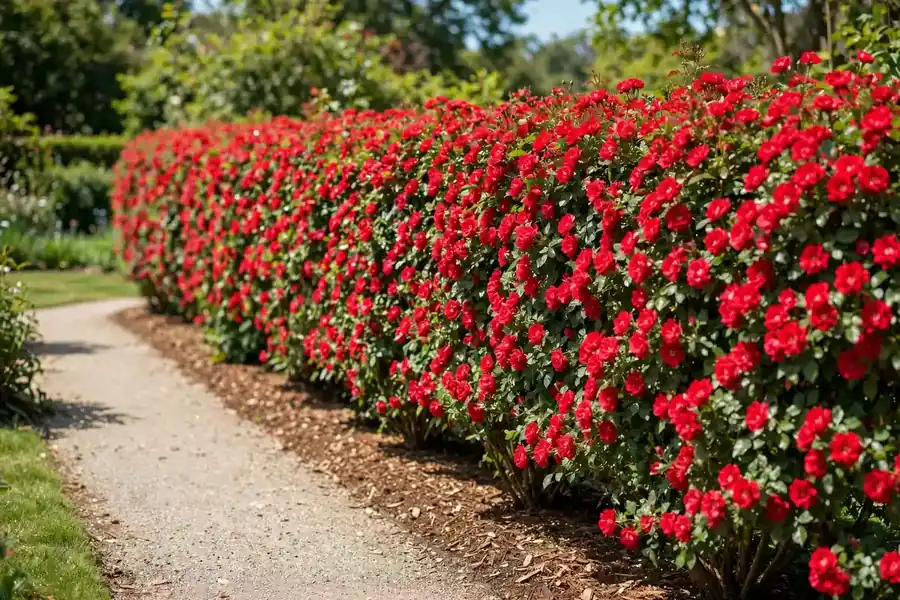
Famous varieties to know:
- ‘Knock Out’ (2000) — the rose that changed the industry. Cherry-red single blooms on a tough, black-spot-resistant bush. The original spawned a whole family: Double Knock Out, Pink Knock Out, Sunny Knock Out (yellow), White Out, and more.
- Drift roses — a cross between groundcover roses and miniatures (e.g., ‘Coral Drift’, ‘Peach Drift’, ‘Red Drift’). Low (1.5–2 ft), spreading, ideal for the front of borders and slopes.
- ‘Home Run’ — bred from Knock Out for even better disease resistance, with true-red blooms.
- Flower Carpet roses — groundcover types that sprawl 3–4 ft wide, excellent for banks and large beds.
Honest growing notes: Two truths nurseries gloss over. First, “disease-resistant” is not “disease-proof” — in the Deep South and humid regions, even Knock Outs can develop black spot and rose rosette disease (a fatal virus spread by microscopic mites; any plant showing witches’-broom growth and excessive thorniness should be removed and destroyed, not treated). Second, Knock Outs are bred for toughness, not fragrance or bloom form — their flowers are simple and scentless. They are the right choice for hedges, parking strips, and foundation plantings where reliability beats romance. Shear them back by a third in early spring; that is genuinely all the pruning they need.
Miniature Roses
Miniature roses are true roses in every way except size: perfectly formed blooms just 1–2 inches across on compact plants 8 inches to 2 feet tall. They are the roses of windowsills, patio pots, and border edging — and, unfairly, of the grocery-store floral department, where they are sold as disposable gifts.
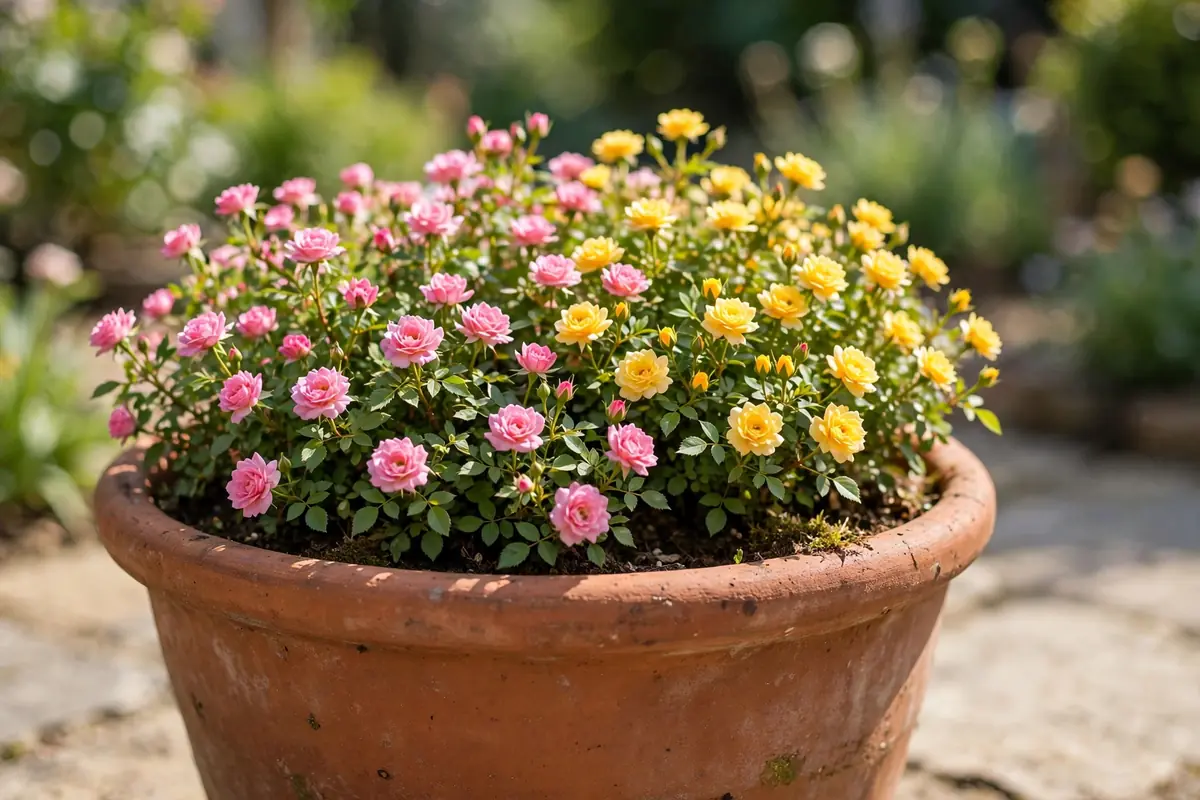
Famous varieties to know:
- ‘Sun Sprinkles’ — bright yellow, very disease-resistant, a standout among minis.
- ‘Gourmet Popcorn’ — white with a honey scent, unusually fragrant for a miniature.
- ‘Rainbow’s End’ — yellow edged red, a classic mini bicolor.
- ‘Jeanne Lajoie’ — technically a climbing miniature, reaching 6–8 ft; proof that “miniature” refers to bloom size, not always plant size.
Honest growing notes: Those gift minis can absolutely live outdoors — they are hardy and perennial. The catch: they are usually sold as three or four rooted cuttings crammed in one tiny pot. To keep one alive, repot into a larger container with real potting soil, move it gradually into full sun, and treat it like any garden rose. Indoors they struggle (dry air invites spider mites); outdoors in a pot with sun and water, they thrive for years. They are also, pound for pound, among the most cold-hardy modern roses.
Polyantha Roses
Polyanthas are the ancestors of the floribunda — compact bushes smothered in large clusters of small (1–2 inch) blooms. They fell out of fashion when floribundas arrived with bigger flowers, but they never stopped being excellent garden plants: tough, floriferous, and genuinely low-maintenance.
Famous varieties to know:
- ‘The Fairy’ (1932) — the polyantha everyone should know. Clusters of small, soft-pink double rosettes on arching stems, blooming from June to frost. Tough, shade-tolerant (for a rose), and one of the great easy roses.
- ‘Cecile Brunner’ — the “sweetheart rose”: tiny, perfectly formed pink buds, sweetly scented. An 1881 introduction still in commerce — that is a 140-year product review.
- ‘Perle d’Or’ — apricot-yellow clusters, charming in cottage borders.
Honest growing notes: Polyanthas ask for almost nothing: sun, decent soil, and a spring haircut. Their small blooms shed rain well, so they ball less than big-petaled types, and many (like ‘The Fairy’) have good disease resistance. Use them where floribundas feel too coarse — edging paths, softening the feet of leggy grandifloras, or spilling from containers. If you want the cottage-garden look without the cottage-garden workload, start here.
Tree Roses (Standards)
Tree roses are not a genetic type at all — they are a form. Any bush rose (hybrid tea, floribunda, or miniature) is grafted or budded onto the top of a straight trunk, usually 2–3 feet tall, to create a “lollipop” shape. The effect is formal and striking: a ball of blooms floating above the border.
What to know: Standards are high-maintenance by design. The graft union sits at the top of the trunk, fully exposed to cold and wind, so tree roses are significantly less winter-hardy than the same variety on its own roots — in zones 6 and below, they need wrapping or an unheated garage for winter. They also need permanent staking from day one; a heavy crown of wet blooms on a thin trunk will snap or uproot in a storm. Water and feed them like the variety grafted on top, and prune the crown exactly as you would that type (hybrid tea standards get the hard prune; floribunda standards a lighter one). Use them as focal points in pots or formal beds where their architecture earns the extra work.
Species & Wild Roses
Before breeders made the 30,000+ modern varieties, there were species roses — the wild ancestors with simple five-petaled (single) flowers, ferocious thorns, and a toughness modern roses can only dream of. They bloom once, in late spring or early summer, but give fragrance, spectacular hips, and near-total neglect tolerance in return.
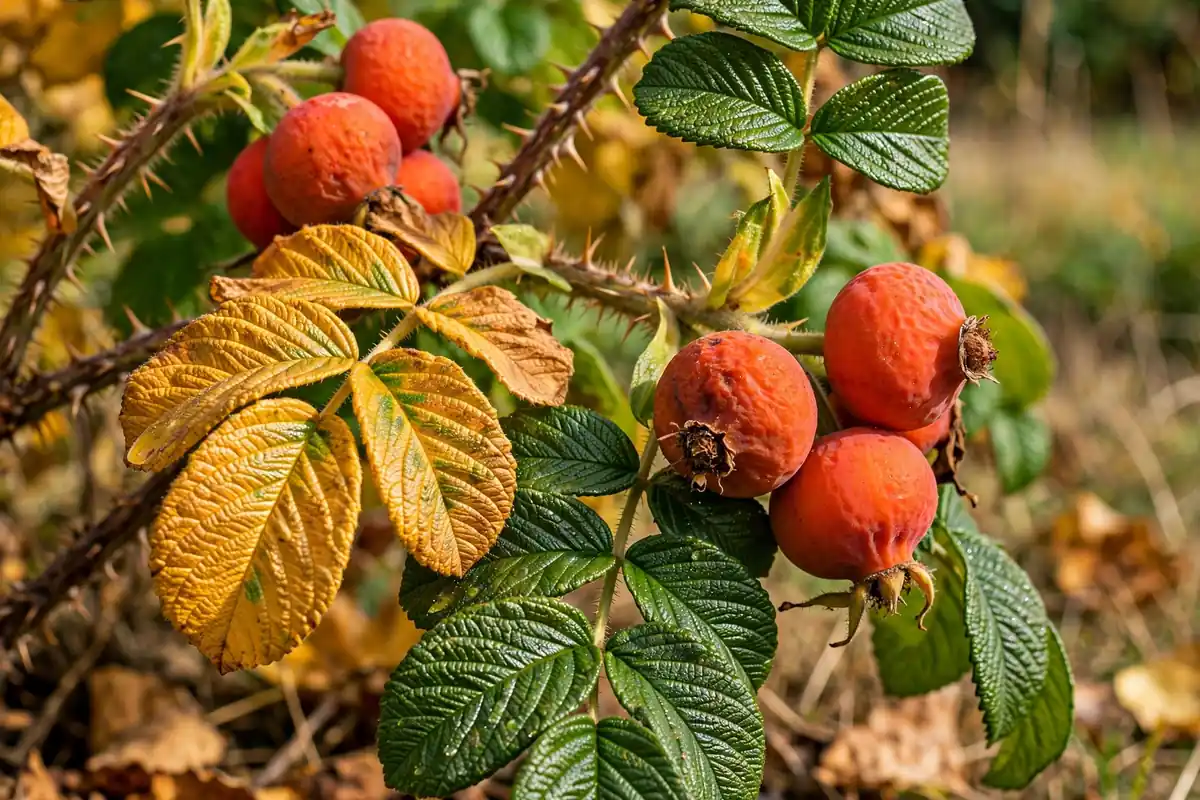
Famous species to know:
- Rosa rugosa — the beach rose. Deeply wrinkled (rugose) leaves, intensely fragrant pink or white single blooms, and the largest hips of any rose — golf-ball-sized, vitamin-C-rich, and brilliant orange-red in fall. Salt-tolerant, drought-tolerant once established, hardy to zone 2, and nearly immune to black spot. One of the toughest plants that start with R you can grow. Honest warning: it suckers vigorously and can become invasive near natural areas — plant where you can mow around it.
- Rosa gallica — the French rose of ancient gardens and apothecaries (‘Rosa Mundi’ is its striped sport). Once-blooming, intensely fragrant, and happy in poor soil.
- Rosa glauca — grown for its blue-grey foliage and red stems as much as its small pink flowers; a foliage plant that happens to be a rose.
- Rosa moyesii — single red flowers followed by extraordinary long, bottle-shaped scarlet hips (‘Geranium’ is the best form).
Honest growing notes: Species roses are the right choice for wildlife gardens, hedgerows, and poor soils where hybrid teas would sulk and die. They need almost no pruning (just remove dead wood), no spraying, and little feeding. The price: one bloom season, simple single flowers, and in rugosa’s case, an appetite for territory. If you love botanical curiosities, our roundup of unusual and beautiful flowers has more plants with this wild, unrefined charm.
Fragrance, Care & Disease Resistance Compared
Big blooms and fragrance rarely travel together in modern breeding — the genes for petal count and the genes for scent were often traded against disease resistance. This table sets honest expectations before you buy:
| Rose Type | Fragrance | Care Level | Black Spot Resistance |
|---|---|---|---|
| Hybrid Tea | Variable — ‘Mister Lincoln’ & ‘Double Delight’ strong, many modern ones scentless | High — spray program, hard prune, winter protection | Low — the most susceptible class |
| Floribunda | Light to moderate; newer varieties often better | Medium — deadhead for rebloom | Medium; modern introductions much improved |
| Grandiflora | Light to moderate | Medium-high — like hybrid teas, slightly easier | Low-medium; ‘Queen Elizabeth’ notably tougher |
| Climbing | Varies widely by variety | Medium — training & tying, light pruning | Medium; ‘New Dawn’ excellent |
| Rambler | Often strong (musk types) | Low-medium — needs space & post-bloom pruning | Medium; mildew can be an issue |
| Shrub / David Austin | Often strong — the class’s main selling point | Medium — annual shaping prune | Medium; heavy blooms ball in rain |
| Landscape (Knock Out) | Mostly none to slight | Low — shear in spring, done | High — bred for it; watch for rose rosette virus |
| Miniature | Usually light; some scented exceptions | Low-medium — easy outdoors, fussy indoors | Medium-high; small leaves dry fast |
| Polyantha | Light; ‘Cecile Brunner’ sweetly scented | Low — among the easiest roses | High — small blooms shed water well |
| Tree (Standard) | Depends on grafted variety | High — staking + winter protection always | Depends on grafted variety |
| Species/Wild | Often strong; rugosa intensely fragrant | Very low — plant and enjoy | Very high — rugosa nearly immune |
The pattern is clear: the more a rose was bred for perfect, huge, scentless exhibition blooms, the more help it needs. The closer it stayed to its wild ancestors, the more it takes care of itself. Neither is “better” — they are answers to different questions.
How to Choose the Right Rose Type
Match the rose to the job, not to the prettiest catalog photo:
- Cut flowers for the house? Hybrid teas (‘Peace’, ‘Mister Lincoln’, ‘Double Delight’) or grandifloras (‘Queen Elizabeth’, ‘Gold Medal’) — long stems, large blooms, bred for the vase.
- Maximum color with minimum work? Landscape roses (‘Knock Out’, Drift series) or polyanthas (‘The Fairy’). Accept simple flowers; gain your weekends back.
- A romantic, fragrant garden? David Austin English roses (‘Gertrude Jekyll’, ‘Graham Thomas’) or old garden species like Rosa gallica. Budget time for disease patrol in humid climates.
- Covering an arch, wall, or pergola? True climbers (‘New Dawn’, ‘Eden’) for repeat bloom; ramblers (‘Albertine’, ‘Veilchenblau’) for one spectacular season and wildlife value. Remember: you provide the support and the ties.
- Pots and small spaces? Miniatures, Drift roses, or a tree rose as a focal point — with the understanding that standards need winter protection.
- Poor soil, cold climate, or a wildlife corner? Species roses, especially Rosa rugosa — hardy to zone 2 and nearly indestructible.
One more honest rule: buy for your climate, not your dreams. A black-spot-prone hybrid tea in a humid zone 8 garden without a spray program will spend August defoliated. In that situation, a disease-resistant floribunda like ‘Julia Child’ or a Knock Out will give you ten times the pleasure. Check your USDA zone, be realistic about maintenance, and choose accordingly.
Planting & Care Basics
Every rose type in this guide shares the same non-negotiables. Get these right and even fussy hybrid teas forgive a lot:
- Sun: Minimum 6 hours of direct sun daily — morning sun is ideal because it dries dew quickly, denying black spot the leaf wetness it needs. Fewer flowers and weak growth are the classic symptoms of too little light.
- Soil & drainage: Rich, loamy, well-drained soil. Roses drink deeply but hate wet feet; in heavy clay, plant in a raised bed or mound. They sit comfortably alongside other full-sun perennials that share these needs.
- Planting: Dig a hole twice as wide as the root ball and just as deep. For grafted roses in cold climates, bury the graft union 2–4 inches below soil level for winter protection. Backfill with native soil mixed with compost, water deeply, and mulch 2–3 inches (keep mulch off the stems).
- Watering: Deep watering 1–2 inches per week at the base, in the morning. Overhead watering and evening watering are the two fastest ways to invite fungal disease.
- Feeding: Roses are hungry. Apply a balanced rose fertilizer when growth starts in spring and again after the first flush. Stop feeding 6–8 weeks before your first expected frost so new growth hardens off. Like mums in our mum care guide, roses respond dramatically to consistent feeding — but overfeeding with high-nitrogen formulas gives you leaves at the expense of blooms.
- Airflow: Space according to the mature size on the label, not the size in the pot. Crowded roses stay wet, and wet roses get sick. Prune for an open, vase-shaped center.
- Deadheading: Remove spent blooms (cut back to the first five-leaflet leaf) on repeat-flowering types to trigger the next flush. Leave hips on once-blooming species and ramblers for fall interest and bird food.
For authoritative step-by-step detail, the RHS rose growing guide and the Missouri Botanical Garden’s rose care FAQ are both excellent references.
Frequently Asked Questions
What are big roses called?
Grandiflora roses — the name literally means “large-flowered.” They are tall (5–7 ft) plants bred from hybrid tea × floribunda crosses, carrying large blooms singly and in clusters. ‘Queen Elizabeth’ (1954) was the first. If you mean the single biggest blooms on long stems, those are hybrid tea roses like ‘Peace’ and ‘Mister Lincoln’.
Which rose type has the biggest blooms?
Hybrid teas produce the largest individual blooms — often 5–6 inches across on long cutting stems. Grandifloras are close behind and produce more of them per plant. No other class matches the hybrid tea for sheer single-bloom size.
Are grandiflora roses easier to grow than hybrid teas?
Slightly. Grandifloras share the hybrid tea’s appetite for sun, food, and airflow, but they are generally more vigorous, hardier, and more forgiving of imperfect pruning. ‘Queen Elizabeth’ in particular is notably tougher than most hybrid teas. Both are more demanding than landscape roses or species roses.
What is the difference between climbing roses and ramblers?
Climbers have stiff canes, larger blooms, and (in modern varieties like ‘New Dawn’) repeat flowering through the season; they need tying to a support. Ramblers have flexible, extremely vigorous canes with huge trusses of small blooms, but most flower only once per year in early summer. Climbers suit arches and trellises; ramblers suit large walls, pergolas, and scrambling through trees.
Do Knock Out roses really need no care?
They need little care, not none. Knock Outs are highly disease-resistant and self-cleaning, but they still need full sun, good soil, deep watering in drought, and an annual spring shearing. In very humid regions they can still get black spot, and everywhere they are vulnerable to rose rosette disease — remove and destroy (never compost) any plant showing distorted, excessively thorny “witches’ broom” growth.
Why do my roses get black spot every year?
Black spot is a fungal disease that thrives on wet foliage and poor airflow. The honest fixes: plant resistant varieties, space for air circulation, water at the base in the morning, clean up fallen leaves (the fungus overwinters in them), and mulch to prevent soil splash. Susceptible hybrid teas in humid climates may need a preventive fungicide program — or replacement with tougher types.
References
- RHS — How to Grow Roses (growing guide)
- Missouri Botanical Garden — How Do I Care for My Roses?
- Oregon State University Extension — Roses: Planting and Care (rose types guide)
- University of Illinois Extension — Rose Types
- The Old Farmer’s Almanac — Old Garden Roses: Types, Fragrance & Growing Tips
- Gardening Know How — Roses: Types, Varieties & Care
Related reading: love roses for their perfume? See our ranked guide to the most fragrant flowers for the garden.

One Comment