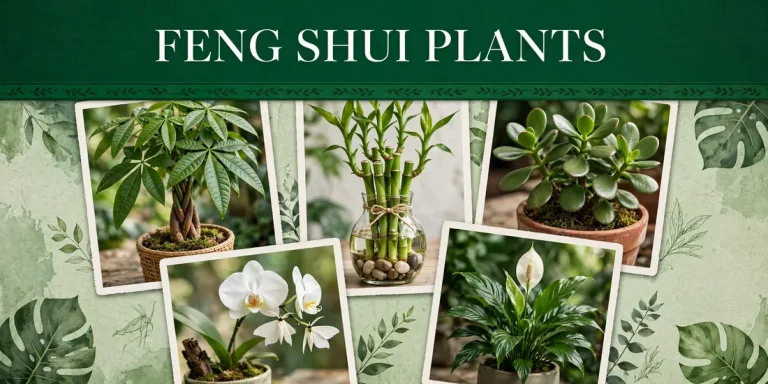
Outdoor Feng Shui Plants for Wealth, Luck & a Beautiful Entrance
Feng shui is not only about what you place inside your home. In traditional Chinese practice, the energy — or chi — of your garden, front walkway, balcony, and patio shapes how prosperity and harmony flow toward your front door. The right plants placed in the right spots are believed to invite wealth, health, and protection, while tired, thorny, or dying plants at the entrance are thought to drain good fortune before it ever crosses your threshold.
This guide covers the classic outdoor feng shui plants for wealth and good luck, with honest, practical growing facts for each one. You will learn which plants actually survive outdoors in your climate (many of the famous “wealth plants” are tropical and only live outside year-round in warm zones), how to place them by the front door and in the southeast wealth corner of your garden, and what to avoid so your landscaping supports — rather than sabotages — your goals. If you are starting with the indoor side first, see our guide to feng shui plants for the houseplant classics, and for entrance-specific advice read feng shui plants for the front of the house.
Quick Answer
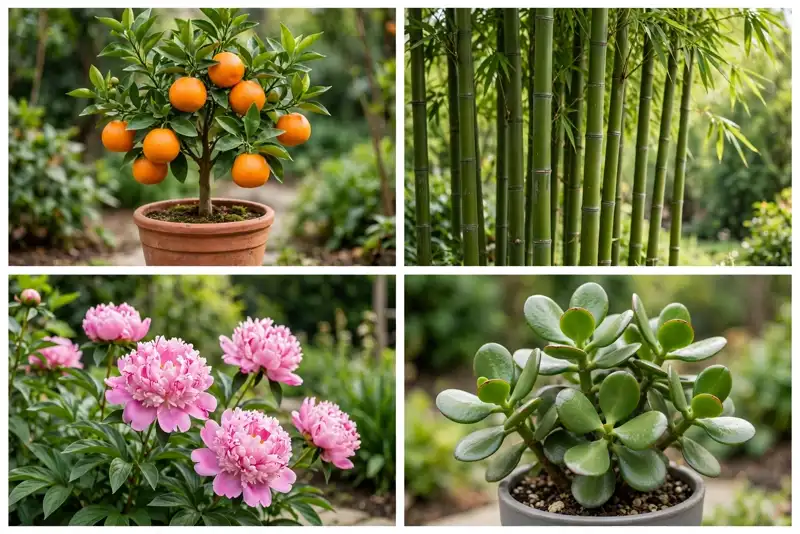
Best outdoor feng shui plants for wealth: citrus trees (especially kumquat and mandarin), lucky bamboo, money tree (Pachira aquatica), jade plant (Crassula ovata), peony, chrysanthemum, and plum blossom. Place pairs of healthy, vibrant plants on both sides of the front door, keep them well-groomed (dead leaves are believed to invite stagnant energy), and put wealth plants in the southeast section of your garden or yard — the wealth area of the bagua map. In cold climates, grow tender wealth plants like money tree and jade in pots you move indoors for winter, and use hardy substitutes such as peony, chrysanthemum, pine, and plum outside.
Table of Contents
- Best Outdoor Feng Shui Plants for Wealth
- Lucky Bamboo Outdoors
- Money Tree (Pachira aquatica)
- Jade Plant (Crassula ovata)
- Citrus & Orange Trees — The Wealth Fruit
- Peony — King of Flowers
- Chrysanthemum — Joy & Long Life
- Lotus — Purity Rising
- Plum Blossom — Resilience & Renewal
- Pine — Longevity & Protection
- Orchids — Refinement & Abundance
- Jasmine — Attracting Love & Positive Energy
- Bamboo — Strength & Flexibility
- Hibiscus — Warmth & Delicate Beauty
- Plants at a Glance
- Placement Rules: Front Door, Wealth Corner & the Bagua
- Care Comparison: Light, Water & Hardiness Zones
- Balcony & Patio Feng Shui Setups
- What to Avoid Outdoors
- Frequently Asked Questions
- References
Best Outdoor Feng Shui Plants for Wealth
In feng shui tradition, certain plants have carried the reputation of wealth magnets for centuries. Citrus fruits symbolize gold because round, golden fruit looks like ancient coins; the jade plant’s thick round leaves are said to resemble jade coins; and lucky bamboo’s fast upward growth represents rising fortune. Framing these as traditional beliefs rather than guaranteed results matters — what is guaranteed is that a front yard or patio full of healthy, beautiful plants lifts your mood, welcomes guests, and raises curb appeal.
Botanical honesty matters just as much. Many wealth plants — money tree, jade plant, lucky bamboo, orchids — are native to warm or tropical regions and will not survive a freezing winter outdoors. That does not rule them out; it just means container growing and moving pots indoors is the smart strategy in cold zones. The care tables later in this guide list real hardiness zones so you can match every plant to your climate instead of learning the hard way.
Lucky Bamboo Outdoors
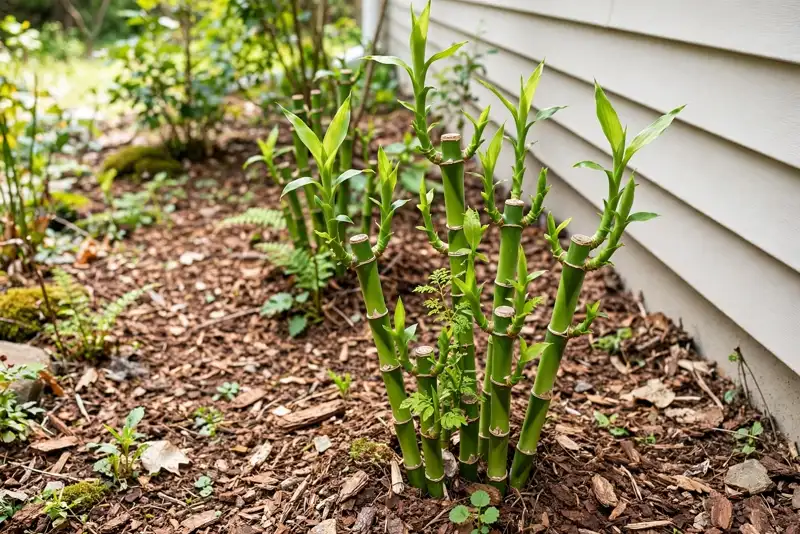
Lucky bamboo (Dracaena sanderiana, despite the name it is not a true bamboo) is one of the most recognized feng shui plants, traditionally given as a gift for new homes and businesses because the number and arrangement of stalks carry meaning: two stalks for love, three for happiness, five for wealth. Outdoors it can serve as a low border or a lush cluster in a shaded bed near the entrance.
Growing facts: Lucky bamboo thrives in bright, indirect light and scorches in harsh afternoon sun — an east-facing spot by the front door is ideal. It is hardy only in USDA zones 10–11 outdoors, so in most climates it is a container or summer-outdoors plant. It prefers consistently moist (not soggy) soil, and outdoors it appreciates protection from wind. If your climate is cold, grow it in a pot you move inside in autumn; it adapts happily to indoor life, which is why it is a star of our feng shui plants guide for interiors too.
Placement tip: A cluster of lucky bamboo in a sturdy ceramic pot on either side of the front steps brings the classic “paired plants” look feng shui favors for entrances — symmetry signals welcome and balance.
Money Tree (Pachira aquatica)
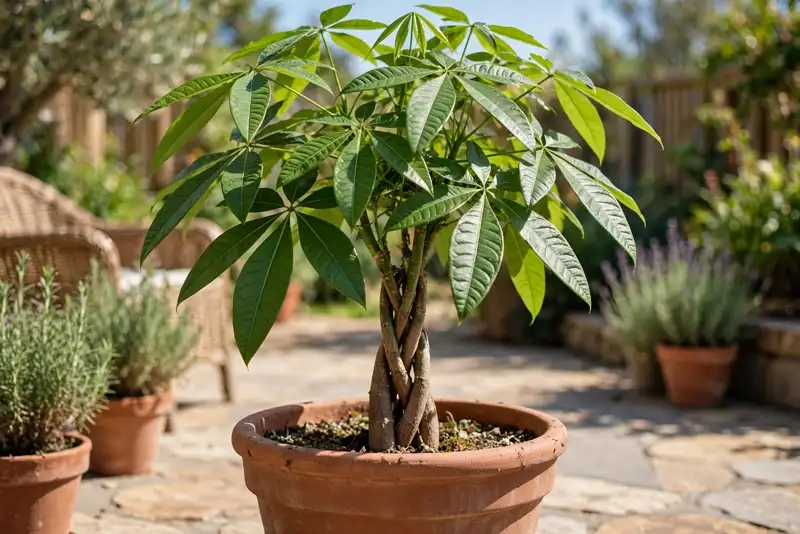
The braided money tree is the poster plant of wealth feng shui. Legend ties it to a Taiwanese farmer who, finding the unusual plant, prayed for prosperity and became wealthy from propagating it — the braided trunk is said to “lock in” fortune. Its five-lobed leaves are associated with the five elements, which practitioners believe brings balance.
Growing facts: Money tree is a tropical swamp tree, hardy outdoors only in zones 10–12. Everywhere else it lives as a patio container plant in the warm months and comes inside before the first frost. Outdoors it wants bright indirect light or gentle morning sun, consistently moist soil with excellent drainage, and shelter from strong wind that can snap its soft trunk. Mature plants can reach 6–8 feet in a large container, so give it a heavy pot that will not tip. Bring it indoors well before nights drop below 50°F (10°C).
Placement tip: Flank your front door with two money trees in matching pots during the warm season — the symmetry reads as intentional and prosperous. In cold zones, switch to a hardy lookalike arrangement at the door and keep the money trees in the sunny spot nearest the entrance they can handle.
Jade Plant (Crassula ovata)
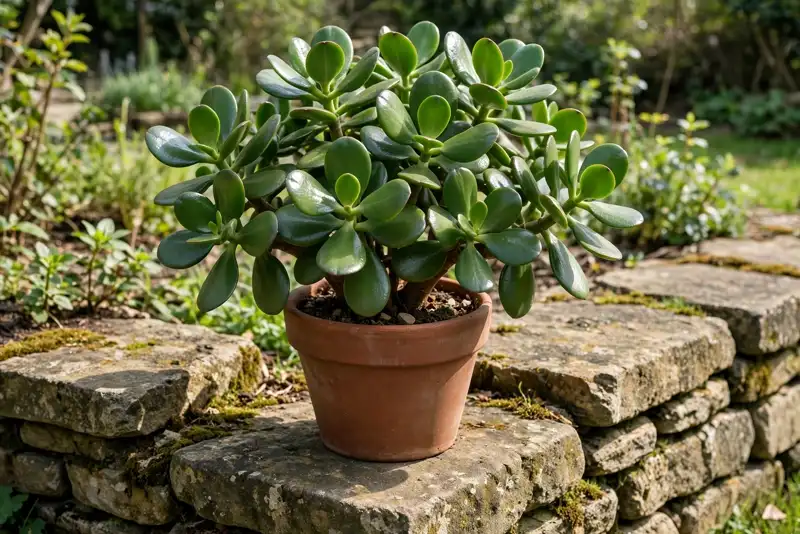
Jade plant earns its wealth reputation from its plump, coin-shaped leaves and its reputation as a nearly indestructible succulent — a plant that thrives for decades is a natural symbol of enduring prosperity. It is a favorite gift for new businesses in many Asian cultures, and its slow, steady growth mirrors the traditional ideal of wealth that accumulates over time rather than arriving overnight.
Growing facts: Jade is hardy outdoors year-round only in zones 10–11. It needs full sun to part shade and extremely well-draining soil; the number-one killer is overwatering, so let soil dry fully between waterings. Outdoors in warm climates it can become a genuine shrub several feet tall and wide — a specimen jade by the front door in a frost-free garden is a showpiece. In colder zones, keep it in a pot outdoors for summer and overwinter it indoors in a bright window. It also handles terrarium plant style miniature setups indoors, but outdoors it wants room to spread.
Placement tip: The southeast corner of your yard or patio is the traditional wealth area — a large, healthy jade in a beautiful pot there combines the wealth plant with the wealth direction.
Citrus & Orange Trees — The Wealth Fruit
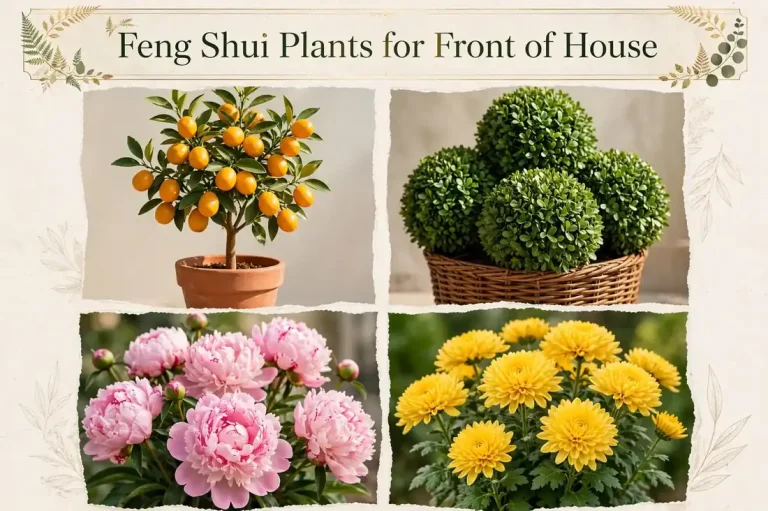
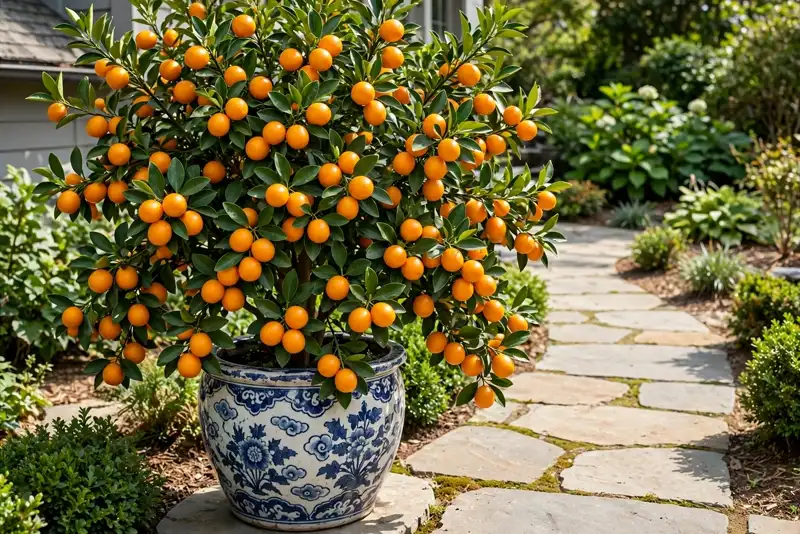
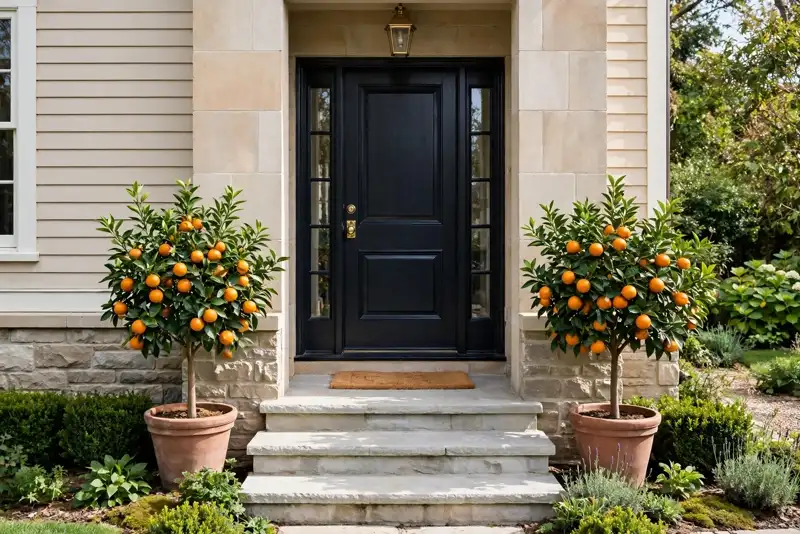
No plant says feng shui wealth quite like a citrus tree loaded with golden fruit. In Cantonese, the word for kumquat sounds like “gold luck,” and oranges symbolize abundance because their round shape and golden color echo coins. Potted citrus flanking a doorway is the single most iconic feng shui entrance arrangement, seen at homes and businesses across Asia during Lunar New Year and year-round.
Growing facts: Most citrus (kumquat, calamondin, Meyer lemon, mandarin) is hardy in zones 9–11, with kumquats tolerating brief dips a bit lower. They demand full sun — 8+ hours — and well-draining, slightly acidic soil. Container citrus is the practical choice almost everywhere: use a large pot (15 gallons or more), water deeply when the top few inches dry out, and feed with a citrus fertilizer through the growing season. In cold zones, move pots indoors or into a greenhouse before frost. A fruiting citrus tree is heavy and thirsty, so plan for a sturdy pot and a consistent watering routine.
Placement tip: Two matching citrus trees in large decorative pots on either side of the front door is the classic wealth welcome. If your climate rules out citrus, a pair of fruiting-look shrubs — or even large, healthy green shrubs in matching pots — preserves the symmetrical, prosperous look.
Peony — King of Flowers
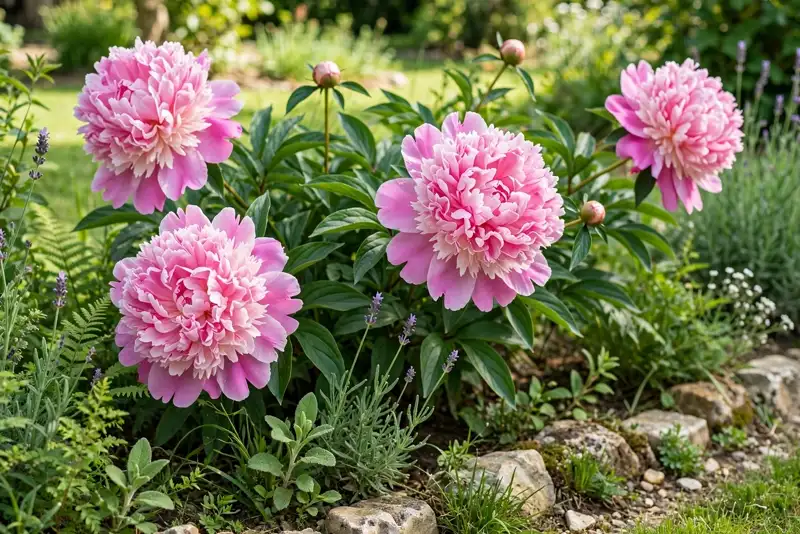
The peony is called the “king of flowers” in Chinese culture and has symbolized honor, prosperity, and happy marriage for over a thousand years — it was even China’s unofficial national flower for long stretches of history. Unlike the tropical wealth plants, peonies are fully hardy garden perennials, which makes them one of the most practical feng shui choices for temperate climates.
Growing facts: Herbaceous peonies are hardy in zones 3–8 and actually need winter chill to bloom well. Plant them in full sun to light shade in rich, well-drained soil, with the crown’s “eyes” no more than 1–2 inches below the surface — planting too deep is the classic reason peonies fail to flower. Once established they can live for decades in the same spot, resenting disturbance. Give them room (3 feet apart), stake heavy double blooms, and cut foliage back after frost. Browse more pink bloomers in our guide to flowers that start with P.
Placement tip: Peonies bloom in late spring to early summer, right when your entrance garden gets the most visitors. A drift of peonies along the front walkway delivers the feng shui message of honor and prosperity in pure color.
Chrysanthemum — Joy & Long Life
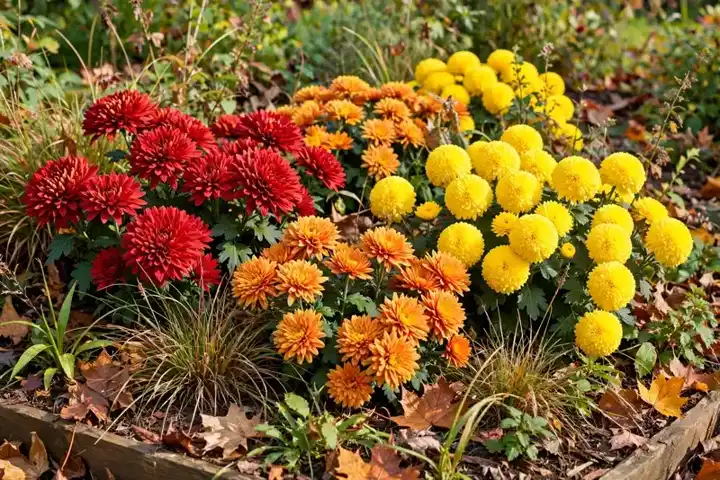
Chrysanthemums are one of the “Four Gentlemen” of Chinese art and symbolize joy, optimism, and long life — the flower of autumn festivals and of a life well-lived. In feng shui terms, their cheerful, abundant blooms are believed to attract positive, happy energy, which is why they are a staple of entrance plantings in fall.
Growing facts: Garden mums (Chrysanthemum × morifolium) are hardy in zones 5–9. They need full sun and well-drained soil, and they bloom in response to shortening days, so plant them where they will not get artificial night light. Pinch back stems until early July for bushier plants with more flowers, water at the base to avoid foliar disease, and mulch after the ground freezes. For full care detail, see our mum care guide. Many fall mums are sold as annuals but are genuinely perennial if planted early enough to root before winter.
Placement tip: Chrysanthemums are the answer to the autumn entrance — when summer pots fade, two large pots of mums flanking the door keep the welcome alive into the season of harvest and gratitude.
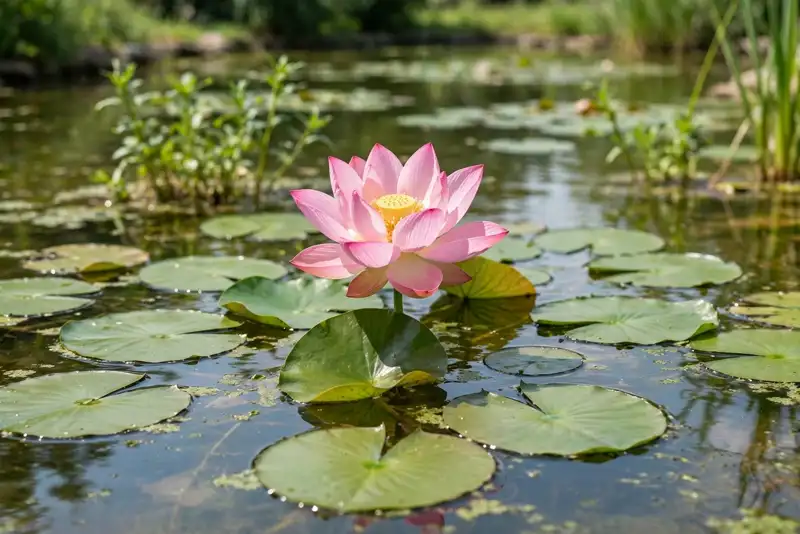
Lotus — Purity Rising
The lotus rises unstained from muddy water, which is why it symbolizes purity, enlightenment, and the ability to rise above difficulty — a powerful feng shui emblem for a household facing challenges. It is also a summer showpiece: few garden plants draw the eye like a lotus in bloom.
Growing facts: Sacred lotus (Nelumbo nucifera) is a true aquatic perennial, hardy in zones 4–10 depending on variety, and needs a pond, large water container, or bog garden with full sun. Plant rhizomes in heavy soil in a pot set below the water surface — lotus will not grow in ordinary garden beds. It needs warm water (70°F+ / 21°C+) to bloom well, so in cool climates treat it as a seasonal water feature. Do not confuse it with water lilies: lotus leaves and flowers rise dramatically above the water. Pair it with other water-edge plants from our unusual and beautiful flowers collection for a truly striking pond.
Placement tip: A lotus container or small pond in the north area of the garden aligns with the water element of the bagua — and a blooming lotus near an outdoor seating area gives the whole space a sense of calm.
Plum Blossom — Resilience & Renewal
Plum blossom (the flower of Prunus mume) blooms in late winter on bare branches, sometimes through snow — the ultimate feng shui symbol of resilience, hope, and renewal after hardship. It is one of the “Three Friends of Winter” along with pine and bamboo, a trio that represents steadfastness through difficult times.
Growing facts: Japanese flowering apricot/plum (Prunus mume) is hardy in zones 6–9 and needs full sun and well-drained soil. It blooms on old wood in late winter to very early spring, often before leaves emerge, with intensely fragrant pink or white flowers. Prune right after flowering (never in late summer or fall, or you cut off next year’s buds), water during dry spells in the first two years, and expect a small tree of 15–20 feet at maturity. It needs some winter chill but is damaged by extreme cold snaps once buds swell — a sheltered spot helps in borderline zones.
Placement tip: A plum tree visible from your front door or main window means the first flowers of the year greet you daily — in feng shui terms, renewal you can see from inside the house is renewal that reaches the household.
Pine — Longevity & Protection
Pine is the third Friend of Winter and the great symbol of longevity: evergreen through the harshest season, it represents endurance, steadfastness, and protection. Tall pines at the back of a property are traditionally seen as a protective “mountain” behind the home — the Black Tortoise of classical feng shui landforms.
Growing facts: There is a pine for nearly every climate — eastern white pine (zones 3–8), Japanese black pine (zones 5–9), mugo pine for small spaces (zones 3–7). All want full sun and well-drained soil; most tolerate poor soil once established but hate waterlogged roots. Give them room: even “small” pines outgrow tight foundation plantings, so check mature size before planting near the house. Prune by candle-pruning new growth in spring rather than shearing old wood, which does not regrow well on most pines.
Placement tip: A pine or pair of pines behind the house (the “support” position) is the classic protective planting. Avoid planting large pines where they will shade your entire entrance — the front door should receive light and be clearly visible from the street.
Orchids — Refinement & Abundance
Orchids symbolize refinement, fertility, and abundance — a house with blooming orchids has long signaled cultivated taste and plenty. Outdoors, they are the jewel of the shaded patio in warm climates, where their long-lasting flowers deliver months of color.
Growing facts: Most familiar orchids (Phalaenopsis, Cattleya, Dendrobium) are hardy only in zones 10–12 outdoors. They need bright indirect light — dappled shade under a tree or patio cover is perfect — excellent air circulation, and a bark-based medium that dries between waterings. In cooler zones, grow them in pots outdoors for summer and bring them inside before nights cool. Truly hardy garden orchids exist (Bletilla striata, zones 5–9; Cypripedium lady’s-slippers, zones 3–8) and can be planted in shaded woodland-style beds if you want orchids in the ground.
Placement tip: A cluster of orchids on a shaded patio table or hanging from a covered porch brings abundance symbolism exactly where you relax — feng shui values beauty you actually live with, not beauty hidden away.
Jasmine — Attracting Love & Positive Energy
Jasmine’s intoxicating evening fragrance has made it a symbol of love, sensuality, and divine hope across Asia. In feng shui terms, fragrant flowering plants near gathering spaces are believed to attract positive, loving energy — and from a purely practical view, a jasmine-draped trellis makes any patio feel magical on a summer night.
Growing facts: Common jasmine (Jasminum officinale) is hardy in zones 7–10; star jasmine (Trachelospermum jasminoides, not a true jasmine but equally fragrant) handles zones 7–10 as well and stays evergreen. All want full sun to part shade, well-drained soil, and a trellis, fence, or arbor to climb. Prune after flowering to keep them in bounds — jasmines can be vigorous. In cold zones, grow jasmine in a large pot and overwinter it in a bright, cool indoor spot; it will sulk but survive.
Placement tip: Train jasmine over the trellis beside your front door or around a patio seating area. Fragrance at the entrance means every arrival is greeted by scent — one of the simplest ways to make a home feel welcoming.
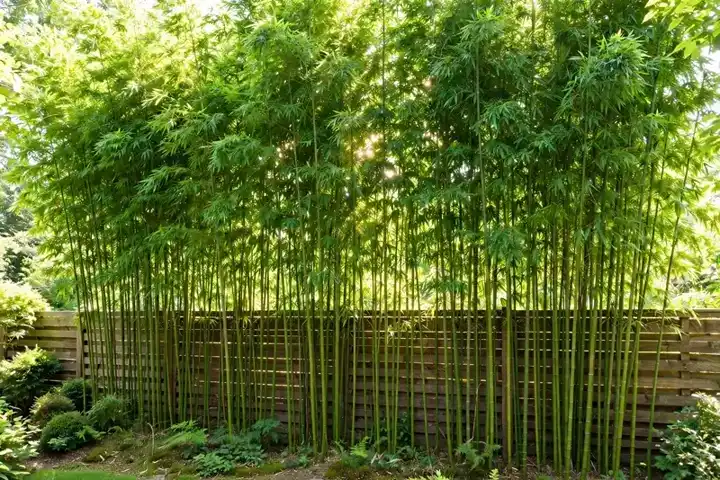
Bamboo — Strength & Flexibility
True bamboo symbolizes strength with flexibility — the stalk that bends in the storm instead of breaking. It is also one of the fastest-growing plants on earth, which feng shui reads as rapidly rising energy and growth. A bamboo screen along a fence line gives privacy, movement, and that unmistakable rustling sound.
Growing facts: Bamboo hardiness varies hugely by species: hardy Fargesia (clumping, zones 5–9) suits most temperate gardens, while giant timber bamboos need zones 7–10+. Bamboo wants full sun to part shade and consistently moist, rich soil. The critical decision is clumping vs. running: running bamboos (most Phyllostachys) spread aggressively by underground rhizomes and MUST have a root barrier or be grown in containers, or they will take over your yard and your neighbor’s. Clumping bamboos stay put and are the safe choice for most gardens. For more B-letter plants, see our guide to plants that start with B.
Placement tip: A contained bamboo cluster at the side of the garden adds height and movement without overwhelming the space. Never plant running bamboo against a property line without a barrier — bad feng shui with the neighbors is worse than no bamboo at all.
Hibiscus — Warmth & Delicate Beauty
Hibiscus flowers — huge, tropical, and fleeting (each bloom lasts a day) — symbolize delicate beauty and enjoying the present moment. In warm climates, a hibiscus hedge in full bloom is one of the most joyful sights in any garden, and its red varieties are especially prized in feng shui for their association with fame and recognition.
Growing facts: Tropical hibiscus (Hibiscus rosa-sinensis) is hardy only in zones 9–11 and wants full sun, regular water, and rich soil; in cold zones it is a summer patio pot brought indoors for winter. Hardy hibiscus (Hibiscus moscheutos and hybrids) survives zones 4–9, dies back to the ground each winter, and returns with dinner-plate flowers in late summer. Do not confuse the two at the nursery — check the label. Both are heavy feeders during bloom season and appreciate consistent moisture.
Placement tip: In feng shui’s bagua, the south area relates to fame and reputation — red hibiscus blooming in a sunny south-facing bed is the traditional pairing of plant, color, and direction.
Plants at a Glance
Use this table to match each plant’s traditional meaning with where it works best outdoors.
| Plant | Feng Shui Meaning | Best Placement |
|---|---|---|
| Lucky bamboo | Growth, good fortune | Paired pots flanking the front door; shaded beds |
| Money tree | Wealth, prosperity | Front entrance (warm season); southeast patio corner |
| Jade plant | Enduring prosperity | Southeast wealth corner; sunny entrance pots |
| Citrus / orange trees | Wealth, abundance, gold | Paired pots on both sides of the front door |
| Peony | Honor, prosperity, happy marriage | Front walkway borders; visible from the door |
| Chrysanthemum | Joy, optimism, long life | Autumn entrance pots; sunny garden beds |
| Lotus | Purity, rising above difficulty | Garden pond or water container; north garden area |
| Plum blossom | Resilience, renewal, hope | Visible from front door or main window |
| Pine | Longevity, protection | Behind the house (support position); windbreaks |
| Orchids | Refinement, abundance | Shaded patio; covered porch displays |
| Jasmine | Love, positive energy | Trellis by the front door; patio seating areas |
| Bamboo | Strength, flexibility, growth | Side fence privacy screen (contained or clumping) |
| Hibiscus | Beauty, fame, recognition | South-facing sunny beds; warm-climate hedges |
Placement Rules: Front Door, Wealth Corner & the Bagua
The front door is the “mouth of chi” — the main point where energy enters your home. Feng shui practice holds that what sits beside it either invites opportunity in or blocks it. The rules below are the traditional ones, translated into practical landscaping you can actually do.
1. Pair plants at the front door. Two matching, healthy plants — one on each side of the door or steps — is the classic arrangement. Symmetry signals order and welcome. Citrus trees are the traditional choice; in cold climates, use hardy evergreens in matching pots and keep the tender wealth plants as summer guests.
2. Use the southeast for wealth. On the bagua map (the feng shui energy map of a space), the southeast sector governs wealth and abundance, and its element is wood — living plants are the natural enhancer. Place your jade plant, money tree, or citrus in the southeast part of your yard, patio, or balcony. Healthy, upward-growing, green plants are the prescription; this is the spot for your most vigorous specimens.
3. Keep the path clear and the door visible. Overgrown shrubs crowding the entrance are said to block incoming opportunity — and they genuinely make a home feel neglected. Trim anything that narrows the walkway or hides the door from the street. The door itself should be easy to find: clear house numbers, a clean mat, and good lighting amplify the effect of the plants.
4. Avoid thorny plants at the entrance. Cacti and other spiky plants at the front door are considered “poison arrows” (sha chi) — harsh, attacking energy pointed at everyone who enters. Roses on a trellis a little farther out are fine in most interpretations because their beauty is the dominant feature, but keep actual cactus and yucca away from the doorway. If you love succulents, the round-leaved jade plant gives you the succulent look with the wealth symbolism instead.
5. Remove dead and dying plants immediately. This is the most practical rule of all: dead plants are believed to hold stagnant, declining energy. A crispy brown pot by the door sends the opposite of a prosperity message — to guests and, frankly, to yourself every time you come home. Compost failures promptly and replace them. A smaller number of thriving plants always beats a larger number of struggling ones.
6. Favor upward, rounded growth. Plants that grow upward (bamboo, citrus) or have round, full forms (jade, peony, chrysanthemum) are preferred over drooping, weeping, or sparse shapes, which are associated with declining energy. This is a gentle guideline, not a ban — a weeping cherry you love is fine; just keep it healthy and balanced with upright plantings nearby.
Care Comparison: Light, Water & Hardiness Zones
Before you buy, check the hardiness column. Plants marked zones 10–11 need winter protection or indoor life in most of the US and Europe — plan for pots, not planting beds.
| Plant | Light | Water | Hardiness Zones |
|---|---|---|---|
| Lucky bamboo | Bright indirect; no harsh afternoon sun | Consistently moist | 10–11 (container elsewhere) |
| Money tree | Bright indirect; gentle morning sun | Moist, well-drained; never soggy | 10–12 (container elsewhere) |
| Jade plant | Full sun to part shade | Let dry fully between waterings | 10–11 (container elsewhere) |
| Citrus trees | Full sun (8+ hours) | Deep watering when top dries | 9–11 (container elsewhere) |
| Peony | Full sun to light shade | Moderate; avoid waterlogging | 3–8 |
| Chrysanthemum | Full sun | Regular; water at base | 5–9 |
| Lotus | Full sun | Aquatic — pond or water container | 4–10 (varies by type) |
| Plum blossom | Full sun | Moderate; drought-tolerant once established | 6–9 |
| Pine | Full sun | Low once established; hates wet roots | 3–9 (varies by species) |
| Orchids | Bright indirect / dappled shade | Let bark dry between waterings | 10–12; hardy types 3–9 |
| Jasmine | Full sun to part shade | Regular; well-drained soil | 7–10 |
| Bamboo | Full sun to part shade | Consistently moist, rich soil | 5–10 (varies by species) |
| Hibiscus | Full sun | Regular; heavy feeder in bloom | 9–11 tropical; 4–9 hardy types |
Balcony & Patio Feng Shui Setups
No yard? A balcony or patio follows the same principles on a smaller scale. Think of the railing edge as your property boundary and your sliding door as the “front door” of the outdoor room.
The wealth corner setup: Identify the southeast corner of your balcony (stand at the door looking out; southeast is to your left-front in the northern hemisphere — or just use a compass app). Place your best wealth plant there: a jade plant or money tree in an attractive pot. Add a small citrus if space allows — even a dwarf kumquat in a 10-gallon pot fruits reliably.
The entrance pair: Flank your balcony or patio door with two matching pots. Lucky bamboo, small citrus, or seasonal chrysanthemums all work. Matching pots matter more than matching plants — visual symmetry is what reads as intentional.
Layer heights: Feng shui favors a sense of shelter: taller plants (bamboo in a contained planter, a small citrus tree) at the back or sides, medium plants (hibiscus, jasmine on a trellis) in the middle, and low, lush plants (potted chrysanthemums, trailing jasmine) at the front. This “embracing” arrangement feels protective and looks professionally designed.
Small-space winners: On a tiny balcony, choose one statement wealth plant (dwarf citrus or jade), one fragrant plant (jasmine or a potted gardenia), and one seasonal color pot you refresh (mums in fall, peony in a large pot in spring where hardy). Three thriving pots beat ten crowded, struggling ones — and dead plants in small spaces are even more conspicuous, so stay on top of replacements.
What to Avoid Outdoors
Dying or dead plants anywhere visible. The single biggest feng shui landscaping mistake. Walk your entrance monthly, remove spent annuals, prune dead branches, and replace failures without guilt.
Thorny and spiky plants at the entrance. Keep cacti, agave, yucca, and barberry away from the front door and main path. Place them in side or back areas if you grow them at all.
Plants that block the door or windows. Overgrown foundation shrubs that swallow the entrance or darken main windows are said to trap stale energy — and they genuinely reduce light and curb appeal. Prune for clear sightlines.
Weeping or drooping forms as the dominant entrance planting. A weeping tree can be beautiful, but feng shui tradition associates downward-drooping shapes with sadness. Balance any weeping specimen with upright growers nearby.
Artificial plants at the entrance. Fake plants are considered “dead energy” — no living chi. They also fade and collect dust outdoors. If you cannot keep real plants alive at your door, choose ultra-tough real ones (hardy evergreen shrubs, ornamental grasses) over plastic.
Clutter around the plants. Broken pots, bags of soil, dead leaves piled in corners — the area around your entrance plants should be as clean as the plants are healthy. A five-minute weekly tidy does more for the feel of your entrance than any new purchase.
Planting running bamboo without containment. This is practical, not mystical: uncontrolled running bamboo destroys fences, patios, and neighborly relations. Always use clumping varieties or proper root barriers.
Frequently Asked Questions
What are the best outdoor feng shui plants for wealth?
Citrus trees (kumquat, mandarin, calamondin), money tree, jade plant, and lucky bamboo are the classic wealth plants. In cold climates where these are not hardy, grow them in containers you move indoors for winter, and use hardy wealth-associated plants — peony, chrysanthemum, and plum blossom — in the ground.
Where should I place feng shui plants outside my front door?
Place two matching, healthy plants — one on each side of the door or steps. Citrus trees in decorative pots are the traditional choice. Keep the walkway clear, the door visible from the street, and avoid thorny plants like cactus right at the entrance.
Which outdoor plants are unlucky in feng shui?
Tradition warns against dead or dying plants, thorny/spiky plants (cactus, agave) at the entrance, and plants that block the door or windows. Weeping, drooping forms used as the dominant planting are also discouraged. The common thread is neglect and harshness, not any particular species being “evil.”
Can I grow a money tree or jade plant outdoors?
Yes, but only year-round in warm climates — money tree in zones 10–12, jade plant in zones 10–11. In colder zones, both make excellent summer patio plants in pots; bring them indoors before night temperatures drop below 50°F (10°C). Never plant them in the ground where winter frost occurs.
What is the feng shui wealth corner of a garden?
The southeast sector of your yard, patio, or balcony is the traditional wealth area on the bagua map. Its element is wood, so healthy green, upward-growing plants — jade plant, money tree, citrus, bamboo — are the recommended enhancers there.
Are peonies good feng shui plants?
Yes — the peony is called the “king of flowers” and symbolizes honor, prosperity, and happy marriage. It is also one of the most practical feng shui choices for temperate gardens, being hardy in zones 3–8 and living for decades once established. For more peony relatives, see our full sun perennials guide.
References
- The Old Farmer’s Almanac: How to Grow Jade Plants — light, water, and indoor/outdoor care for Crassula ovata.
- Clemson University Extension: How to Grow and Care for Lucky Bamboo — light, water, and outdoor culture of Dracaena sanderiana.
- Royal Horticultural Society: How to Grow Bamboo — planting, containment of running types, and aftercare.
- NC State Extension: Crassula ovata (Jade Plant) — botanical details, culture, and hardiness.
- University of Florida IFAS Extension: Citrus Culture in the Home Landscape — container and in-ground citrus care, cold protection.
- The Old Farmer’s Almanac: How to Grow Peonies — planting depth, chill needs, and long-term care.