When to Plant Tulip and Daffodil Bulbs: Timing, Depth & Spacing
Spring's most spectacular flowers are planted in fall — and the difference between a jaw-dropping April display and a handful of blind shoots comes down to three things: planting at the right time, at the right depth, and in soil that is cool but not frozen. Get those right and bulbs are among the easiest, most rewarding plants you will ever grow.
Quick answer: Plant tulip and daffodil bulbs in fall, about 6–8 weeks before the ground freezes — typically September through November in most of the US. Set large bulbs 6–8 inches deep (about 2–3 times the bulb's height), pointed end up, 4–6 inches apart, in well-drained soil. In warm-winter zones, pre-chill tulip bulbs in the refrigerator before planting.
Why Fall? The Chilling Requirement
Tulips, daffodils, hyacinths, crocus, and alliums are not being difficult — they have a biological need. These bulbs require 12–16 weeks of cold (soil temperatures consistently below about 45–50°F) to develop the flower bud and the stem that lifts it. No cold period, no flower — just leaves.
They also need to grow roots before winter, in soil that is cool but workable. That combination — cool soil for rooting, followed by sustained cold for bud development — is exactly what fall provides. Plant in spring and you skip both windows; the bulb may leaf out but it will not bloom properly.
When to Plant: The Soil-Temperature Rule
Forget the calendar first and learn the rule the extension services actually teach: plant when the soil temperature at planting depth has fallen below about 55–60°F and is staying there. For most of the country, that happens a week or two after the first light frost, when nights are reliably in the 40s.
Translated to rough calendar windows (unverified for any specific location — use soil temperature as your real trigger):
| USDA zones | Typical window |
|---|---|
| Zones 3–5 | September to early October |
| Zones 6–7 | October to early November |
| Zones 8–9 | November to early December |
| Zone 10+ | December–January, with pre-chilled bulbs |
Planting too early — into warm September soil — is the classic beginner mistake. In warm, moist ground, bulbs may rot (a fungal problem called Fusarium basal rot) or break dormancy and push up a shoot that winter then damages. When in doubt, wait for the soil to cool.
On the late end, you have more room than most people think: bulbs can go in any time until the ground freezes solid. Multiple extension sources confirm December planting works fine in cold climates as long as you can still dig.
How Deep to Plant
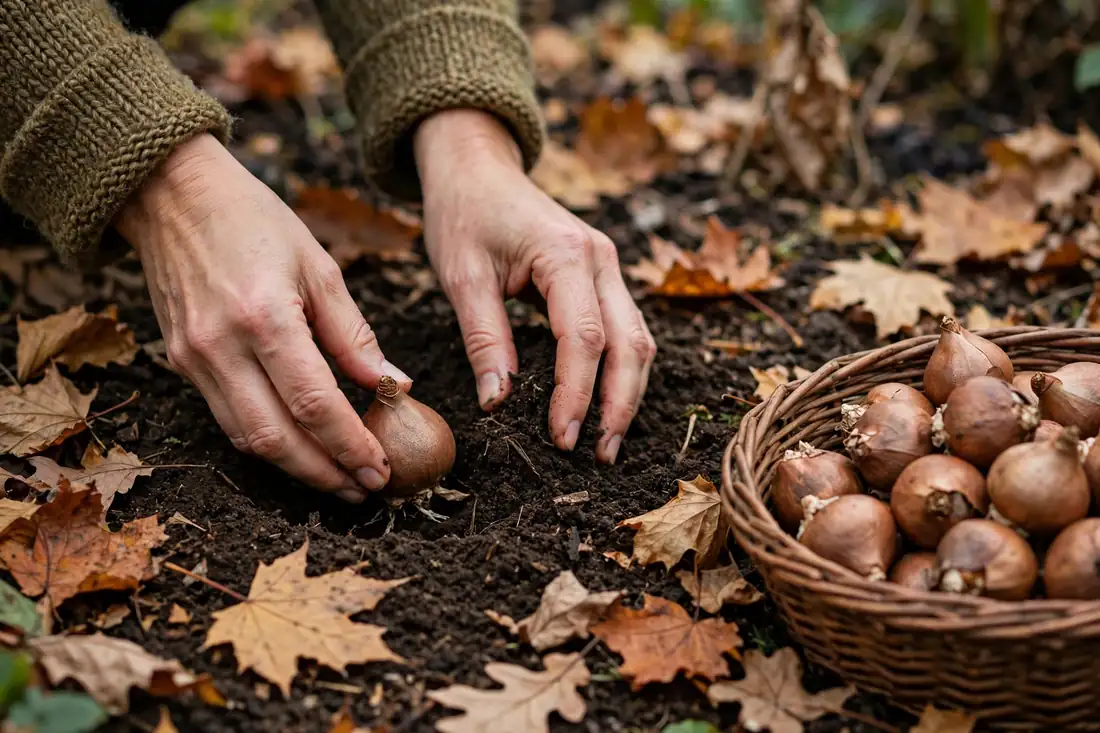
The universal rule: plant bulbs 2–3 times as deep as the bulb is tall, measured from the bottom of the bulb to the soil surface — not from the top of the bulb.
Practical depths:
| Bulb | Depth |
|---|---|
| Large tulips | 6–8 inches |
| Large daffodils | 6–8 inches (deeper end protects against frost heaving) |
| Hyacinths, large alliums | 4–6 inches |
| Crocus, grape hyacinth, small species tulips | 3–4 inches |
Deeper planting has real benefits beyond frost protection: it encourages stronger stems, discourages squirrels from digging bulbs up, and — for tulips — improves the odds of repeat blooming in subsequent years. In cold zones, lean toward the deeper end of each range.
Spacing and Planting Pattern
Space large bulbs (tulips, daffodils) 4–6 inches apart; small bulbs 2–3 inches apart. But spacing numbers matter less than the pattern: plant in clusters and drifts, not single-file rows. Groups of 7–15 bulbs of one variety, planted close together, read as a lush drift; the same bulbs spaced in a lonely row look sparse no matter how many you bought.
For a layered, professional look, try "bulb lasagna" in containers or beds: large bulbs deepest, medium bulbs above them, small bulbs near the surface — all in the same hole. They bloom in succession from the same footprint.
Soil, Drainage, and Orientation
Drainage is non-negotiable. Bulbs rot in soggy soil faster than almost any other garden failure. If your soil is heavy clay, plant in raised beds, amend generously with compost, or plant slightly shallower with a handful of coarse sand or grit under each bulb. When buying bulbs, choose firm, heavy ones with papery skins intact — soft or moldy bulbs are not worth planting.
Orientation: pointed end up, flat (basal) plate down. Daffodils are forgiving about this; tulips less so, though they will usually right themselves at the cost of a crooked stem. If you genuinely cannot tell which end is up, plant it sideways — the shoot will find its way up (unverified as ideal practice, but widely taught as the fallback).
Fertilizer at planting: a small handful of balanced bulb fertilizer or bone meal in the planting hole is the traditional recommendation. Do not overdo it — bulbs carry their own food supply for the first season.
Warm Climates: The Pre-Chilling Workaround
In zones 8b and warmer — Florida, the Gulf Coast, coastal Southern California, the desert Southwest — winters are not cold enough to satisfy the chilling requirement naturally. Tulips simply will not bloom without help.
The workaround: pre-chill tulip bulbs in the refrigerator for 10–12 weeks (the commonly cited range; check your supplier's guidance), then plant in December or January. Keep them away from ripening fruit — ethylene gas from apples and bananas can damage flower buds inside the bulb. Daffodils are more forgiving and often perennialize in warm zones without pre-chilling, though low-chill varieties perform best.
Be realistic in warm zones: even with pre-chilling, treat tulips as annuals — plant fresh bulbs each fall for a reliable show.
Protecting Bulbs from Critters
Squirrels love tulips; deer love tulip flowers; voles love nearly everything underground. A few defenses that actually work:
- Plant daffodils freely — they are toxic and squirrels, deer, and voles all avoid them. Interplanting daffodils among tulips gives the tulips some cover.
- Lay chicken wire or hardware cloth flat over the bed after planting, pinned down and covered with mulch. Remove it in spring when shoots emerge.
- Plant deeper (8 inches for tulips) — most digging pests give up.
- For deer, the only reliable defenses are fencing or repellents applied as flowers emerge; no bulb is truly deer-proof once blooming.
After Planting: Water Once, Then Leave Them
Water thoroughly right after planting to settle the soil around the bulbs and kick-start root growth. After that, fall rain usually handles it — do not keep watering through winter. Mark where you planted (bulb markers, a sketch, a photo) so you do not accidentally dig them up in spring.
Getting Tulips to Come Back (Perennializing)
Here is the honest truth: most modern hybrid tulips are bred for one spectacular season and decline after that, especially in warm or wet-summer climates. Daffodils, by contrast, perennialize almost anywhere and multiply.
If you want tulips that return, your best bets are Darwin Hybrids, Fosteriana (Emperor) types, Kaufmanniana, Greigii, and species tulips — planted deep (8 inches) in sharply drained soil, with foliage left to die back completely (about six weeks after bloom) before removal, and the bed kept on the dry side in summer. Even then, treat repeat bloom as a bonus, not a promise.
The single most important perennializing habit, for tulips and daffodils alike: do not cut the foliage. After bloom, deadhead the spent flower (so the plant does not waste energy on seeds) but leave every leaf until it has yellowed completely. Those six weeks of photosynthesis are next year's flowers being manufactured.
7 Bulb-Planting Mistakes to Avoid
- Planting too early into warm soil. The #1 mistake. Warm soil invites rot and premature sprouting. Wait for soil below ~55°F.
- Planting too shallow. Shallow bulbs produce weak, floppy stems, get eaten by squirrels, and heave out of the ground in freeze-thaw cycles. When in doubt, go deeper.
- Cutting the foliage too soon. Those yellowing leaves are ugly and absolutely essential. Six weeks of post-bloom photosynthesis = next year's flowers.
- Planting in a soggy spot. The lowest corner of the yard where water pools will rot every bulb you put in it. Fix drainage or plant elsewhere.
- Buying soft, moldy, or undersized bulbs. Bargain-bin bulbs are a false economy. Firm, heavy, large bulbs bloom; small soft ones disappoint.
- Planting in lonely singles. One tulip here, one daffodil there — plant in drifts of 7+ or don't bother.
- Forgetting where you planted. Mark the spot. Every spring, gardeners spear their own bulbs with a trowel while planting annuals.
Forcing Bulbs Indoors (Bonus)
Want flowers in January? Pot up tulips, daffodils, or hyacinths in fall, water once, and give them their cold period artificially — 10–14 weeks in a refrigerator (not freezer) or an unheated garage that stays between 35–48°F. Then bring them into a cool room (60–65°F) and watch them bloom weeks ahead of the garden. Hyacinths and daffodils force most reliably; tulips are fussier but doable.
Frequently Asked Questions
When is it too late to plant tulip bulbs?
When the ground is frozen solid and you cannot dig. Until then, you can plant — extension sources confirm December planting works in cold climates. Late-planted bulbs may bloom slightly later, but they still bloom.
Can I plant tulips and daffodils in spring?
You can plant them, but they will not bloom properly that year — they need the fall rooting period plus 12+ weeks of winter cold to form flower buds. Potted, pre-chilled bulbs bought in bloom in spring are the exception.
How deep do I plant daffodil bulbs?
About 6–8 inches deep for standard daffodils (3 times the bulb's height, measured from the bulb's base). Miniature daffodils go 4–5 inches deep. When in doubt in cold zones, plant deeper.
Pointed end up or down?
Pointed end up, flat basal plate down. If you cannot tell, plant sideways — the shoot corrects itself upward.
How many bulbs should I plant together?
For impact, plant in drifts of at least 7–15 of one variety. Single bulbs scattered around look lost; the same number grouped reads as a real display.
Why didn't my tulips come back this year?
Most likely: the variety is a one-season hybrid, the foliage was cut too early last spring, summer soil stayed too wet, or squirrels/voles ate the bulbs. Switch to Darwin Hybrid or species types and leave foliage until fully yellow for better return.
Do I need to water bulbs after planting in fall?
Water once, deeply, right after planting. After that, natural fall rain is usually enough. Do not irrigate through winter — dormant bulbs in wet soil rot.
Can I plant bulbs in containers?
Yes — use containers at least 12 inches deep with drainage holes, follow the same depth rules, and remember pots freeze harder than ground soil, so in cold zones, insulate pots or move them to a sheltered spot.
Should I fertilize bulbs when planting?
A small amount of balanced bulb fertilizer or bone meal in the planting hole is traditional and harmless. Bulbs contain their own stored food for year one, so fertilizer is optional, not critical.
Why are my daffodil leaves up but there are no flowers?
Usually one of three things: the bulbs were planted too shallow, the foliage was cut too early last year (starving the bulb), or the clump is overcrowded and needs dividing. Blind (flowerless) daffodils also happen when bulbs are young or stressed — give them a season of good leaf growth and they often recover.
Sources consulted: Iowa State Extension (planting spring-flowering bulbs), Clemson HGIC (bulb planting depth and soil temperature), Rutgers FS1220 (soil temperature guidance), Wisconsin Extension (planting depth measurement).