Hellebore: Types, Meaning and How to Grow It
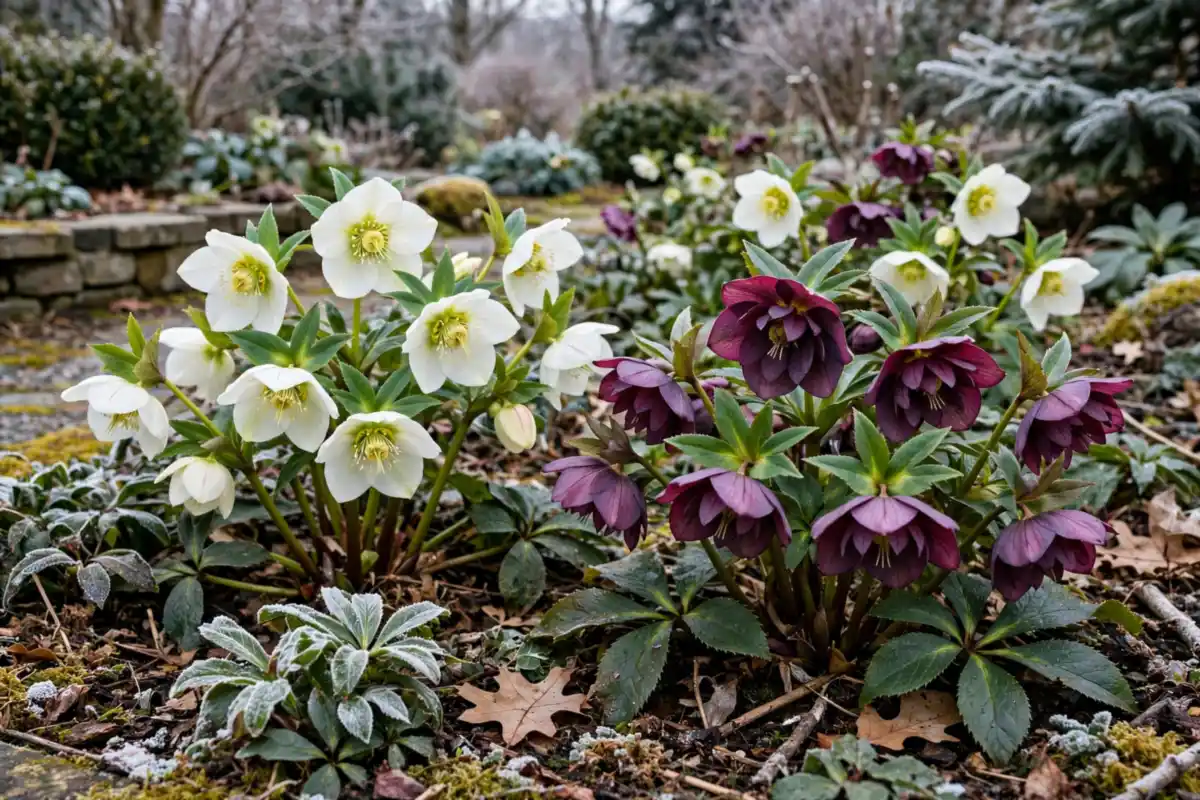
Every winter garden has a moment, somewhere around the darkest weeks of the year, when everything above ground looks finished — and that is exactly when the hellebore opens. Cups of white, plum, apricot and near-black rise through frost and leaf litter as if winter were a rumour, nodding over leathery evergreen leaves that never left. It is the flower that keeps the garden’s promise during the months when promises are hardest to keep.
This guide covers the six hellebores worth knowing (the Christmas rose, the endlessly coloured Lenten hybrids, and their wilder cousins), what it means — calm, serenity and a touch of protective mystery — and the two bits of craft that matter: planting the crown at the right depth, and cutting the old leaves away just before the flowers arrive.
Quick Answer
The hellebore is Helleborus, a genus of evergreen and herbaceous perennials in the buttercup family Ranunculaceae from the mountains and woodlands of Europe and western Asia, flowering from midwinter into spring. Hellebores grow in USDA zones 4 to 9 (species vary), prefer part shade and humus-rich, moisture-retentive but drained soil, and are fully poisonous — which is why deer and rabbits leave them entirely alone. The hellebore means serenity, peace, protection and hope in dark times.
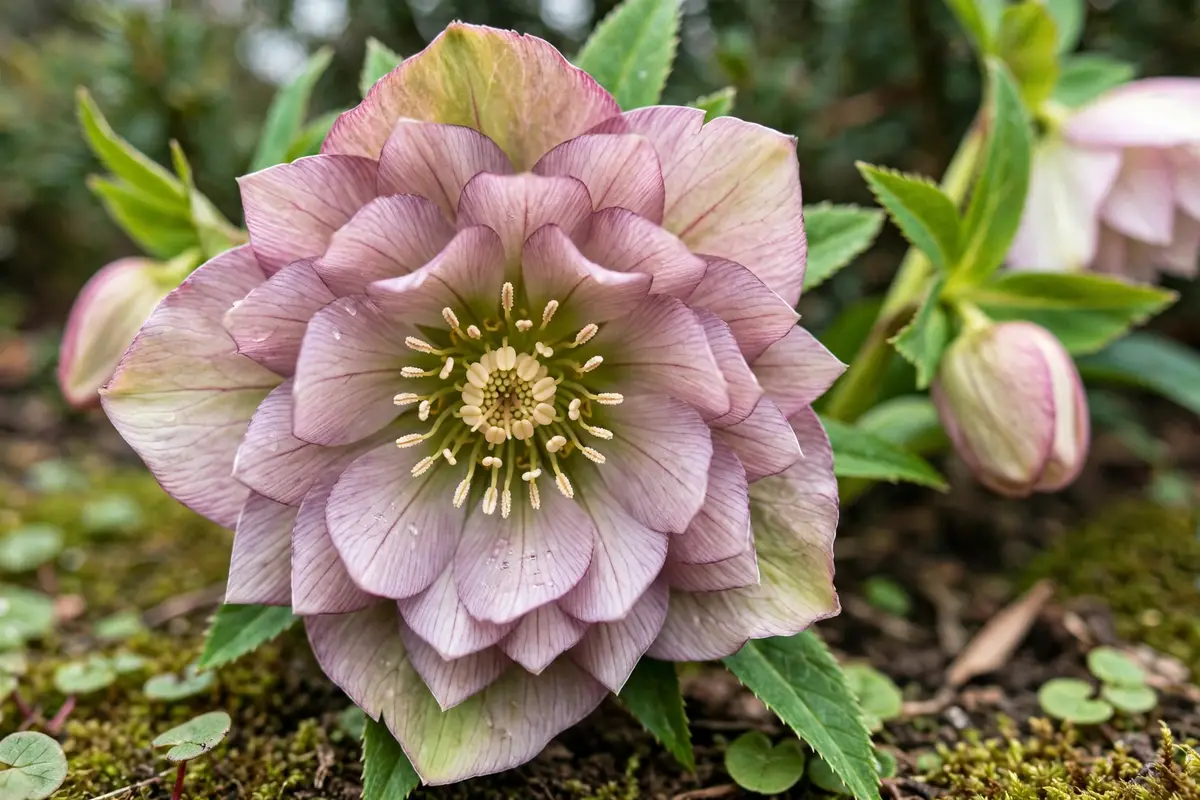
Table of Contents
- What Is a Hellebore?
- Types of Hellebore and 6 Kinds Worth Knowing
- Hellebore Meaning and Symbolism
- Hellebore Colours and Their Meanings
- How to Grow Hellebores
- Common Mistakes When Growing Hellebores
- Three Names, Untangled: Hellebore, Lenten Rose and Christmas Rose
- Frequently Asked Questions
What Is a Hellebore?
A hellebore flower is built to last: what looks like petals are actually sepals — tough, coloured, and persistent for months — while the true petals have shrunk into a ring of little nectar tubes at the flower’s centre, feeding winter’s earliest bees on mild days. The flowers hang downward like bells, a posture that shrugs off rain and snow (and makes hellebore photography an exercise in kneeling). Below them, the foliage forms a handsome architecture: leathery, divided, mostly evergreen leaves that hold the winter border together. The genus runs to about 20 species from the limestone hills of the Balkans to the Caucasus and one outlier in China, and gardeners have bred the orientalis clan into the widest colour range of any winter flower. You can read more on the Helleborus page on Wikipedia.
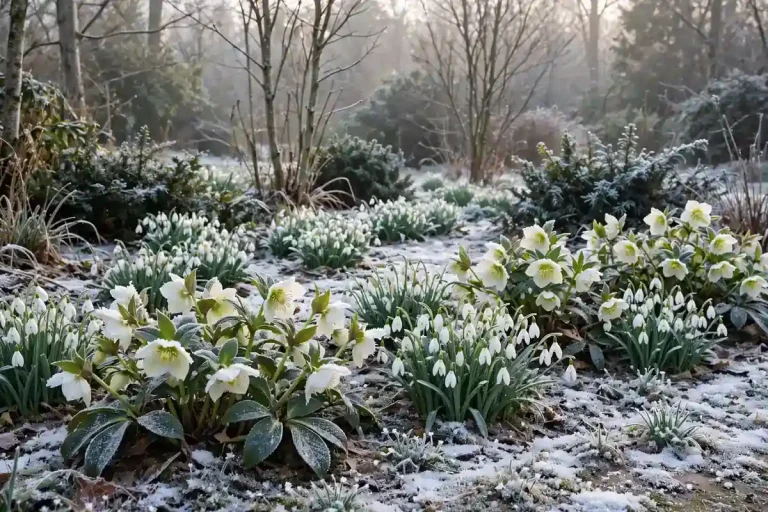
The name tells its older story: hellebore comes from Greek words often read as “food that harms” — this was one of antiquity’s powerful and dangerous medicinal plants, used (at real risk) for madness and melancholy, and planted near doors as protection. The modern garden keeps the protection (deer-, rabbit- and slug-proof by chemistry) and drops the medicine: enjoy it with your eyes, plant it with gloves, and let it be the winter border’s serene, untouchable aristocrat. In the frost-season border it keeps company with snowdrops and winter aconites — and outlasts them both by months.
Hellebore Quick Facts
- Botanical name: Helleborus spp. (chief garden kinds: H. niger, H. × hybridus, H. foetidus, H. argutifolius).
- Family: Ranunculaceae, the buttercup family.
- Hardiness: zones 4 to 9 for the Lenten hybrids; niger zones 3 to 8; foetidus/argutifolius zones 6 to 9.
- Height: 12 to 24 inches (foetidus to 30 inches).
- Bloom time: midwinter to mid-spring — December to April by kind and climate.
- Sun and soil: part shade (winter sun fine); humus-rich, moisture-retentive, well-drained, near-neutral to alkaline soil.
- Good to know: all parts poisonous; evergreen foliage; flowers are long-lasting sepals; resents transplanting once established — plant it right, then leave it for decades.
Types of Hellebore and 6 Kinds Worth Knowing
The white Christmas rose, the rainbow Lenten clan, and three wild characters. The table separates them; the profiles follow. For the full list of flower names, see our flower names A to Z guide.
| Type | Flowers | Height | Season | Best use |
|---|---|---|---|---|
| Christmas rose (H. niger) | White ageing to pink, gold centre | 12–15 in | Midwinter | Winter pots, graves, doorways |
| Lenten rose (H. × hybridus) | Every colour incl. near-black, doubles | 15–18 in | Late winter–spring | Shade borders, collecting |
| Wedding Party doubles | Ruffled double cups, named colours | 15–18 in | Late winter–spring | Close-up beds, cutting |
| Stinking hellebore (H. foetidus) | Green bells, maroon rims | 24–30 in | Late winter | Architecture, dry shade |
| Corsican (H. argutifolius) | Apple-green clusters | 24–36 in | Late winter | Bold foliage structure |
| H. × sternii | Pink-flushed green, silver leaves | 12–15 in | Late winter | Mild gardens, foliage |
1. Christmas Rose — the Midwinter White
Helleborus niger, named for its black roots rather than its flowers, which are the purest white in the winter garden — wide cups with a crown of gold stamens, ageing gracefully to blush pink and green. In mild winters it genuinely flowers at Christmas (the legend says an angel gave it to a shepherd girl who had no gift); in cold ones it waits for the first thaw. It is the fussier of the two great kinds — wanting lime, shelter and patience — and the most treasured for it.
2. Lenten Rose — the Rainbow Clan
Helleborus × hybridus (the orientalis hybrids) is the main event: seedlings and named strains in white, cream, primrose, apricot, pink, plum, wine and a famous near-black slate, spotted, picotee-edged, and doubled. Flowering from late winter through spring for months on end, tolerant, long-lived and happy in shade, the Lenten rose is the winter border’s workhorse and the collector’s rabbit hole — buy them in flower, because seedlings vary and a named colour is a promise kept.
3. Wedding Party Doubles — the Ruffled Series
The modern doubles, raised to flower true from seed in named colours — ‘True Love’ wine-red, ‘Blushing Bridesmaid’ white-and-rose, ‘Wedding Bells’ clear white: fully double cups that hold like little peonies for weeks and cut beautifully for winter vases. They are the Lenten rose dressed for occasions, and the easiest way to plant a colour-planned drift of doubles rather than a lottery of seedlings.
4. Stinking Hellebore — the Architect
Helleborus foetidus is innocent of its name (only a crushed leaf smells, mildly) and guilty of superb architecture: dark, finely divided evergreen foliage and tall stems carrying clusters of green bells rimmed in maroon from late winter. It self-sows with enthusiasm in dry shade where little else performs, lives fast (three to five good years), and replaces itself by seedlings — the wild cousin every designer plants on purpose.
5. Corsican Hellebore — the Bold Leaf
Helleborus argutifolius grows the genus’s biggest presence: bold, spiny-toothed trifoliate leaves in blue-green and, in the plant’s second winter, great clusters of apple-green cups. It wants the milder zones (6–9) and space to be a foliage event; after flowering the stems die back and new ones rise. Pair it with the Lenten clan and the hellebore corner has flowers and foliage from December to May.
6. Helleborus × sternii — the Silvered Hybrid
The cross between the Corsican and the little Balearic H. lividus: compact plants with silver-marbled, pink-flushed leaves and green flowers blushing purple — grown as much for winter foliage as for bloom, and the tenderest of this list (zones 6/7–9). In mild and coastal gardens it is a jewel; elsewhere it is a pot plant to shelter, and worth the trouble for those marbled leaves alone.
Hellebore Meaning and Symbolism
The hellebore means calm under pressure: serenity, peace, tranquillity and protection. Its old medicinal reputation gave it a darker double meaning — a flower against madness and melancholy, planted by doors to keep ill luck and ill humours out — and the Victorians, never comfortable with ambiguity, also read it as scandal and the plea “relieve my anxiety”, which is the same coin’s other face. The modern reading keeps the gentle side: this is the flower of hope in the year’s darkest weeks, of composure that does not wait for spring. The Christmas rose adds its own legend — the angel’s gift to a child with nothing to give — making white hellebores the flower of humble, unexpected grace.
Send hellebores for steadiness: recovery, hard winters of every kind, new beginnings made quietly. Among the winter bloomers in our flowers that start with H guide, it is the one that asks for a kneeling look and rewards it longest.
Hellebore Colours and Their Meanings
- White — serenity and grace: the Christmas rose, winter’s purest flower.
- Near-black and plum — mystery and composure: the slate Lenten roses, collectors’ prizes.
- Pink and rose — gentle hope: the spring-leaning hybrids.
- Apricot and primrose — warmth returning: the newer Lenten colours.
- Green — endurance: foetidus and Corsican cups, flowers that read as foliage with intent.
How to Grow Hellebores
Plant once, plant right, and then leave them alone for twenty years: that is the hellebore method in one line. Gardeners on r/gardening on Reddit add the ritual: “in January, cut every old leaf off at the base — the flowers stand up like they were waiting for the stage to clear.”
Planting and Position
Choose part shade — under deciduous trees is the classic spot, giving winter light and summer shade — in humus-rich soil that holds moisture without staying wet, near neutral to alkaline (the Christmas rose especially likes a limy soil). Set the crown at soil level, never buried deep: a too-deep hellebore sulks and skips flowering. Water through the first summer, mulch with leaf mould or compost every autumn, and then resist all urges to move it — established hellebores resent transplanting and take seasons to forgive it. Buy Lenten roses in flower to choose true colours.
The January Leaf Cut and Flowering
As the flower buds emerge at the base in midwinter, cut away all of last year’s leaves at ground level (gloves on — the sap irritates some skins, and the foliage can harbour leaf-spot fungus). The flowers then rise clean into the light, the display doubles, and disease pressure drops. Leave the flowers standing after they fade — the coloured sepals persist attractively for months while the seed ripens; deadhead only if you do not want seedlings, which in the Lenten clan are often delightful and always variable.
Common Mistakes When Growing Hellebores
Mistake one is planting the crown too deep — the single commonest cause of the “my hellebore never flowers” complaint. Mistake two is moving established plants on a whim: dig, divide and replant only in early autumn or after flowering, with a big rootball and low expectations for the following year.
Mistake three is dry, hungry soil: hellebores are woodlanders that want leaf mould, moisture in summer and an annual mulch — dust-dry beds produce stunted, spotted plants. Mistake four is leaving tatty, spotted foliage through flowering, which both hides the display and spreads leaf spot; the January cut exists for a reason. And mistake five is expecting Christmas-rose timing everywhere: in cold climates niger flowers in the first thaw rather than on the day — plant it somewhere you will see it from a window, whenever it chooses.
Three Names, Untangled: Hellebore, Lenten Rose and Christmas Rose
The bench confusion, sorted. Hellebore is the genus — all 20-odd species and their hybrids. Christmas rose is one species: H. niger, white, the earliest, the one of the angel legend. Lenten rose is the orientalis hybrid swarm (H. × hybridus): every colour, flowering toward Lent and beyond. Neither of the “roses” is a rose — both are buttercup cousins, and both keep the family poisons. The naming test at the nursery: white and winter-solstice timing says Christmas rose; a colour label and a February-March show says Lenten. Buy the plant, not the name, and you will not be disappointed.
Frequently Asked Questions
Are hellebores poisonous?
Yes — all parts contain toxic compounds (including helleborin and cardiac glycosides), and the roots are the strongest. Plant with gloves, wash after handling cut leaves, and keep cut stems away from pets and children. The upside of the same chemistry: deer, rabbits and slugs leave hellebores entirely alone. If your question is not answered here, the questions about the hellebore flower on Quora cover most of the rest.
When do hellebores flower?
From midwinter into spring: the Christmas rose from December in mild winters (or the first thaw), the foetidus and Corsican kinds in late winter, and the Lenten hybrids from late winter through April. The coloured sepals hold for months after, so the visible display is longer than the true flowering.
Why is my hellebore not flowering?
Usually one of three: the crown is planted too deep, the plant is young or recently moved (hellebores take a season or two to settle), or last year’s leaves are shading the base and were never cut. Correct the depth, add the January leaf cut, feed with a mulch — and give it a year.
Do hellebores spread or self-sow?
The Lenten hybrids and foetidus self-sow happily where they are content — seedlings bloom in two to three years in variable colours. The Christmas rose is slower and choosier. Transplant the seedlings you like while they are small; grown plants move badly.
Can hellebores grow in pots?
Yes, well — the Christmas rose is a classic winter doorstep pot, and Lenten hybrids thrive in large, deep containers of rich compost kept moist. Use the biggest pot you can, feed in spring, and move precious pots out of hard frost wind. A potted hellebore by the door in January is the genus at its most theatrical.
Are hellebores deer resistant?
Completely — they are the benchmark deer-proof perennial, ignored even under heavy pressure thanks to their poisons, and the anchor plant of shade borders in deer country. For more winter-proof planting partners, the heather flower guide covers the other great winter performer.