Dragon Flower: All 5 Plants Behind the Name
Five plants, four families, three continents — one nickname. The dragon flower is whichever plant your grandmother, your nursery catalogue or your continent meant: the snapdragon whose seed pods dry into grinning skulls, the dragon-fruit cactus that opens a foot-wide moonlit bloom for one night, the dragon arum that smells of bad decisions, a shy pink orchid in a bog, or a star-shaped succulent flower on a windowsill in November.
This guide sorts the dragons properly (all five claimants, with the tests that separate them), the meaning dragons carry into the garden — strength, protection, luck and a little well-meant menace — and care notes for the two you will actually grow most: the snapdragon and the dragon-fruit flower.
Quick Answer
“Dragon flower” is a shared nickname, not one plant: it most often means the snapdragon (Antirrhinum majus), and is also used for the dragon fruit flower (Selenicereus undatus), the dragon arum (Dracunculus vulgaris), the dragon’s mouth orchid (Arethusa bulbosa) and the dragon flower succulent (Huernia schneideriana). Snapdragons grow almost anywhere as cool-season annuals; dragon fruit is a climbing cactus for USDA zones 10 to 11 (or big pots); the arum is a hardy curiosity for bold gardens. Dragon flowers mean strength, protection, prosperity and good fortune.
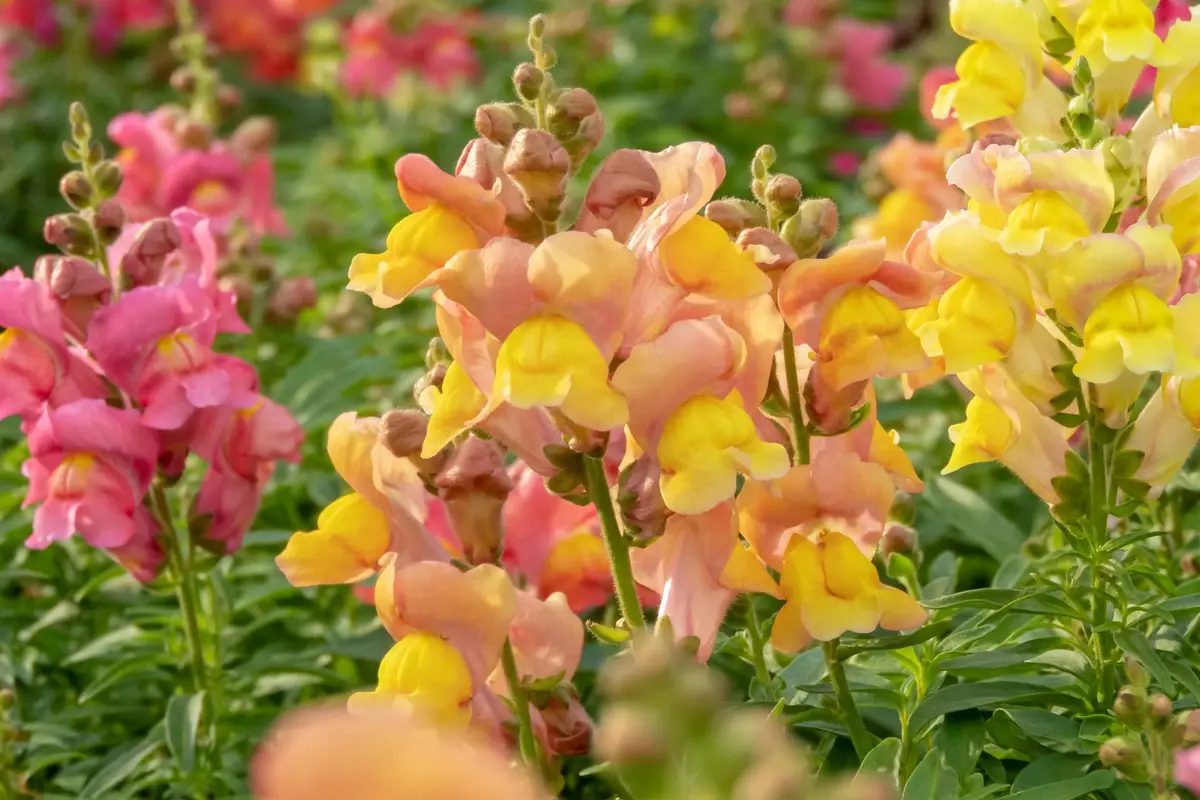
Table of Contents
- What Is a Dragon Flower?
- The 5 Dragon Flowers and How to Tell Them Apart
- Dragon Flower Meaning and Symbolism
- Dragon Flower Colours and Their Meanings
- How to Grow Dragon Flowers
- Common Mistakes When Growing Dragon Flowers
- Dragon Fruit Flower vs Queen of the Night: Two One-Night Wonders
- Frequently Asked Questions
What Is a Dragon Flower?
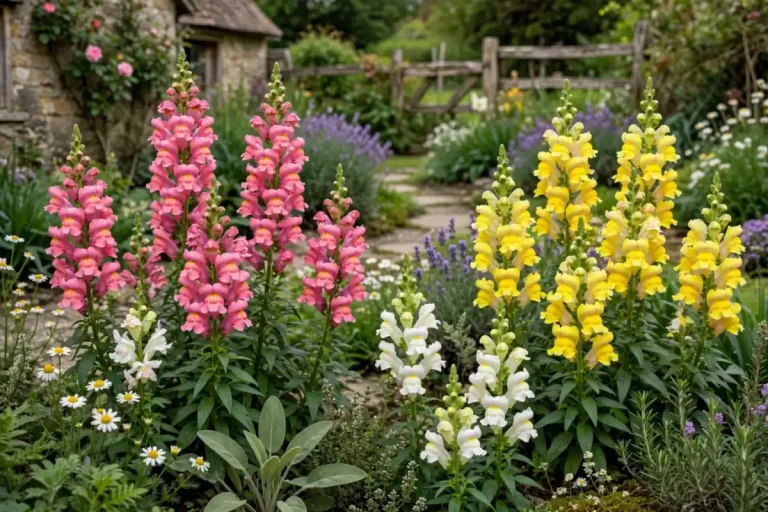
Dragons attach to flowers by shape: a snapdragon bloom, pinched at the sides, opens and closes its mouth like a small beast’s — the Greek name Antirrhinum means “like a snout” — and its dried seed pod, with two round eyes and a gaping jaw, is a convincing tiny skull. The dragon-fruit cactus earns the name by armour: scaly, flame-licked red fruit and stems like a dragon’s tail, crowned by one of the largest flowers on earth. The dragon arum goes by smell as much as looks, a purple-black spire that heats up and reeks of carrion to summon flies. Where cultures keep dragons as luck rather than monsters — above all in Asia — the name is praise; where dragons guard treasure, it is a warning that reads as protection. You can read more on the Antirrhinum page on Wikipedia.
Because the nickname is shared, “dragon flower” searches pull up all five plants on one results page, and nurseries use it loosely. The profiles below give each claimant its proper name and its tell — the feature that settles, in one look, which dragon you are holding.
Dragon Flower Quick Facts
- Botanical names: Antirrhinum majus; Selenicereus undatus; Dracunculus vulgaris; Arethusa bulbosa; Huernia schneideriana.
- Families: Plantaginaceae; Cactaceae; Araceae; Orchidaceae; Apocynaceae.
- Hardiness: snapdragon zones 7–10 (annual elsewhere); dragon fruit 10–11; arum 6–9; orchid 3–8 (bog plant, do not cultivate); huernia 9–11 or houseplant.
- Bloom time: snapdragon spring/autumn; dragon fruit summer nights; arum early summer; orchid late spring; huernia autumn.
- Sun and soil: snapdragon full sun, any decent soil; dragon fruit sun and sharp drainage; arum sun, rich soil; huernia bright light, gritty mix.
- Good to know: snapdragon’s dried pods are the famous “dragon skulls”; dragon fruit flower opens ONE night; dragon arum smells of carrion for a day — plant it downwind.
The 5 Dragon Flowers and How to Tell Them Apart
Five claimants, five easy tells. The table separates them; the profiles follow. For the full list of flower names, see our flower names A to Z guide.
| Plant | Proper name | The tell | Grown as |
|---|---|---|---|
| Snapdragon | Antirrhinum majus | Mouth that snaps; skull pods | Cool-season annual |
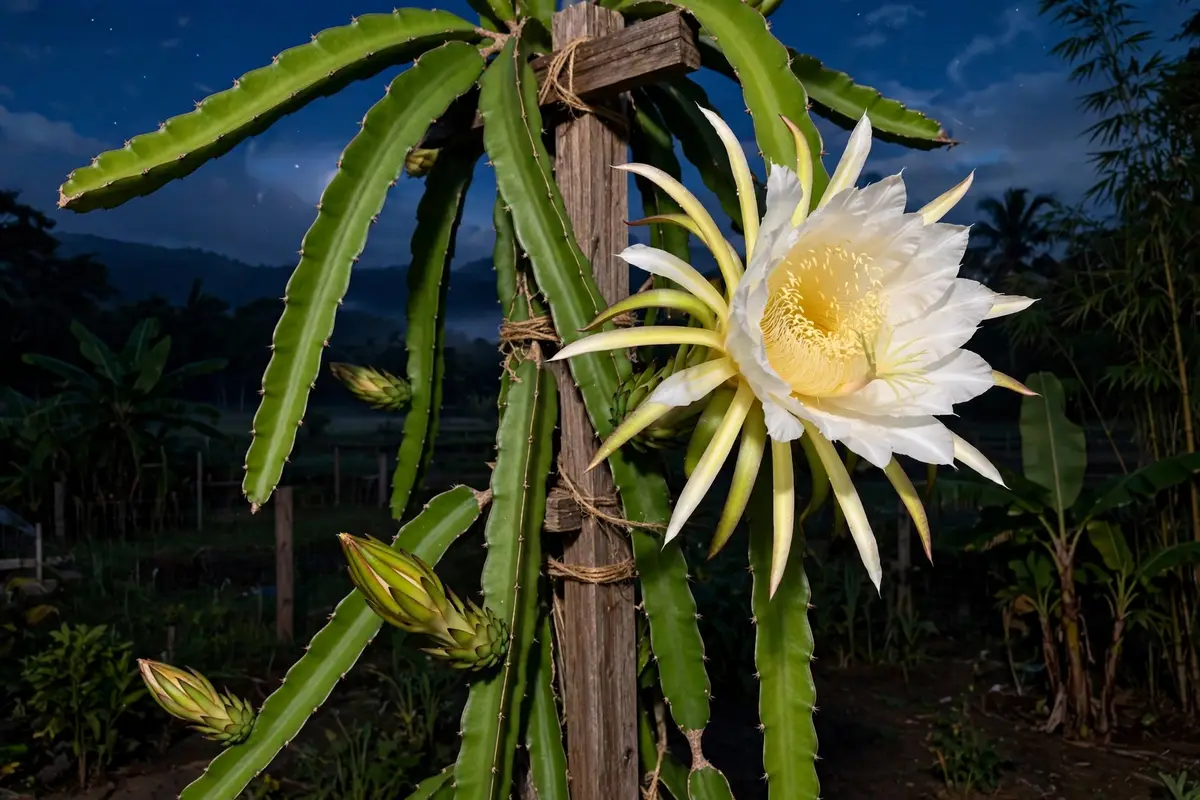
| Dragon fruit flower | Selenicereus undatus | Huge white night bloom on a cactus | Climbing cactus, zones 10–11 |
| Dragon arum | Dracunculus vulgaris | Purple-black spire; carrion smell | Hardy tuber, zones 6–9 |
| Dragon’s mouth orchid | Arethusa bulbosa | Single pink orchid in bogs | Wild only — protected |
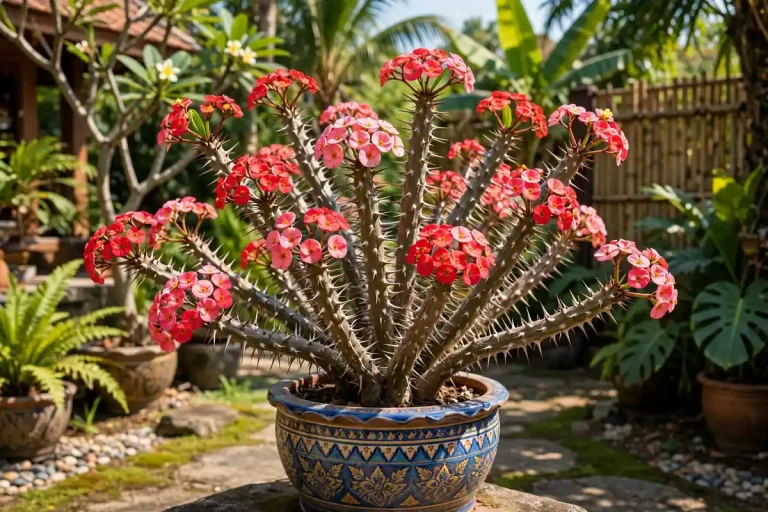
| Dragon flower succulent | Huernia schneideriana | Red star flowers on toothed stems | Houseplant succulent |
1. Snapdragon — the Original Dragon
The default meaning of “dragon flower” in most gardens: spikes of two-lipped blooms in every colour but blue, each flower snapping open when squeezed — children have operated them for centuries. It flowers hardest in cool weather (spring and autumn, through winter in mild zones), self-seeds generously, and leaves behind those grinning skull pods that sell the dragon story better than the flowers do. We gave it a full guide of its own: the snapdragon flower — this is its family nickname doing the rounds.
2. Dragon Fruit Flower — the One-Night Giant
From a sprawling climbing cactus with triangular, dragon-tailed stems comes a flower up to a foot across: white petals in a golden crown of stamens, opening at dusk, perfuming the night for moths and bats, finished by sunrise. Pollinated (by hand, in many home gardens), it sets the magenta dragon fruit. In zones 10–11 it scrambles over walls and trellises; everywhere else it lives in the largest pot you own and summers outside. Flowering takes a mature plant and a hot season — the wait is the price of the spectacle.
3. Dragon Arum — the Beautiful Stinker
Dracunculus vulgaris is theatre with an odour: a waist-high purple-black spathe unfurls around a near-black central spire, the whole apparatus warming itself and smelling convincingly of rotting meat for a day to draw in the flies that pollinate it — then the smell switches off, and the plant settles into handsome spotted stems, divided leaves and autumn spikes of red berries. Grow it where its single dramatic day can be admired from upwind: this is the dragon for gardeners with strong nerves and stronger curiosity.
4. Dragon’s Mouth Orchid — the Wild One
Arethusa bulbosa is the delicate claimant: one magenta-pink orchid flower, its lip crested and dragon-tongued, rising from a single grass-like leaf in the sphagnum bogs of eastern North America in late spring. It is a plant of exact, wet, acidic wildness — protected in much of its range, dependent on fungi, and not a garden plant in any honest sense. Meet it in a bog with a boardwalk, photograph it, and leave it standing; some dragons are for visiting.
5. Dragon Flower Succulent — the Windowsill Dragon
Huernia schneideriana is sold under the name “dragon flower” in the succulent trade: a mat of soft-toothed, dragon-hide stems that throws small, deep-red, star-shaped flowers — often in autumn — said to resemble a dragon’s open mouth. It asks for what all stapeliads ask: brutal drainage, bright light, winter dryness, and respect for its famous family trait — a faint carrion perfume pitched at flies, negligible indoors at this size. The easiest dragon to keep, and the only one that fits a teacup saucer.
Dragon Flower Meaning and Symbolism
Dragons mean opposite things in the two great traditions, and dragon flowers carry both charges. In the Asian reading the dragon is water, rain, strength and imperial luck — so dragon flowers, dragon fruit above all, signify prosperity, abundance and fortune arriving. In the European reading the dragon is the guardian at the gate — so snapdragons in cottage folklore were protection flowers, planted by doors against ill luck and deception, and the flower’s floriography meaning ran to strength and graciousness (with a shadow note of presumption, from the beast’s pride). Either way a dragon flower is never a shy gift: it is the bloom for congratulations with backbone — new ventures, housewarmings, ventures begun — strength wished rather than sympathy offered.
The skull pods give the snapdragon its second, modern register: among the weirdest flowers on earth it holds a permanent place, and its dried dragons get kept for Halloween as happily as its living ones get picked for spring. Few flowers are planted for both ends of the year.
Dragon Flower Colours and Their Meanings
- Red and magenta — prosperity and fire: dragon fruit’s skin, the huernia star, arum berries.
- White — the moonlit miracle: the dragon fruit flower’s single night.
- Purple-black — power and the macabre: dragon arum, snapdragon skull-lore.
- Pink and every pastel — strength made gracious: the snapdragon spikes.
- Gold and yellow — fortune: dragon fruit’s crown of stamens, yellow snapdragons.
How to Grow Dragon Flowers
Two of the five are garden staples; here is their care in brief. Gardeners on r/gardening on Reddit summarise both bluntly: “snapdragons want cool weather, not July” and “dragon fruit flowers when it’s good and ready — feed it sun and wait.”
Snapdragon: the Cool-Season Rule
Start seed indoors 8–10 weeks before the last frost (it is slow and tiny) or buy autumn/spring plants; set them in full sun in ordinary, drained soil a hand’s width apart. Snapdragons flower in flushes through cool weather and stall in heat — in mild climates autumn-planted ones overwinter and blaze in spring. Pinch young plants for bushiness, stake the tall kinds, deadhead for repeat spikes, and let the last pods dry on the plant if you want the skulls (and next year’s self-sown volunteers).
Dragon Fruit: the Cactus Trellis
Give it a post or trellis worthy of a heavy, sprawling cactus: rooted cuttings climb by aerial roots and are trained up a central support, then allowed to cascade — the hanging stems are where flowers form. Full sun, sharply drained cactus soil, water deeply but infrequently, feed in the growing season. Flowers come on mature growth in summer heat, at night: watch the fat buds at dusk, and if fruit is the goal, hand-pollinate after dark with a soft brush (many home clones need a second variety’s pollen — a fact worth checking when you buy).
Common Mistakes When Growing Dragon Flowers
Mistake one is expecting snapdragons to perform in high summer: they are cool-season flowers, and a July sulk is the plant’s calendar, not its failure — autumn brings the second act. Mistake two is planting dragon fruit in a small pot on a windowsill and waiting for flowers: it needs size, sun and a trellis, and patience measured in seasons.
Mistake three is siting the dragon arum beside the patio for its looks in early summer: the great purple spire is glorious, and for one day it smells like a bin — downwind and down-garden is its place. Mistake four is digging the wild dragon’s mouth orchid for the garden — illegal in places, doomed everywhere (its fungus partners do not travel), and a plant the bogs can spare no more of. And mistake five, for the huernia: kindness by watering can — stapeliads rot in winter wet faster than almost any succulent; grit, light and neglect.
Dragon Fruit Flower vs Queen of the Night: Two One-Night Wonders
The two giant night blooms get confused constantly, and both are cacti with one-night stands. Dragon fruit flower (Selenicereus undatus): on a climbing cactus with three-sided, wavy stems; flower huge and white with a dense golden centre; if pollinated, becomes the scaly magenta dragon fruit with white or red flesh. Queen of the night (Epiphyllum oxypetalum): on flat, leaf-like stems of a jungle cactus grown as a houseplant; flower equally huge and white but never sets an edible fruit in the house — its whole reward is the night itself. The stems decide it (triangular climber vs flat leaf-stems), and the fruit settles it. Our queen of the night flower guide covers its twin in full.
Frequently Asked Questions
What plant is the dragon flower?
Most often, the snapdragon (Antirrhinum majus) — its snapping mouth and skull-shaped seed pods earned the name. The nickname is shared with the dragon fruit flower, dragon arum, dragon’s mouth orchid and a huernia succulent, all separated in the table above. If your question is not answered here, the questions about the dragon flower on Quora cover most of the rest.
Why is the snapdragon called a dragon flower?
For its face: the two-lipped flower opens and shuts like a dragon’s mouth when pinched, and the dried seed pod left behind — two eye sockets and a jaw — looks like a miniature dragon skull. Few nicknames are earned twice over; this one is.
How long does the dragon fruit flower last?
One night. The giant bud opens after dusk, peaks around midnight with a heavy perfume, and is finished by morning. If pollination succeeds (moths and bats outdoors, a brush indoors), the fruit follows over the following month or two.
Is the dragon flower poisonous?
Depends which dragon: snapdragons are non-toxic and even appear on edible-flower lists; dragon fruit is food itself. The dragon arum is an irritant aroid — admire, don’t eat, and keep berries from children. The huernia is a mild-caution succulent. The wild orchid should never be handled or harvested at all.
What does a dragon flower symbolise?
Strength in both great readings — Asian prosperity and luck (dragon fruit) and European protection and gracious strength (snapdragon), with the snapdragon’s skull pods adding a modern memento-mori twist. The full symbolism is in the meaning section above.
Can you grow a dragon flower at home?
Yes — snapdragons anywhere cool (seed or plants, spring and autumn), dragon fruit in hot gardens or a big sun-room pot, the huernia on any bright sill. The arum suits a bold, downwind border in zones 6–9; the orchid stays wild. For more flowers under the same letter, see our guide to flowers that start with D.