Plants That Start With X: 19 Names, Pictures & Growing Tips
Looking for plants that start with X? You have picked the rarest letter in the plant kingdom. X opens almost no garden-center catalog, yet the plants hiding behind it are some of the most interesting you will ever grow: papery strawflowers that never fade, giant elephant-ear foliage, glossy evergreen hedges, Texas wildflowers that nap at noon, and a silver coin-leafed vine from Madagascar. Below are 19 real, verified X-plants with descriptions and honest growing advice — including clear caveats where a plant is a botanical curiosity, a tropical specialist, or a weed you should pull rather than plant. If you are working through the whole alphabet, continue with plants that start with A, plants that start with P, and plants that start with C.
X is also a letter that rewards honesty. Unlike friendlier letters, several X genera are known mostly to botanists, orchid collectors, and mangrove researchers — not to home gardeners. This list separates the genuinely growable (xeranthemum, strawflower, xylosma, Texas sleepy daisy, silver dollar vine) from the fascinating-but-impractical, so you never waste money on a plant that cannot survive your climate. For more alphabet rarities, see our unusual and beautiful flowers, and keep going through the series with plants that start with N.
Quick Answer
The best plants that start with X for home gardens are Xeranthemum (immortelle), Strawflower (Xerochrysum bracteatum), Xanthosoma (elephant ear), Xylosma (shiny xylosma hedge), Xanthisma (Texas sleepy daisy), Silver Dollar Vine (Xerosicyos danguyi), Yellowhorn (Xanthoceras sorbifolium), and Bear Grass (Xerophyllum tenax). Most X-plants are full-sun lovers from dry or tropical climates; several others on this list (grass tree, Poor Knights lily, cannonball mangrove) are collector curiosities rather than practical garden plants.
Table of Contents
X-Plants at a Glance
Compare all 19 X-plants side by side, from botanical names to native regions.
| Plant name | Scientific name | Type | Light | Native region |
|---|---|---|---|---|
| Xeranthemum | Xeranthemum annuum | Annual everlasting flower | Full sun | Mediterranean, W. Asia |
| Strawflower | Xerochrysum bracteatum | Tender perennial (grown as annual) | Full sun | Australia |
| Xanthosoma | Xanthosoma sagittifolium | Tropical foliage perennial | Part shade to full sun | Tropical Americas |
| Xylosma | Xylosma congestum | Evergreen shrub / hedge | Full sun to part shade | China |
| Texas Sleepy Daisy | Xanthisma texanum | Native wildflower (annual/biennial) | Full sun | Texas, Oklahoma |
| Grass Tree | Xanthorrhoea spp. | Slow-growing evergreen perennial | Full sun | Australia |
| Xylobium Orchid | Xylobium spp. | Epiphytic orchid | Bright indirect light | Central & S. America |
| Yellowhorn | Xanthoceras sorbifolium | Deciduous shrub / small tree | Full sun | N. China, Korea |
| Bear Grass | Xerophyllum tenax | Evergreen grass-like perennial | Full sun to part shade | W. North America |
| Cocklebur | Xanthium strumarium | Weedy annual (do not plant) | Full sun | Cosmopolitan weed |
| Yellow-Eyed Grass | Xyris complanata | Bog perennial | Full sun | Tropics worldwide |
| Hog Plum | Ximenia americana | Spiny tropical tree/shrub | Full sun | Pantropical |
| Poor Knights Lily | Xeronema callistemon | Evergreen rhizomatous perennial | Full sun to part shade | New Zealand |
| Cannonball Mangrove | Xylocarpus granatum | Tropical mangrove tree | Full sun | Indo-Pacific coasts |
| Golden Penda | Xanthostemon chrysanthus | Tropical flowering tree | Full sun | NE Australia |
| Resurrection Plant | Xerophyta retinervis | Drought-deciduous perennial | Full sun | Southern Africa |
| Ethiopian Pepper | Xylopia aethiopica | Tropical spice tree | Full sun | W. & C. Africa |
| Silver Dollar Vine | Xerosicyos danguyi | Succulent climbing vine | Bright indirect to sun | Madagascar |
| Woody Pear | Xylomelum occidentale | Australian native tree | Full sun | Western Australia |
Hardiness Zones, Water Needs & Bloom Time
Zone and water data at a glance — check the second column before you buy, because X contains more zone-sensitive plants than almost any other letter.
| Plant name | Bloom season | Water | Hardiness zones | Mature size |
|---|---|---|---|---|
| Xeranthemum | Summer to fall | Low to average | Grown as annual | 1–3 ft tall |
| Strawflower | Summer to frost | Average; drought tolerant | 8–11 (annual elsewhere) | 1–3 ft tall |
| Xanthosoma | Rarely indoors | Regular; likes moisture | 8–11 (lift corms elsewhere) | 3–6 ft tall |
| Xylosma | Inconspicuous (fall) | Low once established | 7–11 | 8–10 ft tall |
| Texas Sleepy Daisy | Spring to summer | Low; very drought tolerant | Grown as annual | 1–2 ft tall |
| Grass Tree | Sporadic (after fire/rain) | Low | 9–11 | 6–15 ft tall (very slow) |
| Xylobium Orchid | Spring | Regular; never soggy | Greenhouse / indoors | 1–2 ft tall |
| Yellowhorn | Mid-spring | Average; drought tolerant | 4–8 | 8–15 ft tall |
| Bear Grass | Early summer | Low once established | 6–9 | 2–3 ft (flower spike to 6 ft) |
| Cocklebur | Late summer | Average | Weed — do not plant | 2–4 ft tall |
| Yellow-Eyed Grass | Summer | Bog conditions | 9–11 | 1–2 ft tall |
| Hog Plum | Spring | Low; drought tolerant | 10–12 | 10–25 ft tall |
| Poor Knights Lily | Late spring to summer | Regular | 9–11 | 2–3 ft tall |
| Cannonball Mangrove | Seasonal | Intertidal / brackish | Not a garden plant | 10–40 ft tall |
| Golden Penda | Summer to fall | Regular when young | 10–12 | 15–30 ft tall |
| Resurrection Plant | Rarely in cultivation | Minimal; revives with rain | 9–11 | 1–2 ft tall |
| Ethiopian Pepper | Spring | Regular | 10–12 | 30–60 ft tall |
| Silver Dollar Vine | Rarely indoors | Low; let soil dry | 10–12 (houseplant elsewhere) | Trails 6–10 ft |
| Woody Pear | Winter to spring | Low; perfect drainage | 9–11 | 10–25 ft tall |
19 Plants That Start With X: The Complete List
The full rundown of X-plants, ordered by how useful they are to a home gardener, with real growing advice for each one — and honest warnings where they are needed.
1. Xeranthemum (Xeranthemum annuum)
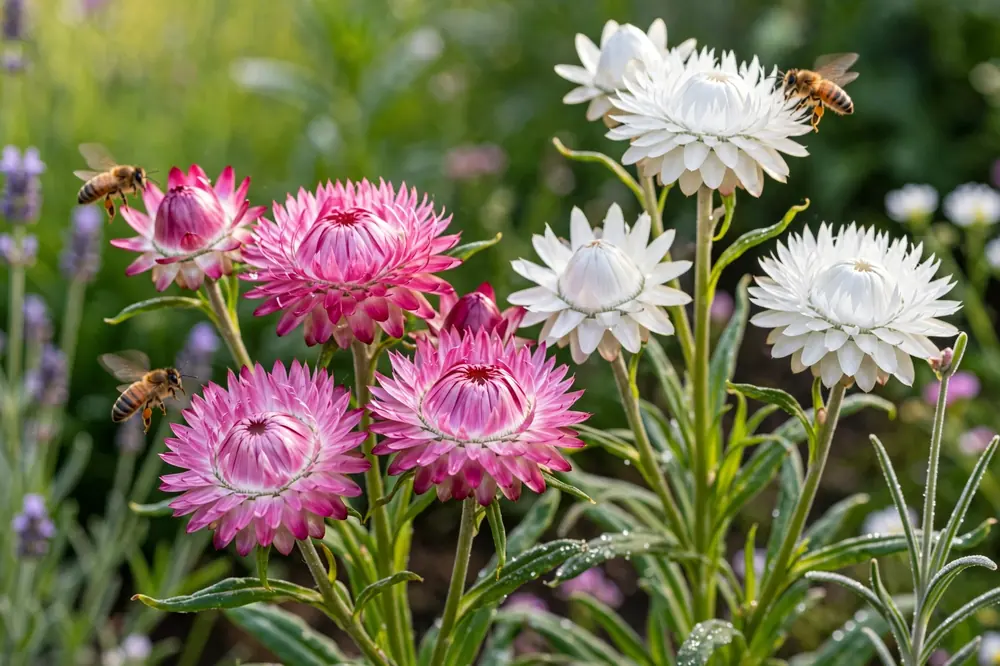
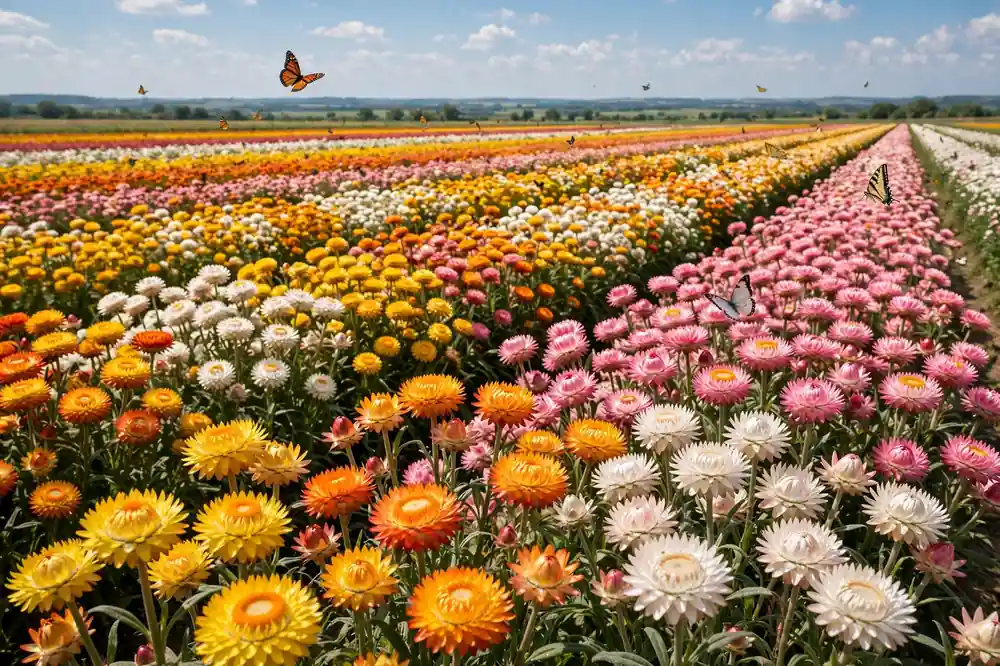
Xeranthemum, the immortelle, is the X-flower you are most likely to actually grow. This Mediterranean annual produces stiff, papery flower heads in silvery lilac, rose, pink, and white that look freshly picked for months — because the “petals” are dry bracts, the blooms hold their color on the stem and in the vase. It is a cottage-garden classic and one of the easiest dried flowers you can grow from seed.
Sow xeranthemum directly outdoors after all frost danger has passed, barely covering the seed, in full sun and average, well-drained soil — it actually prefers lean soil and resents rich, soggy ground. Thin seedlings to about 10 inches apart for good air flow. Deadhead to extend bloom from midsummer to fall, or leave the last heads standing for self-sowing. Cut stems for drying just as the centers open, and hang them upside down in a dark, airy spot.
2. Strawflower (Xerochrysum bracteatum)
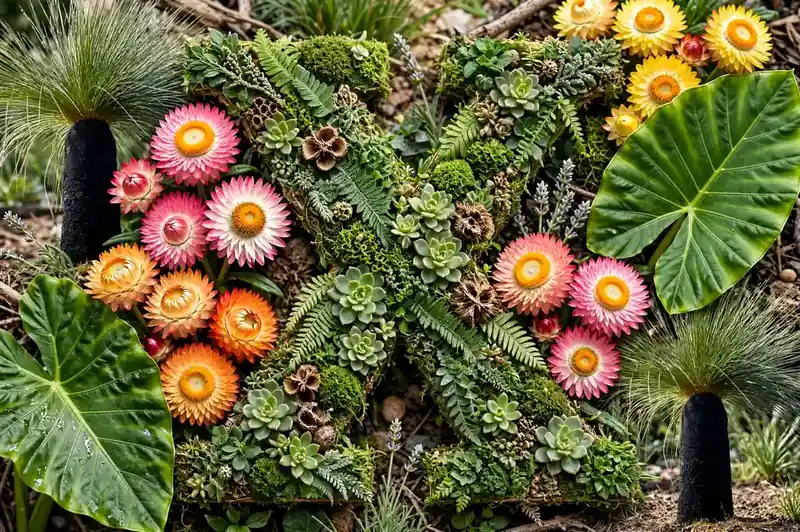
The strawflower is Australia’s gift to the cutting garden: stiff, glossy, daisy-like blooms in gold, orange, scarlet, pink, and white that feel like painted paper and dry perfectly without losing shape. Long sold under its old name Helichrysum bracteatum, it is a short-lived perennial in zones 8–11 and grown as a half-hardy annual everywhere colder. Few flowers give this much color for this little effort, and it belongs on any list of the showiest flowers that start with X.
Start seeds indoors 6–8 weeks before the last frost, or sow directly once nights stay above 50°F. Give strawflowers full sun and well-drained soil, spacing plants 10–12 inches apart. Water regularly but let the surface dry between waterings, and feed lightly — Australian natives dislike high-phosphorus fertilizers, so use a balanced or low-phosphorus feed. Deadhead constantly for bloom until frost; like its daisy cousins, it responds to the same deadheading routine in our mum care guide. For dried arrangements, cut when buds are half-open.
3. Xanthosoma (Xanthosoma sagittifolium)
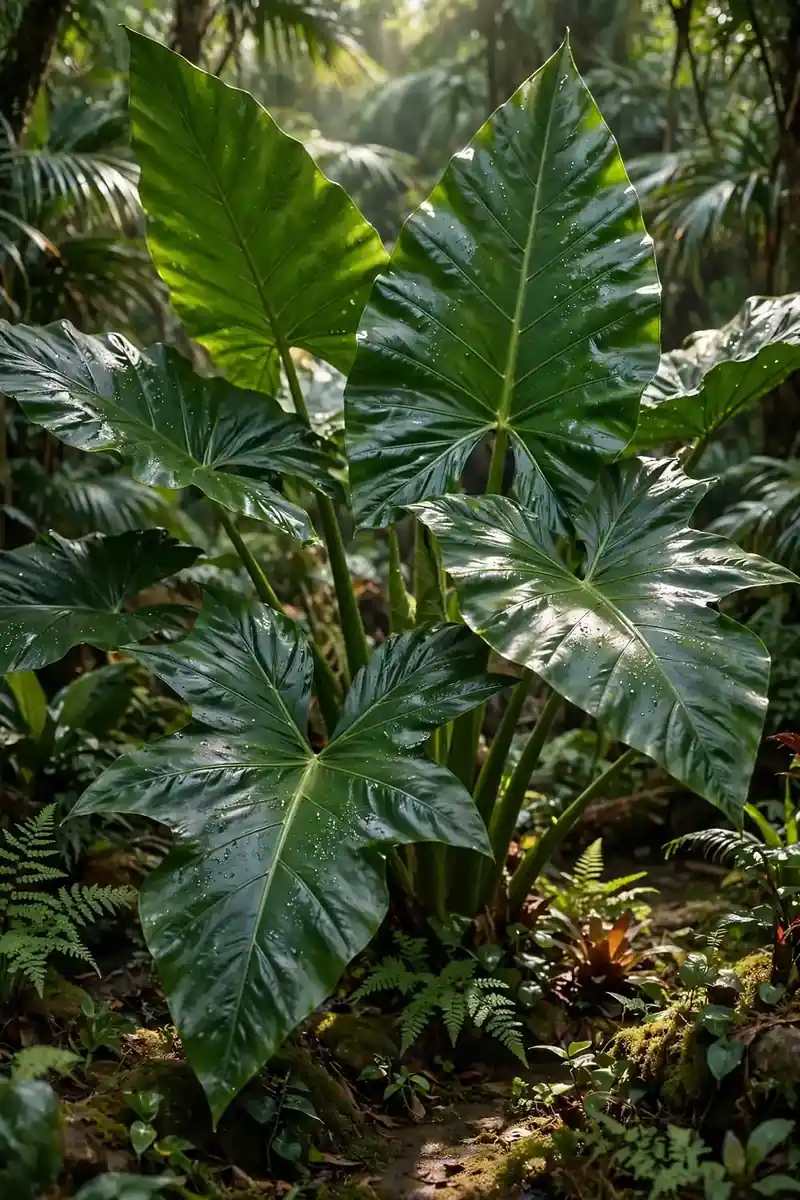
Xanthosoma is the arrowleaf elephant ear — enormous, arrow-shaped leaves on tall stalks that turn any border into a jungle. Native to tropical America and long cultivated across the tropics as tannia or cocoyam for its edible corms, it is grown in temperate gardens purely for foliage drama. Leaves can reach two feet long on plants 3–6 feet tall in a single season.
Plant xanthosoma corms outdoors after the soil warms in zones 8–11, in rich, moisture-retentive soil in part shade to full sun — more sun means more water needed. Feed monthly through summer for maximum leaf size. In colder zones, grow it in a large pot and bring it indoors before the first frost, or lift the corms like dahlias and store them dry over winter. Note: all parts contain calcium oxalate and are irritating raw; the corms are only edible after thorough cooking.
4. Xylosma (Xylosma congestum)
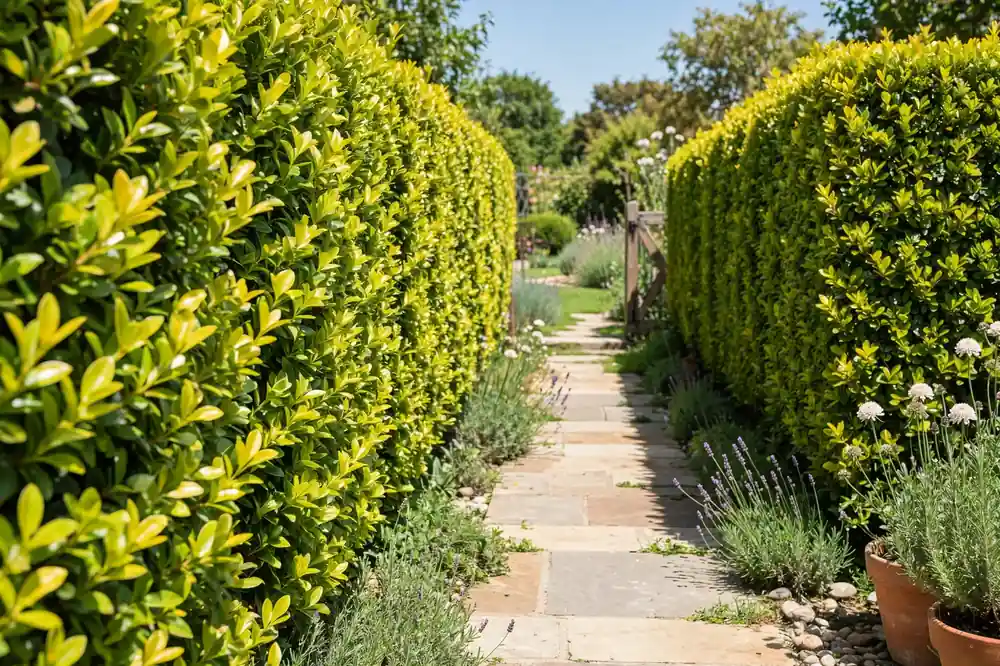
Shiny xylosma is the workhorse hedge of the X-list: a fast-growing evergreen shrub from China with small, glossy, bright-green leaves and bronze-red new growth. It shears beautifully into hedges, screens, and topiary, shrugs off heat and drought once established, and — unlike many hedge plants — tolerates both sun and shade. The species is dioecious, so female plants produce small black berries in fall if a male is nearby.
Plant xylosma in zones 7–11 in any well-drained soil, in full sun for the densest growth or part shade where summers are brutal. Water deeply for the first season, then back off — established plants are notably drought tolerant. Shear hedges in spring and again in midsummer; it responds to hard pruning if it outgrows its space. Hardy to around 10°F, X. congestum is the toughest of the xylosmas and the one to ask for at the nursery.
5. Texas Sleepy Daisy (Xanthisma texanum)
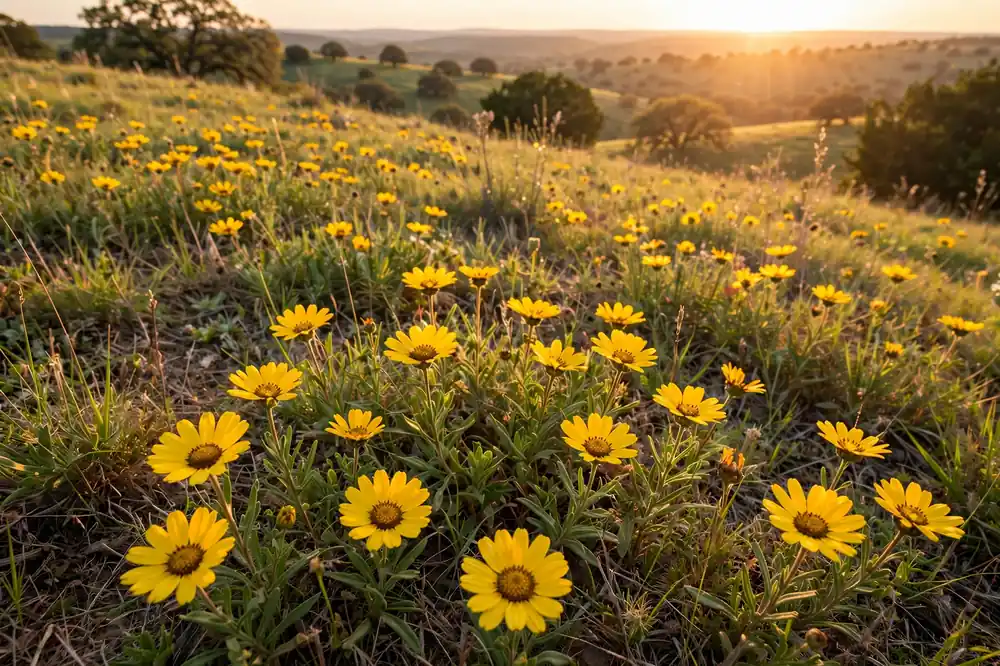
The Texas sleepy daisy earns its name honestly: its bright yellow, aster-like flowers open in the morning and fold shut by early afternoon, as if the plant naps through the heat. A true Texas and Oklahoma native wildflower, it thrives in the thin, rocky soils where fussier plants give up, blooming from spring into summer and self-sowing freely for years of free flowers.
Sow Texas sleepy daisy seed directly in fall or early spring in the poorest, sunniest spot you have — rich soil makes it floppy. It needs no fertilizer and almost no water once established, making it a star of xeriscape and native wildflower plantings. Let some flowers set seed each year and you will never buy seed twice. Deadhead the first flush to push a second round of blooms. Pair it with other drought-tough natives rather than thirsty bedding plants.
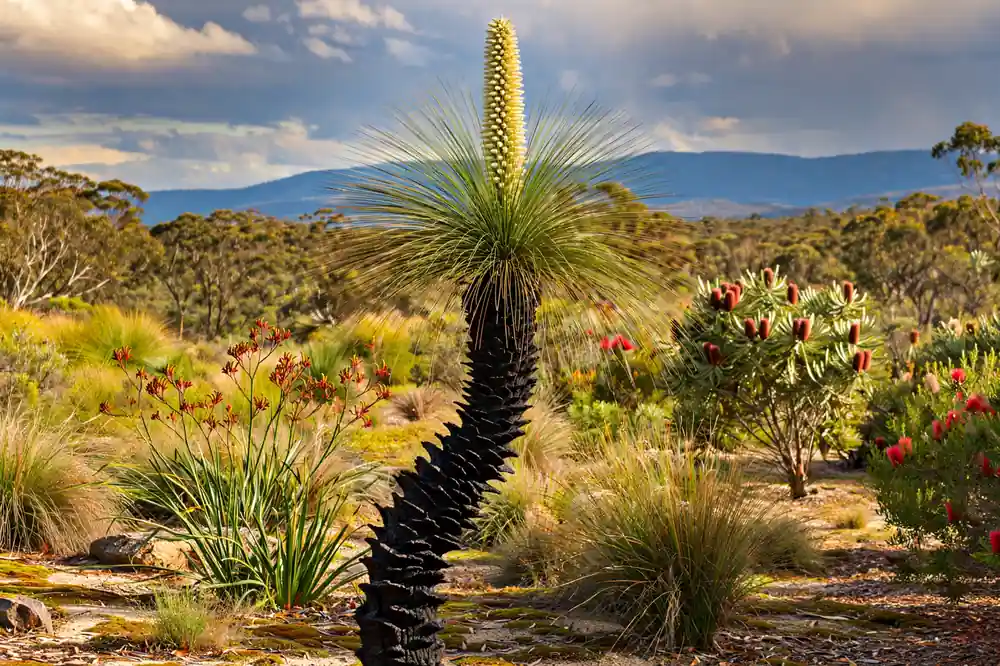
6. Grass Tree (Xanthorrhoea spp.)
The grass tree is Australia’s most sculptural plant: a blackened, fire-scarred trunk topped with a cascading fountain of needle-like leaves and, occasionally, a towering 6-foot flower spike. Some specimens are centuries old, growing only inches per decade. Honest caveat: this is a collector’s plant, not a casual purchase — nursery specimens are expensive, transplanting is risky, and growth is glacially slow.
If you are determined, buy only nursery-grown (never wild-collected) plants in zones 9–11, and give them full sun and extremely sharp drainage — raised beds or slopes work best. Water sparingly; grass trees rot in wet winter soil. Never move an established plant. For most gardeners outside Australia, the grass tree is best admired in botanical gardens or photographs, which is a perfectly valid way to enjoy it.
7. Xylobium Orchid (Xylobium spp.)
Xylobium is a genus of about three dozen orchids from the forests of Central and South America, producing waxy, often fragrant flowers in white, cream, and greenish-yellow on arching spikes. Honest caveat: you will almost never see one for sale. These are specialist-grown epiphytes traded among orchid societies, not garden-center plants.
Grow xylobiums like other warm-growing epiphytic orchids: in coarse bark mix in slatted baskets or pots, in bright indirect light with strong air movement, watering as the mix approaches dryness and easing off in winter. They resent cold below about 50°F and stagnant, soggy media. If the name intrigues you, join a local orchid society — that is genuinely how these plants change hands.
8. Yellowhorn (Xanthoceras sorbifolium)
Yellowhorn is the X-list’s hidden gem for temperate gardeners: a hardy (zones 4–8) deciduous shrub or small tree from northern China and Korea with rowan-like pinnate leaves and, in May, masses of white flowers with a yellow blotch that ages to deep pink-red. The flowers are fragrant, the fall fruits split to reveal edible chestnut-like nuts, and the Royal Horticultural Society has given it the Award of Garden Merit. It deserves to be far better known.
Plant yellowhorn in full sun and well-drained soil — it tolerates drought once established and dislikes winter wet. It is slow to start but long-lived, so site it carefully and avoid moving it. Prune only to remove dead wood, right after flowering. Honest caveat: it is rarely stocked in nurseries, so expect to order seed or a young plant from a specialist woody-plant nursery, and be patient with its slow early years.
9. Bear Grass (Xerophyllum tenax)
Bear grass forms evergreen fountains of tough, grass-like leaves from the mountains and open forests of western North America, and in early summer sends up spectacular 5–6 foot plumes of tiny creamy-white flowers that hum with pollinators. Native peoples have woven its flexible leaves into baskets for millennia. It is one of the most architectural native perennials you can grow in zones 6–9.
Give bear grass full sun to light shade and lean, well-drained, slightly acidic soil — it sulks in rich, wet ground. Water regularly the first year, then leave it alone; established clumps are very drought tolerant. Do not expect flowers every year; bear grass blooms erratically, often most heavily after fire or stress. Divide congested clumps in early spring, and cut old flower stalks to the base when they finish.
10. Cocklebur (Xanthium strumarium)
Cocklebur earns its place on this list as a warning, not a recommendation. This coarse annual weed produces the spiny burs that inspired Velcro — and that tangle in pet fur, socks, and hair — plus highly toxic seeds and strongly allergenic pollen. It colonizes disturbed soil, field edges, and streambanks almost everywhere. Included here so you can identify it and act.
Do not plant cocklebur; pull it. Hand-pull young plants before they set seed, ideally in early summer, and bag and discard the burs — never compost them. A single plant can produce hundreds of burs that stay viable in soil for years, so patrol the same spots each season. Wear gloves; the spines are unpleasant. If burs are already in a pet’s coat, work them out with oil and a comb rather than cutting the fur.
11. Yellow-Eyed Grass (Xyris complanata)
Yellow-eyed grasses are a large genus of rush-like wetland plants with small, three-petaled yellow flowers that open briefly on sunny mornings. Honest caveat: this is a bog-garden plant, full stop. Without constantly wet, acidic soil — a pond margin, rain garden, or constructed bog — it will not survive, which rules it out for ordinary borders.
Grow yellow-eyed grass at the shallow edge of a pond or in a bog container (a pot with no drainage hole, filled with peat and sand, kept topped up with rainwater) in full sun in zones 9–11. Never let it dry out, even briefly. It needs no fertilizer and little care beyond removing old foliage in spring. In the right bog setting it is charming; anywhere else, admire it in the wild.
12. Hog Plum (Ximenia americana)
Hog plum, or tallow wood, is a spiny small tree of tropical coasts and savannas worldwide, with fragrant cream flowers and yellow-orange fruits that are tartly edible when fully ripe. It is a tough survivor of poor sandy soils and drought, valued in its native range for fruit, firewood, and wildlife cover. Honest caveat: the spines are formidable, the fruits are an acquired taste, and it is essentially unavailable in the nursery trade outside the tropics.
In zones 10–12, plant hog plum in full sun and any well-drained soil, and then largely ignore it — it is built for neglect. Prune to shape in the dry season, wearing serious gloves. Grow it as a wildlife and security hedge rather than an ornamental. Temperate gardeners should cross this one off the shopping list.
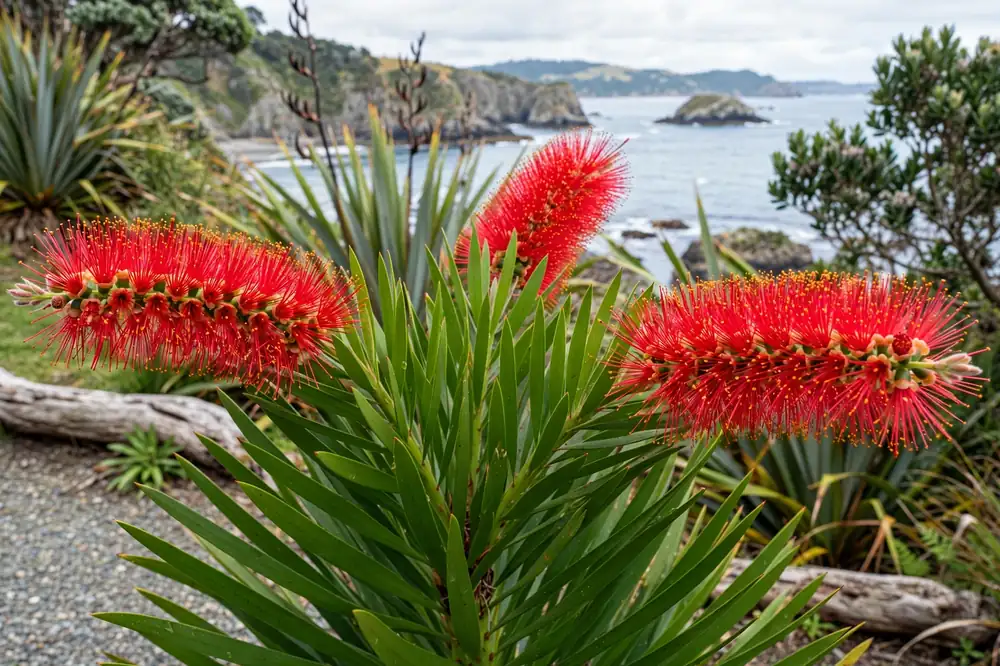
13. Poor Knights Lily (Xeronema callistemon)
The Poor Knights lily is one of the world’s great botanical show-offs: evergreen, iris-like fans of leaves and, in late spring, extraordinary horizontal spikes of crimson bottlebrush flowers tipped with orange pollen. It grows wild on just a few rocky islands off New Zealand’s coast. Honest caveat: it is frost-tender (zones 9–11), very slow from seed (a decade or more to first bloom), and genuinely hard to find for sale.
Grow it in full sun to light shade in sharply drained, even rocky soil, with regular water through the growing season and excellent winter drainage — wet cold kills it faster than dry cold. It tolerates coastal wind and salt spray beautifully. Buy a mature, nursery-grown plant if you can find one; starting from seed is a project for the patient. In colder zones, grow it in a large pot and overwinter it frost-free.
14. Cannonball Mangrove (Xylocarpus granatum)
The cannonball mangrove — also called the puzzle nut tree — is a mahogany-family tree of Indo-Pacific tidal forests, famous for its huge, woody, cannonball-sized fruits that split to release angular seeds. Honest caveat: this is a mangrove. It grows in brackish intertidal mud in the tropics and has no place in any home garden. It is on this list because X is so thin that the botanical record deserves representation, not because you should try to grow it.
There are no home-growing tips for a mangrove tree. If you live on a tropical coastline and are involved in mangrove restoration, work with local conservation groups — mangrove planting is specialized ecological work, not gardening. Everyone else: enjoy the cannonball fruit photos and move on to entry 18.
15. Golden Penda (Xanthostemon chrysanthus)
Golden penda is a small tree from the rainforests of northeastern Australia that erupts in summer with dense, golden-yellow, bottlebrush-like flower clusters utterly beloved by birds and butterflies. In the right tropical garden it is magnificent. Honest caveat: it needs frost-free zones 10–12, rich moist soil, and room to become a 15–30 foot tree — a combination most gardeners cannot offer.
Where the climate allows, plant golden penda in full sun in rich, well-drained soil, water deeply through its first two dry seasons, and mulch well. Tip-prune young trees to encourage a bushy crown. It is occasionally available from Australian native-plant nurseries; elsewhere, treat it as a botanical-garden spectacle.
16. Resurrection Plant (Xerophyta retinervis)
Xerophyta species are the true resurrection plants of southern Africa: grass-like tufts that dry to a crisp, brown, apparently dead husk in drought and unfurl green again within hours of rain. Few plant tricks are more astonishing. Honest caveat: these are extreme-specialist plants of rocky African outcrops, barely in cultivation anywhere, and not the same as the novelty “resurrection fern” sold in gift shops.
Cultivation is for experienced collectors: full blazing sun, mineral-gritty soil with flawless drainage, and a strict wet-summer / dry-winter rhythm that mimics their habitat. Overwatering in dormancy rots them. Zones 9–11 at best, and even then only in a carefully managed rock garden or alpine house. Fascinating, but not a garden plant for most readers.
17. Ethiopian Pepper (Xylopia aethiopica)
Ethiopian pepper, or grains of Selim, is a tall West and Central African tree whose aromatic, peppery seed pods are a traditional spice — smoky, musky, and complex. It is an important agroforestry and medicinal tree in its native range. Honest caveat: it is a 30–60 foot tropical tree for zones 10–12, not something you grow for the spice rack in a temperate backyard.
In suitable climates, plant in full sun in deep, well-drained soil and give young trees regular water. It is grown from seed, which germinates best fresh. For everyone else, the practical takeaway is culinary: look for grains of Selim at African grocery stores or spice merchants and try it in stews — experiencing the plant as a spice is the realistic option.
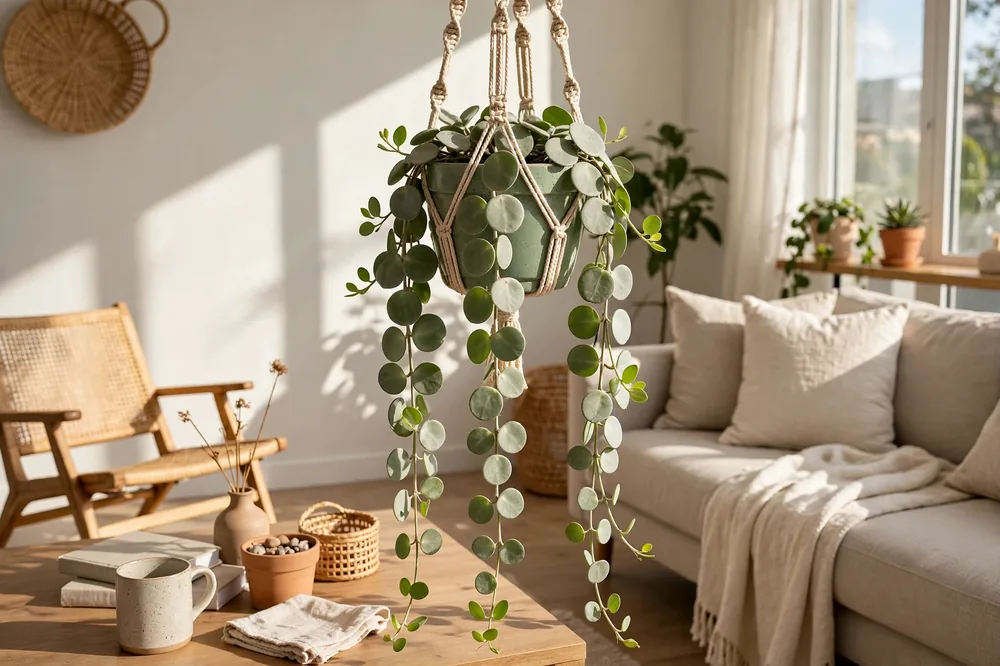
18. Silver Dollar Vine (Xerosicyos danguyi)
The silver dollar vine is the X-plant most likely to end up in your living room: a climbing succulent from Madagascar (in the cucumber family, of all things) with thick, round, silver-green leaves like coins strung along twining stems. It trails beautifully from hanging baskets or climbs a small trellis, and it is far more drought-forgiving than it looks. A genuinely fun and easy houseplant, and a strong candidate for our best terrarium plants list in a large, open terrarium.
Give silver dollar vine bright indirect light with some gentle direct sun — too little light makes it leggy. Plant in a gritty cactus or succulent mix and water only when the soil is fully dry; wrinkled leaves mean thirsty, mushy stems mean too much water. It prefers 65–85°F and normal indoor humidity. Propagate from stem cuttings in spring. Note: it may cause stomach upset if eaten, so keep it away from pets and small children that chew plants.
19. Woody Pear (Xylomelum occidentale)
The woody pear is a Western Australian tree in the protea family, named for its large, woody, pear-shaped fruits, with cream flower spikes that draw honeyeaters. Honest caveat: like all proteas, it demands perfect drainage and phosphorus-free fertilizer, is frost-tender (zones 9–11), and is rarely sold outside Australia. It is included as a botanical curiosity and a challenge for protea collectors.
Grow it only if you already succeed with proteas and banksias: full sun, deep sandy soil, zero-phosphorus native-plant fertilizer, and deep but infrequent watering. Never amend the planting hole with rich compost or manure. For most gardeners, the woody pear stays a fascinating photograph.
Growing Tips for X-Plants
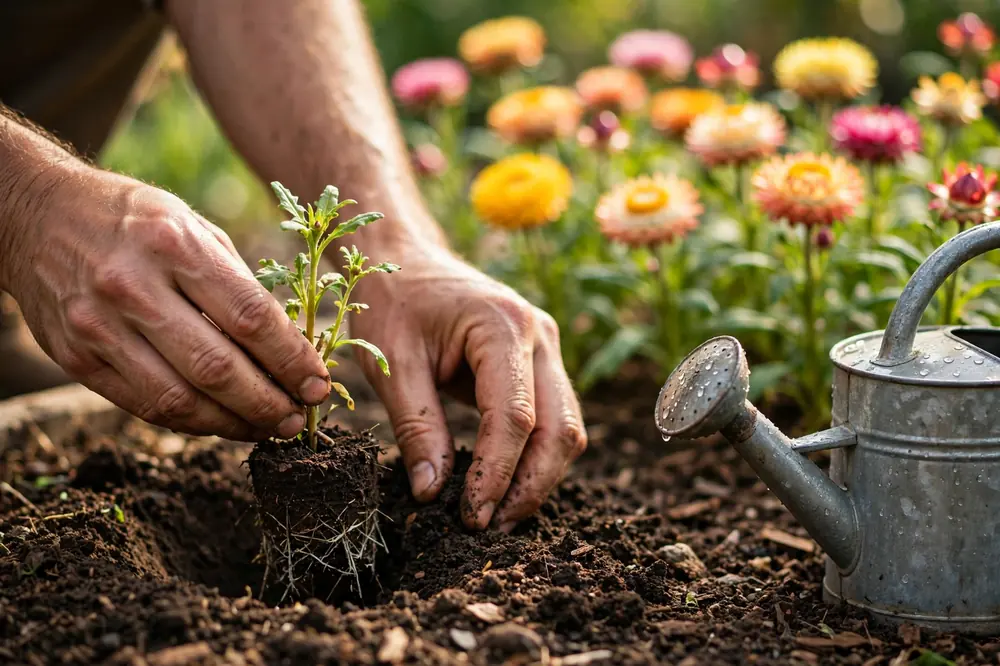
Start with the proven five. If you want X-plants in your garden this season, plant xeranthemum, strawflower, xylosma, Texas sleepy daisy, and silver dollar vine (as a houseplant). They are the affordable, available, genuinely easy core of the X-list — everything else is a bonus or a curiosity.
Match the plant to your zone before you fall in love. More than half the X-list is frost-tender or tropical. Check the care chart above first: yellowhorn and bear grass suit cold climates, xylosma bridges the middle, and the rest want warmth or a windowsill.
Give them sun and drainage. Most X-plants evolved in bright, dry, or sharply drained habitats — Mediterranean hillsides, Australian sandplains, Texas rock. Full sun and soil that never stays soggy will keep xeranthemum, strawflower, xylosma, and xanthisma happy.
Go easy on the fertilizer — especially phosphorus. Strawflowers and the Australian natives dislike high-phosphorus feeds. Use a balanced, low-phosphorus fertilizer at half strength, and skip the rich compost for the dry-country annuals.
Deadhead the daisies. Xeranthemum, strawflower, and Texas sleepy daisy all bloom weeks longer when spent flowers are removed. Leave the final heads of xeranthemum and sleepy daisy to self-sow for free plants next year.
Overwinter the tropicals. Xanthosoma corms can be lifted like dahlias, and silver dollar vine simply comes indoors to a bright window. A little October effort saves the cost of rebuying every spring.
Which X-Plants Will You Grow?
X may be the rarest letter in the plant kingdom, but it is not an empty one. Sow a packet of xeranthemum for papery blooms that dry perfectly, fill a sunny border with strawflowers, shear a xylosma into the toughest hedge on the street, or hang a silver dollar vine in your brightest window — and you will have grown more X-plants than most gardeners ever attempt. The curiosities, from grass trees to Poor Knights lilies to cannonball mangroves, are there to marvel at, and now you know exactly which ones to admire from a distance.
Pick two or three X-plants that fit your zone and light, plant them this season, and finish the alphabet garden you started. Happy planting!
Frequently Asked Questions
What is the most popular plant that starts with X?
The strawflower (Xerochrysum bracteatum) is the most widely grown X-plant — a beloved cutting and dried flower sold at every garden center. Xeranthemum (immortelle) is a close second among dried-flower growers, and shiny xylosma is the most-planted X shrub in warm-climate landscaping.
What plants starting with X are good for beginners?
Xeranthemum, strawflower, Texas sleepy daisy, and xylosma are the beginner-friendly outdoor choices — all thrive on sun, lean soil, and a little neglect. Indoors, the silver dollar vine is an easy, forgiving succulent as long as you avoid overwatering.
What plants that start with X grow indoors?
The silver dollar vine (Xerosicyos danguyi) is the best indoor X-plant: a trailing succulent that loves a bright window. Xanthosoma (elephant ear) also works indoors in bright light, though it grows far larger outdoors. The rest of the X-list needs full outdoor sun.
Which X-plants are perennials and which are annuals?
True perennials include xylosma, bear grass, yellowhorn, xanthosoma (in warm zones), and the woody curiosities. Xeranthemum and Texas sleepy daisy are true annuals (though both self-sow). Strawflower is a tender perennial in zones 8–11 but grown as an annual in colder climates.
Are any plants that start with X toxic or weedy?
Yes. Cocklebur (Xanthium strumarium) is a genuine weed with toxic seeds and allergenic pollen — pull it, do not plant it. Xanthosoma contains irritating calcium oxalate (its corms are edible only after thorough cooking), and silver dollar vine may upset pets’ stomachs if chewed.
Why are there so few plants that start with X?
Botanical Latin favors Greek roots, and few Greek plant descriptors begin with X — the main ones are xantho- (yellow), xero- (dry), and xylo- (wood), which is exactly why so many X-plants are yellow-flowered, drought-tolerant, or woody. With such a narrow naming pool, X ends up the thinnest letter in every plant dictionary.