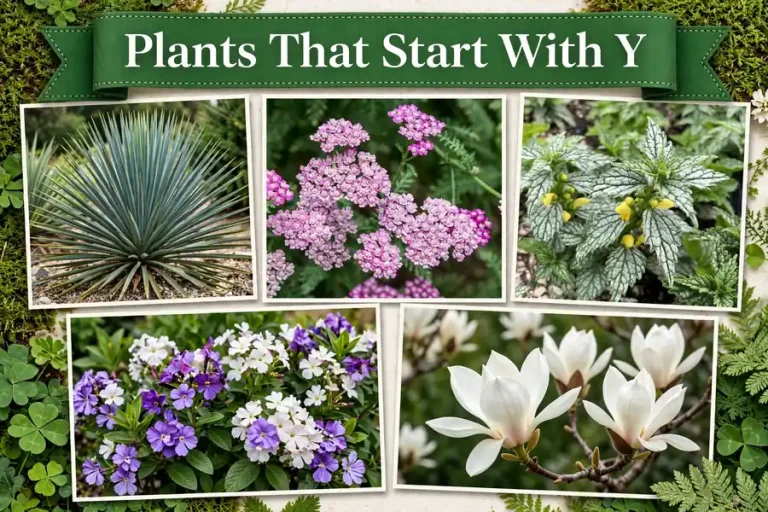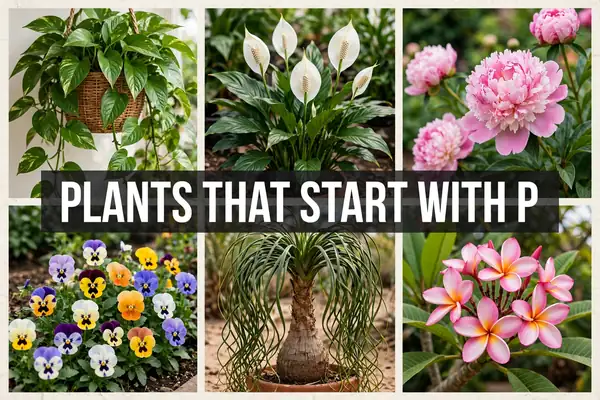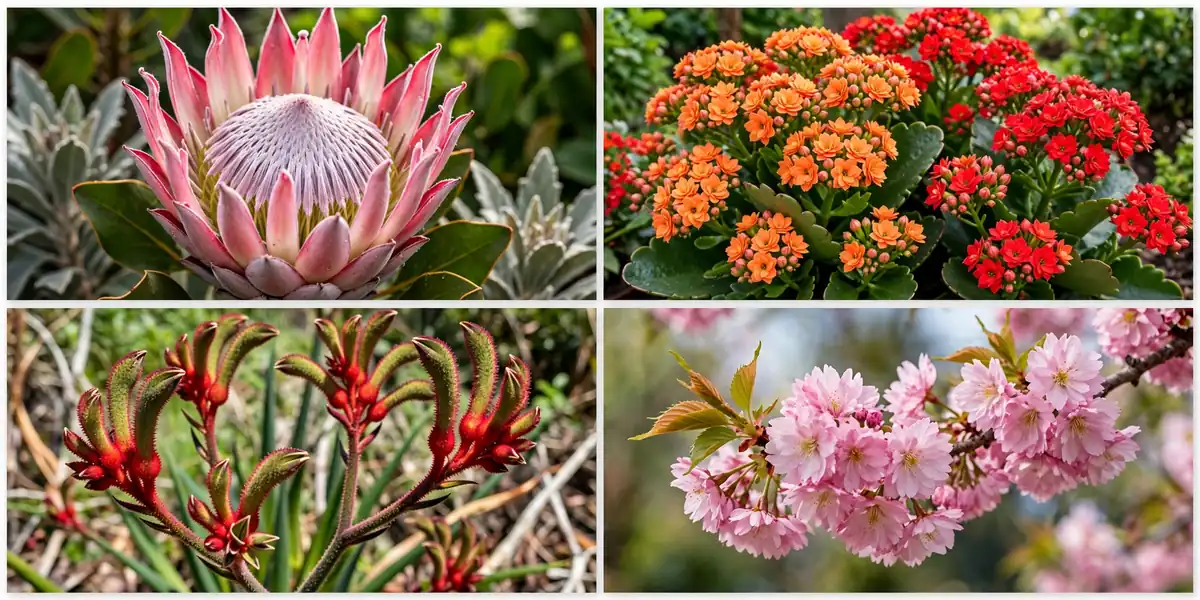
Plants that start with K: 30 Names, Pictures & Growing Tips
Looking for plants that start with K? The letter K punches far above its weight in the plant world. It gives us the kalanchoe glowing on winter windowsills, the kentia palm that made Victorian parlors fashionable, the kiwi vine heavy with fuzzy fruit, the kousa dogwood lighting up June gardens, and the king protea — one of the most dramatic flowers on earth. From houseplants and fruit trees to native groundcovers and cool-season vegetables, this guide covers 30 real plants that start with K, each with its botanical name, native region, bloom season, and practical growing advice. If you are mainly after blooms, see also our companion guide to flowers that start with K.
Every entry below lists the plant’s scientific name, light and water needs, and USDA hardiness zone, so you can tell at a glance which K-plants suit your home or garden. You will also find two comparison tables, hands-on growing tips, and answers to the questions gardeners ask most about plants starting with K.
Quick Answer
Popular plants that start with K include Kalanchoe, Kentia Palm, King Sago Palm, Kiwi, Kumquat, Knock Out Rose, Kwanzan Cherry, Kousa Dogwood, Kerria, Kangaroo Paw, Red Hot Poker, Kale, and Kohlrabi. They span tropical houseplants, flowering trees, fragrant shrubs, Australian exotics, and cool-season vegetables — covering USDA zones 2–11, so there is a K-plant for nearly every garden and windowsill.
Table of Contents
K-Plants at a Glance
Use this table to compare all 30 plants that start with K side by side, from botanical names to native regions.
| Plant name | Scientific name | Type | Light | Native region |
|---|---|---|---|---|
| Kalanchoe | Kalanchoe blossfeldiana | Succulent houseplant | Bright indirect | Madagascar |
| Panda Plant | Kalanchoe tomentosa | Succulent houseplant | Bright light | Madagascar |
| Kentia Palm | Howea forsteriana | Indoor palm | Bright indirect to low | Lord Howe Island, Australia |
| King Sago Palm | Cycas revoluta | Cycad | Full sun to part shade | Japan (Ryukyu Islands) |
| Kangaroo Fern | Microsorum diversifolium | Fern houseplant | Bright indirect | Australia, New Zealand |
| Kiwi | Actinidia deliciosa | Fruiting vine | Full sun | China |
| Kumquat | Citrus japonica | Citrus tree | Full sun | China |
| Kaffir Lime | Citrus hystrix | Citrus tree | Full sun | Southeast Asia |
| Knock Out Rose | Rosa ‘Radrazz’ | Shrub rose | Full sun | Garden hybrid (USA) |
| Kwanzan Cherry | Prunus serrulata ‘Kanzan’ | Flowering tree | Full sun | Japan, China, Korea |
| Kousa Dogwood | Cornus kousa | Flowering tree | Full sun to part shade | China, Korea, Japan |
| Goldenrain Tree | Koelreuteria paniculata | Ornamental tree | Full sun | China, Korea |
| Kentucky Coffee Tree | Gymnocladus dioicus | Shade tree | Full sun | Central and eastern USA |
| Katsura Tree | Cercidiphyllum japonicum | Ornamental tree | Full sun to part shade | Japan, China |
| Kobus Magnolia | Magnolia kobus | Flowering tree | Full sun | Japan, Korea |
| Kerria | Kerria japonica | Deciduous shrub | Part shade to shade | China, Japan |
| Beautybush | Kolkwitzia amabilis | Deciduous shrub | Full sun | China |
| Mountain Laurel | Kalmia latifolia | Evergreen shrub | Part shade | Eastern USA |
| Korean Spice Viburnum | Viburnum carlesii | Deciduous shrub | Full sun to part shade | Korea, Japan |
| Korean Boxwood | Buxus sinica var. insularis | Evergreen shrub | Part shade | Korea, China |
| King Protea | Protea cynaroides | Evergreen shrub | Full sun | South Africa |
| Kangaroo Paw | Anigozanthos spp. | Perennial | Full sun | Western Australia |
| Red Hot Poker | Kniphofia uvaria | Perennial | Full sun | South Africa |
| Knautia | Knautia macedonica | Perennial | Full sun | Southeastern Europe |
| Kaffir Lily | Clivia miniata | Houseplant / perennial | Shade to bright indirect | South Africa |
| King’s Mantle | Thunbergia erecta | Tropical shrub | Full sun to part shade | Tropical Africa |
| Kale | Brassica oleracea Acephala Group | Vegetable | Full sun | Mediterranean region |
| Kohlrabi | Brassica oleracea Gongylodes Group | Vegetable | Full sun | Europe (garden origin) |
| Kinnikinnick | Arctostaphylos uva-ursi | Evergreen groundcover | Full sun | Northern Hemisphere (circumboreal) |
| Kentucky Bluegrass | Poa pratensis | Turf grass | Full sun | Europe, Asia |
Bloom Season, Water Needs & Hardiness Zones
This second table focuses on practical care: when each K-plant blooms, how much water it wants, and the USDA zones where it survives winter outdoors.
| Plant name | Bloom season | Water needs | USDA hardiness |
|---|---|---|---|
| Kalanchoe | Late fall to winter (indoors) | Low — let soil dry out | 10–11 |
| Panda Plant | Rarely indoors | Low — drought tolerant | 9–11 |
| Kentia Palm | Rarely indoors | Medium — evenly moist | 9b–11 |
| King Sago Palm | Non-flowering (cycad) | Medium — well drained | 8–10 |
| Kangaroo Fern | Non-flowering (fern) | Medium-high — keep moist | 9–11 |
| Kiwi | Late spring (flowers) | High — consistent moisture | 7–9 |
| Kumquat | Spring to summer | Medium — evenly moist | 8–10 |
| Kaffir Lime | Spring | Medium — evenly moist | 9–11 |
| Knock Out Rose | Spring to frost | Medium | 4–9 |
| Kwanzan Cherry | Mid to late spring | Medium | 5–9 |
| Kousa Dogwood | Early summer | Medium | 5–8 |
| Goldenrain Tree | Summer | Low-medium — drought tolerant | 5–9 |
| Kentucky Coffee Tree | Late spring (inconspicuous) | Medium | 3–8 |
| Katsura Tree | Spring (inconspicuous) | Medium-high — dislikes drought | 4–8 |
| Kobus Magnolia | Early spring | Medium | 5–8 |
| Kerria | Mid spring | Medium | 4–9 |
| Beautybush | Late spring | Medium | 4–8 |
| Mountain Laurel | Late spring | Medium | 4–9 |
| Korean Spice Viburnum | Mid spring | Medium | 4–7 |
| Korean Boxwood | Spring (inconspicuous) | Medium | 5–9 |
| King Protea | Spring to summer | Low — sharp drainage | 9–11 |
| Kangaroo Paw | Late spring to summer | Medium — good drainage | 9–11 |
| Red Hot Poker | Summer | Low-medium once established | 5–9 |
| Knautia | Summer to early fall | Medium | 5–9 |
| Kaffir Lily | Late winter to spring | Medium — dry winter rest | 9–11 |
| King’s Mantle | Nearly year-round (tropics) | Medium | 10–11 |
| Kale | Grown for foliage | Medium — consistent | 2–9 (grown as annual) |
| Kohlrabi | Grown for swollen stem | Medium — consistent | Grown as annual |
| Kinnikinnick | Spring (flowers), fall (berries) | Low once established | 2–7 |
| Kentucky Bluegrass | Grown for turf | High — needs regular water | 3–7 |
30 Plants That Start With K: The Complete List
Below is the full rundown — houseplants, trees, shrubs, perennials, fruits, and vegetables — with the growing details that matter for each one.
1. Kalanchoe (Kalanchoe blossfeldiana)
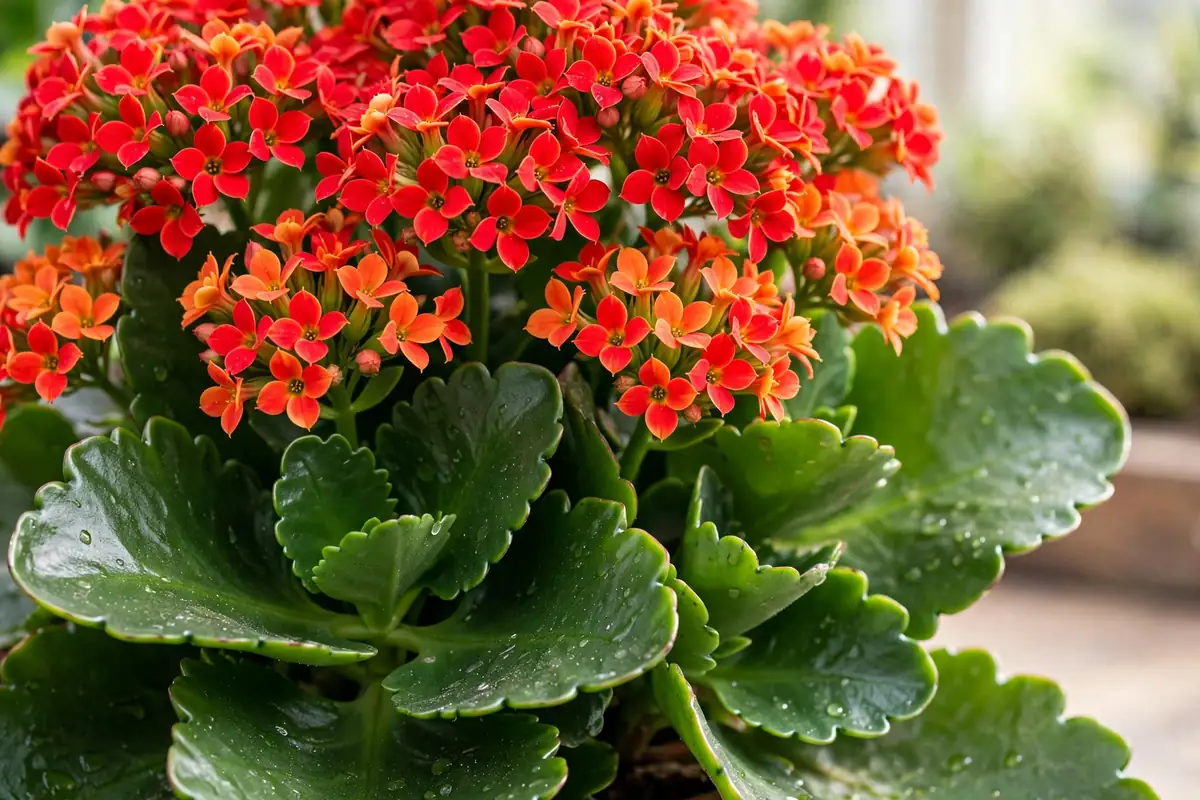
The kalanchoe sold in every grocery store and garden center is a succulent from Madagascar that carries dense clusters of tiny red, orange, yellow, pink, or white flowers for weeks — often from late fall through winter, exactly when indoor color is scarcest. Its thick, scalloped leaves store water, so it forgives forgetful waterers far better than most flowering houseplants. Outdoors it is hardy only in zones 10–11, but as a houseplant it thrives anywhere with a bright windowsill.
Give it bright indirect light and water only when the top inch of soil is dry; soggy soil rots the roots fast. To rebloom a finished plant, provide 14 hours of uninterrupted darkness each night for about six weeks in fall — a closet or a cardboard box works — while keeping days bright. Note that all kalanchoes contain compounds toxic to cats and dogs, so keep plants out of pets’ reach. For verified care details, see the Gardening Know How kalanchoe growing guide and the NC State Extension plant profile.
2. Panda Plant (Kalanchoe tomentosa)
Also from Madagascar, the panda plant trades flowers for foliage: its silvery-gray leaves are coated in fine velvety hairs and edged with chocolate-brown spots, like a plush toy crossed with a succulent. It stays compact — usually under two feet — and its upright, branching habit makes it a favorite for mixed succulent bowls and sunny kitchen windows. Like its cousin above, it is hardy outdoors only in zones 9–11.
Treat it like a true desert plant: maximum light, gritty fast-draining cactus soil, and water only when the soil is completely dry. The fuzzy leaves trap moisture, so never mist it and keep water off the foliage to prevent rot. It rarely blooms indoors, but nobody grows it for flowers anyway. Rotate the pot monthly so growth stays symmetrical, and propagate fallen leaves by laying them on dry soil.
3. Kentia Palm (Howea forsteriana)
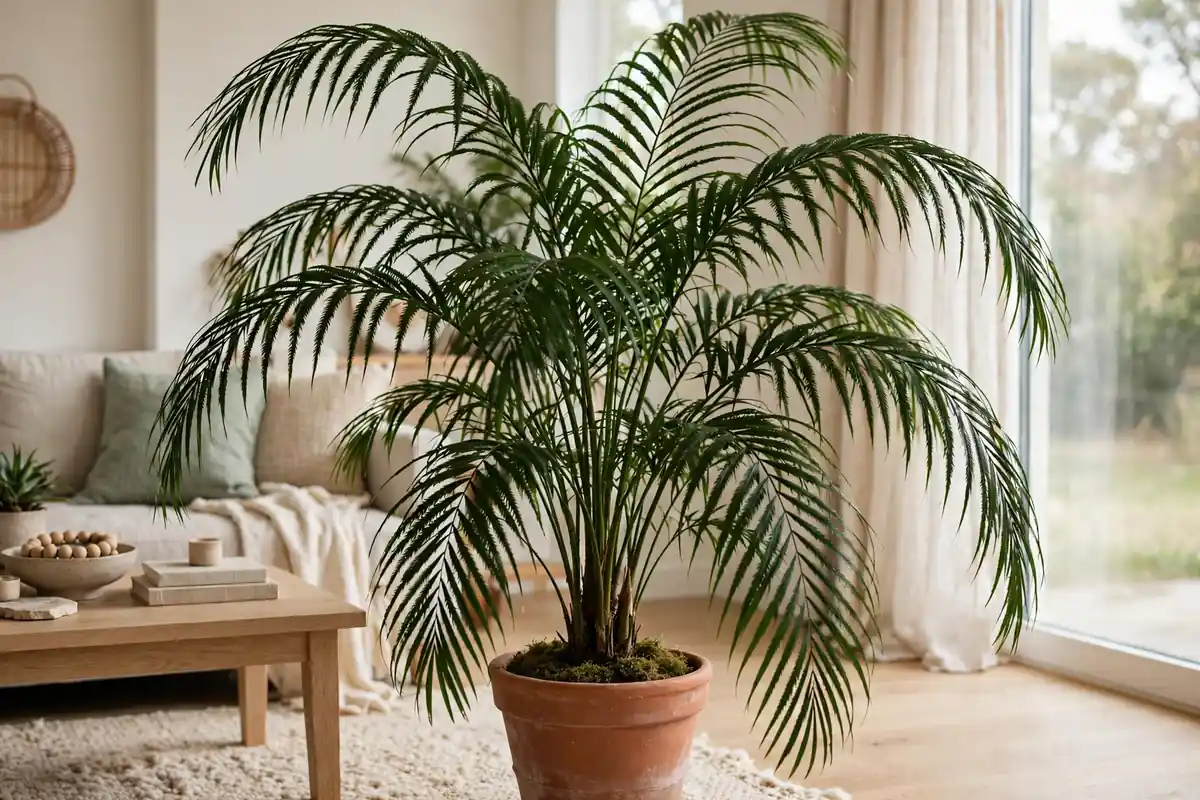
Native to tiny Lord Howe Island off Australia, the kentia palm is the classic parlor palm of Victorian drawing rooms — graceful, arching dark-green fronds rising from slender trunks, slow-growing and remarkably tolerant of indoor life. It handles lower light and occasional neglect better than almost any other indoor palm, which is why hotels and offices still rely on it. Outdoors it survives in zones 9b–11, where it can eventually reach 30 feet or more.
Indoors, give it bright indirect light (it tolerates dimmer spots but grows even slower), water when the top inch of soil dries, and feed lightly in spring and summer. Kentias resent overpotting and soggy soil, so choose a snug pot with drainage. Wipe fronds occasionally to keep them dust-free and photosynthesizing. It is non-toxic to pets, a genuine advantage over many lookalike palms.
4. King Sago Palm (Cycas revoluta)
Despite the name, the king sago is not a palm at all — it is a cycad, a member of an ancient plant lineage that predates flowering plants by hundreds of millions of years. Native to the Ryukyu Islands of Japan, it grows a stout trunk crowned with a symmetrical rosette of stiff, feathery, dark-green fronds. Growth is famously slow — sometimes a single flush of new fronds per year — which makes large specimens genuinely valuable. It is hardy in zones 8–10 and a staple of subtropical landscaping.
Plant it in full sun to part shade with excellent drainage; wet feet in winter are its biggest enemy. Once established it is quite drought-tolerant. Feed lightly in spring, and resist the urge to prune healthy green fronds — the plant reabsorbs their nutrients. Critical safety note: all parts, especially the seeds, are highly toxic to pets and people if eaten, so site it away from curious dogs and children.
5. Kangaroo Fern (Microsorum diversifolium)
This Australian and New Zealand native earns its common name from glossy, leathery fronds whose lobed shape vaguely suggests a kangaroo’s paw print. In the wild it grows as an epiphyte on trees and rocks, which explains its adaptability: it tolerates typical indoor humidity better than fussy ferns like the maidenhair. Outdoors it is hardy in zones 9–11, where it makes a handsome groundcover or hanging basket subject. Do not confuse it with kangaroo paw (Anigozanthos), the flowering perennial also on this list — they share only a continent and a name theme.
Give it bright indirect light and keep the soil lightly but consistently moist; it dislikes both swampy soil and full drought. A chunky, bark-based mix suits its epiphytic roots. It is an excellent terrarium and bathroom plant — for more enclosed-garden ideas, see our guide to the best terrarium plants. Divide crowded rhizomes in spring to make new plants.
6. Kiwi (Actinidia deliciosa)
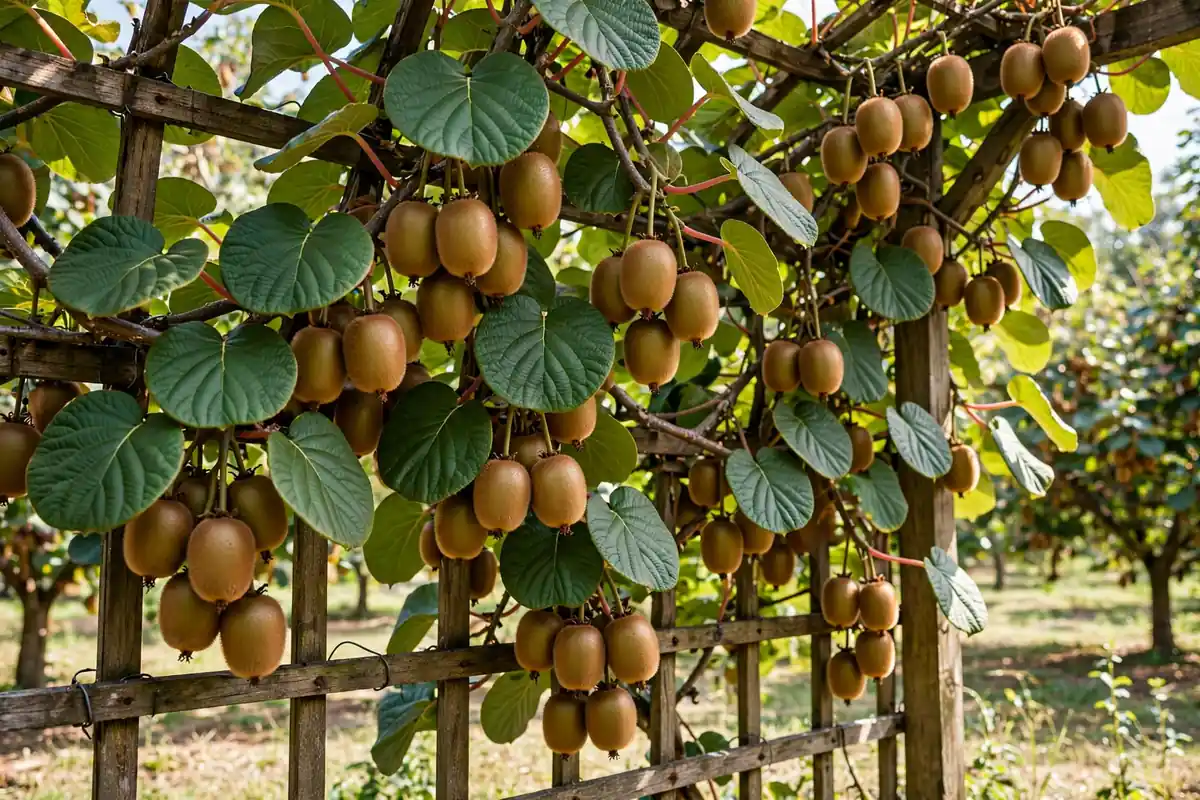
The fuzzy brown fruit everyone knows is the berry of a vigorous deciduous vine native to China — the “kiwi” name came later, from New Zealand growers who marketed it in the mid-20th century. Vines can sprawl 20 feet or more and need a sturdy trellis or pergola. One essential fact: most kiwis are dioecious, so you need both a female fruiting plant (such as ‘Hayward’) and a male pollinator (such as ‘Tomuri’) for fruit. Hardy in zones 7–9, it also offers fragrant white spring flowers and attractive heart-shaped foliage.
Plant in full sun with deep, fertile, well-drained soil and water consistently — drought causes fruit drop. Prune hard in winter, cutting back the previous season’s growth to keep fruiting wood productive and the vine manageable. Fruit ripens in fall; pick firm and let it soften off the vine. If your climate runs cold, look for hardy kiwi (Actinidia arguta), which fruits at smaller size and survives zone 4.
7. Kumquat (Citrus japonica)
The kumquat is the outlier of the citrus world: its small oval fruits are eaten whole, rind and all, because the sweet peel balances the tart flesh. Native to China, it is also the most cold-hardy commonly grown citrus, surviving into zone 8 and brief dips near 15°F — which is why gardeners far outside Florida and California can grow it in containers. The popular ‘Nagami’ cultivar bears reliably, and the tree’s dense evergreen canopy and fragrant spring blossoms make it ornamental even when fruitless.
Give it full sun — at least six to eight hours — and well-drained, slightly acidic soil. In containers use a citrus mix and water when the top two inches dry out. Move pots indoors before hard frosts and place them in the brightest window available. Feed with a citrus fertilizer on the label schedule; pale leaves usually signal nitrogen or iron deficiency rather than disease. Fruit holds on the tree for months, so harvest as needed.
8. Kaffir Lime (Citrus hystrix)
If you cook Thai or Indonesian food, you already know this plant: the kaffir lime’s double-lobed, intensely aromatic leaves are the signature flavor of tom yum and curries, and cooks prize the leaves far more than the bumpy, bitter fruit. Native to Southeast Asia, it grows as a small thorny evergreen tree, hardy outdoors in zones 9–11 and a rewarding container plant elsewhere. Crushed leaves release a perfume no substitute truly matches.
Grow it in full sun with the same care as other citrus — well-drained soil, consistent moisture, regular feeding. Harvest outer leaves as needed; the tree replaces them quickly in warm weather. Indoors for winter, give it maximum light and watch for scale insects and spider mites. Prune to keep it bushy and within reach of your kitchen — a 4-foot container tree supplies a household generously.
9. Knock Out Rose (Rosa ‘Radrazz’)
Bred by William Radler and introduced in 2000, the Knock Out rose changed low-maintenance landscaping: it shrugs off black spot and mildew that devastate hybrid teas, blooms continuously from spring to frost without deadheading, and survives zone 4 winters. The original bears single cherry-red flowers; the family now includes double-flowered, pink, and yellow forms. Few shrubs deliver this much flower power per unit of effort.
Plant in full sun with good air circulation and average, well-drained soil. Water deeply but infrequently to encourage deep roots. In late winter or early spring, cut the whole shrub back by about a third to keep it compact and floriferous — Knock Outs bloom on new wood, so hard pruning only increases flowers. A spring feeding with rose fertilizer is all the pampering it needs.
10. Kwanzan Cherry (Prunus serrulata ‘Kanzan’)
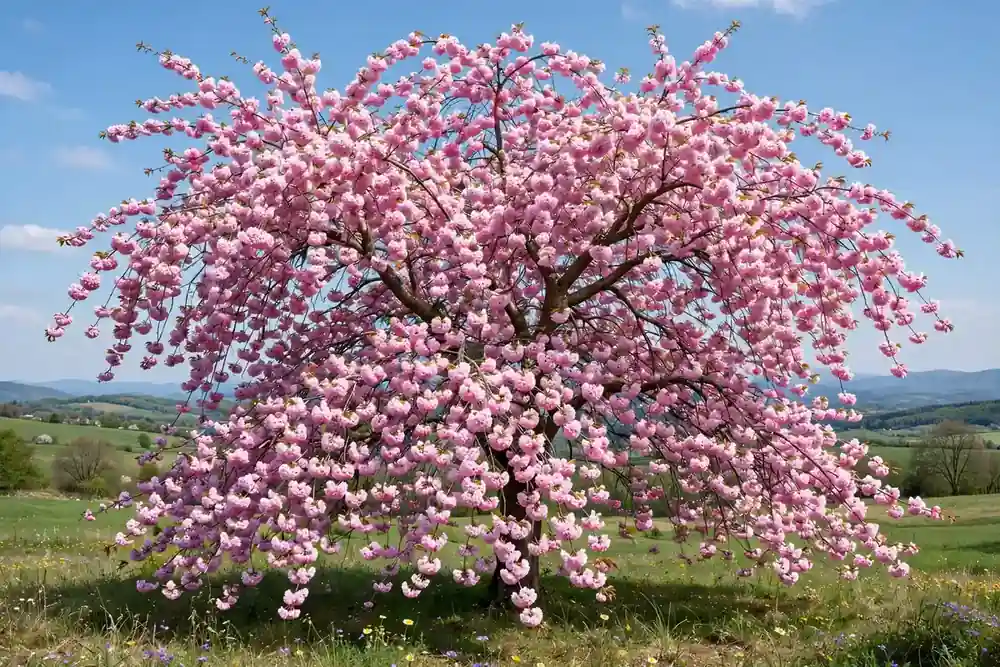
The Kwanzan (also spelled Kanzan) is the showiest of the Japanese flowering cherries: in mid to late spring, bare branches erupt in clouds of double, deep-pink blossoms before the bronze-red young leaves emerge. It grows into a handsome vase-shaped tree 25–30 feet tall, hardy in zones 5–9. Many of the most photographed cherry trees in Washington, D.C. and other festival plantings are Kwanzans, prized because their blooms are larger and longer-lasting than the paler Yoshino cherry’s.
Plant in full sun with well-drained soil and give it room — Kwanzans resent crowding and compacted soil. Water deeply during the first two years; established trees are moderately drought-tolerant. Prune only to remove dead or crossing wood, ideally right after flowering, since cherries bloom on old wood and bleed heavily if pruned in winter. Expect a lifespan of 25 years or so — spectacular, but not a heritage tree.
11. Kousa Dogwood (Cornus kousa)
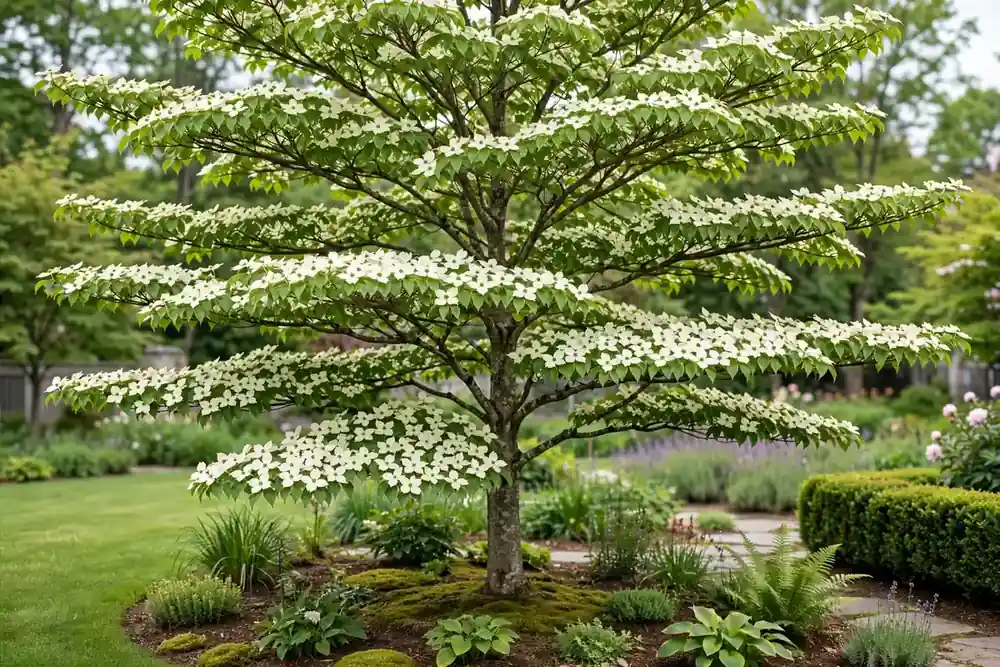
Native to China, Korea, and Japan, the kousa dogwood is the tougher, later-blooming cousin of America’s native flowering dogwood. Its creamy-white bracts appear in early summer — after the leaves are out, so the display reads differently and lasts longer — followed by raspberry-like red fruits that birds devour and an exfoliating bark that looks good all winter. Crucially, it resists the anthracnose and powdery mildew that plague Cornus florida. Hardy in zones 5–8, it works as a specimen tree or a large multi-stemmed shrub. The NC State Extension kousa dogwood plant profile is a solid reference for cultivars and care.
Plant in full sun to part shade with rich, acidic, well-drained soil, and mulch to keep roots cool — dogwoods are shallow-rooted. Water during dry spells for the first few years. Prune minimally and only in late fall or winter dormancy to shape. The fruit is edible but mealy; leave it for the wildlife, which is half the point of planting one.
12. Goldenrain Tree (Koelreuteria paniculata)
Few trees earn their common name as literally as the goldenrain tree: in midsummer it carries upright panicles of small bright-yellow flowers, followed by papery, lantern-like seed capsules that turn from green to pinkish-tan and persist into fall. Native to China and Korea and hardy in zones 5–9, it is a medium-sized, drought-tolerant tree that asks little and gives three seasons of interest. It does self-seed with enthusiasm, so check whether it is considered invasive in your region before planting — it naturalizes aggressively in parts of the Southeast.
Give it full sun and any well-drained soil, including poor or alkaline ground where fussier trees fail. It tolerates urban pollution and drought once established, making it a genuine street-tree candidate. Prune in late winter to develop a strong central leader when young; mature trees need little beyond removing dead wood.
13. Kentucky Coffee Tree (Gymnocladus dioicus)
This rugged North American native is a tree of superlatives: enormous doubly compound leaves up to three feet long, one of the latest trees to leaf out in spring, and striking coarse winter architecture. Early settlers roasted its seeds as a coffee substitute — hence the name — though raw seeds and pods are toxic. Male trees (such as the podless cultivar ‘Espresso’) avoid the large leathery seed pods altogether. It is exceptionally cold-hardy (zones 3–8) and shrugs off drought, poor soil, and urban conditions.
Plant in full sun with room to grow — mature trees reach 60–75 feet with a broad, open crown. It is slow to establish but then trouble-free; no serious pests or diseases. Because it leafs out so late, underplant with spring bulbs or early perennials so the bed never looks empty. Choose a male cultivar if you want zero pod cleanup.
14. Katsura Tree (Cercidiphyllum japonicum)
The katsura’s claim to fame is deliciously strange: in autumn, its heart-shaped leaves turn apricot-gold and release a sweet scent of caramel or cotton candy as they fall, caused by the compound maltol. Native to Japan and China and hardy in zones 4–8, it grows into a graceful pyramidal tree 40–60 feet tall with layered branching that looks good even bare. Few shade trees offer fragrance as part of the fall show.
Plant in full sun to part shade with consistently moist, well-drained, slightly acidic soil — katsuras suffer in drought and scorch in hot, dry exposures. Mulch generously and water deeply through dry spells, especially while young. It needs little pruning; just remove crossing branches in late winter. Site it where foot traffic will crush the fallen leaves and release the scent along a path.
15. Kobus Magnolia (Magnolia kobus)
Before the famous saucer and star magnolias existed, there was Magnolia kobus — a Japanese and Korean native that is one of their parent species. In very early spring, before any leaves appear, it covers itself in fragrant white flowers, each with a subtle pink blush at the base. It is slow-growing but eventually forms a handsome 25–30-foot tree, hardy in zones 5–8, with smooth gray bark that adds winter interest.
Plant in full sun to light shade with moist, acidic, well-drained soil; magnolias hate both waterlogging and drought. Avoid disturbing the fleshy roots once planted, and mulch to protect them. Flowers open early enough to risk late frosts in marginal zones — planting on the north or east side of a building can delay blooming just enough to dodge the damage.
16. Kerria (Kerria japonica)
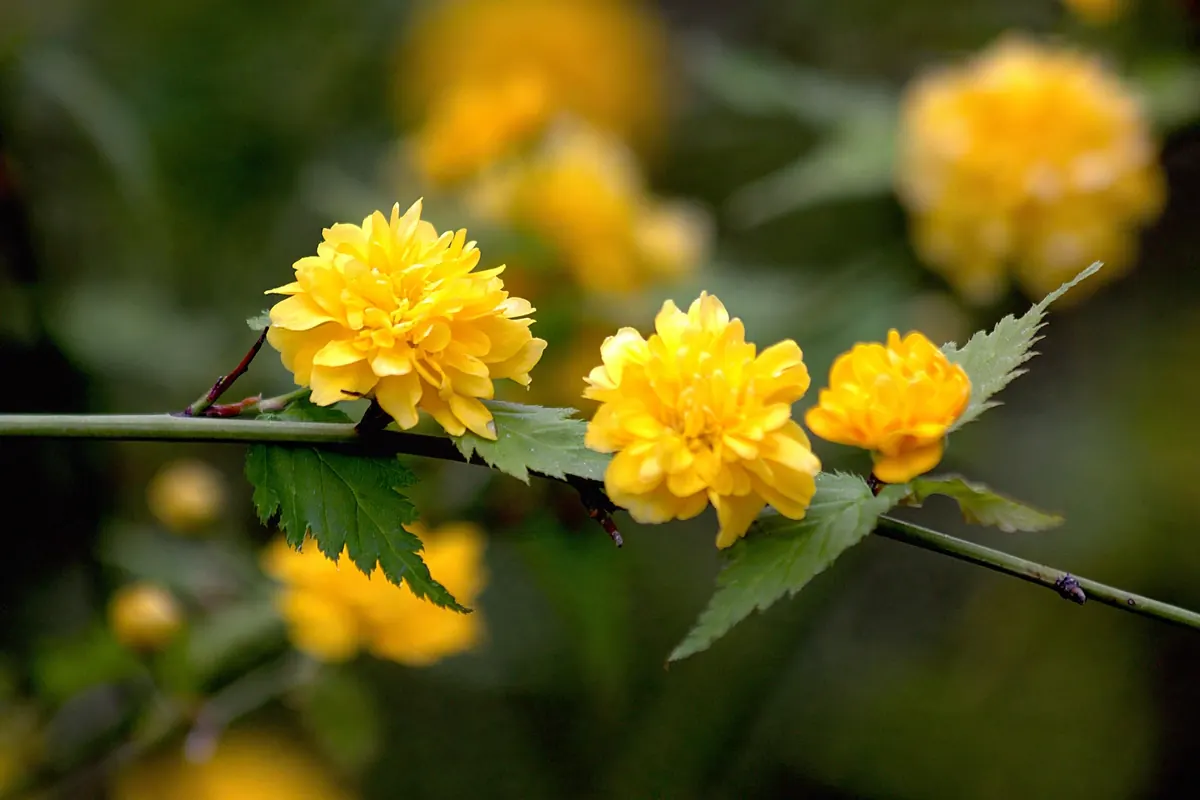
Japanese kerria is the shrub that solves the dry-shade problem: it blooms happily where most flowering shrubs sulk, producing bright-yellow, rose-like flowers in mid-spring on gracefully arching green stems. The double-flowered form ‘Pleniflora’ looks like tiny yellow pom-poms and blooms a bit longer. Even in winter the green stems add color. Hardy in zones 4–9, it suckers gently to form a cheerful thicket 4–6 feet tall.
Plant in part shade to full shade with average, well-drained soil — it tolerates clay and dry shade once established. Prune right after flowering, cutting back stems that bloomed to encourage next year’s wood, and remove a few of the oldest stems at ground level every couple of years. If it outgrows its space, it takes hard rejuvenation pruning in stride.
17. Beautybush (Kolkwitzia amabilis)
Named for the German botanist Richard Kolkwitz, beautybush justifies its name for about three weeks each May and June, when its fountain-like arching branches disappear under thousands of pink, bell-shaped flowers with yellow throats. The rest of the year it is a quiet, vase-shaped shrub 6–10 feet tall with peeling bark for mild winter interest. Native to China and hardy in zones 4–8, it is old-fashioned in the best sense — the kind of shrub your grandmother grew.
Give it full sun for the heaviest bloom and any reasonably drained soil. Prune immediately after flowering, since it blooms on old wood — cut back flowered stems and thin crowded growth, but never shear it into a meatball. It is generally pest-free and long-lived; the main maintenance is removing suckers if you want a single specimen.
18. Mountain Laurel (Kalmia latifolia)
Connecticut’s state flower and one of the great native evergreen shrubs of eastern North America, mountain laurel produces intricate clusters of pink-to-white cup-shaped flowers in late spring, each bud opening like a tiny parasol. The glossy evergreen foliage looks good year-round, and mature plants develop gnarled, picturesque trunks. Hardy in zones 4–9, it thrives in the dappled shade of oak canopies where rhododendrons also grow.
It demands acidic, well-drained, humus-rich soil — amend with composted pine bark and never let the crown sit in water. Mulch to keep roots cool and water during dry spells. Deadhead spent trusses to redirect energy into growth, and prune lightly after flowering if shaping is needed. Important: all parts are toxic if ingested, so keep it away from livestock and curious toddlers.
19. Korean Spice Viburnum (Viburnum carlesii)
If fragrance is your priority, few shrubs beat Korean spice viburnum. In mid-spring its pink buds open to white snowball clusters with a sweet, spicy perfume — clove and vanilla with a powdery softness — that carries across the garden. Native to Korea and Japan and hardy in zones 4–7, it is a dense, rounded shrub 4–6 feet tall with handsome red-bronze fall foliage as a second act.
Plant in full sun to part shade with moist, well-drained soil; good drainage matters more than fertility. Site it near a path, patio, or window where the scent can be enjoyed. Prune after flowering only if needed — it has a naturally tidy habit. It can be slow to establish, so be patient the first two years; the fragrance payoff is worth it.
20. Korean Boxwood (Buxus sinica var. insularis)
For hedging and topiary in cold climates, Korean boxwood is the practical choice: it is hardier (zones 5–9) and holds its green color through winter better than many English boxwood cultivars, with small, rounded, densely packed leaves that shear cleanly. Native to Korea and China, it grows slowly into a 2–3-foot mound — or taller if left unclipped — and suits formal edging, knot gardens, and containers.
Plant in part shade with well-drained soil; winter sun and wind cause the bronzing boxwoods are known for, so a sheltered spot helps. Water during dry spells — boxwoods die more often from drought than cold. Watch for boxwood blight and leafminer in regions where they occur, and disinfect shears between plants. A light shearing in early summer keeps hedges crisp; avoid late-season pruning that stimulates frost-tender growth.
21. King Protea (Protea cynaroides)
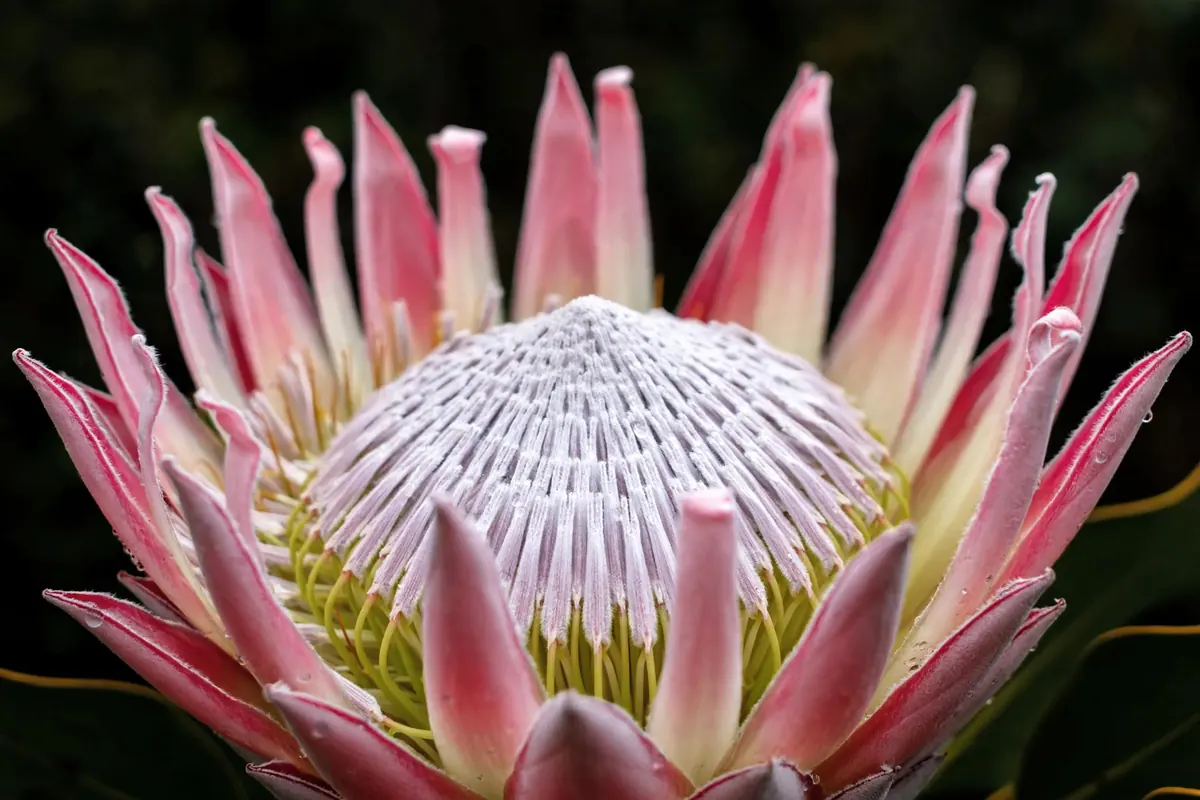
South Africa’s national flower looks like it landed from another planet: a single bloom up to a foot across, ringed with silky pink bracts around a silvery central dome. It is the largest flower head in the protea family and one of the most unusual and beautiful flowers a gardener can grow. In the garden it is a sprawling evergreen shrub for zones 9–11 with leathery leaves and a serious presence; as a cut flower it lasts for weeks, drying beautifully.
Proteas demand what most garden plants hate: extremely well-drained, acidic, nutrient-poor soil — and above all, almost no phosphorus, which is toxic to them. Use a protea-specific or low-phosphorus fertilizer, or none at all. Full sun and good air circulation are essential, and established plants are quite drought-tolerant. In colder zones, grow it in a large pot and overwinter indoors above freezing.
22. Kangaroo Paw (Anigozanthos spp.)
Western Australia’s floral emblem in red-and-green (Anigozanthos manglesii) gives the genus its name: tubular, velvet-textured flowers that branch like tiny paws, in reds, yellows, oranges, pinks, and bicolors. Modern hybrids extend the season from late spring through summer on stems 2–4 feet tall. Hardy in zones 9–11, kangaroo paw is a superb cut flower and a magnet for hummingbirds. Despite the shared nickname, it is unrelated to the kangaroo fern (entry 5).
Full sun and sharp drainage are non-negotiable — raised beds or slopes suit it, and heavy clay kills it. Water at the base rather than overhead to discourage ink spot, the black leaf-spotting disease that plagues the genus in humid climates. Cut flowered stems to the base to trigger rebloom, and divide congested clumps every few years. In humid regions, choose disease-resistant hybrid series bred for the purpose.
23. Red Hot Poker (Kniphofia uvaria)
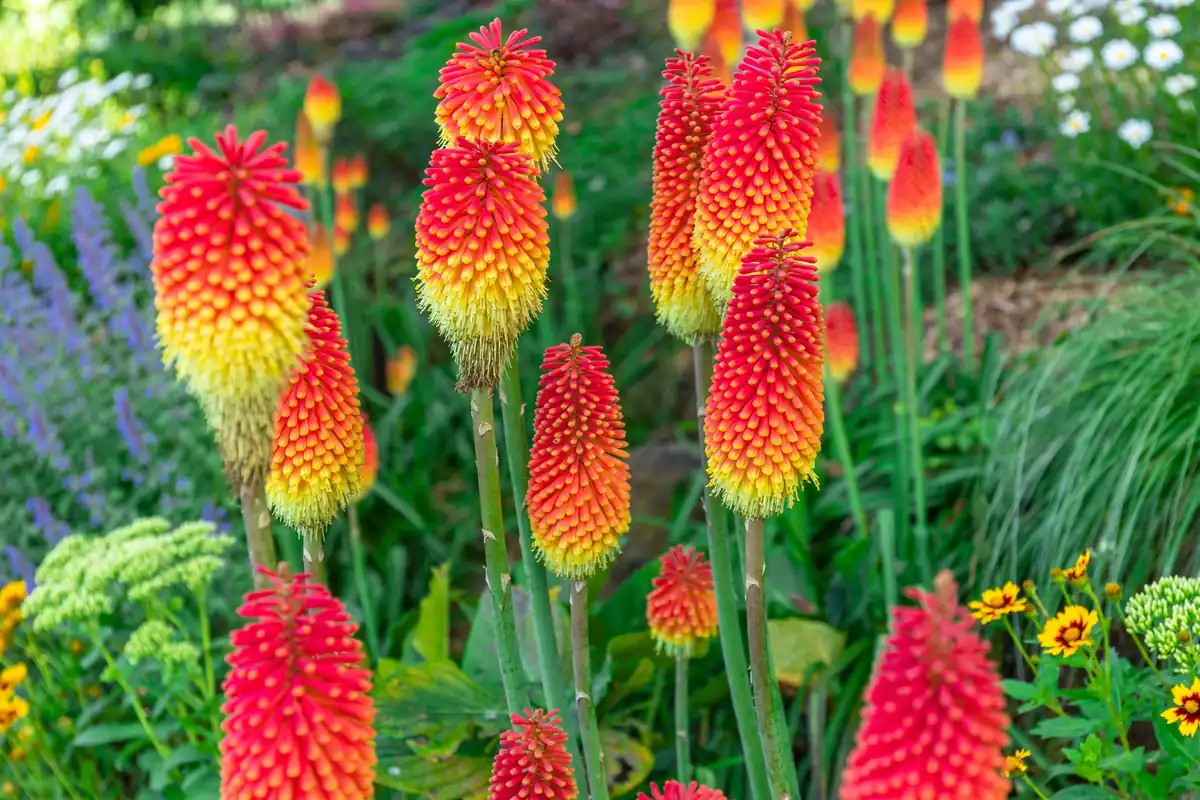
Also called torch lily, red hot poker sends up stiff spikes of tubular flowers that open red at the top and fade to yellow below — like a torch in the border. The South African species and its hybrids bloom in summer, reach 3–4 feet, and are absolute hummingbird magnets. Hardy in zones 5–9, it brings vertical drama and hot color to perennial beds and is far tougher than its exotic looks suggest.
Plant in full sun with well-drained soil; winter wetness rots the crown faster than cold does, so avoid low spots and heavy mulch over the crown. Once established it is drought-tolerant. Leave the strappy evergreen-ish foliage standing over winter for crown protection, then comb out dead leaves in spring. Deadhead spent spikes to encourage a second flush, and divide every 4–5 years when flowering declines.
24. Knautia (Knautia macedonica)
From the Balkans comes one of the best long-blooming perennials few gardeners know: knautia carries deep-crimson pincushion flowers on wiry, branching stems from summer into early fall, floating above the border like sparks. Bees and butterflies mob it. Hardy in zones 5–9, it grows 2–3 feet tall with a loose, airy habit that weaves through grasses and coneflowers beautifully. The compact cultivar ‘Mars Midget’ stays under two feet for smaller gardens.
Give it full sun and average to poor, well-drained soil — rich soil makes it floppy. Deadhead regularly and it will bloom for months; shear back by half in midsummer if it gets leggy and it will flush again. It self-sows modestly, which most gardeners welcome. Stake only in very fertile soil; in lean ground it stands on its own.
25. Kaffir Lily (Clivia miniata)
Do not let the common name confuse you — the kaffir lily is no lily, but a South African member of the amaryllis family grown for its strappy, dark-green leaves and spectacular late-winter clusters of orange trumpet flowers. It is one of the great shade houseplants: it actively prefers dim conditions, tolerates neglect, and lives for decades, getting better with age. Outdoors it is hardy in zones 9–11 as a shade perennial. All parts are toxic if eaten, so keep it from pets.
The secret to flowering is a cool, dry winter rest: keep it around 50°F (10°C) with almost no water for 6–8 weeks in fall, then resume watering and watch buds emerge. The rest of the year, give bright indirect light and water when the top inch dries. It blooms best when slightly pot-bound, so repot only every 3–4 years. Wipe the leaves clean — their gloss is half the show.
26. King’s Mantle (Thunbergia erecta)
Native to tropical Africa, king’s mantle is an evergreen shrub that carries violet-blue trumpet flowers with bright yellow throats nearly year-round in frost-free climates. Related to the black-eyed Susan vine, it has the same vigorous good nature in a bushier package — 4–6 feet of glossy dark foliage studded with color. Hardy only in zones 10–11, it also works as a fast summer annual or a conservatory plant elsewhere.
Plant in full sun to part shade with fertile, well-drained soil and water consistently; it sulks in drought. Prune after flowering flushes to keep it compact — it responds to hard cutting back in spring. In containers, feed through the growing season for nonstop bloom. Watch for whiteflies indoors; outdoors it is generally trouble-free.
27. Kale (Brassica oleracea Acephala Group)
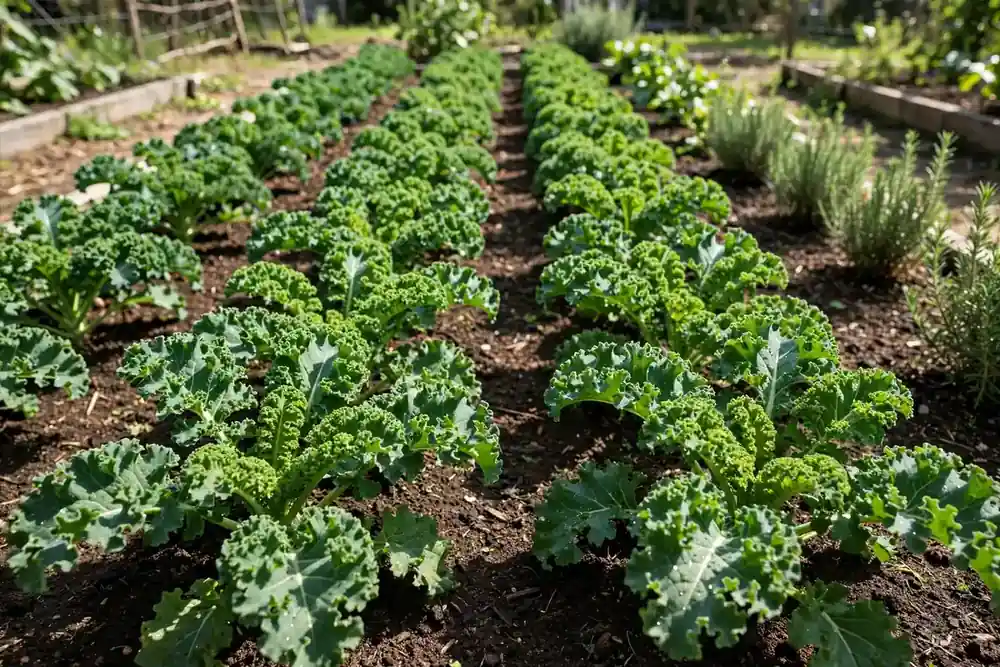
Kale is the cool-season workhorse of the vegetable garden — and increasingly of the ornamental border, where frilly winter varieties glow through frost. Curly types, dinosaur (lacinato) types with savoyed blue-green leaves, and red Russian types all belong to the same cabbage family. It is remarkably cold-hardy (zones 2–9 as a biennial, usually grown as an annual), and a light frost actually sweetens the leaves by converting starches to sugars. The Old Farmer’s Almanac kale growing guide covers varieties and timing in detail.
Sow in early spring for summer harvest or midsummer for a fall crop — fall kale is the sweetest. Give it full sun and rich, consistently moist soil; side-dress with nitrogen for leafy growth. Harvest outer leaves from the bottom up and the plant keeps producing for months. Watch for cabbage worms and flea beetles; floating row covers prevent most damage without sprays.
28. Kohlrabi (Brassica oleracea Gongylodes Group)
Kohlrabi — German for “cabbage turnip” — is grown for its swollen stem, which tastes like a mild, sweet cross between cabbage and broccoli stems. Crisp raw in salads or tender when roasted, it is one of the fastest brassicas, ready in 50–60 days. Purple and green varieties perform the same; the color is only skin deep. Like kale it is a cool-season crop, best in spring and fall.
Direct-sow as soon as soil can be worked in spring, then again in late summer for fall. Full sun and steady moisture are key — drought or heat makes the bulbs woody and pungent. Thin to 4–6 inches apart and harvest at tennis-ball size; oversized kohlrabi turns fibrous. It shares kale’s pests, so rotate brassica beds yearly and use row covers against cabbage worms.
29. Kinnikinnick (Arctostaphylos uva-ursi)
Kinnikinnick — from an Algonquian word for a smoking mixture that included its leaves — is one of the toughest evergreen groundcovers for cold climates. This circumboreal native (zones 2–7) spreads into a dense, 6-inch mat of small glossy leaves that bronze in winter, with pink urn-shaped spring flowers and bright red fall berries that feed grouse and bears. It stabilizes slopes, shrugs off poor sandy soil, and once established needs almost nothing.
Plant in full sun with acidic, sharply drained, even gravelly soil — it evolved for poor ground and sulks in rich, wet beds. Water regularly the first season, then leave it alone; overwatering kills more kinnikinnick than drought. Space plants 12–18 inches apart and be patient — it spreads steadily but not instantly. Do not shear it; hand-prune only to remove dead wood.
30. Kentucky Bluegrass (Poa pratensis)
The classic American lawn grass is neither from Kentucky nor blue — the name comes from the bluish-green seed heads it produces if left unmowed, and its fame from Kentucky’s pastures. Native to Europe and Asia, it forms a dense, rhizomatous turf that self-repairs, which is why it dominates cool-season lawns in zones 3–7. No other common grass matches its combination of fine texture, rich color, and recuperative power.
It needs full sun and consistent water — an inch a week — to look its best, and goes dormant (brown) in summer heat without irrigation. Mow at 3–3.5 inches; taller grass shades out weeds and deepens roots. Overseed thin spots in early fall, which is also the best time for fertilizing. In deep shade or hot climates, choose a different species — bluegrass is honest about its limits.
Growing Tips for K-Plants
Match the zone before you fall in love. The K-list spans zones 2 to 11, and the tropical stars — king protea, kangaroo paw, kaffir lime, king’s mantle — will not survive a frost. In cold climates, grow them in containers and overwinter indoors, or treat king’s mantle as a summer annual. Conversely, mountain laurel and kinnikinnick demand winter chill and sulk in zone 9 heat.
Drainage decides more fates than fertilizer. King protea, kangaroo paw, red hot poker, goldenrain tree, and every succulent on this list die in winter-wet soil long before cold gets them. When in doubt, plant high — mound the soil, use raised beds, or add grit. Kalanchoes and panda plants want a cactus mix, not potting soil, and a pot with a drainage hole is mandatory.
Feed the fruit, starve the protea. Kiwis, kumquats, kale, and kohlrabi are hungry plants that reward regular feeding. King protea is the opposite: standard fertilizers, especially anything with phosphorus, can kill it. Read every label through the plant’s eyes, not the garden center’s.
Prune on the plant’s schedule. Spring bloomers on old wood — kerria, beautybush, kwanzan cherry, kousa dogwood, kobus magnolia, Korean spice viburnum — get pruned right after flowering. Summer bloomers on new wood — Knock Out roses, red hot poker, knautia — get cut back in late winter or deadheaded through the season. Prune a spring bloomer in fall and you have removed next year’s flowers.
Plan for all four seasons. K-plants make this easy: kobus magnolia and kerria open spring, kousa dogwood and red hot poker carry summer, katsura and Kentucky coffee tree deliver fall color and winter architecture, and kalanchoe plus kaffir lily bloom indoors in winter. For autumn container color after the summer perennials fade, our mum care guide pairs well with this list.
Which K-Plants Will You Grow?
Thirty plants, one letter — and the range is remarkable. Start indoors with a kalanchoe or panda plant if you are new to houseplants; plant a kwanzan cherry or kousa dogwood if you want a tree that stops traffic; sow kale and kohlrabi if you want dinner. The K-list rewards every kind of gardener, from windowsill to acreage.
Keep exploring the alphabet with our guides to plants that start with A, plants that start with C, plants that start with N, and plants that start with P — or browse flowers that start with A if blooms are your main pursuit. Pick three K-plants that fit your light and zone, get them in the ground this season, and watch the letter K earn its keep. Happy planting!
Frequently Asked Questions
What are the most popular plants that start with K?
The most popular K-plants are kalanchoe, kentia palm, king sago palm, kiwi, kumquat, Knock Out rose, kwanzan cherry, kousa dogwood, kerria, kangaroo paw, red hot poker, kale, and kohlrabi. Together they cover houseplants, flowering trees, shrubs, perennials, fruits, and vegetables, and all are widely available at garden centers and nurseries.
Which plants starting with K are good for beginners?
Panda plant and kalanchoe are nearly indestructible succulents for beginners, kentia palm and kangaroo fern are forgiving houseplants, and outdoors Knock Out roses, kerria, red hot poker, knautia, kale, and kohlrabi all tolerate imperfect conditions. Start with plants matched to your light and hardiness zone and most of this list is easy.
Which K-plants are safe for pets?
Pet-safe choices include kentia palm, kangaroo fern, and parlor-palm relatives generally, plus all the edibles (kiwi, kumquat, kale, kohlrabi) in normal garden contexts. Avoid kalanchoe, panda plant, king sago palm (highly toxic seeds especially), mountain laurel, and kaffir lily around cats and dogs that chew plants.
What plants that start with K grow in shade?
Kerria actually prefers shade and blooms there reliably, mountain laurel and kaffir lily thrive in shade to part shade, and indoors kentia palm, kangaroo fern, and kaffir lily all tolerate lower light. Most “low light” plants still bloom and color up better with bright indirect light rather than deep darkness.
Can I grow king protea outside South Africa?
Yes, if you are in zones 9–11 with acidic, extremely well-drained soil — or anywhere if you grow it in a large container and overwinter it above freezing. The two rules are sharp drainage and almost no phosphorus fertilizer. Where those are met, king proteas are long-lived and spectacular.
Do I need two kiwi plants to get fruit?
For common kiwi (Actinidia deliciosa), yes — it is dioecious, so you need a female plant like ‘Hayward’ plus a male pollinator like ‘Tomuri’ planted nearby. One male can pollinate up to eight females. Self-fertile hardy kiwi varieties exist if you only have room for one vine.