Minnesota State Flower: The Protected Pink and White Lady’s Slipper
The Minnesota state flower is the one emblem in this whole series you are forbidden to touch. The pink and white lady’s slipper — Minnesota’s official flower since 1902 — is a wild orchid of the northern bogs, rare, slow, and protected by law: picking one or digging one up is illegal in Minnesota. It earned its crown the complicated way, too: the state first adopted a lady’s slipper in 1893 and named the wrong species, then corrected the record nine years later to the flower it had meant all along. A queen chosen by correction, guarded by statute, and grown by almost no one — this closes our state-flower series with its most untouchable bloom.
This guide covers the Minnesota state flower and its wrong-species story, the orchid biology that makes it so rare, why it is protected, what it means, six more Minnesota flowers worth knowing, and honest advice on growing lady’s slippers: who can, who shouldn’t, and what to plant instead.
Quick Answer
The Minnesota state flower is the pink and white lady’s slipper, Cypripedium reginae (the showy lady’s slipper), adopted in 1902 — correcting an 1893 adoption that had mistakenly named a different species. It is a tall wild orchid of bogs, swamps and wet woods, flowering in June and July with white petals over a inflated pink-and-white pouch. It is legally protected in Minnesota: picking or transplanting wild plants is prohibited. Lady’s slippers mean capricious beauty and rarity — a flower to be looked at, photographed, and left standing.
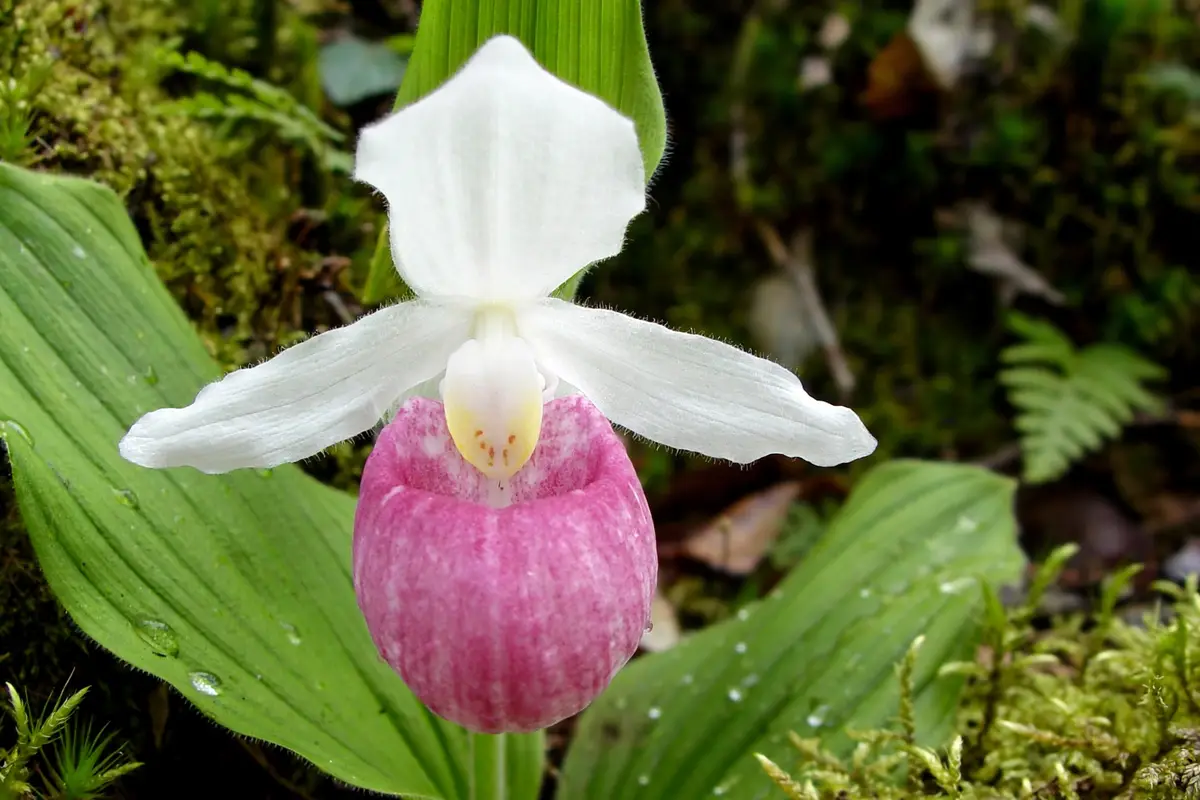
Table of Contents
- What Is the Minnesota State Flower?
- The Story: 1893 Picked the Wrong Flower, 1902 Fixed It
- An Orchid That Needs a Fungus: Why It Is So Rare
- Protected by Law: The Flower You Must Not Pick
- Lady’s Slipper Meaning and Symbolism
- 6 More Minnesota Flowers Worth Knowing
- Growing Lady’s Slippers: The Honest Guide
- Frequently Asked Questions
What Is the Minnesota State Flower?
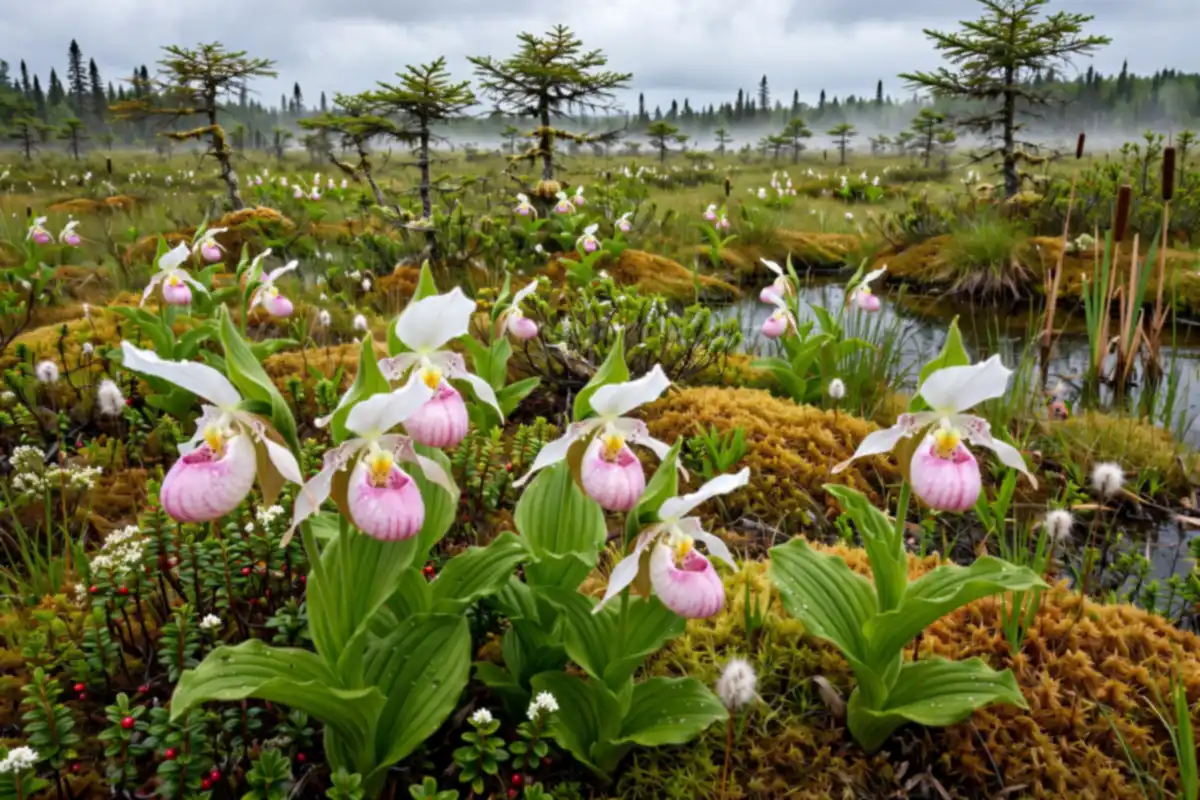
The showy lady’s slipper is North America’s grandest native orchid: a plant of 1 to 3 feet rising from wet ground, with pleated oval leaves climbing the stem and, at the top, one or two — occasionally three — remarkable flowers: flaring white sepals and petals above an inflated, slipper-shaped pouch in white blushed and veined with rose pink, like a silk shoe stuffed with shadow. It grows in tamarack bogs, cedar swamps, wet meadows and damp woods around the Great Lakes and northeast, with Minnesota one of its strongholds — thousands bloom in protected bogs each June, and the state tends whole preserves around them. The name it answers to matters: “pink and white lady’s slipper” is Minnesota’s wording, and the species behind it is Cypripedium reginae — reginae, the queen’s. You can read more on the Cypripedium reginae page on Wikipedia.
Minnesota State Flower Quick Facts
- State flower: pink and white lady’s slipper, Cypripedium reginae (showy lady’s slipper) — family Orchidaceae.
- Adopted: 1902, correcting the 1893 act that had named Cypripedium calceolus (a yellow-flowered species) by mistake.
- The flower: white petals and sepals over an inflated pink-and-white pouch; blooms June to early July.
- The plant: 1 to 3 feet; a long-lived perennial of bogs, swamps and wet woods — individual plants can live 20+ years.
- Status: protected in Minnesota — picking the flower or digging the plant is illegal; it is also protected or rare across much of its range.
- Slow life: from seed to first flower can take many years; the seed cannot even germinate without a partner fungus.
- Good to know: Minnesota counts it both state flower and, often, state wildflower — the orchid carries every floral honour the state gives.
The Story: 1893 Picked the Wrong Flower, 1902 Fixed It
In 1893 Minnesota did what several states were doing and chose a state flower — the lady’s slipper, championed (by the standard account) through the efforts of the women’s groups of the day and a legislature picturing bogs full of pink slippers. But the act as written named Cypripedium calceolus — the yellow lady’s slipper’s name (in its European usage) — rather than the pink-and-white showy species everyone intended. For nine years Minnesota’s official flower was, on paper, a different plant than the one on its postcards. In 1902 the legislature corrected the designation to Cypripedium reginae, and the pink and white lady’s slipper has held the title, accurately, ever since. It is a forgiving story to end on: a state so sure of its flower that it fixed the Latin rather than change the bloom — the botanical equivalent of amending the map because the territory was right.
An Orchid That Needs a Fungus: Why It Is So Rare
The lady’s slipper’s rarity is not fragility — a settled plant is tough and long-lived — but reproduction so demanding it borders on ritual. Orchid seeds are dust without a pantry: unlike a bean or a peony seed, a Cypripedium seed carries no food for its embryo. In the wild it can germinate only if a particular soil fungus (of the Rhizoctonia group) finds it, threads into it and feeds it — the seedling then lives underground, fed by the fungus, for its first years before it dares a leaf. Add the needs of a mature plant — constant moisture, cool roots, undisturbed ground, and the same fungal community in the soil — and you see why lady’s slippers vanish when a bog is drained or a wood is “tidied”, and why moving one almost always kills it: you cannot transplant a relationship. The flower Minnesota chose is not rare because it is delicate. It is rare because it is faithful to one small, wet, particular world.
Protected by Law: The Flower You Must Not Pick
Minnesota wrote the conclusion into law: the pink and white lady’s slipper is protected, and picking wild flowers or digging wild plants is prohibited — a protection Minnesota built earlier and more completely than most states managed for any wildflower. The ethic travels beyond the statute: a picked lady’s slipper does not even reward the picker, wilting fast in a jar, and a dug one dies slowly in a garden that lacks its fungus. The correct ceremonies are the ones Minnesotans actually practise each June — the pilgrimage to the bog boardwalks, cameras out, slippers standing untouched in their thousands. It shares this protected dignity with Michigan’s dwarf lake iris, the federally threatened endemic of the Michigan state flower article: two Great Lakes emblems whose states decided that the highest honour a flower can be given is to be left alone.
Lady’s Slipper Meaning and Symbolism
In the language of flowers the lady’s slipper means capricious beauty — “win me and wear me”, ran its flirtatious old gloss, the slipper being a prize to be won. Minnesota’s century with the flower has rewritten the meaning into something better: beauty that is not for taking, rarity defended by law, a state kneeling (botanists, photographers and schoolchildren literally kneel on those boardwalks) before a wild thing it voted to protect. As a closing emblem for this whole series — seventeen state flowers, from Hawaii’s hibiscus to this bog orchid — it states the theme every state kept circling: what a flower means to a place grows, in the end, from how the place treats it. Like the Indiana state flower‘s peony, kept for remembrance, the lady’s slipper is a meaning maintained by behaviour, year after year.
6 More Minnesota Flowers Worth Knowing
Bogs, prairies and the Boundary Waters stock a rich cast. The table separates them; the profiles follow. For thousands more flower names, see our flower names A to Z guide.
| Flower | Colour | Season | Character | Best use |
|---|---|---|---|---|
| Yellow lady’s slipper | Yellow | Late spring | The original 1893 pick | Wet woods (admire) |
| Harebell | Violet-blue | Summer | The Boundary Waters jewel | Rock gardens |
| Wood lily | Orange-red | Summer | The upright lily | Prairie gardens |
| Wild lupine | Blue | Late spring | The sand-country spires | Prairie plantings |
| Showy orchid | Purple and white | Spring | The second orchid | Rich woods (admire) |
| Wild rose | Pink | Summer | The prairie rose | Hedges, wild gardens |
1. Yellow Lady’s Slipper — the Original 1893 Pick
Cypripedium parviflorum — golden pouches in late-spring woods — is the flower Minnesota accidentally adopted in 1893 by naming its European cousin. It thrives in the same wet woods as the queen, a whole act of the legislature hiding in plain sight; both slippers now share the state’s woods and, informally, its honours.
2. Harebell — the Boundary Waters Jewel
Campanula rotundifolia rings its violet bells from cracks in Canadian Shield rock all summer — the flower of a thousand canoe-country campsites, growing where almost nothing else can root. In a rock garden it brings the north shore home, and it asks only for the sharp drainage it evolved in.
3. Wood Lily — the Upright Lily
Lilium philadelphicum is the exception among lilies: its orange-red chalices face straight up at the sky over Minnesota’s prairies and open woods in July, on stems slim enough to miss until the colour stops you. A wild lily so distinct it was once a candidate flower of nations, let alone states.
4. Wild Lupine — the Sand-Country Spires
Lupinus perennis blues Minnesota’s sandy savannas each late spring and feeds, as its only host, the Karner blue butterfly’s caterpillars — flower and butterfly rising and falling together across the upper Midwest. Our lupine guide covers the family and its care.
5. Showy Orchid — the Second Orchid
Galearis spectabilis opens purple-and-white hoods in rich May woods — Minnesota’s quiet second orchid, a few inches tall, easy to walk past and impossible to forget once seen. A state with two wild orchids among its signature flowers understands its own woods.
6. Wild Rose — the Prairie Rose
Rosa blanda, the smooth wild rose, pinks Minnesota’s roadsides and prairie edges all summer and feeds half the neighbourhood with its hips by autumn — the north’s own rose, thorn-light, winter-proof, and still wild in every sense after three centuries of settlement.
Growing Lady’s Slippers: The Honest Guide
Three rules before any technique. First: never buy or accept a wild-dug plant — it is illegal to dig them in Minnesota, the trade in dug plants is the species’ main threat, and the plant will die on you anyway, away from its fungus. Second: buy only nursery-propagated stock from specialist orchid nurseries, which raise Cypripedium from seed in laboratories and sell divisions of garden-grown clones, including hardy hybrids bred for gardens. Third: give even those exactly what the bog gives. Gardeners on r/gardening on Reddit pass on the rule as the family’s first law: “a lady’s slipper isn’t planted, it’s hosted — you are building a wetland with a guest list of one fungus.”
For Those Who Qualify
You qualify if you have: a cool climate (zones 3 to 6 are the comfort range; heat is the hard limit), constant moisture without stagnation, and a spot in light shade with cool roots. Grow nursery stock in a purpose-built bed of mostly inorganic medium — coarse sand, fine gravel, perlite and a little leaf mould — kept evenly moist with rainwater if your tap runs alkaline, and never fed rich fertilizers; the plants draw much of their living through their fungi and resent a banquet. Hardy garden hybrids (crosses bred from Asian and American species) are markedly easier than pure C. reginae and the honest recommendation for most growers. Mulch in winter after the ground freezes; mark the spot, because the shoots emerge tender and late. Done right, a garden clump strengthens yearly and can flower for decades — slower than any plant in this series, and worth more for exactly that reason.
And If You Don’t Qualify
Then garden like Minnesota protects: plant the stand-ins. Hardy terrestrial orchids’ easier cousins include the Chinese ground orchid Bletilla striata in mild districts; everywhere, the slipper’s bog companions — blue flag iris, marsh marigold, cardinal flower — build the same wet, cool world the queen demands, beautifully, without the heartbreak. And visit the real flower on its own ground each June, as Minnesotans do: some state flowers you grow. This one you go to.
Frequently Asked Questions
What is the Minnesota state flower?
The pink and white lady’s slipper, Cypripedium reginae (the showy lady’s slipper), adopted in 1902. It is a protected wild orchid of Minnesota’s bogs and wet woods — and one of the few state flowers it is illegal to pick. If your question is not answered here, the questions about the Minnesota state flower on Quora cover most of the rest.
Why did Minnesota change its state flower in 1902?
It didn’t change the flower — it corrected the flower’s name. The 1893 adoption intended the pink and white showy lady’s slipper but wrote the Latin name of a yellow-flowered relative, Cypripedium calceolus. The 1902 act fixed the designation to Cypripedium reginae, the plant Minnesota had meant all along.
Is it really illegal to pick a lady’s slipper in Minnesota?
Yes. Minnesota law protects the pink and white lady’s slipper: picking wild flowers, digging plants or transplanting them from the wild is prohibited. The plant is also a poor prize — picked blooms wilt quickly and dug plants nearly always die without their soil fungus partners.
When do lady’s slippers bloom in Minnesota?
June into early July, peaking around mid-to-late June in the great bog preserves. The bloom follows the northern spring: year by year it can shift a week or two with the season, and local wildflower reports track the famous sites.
Can I grow a pink and white lady’s slipper in my garden?
Only under bog conditions, and only from nursery-propagated stock — never from the wild. You need cool summers, constant moisture, light shade and a lean, gritty bed; even then it is a specialist’s plant. Hardy Cypripedium hybrids from orchid nurseries are the realistic route, and they reward the effort like nothing else in the hardy garden.
Why does the lady’s slipper need a fungus?
Because its seeds carry no food. A Cypripedium seed is dust with an embryo and no pantry; it can only germinate when a compatible soil fungus colonizes it and feeds it, and the young plant lives underground on that partnership for its first years. It is the deepest reason the species cannot simply be moved: the fungus, the moisture and the undisturbed soil are the plant, as much as the leaves are.