
Alabama State Flower: The Camellia That Replaced the Goldenrod
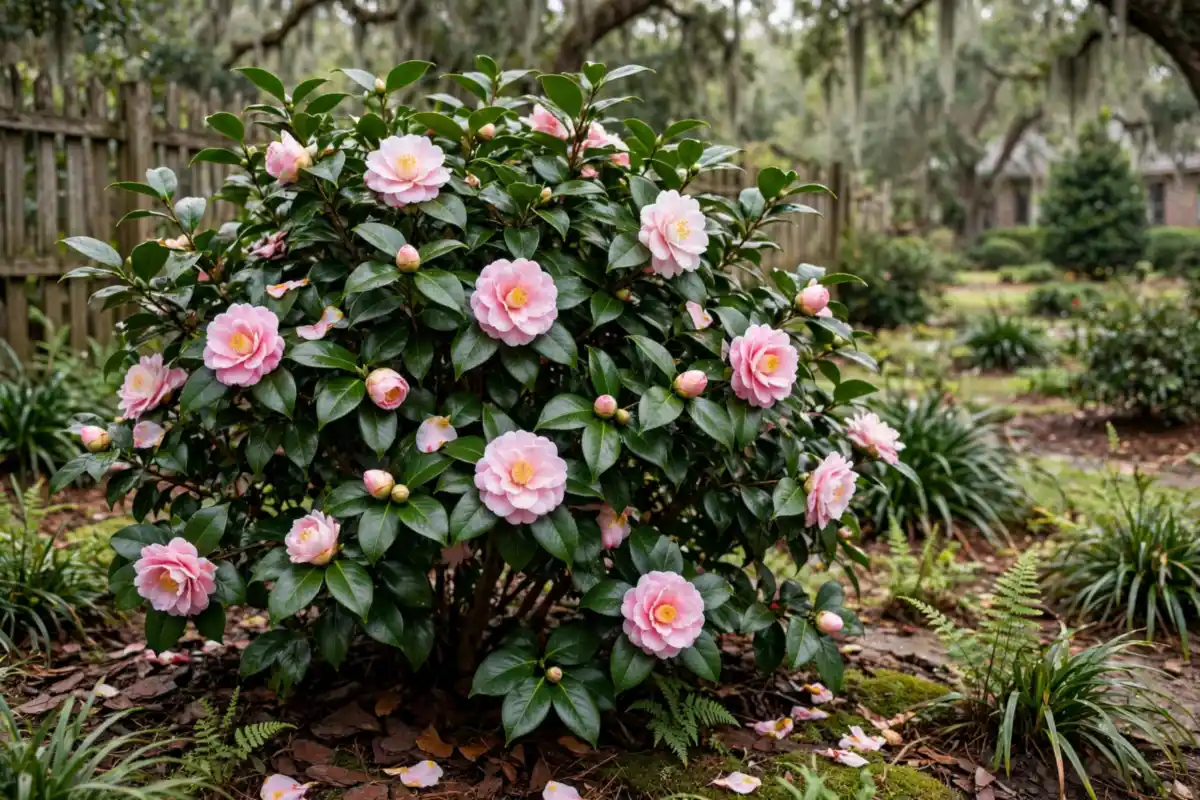
Alabama fired its first state flower. In 1927 the state chose the goldenrod — and lived to regret a choice shared with half the continent and mistaken for a weed. In 1959, after a determined campaign by the camellia growers of Butler County, Alabama traded up: the camellia, the rose of winter, became the Alabama state flower, an evergreen aristocrat that blooms when the garden is otherwise asleep and turns Deep South winters into a flower show.
This guide covers the Alabama state flower and its swap-story, what the camellia means, Alabama’s state wildflower (the oak-leaf hydrangea — including the Alabama river lily that should be famous), six more Alabama flowers worth knowing, and how to grow camellias: the acid-soil, light-shade, plant-it-high rules that keep winter’s rose happy for a century.
Quick Answer
The Alabama state flower is the camellia — Camellia japonica as designated — adopted in August 1959, replacing the goldenrod chosen in 1927. It is a glossy evergreen shrub, 6 to 12 feet in gardens, flowering from late autumn through spring (japonica kinds peak late winter) in zones 7 to 9, wanting acidic soil and light shade. Alabama’s state wildflower, adopted 1999, is the oak-leaf hydrangea. Camellia means admiration, perfection and steadfast love — a flower that blooms through the coldest months and shrugs.
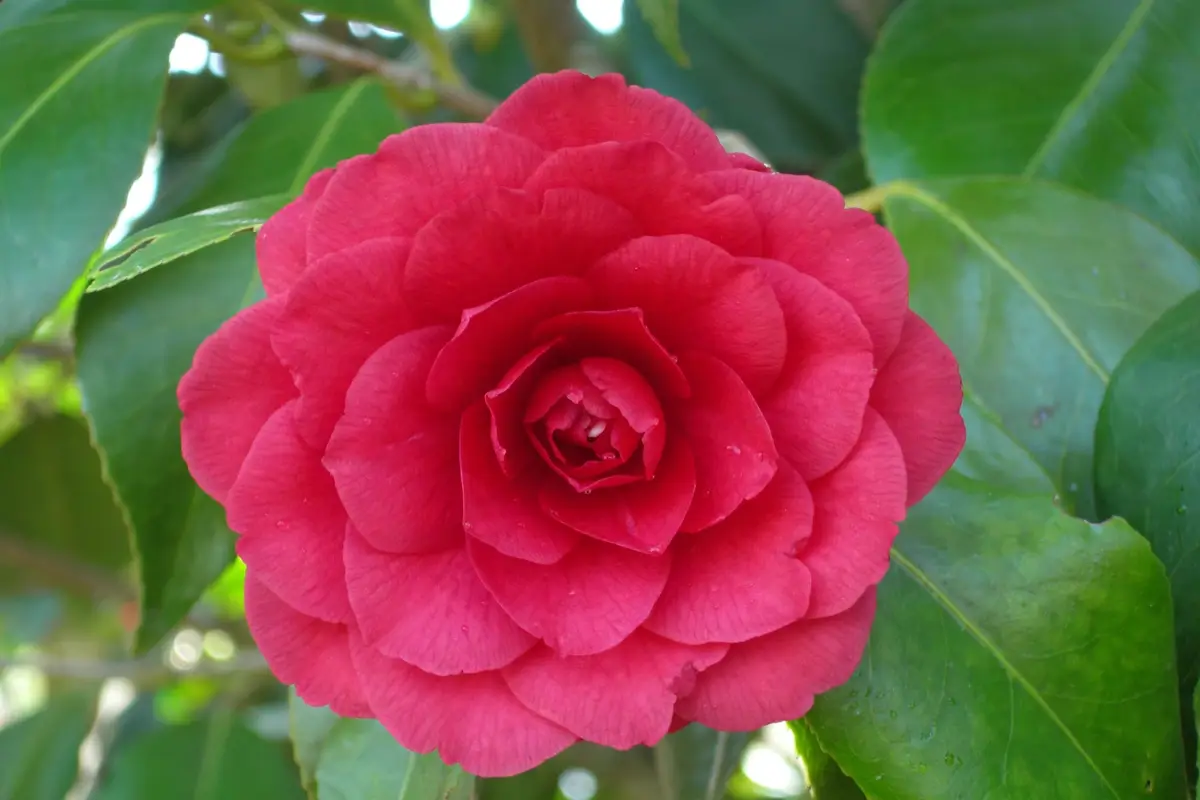
Table of Contents
- What Is the Alabama State Flower?
- The Story: 1959, the Year Alabama Fired the Goldenrod
- Camellia Meaning and Symbolism
- Alabama’s State Wildflower: Oak-Leaf Hydrangea
- 6 More Alabama Flowers Worth Knowing
- How to Grow Camellias
- Common Mistakes When Growing Camellias
- Frequently Asked Questions
What Is the Alabama State Flower?
The camellia is an evergreen shrub from the tea family — the drink and the flower are cousins — with polished, leathery leaves and rose-like blooms built like small architecture: petals laid in perfect spirals around golden stamens, in white, every pink, and flag red. Camellia japonica, the designated species, flowers through winter into spring; its smaller sister C. sasanqua opens the season in autumn. In Alabama the plant is woven into place-names and pride: Greenville calls itself the Camellia City, Mobile flames with azaleas a month later, and old gardens from Birmingham to the Gulf hold camellias older than the houses — some Alabama plants trace to the 1840s, when the flower crossed the Atlantic world as a greenhouse celebrity and then moved outdoors in the South’s mild winters. Our full camellia guide covers the genus’s kinds, colours and care in depth. You can read more on the Camellia japonica page on Wikipedia.
Alabama State Flower Quick Facts
- State flower: camellia, designated as Camellia japonica — family Theaceae, kin to the tea plant.
- Adopted: August 1959, replacing the goldenrod (state flower 1927–1959).
- The campaign: camellia growers and garden clubs, notably from Butler County, pushed the swap; Greenville is the “Camellia City”.
- The plant: evergreen shrub 6 to 12 feet (old Southern specimens far larger); flowers late autumn to spring.
- Conditions: zones 7 to 9 (sasanquas slightly hardier); acidic soil pH 5.5 to 6.5, light shade, shelter from morning sun after frost.
- State wildflower (separate title): oak-leaf hydrangea, Hydrangea quercifolia (1999) — an Alabama native.
- Good to know: camellia petals fall whole and clean — the flower dies as it lived, in one perfect piece, a trait with symbolism of its own (see Meaning).
The Story: 1959, the Year Alabama Fired the Goldenrod
Goldenrod never stood a chance, once the comparison was made. Adopted in 1927, it was pretty in autumn — but it was also Nebraska’s and Kentucky’s and half the roadsides’ flower, a wildling with hay-fever blame attached. Through the 1950s, Alabama’s camellia belt — growers and garden clubs centred on Butler County, where the winter flower was practically an industry — argued for an emblem with distinction: evergreen in January, aristocratic in February, and Alabamian by adoption so complete that visitors assumed it native. In August 1959 the legislature agreed, and the camellia replaced the goldenrod by act — one of the very few times a state has formally swapped its flower. Forty years later, in 1999, the state added its wildflower title and gave the native oak-leaf hydrangea the job — as if to say the camellia handles the garden, and the hydrangea speaks for the woods. The goldenrod, it must be said, never held a grudge: it still gilds Alabama’s autumn roadsides, demoted but unbothered.
Camellia Meaning and Symbolism
The camellia means admiration, perfection and steadfast love — and in the South, a particular kind of courage: blooming in winter, unhurried by the cold. The flowers fall whole when they finish, which storytellers on two continents noticed: in Japan the falling camellia carried a samurai shadow (a head, falling in one piece — plant it thoughtfully there), while Alabama’s reading is gentler — devotion entire, a love that lets go all at once rather than petal by petal. Where the Michigan state flower is a ten-day promise in May, the camellia is a four-month presence across the dark of the year: promise’s older, steadier sister.
Alabama’s State Wildflower: Oak-Leaf Hydrangea
Hydrangea quercifolia is one of the few famous garden plants that is genuinely Alabama’s to claim — a woodland shrub of the Southeast’s bluffs and stream banks, with oak-shaped leaves, great white flower cones in late spring, and bark that peels in cinnamon scrolls. It was named the state wildflower in 1999, and it earns the double title for gardeners too: four seasons of interest (flowers, foliage colour, bark, winter silhouette) on one undemanding native. Between them, Alabama’s two official flowers sketch the whole state garden: the camellia for the shaded front walk, the oak-leaf for the wild back slope.
6 More Alabama Flowers Worth Knowing
The long Southern season stacks the cast. The table separates them; the profiles follow. For thousands more flower names, see our flower names A to Z guide.
| Flower | Colour | Season | Character | Best use |
|---|---|---|---|---|
| Oak-leaf hydrangea | White cones | Late spring | The four-season native | Woodland edges, slopes |
| Cahaba lily | White trumpets | May–June | The river miracle | River shoals (admire only) |
| Azalea | Every colour | Spring | Mobile’s flame | Foundation plantings |
| Gardenia | White, perfumed | Late spring–summer | The Southern perfume | Doorways, pots |
| Confederate rose | White to pink | Autumn | The colour-changer | Back borders |
| Black-eyed Susan | Gold | Summer | The meadow worker | Wildflower beds |
1. Oak-Leaf Hydrangea — the Four-Season Native
The state wildflower (see above): white panicles in May, burgundy foliage in October, cinnamon bark in January. If a gardener in Alabama plants one native shrub, the smart money sits here — and the plant has marched from its home woods into gardens on three continents.
2. Cahaba Lily — the River Miracle
For a few weeks in May and June, the Cahaba River runs white: Hymenocallis coronaria stands in the rocky shoals by the thousand, great fragrant trumpets opening at dusk above the current — a flower that grows standing in a river, in a handful of Southern streams, with its capital in Bibb County, Alabama. The festival at West Blocton times itself to the miracle.
3. Azalea — Mobile’s Flame
Come March, Mobile ignites: the Azalea Trail winds through streets where evergreen azaleas stand taller than the porches, a spring fireworks in coral, pink and white that the city has celebrated since the 1930s. Alabama’s unofficial second season — the one between winter’s camellias and summer’s heat — belongs to it.
4. Gardenia — the Southern Perfume
Gardenia jasminoides, the Cape jasmine, perfumes Alabama doorways in June — white rosettes with a scent that carries down the street, on glossy evergreen shrubs that sulk only at cold snaps and alkaline soil. Plant one where you pass daily; the flower repays the placement.
5. Confederate Rose — the Colour-Changer
Hibiscus mutabilis opens white in the morning, blushes pink by noon and stands rose-red by dusk — three dresses in a day, on a big shrubby hibiscus that flowers through Alabama’s autumn when the garden needs it most. Old Southern gardens pass cuttings of it like family news.
6. Black-Eyed Susan — the Meadow Worker
Rudbeckia fulgida and kin gild Alabama’s roadsides and wildflower beds all summer — gold daisies with chocolate cones, on plants that take the state’s heat and humidity without blinking and seed themselves for next year’s shift.
How to Grow Camellias
Acid soil, light shade, planted high: the camellia’s whole catechism fits one breath. Gardeners on r/gardening on Reddit pass on the rule as the family’s first law: “plant it like it might flood — high, mulched, and out of the morning sun.”
Planting and Position
Choose light or dappled shade, ideally with shelter from early-morning winter sun (frozen buds thawing too fast is the classic flower-killer; a north or west aspect delays the thaw). Soil must drain freely and lean acid — pH 5.5 to 6.5 — enriched with leaf mould or pine bark. Plant in autumn where winters are mild (roots settle before spring), setting the root ball an inch proud of the soil, and mulch 3 inches deep, keeping the trunk clear. Water deeply through the first two summers and in late-summer drought, when next winter’s buds are deciding.
Choosing Your Season
Camellias let you schedule winter: sasanqua kinds flower October to December on smaller, sun-tolerating shrubs (use them for hedges), japonicas carry the formal show January to April, and hybrids bridge the two. Feed once in spring with an acid-lovers’ fertilizer, prune only for shape right after flowering, and expect longevity that embarrasses other shrubs: tended camellias in Alabama are still flowering from plantings older than anyone alive to remember planting them.
Common Mistakes When Growing Camellias
Mistake one is planting deep: like their rhododendron cousins, camellias suffocate planted low — the root flare belongs at the surface. Mistake two is limy or neutral soil, which starves them of iron and yellows the leaves; test and acidify, or grow in a raised bed of ericaceous mix. Mistake three is a sunny winter-morning wall: buds freeze at night, thaw too fast at dawn, and brown before opening — site for slow thaws.
Mistake four is pruning in autumn, which removes the buds the winter show depends on; prune after flowering or leave the shears holstered. Mistake five is drought in August and September, when buds form: a thirsty autumn means a flowerless winter, however kind the winter weather. And mistake six is impatience with a young plant’s modesty: camellias spend their first years building the evergreen architecture the flowers will hang on — the show compounds annually, like interest.
Frequently Asked Questions
What is the Alabama state flower?
The camellia — designated in August 1959 (the act named Camellia japonica) — replacing the goldenrod, which had held the title since 1927. Alabama’s state wildflower, adopted in 1999, is the oak-leaf hydrangea. If your question is not answered here, the questions about the Alabama state flower on Quora cover most of the rest.
Why did Alabama replace the goldenrod?
Because the goldenrod was everybody’s flower — shared with other states, wild, and blamed (mostly unfairly) for hay fever — while the camellia was distinctive, evergreen, and championed by the Butler County growers and garden clubs who made it the emblem of Alabama’s winter gardens. The legislature made the swap in 1959.
When do camellias bloom in Alabama?
By kind: sasanquas from October into December, japonicas from January to April, with the state’s peak show in late winter. A planting of both kinds gives flowers across nearly half the year — the whole cold season, flowered.
Can I grow camellias outside the South?
Yes, within limits: standard kinds thrive in zones 7 to 9 (the Pacific Northwest and sheltered mid-Atlantic do well), and extra-hardy modern hybrids push into zone 6 in protected spots. Further north, grow them in large pots wintered in a bright, cool, frost-free place.
Why do my camellia buds drop or brown?
The usual trio: late-summer drought while the buds were forming, a hard freeze followed by fast morning sun on frozen buds, or buds set in a year the plant couldn’t afford (young or stressed plants shed surplus). Water in August, site for slow thaws, and let young plants spend on roots before shows.
Is the camellia native to Alabama?
No — camellias came from East Asia in the 1700s–1800s and were adopted so completely by Southern gardens that the state made one official. The native half of the official pair is the state wildflower, the oak-leaf hydrangea, which evolved in Alabama’s own woods.
One Comment