Colorado State Flower: The Blue Columbine, Its Law and Growing Guide
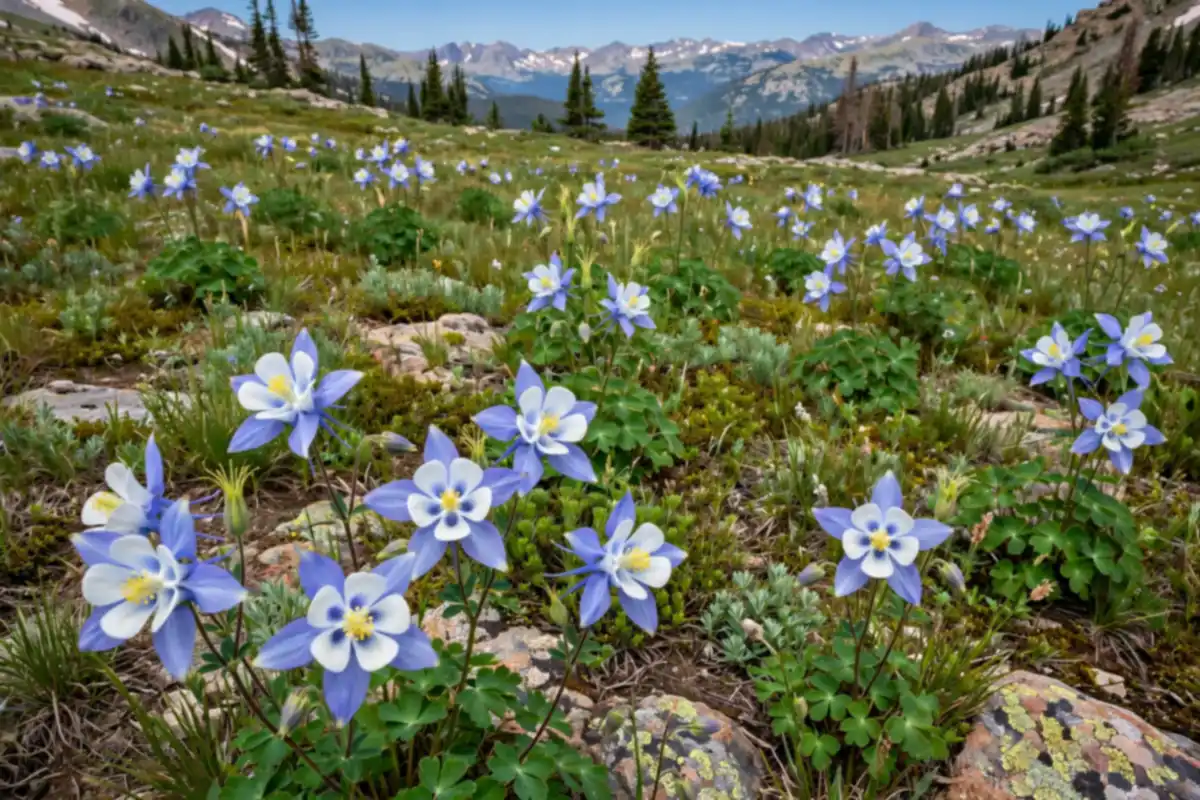
High in a Colorado meadow, where the air thins and the summer is six weeks long, one flower stops every hiker mid-stride: a sky-blue star on a silver stem, five petals around a golden heart, each petal trailing a long, elegant spur like a comet’s tail. The Colorado blue columbine is the Colorado state flower — adopted in 1899, protected by law since 1925, and still the defining bloom of the Rockies. Colorado guards it so jealously that state law calls protecting it the duty of every citizen, and uprooting one on public land is a crime.
This guide covers the Colorado state flower and its story, what the blue columbine means (including the sadder echo its name carries), where to see it at its alpine best, six more Colorado flowers worth knowing, and how to grow columbines — a short-lived perennial whose colony, managed right, never actually dies.
Quick Answer
The Colorado state flower is the Colorado blue columbine, Aquilegia coerulea (older books: A. caerulea), adopted on 4 April 1899. It is a blue-and-white alpine flower with five long nectar spurs, blooming late spring to midsummer from the foothills to above treeline, hardy in zones 3 to 8. A 1925 Colorado law protects it: uprooting or destroying columbines on public land is illegal, and gathering on public land is limited; on your own land and in gardens it is freely grown from seed. The flower means faith, endurance and remembrance.
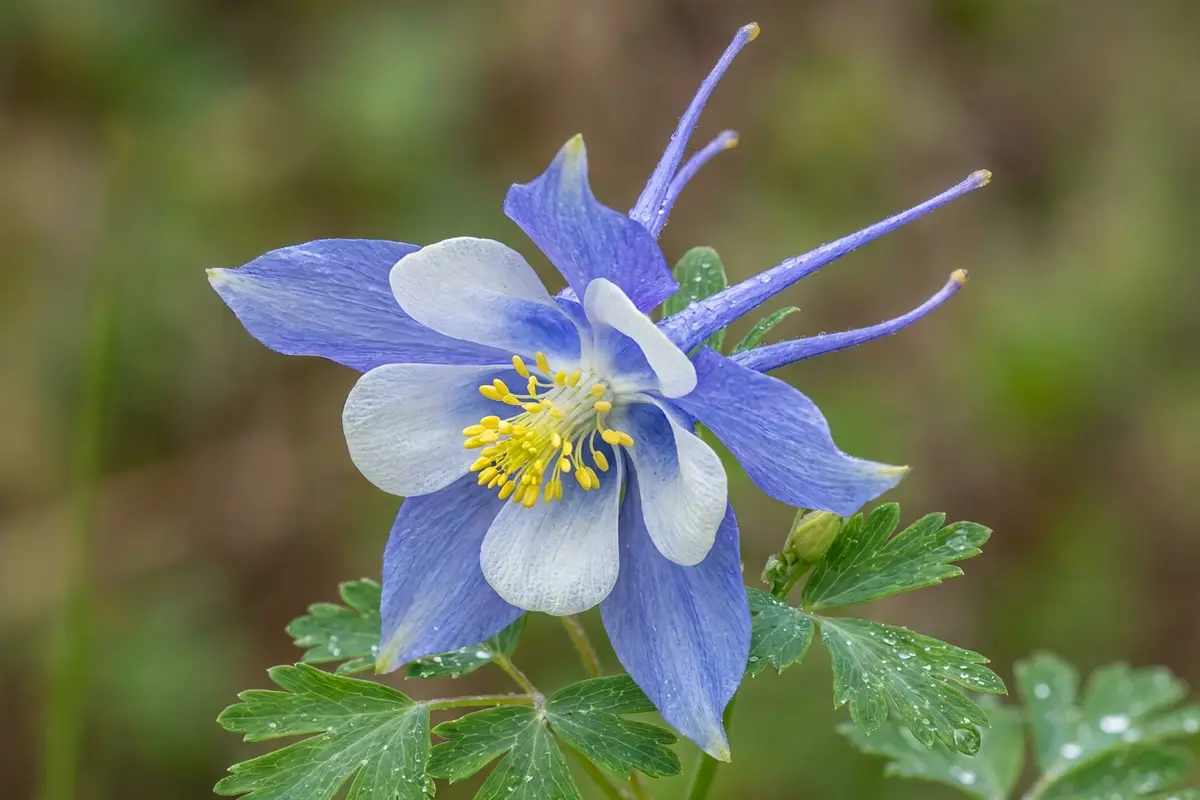
Table of Contents
- What Is the Colorado State Flower?
- The Story: 1899, and the Law That Guards a Flower
- Columbine Meaning: Faith, Endurance and Remembrance
- Where to See Colorado Blue Columbines
- 6 More Colorado Flowers Worth Knowing
- How to Grow Colorado Blue Columbines
- Common Mistakes When Growing Columbines
- Frequently Asked Questions
What Is the Colorado State Flower?
The blue columbine is a Rocky Mountain native of meadows, aspen groves and talus slopes, standing 1 to 3 feet tall with ferny, blue-green foliage. The flower is its unmistakable self: five blue-violet sepals spread like a star, five white petals cupped in the centre, and behind, five straight spurs sweeping back — nectar tubes evolved for the long tongues of hummingbirds and hawk moths, the flower’s true pollinators. The colours are not decoration but geography: the classic blue-and-white form rules Colorado, while populations elsewhere in the Rockies shade toward lavender and pink. Aquilegia is a whole genus of spurred stars — our full columbine guide covers its kinds, colours and care; the state flower is the species that started it all. You can read more on the Aquilegia coerulea page on Wikipedia.
Colorado State Flower Quick Facts
- State flower: Colorado blue columbine, Aquilegia coerulea — family Ranunculaceae.
- Adopted: 4 April 1899; schoolchildren’s votes helped carry the choice.
- Protected: since 1925, Colorado law forbids uprooting or destroying it on public land and limits picking there; the statute names its protection every citizen’s duty.
- The flower: blue sepals, white petals, five long spurs; blooms late spring to midsummer by elevation.
- Height and habitat: 1 to 3 feet; foothill meadows to alpine tundra edges, aspen groves, moist slopes.
- Pollinators: hummingbirds and hawk moths, matched to the spurs’ nectar.
- Garden life: zones 3 to 8; a short-lived perennial (2 to 4 years per crown) that self-sows into a permanent colony.
- Good to know: columbines cross freely — garden colonies drift in colour over generations unless you rogue out off-types and renew from true seed.
The Story: 1899, and the Law That Guards a Flower
Colorado went looking for a floral emblem in the 1890s, and the campaign had a charming electorate: the state’s schoolchildren, whose votes championed the blue columbine over its rivals. On 4 April 1899 the legislature made it official. But Colorado’s love turned quickly to worry: the flower was being picked by the armload — excursion trains carried tourists into the mountains, and columbines came home by the basket until meadows near the rail lines stood stripped. So in 1925 Colorado did something almost no state has done: it passed a law for a flower. The statute makes it unlawful to uproot, destroy or mutilate the columbine on public lands, limits how much may be gathered there, and declares it the duty of all citizens to protect it. A century on, the law still stands — the state flower with its own bodyguard, written into the books.
Columbine Meaning: Faith, Endurance and Remembrance
In the old language of flowers the columbine carries faith and endurance — a mountain reading is built into it: a flower of thin air and short summers that returns after winters that would end most gardens. The five spurs gave it older symbolism too (five doves in a ring, said the medieval gardeners, reading columba, the dove, in its name). Since April 1999 the flower’s name carries a second, sadder association for Colorado and the nation — the Columbine High School tragedy — and in the years since, blue columbines have been planted at memorials across the state, the flower of endurance quietly becoming a flower of remembrance as well. Where the Utah state flower commemorates survival by hunger, Colorado’s commemorates survival of every other kind.
Where to See Colorado Blue Columbines
Elevation writes the calendar again: foothill colonies bloom in late spring, the great alpine shows run late June through July. The famous pilgrimage is the Crested Butte wildflower festival in July, in meadows where columbines stand among paintbrush and lupine by the acre; Yankee Boy Basin above Ouray and the trails around Maroon Bells near Aspen carry classic stands in aspen shade and open meadow. Go in the morning, when hawkmoth-pollinated blooms still hold the night’s nectar and the light comes sideways. And obey the 1925 law with a light heart: photograph everything, pick nothing, leave the meadow as the next hiker’s inheritance.
6 More Colorado Flowers Worth Knowing
Short summers, intense light: Colorado’s cast is built for altitude. The table separates them; the profiles follow. For thousands more flower names, see our flower names A to Z guide.
| Flower | Colour | Season | Character | Best use |
|---|---|---|---|---|
| Indian paintbrush | Scarlet | Late spring–summer | The meadow flame | Wild meadows with hosts |
| Rocky Mountain penstemon | Deep blue spikes | Early summer | The boldest blue | Borders, dry slopes |
| Pasqueflower | Lavender cups | Early spring | The Easter herald | Rock gardens, slopes |
| Alpine sunflower | Golden | Midsummer | Old man of the mountain | Alpine gardens |
| Rocky Mountain iris | Violet-blue | Late spring | The wet-meadow flag | Stream banks, damp beds |
| Blanket flower | Red and gold | Summer–frost | The plains workhorse | Hot dry borders |
1. Indian Paintbrush — the Meadow Flame
Castilleja species set the mountain meadows alight in scarlet — technically the colour sits in leafy bracts, not petals. Paintbrushes are partial parasites that tap the roots of neighbours (grasses and sages), which is why they defy garden transplanting and why a wild meadow, where the whole community grows together, is where they belong.
2. Rocky Mountain Penstemon — the Boldest Blue
Penstemon strictus is everything the columbine is not: a fortress of a plant, evergreen mats sending up 2-foot spikes of saturated blue trumpets in early summer, drought-proof and long-lived. If you plant one Colorado native in a lowland garden, make it this one.
3. Pasqueflower — the Easter Herald
Pulsatilla patens opens silky lavender cups at snowmelt — often the first flower of the Colorado year, furred against the cold, followed by feathery seed heads that glow in backlight. It was the columbine’s chief rival in the 1890s voting, and remains the connoisseur’s favourite.
4. Alpine Sunflower — Old Man of the Mountain
Hymenoxys grandiflora grows only where almost nothing else will: above treeline, in gravel and wind, raising big golden sunflowers that famously all face east. A plant measured in decades, not seasons — leave it to the tundra and admire with reverence.
5. Rocky Mountain Iris — the Wet-Meadow Flag
Iris missouriensis sheets damp mountain meadows in violet-blue in late spring, cattle-tough and cheerfully unbothered by wet feet that would rot its garden cousins. The West’s own iris, as at home in a ranch ditch as a national park.
6. Blanket Flower — the Plains Workhorse
Gaillardia aristata, the perennial blanket flower, takes the other Colorado — the hot, dry eastern plains — in stride: red-and-gold daisies from summer to frost on almost no water, year after year. The front-range xeriscape runs on it.
How to Grow Colorado Blue Columbines
Give it the mountain’s terms: cool roots, bright light, winters that mean it. Gardeners on r/gardening on Reddit pass on the columbine rule as the genus’s first law: “plant the colony, not the plant — the daughters are the perennial.”
Planting and Position
Sow seed in autumn or early spring (cold weeks wake it reliably), barely covered, in humus-rich, free-draining soil. Site in full sun in cool climates, and light or afternoon shade where summers run hot — a north or east wall, or the edge of aspen-like dapple, is perfect. Garden hybrids and true A. coerulea both establish best from nursery plants set out in spring in mild districts and early autumn in cold ones. Water through the first season; established colonies shrug off ordinary drought but flower longest with spring moisture.
The Colony Method
Each crown lives two to four years — the secret is to stop asking one plant to be immortal and let the family carry on: leave some seed heads standing every year, let seedlings appear where they choose, and thin or move the extras while small. To keep the true blue-and-white, rogue out any seedling that flowers off-colour and refresh the colony every few years with genuine coerulea seed, because columbines marry their neighbours and the children improvise. Leaf-miner trails on the foliage are the genus’s cosmetic tax — ugly, rarely serious, and best answered by removing spoiled leaves.
Common Mistakes When Growing Columbines
Mistake one is expecting a long-lived single plant: a columbine crown is a sprinter, and gardeners who deadhead every flower for tidiness deadhead the colony’s future with it — leave seed. Mistake two is hot, heavy, wet soil: root-rot country. Columbines want drainage and cool roots, not a steamy clay border. Mistake three is full desert sun in a hot climate — the alpine blood shows, and plants scorch and dwindle; give afternoon shade below the mountains.
Mistake four is colour disappointment: seedlings from a mixed planting will not match the mother, and blaming the nursery misses the genus’s free-love genetics. Mistake five is collecting wild plants or seed from public land — beyond the ethics, Colorado law protects the state flower there, and wild crowns transplant badly anyway. And mistake six is crowding: air and elbow room keep mildew and miners at nuisance level instead of plague.
Frequently Asked Questions
What is the Colorado state flower?
The Colorado blue columbine, Aquilegia coerulea — adopted 4 April 1899 and protected by state law since 1925, which forbids uprooting or destroying it on public land. Its blue-and-white, five-spurred flower is the signature bloom of the Rocky Mountain summer. If your question is not answered here, the questions about the Colorado state flower on Quora cover most of the rest.
Is it illegal to pick Colorado columbines?
On public land, gathering is strictly limited by the 1925 law, and uprooting or destroying the plants there is illegal outright — the statute makes protecting the flower every citizen’s duty. On your own land, and with nursery-grown plants and seed, columbines are ordinary garden flowers: grow them freely, and let the wild meadows stand.
How do I keep my columbines blue and white?
Isolate and rogue: columbines cross-pollinate enthusiastically, so seedlings near other columbine colours will drift. Grow A. coerulea away from hybrids, remove any seedling that blooms off-type before it sets seed, and renew the colony from true seed every few years.
When do Colorado columbines bloom?
Late spring in the foothills, peaking late June to July in the high meadows — the season follows the snowmelt uphill. In lowland gardens expect late spring to early summer flowering, with occasional repeat blooms if spent stems are cut and the weather cools.
Are columbines deer and rabbit resistant?
Largely, yes: the foliage is seldom browsed (the family chemistry discourages it), which is one reason columbines persist in mountain gardens where tastier plants need fencing. Rabbits may sample young growth in a hard spring; established colonies are rarely troubled.
How long does a columbine plant live?
One crown: two to four years, occasionally five. A colony: indefinitely — which is why experienced growers manage columbines as a self-renewing family, always with seedlings coming on. Judge your planting by the colony’s health, never by one plant’s lifespan.