Ohio State Flower: The Scarlet Carnation and President McKinley
One flower in this series is a memorial with petals. The Ohio state flower is the scarlet carnation, adopted in 1904 in memory of President William McKinley — the Ohioan in the White House who wore a scarlet carnation in his buttonhole every day of his public life, called it his lucky flower, and, in the receiving line at Buffalo in 1901, took it from his lapel and gave it to a young girl in the crowd. Minutes later, an assassin’s shots rang out. He died eight days later — and three years on, Ohio made the flower he loved its own, so that it would be worn by the whole state forever.
This guide covers the Ohio state flower and the story behind it, what the scarlet carnation means, Ohio’s state wildflower, six more Ohio flowers worth knowing, and how to grow carnations — the cool-loving, sharp-drained Dianthus that thrives in Ohio’s seasons when everyone else’s border is fading.
Quick Answer
The Ohio state flower is the scarlet carnation, Dianthus caryophyllus, adopted in 1904 as a memorial to President William McKinley of Ohio. It is a frilled, clove-scented garden flower in a specified scarlet-red, grown as a short-lived perennial or annual in zones 5 to 9, wanting full sun, sharp drainage and cooler summers. Ohio’s state wildflower (1986) is the great white trillium. A red carnation means love, admiration and remembrance — and in Ohio, it means one man’s flower, worn by a state.
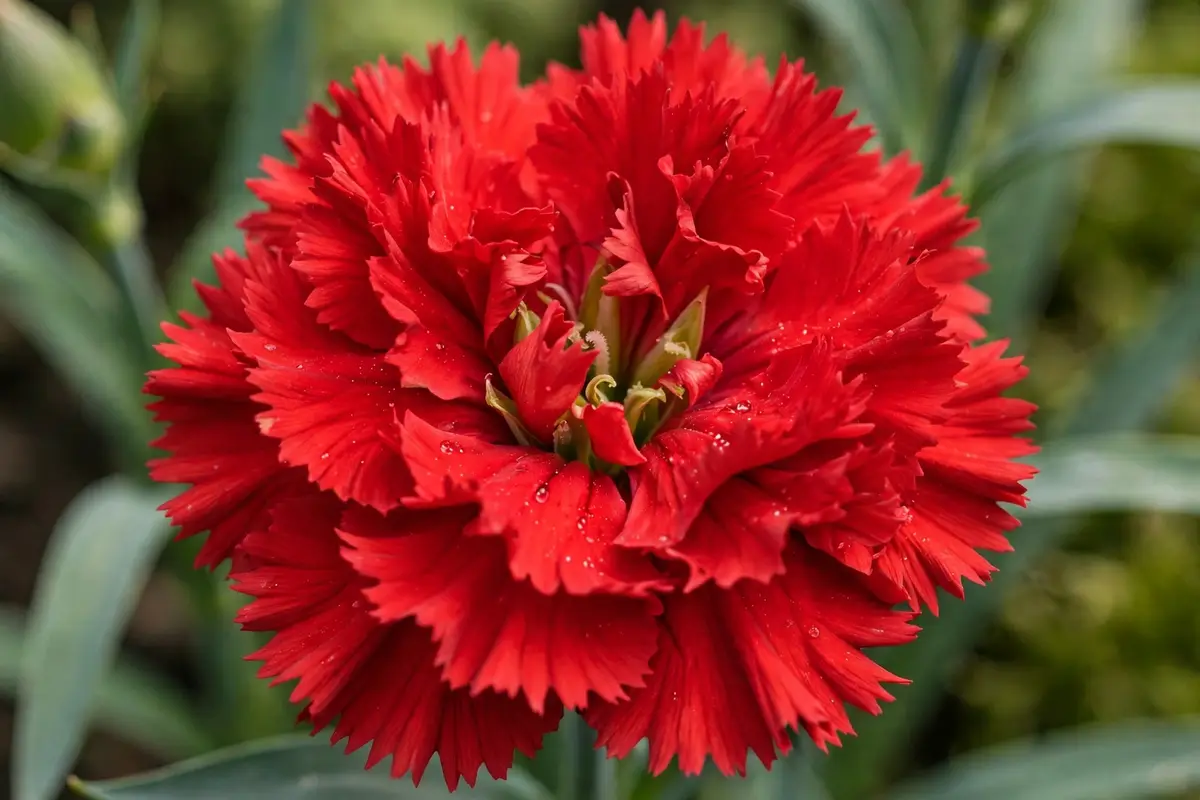
Table of Contents
- What Is the Ohio State Flower?
- The Story: McKinley’s Carnation, 1901 to 1904
- Scarlet Carnation Meaning and Symbolism
- Ohio’s State Wildflower: Great White Trillium
- 6 More Ohio Flowers Worth Knowing
- How to Grow Carnations
- Common Mistakes When Growing Carnations
- Frequently Asked Questions
What Is the Ohio State Flower?
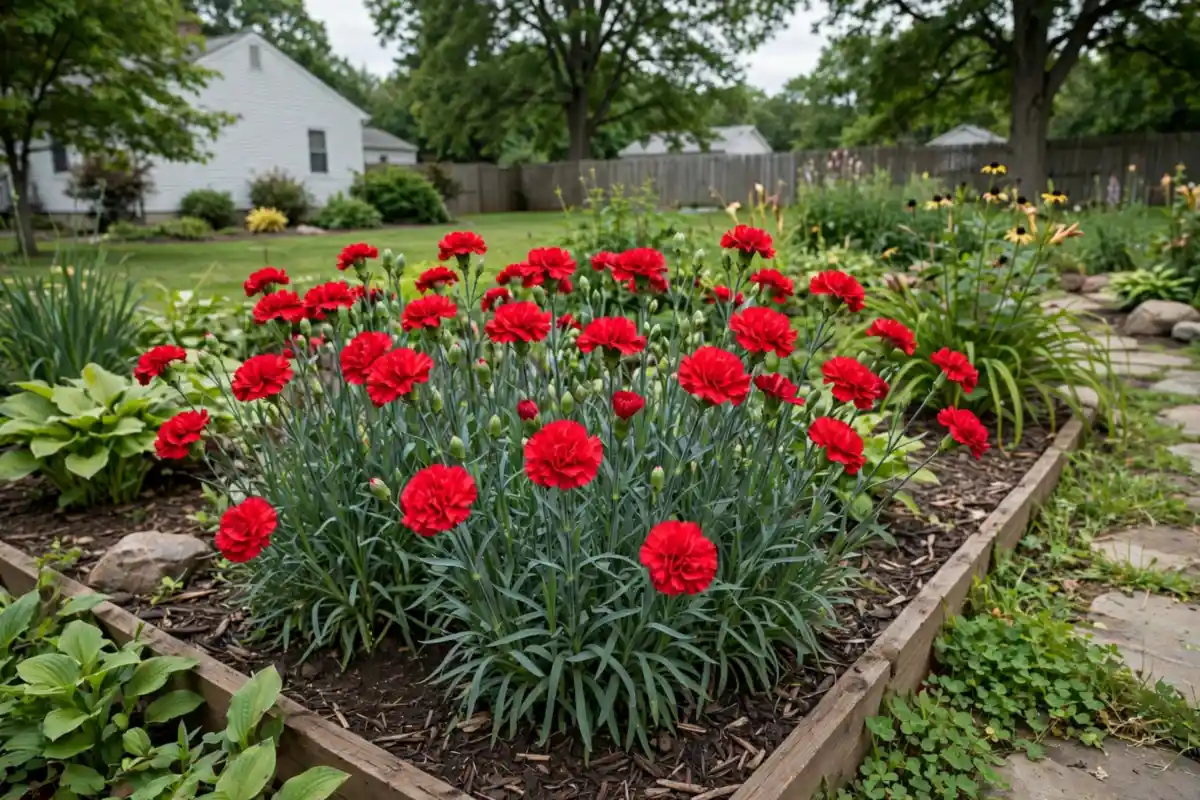
The carnation is one of humanity’s oldest cultivated flowers — two thousand years in gardens — a grey-green, grassy-leaved plant of the pink family carrying frilled double blooms with a warm, clove-like scent on wiry stems. The scarlet of Ohio’s choice is a flag-red, fully double form, raised for cutting and buttonholes alike; florists’ carnations are its hothouse descendants, and the hardier garden kinds (the border carnations and pinks) are its country cousins. Ohio’s bond with the flower runs deeper than the memorial: the city of Alliance calls itself Carnation City, where Dr. Levi Lamborn — McKinley’s friend and fellow Ohioan — grew and hybridized carnations from the 1860s and is credited with giving the president his first. You can read more on the Dianthus caryophyllus page on Wikipedia.
Ohio State Flower Quick Facts
- State flower: scarlet carnation, Dianthus caryophyllus — family Caryophyllaceae.
- Adopted: 1904, in memory of President William McKinley (born in Niles, Ohio; assassinated 1901).
- The colour matters: scarlet — McKinley’s own buttonhole colour; Ohio’s is one of the few state flowers with a specified shade.
- The flower: frilled, double, clove-scented, 2 to 3 inches; blooms late spring into summer, with a smaller autumn encore.
- The plant: mounding grey-green foliage 12 to 24 inches; short-lived perennial, often grown as an annual.
- Conditions: zones 5 to 9; full sun, sharp drainage, neutral-to-alkaline soil; happiest where summers are cool to moderate.
- Carnation City: Alliance, Ohio — home of Dr. Levi Lamborn, the carnation-growing congressman who befriended McKinley.
- State wildflower (separate title): great white trillium, Trillium grandiflorum (1986).
The Story: McKinley’s Carnation, 1901 to 1904
William McKinley wore the flower so faithfully that cartoonists drew him with it. The scarlet carnation was his campaign emblem, his daily buttonhole, his “lucky flower” — given to him in his early congressional days, by the story Ohio tells, by his friend and rival-turned-colleague Dr. Levi Lamborn of Alliance, the carnation-breeding congressman. On 6 September 1901, at the Pan-American Exposition in Buffalo, McKinley stood in a receiving line at the Temple of Music. A 12-year-old girl, Myrtle Ledger, came through the line; the president smiled, took the scarlet carnation from his own lapel, and gave it to her. Moments later, Leon Czolgosz, his hand wrapped in a handkerchief concealing a revolver, fired twice. McKinley died on 14 September. In 1904 the Ohio legislature adopted the scarlet carnation as the state flower in his memory — not a flower for a party or a campaign, but the flower a president had given away in his last kind act, worn now by Ohio in perpetuity. Alliance still celebrates with a Carnation Festival each August.
Scarlet Carnation Meaning and Symbolism
In the language of flowers, carnations speak in colours: pink for gratitude and a mother’s love, white for pure love and luck, and red — deep red — for admiration, deep love and remembrance, which is exactly the message Ohio encoded. The scarlet carnation is thus less a decoration than a wreath: a state flower chosen to grieve in public, beautifully, every summer. It pairs in spirit with the Alaska state flower — two northern emblems, one pledged to remembering the pioneers, the other to remembering a president, both insisting that a flower can carry a vow.
Ohio’s State Wildflower: Great White Trillium
In 1986 Ohio gave the woods their own title: the great white trillium, Trillium grandiflorum — three white petals above three leaves, carpeting the state’s spring woodlands in April and May before the canopy closes, ageing blush-pink as the flowers fade. It is protected in spirit everywhere and by law in places: trilliums take seven years from seed to flower and die if picked with their leaves, so Ohio’s wildflower is strictly a look-and-leave citizen. With the buckeye tree overhead and the cardinal in it, the trillium completes Ohio’s official portrait: red, white and green, all of it alive.
6 More Ohio Flowers Worth Knowing
From Lake Erie marshes to Hocking Hills woods, the cast is rich. The table separates them; the profiles follow. For thousands more flower names, see our flower names A to Z guide.
| Flower | Colour | Season | Character | Best use |
|---|---|---|---|---|
| Great white trillium | White to blush | Spring | The seven-year flower | Woodland gardens (nursery-grown) |
| Ohio buckeye blossom | Yellow-green spikes | Spring | The namesake tree’s flower | Shade trees |
| Pawpaw blossom | Maroon | Spring | The custard tree’s secret | Native groves |
| Purple coneflower | Purple-pink | Summer | The prairie workhorse | Sunny borders |
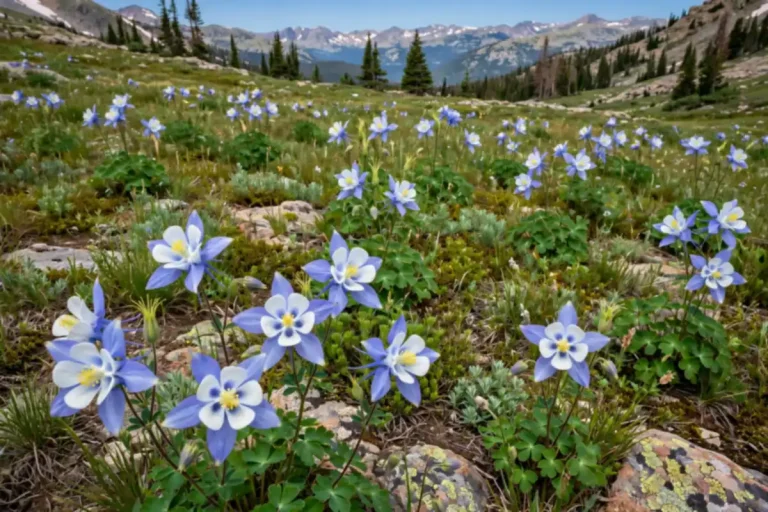
| Wild columbine | Red and gold | Spring | The hummingbird lantern | Rock and woodland gardens |
| Virginia bluebells | Blue | Spring | The riverbank carpet | Moist shade |
1. Great White Trillium — the Seven-Year Flower
The state wildflower (see above): spring’s grandest Ohio carpet, and its slowest — seed to bloom can take seven years, which is why gardeners buy nursery-propagated plants and wild stands are never, ever picked.
2. Ohio Buckeye Blossom — the Namesake Tree’s Flower
The state tree flowers in May: upright panicles of yellow-green trumpets over palmate leaves, on the tree whose polished nuts gave Ohio its nickname and its teams their name. The blossom is the buckeye’s quiet season — everyone watches the tree in autumn instead.
3. Pawpaw Blossom — the Custard Tree’s Secret
Ohio’s native pawpaw — North America’s largest native fruit, tasting of banana custard — hides maroon, bell-shaped flowers in April, pollinated by flies drawn to their faintly yeasty scent. A flower for connoisseurs: most Ohioans eat the fruit for decades without ever noticing it.
4. Purple Coneflower — the Prairie Workhorse
Echinacea purpurea is native to Ohio’s prairie remnants and now anchors its sunny borders all summer — purple-pink daisies with orange cones that feed bees in July and goldfinches in September. Our coneflower guide covers its kinds, colours and care.
5. Wild Columbine — the Hummingbird Lantern
Aquilegia canadensis dangles red-and-gold lanterns over Ohio’s rocky woods each spring, timed to the hummingbirds’ return — the spurs hold nectar at exactly hummingbird-bill depth, in an arrangement evolution negotiated and gardeners inherited.
6. Virginia Bluebells — the Riverbank Carpet
Along the Scioto and a hundred creeks, Mertensia virginica turns April’s floodplains briefly, impossibly blue — pink buds opening to bells, then the whole plant vanishing by June as if the river dreamed it. Plant it where spring is wet and summer is shaded.
How to Grow Carnations
Carnations are cool-season aristocrats: they would rather be crisp than coddled. Gardeners on r/gardening on Reddit pass on the rule as the family’s first law: “grit under them, air around them, and never let them sit wet — a carnation forgives cold and drought before it forgives a puddle.”
Planting and Position
Grow in full sun in sharply drained soil, neutral to slightly alkaline (work in a little lime on Ohio’s more acid soils), with the crown planted exactly at soil level — burying the stem invites the rot that is the genus’s one great weakness. Space 12 inches apart for airflow, mulch with gravel or grit rather than bark, and choose the border kinds and hardy pinks for permanence; florists’ types are best grown fresh from cuttings or as annuals. Feed lightly in spring; rich feeding buys soft, flop-prone growth.
The Long Bloom
Deadhead spent stems to their base and border carnations pay a second, smaller flush in autumn; support the wiry cutting kinds with twiggy sticks before they need it. Keep the clumps young: carnations tire after three or four years at the centre, so layer or take summer cuttings (slips pulled from non-flowering shoots root readily) to keep your scarlet strain immortal — exactly as Alliance’s growers kept theirs for a century and a half.
Common Mistakes When Growing Carnations
Mistake one is wet feet: heavy, waterlogged Ohio clay in winter kills more carnations than any cold — raise the bed, grit the soil, or use a gravel garden. Mistake two is burying the crown at planting; even an inch deep invites stem rot. Mistake three is bark mulch packed against the stems, holding moisture exactly where the plant hates it — mulch with grit and keep the centre open.
Mistake four is high-nitrogen feeding, which makes sappy growth that flops and rots; carnations bloom best on a leaner diet. Mistake five is expecting cutting-type florist carnations to overwinter like border pinks — know which tribe you bought. And mistake six is leaving clumps to age into woody, bare-centred mats: renew by cuttings every few years and the president’s flower stays as crisp as a fresh buttonhole.
Frequently Asked Questions
What is the Ohio state flower?
The scarlet carnation, Dianthus caryophyllus, adopted in 1904 in memory of President William McKinley of Ohio, who famously wore one in his buttonhole. Ohio’s state wildflower, adopted in 1986, is the great white trillium. If your question is not answered here, the questions about the Ohio state flower on Quora cover most of the rest.
Why did Ohio choose the scarlet carnation?
As a memorial: the scarlet carnation was President McKinley’s signature “lucky” flower, worn daily and — in the famous Buffalo moment of 6 September 1901 — given from his lapel to a young girl moments before he was shot. After his death, Ohio adopted his flower, in his colour, as the state’s own.
Who gave McKinley his carnations?
By Ohio’s account, Dr. Levi Lamborn of Alliance — a carnation-breeding congressman and the president’s friend — supplied and popularized the association; Alliance’s carnation industry grew around Lamborn’s greenhouses, and the city still calls itself Carnation City.
When do carnations bloom in Ohio?
Border carnations and pinks flower mainly from late May into July, with a lighter repeat in autumn if deadheaded. Florist types under glass can bloom nearly year-round, which is why the buttonhole was possible in any month of McKinley’s presidency.
Are carnations perennial in Ohio?
The hardy border kinds and pinks are short-lived perennials in Ohio (zones 5 to 6 with sharp drainage), typically best in years two and three. Florist carnations are tenderer and usually grown as annuals or replaced from cuttings — plan renewal either way.
Why must the colour be scarlet?
Because the choice is a portrait: McKinley’s buttonhole was scarlet, the 1904 adoption specified the colour, and Ohio remains one of the few states whose flower is defined down to its shade — red as remembrance, worn fresh every summer.