Indiana State Flower: The Peony and the Memorial Day Tradition
Every Memorial Day, Indiana turns out with armfuls of one flower. The peony has been the Indiana state flower since 1957 — and its election was really a coronation, because Hoosiers had been growing, showing and decorating graves with peonies for generations. Indiana was one of America’s great peony states, its nurseries shipping roots nationwide, and the flower’s late-May bloom locks exactly onto the state’s graveyard-and-picnic calendar. The peony replaced the zinnia, Indiana’s first flower (1931) — a swap made, as in Alabama, in favour of the plant the state actually loved most.
This guide covers the Indiana state flower and the 1957 change, the peony’s Memorial Day role, what it means, six more Indiana flowers worth knowing — starting with the flower it replaced — and how to grow peonies: the shallow-planting, cold-winter rules that keep a clump flowering for fifty years.
Quick Answer
The Indiana state flower is the peony — Paeonia species and hybrids, with no variety or colour specified — adopted in 1957, replacing the zinnia (the 1931 choice). It is a long-lived herbaceous perennial, 2 to 3 feet tall, flowering in late May and June in Indiana (zones 5 to 6), wanting full sun, well-drained soil, and a proper cold winter to set buds. Indiana has no separate state wildflower. Peonies mean prosperity, honour, romance and a happy life — and in Indiana, remembrance too, as the traditional Memorial Day flower.
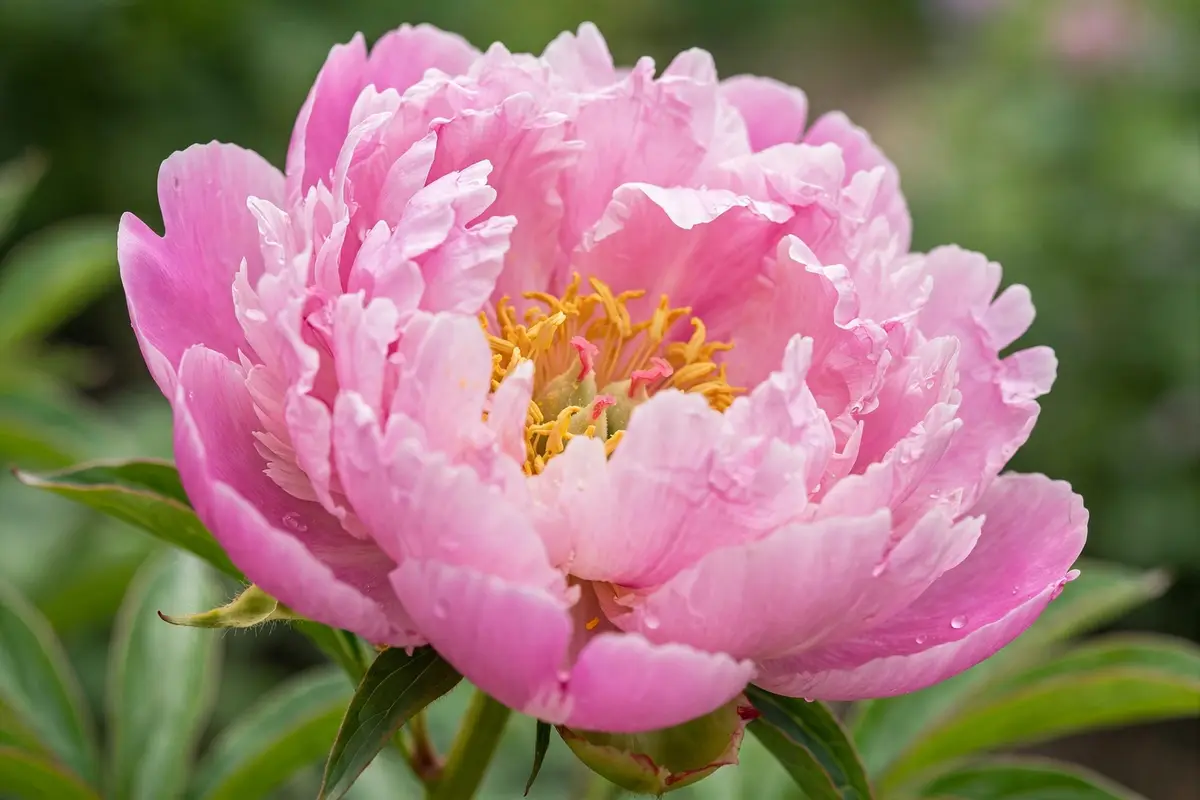
Table of Contents
- What Is the Indiana State Flower?
- The Story: 1957, the Peony Replaces the Zinnia
- The Memorial Day Flower
- Peony Meaning and Symbolism
- 6 More Indiana Flowers Worth Knowing
- How to Grow Peonies in Indiana
- Common Mistakes When Growing Peonies
- Frequently Asked Questions
What Is the Indiana State Flower?
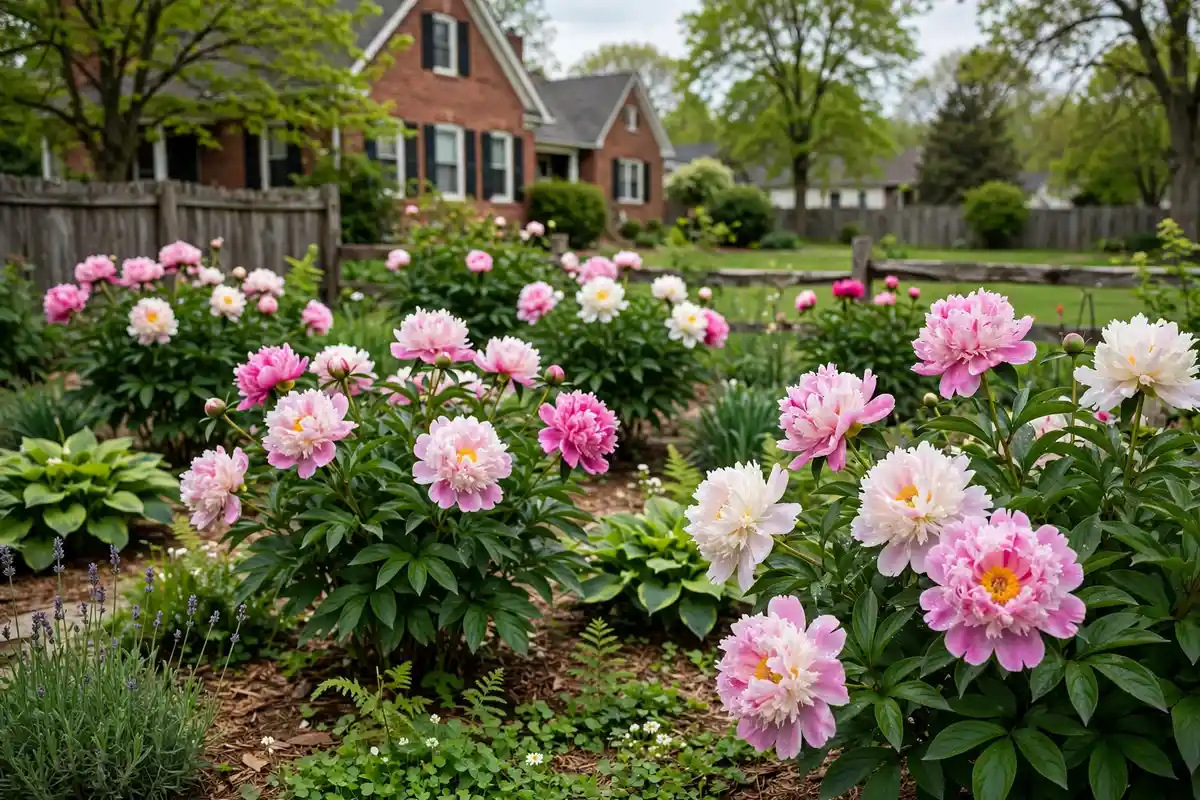
The peony is the aristocrat of the herbaceous border: a clump-forming perennial whose fat, maroon-tipped shoots push through cold spring soil and unfold into some of the largest, lushest flowers in the temperate garden — bowls of silk petals in white, blush, pink, coral and crimson, many of them sweetly scented, over handsome divided foliage that stays respectable all summer. Indiana’s adoption names the whole genus and no colour, as New York’s did for the rose — every peony in every Hoosier garden is the state flower. The state earned the choice commercially as well as sentimentally: Indiana nurseries were peony country in the flower’s American heyday, growing fields of roots for the national trade in the early 1900s. Our peony guide covers the kinds — herbaceous, tree and intersectional — their meaning and care in full. You can read more on the peony page on Wikipedia.
Indiana State Flower Quick Facts
- State flower: peony, Paeonia spp. — no variety or colour specified in the adoption.
- Adopted: 1957, replacing the zinnia (Indiana’s state flower 1931–1957).
- The flower: large single-to-fully-double blooms, 4 to 10 inches, in white, pink, coral, red and yellow forms; many fragrant.
- The plant: herbaceous perennial 2 to 3 feet; dies to the ground each winter, returns for decades — clumps of 50+ years are ordinary.
- Conditions: zones 3 to 8 (Indiana 5 to 6 is ideal); full sun, deep fertile well-drained soil; needs real winter chill to bloom well.
- The date it owns: Memorial Day — peonies are the traditional flower for decorating Indiana graves in late May.
- Good to know: the ants on peony buds are harmless nectar-drinkers, not pests and not required for opening — an old myth, backwards: the buds open fine without them.
The Story: 1957, the Peony Replaces the Zinnia
Indiana’s first floral emblem, chosen in 1931, was the zinnia — bright, easy, and (its critics said) available everywhere and special nowhere: an annual from Mexico that any state could claim. The peony, meanwhile, had quietly become Indiana’s signature plant in fact if not in law: Hoosier nurseries grew it by the field, Hoosier gardeners divided and passed it along with the family silver, and Hoosier cemeteries bloomed with it every Decoration Day. In 1957 the legislature made the paperwork match the landscape and adopted the peony. The swap put Indiana in the small club of states that have changed their flower by experience (Alabama did the same two years later, trading goldenrod for camellia) — and the zinnia, like Alabama’s goldenrod, kept its dignity and its gardens: it remains one of Indiana’s most-planted summer annuals, the respected predecessor rather than the rejected one.
The Memorial Day Flower
To understand the peony in Indiana, stand in a small-town cemetery on the last Monday of May. Decoration Day — Memorial Day’s older name, born after the Civil War — made late May the date when graves are cleaned, flagged and flowered, and in the Midwest the flower that times itself to the duty is the peony: the same clumps, planted beside family plots generations ago precisely so the blooms would be there, open like clockwork in the last week of May. Families cut them by the bucket for vases and headstones; churches fill with them; the whole state smells faintly of peony for a fortnight. It is the deepest root the flower has in Indiana — deeper than the nursery trade, deeper than the statute: the peony is how Indiana says, once a year, that its people are not forgotten.
Peony Meaning and Symbolism
The peony means prosperity, honour, romance and a happy life — in China, where it is the unofficial national flower, it is the “king of flowers”, an emblem of wealth and rank; blush peonies add bashfulness (the Greek myth has the nymph Paeonia turned into the flower for blushing), and white peonies carry apology and remembrance. Indiana’s use leans on that last note without discarding the others: a Memorial Day peony is prosperity’s flower doing remembrance’s work — the promise that a good life, honourably lived, is honoured still. Like the Pennsylvania state flower, adopted by a state that plants its values, the peony is a meaning Indiana demonstrates rather than merely declares.
6 More Indiana Flowers Worth Knowing
Limestone woods, lake dunes and prairie remnants stock the cast. The table separates them; the profiles follow. For thousands more flower names, see our flower names A to Z guide.
| Flower | Colour | Season | Character | Best use |
|---|---|---|---|---|
| Zinnia | Every colour | Summer | The respected predecessor | Cutting gardens |
| Tulip tree blossom | Yellow-green and orange | Late spring | The state tree’s flower | Shade trees |
| Fire pink | Scarlet | Spring | The woods’ jewel | Rock and woodland gardens |
| Blue flag iris | Violet-blue | Late spring | The wetland flag | Pond edges, rain gardens |
| Spicebush | Pale yellow | Early spring | The fragrant forerunner | Woodland shrubs |
| Wild ginger | Maroon, hidden | Spring | The secret flower | Groundcover in shade |
1. Zinnia — the Respected Predecessor
State flower from 1931 to 1957, and still the backbone of the Indiana cutting garden: heat-proof, butterfly-covered, and cut-and-come-again all summer. The peony took the title; the zinnia kept the workload — few demoted emblems have stayed so cheerfully employed.
2. Tulip Tree Blossom — the State Tree’s Flower
Indiana’s state tree, Liriodendron tulipifera, is one of the tallest trees in the East — and in late May it carries its namesake cups high in the canopy: greenish-yellow tulips with orange flames, full of nectar for bees. Most people meet the flowers only when they fall, intact, like dropped goblets on the lawn.
3. Fire Pink — the Woods’ Jewel
Silene virginica sets the southern Indiana woods sparking in April and May — five scarlet, notched petals on low plants over rock and slope, a hummingbird flower of jewel-box scale. Catch a colony in the Hoosier National Forest and the whole spring sharpens.
4. Blue Flag Iris — the Wetland Flag
Iris versicolor and its kin raise violet standards over Indiana marshes, pond edges and the Lake Michigan dune swales in late spring — the wild original of every bearded garden iris, content with its feet in water and its head in the sun.
5. Spicebush — the Fragrant Forerunner
Before the leaves, before almost anything, Lindera benzoin dusts Indiana’s woods with tiny pale-yellow flowers in March — and every part of the shrub is lemon-spice scented, its autumn berries feeding the birds and its leaves feeding the spicebush swallowtail. The spring that starts quietly starts here.
6. Wild Ginger — the Secret Flower
Asarum canadense carpets shady Indiana floors with heart-shaped leaves — and hides its flowers completely: small maroon jugs lying at ground level beneath the foliage, pollinated by ground beetles and early flies. A flower for people who look closely; the woods reward them.
How to Grow Peonies in Indiana
Indiana is peony country by climate: cold winters to arm the buds, rich soil, and a spring that arrives on schedule. Gardeners on r/gardening on Reddit pass on the rule as the family’s first law: “plant the eyes shallow, in the sun, in autumn — then go away for three years and let it become the oldest thing in the garden.”
Planting — Shallow Is Everything
Plant bare roots in September or October, in full sun and deep, fertile, well-drained soil, with the pink “eyes” (buds) no more than 1 to 2 inches below the surface — the single most important measurement in peony growing; deeper planting is the classic cause of a healthy clump that never flowers. Space 3 feet apart, water in well, and mark the spot: the shoots are brittle in their first springs. Container plants can go in any time, at the same shallow depth relative to their soil line.
Settling In for Decades
Expect the peony timetable: sleep the first year, creep the second, leap the third — full flowering from year three or four, and then for half a century with no division needed (peonies resent disturbance; divide only in autumn, and only when a clump truly declines or you want more plants). Cut the foliage down after frost blackens it and clear it away — sanitation is the whole programme against botrytis, the grey mould that spots buds in wet springs. Support the heaviest double kinds with a ring before the buds swell; a Memorial Day thunderstorm is the traditional test, and it comes every year.
Common Mistakes When Growing Peonies
Mistake one is planting too deep — the eyes belong within 2 inches of the surface, and a no-bloom peony is a buried peony nine times in ten (lift and replant in autumn). Mistake two is shade: under six hours of sun the buds dwindle year by year. Mistake three is impatience — digging, moving or dividing a young clump resets its three-year clock, and peonies hold grudges in seasons.
Mistake four is spring planting of bare roots, which start the race a full year behind autumn’s; in Indiana, September is peony-planting month. Mistake five is leaving spent foliage standing through winter, harbouring the botrytis that blasts next spring’s buds — cut and clear in autumn. And mistake six is killing the ants: the insects on the buds are sipping nectar, not eating the flower, and the bud would open in a sterile room. Leave them; they were Indiana’s peony companions long before we were.
Frequently Asked Questions
What is the Indiana state flower?
The peony, adopted in 1957 — the whole genus, with no variety or colour specified — replacing the zinnia, which had been Indiana’s state flower since 1931. Indiana has no separate state wildflower. If your question is not answered here, the questions about the Indiana state flower on Quora cover most of the rest.
Why did Indiana change from the zinnia to the peony?
Because the peony was already Indiana’s flower in practice: grown commercially by Hoosier nurseries, planted in gardens statewide, and woven into the Memorial Day custom of decorating graves. The 1957 adoption honoured the plant the state actually lived with — the zinnia remains a beloved Indiana summer annual.
Why is the peony the Memorial Day flower?
Its timing: in Indiana, peonies peak in the last week of May, exactly when Decoration Day (Memorial Day) calls for flowers at the cemeteries. Generations planted clumps beside family plots for the purpose, and the association — peonies for remembrance — became the flower’s Indiana meaning.
Do peonies need ants to open?
No — that is a durable myth. Ants visit the buds for the sweet nectar on their surface and do no harm (some gardeners credit them with discouraging other insects), but the flowers open perfectly well without a single ant in attendance.
How long do peonies live?
Exceptionally long: a well-sited clump flowers for 50 years and more, routinely outliving the gardener who planted it and sometimes the house it was planted beside. Indiana farmsteads are still marked by peony rows where the buildings are long gone.
Why isn’t my peony blooming?
The usual suspects, in order: planted too deep (eyes more than 2 inches down), too much shade, too young (give it three years), or moved too recently. In Indiana’s climate a correctly planted peony in sun is one of the most reliable bloomers in the garden — diagnose depth first.