Texas State Flower: The Bluebonnet, Its Legend, Trails and Growing Guide
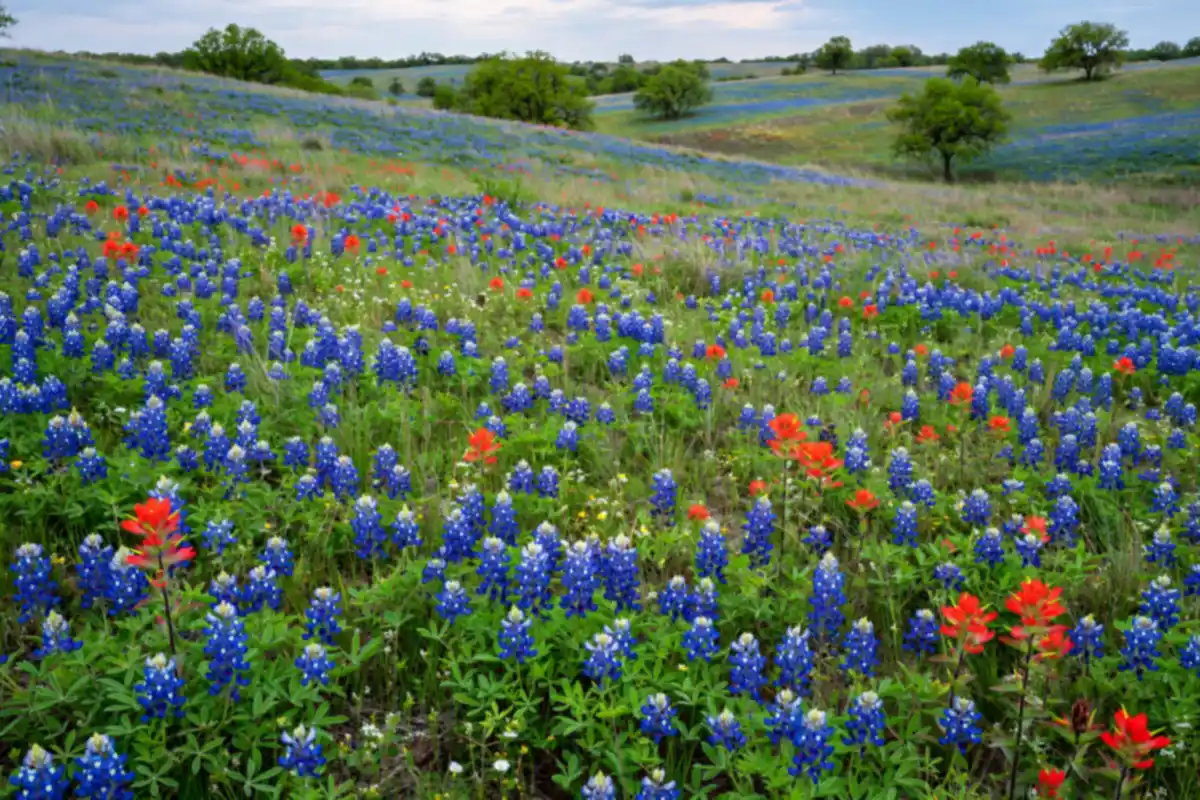
Texas does not do spring subtly. For a few weeks every year, the highways, pastures and cemeteries of the Hill Country and beyond disappear under a blue so deep it looks poured — bluebonnets, millions of them, shoulder to shoulder with red paintbrush and pink primrose. The bluebonnet is not just the Texas state flower; it is the state’s spring signature, the subject of its most retold legend, and the reason April road trips have official “bluebonnet trails” with their own festivals. It also holds a distinction no other state flower can claim: Texas argued about which bluebonnet it meant for seventy years, then gave up and adopted all of them.
This guide covers the Texas state flower and its two-step adoption story (1901 and 1971), the Legend of the Bluebonnet, what the flower means, where the famous trails run, six more Texas wildflowers, and how to grow bluebonnets — a fall-sown flower with one non-negotiable rule.
Quick Answer
The Texas state flower is the bluebonnet — and officially, it is every bluebonnet: in 1971 Texas designated all species of Lupinus found in the state (the famous Texas bluebonnet Lupinus texensis, the original 1901 choice L. subcarnosus, and their kin) as the state flower. Bluebonnets are blue, bonnet-shaped lupines flowering March to May, peaking in April; they are hardy winter annuals sown in autumn on well-drained soil in full sun, and they fix their own nitrogen like other legumes. The bluebonnet means pride, loyalty and — in its legend — sacrifice rewarded.
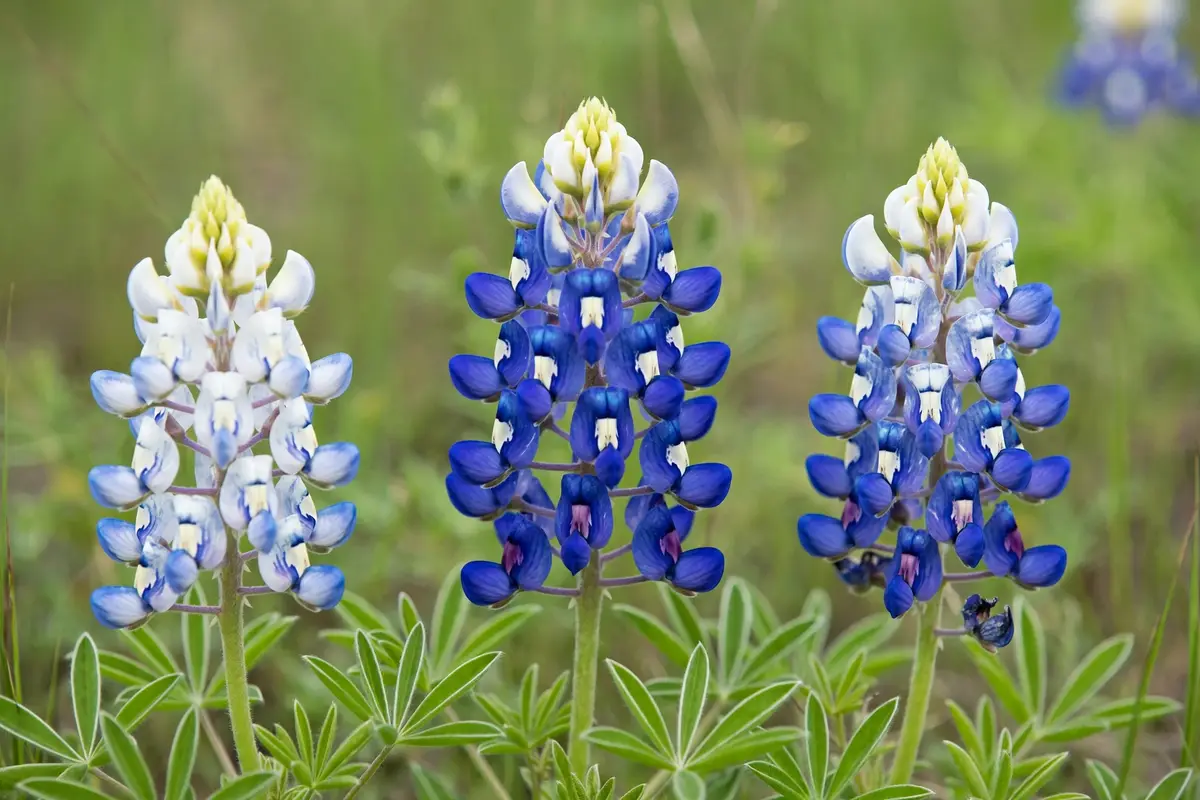
Table of Contents
- What Is the Texas State Flower?
- The Story: Two Bluebonnets and the 1971 Compromise
- The Legend of the Bluebonnet
- Texas Bluebonnet Meaning and Symbolism
- Bluebonnet Trails: Where to See Them
- 6 More Texas Flowers Worth Knowing
- How to Grow Bluebonnets
- Common Mistakes When Growing Bluebonnets
- Frequently Asked Questions
What Is the Texas State Flower?
A bluebonnet is a lupine in a bonnet: a spike of pea-flowers, each bloom shaped like the cloth sunbonnets of pioneer women, in blue with a white (sometimes yellow) eye that ages to pink-purple as the flower is pollinated — a traffic-light for bees. The plants are low winter rosettes that bolt in spring, seed freely, and vanish by summer, leaving hard seeds that wait for autumn. They belong to the pea family, Fabaceae, which makes them nitrogen-fixers: a bluebonnet field is quietly fertilizing itself. The whole genus, from garden hybrids to mountain species, is covered in our lupine flower guide; bluebonnets are its Texan branch. You can read more on the Bluebonnet page on Wikipedia.
Texas State Flower Quick Facts
- State flower: bluebonnet — all Texas Lupinus species, led by Lupinus texensis (Texas bluebonnet) and L. subcarnosus (sandyland bluebonnet).
- Adopted: 7 March 1901 (L. subcarnosus); broadened to all Texas bluebonnet species in 1971.
- Family: Fabaceae, the pea family — a nitrogen-fixing legume.
- Bloom season: March to May, peaking in April; a winter annual (germinates in autumn).
- Height: 12 to 24 inches in bloom, over a low leafy rosette.
- Soil and sun: full sun; well-drained, even poor and alkaline soils; hates wet feet.
- Good to know: seeds are hard-coated and can wait years in the soil; the eye of each flower changes colour after pollination to signal bees. Ennis is the “Official Bluebonnet Trail of Texas”; Burnet is the “Bluebonnet Capital”.
The Story: Two Bluebonnets and the 1971 Compromise
In 1901 the Texas Legislature, choosing a state flower, picked the bluebonnet — specifically Lupinus subcarnosus, the sandyland bluebonnet of the state’s sandy soils. The trouble: most Texans’ beloved bluebonnet was the bolder, bigger Lupinus texensis, the one that paints the Hill Country. For seventy years the argument simmered — garden clubs and whole towns championing their species — until 1971, when the legislature produced the most Texan solution imaginable: it declared that the state flower of Texas is the bluebonnet, meaning all bluebonnets, every Lupinus species native to the state, then and any discovered later. The law even covers future finds, which is why Texas is said to have adopted not a flower but a family, sight unseen. Around the same era, the wildflower plantings championed by Lady Bird Johnson — and the highway beautification work that followed — spread the bluebonnet along thousands of miles of Texas roadsides, where the spring show now runs on public land for everyone.
The Legend of the Bluebonnet
Every Texas schoolchild learns it, in the retelling made famous by Tomie dePaola: in a time of drought and famine, the People are told that the Great Spirit asks a burnt offering of the most valued possession in the tribe. A small girl — an orphan, in many versions — owns one treasure: a doll dressed in buckskin with a bright blue feather from a jay. In the night she climbs the hill alone, burns the doll, and scatters its ashes to the four winds. In the morning the hills are covered with blue flowers the colour of the feather, the rains come, and the people name the flower for the bonnet-shaped bloom that remembers a child’s sacrifice. As legend it does what the best state-flower stories do: it makes the flower mean something a whole community can carry — here, generosity repaid, and courage in a small person’s size.
Texas Bluebonnet Meaning and Symbolism
The bluebonnet means Texas, first of all — pride, loyalty and home, the way the California state flower means California. Underneath the patriotism sit the older layers: the legend’s lesson of sacrifice and gratitude, and the language-of-flowers sense of the lupine family — imagination, admiration and recovery. Bluebonnets also mark time the way few symbols do: a bluebonnet photograph in a family album dates itself, because the bloom means April, means spring, means the year the picture was taken. It is a flower Texans abroad ask after the way other people ask after the weather at home.
Bluebonnet Trails: Where to See Them
April is the month, and the map is generous. Ennis, south of Dallas, maintains over 40 miles of mapped Bluebonnet Trails — the oldest official trails in the state — with a festival each April. Burnet, in the Hill Country, calls itself the Bluebonnet Capital of Texas and holds its Bluebonnet Festival the second weekend of April. The Willow City Loop near Fredericksburg is the connoisseur’s drive in a good year, and the Lady Bird Johnson Wildflower Center in Austin shows bluebonnets with the whole spring cast in a garden setting. Bloom timing shifts with the winter rains — a dry autumn means a thin April — so check local reports before a long drive, and follow the standing etiquette: park legally, walk gently, never trample the seed-makers, and take the photograph from the edge of the field.
6 More Texas Flowers Worth Knowing
The bluebonnet leads a famous supporting cast. The table separates them; the profiles follow. For thousands more flower names, see our flower names A to Z guide.
| Flower | Colour | Season | Character | Best use |
|---|---|---|---|---|
| Indian paintbrush | Scarlet-orange | Spring | The bluebonnet’s partner | Wild meadows |
| Pink evening primrose | Pink cups | Spring–summer | The roadside carpet | Banks, wild edges |
| Texas mountain laurel | Violet, grape-scented | Spring | The perfume shrub | Screens, small tree |
| Prickly pear flower | Yellow (state plant’s bloom) | Late spring | Silk on a cactus | Dry gardens |
| Blackfoot daisy | White, gold centre | Spring–frost | The marathon bloomer | Rock gardens, pots |
| Winecup | Magenta goblets | Spring–summer | The trailing jewel | Groundcover, walls |
1. Indian Paintbrush — the Red Beside the Blue
The bluebonnet’s immortal partner: Castilleja indivisa flames scarlet-orange in the same fields at the same weeks, and the red-white-and-blue spring photographs of Texas are really red-paintbrush-and-blue. It is a hemiparasite — it taps the roots of grasses for part of its living — which is why it resists tidy garden cultivation and belongs to the wild meadow.
2. Pink Evening Primrose — the Daytime “Buttercup”
Texans call it buttercup (it is neither); Oenothera speciosa opens pink-veined cups by day along roadsides and old fields, spreads enthusiastically by runners, and asks for nothing — a beautiful thug for wild corners, kept out of polite beds by anyone who has met it.
3. Texas Mountain Laurel — the Grape-Soda Tree
Not a laurel and barely a mountain plant, Dermatophyllum secundiflorum is a slow evergreen small tree whose violet wisteria-like clusters in spring smell precisely like grape soda — the most recognizable perfume in Texas. Glossy leaves, orange-red seeds (poisonous — admire only), and patience required: it grows at its own dignified pace.
4. Prickly Pear Flower — Silk on Armour
The state plant of Texas is the prickly pear cactus, and for a few late-spring weeks it opens satiny yellow (sometimes peach or red) cups above the spines — a flower as delicate as the plant is not. Pollinators crowd in; gardeners in dry country plant whole fences of it.
5. Blackfoot Daisy — the Marathon Bloomer
Melampodium leucanthum is the hardest-working small flower in Texas: white daisies with gold centres from spring to frost on a mound of narrow leaves, in heat, drought and poor limestone soil, asking only drainage. If bluebonnets are April, blackfoot daisy is the whole rest of the year.
6. Winecup — the Trailing Jewel
Callirhoe involucrata spills magenta goblets over banks and walls from spring into summer, each flower a small chalice of wine-purple with a white eye. A Texas-Oklahoma native groundcover that behaves like it was bred for gardens — because in effect, roadsides bred it.
How to Grow Bluebonnets
One rule runs the whole crop: bluebonnets are sown in autumn, not spring. Gardeners on r/gardening on Reddit repeat it like a proverb: “plant in fall, or don’t bother.”
Sowing and Position
Scatter seed in autumn (September to November in Texas; in cold-winter regions, late autumn so it germinates as a spring rosette, or very early spring with scarified seed) on raked, well-drained soil in full sun — the poorer and more alkaline the better. The seeds wear a hard coat: bought seed is usually scarified (nicked) to speed germination, and home seed germinates best after a winter outdoors breaking the coat down. Press seed into contact with the soil, water to settle, then let winter do the work — the plants grow as low green rosettes through the cold months, building the root that powers April.
Care and Self-Sowing
Almost none: no fertilizer (they fix their own nitrogen — feeding makes leaves), no watering beyond winter rain except in drought, no deadheading. The one piece of timing that matters comes at the end: let the pods dry and rattle on the plant before mowing or tidying, so the seed falls where next year’s field will be. Bluebonnets persist as a seed bank; a bed managed this way renews itself for decades.
Common Mistakes When Growing Bluebonnets
Mistake one is sowing in spring and harvesting disappointment: unscarified spring seed mostly waits for next year, and late rosettes bloom weakly. Mistake two is rich, wet soil: bluebonnets rot in soggy ground and flop in fed ground — drainage and poverty are the prescription. Mistake three is shade: roadside fields are the hint; this is a full-sun plant.
Mistake four is tidying too early — mowing in May, before the pods ripen, ends the line, since a bluebonnet planting lives by its seed bank. Mistake five is expecting them to behave like bedding plants in summer: the annuals die after seeding, on schedule, and the bed belongs to something else by June. And mistake six is buying a generic “wildflower mix” for the look: it may contain a pinch of bluebonnet among thirstier species; buy straight bluebonnet seed, scarified, and sow it alone and thick.
Frequently Asked Questions
What is the Texas state flower?
The bluebonnet — all of them. Texas first adopted Lupinus subcarnosus on 7 March 1901, then in 1971 extended the honour to every Lupinus species found in the state, including the famous Texas bluebonnet, L. texensis. If your question is not answered here, the questions about the Texas state flower on Quora cover most of the rest.
Is it illegal to pick bluebonnets in Texas?
There is no Texas law specifically against picking bluebonnets — the famous ban is a myth. What is illegal is the usual trio: trespassing on private land to reach them, damaging property, and stopping unsafely on highways. The flowers are best left standing anyway: each picked spike is seed the field will not make.
When do bluebonnets bloom in Texas?
March to May, peaking in April. The season starts in South Texas and rolls north; timing and density depend on autumn and winter rain. The Ennis trails and Burnet festival are timed to the usual early-to-mid-April peak.
Why are there so many kinds of bluebonnet?
Because Texas is big and its soils vary: at least five or six Lupinus species are native, each fitted to its ground — sandyland bluebonnet to the sands, Texas bluebonnet to the limestone hills, big bend bluebonnet to the desert west. The 1971 law adopted them all rather than choose among regions.
Can I grow bluebonnets outside Texas?
Yes, anywhere with full sun, sharp drainage and a cool season for the rosette stage (roughly zones 6 to 10). Sow scarified seed in autumn where winters are mild, or in very early spring further north; the plant is an annual that finishes by summer, and it self-sows where it is happy.
What is the Legend of the Bluebonnet about?
A Comanche legend, retold by Tomie dePaola, in which a young girl sacrifices her most treasured possession — a doll with a blue feather — as a burnt offering during a drought, and bluebonnets bloom where the ashes fell, followed by rain. It is Texas’s best-known flower story, and it gives the bluebonnet its meaning of sacrifice rewarded and generosity honoured.