
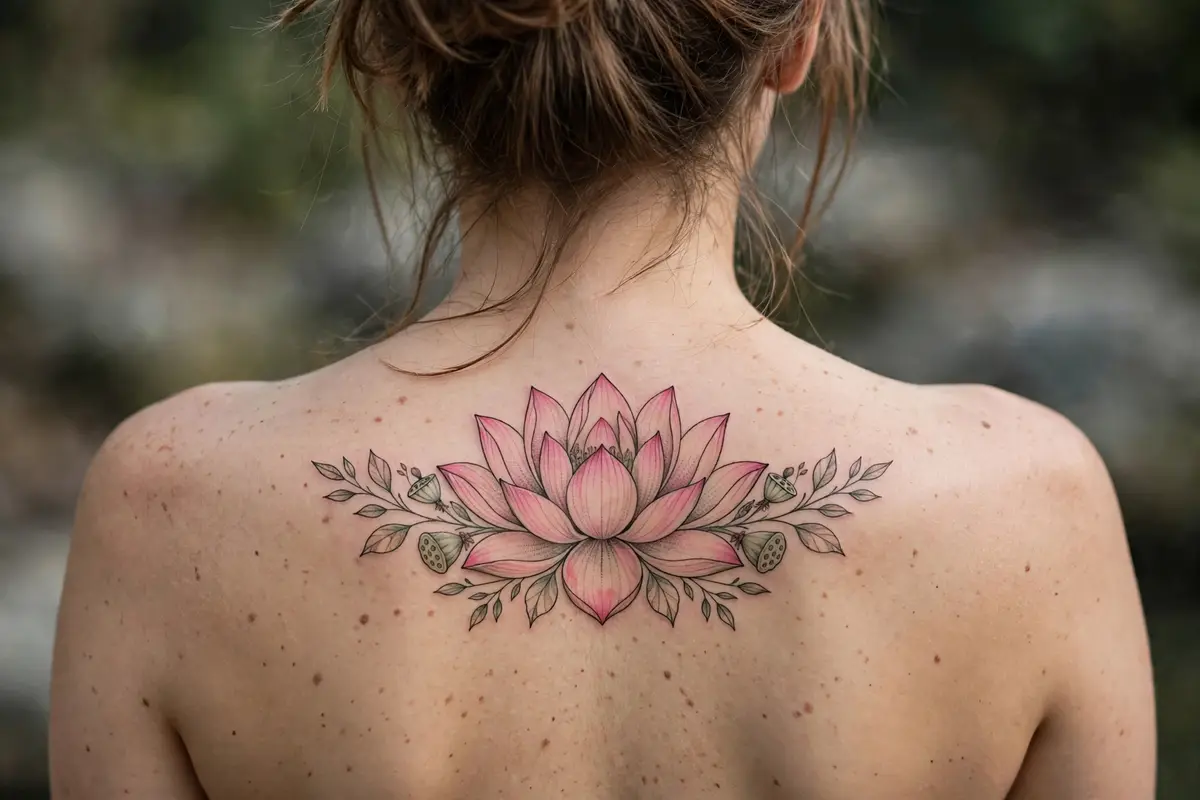
Lotus Flower Tattoo: Meaning, Design Ideas and Placement Guide
Some tattoos are decoration. The lotus flower tattoo is a declaration. For thousands of years the lotus has stood for one of the most hopeful ideas in any culture that grows it: that a beautiful thing can rise out of muddy water, open clean, and do it again every single morning. It is the most meaningful flower tattoo in the world — symmetrical enough to sit perfectly on a spine or sternum, simple enough to shrink to a wrist, and layered enough that artists can draw it a thousand ways without repeating themselves. If you are choosing a first flower tattoo, or the one that has to carry a story, this is the design the rest are measured against.
This guide covers what a lotus flower tattoo means, the symbol’s roots, what each colour says, six design ideas from minimalist to mandala, the best placements and what they communicate, honest notes on size, pain and cost, and the aftercare that keeps fine lines fine.
Quick Answer
A lotus flower tattoo means purity, rebirth and rising above struggle — the flower grows from mud, through murky water, and opens unstained in the sun, closing and sinking at night to rise again at dawn. In Hindu and Buddhist tradition it also means spiritual awakening and compassion. The classic design is an eight-petal lotus, drawn symmetrically, and it works at almost any size: a coin-sized wrist piece, a sternum centrepiece, or a full spine of unfolding blooms. Colours carry their own meanings — pink for compassion, white for purity, blue for wisdom, black for strength.
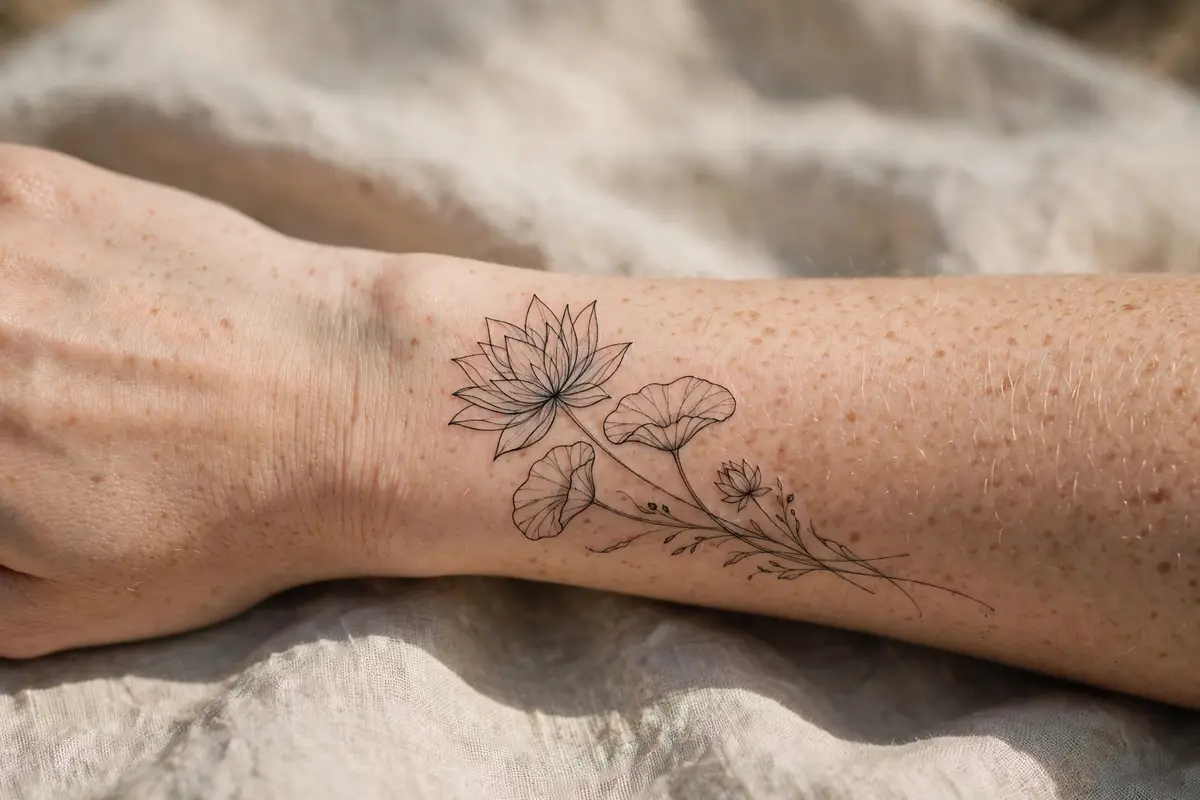
Table of Contents
- What Does a Lotus Flower Tattoo Mean?
- The Story Behind the Symbol
- Lotus Tattoo Colours and Their Meanings
- 6 Lotus Flower Tattoo Design Ideas
- Best Placements — and What They Say
- Size, Pain and Practicalities
- Aftercare: The First Two Weeks
- Frequently Asked Questions
What Does a Lotus Flower Tattoo Mean?
The lotus tattoo means, at its core, beauty that adversity could not stain. The plant roots in pond mud, pushes a stem up through cloudy water, and opens a flower so clean that water rolls off its petals carrying the dirt away — botanists literally call it the lotus effect. Wear that on skin and it says: I came through something, and I am not marked by it. Layered on that are the older meanings: purity of body and mind, rebirth and new beginnings (the flower’s daily cycle of sinking and rising is a sunrise in plant form), resilience, calm, and — from its sacred roots — spiritual awakening. It is also, quietly, one of the most chosen tattoos after loss, divorce, recovery and survival: the flower that opens anyway. For the plant itself and its full symbolism, see the sacred lotus page on Wikipedia.
Lotus Flower Tattoo Quick Facts
- Core meanings: purity, rebirth, resilience, rising above struggle, spiritual awakening.
- The classic form: eight petals — in Buddhist symbolism, the Noble Eightfold Path; also cosmic harmony.
- Roots: sacred in Hinduism and Buddhism for 3,000+ years; a rebirth symbol in ancient Egypt too.
- Best placements: spine, sternum, upper back, forearm, wrist, ankle, thigh.
- Size range: from a 2 cm micro lotus to a full-back mandala — few designs scale this well.
- Colour meanings: pink = compassion, white = purity, blue = wisdom, red = love, purple = spirituality, black = strength.
- Good to know: an open lotus (petals spread) signals an awakened, sharing heart; a closed bud signals potential and beginnings — choose the stage that matches your story.
The Story Behind the Symbol
The lotus is not a metaphor someone invented for tattoos; it is one of humanity’s oldest sacred images. In Hindu tradition the goddess Lakshmi stands on a lotus, Vishnu rests with one blooming from him, and creation itself unfolds from a golden lotus. In Buddhism the Buddha is shown seated on lotus thrones, and the mantra “Om Mani Padme Hum” names the jewel in the lotus — awakening found at the heart of an ordinary flower. Egypt, working the blue water-lily it called lotus, tied the bloom to the sun and rebirth: closed at night, open at dawn, the world remade daily. The tattoo inherits all of it. When you wear a lotus you are not borrowing a trend — you are joining a 3,000-year-old queue of people who looked at a flower rising out of mud and saw the truest picture of a life. Treat sacred combinations with respect (see the FAQ), and the symbol remains what it has always been: an honour to carry.
Lotus Tattoo Colours and Their Meanings
A lotus tattoo speaks twice — once in shape, once in colour. Pink is the supreme lotus, the Buddha’s own: compassion, divinity, unconditional love — the most traditional choice. White means purity, peace and a clear mind; it is often drawn as white ink or fine black line, since true white pigment fades fast (an honest artist will tell you). Red turns the meaning toward the heart: love, passion, devotion. Blue — the rarest lotus in nature and symbol — means wisdom, knowledge and self-control. Purple carries spirituality and royalty, a favourite for awakening stories. Black and grey lotuses mean strength, survival and remembrance: the same flower, drawn in mourning’s palette, for the chapters that were survived rather than celebrated. And watercolour washes behind a black outline mean creativity and freedom — the meaning held, the rules loosened.
6 Lotus Flower Tattoo Design Ideas
From a two-line whisper to a back-piece mandala, the lotus redraws itself endlessly. The table compares the main directions; the profiles follow. For the flower’s wider family and hundreds more blooms, see our flower names A to Z guide.
| Design | Style | Best placement | Size sweet spot | Character |
|---|---|---|---|---|
| Fine-line lotus | Minimalist single needle | Wrist, ankle, behind ear | 2–5 cm | The quiet statement |
| Mandala lotus | Dotwork and geometry | Upper back, sternum | 10–20 cm | The meditator |
| Unalome lotus | Line and symbol | Spine, sternum, finger | 5–12 cm | The path to awakening |
| Watercolour lotus | Painterly colour wash | Shoulder, thigh, forearm | 8–15 cm | The free spirit |
| Lotus and koi | Japanese-inspired | Arm, back, calf | 15 cm + | Struggle into strength |
| Blackwork lotus | Bold black, negative space | Forearm, thigh, back | 8–20 cm | The survivor’s emblem |
1. Fine-Line Lotus — the Quiet Statement
A single needle, a few unbroken lines, no shading: the minimalist lotus is the most-requested small flower tattoo of the decade. It reads instantly, heals fast, and suits wrists, ankles and collarbones. One honesty note: hair-fine lines soften as skin ages — a good artist draws them a fraction bolder than the reference photo suggests, so the design is still crisp in ten years.
2. Mandala Lotus — the Meditator
The lotus opened into a mandala — rings of dotwork petals, geometric halos, sometimes a full back blooming between the shoulder blades. It is the design that most honours the flower’s sacred geometry, and its symmetry flatters the centre lines of the body: sternum, spine, solar plexus. Expect multiple sessions for large versions; the dots are worth it.
3. Unalome Lotus — the Path to Awakening
The unalome — the spiral-and-winding-line symbol of the path to enlightenment, its dots marking life’s twists — crowned by a small lotus, is the meaning-densest small tattoo in the lotus family. Placed down the sternum or spine, the line reads as your own road: loops for the hard years, the lotus for where they were leading.
4. Watercolour Lotus — the Free Spirit
Splashes of pink, violet and teal wash behind or through a fine black outline, as if the flower were painted on wet paper. Watercolour work photographs beautifully and ages softer than any other style — edges blur gently over the years — so choose it for the feeling, and plan on the design reading as art rather than diagram at year ten.
5. Lotus and Koi — Struggle into Strength
In Japanese-inspired work, the koi that swims upstream and leaps the waterfall becomes a dragon — and the lotus it circles is the purity it strives toward. Together they tell the full story in one piece: effort below, blossoming above. A favourite for arms, calves and backs, and the most narrative design in this list.
6. Blackwork Lotus — the Survivor’s Emblem
Solid black petals, bold negative-space highlights, no colour to hide behind: the blackwork lotus is the choice for memorial pieces, recovery milestones and anyone whose story is strength rather than serenity. It also ages the best of all six — black holds — and pairs cleanly with script, dates and coordinates.
Best Placements — and What They Say
Placement is the tattoo’s second language. Spine: a lotus or a descending row of them sits on the body’s centre line, echoing the chakras the flower represents — the most symbolic placement of all. Sternum/underbust: a mirrored lotus follows the ribs’ natural frame; intimate, mostly private, revealed on your terms — and one of the tenderest spots to tattoo. Upper back, between the shoulders: the classic mandala lotus canvas, flat and symmetrical. Forearm: the public declaration — visible to you all day, which is exactly why reminder-tattoos live there. Wrist and ankle: small, elegant, easily covered by a watch strap or sock when needed. Behind the ear and fingers: micro lotuses, discreet and charming — with the honest caveat that finger tattoos fade fastest of all and need touch-ups to stay legible. Choose by two questions: who is this tattoo for (you, or the world), and how often do you want to see it?
Size, Pain and Practicalities
The lotus scales better than almost any design, but physics still applies: tiny tattoos must be simple tattoos. Under 4 cm, keep the petal count low and the lines clean, or the bloom closes into a blob as it ages. Pain follows the map you would expect — outer forearm, outer thigh and calf are the mild zones (most people rate them 3–4 out of 10); wrist and ankle are moderate (5–6); sternum, ribs, spine and feet are the sharp end (7–9), and sternum pieces often need a steady breathing plan more than a high pain threshold. Cost is driven by size, colour and the artist’s booking rate rather than by the flower itself: small fine-line pieces often sit at a studio’s minimum charge, while mandala and colour work is priced by the piece or the session. The two practical rules that save tattoos: book an artist whose portfolio already contains healed fine-line or dotwork (fresh photos flatter everyone), and ask to see the stencil on your skin, moved and resized, before a single line is permanent — a lotus is symmetry, and symmetry must be checked standing, not lying.
Aftercare: The First Two Weeks
A tattoo is a beautiful wound, and the first fortnight decides how it ages. The shared experience on r/tattoos on Reddit matches every reputable studio’s sheet: keep the wrap on as directed, then wash gently with lukewarm water and fragrance-free soap, pat dry, and apply a thin — thin — layer of the recommended balm two or three times a day. The tattoo should never be shiny with product or dry enough to crack. It will flake like sunburn around days four to seven; let flakes fall on their own, because picking them pulls ink. No soaking (showers fine, baths and pools not), no sun on the piece, no tight gym clothes grinding across it, and hands off except when clean and washing it. Fine-line and dotwork lotuses often look fully settled at two weeks; colour pieces take three to four. Once healed, sunscreen is the tattoo’s pension plan — UV is the number one fader of every design in this guide, and a protected lotus keeps its edges for decades.
Frequently Asked Questions
What does a lotus flower tattoo mean?
Purity, rebirth and resilience: the flower rises from mud through murky water and opens unstained, so the tattoo says its wearer came through difficulty without being defined by it. In its Hindu and Buddhist roots it also means spiritual awakening and compassion — pink lotuses especially. The birth-flower side of tattoo symbolism is a whole family of designs; our birth flowers guide explains the monthly meanings people combine with lotus work. If your question is not answered here, the questions about lotus flower tattoos on Quora cover most of the rest.
Is a lotus tattoo appropriate if I am not Hindu or Buddhist?
For most people and most designs, yes — the lotus has been a shared human symbol across Egypt, India, China and Japan for millennia, and floral lotus designs are worn worldwide with respect. The care point is combination: pairing the flower with deity imagery or sacred text from a faith that is not yours deserves a pause and a conversation. A lotus on its own is a flower with a beautiful meaning; wear it like one.
How much does a lotus flower tattoo cost?
It depends on size, style, city and the artist’s rate. Small fine-line lotuses are commonly charged at a studio minimum (often roughly the price of one hour’s work), palm-sized colour pieces at a few hours’ rate, and large mandala back pieces by the session across several sittings. Get the quote after the design consultation — any honest studio prices the drawing in front of you, not the idea of it.
Does a lotus tattoo hurt?
It hurts like any tattoo in the same spot: mildly on the outer forearm or thigh, moderately on the wrist or ankle, and sharply on the sternum, ribs or spine. The lotus itself brings no extra pain — its lines are no deeper than any other design’s — and small pieces are usually over in under an hour.
What is the difference between a lotus tattoo and a water lily tattoo?
The plants are cousins in look, strangers in family. A true lotus (Nelumbo) holds its flowers and round leaves high above the water on stalks, with a distinctive shower-head seed pod at the flower’s centre; a water lily (Nymphaea) floats its blooms on the surface. Tattoo references mix them constantly — the water lily is also July’s birth flower, as our July birth flower guide explains. If the sacred-lotus meaning is the point, check your design has the raised, symmetrical Nelumbo form.
How small can a lotus tattoo be?
Around 2 cm for a single simple bloom with three to five petals — below that, or with more detail squeezed in, skin’s natural ink spread will blur it within a few years. If tiny is the dream, simplify the design, place it somewhere stable like the inner wrist or ankle, and choose an artist who specialises in micro work.
2 Comments