Balloon Flower: Meaning, Types and How to Grow Platycodon
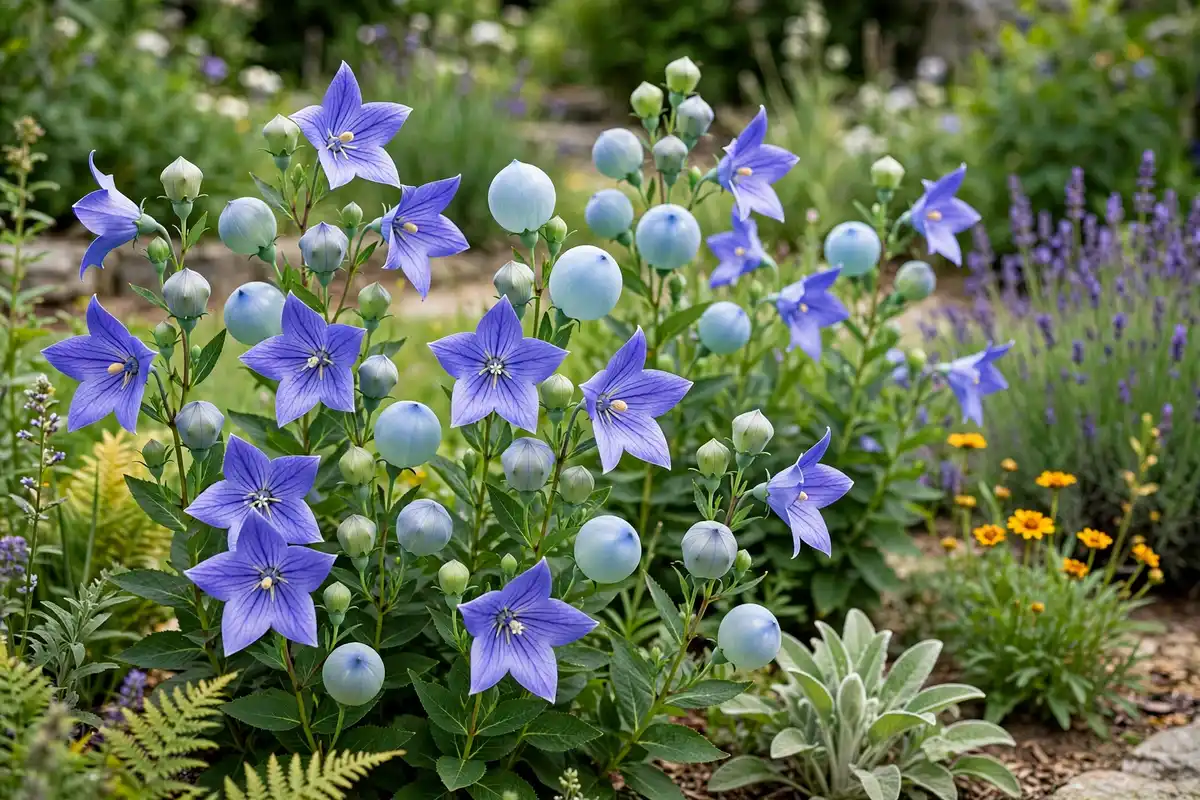
Every summer, the balloon flower performs the garden’s favourite party trick: its buds swell into perfect little balloons — which children cannot resist popping between finger and thumb — and then burst open into starry blue bells. It is a flower with two acts, and the bud is as loved as the bloom.
Behind the trick is one of the toughest, longest-lived perennials you can plant: a plant that shrugs off cold, heat and neglect, feeds Korean kitchens with its roots, and then has the nerve to terrify its owner every spring by “dying” — it is simply the last plant in the border to wake up. This guide covers what a balloon flower is, the types worth growing, what it means, and how to grow it without digging it up by accident in April.
Quick Answer
A balloon flower is Platycodon grandiflorus, a hardy East Asian perennial in the bellflower family whose unopened buds inflate like balloons before opening into blue-violet stars. It grows 1 to 3 feet tall (dwarf forms 8 to 10 inches), flowers in mid-to-late summer in USDA zones 3 to 8, and wants full sun and well-drained soil. Two rules define it: plant it once and never move it (the fleshy taproot hates disturbance), and mark its spot — it emerges very late in spring and is easily dug up by mistake.
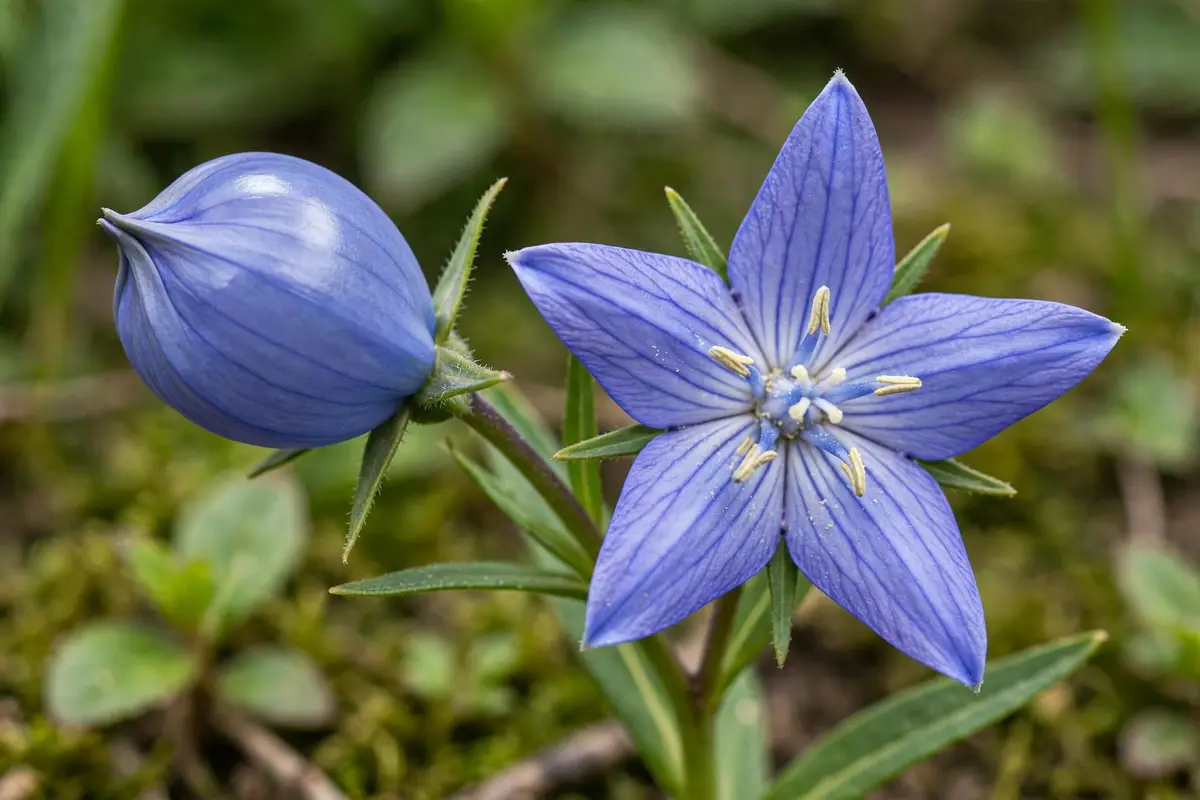
Table of Contents
- What Is a Balloon Flower?
- Types of Balloon Flower and 6 Kinds Worth Growing
- Balloon Flower Meaning and Symbolism
- Balloon Flower Colours and Their Meanings
- How to Grow Balloon Flowers
- Common Mistakes When Growing Balloon Flowers
- The Spring Panic: Why Balloon Flowers Emerge Late
- Frequently Asked Questions
What Is a Balloon Flower?
Platycodon grandiflorus is the only species in its genus — Platycodon means “broad bell” in Greek — a member of the bellflower family, Campanulaceae, native to East Asia: China, Korea, Japan and eastern Siberia. The plant forms a clump of blue-green, toothed leaves on upright stems, topped through summer by the famous buds. Each bud inflates as the fused petals grow, seams showing like a hot-air balloon’s panels, until the pressure opens it into a five-pointed star of a bell, two to three inches wide, with prominent veining and a pale centre. You can read more on the Platycodon page on Wikipedia.
In its homelands the plant is food and medicine as much as flower: in Korea the root, doraji, is a standard vegetable — peeled, shredded and seasoned, or simmered in syrups and teas — and traditional medicine across the region has used it for centuries for coughs and chest complaints. In the garden, the same deep, fleshy taproot that feeds kitchens explains the plant’s personality: it anchors for decades, tolerates drought once settled, and bitterly resents being moved. One more family trait to know: cut stems bleed a milky sap, which is why florists sear the ends (see the growing section).
Balloon Flower Quick Facts
- Botanical name: Platycodon grandiflorus (the only Platycodon species).
- Family: Campanulaceae, the bellflower family.
- Hardiness: perennial, USDA zones 3 to 8.
- Height: 1 to 3 feet (dwarfs 8 to 10 inches).
- Bloom time: mid to late summer (July to September), when blue is scarce.
- Sun and soil: full sun (light shade tolerated); fertile, well-drained soil.
- Good to know: emerges very late in spring — mark the spot; taproot hates transplanting.
Types of Balloon Flower and 6 Kinds Worth Growing
One species, but breeders have built a useful wardrobe of heights and forms. The table covers the six groups worth knowing; the profiles follow. For the full list of flower names, see our flower names A to Z guide.
| Type | Height | Flower | Bloom time | Best use |
|---|---|---|---|---|
| Classic blue species | 2–3 ft | Blue-violet single stars | Mid-late summer | Borders, the original |
| Astra series (dwarf) | 8–10 in | Blue, pink, white singles | Summer | Pots, edging, rock gardens |
| Fuji series | 2–2½ ft | Blue, pink, white singles | Summer | Cutting and borders |
| ‘Mariesii’ | 12–18 in | Rich blue, compact | Summer | Small gardens, front borders |
| ‘Sentimental Blue’ | 6–8 in | Blue-violet, profuse | Summer | Containers, troughs |
| Double forms (‘Hakone’) | 18–24 in | Double-layered stars | Summer | Novelty, close display |
1. The Classic Blue Species
The plant itself, unimproved: two to three feet of wiry stems carrying balloon after balloon of blue-violet stars, each veined darker, opening in succession for weeks. The species is the toughest and most perennial form, and its colour is one of the great genuine blues of the summer garden — the family of shades celebrated in our blue flowers guide. Give it room and a decade; it will still be there, bigger, when fussier plants have gone.
2. Astra Series — the Dwarf Standards
The container revolution for this plant: genetics that keep plants at 8 to 10 inches, stocky and self-supporting, in blue, pink and white, with the full balloon act intact. Astras are the balloon flowers of pots, window boxes and the rock garden, and the ones sold in spring as instant patio colour. In the ground they make a neat flowering carpet edge for a path — poppable at exactly toddler height, which cuts both ways.
3. Fuji Series — the Cut-Flower Strains
Tall, straight-stemmed selections (blue, pink and white) bred for the vase: the florist strains. Fuji stems hold their opened stars and unopened balloons together in an arrangement for a week or more — if the cut end is seared or dipped in boiling water to seal the milky sap (details in the growing section). As border plants they are indistinguishable from the species in quality and reliably upright with support.
4. ‘Mariesii’ — the Compact Classic
The Victorian garden favourite that never left: a naturally compact form, 12 to 18 inches, with rich blue flowers of excellent substance over a long season. ‘Mariesii’ needs no staking, fits the front or middle of a border, and has been the connoisseur’s default balloon flower for over a century. If you plant one balloon flower and garden small, plant this one.
5. ‘Sentimental Blue’ — the Miniature
The smallest of all, six to eight inches, smothered in blue-violet stars over a long season: the balloon flower as an alpine. ‘Sentimental Blue’ is made for troughs, sinks and the front inch of a border, and it is the form most likely to be mistaken for something delicate. It is not: same taproot, same constitution, miniature scale.
6. Double Forms — ‘Hakone Blue’ and ‘Hakone White’
The curiosity: two stars nested one inside the other, ten pointed petals instead of five, giving a ruffled, almost peony-like centre to the opened flower (the buds still balloon as they should). Doubles open a touch slower and read best at close range — a container by a seat, a posy on a table. They come in blue and white and are the balloon flowers plant collectors ask for by name.
Balloon Flower Meaning and Symbolism
The balloon flower means everlasting love and devotion — a meaning rooted in its nature: a plant that returns faithfully for decades, unchanged, earns the romantic titles. Victorian floriography gave it honesty and obedience as well, and in Japan the flower (kikyo) is a beloved emblem: one of the seven flowers of autumn, the five-petalled star appears in family crests and was the crest of the ill-fated Akechi Mitsuhide, which layers a note of doomed loyalty into its Japanese symbolism. In Korea, doraji carries its own folk songs — the root-digger’s ballad “Doraji” is one of the most famous Korean folk songs of all — tying the flower to home, endurance and honest work.
Modern gifting keeps the headline: balloon flowers say “my love is everlasting” — and the plant itself, given potted, literally backs the promise up for twenty years. The buds add a private second meaning understood by every child: anticipation, the joy of something about to open.
Balloon Flower Colours and Their Meanings
The palette is small but the blues are priceless:
- Blue-violet balloon flower — everlasting love and constancy: the original colour, and the one the meanings attach to.
- White balloon flower — purity and honesty: the crest-form colour, elegant and cool in summer borders.
- Pink balloon flower — gentle affection and gratitude: the softest form of the message, in the Astra and Fuji series.
- Double balloon flower — abundance: two stars in one flower, for feelings that will not fit in a single bloom.
How to Grow Balloon Flowers
Balloon flowers are genuinely easy — sun, drainage, patience — with two personality quirks to design around. Gardeners on r/gardening on Reddit repeat the community mantra: “mark the spot in autumn, thank yourself in April”.
Planting: Once, in the Right Place
Choose the spot as a permanent one. Balloon flowers grow from a fleshy taproot that snaps and sulks when moved, so plant young pot-grown plants where they will live, in spring or early autumn, at the same depth, and water them in well for the first season. From seed, sow in spring and be patient — seed-grown plants take two to three years to flower at full strength, and do not always come true to colour. Space tall forms 12 to 18 inches apart; dwarfs 8 to 10.
Sun, Soil and Water
Full sun produces the most flowers and the stockiest plants; light afternoon shade is tolerated and keeps blues richer in hot climates. The soil should be fertile and sharply drained — the taproot rots in winter wet — but the plant is not fussy about pH. Once established it is drought-tolerant thanks to that root; new plants need a first season of regular water. A spring mulch keeps the crown cool and the weeds down — and reminds you where the plant is sleeping.
Staking, Pinching and Deadheading
Tall forms in rich soil can flop by August. Two fixes: grow them through a low support or among sturdy neighbours (the classic border solution, alongside companions like the columbine in the spring-to-summer relay), or pinch the stems by a third in late spring (the “Chelsea chop”), which costs a week’s flowering and buys a compact, self-supporting plant. Deadhead spent stars promptly and flowering continues into September; leave the last seed pods if you enjoy their winter shape.
Cutting Balloon Flowers
Cut when the balloons are coloured but unopened — they open in the vase. Sear each stem end for 20 seconds in a flame or dip in boiling water to seal the milky sap; unsealed stems wilt their neighbours’ hopes and cloud the water. Treated this way, balloon flowers last a week or more in arrangements, balloons and stars together.
Common Mistakes When Growing Balloon Flowers
The classic mistake is digging the plant up in spring because it shows no life while everything else is up — it is asleep, not dead (next section). The second is trying to move or divide an established plant: the taproot breaks, and years of strength go with it. Propagate by seed or basal cuttings in spring instead.
The third mistake is rich, wet kindness: soggy winter soil rots the crown, and overfed plants flop. The fourth is planting the tall species at the border’s front, where its bare late spring patch and late height confuse the design — mid-border is its home, with spring plants in front to fill the gap. And the fifth is letting grandchildren — or oneself — pop every bud: each popped balloon is a flower that never opens. Pop a few; leave the show.
The Spring Panic: Why Balloon Flowers Emerge Late
Every April, the same emergency: the balloon flower bed is bare earth, the neighbouring perennials are a foot tall, and the gardener concludes the plant died in winter. It almost never has. Balloon flowers are among the last perennials to emerge — often not until late spring, weeks after the border wakes — because the crown waits for genuinely warm soil before spending its reserves. The plant is not struggling; it is prudent.
The practical defences are simple. Mark the crown in autumn with a label, a ring of pebbles, or the mulch mound trick. Do not dig or plant annuals in the “empty” spot. And if you must check, scratch gently at the marked place: a firm, pale crown bud is a living plant. When the shoots do come, they come fast — the summer show loses nothing by the lie-in.
Frequently Asked Questions
Is the balloon flower a perennial?
Yes — one of the longest-lived. A well-placed balloon flower returns for decades from its taproot, flowering from its second or third year and improving with age. It is hardy in USDA zones 3 to 8 and dislikes only two things: winter-wet soil and being moved. If your question is not answered here, the questions about the balloon flower on Quora cover most of the rest.
When do balloon flowers bloom?
Mid to late summer — roughly July into September — when true blue flowers are at their scarcest in the border. Individual stars open in succession up each stem, and deadheading extends the season. The dwarf Astra types can start a little earlier in warm gardens.
Why hasn’t my balloon flower come up this spring?
Almost certainly because it is still asleep: balloon flowers emerge weeks later than most perennials, waiting for warm soil. Check the marked spot for a firm crown, do not dig, and give it until late spring before worrying. Actual losses are rare and usually trace to winter-wet soil rotting the crown.
Can you eat balloon flowers?
The root is the edible part — in Korea, doraji root is a common vegetable, peeled and prepared (soaked and seasoned or cooked) before eating; the raw root is intensely bitter and saponin-rich, so this is a job for recipes, not grazing. The flowers are grown for ornament. Buy culinary doraji from Korean grocers rather than experimenting with border plants, which may have been sprayed.
Do balloon flowers spread or self-seed?
Gently: plants may self-seed a little near the parent (seedlings vary in colour), and the clump widens slowly over years without ever becoming a pest. Deadhead to prevent seedlings, or lift the volunteers in spring while they are small — once the taproot deepens, moving gets harder.
Are balloon flowers good for bees?
Yes — the open stars offer accessible pollen through the late summer, worked by bees of many sizes, and the plant flowers in the hungry gap between spring flush and autumn asters. For more flowers under the same letter, see our guide to flowers that start with B.