Narcissus Flower: Meaning, Types, Daffodil Difference and Growing Tips
Every flower carries a story, but the narcissus carries two that pull in opposite directions. In the Greek myth, Narcissus was the beautiful young hunter who fell in love with his own reflection, wasted away staring at it, and left a flower in his place — which is why his name became the word for vanity. Yet the same flower, blooming at the first breath of spring, is one of the world’s great symbols of rebirth and new beginnings, and a good-luck flower for Chinese New Year. Vanity and renewal, winter’s end and a fresh start, all in one small yellow trumpet.
If you grow daffodils, you already grow narcissus — they are the same genus, which confuses nearly everyone. This guide sorts it out: what a narcissus flower is, how it differs from a daffodil, the six types worth knowing, what the flower means, and how to plant, force and care for the bulbs so they return spring after spring.
Quick Answer
A narcissus flower is any plant in the genus Narcissus — the spring bulbs in the amaryllis family whose flowers carry a central cup or trumpet (the corona) ringed by six petals. “Daffodil” is simply the common name used for the large-flowered types, so every daffodil is a narcissus, but gardeners reserve “narcissus” for the smaller, often fragrant and clustered types like paperwhites, jonquils and the poet’s daffodil. They grow from bulbs in USDA zones 3 to 8, are planted in autumn, bloom in spring (paperwhites are forced indoors for winter), and all parts — especially the bulb — are poisonous if eaten.
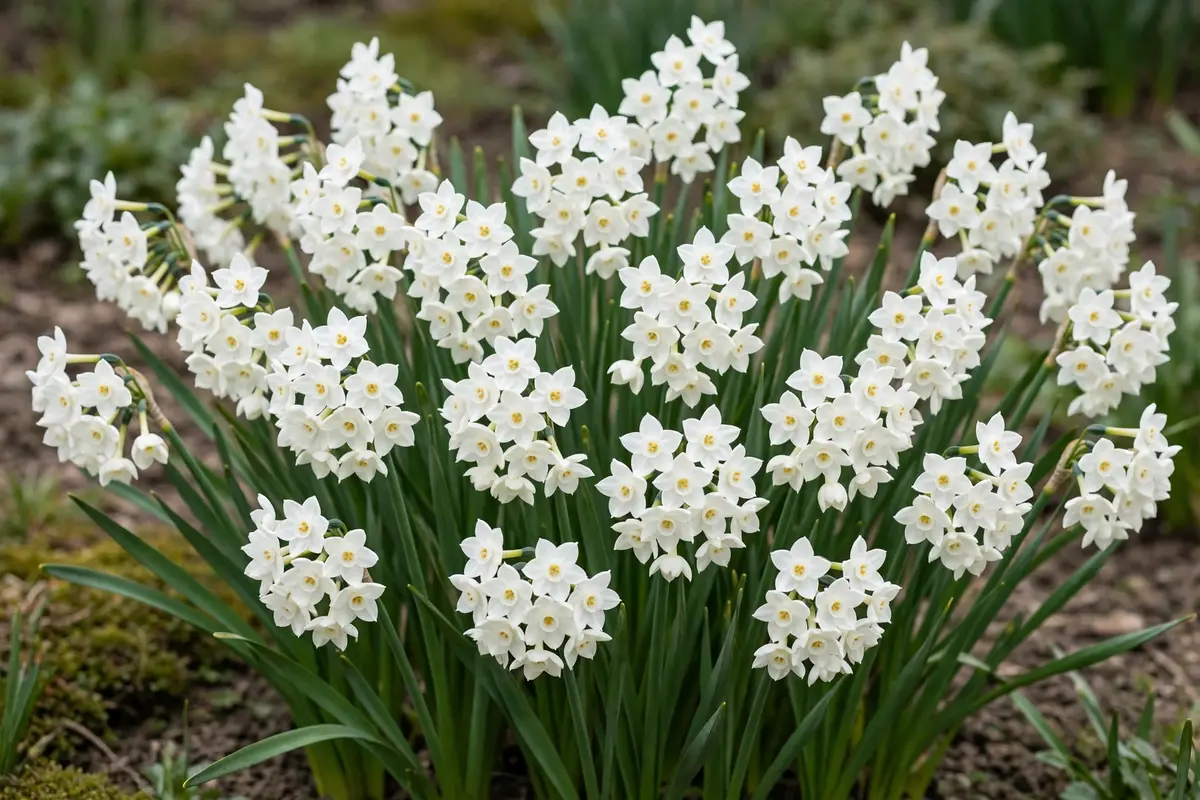
Table of Contents
- What Is a Narcissus Flower?
- Types of Narcissus and 6 Daffodils Worth Growing
- Narcissus Flower Meaning and Symbolism
- Narcissus Flower Colours and Their Meanings
- How to Grow Narcissus
- Common Mistakes When Growing Narcissus
- Narcissus Toxicity and Safe Handling
- Frequently Asked Questions
What Is a Narcissus Flower?
Narcissus is a genus of around 50 species of spring-flowering bulbs in the amaryllis family, Amaryllidaceae, native mainly to the Mediterranean — Spain, Portugal and North Africa hold the richest variety — with a few species reaching east to China and Japan. The flower’s structure is unmistakable: six petal-like tepals spread around a central corona, which can be a long trumpet, a neat cup, or a tiny crinkled ring depending on the type. You can read more on the Narcissus page on Wikipedia.
So what is the difference between a narcissus and a daffodil? Officially, none: daffodil is the accepted common name for the whole genus, and the Royal Horticultural Society classifies all of them — over 13,000 registered hybrids — as Narcissus in 13 divisions. In everyday garden-centre language, though, “daffodil” means the big, bold, large-cupped spring types, while “narcissus” is used for the daintier species and multi-flowered types: paperwhites with their clusters of small white blooms, sweetly scented jonquils, and the poet’s daffodil with its tiny red-rimmed cup. When a bulb catalogue says narcissus, expect elegance and fragrance; when it says daffodil, expect size and punch. Our December birth flower guide explains the paperwhite’s special role among them.
Narcissus Flower Quick Facts
- Botanical name: Narcissus (about 50 species, 13,000+ registered hybrids).
- Family: Amaryllidaceae, the amaryllis family.
- Hardiness: USDA zones 3 to 8 for most types; paperwhites (N. tazetta) are tender, zones 8 to 11.
- Height: 4 to 18 inches, from miniature rock-garden types to standard daffodils.
- Bloom time: late winter to late spring by type; paperwhites flower indoors in winter.
- Chill needs: most types need 3 to 4 months of cold soil to bloom well; tazetta types need none.
- Good to know: all parts are toxic — plant bulbs where pets cannot dig them up, and never store them near onions.
Types of Narcissus and 6 Daffodils Worth Growing
With 13 official divisions, narcissus can feel like a specialist’s hobby, but six types cover what gardeners actually plant. The table compares them at a glance; the profiles follow. For the full list of flower names, see our flower names A to Z guide.
| Type | Botanical name | Height | Flowers | Best use |
|---|---|---|---|---|
| Trumpet daffodil | N. pseudonarcissus types | 14–18 in | One large flower, long trumpet | Classic borders and lawns |
| Large-cupped daffodil | Hybrid divisions | 14–18 in | One flower, cup over a third of petal length | Cutting and bedding |
| Paperwhite | N. tazetta | 12–18 in | Clusters of 5–20 small white flowers | Forcing indoors for winter |
| Poet’s daffodil | N. poeticus | 12–16 in | White petals, tiny red-rimmed cup | Late spring, wild gardens |
| Jonquil | N. jonquilla | 10–14 in | Clusters of small, intensely fragrant yellow flowers | Scent near paths and doors |
| Miniature daffodil | N. cyclamineus types | 4–8 in | Swept-back petals, nodding flowers | Rock gardens and pots |
1. Trumpet Daffodil (Narcissus pseudonarcissus types)
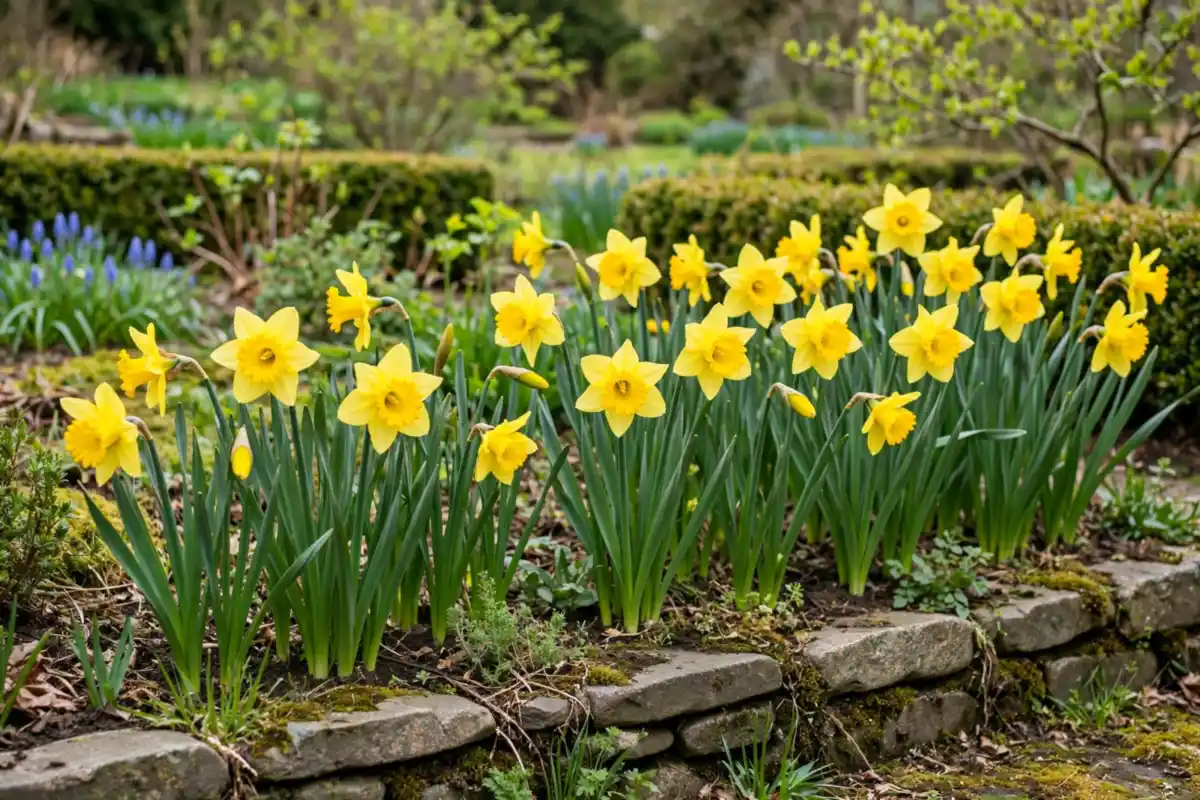
This is the daffodil of ten thousand spring postcards: one large flower per stem, its trumpet as long as or longer than the petals behind it. The wild species N. pseudonarcissus — the Lent lily Wordsworth wrote about — still carpets woods in parts of Britain, and its tougher garden descendants (‘King Alfred’ types and modern trumpets) are the backbone of public plantings everywhere. Plant them in drifts of a dozen or more; single bulbs look lost, and a drift of trumpets is spring’s loudest announcement.
2. Large-Cupped Daffodil (Hybrid Divisions)
The large-cupped division holds most of the modern garden daffodils: one flower per stem, with a cup more than a third the length of the petals but not as long as a trumpet. This is where the colour experiments live — white petals with pink cups (‘Salome’), lemon fading to cream, orange-rimmed and near-red forms. If you want daffodils that look designed rather than wild, and stems that stand up in a vase, plant large-cupped varieties by the dozen.
3. Paperwhite (Narcissus tazetta)
The paperwhite is the narcissus of winter windowsills: a Mediterranean tazetta type carrying clusters of five to twenty small, intensely fragrant white flowers, and — uniquely among common daffodils — needing no cold period to bloom. That is why it is forced indoors for December and January flowers, which also makes it the December birth flower. Outdoors it is only hardy in zones 8 to 11. One warning: its perfume is famously strong, and households divide sharply into those who find it glorious and those who banish the pot to another room.
4. Poet’s Daffodil (Narcissus poeticus)
The poet’s daffodil is the species most scholars believe grew in ancient Greece — quite possibly the very flower of the myth. Its petals are pure white and its cup is a tiny, crinkled disc of yellow rimmed with red, like a drop of sealing wax. It flowers late, in May in cool climates, smells sweetly spicy, and naturalises happily in damp grass. ‘Actaea’ is the classic garden form. Choose it for the end of the daffodil season, when the trumpets have finished and the garden needs one last, elegant word.
5. Jonquil (Narcissus jonquilla)
Jonquils are the scent specialists of the genus: clusters of small, deep-yellow flowers on rush-like leaves, with a perfume so strong it was once extracted for use in southern France. True jonquils are tenderer than trumpet daffodils (zones 7 to 10) and love heat and drainage. In American Southern gardens, “jonquil” is the everyday word for daffodils in general — another of this genus’s charming naming muddles, and a good reason the botanical names in the table matter.
6. Miniature Daffodil (Narcissus cyclamineus types)
The cyclamineus types are daffodils in miniature: nodding flowers with petals swept sharply backwards like a cyclamen’s, on stems only 4 to 8 inches tall. ‘Tête-à-Tête’, with two or three golden flowers per stem, is one of the most planted bulbs in the world — it forces easily in pots, edges paths sweetly, and multiplies in rock gardens. Grow miniatures where the big trumpets would look clumsy: in window boxes, alpine beds, and the front of every border.
Narcissus Flower Meaning and Symbolism
The narcissus meaning is a tale of two traditions. The Greek one is famous: Narcissus, the hunter so beautiful that he spurned everyone who loved him — including the nymph Echo, who faded to a voice — was led by fate to a still pool, fell in love with his own reflection, and died beside it, unable to leave. Where he lay, the flower grew. From that story the narcissus keeps its meanings of self-love, vanity and unrequited love, and gives its name to narcissism itself.
But the second tradition is older in the garden. Because the narcissus is among the very first flowers of spring — sometimes pushing through snow — it became a symbol of rebirth, renewal and new beginnings across Europe and Asia. In China, the tazetta narcissus (水仙, “water immortal”) is a treasured Chinese New Year flower believed to bring prosperity and good fortune, forced to bloom exactly for the holiday. In Wales, the daffodil is the national flower, worn on St David’s Day, March 1st. And in the modern language of flowers, a gift of narcissus most often means “you are the only one” or hopeful new beginnings — send a bunch, never a single stem, because a lone narcissus is said to foretell misfortune while a bouquet promises happiness.
The flower is also a birth flower twice over: the paperwhite narcissus is the December birth flower, and the daffodil is the March birth flower — winter and spring, the two ends of its season, both claimed. Its cancer-charity role (the daffodil of Marie Curie in the UK and daffodil days elsewhere) has added one more modern layer: hope in the face of illness.
Narcissus Flower Colours and Their Meanings
Narcissus colours run in a tighter range than roses or tulips — yellows, whites, creams and touches of orange and pink — but each shade carries its own shade of meaning:
- Yellow narcissus — the classic colour: new beginnings, joy, prosperity and good luck. The Chinese New Year flower and the Welsh emblem are both yellow-hearted, and a drift of yellow daffodils is the universal shorthand for spring’s arrival.
- White narcissus — purity, innocence and quiet renewal: the paperwhite of December birthdays, and the poet’s daffodil of ancient Greece. White tazettas also carry the good-fortune meaning in Chinese tradition.
- Orange-cupped narcissus — enthusiasm, energy and warmth: the orange rim on a poet’s daffodil, or a full orange cup on a modern hybrid, adds fire to the spring message.
- Pink-cupped narcissus — a modern breeding achievement rather than a true pink flower: cups that open apricot and fade to rose. They mean affection and admiration, and pair beautifully with our collection of other fragrant flowers.
How to Grow Narcissus
Narcissus are among the easiest bulbs in the garden — plant them once, correctly, and they return for years with almost no help. Gardeners on r/gardening on Reddit sum up the whole method as “pointy end up, autumn, deeper than you think”, and the details below are mostly refinements of that.
When and How to Plant the Bulbs
Plant narcissus bulbs in autumn, about two to four weeks before the ground freezes, when soil temperatures have dropped below about 15°C (60°F) — September to November in most temperate gardens. Dig the hole three times as deep as the bulb is tall (roughly 6 inches for standard daffodils), set the bulb pointy-end up, and space bulbs 4 to 6 inches apart. Planted too shallow, bulbs split and flower poorly; planted at the right depth, they sit safely below frost heave and hungry squirrels.
Sun, Soil and Water
Give narcissus full sun while they grow in spring — under deciduous trees is fine, because the bulbs finish before the canopy closes. They need well-drained soil above all: bulbs rot in ground that stays wet in winter. Water during spring growth if rain fails, and stop once the foliage starts to yellow. A handful of general fertiliser at planting and again as the shoots emerge keeps clumps building instead of shrinking.
After Flowering: the Foliage Rule
The single most important care rule: never cut, braid or tie the foliage while it is green. The leaves need about six weeks after flowering to rebuild the bulb for next year. Mow around naturalised daffodils only once the leaves have yellowed, and deadhead spent flowers so the plant does not waste energy on seed. Clumps that flower less each year are overcrowded — lift and divide them in early summer, and the decline reverses.
Forcing Paperwhites Indoors
Paperwhites are the indoor exception to every rule above: they need no chilling at all. Set the bulbs shoulder to shoulder in a shallow container of pebbles and water (just touching the bulb bases) or in compost, keep them bright and cool-ish, and they flower in four to six weeks — a bowl planted in mid-November blooms for the December birthdays and holidays. A teaspoon of spirit in the water is a famous trick to keep forced paperwhites shorter and sturdier. Spent forced bulbs rarely flower well again indoors; in warm climates, plant them out.
Common Mistakes When Growing Narcissus
The classic mistake is planting too late or too shallow — bargain bulbs planted in December at half depth sulk for a year. The second is tidying away the green foliage: every spring, gardens lose next year’s daffodils to an early mow or a well-meant braid, because starved bulbs come back blind (all leaf, no flower). The third is planting in a wet hollow, where bulbs quietly rot over winter and simply never appear.
Gardeners also undo good work with the vase and the compost heap: bulbs that flower one year and not the next are usually overcrowded or were deadheaded with their leaves. And never, ever store narcissus bulbs anywhere near the kitchen’s onions — the bulbs are poisonous (see below), look uncomfortably similar once the skins darken, and have genuinely poisoned people who mistook them. Label the bag.
Narcissus Toxicity and Safe Handling
All parts of the narcissus are toxic, especially the bulb, which concentrates the alkaloid lycorine. Eating bulbs or leaves causes vomiting, stomach cramps and worse, and pets — dogs that dig bulbs are the usual victims — are at real risk. Wear gloves when handling bulbs if your skin is sensitive: “daffodil itch” is a recognised rash among florists, caused by calcium oxalate crystals in the sap.
The sap matters in the vase too. Fresh-cut daffodil stems leak a sap that shortens the life of other flowers, which is why florists condition daffodils alone in water for several hours before mixing them into bouquets — and why you should never re-cut the stems after conditioning (it restarts the leak) or add them straight into a mixed spring arrangement. Handled with these simple precautions, narcissus are safe, generous garden plants; just keep the bulbs labelled, planted deep, and out of the kitchen.
Frequently Asked Questions
What is the difference between a narcissus and a daffodil?
Botanically, none — daffodil is the common name for the whole genus Narcissus, so every daffodil is a narcissus and vice versa. In garden-centre usage, “daffodil” usually means the large trumpet and large-cupped types, while “narcissus” is used for the smaller, clustered, often fragrant types like paperwhites, jonquils and the poet’s daffodil. If your question is not answered here, the questions about the narcissus flower on Quora cover most of the rest.
What does a narcissus flower symbolise?
It carries two meanings at once. From the Greek myth of Narcissus, it symbolises self-love, vanity and unrequited love. From its habit of blooming first in spring, it also symbolises rebirth, new beginnings, hope and prosperity — the meaning behind its Chinese New Year role and its use as the December and March birth flower.
Do narcissus come back every year?
Yes — narcissus are perennials and among the longest-lived bulbs in the garden. Given autumn planting at the right depth, full spring sun, and six weeks of untidy foliage after flowering, clumps return and multiply for many years. If flowering fades, the usual causes are overcrowding (lift and divide), foliage cut too early, or shade creeping over the spot.
When should I plant narcissus bulbs?
In autumn, two to four weeks before the ground freezes — typically September to November in temperate climates, once the soil has cooled. Plant pointy-end up, three times as deep as the bulb is tall. Paperwhites for indoor forcing are the exception: plant them in pots any time from October onwards for winter flowers, with no chilling needed.
Are narcissus poisonous to dogs and cats?
Yes. The bulbs are the most toxic part, and dogs that dig them up are the most common victims; symptoms include vomiting, drooling and stomach pain. Plant bulbs deep, store them labelled and away from pets (and never near onions in the kitchen), and contact a vet if a pet chews a bulb.
Why did my daffodils come up blind?
“Blind” daffodils — leaves but no flowers — are usually bulbs that were starved the previous spring: foliage cut or mown too early, heavy shade, overcrowding, or bulbs planted too shallow. Leave the foliage a full six weeks next year, feed in spring, and divide overcrowded clumps in summer. For more flowers filed under the same letter, see our guide to flowers that start with N.