New York State Flower: The Rose in All Its Colours
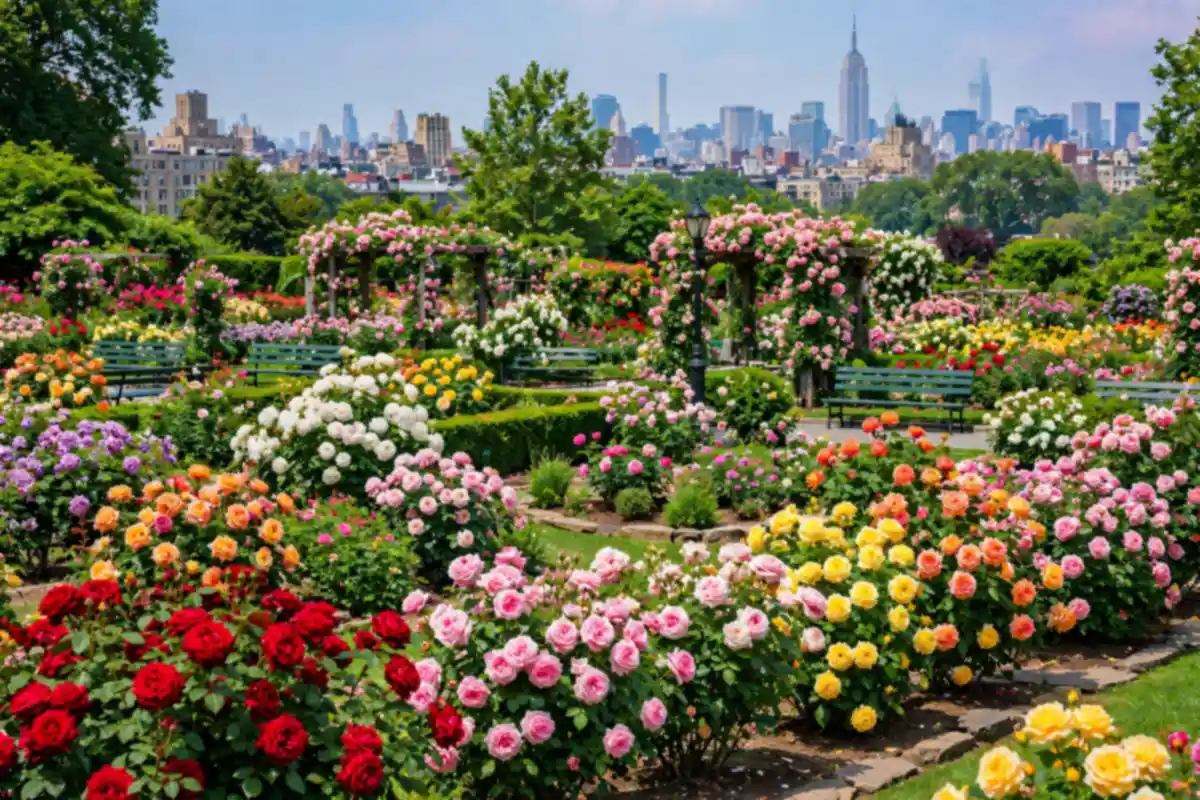
New York did not pick a species. It did not pick a colour. When the state finally settled its flower in 1955, it adopted “the rose, in all its variety and colours” — the whole beloved genus, red, pink, white, yellow and striped, from a Manhattan window box to the Peggy Rockefeller Rose Garden in the Bronx. The New York state flower is the only emblem in the series chosen like a New Yorker would choose it: all of them, at once, no apologies.
This guide covers the New York state flower and its unusually open adoption, what the all-colours rose means, six more New York flowers worth knowing — Rochester’s lilacs, Albany’s tulips, the Hamptons’ hydrangeas — and how to grow roses through real New York seasons: humid summers, black spot, and winters that test every cane.
Quick Answer
The New York state flower is the rose — Rosa species and hybrids of every kind and colour — adopted in 1955. The law names no species and no colourway, making New York’s the most inclusive state flower in the country. Roses grow statewide: shrubs, climbers, hybrid teas and hardy own-root kinds, in sun and well-drained soil, with winter protection needed upstate (zones 4 to 7 across the state). New York has no separate state wildflower. The rose means love in every sense — and in New York, in every colour too.
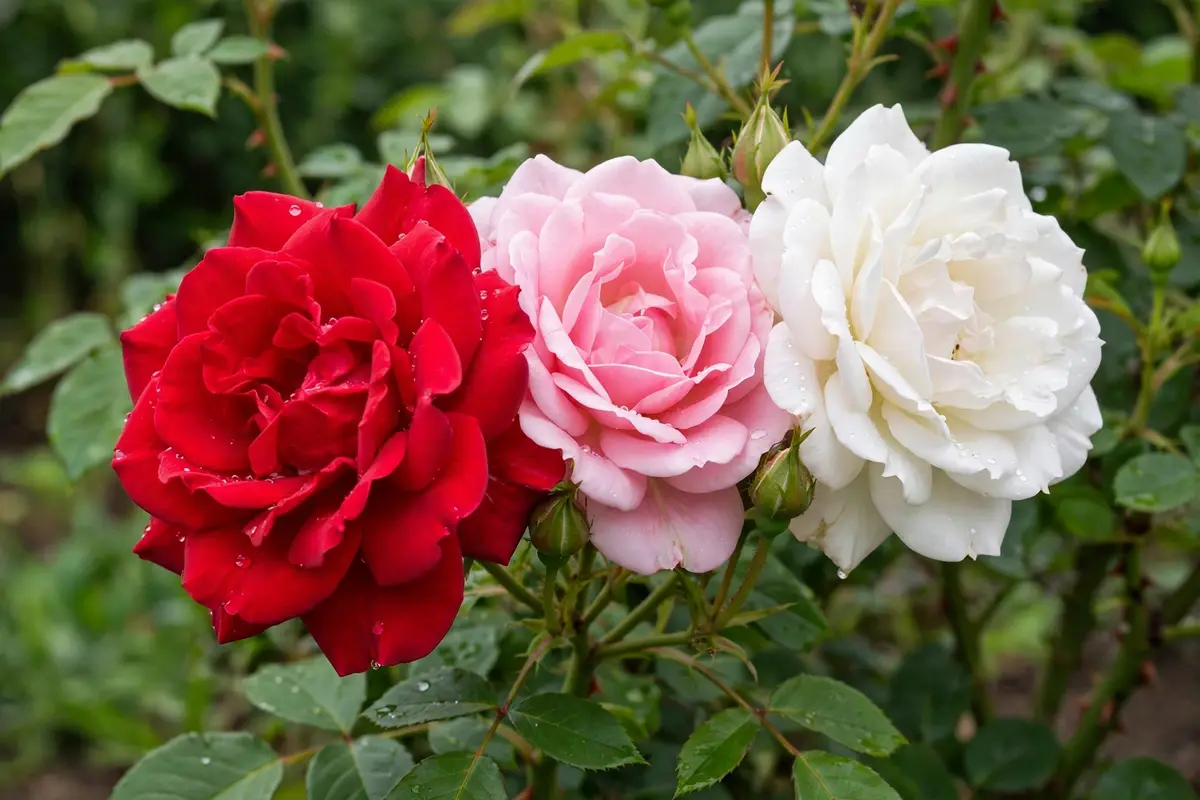
Table of Contents
- What Is the New York State Flower?
- The Story: 1955 and the Flower Chosen in All Colours
- The Rose Meaning, in Every Colour
- 6 More New York Flowers Worth Knowing
- How to Grow Roses in New York
- Common Mistakes When Growing Roses in New York
- Frequently Asked Questions
What Is the New York State Flower?
The rose needs no identification — which is precisely why New York could adopt it wholesale. Rosa is a genus of some 150 species and tens of thousands of garden hybrids: shrubs, climbers, ramblers, ground-covers and miniature pot roses, flowering in every shade except true blue. In New York the rose is democratic infrastructure: it climbs Brooklyn fences, fills the Bronx’s Peggy Rockefeller Rose Garden (a 650-plus-variety showcase at the New York Botanical Garden), edges upstate farmhouses, and survives winters from Zone 7 in the city to Zone 4 in the Adirondacks when the right kinds are chosen. Our June birth flower guide covers the rose’s history, kinds and meaning in depth — fittingly, since the rose is June’s birth flower and New York’s choice blooms at its peak in June. You can read more on the rose page on Wikipedia.
New York State Flower Quick Facts
- State flower: the rose — Rosa spp., all varieties and colours (the statute names none specifically).
- Adopted: 1955. Earlier favourites (an 1890s schoolchildren’s vote liked the goldenrod) were never made official.
- The plant: shrubs, climbers and ground-cover roses from 1 to 20 feet; flowers mainly June, many kinds repeating to frost.
- Colours: red, pink, white, yellow, orange, apricot, purple and bicolours — every colour but blue.
- Conditions: full sun (6+ hours), well-drained soil, airflow; hardiness varies by kind — hardy shrub roses thrive to zone 4, hybrid teas want winter cover upstate.
- Showcase: Peggy Rockefeller Rose Garden, New York Botanical Garden (Bronx) — 650+ varieties at peak in June.
- Good to know: New York shares the rose with no ambiguity — Oklahoma chose a hybrid tea (‘Oklahoma’), Iowa and others chose wild roses; New York chose them all.
The Story: 1955 and the Flower Chosen in All Colours
New York took its time. In the 1890s, when states were racing to adopt emblems, New York’s schoolchildren voted in a statewide poll and favoured the goldenrod — a choice never ratified into law, leaving the state flowerless for half a century while its gardens filled with the obvious candidate. When the legislature finally acted in 1955, it did so with a flourish no other state matched: rather than arbitrate between the wild rose of the hedgerows, the tea rose of the florists and the climbers of a million fences, it adopted the rose entire — “in all its variety and colours”, as the choice is universally summarized. It is the only state flower that is also a whole horticultural universe, and it fit the state that contains both the Adirondacks and Manhattan: any rose you will ever plant is, by law, the New York state flower.
The Rose Meaning, in Every Colour
The rose is the language of love itself — but the dialect is colour. Red means romantic love and desire; pink, admiration and gratitude; white, purity and new beginnings (the bridal rose); yellow, friendship and joy; orange, fascination; lavender, love at first sight. New York’s all-colours adoption reads, in the language of flowers, as a state declining to narrow its affections: every kind of love, every kind of New Yorker. Where the Alaska state flower speaks one word perfectly — remembrance — the rose speaks the whole dictionary, and New York claimed the dictionary.
6 More New York Flowers Worth Knowing
A state this size runs several floral capitals at once. The table separates them; the profiles follow. For thousands more flower names, see our flower names A to Z guide.
| Flower | Colour | Season | Character | Best use |
|---|---|---|---|---|
| Lilac | Purple, white, pink | May | Rochester’s crown | Hedges, festivals |
| Tulip | Every colour | May | Albany’s Dutch legacy | Spring beds |
| Hydrangea | Blue and white | Summer | The Hamptons’ signature | Coastal gardens |
| Peony | Pink, white, red | June | The upstate heirloom | Borders |
| Apple blossom | White-pink | May | The orchard snow | Hudson Valley orchards |
| Wild bergamot | Lavender | Summer | The Oswego tea flower | Pollinator gardens |
1. Lilac — Rochester’s Crown
Rochester is America’s lilac capital: Highland Park holds 500-plus varieties, and the Lilac Festival has drawn crowds since the late 1890s, when the park’s plantings first perfumed a whole city each May. Our lilac guide covers the kinds, the scent, and the short sweet season.
2. Tulip — Albany’s Dutch Legacy
Albany was New Amsterdam before it was Albany, and it remembers in flowers: the Tulip Festival fills Washington Park each May with some 140,000 tulips, honouring the city’s Dutch founding and its sister-city bond with Nijmegen. A capital that celebrates its roots with bulbs.
3. Hydrangea — the Hamptons’ Signature
Out east, summer is measured in hydrangeas: great blue mopheads over every fence in the Hamptons, blued by the sandy acid soil, with white ‘Annabelle’ billowing through upstate shade. The Long Island summer house and the hydrangea hedge are one idea in two forms.
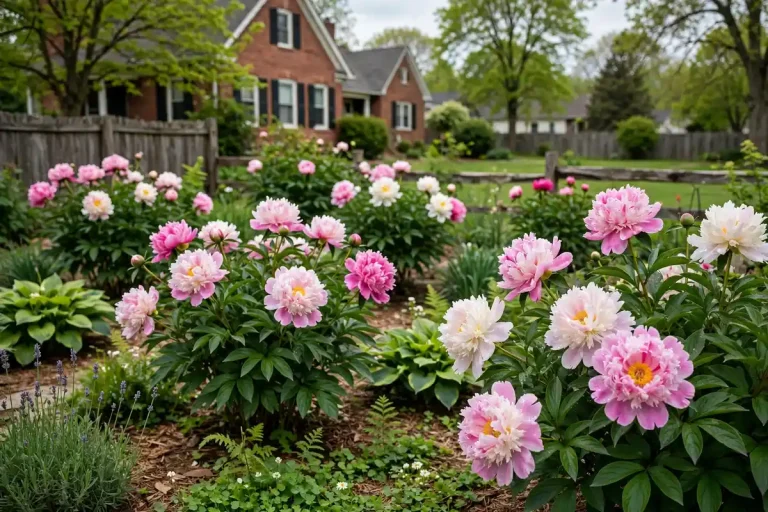
4. Peony — the Upstate Heirloom
June in upstate New York is peony season — the same clumps flowering beside farmhouses for fifty years, passed down with the deed. Our peony guide covers the varieties and the famous rule (plant the eyes too deep and you will wait forever).
5. Apple Blossom — the Orchard Snow
New York is one of the nation’s great apple states, and in May the Hudson Valley and Lake Ontario shore turn white-pink with blossom — a working flower show across thousands of orchard acres, over almost before the bees have finished with it.
6. Wild Bergamot — the Oswego Tea Flower
Monarda fistulosa is New York’s own native: the Oswego people near Lake Ontario brewed its leaves as tea (the colonists learned it as Oswego tea, and drank it happily during the British tea boycotts), and its shaggy lavender heads still hum with bees and hummingbirds in summer meadows.
How to Grow Roses in New York
Choose the rose for your winter first and your summer second: that ordering grows roses anywhere in the state. Gardeners on r/gardening on Reddit pass on the rule as the family’s first law: “upstate, buy the rose that laughs at January; the city can grow anything it can keep from sweating in August.”
Choosing and Planting
In zones 4 and 5, plant hardy own-root shrub roses (the Canadian Explorer series, rugosas, and Buck roses shrug off −30 °F), and site hybrid teas only in the warmest, sheltered spots with winter cover planned. In zones 6 and 7 everything is on the table. Plant in spring in full sun with 2 to 3 feet of air around each bush, in soil enriched with compost and kept mulched; water deeply at the base through the first season, and keep wetting the soil rather than the leaves — New York’s humid summers make foliage diseases the state’s tax on roses.
Through the Seasons
Prune in April as the forsythia fades, removing winter kill to live wood; feed at first flush and again after the June bloom. Fight black spot by hygiene — morning watering, airflow, fallen leaves removed — and accept a little of it by August as every New York rosarian does. From zone 5 northward, mound soil or compost 10 to 12 inches over the crowns after the ground cools in November; uncover in April. Do this and the state’s flower performs in every county it represents.
Common Mistakes When Growing Roses in New York
Mistake one is planting a zone-7 hybrid tea in zone 4 without protection and calling the plant weak — match hardiness to the coldest week, not the average one. Mistake two is overhead watering in July: wet leaves overnight in humid air are black spot’s whole business plan. Mistake three is shade — under five hours of sun, New York roses sulk and mildew; the state flower demands the sunny spot.
Mistake four is pruning hard in autumn, which invites winter dieback into fresh cuts; the state’s pruning month is April. Mistake five is skipping the November mound upstate — one unprotected hard winter can take a grafted rose to the rootstock. And mistake six is crowding: roses packed tight for a fuller look trade flowers for fungus by midsummer in this climate; give them the air the Bronx garden gives its 650 varieties.
Frequently Asked Questions
What is the New York state flower?
The rose — adopted in 1955 not as one species but as the whole genus, “in all its variety and colours”. Any rose, of any kind or colour, qualifies as the New York state flower. New York has no separate state wildflower. If your question is not answered here, the questions about the New York state flower on Quora cover most of the rest.
Why doesn’t New York name a specific rose?
Because the 1955 adoption deliberately embraced all of them — wild roses, garden hybrids, climbers and teas alike. An earlier schoolchildren’s favourite, the goldenrod, was never ratified, and when the legislature finally acted it chose inclusively: the whole genus, in every colour but the blue nobody has bred yet.
When do roses bloom in New York?
The great flush peaks in June statewide — the Peggy Rockefeller Rose Garden’s famous moment — with repeat-flowering kinds continuing in waves through summer to the first hard frosts of autumn, especially in the milder city and Long Island climates.
Can roses survive an upstate New York winter?
The right roses can: hardy own-root shrub roses (Explorer, rugosa and Buck types) survive zone 4 winters on their own roots, returning even if tops are nipped. Tender grafted hybrid teas upstate need the November soil mound over the crown — or a warmer county.
What is the biggest rose problem in New York?
Black spot, the fungal disease that defoliates bushes in humid summers. Airflow, base watering, leaf cleanup and resistant varieties manage it; Japanese beetles in July run a close second, and they are managed by hand-picking, traps placed away from the roses, and patience.
Where can I see the New York state flower at its best?
The Peggy Rockefeller Rose Garden at the New York Botanical Garden in the Bronx — hundreds of varieties in a walled, sunlit showcase, at peak in June. In Rochester, time a May visit for lilacs instead, and in Albany the same month for tulips: New York’s floral capitals divide the spring between them.