Plants that start with C: Names, Pictures and Useful Facts
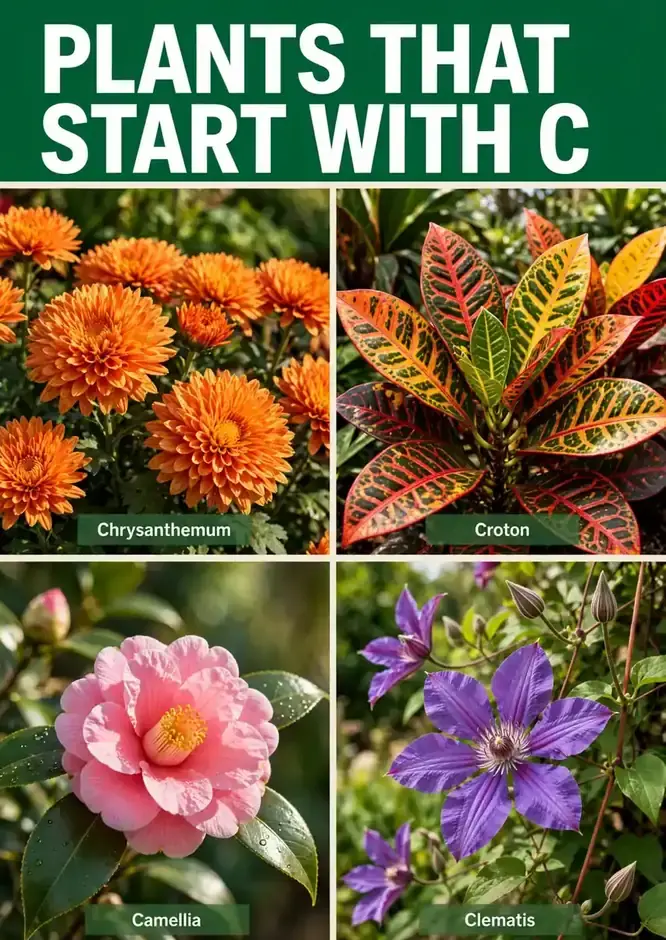
Looking for plants that start with C? You have come to the right place. The letter C is one of the most generous letters in the gardening alphabet, covering everything from the autumn fireworks of chrysanthemums and the jewel-toned leaves of crotons and calatheas, to the winter roses of camellias, the towering spires of cosmos, and the climbing curtains of clematis. Whether you are planting a sunny border, building an indoor jungle, or starting an alphabet garden with kids, this guide covers 32 real plants that start with C, each with a vivid description and practical growing advice.
Every entry below lists the plant’s scientific name, bloom season, light needs, water needs, and USDA hardiness zone, so you can tell at a glance which C-plants fit your garden. You will also find two handy comparison tables, practical growing tips, and answers to the questions gardeners ask most about plants starting with C. Working through the whole alphabet? Start with our guide to plants that start with A. Let’s dig in.
Quick Answer
Popular plants that start with C include Chrysanthemum, Croton, Calathea, Cyclamen, Chinese Evergreen, Cast Iron Plant, Coleus, Camellia, Cosmos, Canna, Clematis, Calla Lily, Coneflower, Coral Bells, Crocus, Coreopsis, Columbine, Catmint, Crape Myrtle, and Christmas Cactus. They span fall perennials, tropical houseplants, spring bulbs, summer annuals, flowering vines, shrubs, and trees, covering USDA zones 3–12.
Table of Contents
C-Plants at a Glance
Use this table to compare all 32 plants that start with C side by side, from botanical names to native regions.
| Plant name | Scientific name | Type | Light | Native region |
|---|---|---|---|---|
| Chrysanthemum | Chrysanthemum × morifolium | Herbaceous perennial | Full sun | China, Japan (hybrid breeding) |
| Croton | Codiaeum variegatum | Tropical evergreen shrub / houseplant | Bright indirect to full sun | Southeast Asia, Pacific Islands |
| Calathea | Goeppertia spp. (sold as Calathea) | Tropical houseplant | Medium indirect light | Tropical Americas |
| Cyclamen | Cyclamen persicum | Winter-blooming tuberous perennial | Bright indirect light | Mediterranean region |
| Chinese Evergreen | Aglaonema commutatum | Tropical houseplant | Low to medium indirect light | Tropical Asia (Philippines, Indonesia) |
| Cast Iron Plant | Aspidistra elatior | Evergreen perennial / houseplant | Low light to deep shade | China, Taiwan, Japan |
| Coleus | Coleus scutellarioides | Tender foliage perennial (grown as annual) | Part shade | Southeast Asia, Australia |
| Caladium | Caladium bicolor | Tender tuberous perennial | Part to full shade | Tropical South America |
| Camellia | Camellia japonica | Evergreen flowering shrub | Part shade | Japan, Korea, China |
| Cosmos | Cosmos bipinnatus | Annual wildflower | Full sun | Mexico |
| Canna | Canna × generalis | Tender rhizomatous perennial | Full sun | Tropical Americas (hybrid breeding) |
| Clematis | Clematis spp. and hybrids | Deciduous flowering vine | Full sun (roots shaded) | Northern Hemisphere (worldwide breeding) |
| Calla Lily | Zantedeschia aethiopica | Rhizomatous perennial | Full sun to part shade | South Africa |
| Coneflower | Echinacea purpurea | Herbaceous perennial | Full sun | Central and eastern North America |
| Coral Bells | Heuchera spp. and hybrids | Evergreen-ish perennial | Part shade | North America |
| Crocus | Crocus vernus and hybrids | Spring-flowering corm | Full sun | Europe, western Asia |
| Coreopsis | Coreopsis lanceolata | Herbaceous perennial | Full sun | Central and southeastern North America |
| Columbine | Aquilegia spp. and hybrids | Herbaceous perennial | Part shade | Northern Hemisphere |
| Catmint | Nepeta × faassenii | Herbaceous perennial | Full sun | Europe, Asia (hybrid breeding) |
| Crape Myrtle | Lagerstroemia indica | Deciduous shrub / small tree | Full sun | China, Korea, Japan |
| Clivia | Clivia miniata | Evergreen houseplant | Bright indirect light | South Africa |
| Celosia | Celosia argentea | Annual flower | Full sun | Tropical Africa, Asia |
| Crabapple | Malus spp. and hybrids | Deciduous flowering tree | Full sun | North America, Asia, Europe |
| Chinese Lantern | Physalis alkekengi | Herbaceous perennial | Full sun to part shade | Southern Europe, Asia |
| Crown Imperial | Fritillaria imperialis | Spring-flowering bulb | Full sun to part shade | Turkey, Iran, Afghanistan |
| Carnation | Dianthus caryophyllus | Herbaceous perennial | Full sun | Mediterranean region |
| Candytuft | Iberis sempervirens | Evergreen perennial | Full sun | Southern Europe |
| Christmas Cactus | Schlumbergera truncata | Tropical epiphytic cactus / houseplant | Bright indirect light | Coastal mountains of Brazil |
| Barrel Cactus | Echinocactus grusonii | Desert succulent | Full sun | Central Mexico |
| Century Plant | Agave americana | Succulent rosette perennial | Full sun | Mexico, Texas |
| Creeping Jenny | Lysimachia nummularia | Evergreen groundcover | Full sun to part shade | Europe |
| Chives | Allium schoenoprasum | Perennial herb | Full sun | Northern Hemisphere |
Bloom Season, Water Needs & Hardiness Zones
Planning your garden calendar? This second table shows when each C-plant blooms, how much water it wants, and the USDA zones where it grows outdoors year-round.
| Plant name | Bloom season | Water needs | Hardiness zone | Mature size |
|---|---|---|---|---|
| Chrysanthemum | Late summer to fall | Regular; 1 inch per week | 5–9 | 1–3 ft tall |
| Croton | Insignificant indoors | Average; keep evenly moist | Houseplant (10–12 outdoors) | 3–6 ft indoors |
| Calathea | Rarely indoors | Regular; high humidity needed | Houseplant (10–12 outdoors) | 1–3 ft tall |
| Cyclamen | Fall to spring | Average; water from below | Houseplant (9–11 outdoors) | 6–12 in tall |
| Chinese Evergreen | Rarely indoors | Average; let top inch dry | Houseplant (10–12 outdoors) | 1–3 ft tall |
| Cast Iron Plant | Rarely seen (near soil level) | Low; very drought tolerant | 7–11 (houseplant elsewhere) | 2 ft tall, slowly spreading |
| Coleus | Summer (spikes usually pinched off) | Regular; never let wilt | Grown as annual (10–11 perennial) | 1–3 ft tall |
| Caladium | Rarely (grown for foliage) | Regular; loves moisture | 9–11 (tubers lifted in colder zones) | 1–2 ft tall |
| Camellia | Late fall to spring | Regular; consistent moisture | 7–9 | 6–12 ft tall |
| Cosmos | Summer to first frost | Low; drought tolerant | Grown as annual | 2–6 ft tall |
| Canna | Summer to fall | Regular to moist; loves water | 7–10 (rhizomes lifted in colder zones) | 3–6 ft tall |
| Clematis | Spring to fall (varies by type) | Regular; cool shaded roots | 4–9 | 6–12 ft vine |
| Calla Lily | Late spring to summer | Regular to moist | 8–10 (rhizomes lifted in colder zones) | 2–3 ft tall |
| Coneflower | Summer to fall | Low to average; drought tolerant | 3–8 | 2–4 ft tall |
| Coral Bells | Late spring to summer | Average | 4–9 | 1–1.5 ft tall (flowers taller) |
| Crocus | Very early spring | Average; dry summer dormancy | 3–8 | 3–6 in tall |
| Coreopsis | Early summer to fall | Low; very drought tolerant | 4–9 | 1–3 ft tall |
| Columbine | Late spring to early summer | Average | 3–8 | 1–3 ft tall |
| Catmint | Late spring to fall | Low; drought tolerant | 3–8 | 1–3 ft tall |
| Crape Myrtle | Summer to fall | Low; drought tolerant once established | 7–10 | 10–30 ft tall |
| Clivia | Late winter to spring | Average; dry winter rest | Houseplant (9–11 outdoors) | 1–2 ft tall |
| Celosia | Summer to frost | Average | Grown as annual | 1–3 ft tall |
| Crabapple | Mid spring | Average | 4–8 | 15–25 ft tall |
| Chinese Lantern | Summer (white flowers); orange pods in fall | Average | 3–9 | 1–2 ft tall |
| Crown Imperial | Mid spring | Average; dry summer dormancy | 5–8 | 2–3 ft tall |
| Carnation | Late spring to summer | Average; good drainage essential | 5–9 | 1–2 ft tall |
| Candytuft | Mid to late spring | Low to average | 4–8 | 6–12 in tall |
| Christmas Cactus | Late fall to winter | Average; more water in bloom | Houseplant (10–12 outdoors) | 1–2 ft trailing |
| Barrel Cactus | Summer (yellow flowers on mature plants) | Very low; drought tolerant | 9–11 | 2–3 ft tall and wide |
| Century Plant | Once in a lifetime (tall stalk) | Very low; drought tolerant | 8–11 | 6–10 ft rosette |
| Creeping Jenny | Early summer (small yellow flowers) | Average to moist | 4–8 | 2–4 in tall, spreading |
| Chives | Late spring to summer (purple pompons) | Average | 3–9 | 12–18 in tall |
32 Plants That Start With C: The Complete List
Here is the full rundown of C-plants, with real growing advice for each one.
1. Chrysanthemum (Chrysanthemum × morifolium)
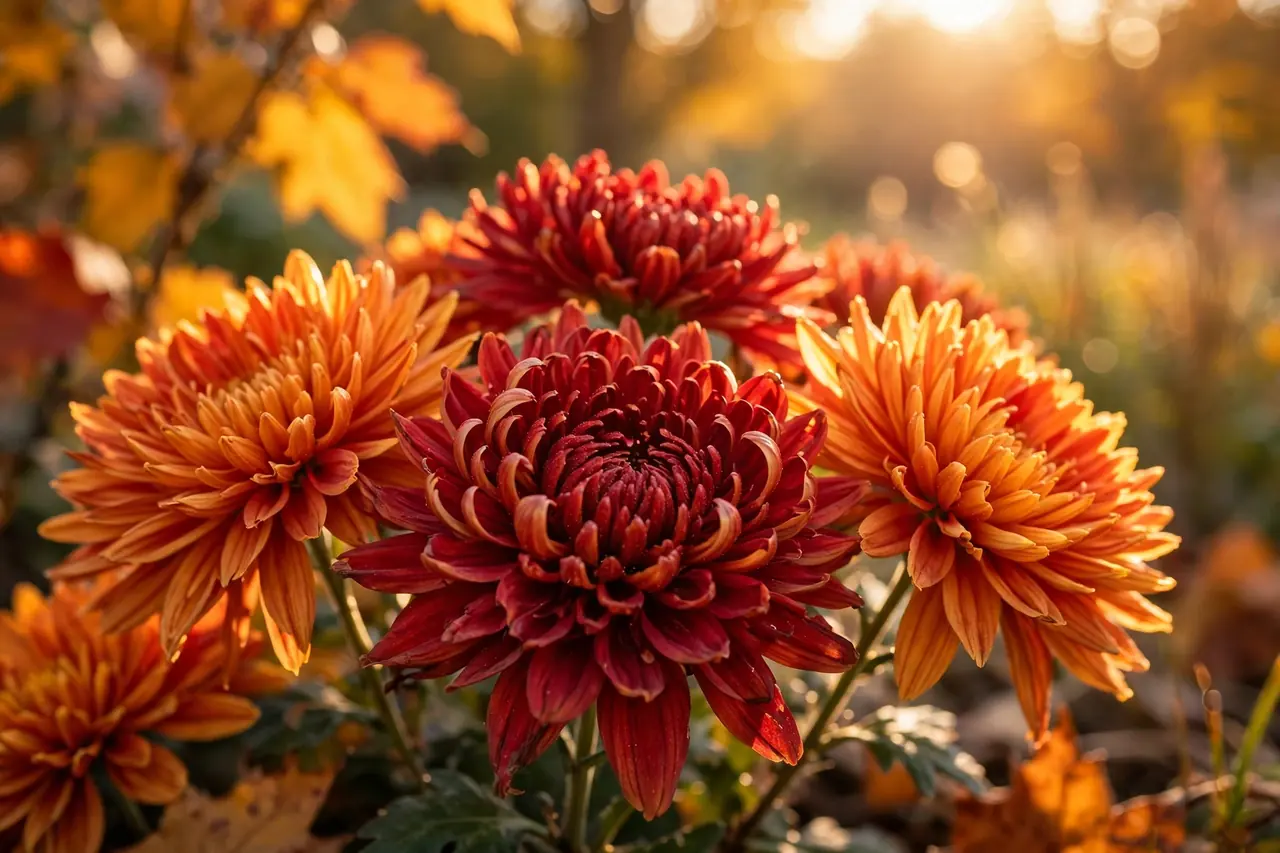
The chrysanthemum is the undisputed queen of the autumn garden. When nearly everything else is fading, garden mums explode into domes of bronze, gold, rust, purple, and white, blooming from late summer until hard frost — the reason they top nearly every list of flowers that start with C. Beyond the familiar cushion mums, the genus includes spider, quill, pompon, and daisy forms.
Plant mums in full sun in zones 5–9, in rich, well-drained soil. For bushy plants loaded with buds, pinch the growing tips every few weeks from spring until early July, then stop so buds can form. Water deeply and mulch well; the number-one killer of garden mums is not cold but wet winter soil rotting the crowns. Divide every 2–3 years in spring to keep them vigorous. For a month-by-month schedule of feeding, pinching, and winter storage, see our complete mum care guide.
2. Croton (Codiaeum variegatum)
No houseplant shouts color like the croton. Its leathery, glossy leaves come splashed, veined, and edged in combinations of red, orange, yellow, pink, and green — each cultivar a different work of abstract art. Indoors it stays a dramatic 3–6 foot statement plant that needs no flowers to steal the show.
The secret to croton’s color is light: the brighter the light, the bolder the variegation. Give it the sunniest window you have or bright indirect light, keep the soil evenly moist (never soggy), and maintain humidity. Crotons hate being moved and may drop leaves in protest — pick a spot and leave it there. Note the milky sap can irritate skin, and the plant is toxic if eaten.
3. Calathea (Goeppertia spp., still sold as Calathea)
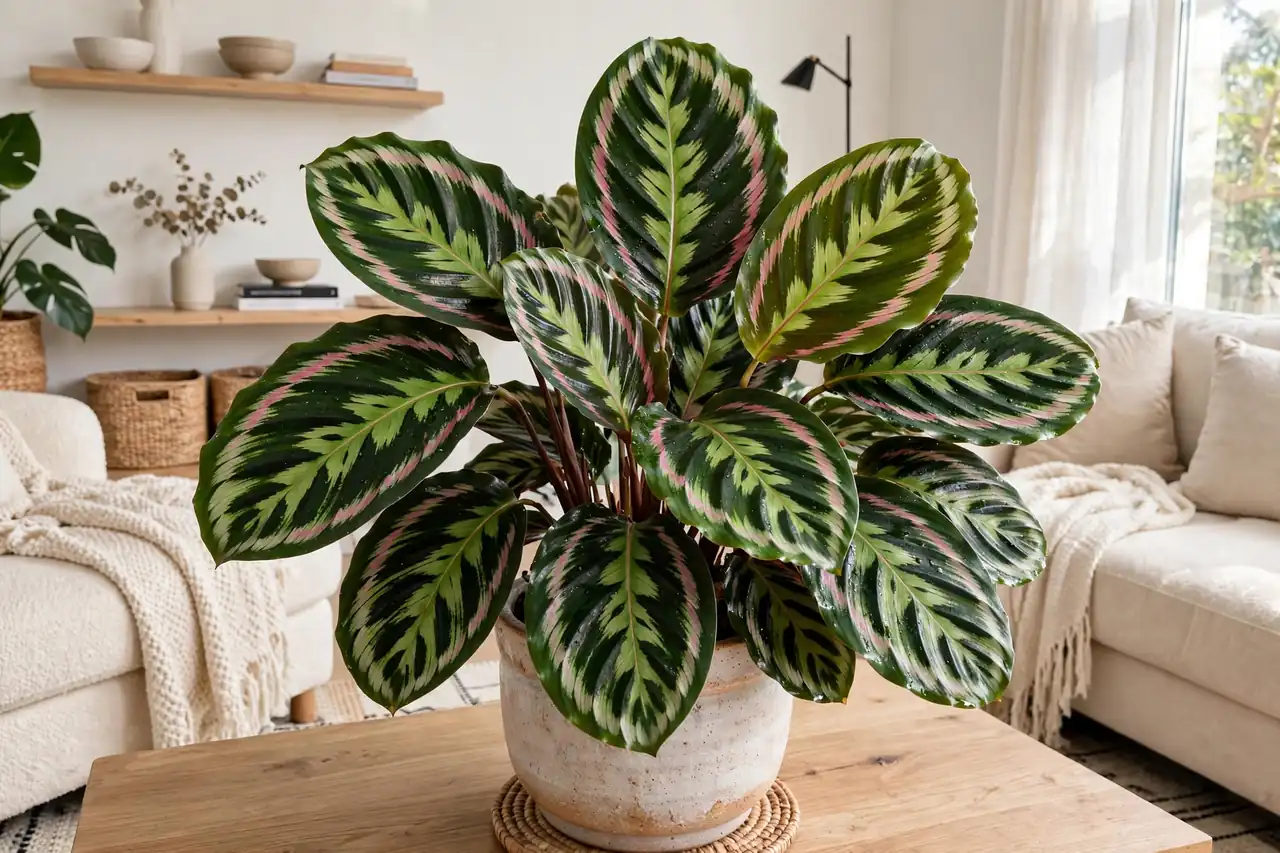
Calatheas — the prayer plants — have the most intricately patterned foliage of any houseplant: zebra stripes, peacock feathers, rattlesnake spots, and pink pinstripes painted on velvety oval leaves. They earn their common name honestly, folding their leaves upright at night like hands in prayer and lowering them by day, a daily ritual you can watch.
Calatheas are beautiful but particular. They want medium indirect light (direct sun bleaches the patterns), consistently moist soil, and high humidity — brown crispy leaf edges mean the air is too dry. Keep them warm, above 60°F, and never let them sit in water.
4. Cyclamen (Cyclamen persicum)
Florist’s cyclamen is winter’s gift to indoor gardeners: heart-shaped, silver-marbled leaves topped with elegant swept-back flowers in white, pink, red, and purple, blooming for months from fall through spring when the garden outside is asleep.
Cyclamen likes it cool — 60–65°F days are ideal, which makes a bright windowsill perfect. Water from below or around the edges of the tuber, never over the crown, and let the soil dry slightly between waterings. When the leaves yellow in late spring, the plant is going dormant, not dying: stop watering, let it rest in a cool dark spot for summer, and resume watering in fall for another season of blooms.
5. Chinese Evergreen (Aglaonema commutatum)
The Chinese evergreen is the houseplant for rooms where nothing else survives. Its broad, lance-shaped leaves — patterned in silver, cream, pink, or red depending on cultivar — tolerate the low light of north-facing rooms and offices that would starve most tropicals. It grows slowly into a lush 1–3 foot clump, asks for almost nothing, and has been a staple of indoor gardening for generations.
Give it low to medium indirect light and water when the top inch of soil dries out; overwatering is its main enemy. It appreciates warmth and humidity but tolerates dry indoor air better than most tropicals. All parts are toxic if chewed, so keep it away from pets — though its toughness makes it perfect for busy households.
6. Cast Iron Plant (Aspidistra elatior)
The cast iron plant earned its name in Victorian parlors, where it survived gas fumes, dark corners, and total neglect that killed every other houseplant. Its bold, dark-green, strap-like leaves rise directly from the soil on stiff stems, forming an architectural fountain of foliage that looks modern despite its 19th-century pedigree. Outdoors in zones 7–11, it is the ultimate evergreen groundcover for deep dry shade.
Live up to the name and neglect it a little: low to medium light, water only when the soil is dry, and it will thrive for decades — specimens are known to outlive their owners. It dislikes direct sun (leaves bleach) and soggy soil, but forgives nearly everything else.
7. Coleus (Coleus scutellarioides)
Coleus is the fastest color you can buy for a shady garden. Its velvety leaves come in every pattern imaginable — lime splashed with burgundy, hot pink edged in green, near-black with chartreuse veins — and modern sun-tolerant series have freed it from the shade. As a tender perennial from Southeast Asia, it is grown as an annual in most climates, but one flat of coleus transforms containers and borders in weeks.
Plant coleus after all frost danger in part shade (sun varieties excepted), in rich, moist soil. Pinch the growing tips regularly to keep plants bushy, and snap off the small blue flower spikes — they are insignificant and flowering signals the plant to decline.
8. Caladium (Caladium bicolor)
Caladiums are the angels of the shade garden: heart-shaped leaves painted in white, pink, red, and green, glowing like stained glass in dark corners where flowers refuse to bloom. Native to the rainforests of tropical South America, these tuberous perennials leaf out in late spring and hold their luminous display until fall, thriving in the heat and humidity of summer when other shade plants sulk.
Plant the tubers 2 inches deep after the soil warms to at least 70°F — caladiums planted into cold soil simply rot. Give them part to full shade and consistently moist, rich soil. In zones 9–11 they can stay in the ground; elsewhere, lift the tubers before frost and store them dry at 60°F+ over winter.
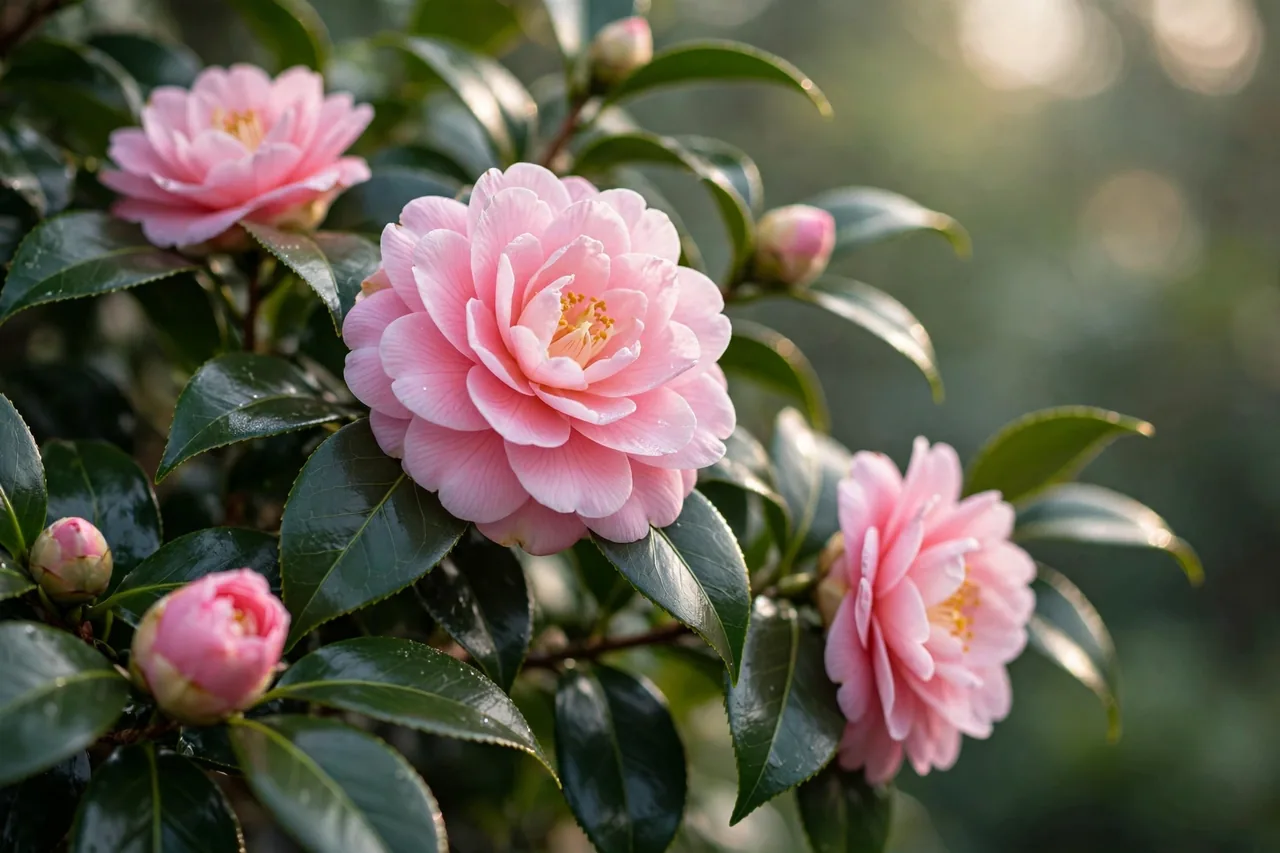
9. Camellia (Camellia japonica)
The camellia is winter’s rose: flawless, layered blooms in white, pink, and red opening from late fall through spring on glossy evergreen shrubs, at a time when the garden desperately needs them. Native to Japan, Korea, and China, camellias have been cultivated for centuries, and the hundreds of cultivars range from simple single wild-rose forms to formal doubles that look carved from wax.
Plant camellias in part shade in zones 7–9, in acidic (pH 5.5–6.5), humus-rich, well-drained soil — they share the rhododendron’s love of acid ground. Shelter them from harsh morning sun and drying winds, mulch to keep roots cool, and water consistently; drought causes bud drop.
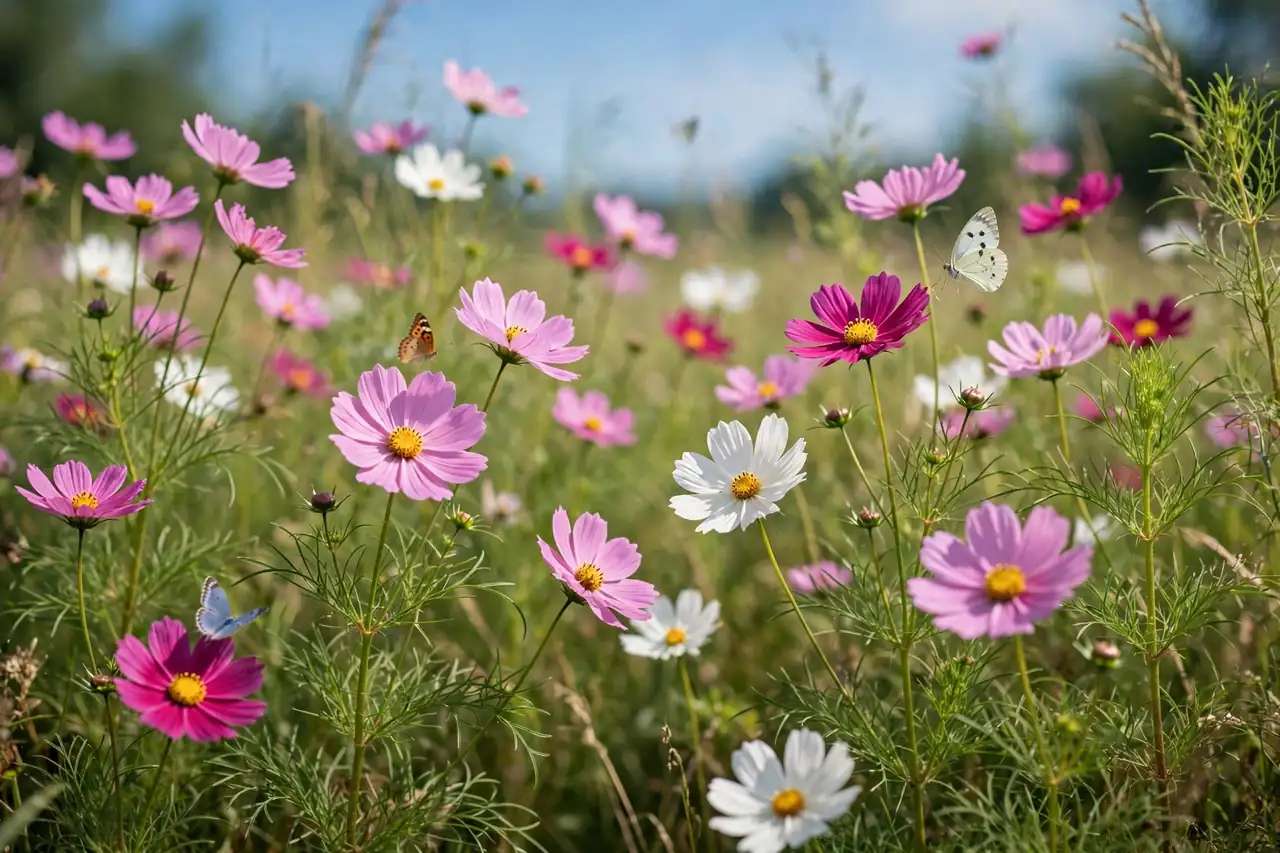
10. Cosmos (Cosmos bipinnatus)
Cosmos is proof that the easiest plants are often the loveliest. Sow these Mexican wildflower seeds directly in the garden, and within weeks you have clouds of daisy-like pink, white, and magenta blooms on feathery foliage, swaying above the border from summer until frost. Bees and butterflies adore them, they make superb cut flowers, and they self-sow so reliably you may never plant them twice.
Cosmos thrives on neglect: full sun and poor to average soil actually produce more flowers than rich ground, which grows leaves at the expense of blooms. Deadhead for continuous flowering or leave the seed heads for goldfinches and next year’s volunteers. Truly a plant-it-and-forget-it annual.
11. Canna (Canna × generalis)
Cannas bring the tropics to any garden: bold paddle-shaped leaves — green, bronze, or striped — topped with spikes of vivid red, orange, yellow, or pink flowers that bloom from summer to frost. Hummingbirds treat them like neon signs. These rhizomatous perennials from tropical America grow with astonishing speed, turning an empty border into a jungle by August.
Give cannas full sun and the richest, moistest soil you have — they are one of the few plants that thrive in soggy spots and even at pond edges. Hardy in zones 7–10; north of there, dig the rhizomes after the first frost, dry them, and store frost-free over winter.
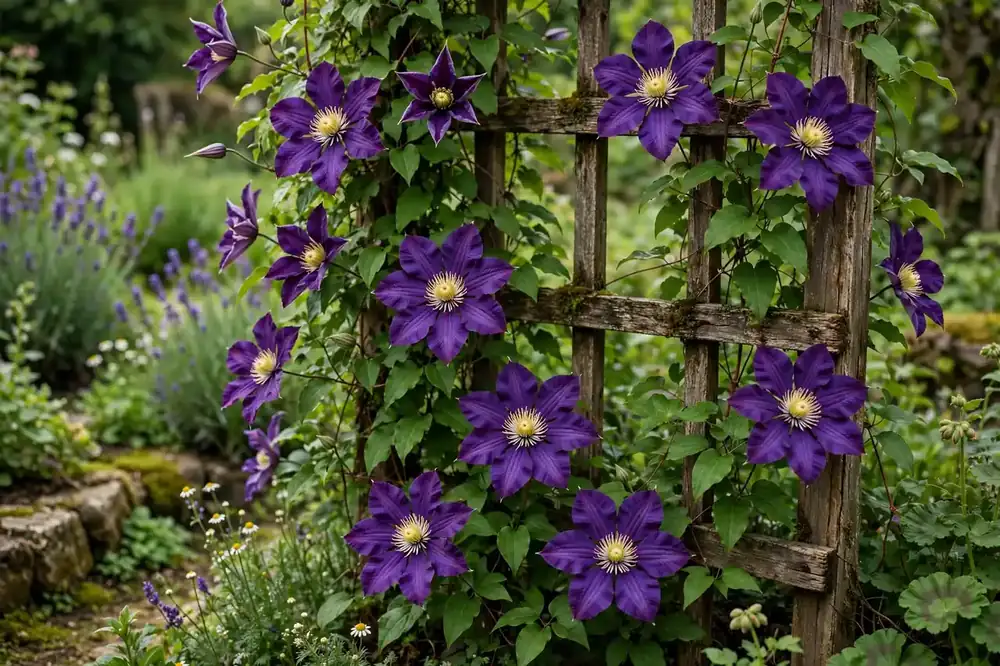
12. Clematis (Clematis spp. and hybrids)
Clematis is the queen of flowering vines, and with over 300 species plus thousands of hybrids, there is one for every month of the growing season. The large-flowered hybrids produce dinner-plate blooms in purple, pink, blue, white, and red; the species types offer clouds of smaller bells and stars with delicious fragrance. A mature clematis clothing a trellis, obelisk, or old tree is one of gardening’s great sights.
Remember the mantra: heads in the sun, feet in the shade. Plant clematis with its crown 2–3 inches below soil level in full sun, then shade the roots with mulch, stones, or low companion plants. Pruning depends on the group — early bloomers need only tidying, while summer bloomers are cut hard in late winter.
13. Calla Lily (Zantedeschia aethiopica)
The calla lily is pure elegance: a sculptural, trumpet-shaped spathe — classically white, now bred in yellow, pink, purple, orange, and near-black — rising above arrow-shaped green leaves. Native to the marshes of South Africa, it carries an Art Deco glamour that has made it a wedding and funeral flower for a century, yet it is surprisingly easy to grow in the garden.
Plant the rhizomes 4 inches deep in spring in full sun to part shade, in rich, moisture-retentive soil — callas love water and even tolerate boggy edges. Hardy in zones 8–10; in colder climates, lift the rhizomes after frost and store them dry over winter.
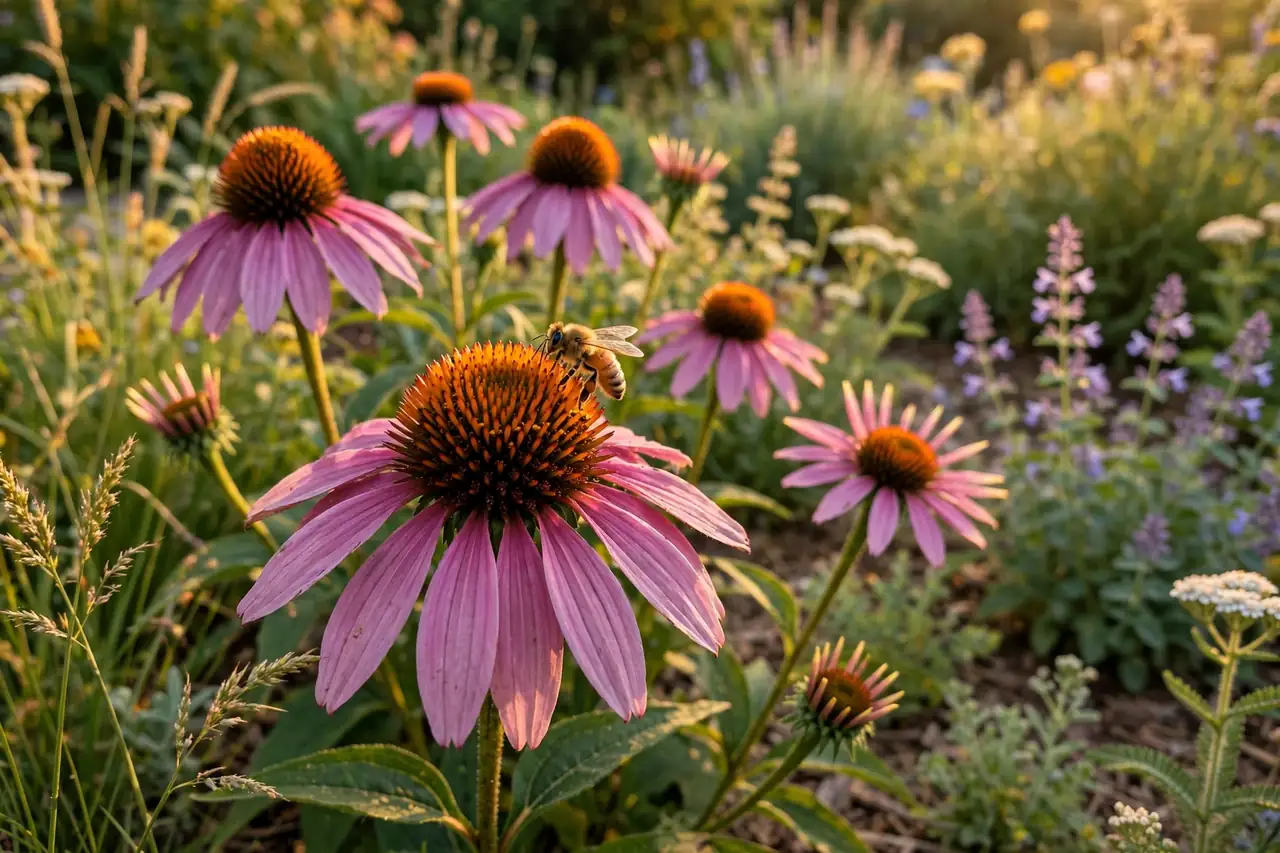
14. Coneflower (Echinacea purpurea)
The purple coneflower is the backbone of the American prairie garden: sturdy 2–4 foot stems topped with daisy-like blooms whose prominent coppery cones give the plant its name. Native to central and eastern North America, it feeds bees and butterflies all summer, then feeds goldfinches all winter if you leave the seed heads standing. Modern breeding has added white, yellow, orange, and double forms, but the wild purple remains unbeatable.
Plant coneflowers in full sun in zones 3–8, in average to lean, well-drained soil — they actually prefer poor soil and are superbly drought tolerant once established. Deadhead the first flush for rebloom, but leave the fall heads for birds and winter interest. Divide every 3–4 years in spring.
15. Coral Bells (Heuchera spp. and hybrids)
Coral bells have undergone one of the most dramatic makeovers in horticulture: once grown for their dainty coral flower spikes, modern heucheras are foliage stars, with rounded, ruffled leaves in purple, caramel, lime, silver, and near-black. These North American natives form neat evergreen mounds that light up shade borders, containers, and path edges year-round in mild climates.
Plant coral bells in part shade in zones 4–9, in rich, well-drained soil — they rot in winter wet, so drainage matters more than fertility. In hot climates give them more shade; in cool climates they tolerate more sun. Divide every 3–4 years as the crowns lift out of the soil, replanting them slightly deeper.
16. Crocus (Crocus vernus and hybrids)
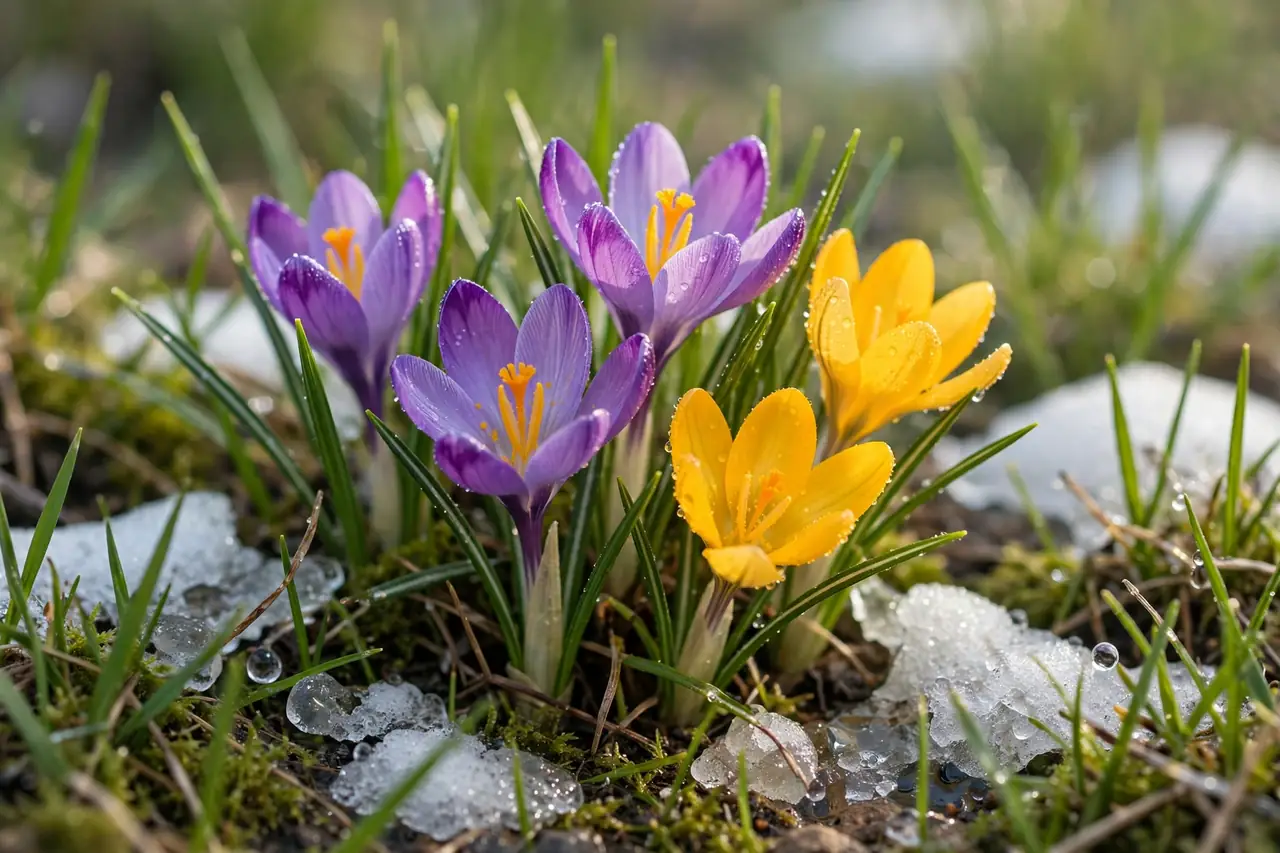
Crocuses are spring’s opening act: jewel-like cups of purple, yellow, white, and striped blooms pushing through the last of winter, sometimes flowering through snow. Bees emerging from hibernation make a beeline for them, and a lawn or border drift of a few hundred crocuses is one of the cheapest, most joyful displays in gardening.
Plant the corms 3–4 inches deep in fall, in full sun and well-drained soil — crocuses demand a dry summer dormancy. Hardy in zones 3–8, they naturalize beautifully in lawns if you delay the first mowing until the foliage ripens. Plant in large drifts, never in stiff rows, and protect from squirrels with a layer of chicken wire at planting time.
17. Coreopsis (Coreopsis lanceolata)
Coreopsis — tickseed — is the sunny optimist of the perennial border: masses of golden-yellow, daisy-like flowers floating above airy foliage from early summer to fall. This North American native is famously tough, thriving in poor soil, heat, and drought where fussier perennials give up.
Plant coreopsis in full sun in zones 4–9, in average to poor, well-drained soil — rich ground makes it floppy. Deadhead regularly or shear the whole plant by half after the first flush for a strong rebloom. Divide every 2–3 years to keep clumps vigorous. Butterflies flock to it, deer mostly ignore it, and it asks for almost nothing in return.
18. Columbine (Aquilegia spp. and hybrids)
Columbines are the ballerinas of the spring garden: nodding, spurred flowers in every shade of blue, purple, pink, red, yellow, and white, dancing above delicate, lacy foliage. Native across the Northern Hemisphere, the wild American columbine (A. canadensis) with its red-and-yellow lanterns is a hummingbird magnet, while the long-spurred Rocky Mountain columbine (A. coerulea) is Colorado’s state flower.
Plant columbines in part shade in zones 3–8, in rich, moist but well-drained soil. They self-sow freely — often hybridizing into delightful surprises — so leave some seed heads if you want volunteers. The main pest is leaf miner, which disfigures foliage but rarely kills the plant; simply cut back damaged leaves after flowering.
19. Catmint (Nepeta × faassenii)
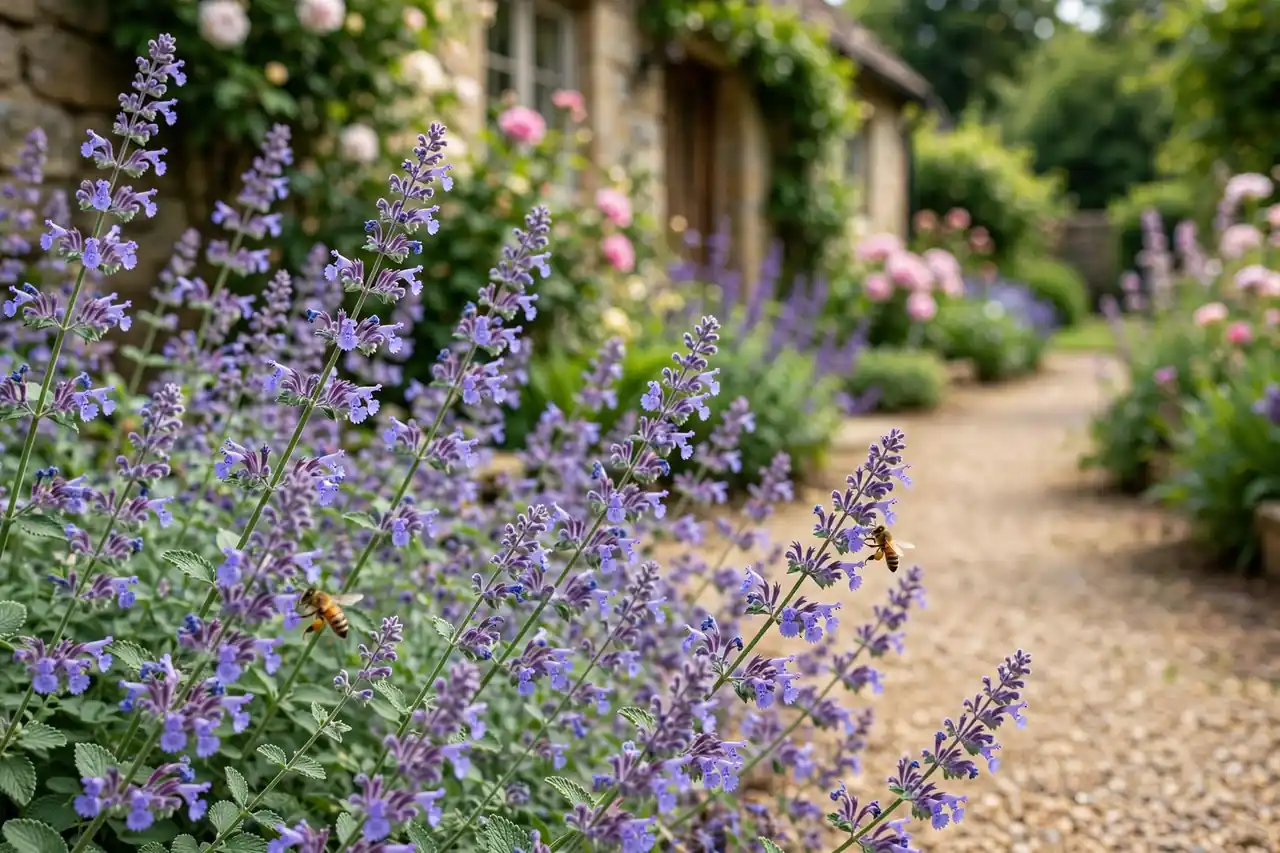
Catmint is the plant that makes garden designers look like geniuses: billowing mounds of soft gray-green foliage topped with clouds of lavender-blue flowers from late spring to fall, beloved by bees, butterflies, and every cat in the neighborhood. The cultivar ‘Walker’s Low’ was the Perennial Plant Association’s Plant of the Year and remains one of the most planted perennials in the world.
Give catmint full sun in zones 3–8 and lean, well-drained soil — it hates wet feet and rich soil makes it flop. Shear plants back by half after the first bloom flush for fresh foliage and a strong rebloom. It is deer and rabbit resistant, drought tolerant, and pairs beautifully with roses, coneflowers, and ornamental grasses. Expect feline visitors; the foliage contains the same compounds that drive cats wild.
20. Crape Myrtle (Lagerstroemia indica)
The crape myrtle is the signature flowering tree of the American South: from midsummer to fall, when few trees dare to bloom, it erupts in huge panicles of crepe-papery flowers in pink, red, purple, and white. Add cinnamon-colored exfoliating bark for winter interest, brilliant fall foliage, and a naturally sculptural multi-trunk form, and you have a four-season tree.
Plant crape myrtles in full blazing sun in zones 7–10 — shade means no flowers. They are extremely drought and heat tolerant once established and thrive in poor soil. The critical rule: never commit “crape murder.” Top-pruning the trunks into stubs ruins the tree’s form; instead, thin selectively in late winter, removing suckers and crossing branches. Choose mildew-resistant cultivars for humid climates.
21. Clivia (Clivia miniata)
Clivia is the houseplant that blooms when you need it most: in late winter, strap-like dark-green leaves produce a stout stalk crowned with a head of trumpet-shaped orange, red, or yellow flowers that last for weeks. Native to the shady forests of South Africa, it is a slow, stately plant that can live for decades — century-old clivias passed down through families are not unusual.
The secret to clivia blooms is a cool, dry winter rest: from fall to early winter, keep it in a cool room (50–55°F), water sparingly, and do not feed. When the flower stalk appears, return it to normal care — bright indirect light and regular watering. It blooms best when slightly pot-bound, so repot only every 3–4 years. All parts are toxic if eaten, so keep it from curious pets.
22. Celosia (Celosia argentea)
Celosia looks like it was designed by a textile artist: the plume types send up feathery flames of red, orange, pink, and yellow, while the cockscomb types form velvety, brain-like crests in shocking magenta and crimson. Native to tropical Africa and Asia, this annual brings an almost electric intensity to summer beds and containers, and it dries beautifully for everlasting arrangements.
Sow celosia after all frost danger in full sun — it needs heat to thrive and sulks in cold, wet soil. Average garden soil is fine; avoid over-fertilizing, which produces leaves at the expense of flowers. Deadhead for continuous bloom or leave the heads to dry on the plant for stunning dried arrangements. It self-sows lightly where summers are long.
23. Crabapple (Malus spp. and hybrids)
Flowering crabapples are spring’s grand finale among trees: clouds of pink, red, or white blossoms — often deliciously fragrant — followed by glossy persistent fruits that feed birds through winter. Modern disease-resistant cultivars have banished the old reputation for scab and rust, and varieties like ‘Prairifire’ and ‘Donald Wyman’ offer purple foliage, coral-red fruits, and superb winter silhouettes.
Plant crabapples in full sun in zones 4–8, in average, well-drained soil. Choose disease-resistant cultivars and give the tree good air circulation to keep foliage healthy. Prune in late winter to shape, removing suckers and crossing branches. The small fruits are too tart for fresh eating but make excellent jelly — and they keep robins and cedar waxwings visiting all winter.
24. Chinese Lantern (Physalis alkekengi)
Chinese lantern is grown for its fall magic: after insignificant white summer flowers, each bloom swells into a glowing orange, papery husk — a perfect little lantern — enclosing a cherry-like berry. Dried, these lanterns last for years in autumn arrangements and wreaths, their vivid orange unmatched by any other dried plant material.
Plant it in full sun to part shade in zones 3–9, in average soil. The warning: Chinese lantern spreads aggressively by underground rhizomes and can take over a bed. Grow it in a buried bottomless pot, a contained raised bed, or a spot where it can roam freely. Harvest the lanterns for drying just as they turn fully orange, before fall rains spot them.
25. Crown Imperial (Fritillaria imperialis)
The crown imperial is the drama queen of spring bulbs: a stout 2–3 foot stem topped with a ring of nodding orange, red, or yellow bell flowers, crowned by a tuft of leaves like a pineapple top. Native to the rocky slopes of Turkey, Iran, and Afghanistan, it has been prized since Ottoman times, and its musky scent reputedly repels moles and voles from the bulb bed.
Plant the large bulbs 8 inches deep in fall, in full sun to part shade and sharply drained soil — and plant them on their sides so water cannot collect in the hollow crown and cause rot. Hardy in zones 5–8, crown imperials dislike disturbance and bloom best when left alone for years. The foxy scent is strong up close, so site them slightly away from paths.
26. Carnation (Dianthus caryophyllus)
The carnation is one of humanity’s oldest cultivated flowers, grown for over 2,000 years for its ruffled, clove-scented blooms. Modern garden carnations come in an astonishing range of colors — including striped and picotee forms — and their spicy-sweet fragrance is unmatched among cut flowers. As a border perennial in zones 5–9, they bloom from late spring into summer with steady deadheading.
Carnations insist on full sun and sharply drained, slightly alkaline soil; wet winter soil kills more carnations than cold does. Plant them where air circulates freely, deadhead regularly, and shear plants lightly after the main flush. A vase of home-grown carnations can perfume an entire room — cut stems last two weeks or more.
27. Candytuft (Iberis sempervirens)
Candytuft is the evergreen edging plant that earns its keep twice: year-round mounds of glossy dark-green foliage, then a mid-spring blizzard of pure-white flower clusters so dense the leaves disappear. Native to southern Europe, this low perennial is perfect for rock gardens, wall tops, path edges, and the front of sunny borders.
Plant candytuft in full sun in zones 4–8, in average to poor, sharply drained soil — it hates wet feet, especially in winter. Shear the plants back by a third after flowering to keep them compact and encourage a light fall rebloom. It is evergreen in mild climates and reliably perennial, asking for almost nothing beyond that annual haircut.
28. Christmas Cactus (Schlumbergera truncata)
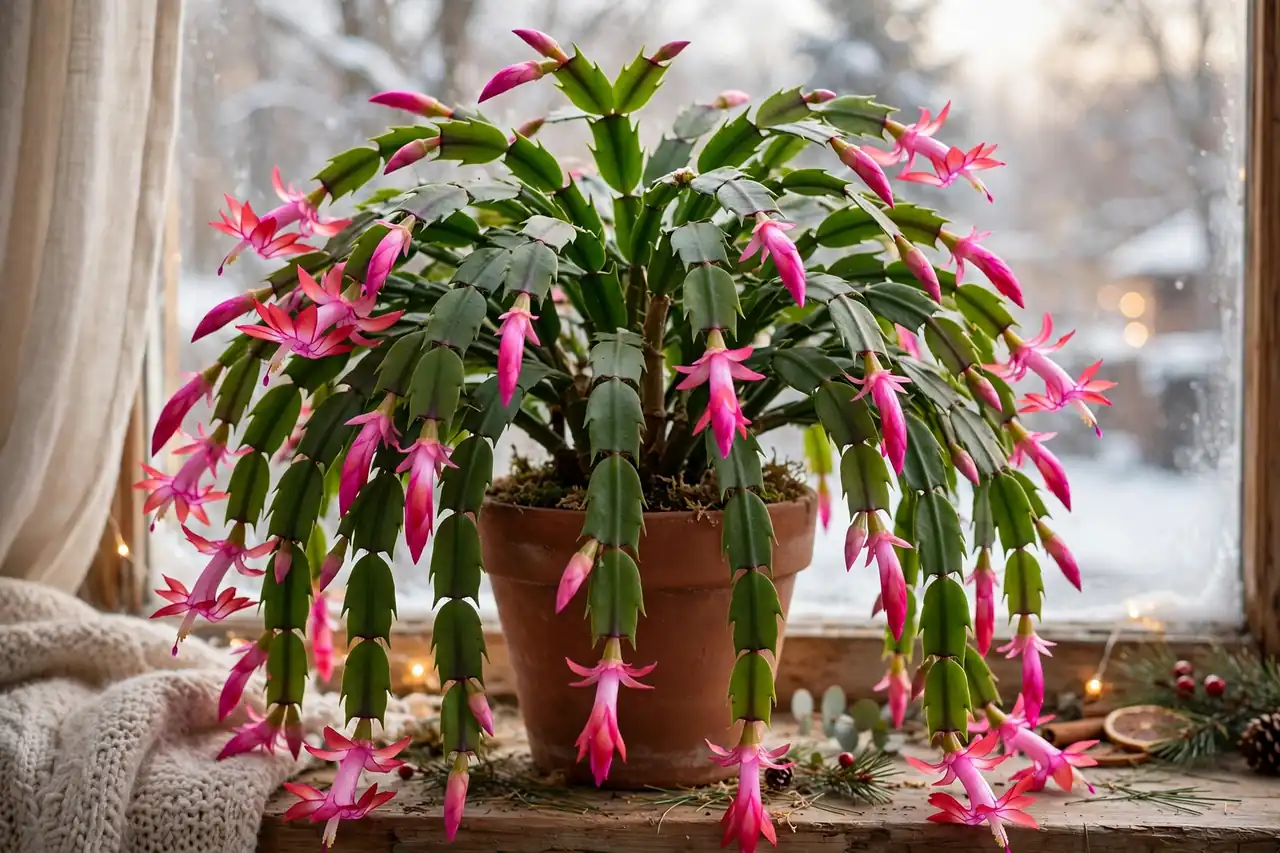
The Christmas cactus is the holiday houseplant that actually lives up to the hype: cascading segmented stems erupting in layers of pink, red, white, or orange tubular flowers just as the days grow shortest. Native to the coastal mountains of Brazil, where it grows as an epiphyte in tree forks, it is a true cactus that prefers the opposite of desert conditions.
Grow it in bright indirect light in a fast-draining mix, watering when the top inch dries — more generously while budding and blooming. To trigger holiday blooms, give it 12–14 hours of uninterrupted darkness and cool nights (55–65°F) for 3–6 weeks in fall. Once buds form, do not move the plant or they may drop. With basic care, Christmas cacti live for decades and grow into spectacular specimens.
29. Barrel Cactus (Echinocactus grusonii)
The golden barrel cactus is the desert’s perfect sphere: a ribbed, symmetrical globe covered in golden-yellow spines, glowing like a lantern in the sun. Native to a small region of central Mexico, mature specimens eventually produce a crown of yellow flowers — but the form alone is the attraction, a living sculpture that anchors rock gardens and succulent collections.
Give barrel cactus the sunniest, hottest spot available in extremely gritty, fast-draining soil. Water deeply but rarely — every few weeks in summer, almost nothing in winter. Hardy only in zones 9–11, it is grown in pots elsewhere and brought indoors before frost. Handle with thick gloves or tongs; the spines are formidable, which is exactly the point.
30. Century Plant (Agave americana)
The century plant is the desert garden’s exclamation point: a massive rosette of blue-gray, sword-like leaves edged with wicked teeth, spreading 6–10 feet wide. Its legend — that it blooms once a century — is an exaggeration, but the truth is dramatic enough: after 10–30 years, it sends up a 15–25 foot flower stalk, blooms spectacularly, and dies, leaving offsets to carry on.
Plant century plant in full sun in zones 8–11, in sharply drained, even rocky soil. Once established it needs no water beyond rainfall and no care beyond removing dead leaves (wear armor — the leaf tips are needle-sharp). Give it room and keep it away from paths and play areas. In cold climates, grow the smaller, hardier agaves in pots instead.
31. Creeping Jenny (Lysimachia nummularia)
Creeping Jenny is the groundcover that spills like liquid gold: round, coin-like leaves in chartreuse that trail over walls, cascade from containers, and knit together into a weed-smothering carpet. In early summer it adds small butter-yellow flowers. This European native roots as it spreads, making it one of the fastest living mulches for moist, difficult spots.
Plant it in full sun to part shade in zones 4–8, in average to moist soil — it thrives in damp areas where other groundcovers fail, and the golden color is brightest in sun. The catch is vigor: in rich, moist soil it can be aggressive, so edge beds firmly or grow it in containers. ‘Aurea’ is the golden form; the plain green species is even tougher.
32. Chives (Allium schoenoprasum)
Chives prove that C-plants are not all ornamentals: this perennial herb forms tidy clumps of hollow, grass-like leaves with a mild onion flavor, essential for salads, baked potatoes, and herb butters. In late spring the clumps crown themselves with globe-like purple pompon flowers that are edible, beautiful, and irresistible to bees — ornamental enough for the flower border.
Plant chives in full sun in zones 3–9, in average garden soil. They are among the easiest herbs to grow: drought tolerant, pest-free, and perennial for years. Snip leaves from the outside of the clump, cutting an inch above the base, and the plant regrows quickly. Deadhead the flowers if you want to prevent self-sowing — or leave them for the pollinators and next year’s volunteers.
Growing Tips for C-Plants
Match the plant to your zone first. C-plants span zones 3–12 — from the ultra-hardy coneflower, catmint, and columbine (zone 3) to tropical crotons, calatheas, and Chinese evergreens (zones 10–12). Check the tables above before falling in love with a plant that cannot survive your winter.
Give sun-lovers real sun. Chrysanthemums, cosmos, coneflowers, coreopsis, crape myrtles, and cacti all bloom best with at least six hours of direct sun. Shade specialists like caladiums, coral bells, cast iron plant, and columbine will scorch in hot afternoon sun — tuck them under trees or on the north side of the house.
Keep tropical houseplants humid. Calathea, croton, and Chinese evergreen all come from humid rainforests and suffer in dry indoor air. Group plants together, set pots on pebble trays, or run a humidifier nearby — brown leaf edges are the classic cry for more moisture in the air. Small humidity-lovers like calathea are also naturals for enclosed glass gardens — see our picks for the best terrarium plants.
Lift tender bulbs and tubers in cold zones. Cannas, caladiums, and calla lilies are hardy only to zones 7–9. North of there, dig the rhizomes and tubers after the first light frost, dry them, and store them frost-free over winter for replanting in spring.
Deadhead for more flowers. Cosmos, coneflowers, coreopsis, catmint, carnations, and chrysanthemums all rebloom far longer when spent flowers are removed regularly.
Watch the toxic ones. Croton sap, caladium, calla lily, clivia, and crown imperial are all toxic if ingested. Enjoy them, but site them away from vegetable beds, curious toddlers, and pets that chew plants.
Which C-Plants Will You Grow?
From the snow-pushing crocuses of late winter to the frost-defying chrysanthemums of fall, C-plants cover every season, every garden style, and nearly every hardiness zone. If you are just starting out, you cannot go wrong with the bulletproof trio of coneflowers, cosmos, and catmint. If you want drama, try a crown imperial, a crape myrtle, or a century plant. And if you garden indoors, a calathea, croton, or cast iron plant brings the letter C to your living room.
Pick three C-plants that suit your light and zone, plant them this season, and watch the letter C become the hardest-working letter in your garden. Then keep going through the alphabet with our guides to plants that start with D and plants that start with P. Happy planting!
Frequently Asked Questions
What are the most popular plants that start with C?
The most popular C-plants are chrysanthemum, croton, calathea, camellia, cosmos, clematis, coneflower, canna, calla lily, cyclamen, coleus, and Christmas cactus. These twelve cover fall perennials, tropical houseplants, flowering vines, spring bulbs, and summer annuals, and all are widely available at garden centers.
What plants starting with C are good for beginners?
Cosmos, coneflowers, catmint, coreopsis, Chinese evergreen, cast iron plant, and chives are nearly indestructible and perfect for beginners. They tolerate imperfect soil, missed waterings, and a wide range of light conditions while still blooming or looking great.
Which C-plants bloom in spring?
Spring-blooming C-plants include crocus, camellia (late winter to spring), columbine, candytuft, crown imperial, crabapple, coral bells, and clivia indoors. Plant a mix of early, mid, and late spring bloomers for two to three months of continuous color.
What plants that start with C grow in shade?
Excellent shade-tolerant C-plants include caladium, coral bells, cast iron plant, columbine, Chinese evergreen, calathea, and creeping Jenny. Most prefer the dappled light under deciduous trees or bright indirect indoor light rather than deep, dark shade.
Are chrysanthemums perennials or annuals?
Garden chrysanthemums are herbaceous perennials, hardy in USDA zones 5–9. Many are sold in fall as seasonal color and treated as annuals, but planted in spring in well-drained soil with winter mulch, they return reliably for years — just keep them out of soggy winter ground.
Which plants starting with C are toxic to pets?
Several C-plants are toxic if chewed or eaten: croton, caladium, calla lily, clivia, crown imperial, cyclamen tubers, and Chinese evergreen. If you have pets that chew plants, choose pet-safe options like Christmas cactus or herbs like chives (in moderation), and keep toxic species out of reach.
References
- The Old Farmer’s Almanac — Growing Chrysanthemums
- Royal Horticultural Society — Chrysanthemum Plant Search
- Royal Horticultural Society — Camellia Plant Search
- Royal Horticultural Society — Clematis Plant Search
- Missouri Botanical Garden — Plant Finder
- Lady Bird Johnson Wildflower Center — Native Plant Database