Lilac Flower: Meaning, Types and How to Grow Lilacs
For two or three weeks each spring, one shrub perfumes whole streets. Lilac does not do subtlety: great cones of purple, pink and white flowers, a fragrance that carries on evening air clear down the road, and then — permission to be a plain green shrub for the remaining forty-nine weeks, which gardeners forgive instantly every April.
The lilac is a Balkan mountain native that travelled through Ottoman gardens into every temperate garden on earth, became New Hampshire’s state flower, and left relic plantings that still mark vanished farmsteads a century later. This guide covers what a lilac flower is, the six kinds worth knowing, what lilacs mean, and how to grow them — including the pruning rule whose violation is why half the lilacs in the suburbs never bloom.
Quick Answer
A lilac flower is the fragrant spring bloom of shrubs in the genus Syringa, best known as common lilac (Syringa vulgaris), in the olive family. Lilacs flower for two to three weeks in mid-to-late spring in USDA zones 3 to 7, needing a genuinely cold winter to bloom well. Grow them in full sun and well-drained, neutral-to-alkaline soil. The golden rules: prune immediately after flowering, never in autumn or spring — lilacs bloom on last year’s wood — and give them air, because crowded lilacs mildew.
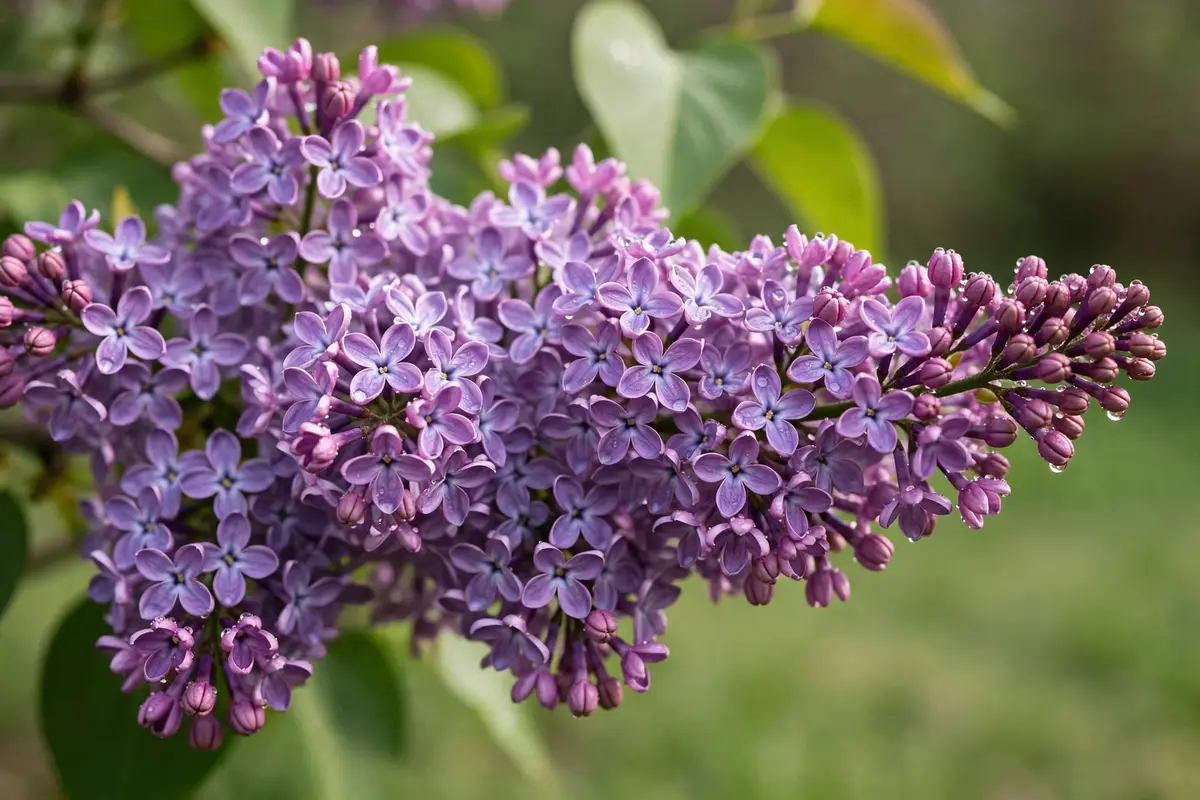
Table of Contents
- What Is a Lilac Flower?
- Types of Lilac and 6 Kinds Worth Knowing
- Lilac Flower Meaning and Symbolism
- Lilac Flower Colours and Their Meanings
- How to Grow Lilacs
- Common Mistakes When Growing Lilacs
- Cutting Lilacs for the Vase
- Frequently Asked Questions
What Is a Lilac Flower?
Lilacs are deciduous shrubs of the genus Syringa — about twenty species in the olive family, Oleaceae, kin to jasmine, forsythia and the olive itself. The garden standard, Syringa vulgaris, is native to rocky hillsides of the Balkan Peninsula. It reached Western Europe in the 1560s through the Ottoman court gardens — the imperial ambassador Ogier de Busbecq is usually credited with carrying it from Constantinople to Vienna — and by the 1700s colonists had planted it across New England, where it became so identified with homestead gardens that archaeologists still map abandoned farmsteads by the lilacs blooming alone in the woods. You can read more on the Syringa vulgaris page on Wikipedia.
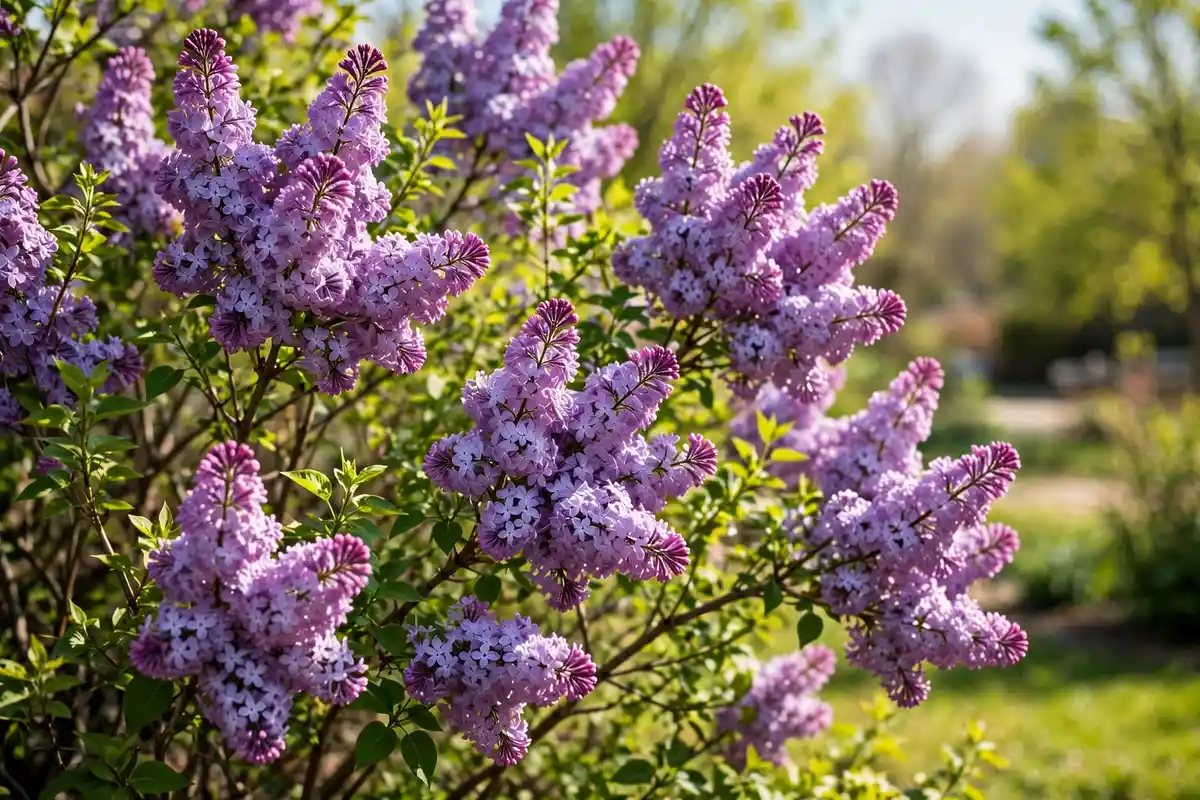
Each lilac “flower” is really a panicle: a cone of dozens of small, tubular, four-petalled florets, each one capable of the famous scent (the perfume comes from compounds chemists named for the plant — lilac aldehyde among them). A healthy shrub covers itself in these cones for a fortnight. New Hampshire chose wisely in 1919: the lilac as state flower “is symbolic of that hardy character of the men and women of the Granite State” — a shrub that winters at −30°C and perfumes May anyway.
Lilac Flower Quick Facts
- Botanical name: Syringa vulgaris and hybrids (olive family, Oleaceae).
- Hardiness: USDA zones 3 to 7; needs real winter chill to bloom.
- Height: 1½ feet (dwarf) to 15 feet (old common lilacs); tree lilacs taller.
- Bloom time: mid-to-late spring, 2 to 3 weeks; reblooming types flower again in autumn.
- Sun and soil: full sun; well-drained, neutral to slightly alkaline soil.
- Good to know: prune right after flowering — buds for next year are set by midsummer.
Types of Lilac and 6 Kinds Worth Knowing
From French doubles to two-foot dwarfs, here is the family. The table separates them; the profiles follow. For the full list of flower names, see our flower names A to Z guide.
| Type | What it is | Flowers | Size | Best use |
|---|---|---|---|---|
| Common / French lilacs | S. vulgaris cultivars | Single/double, all colours | 8–15 ft | The classic display |
| Miss Kim lilac | S. patula ‘Miss Kim’ | Pale lavender, ice-blue fade | 4–6 ft | Small gardens, milder zones |
| Dwarf Korean lilac | S. meyeri ‘Palibin’ | Violet-pink, very fragrant | 4–5 ft (neat) | Hedges, formal gardens |
| Reblooming lilacs | Bloomerang® series | Purple/pink, twice a year | 3–5 ft | Long season, small spaces |
| Persian lilac | S. × persica | Pale lilac, lacy leaves | 6–8 ft | Graceful, less chill need |
| Japanese tree lilac | S. reticulata | Creamy white plumes, late | 20–30 ft tree | Streets, shade tree |
1. Common and French Lilacs — the Classics
The great garden race: S. vulgaris and its hundreds of cultivars, the “French” lilacs bred by the Lemoine nursery from the 1870s onward. This is where the colours live — magenta-purple ‘Charles Joly’, snow-white double ‘Mme Lemoine’, picotee ‘Sensation’ (purple florets edged in white) and the true lilac-blue standards. Plant one classic beside a door where you pass daily in May; the scent is the point of the entire enterprise. They are also the biggest and the longest-lived: century-old clumps are common.
2. Miss Kim Lilac — the Southern Friend
A Manchurian lilac (S. patula ‘Miss Kim’) bred for the jobs common lilac does badly: smaller size (4 to 6 feet), denser habit, better mildew resistance, burgundy-red autumn colour — and a lower chill requirement that lets it bloom further south (to zone 8). Flowers open pale lavender and fade ice-blue, heavily perfumed. For warm-edge gardeners and small gardens, start here.
3. Dwarf Korean Lilac — ‘Palibin’
Syringa meyeri ‘Palibin’ is the tidy one: a dense, rounded 4- to 5-foot shrub with small leaves, violet-pink flowers of knockout fragrance relative to its size, and the discipline to hold a hedge line or a standard (lollipop) shape. It is the lilac for formal gardens, front-door pairs and anyone whose common lilac ate a path. Mildew-resistant, low-chill tolerant, and it often throws a light second flush.
4. Reblooming Lilacs — the Bloomerang® Series
The breeders’ answer to “only two weeks?”: Bloomerang lilacs flower heavily in spring, rest, then bloom again from midsummer into autumn. ‘Bloomerang Purple’ and ‘Dark Purple’ stay 3 to 5 feet; the second show is smaller than the first but lands when no other lilac is blooming. Deadhead the spring flush promptly to strengthen the encore. Two perfumes a year changes the maths on small shrubs.
5. Persian Lilac — the Graceful One
Syringa × persica is an old hybrid (despite the name, an ancient garden cross rather than a wild Persian species) with finer, sometimes lacy-cut leaves, a looser arching habit, and pale lilac flowers on a 6- to 8-foot frame. It needs less chill than common lilac and carries a lighter, more elegant silhouette — the connoisseur’s lilac, less grown than it deserves.
6. Japanese Tree Lilac — the Late Giant
Syringa reticulata breaks the lilac mould entirely: a small tree (20 to 30 feet) flowering in early summer — weeks after the shrubs finish — with huge creamy-white plumes, cherry-like bark, and street-tree toughness (salt, pollution, zone 3 cold). Its scent is privet-sweet rather than classic-lilac. Cities plant it by the thousand; gardens with room should steal the idea.
Lilac Flower Meaning and Symbolism
The lilac means first love and youthful innocence — in the Victorian language of flowers, to give lilacs was to ask “do you still love me?” and to mark the first emotions of love itself. The colour split matters: purple lilac is the emblem of first love, white lilac of youthful purity and innocence (white lilacs were correspondingly used at young funerals in Victorian England — innocence is a double-edged bouquet). Greek myth supplies the name’s story: the god Pan, pursuing the nymph Syringa, found her transformed into the reed-like shrub — syrinx — from whose stems he made his pipes; lilac stems are indeed hollow and pith-filled, pipe-ready.
Today the lilac mostly says spring itself: renewal, confidence, and the brief, intense beauty of early love — it is also a traditional gift for the 8th wedding anniversary in some lists, “first love, still blooming”. Set it beside its colour-cousin: in the same Victorian lists the violet flower meant faithfulness, so a lilac-and-violet posy said first love, kept faithfully — a whole letter in flowers. It is also woven through the May birth flower season’s garden, though May’s official blooms are lily of the valley and hawthorn.
Lilac Flower Colours and Their Meanings
The colour “lilac” is named after the flower — pale purple is the type, but the genus spans more:
- Purple lilac — first love: the original colour, and the most fragrant in most cultivars.
- White lilac — youthful innocence and purity: ‘Mme Lemoine’ and its double whites carry May weddings.
- Pink lilac — love and acceptance: soft pinks like ‘Maiden’s Blush’, strong spring romance.
- Magenta and deep purple lilac — strong love and passion: ‘Charles Joly’ and the dark French doubles.
- Blue-lilac — tranquillity and trust: the blue standards (‘President Lincoln’ is the famous one) are the connoisseurs’ chase.
How to Grow Lilacs
Lilacs are easy plants with two non-negotiables: winter cold and pruning timing. Gardeners on r/gardening on Reddit diagnose nine of ten lilac problems as “you pruned at the wrong time” or “it isn’t cold enough there”.
Site, Chill and Soil
Plant in full sun — six hours minimum or flowering thins — in well-drained soil of neutral to slightly alkaline reaction; a handful of lime suits acid ground. The chill rule is real botany: common lilac buds need long cold winters to mature, so in zones warmer than 7 choose low-chill kinds (Miss Kim, Persian, Descanso hybrids bred in California) — or accept leaves. Space generously: air movement is the mildew defence.
The Pruning Rule
Lilacs bloom on wood made the previous summer, and the flower buds for next spring are set by midsummer. Therefore: prune within a few weeks after flowering, and never in autumn, winter or early spring — every wrongly timed prune is next May’s flowers on the bonfire. Annual work is light: deadhead spent cones (optional, tidier), cut out a few of the oldest, thickest stems at the base each year to keep young wood coming, and remove suckers from grafted plants. For a neglected thicket, renovate over three winters, removing a third of the oldest stems each year — accepting a quiet spring in exchange for a reborn shrub.
Water, Food and Mildew
Water deeply in drought the first two years; established lilacs largely fend for themselves. Feed lightly in early spring with a general fertiliser — overfed lilacs leaf instead of blooming (the classic lush-green-no-flowers symptom is nitrogen). Powdery mildew arrives on the leaves in humid late summers: it looks dreadful and does the plant almost no harm; rake fallen leaves, thin for airflow, and choose resistant types (Miss Kim, ‘Palibin’) where it is chronic. Its fellow spring perfumer, the hyacinth flower, shares the same sunny well-drained bed happily.
Common Mistakes When Growing Lilacs
Mistake one, by a mile: pruning in autumn or spring and cutting off the year’s bloom. Mistake two: planting common lilac in a mild climate and waiting forever for flowers — match the type to the chill. Mistake three: shade — a lilac under trees becomes a green tower of disappointment.
Mistake four is feeding like a rose: high-nitrogen lawn fertiliser drifting onto lilac beds is a top cause of bloomless giants. Mistake five is panic at mildew: it is cosmetic, not fatal — treat the air, not the leaf. And the sixth is planting the shrub hard against a wall where its 12-foot future has 4 feet of room: lilacs outlive their planters, so plant for the shrub’s old age.
Cutting Lilacs for the Vase
Cut lilac in the cool of morning when about a third to half the florets on the cone are open — buds cut tighter rarely open indoors. The stems are woody and drink badly: split the stem ends vertically or crush them with a hammer, and plunge into warm water. Expect three to five days of perfume (remove leaves below the waterline — they foul it faster than the flowers fade).
A lilac arrangement needs nothing else — but if you must combine, stay in its own two weeks: tulips, late narcissi and branches of flowering quince are its natural contemporaries. And cut generously: pruning by bouquet, right after flowering, is exactly the timing the shrub wants anyway.
Frequently Asked Questions
Why is my lilac not blooming?
In order of likelihood: pruned at the wrong time (autumn/spring pruning removes the buds); not enough sun; too much nitrogen fertiliser; insufficient winter chill for common lilac in mild zones; or the shrub is simply young — seed-grown lilacs can take five-plus years, and old renovated shrubs skip a season. Fix the timing and the feed first. If your question is not answered here, the questions about the lilac flower on Quora cover most of the rest.
When do lilacs bloom?
For two to three weeks in mid-to-late spring — April to June depending on zone and type, with tree lilacs latest, into early summer. The season within the shrub runs the same order every year: common lilac, then the late hybrids, then the tree. Reblooming types add a second, smaller show in late summer-autumn.
How long do lilacs live?
A very long time: 75 to 100+ years is normal for common lilac, and relic homestead plantings far older are documented still blooming. Lilacs are heritage plants — planting one is a gift to grandchildren. Keep them young at heart with the annual removal of a few oldest stems.
Are lilacs deer resistant?
Mostly, yes — lilacs are rarely browsed once established (hungry deer in hard winters will sample almost anything, but lilac sits low on the menu). They are also notably tolerant of black walnut’s juglone, a useful niche under those trees.
Can lilacs grow in pots?
The dwarf types can: ‘Palibin’, Miss Kim and the Bloomerang series grow happily for years in large (15+ inch) pots of free-draining compost, given winter exposure to cold (they need the chill — do not overwinter them warm indoors) and regular water in summer. The big French lilacs belong in the ground.
Is lilac the same as lavender?
No — different families entirely (lilac is olive family; lavender is mint family), linked only by the colour family and the perfume trade. Both flowered in the same cottage gardens for centuries, which is how the confusion persists. For more flowers under the same letter, see our guide to flowers that start with L.