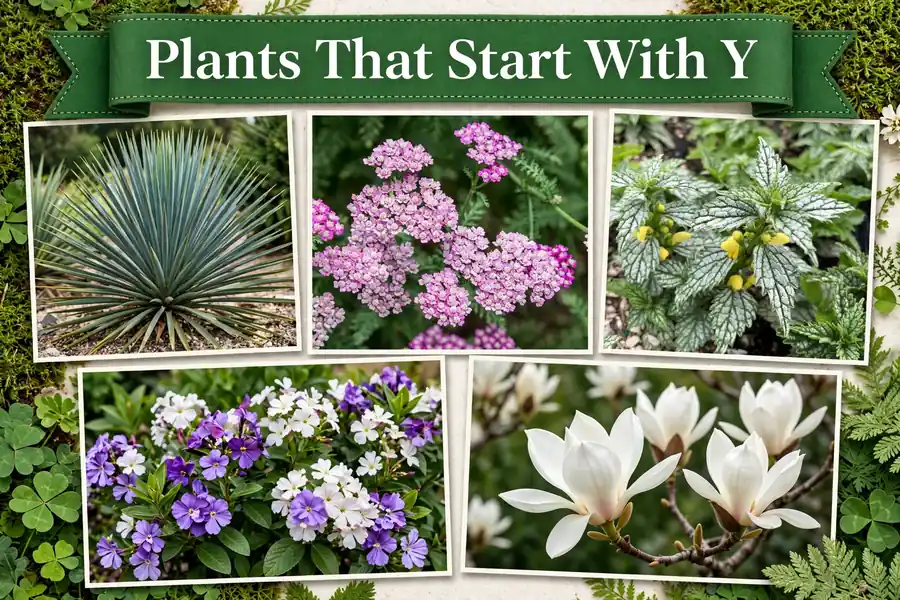
23 Plants That Start With Y (With Growing Tips)
The letter Y gives gardeners a wonderfully eclectic mix of plants. Sculptural yuccas, clouds of yarrow, the shade-loving yellow archangel, the color-shifting yesterday-today-and-tomorrow shrub, stately yews, and a parade of yellow-flowered beauties — plants that start with Y range from tropical showstoppers to hardy natives you can grow almost anywhere. Whether you are building an alphabet garden, hunting for a plant-themed gift, or simply curious which botanical names hide behind the letter Y, this guide has you covered.
Below you will find 23 real, botanically verified plants that start with Y — each with its scientific name, plant type, and practical growing tips so you can actually plant them, not just read about them. Every entry is a genuine species or hybrid you can buy from a nursery or seed catalog; nothing here is invented. A few of these plants carry honest caveats — the yew’s toxicity and the yellow archangel’s invasive streak among them — and those warnings are spelled out where they belong. If you are after blooms specifically, see our companion list of flowers that start with Y for even more flowering inspiration.
Quick Answer
What are the most popular plants that start with Y? The standouts are Yucca (sculptural evergreen for hot, dry spots), Yarrow (tough native wildflower), Yellow Archangel (silver-variegated shade groundcover — watch for invasiveness), Yesterday-Today-and-Tomorrow (fragrant tropical shrub whose flowers change color), Yew (classic evergreen for hedges; all parts except the red berry flesh are toxic), Yellowwood (native flowering tree), Yaupon Holly (evergreen native with red winter berries), Yulan Magnolia (ivory spring blooms), and Yellow Bells (heat-loving hummingbird magnet). Beginners should start with yarrow, yucca, kerria, or yellow chamomile — all forgiving and fast to reward you.
Table of Contents
- Quick Answer
- Plants That Start With Y: At a Glance
- 1. Yucca
- 2. Yarrow
- 3. Yellow Archangel
- 4. Yesterday-Today-and-Tomorrow
- 5. Yew
- 6. Yellow Jessamine
- 7. Yellowwood
- 8. Yaupon Holly
- 9. Yulan Magnolia
- 10. Yam
- 11. Yellow Wax Bells
- 12. Yellow Corydalis
- 13. Yellow Lady’s Slipper
- 14. Yellow Bells
- 15. Yerba Mate
- 16. Ylang-Ylang
- 17. Yellow Oleander
- 18. Youngberry
- 19. Yellow Passionflower
- 20. Yellow Foxglove
- 21. Yellow Chamomile
- 22. Yellow Flax
- 23. Kerria (Japanese Yellow Rose)
- Bloom, Water & Hardiness Comparison
- Frequently Asked Questions
- References
Plants That Start With Y: At a Glance
Here is every plant in this guide with its scientific name and type, so you can scan the full list before diving into the details.
| # | Plant | Scientific Name | Type |
|---|---|---|---|
| 1 | Yucca | Yucca filamentosa | Evergreen architectural perennial |
| 2 | Yarrow | Achillea millefolium | Native flowering perennial |
| 3 | Yellow Archangel | Lamiastrum galeobdolon | Shade groundcover |
| 4 | Yesterday-Today-and-Tomorrow | Brunfelsia pauciflora | Fragrant tropical shrub |
| 5 | Yew | Taxus spp. | Evergreen conifer |
| 6 | Yellow Jessamine | Gelsemium sempervirens | Evergreen flowering vine |
| 7 | Yellowwood | Cladrastis kentukea | Native flowering tree |
| 8 | Yaupon Holly | Ilex vomitoria | Evergreen native shrub |
| 9 | Yulan Magnolia | Magnolia denudata | Early-blooming tree |
| 10 | Yam | Dioscorea alata | Tropical edible vine |
| 11 | Yellow Wax Bells | Kirengeshoma palmata | Shade perennial |
| 12 | Yellow Corydalis | Corydalis lutea | Shade perennial |
| 13 | Yellow Lady’s Slipper | Cypripedium parviflorum | Native orchid |
| 14 | Yellow Bells | Tecoma stans | Flowering shrub |
| 15 | Yerba Mate | Ilex paraguariensis | Caffeinated evergreen tree |
| 16 | Ylang-Ylang | Cananga odorata | Fragrant tropical tree |
| 17 | Yellow Oleander | Cascabela thevetia | Flowering tropical shrub/tree |
| 18 | Youngberry | Rubus ‘Youngberry’ | Hybrid berry bramble |
| 19 | Yellow Passionflower | Passiflora lutea | Native flowering vine |
| 20 | Yellow Foxglove | Digitalis grandiflora | Flowering perennial |
| 21 | Yellow Chamomile | Anthemis tinctoria | Drought-tolerant perennial |
| 22 | Yellow Flax | Linum flavum | Flowering perennial |
| 23 | Kerria (Japanese Yellow Rose) | Kerria japonica | Spring-flowering shrub |
1. Yucca (Yucca filamentosa)
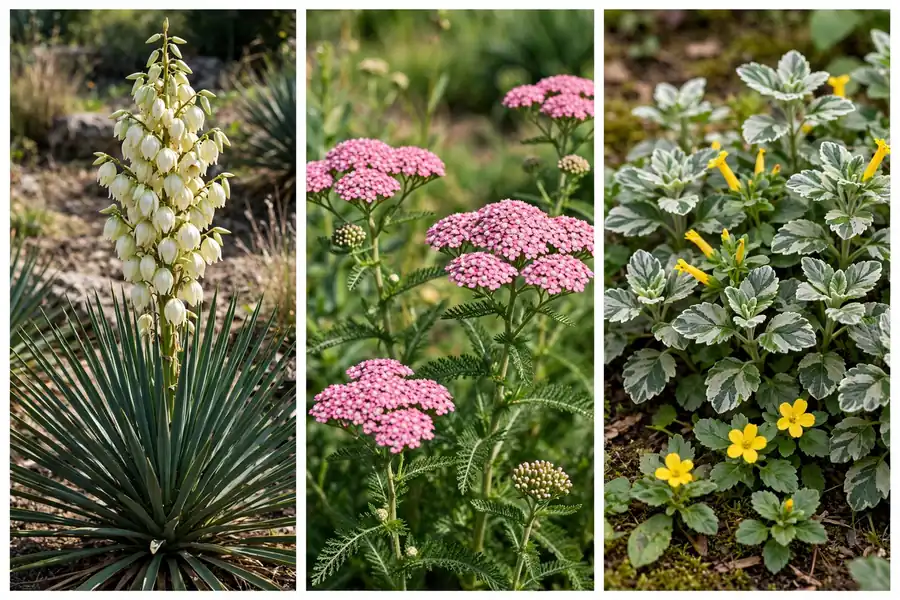
If your garden has a hot, dry, hopeless corner where nothing thrives, yucca is the answer. Adam’s needle (Yucca filamentosa) forms bold rosettes of stiff, sword-like evergreen leaves edged with curly white fibers, and every summer it sends up a towering spike — sometimes six feet tall — crowded with creamy white, bell-shaped flowers. It is one of the most architectural plants you can grow, giving desert-garden drama to ordinary suburban beds, and it is remarkably cold-hardy for something that looks this tropical.
Growing tips: Give yucca the sunniest, best-drained spot you have — full sun and sandy or gravelly soil are ideal, and it shrugs off drought, heat, and poor soil once established. The one thing it cannot stand is winter wetness, so avoid low spots and heavy clay. One practical warning: the leaf tips are needle-sharp, so plant it away from paths, play areas, and anywhere you brush past. Remove spent flower spikes at the base, and divide congested clumps in spring if you want more plants. Hardy in zones 4–10.
2. Yarrow (Achillea millefolium)
Yarrow is the wildflower that refuses to quit. Its flat-topped clusters of tiny white flowers (pink and red in garden cultivars) float above ferny, aromatic foliage from early summer into fall, feeding bees, butterflies, and beneficial insects for months. Native across North America, Europe, and Asia, it has been used in folk medicine for centuries — the genus name honors Achilles, who legend says used it to treat his soldiers’ wounds. It is a backbone plant for full sun perennial borders, meadows, and pollinator gardens alike.
Growing tips: Plant yarrow in full sun in average to poor, well-drained soil — rich soil and fertilizer make it tall and floppy. Water only until established; mature plants are genuinely drought-tolerant. Deadhead the first flush of blooms for a second round, or leave the seedheads standing for winter birds. One honest caveat: yarrow spreads by rhizomes and self-sowing, so give it room or choose well-behaved cultivars like ‘Moonshine’ (yellow) or ‘Paprika’ (red). Hardy in zones 3–9.
3. Yellow Archangel (Lamiastrum galeobdolon)
For dry shade under trees where almost nothing flowers, yellow archangel earns its place — silver-splashed, mint-family foliage and cheerful hooded yellow blooms in late spring. The variegated cultivar ‘Variegatum’ brightens the darkest corners, and the plant forms a dense, weed-smothering mat about a foot tall. It is one of the toughest shade groundcovers in existence.
Growing tips: Plant in partial to full shade in average, well-drained soil and water until established — after that it tolerates dry shade remarkably well. Shear back after flowering to keep it tidy. Now the honest caveat: the unimproved species is genuinely invasive in the Pacific Northwest and parts of the Northeast and Mid-Atlantic, spreading by stolons and seed into natural areas; Washington State lists it as a noxious weed and bans its sale. Stick to named, less aggressive cultivars like ‘Hermann’s Pride’, never plant it near woodlands, and check local regulations first. If you are working through our alphabet series, continue with plants that start with X next. Hardy in zones 4–9.
4. Yesterday-Today-and-Tomorrow (Brunfelsia pauciflora)
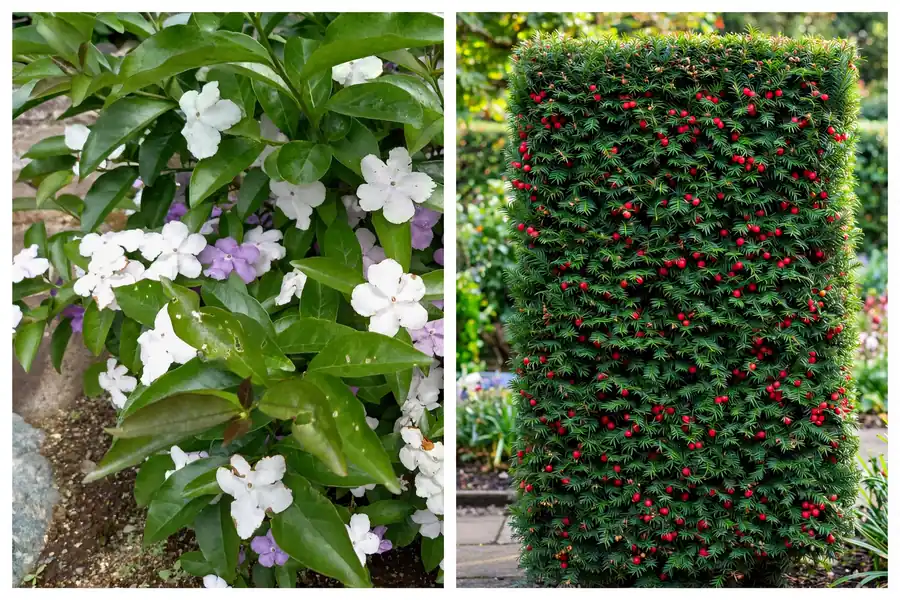
Few shrubs put on a show like yesterday-today-and-tomorrow. Each flower opens deep violet-purple, fades to lavender the next day, and finishes white — so the bush carries all three colors at once, hence the poetic common name. The blooms are intensely fragrant, especially in the evening, and in warm climates the shrub flowers in waves nearly year-round. Native to Brazil, it is a signature plant of frost-free Southern and coastal gardens.
Growing tips: Plant in partial shade (morning sun, afternoon shade) in rich, well-drained, slightly acidic soil, and keep it consistently moist — it sulks in drought. Feed regularly through the growing season for the heaviest bloom. It is hardy only in zones 9–11; elsewhere, grow it in a large pot and overwinter indoors in bright light. One important caution: all parts of Brunfelsia are toxic to dogs and cats if ingested, so it is not the right shrub for households with plant-chewing pets.
5. Yew (Taxus spp.)
The yew is the aristocrat of evergreens — dense, dark, slow-growing, and capable of living for centuries. English yew (Taxus baccata) and Japanese yew (Taxus cuspidata) are the backbone of formal hedging, topiary, and foundation plantings, tolerating deep shade and hard pruning better than almost any other conifer. Female plants produce small, bright red, cup-like arils in fall that birds adore.
Growing tips: Plant yews in sun to deep shade in well-drained soil; they tolerate shade and pollution but not waterlogged ground. Prune in late spring or early summer — yews regenerate from old wood, so even a neglected hedge can be renovated. Now the critical safety note: every part of the yew except the fleshy red aril is highly poisonous, containing the alkaloid taxine — needles, bark, wood, and the seed inside the aril. Livestock and pet deaths from yew clippings are well documented. Never plant yews where horses graze or where small children might chew the attractive red berries. English yew is hardy in zones 6–7; Japanese yew and hybrids reach zones 4–7.
6. Yellow Jessamine (Gelsemium sempervirens)
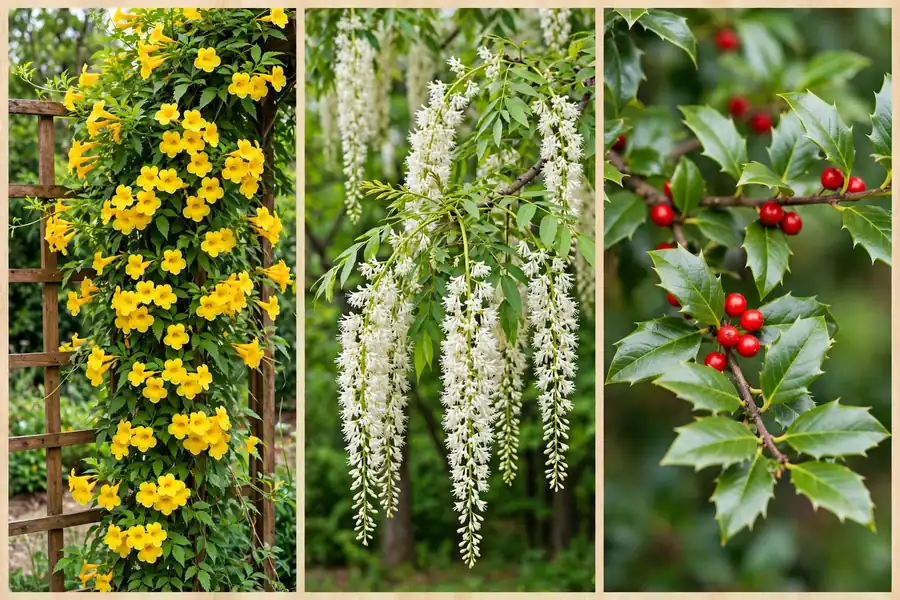
Carolina jessamine — more often spelled jessamine than jasmine, though it is no true jasmine — drapes fences, arbors, and trellises in cascades of fragrant, trumpet-shaped yellow flowers every spring. The state flower of South Carolina, it is an evergreen vine in mild climates, holding glossy foliage through winter. Hummingbirds mob the early blooms, and it is one of the finest native vines for Southern gardens.
Growing tips: Plant in full sun to partial shade with something to climb — a trellis, fence, or arbor — in average, well-drained soil. Water regularly the first year; established vines handle short dry spells. Prune right after flowering to control size and encourage denser growth. The honest caveat: all parts of yellow jessamine are toxic if eaten, and its nectar has been implicated in honeybee losses in some years. Enjoy the flowers, keep them away from curious mouths (human and animal), and do not plant it near beehives. Hardy in zones 6–9, reliably evergreen in zones 7–9.
7. Yellowwood (Cladrastis kentukea)
Yellowwood is one of America’s most underplanted native trees, and it is hard to say why. In May it hangs long, drooping panicles of fragrant white flowers like a native wisteria; in fall the compound leaves turn a clear, glowing gold; and in winter the smooth gray bark and picturesque branching earn their keep. Named for the yellow heartwood revealed when the wood is cut, it is a medium-sized shade tree that fits modern yards far better than a sprawling oak.
Growing tips: Plant in full sun in deep, well-drained soil — yellowwood dislikes compacted or waterlogged ground. Stake young trees and prune in summer (not late winter or spring, when it bleeds sap heavily) to develop strong branch structure, since the wood can be brittle at narrow crotches. Be patient with flowering: young trees bloom lightly and tend to flower heavily in alternate years, with the show improving as the tree matures. Hardy in zones 4–8.
8. Yaupon Holly (Ilex vomitoria)
Yaupon holly is the South’s most useful native evergreen — glossy leaves, dense habit, and clouds of bright red berries on female plants every winter that birds strip by spring. It takes shearing beautifully, making it a native alternative to boxwood for hedges and foundation plantings, and it laughs at heat, drought, and poor soil. Its claims to fame go further: yaupon is the only native North American plant containing significant caffeine, and Indigenous peoples brewed its roasted leaves into a ceremonial drink long before European contact.
Growing tips: Plant in full sun to partial shade in almost any soil — yaupon tolerates sand, clay, salt spray, and drought once established. You need both a male and a female plant for berries, since hollies are dioecious; one male pollinates several females. Prune in late winter to shape. Despite the alarming species name (vomitoria), the berries are a bird food, not people food — they cause vomiting in humans, so admire them on the bush. Hardy in zones 7–10.
9. Yulan Magnolia (Magnolia denudata)
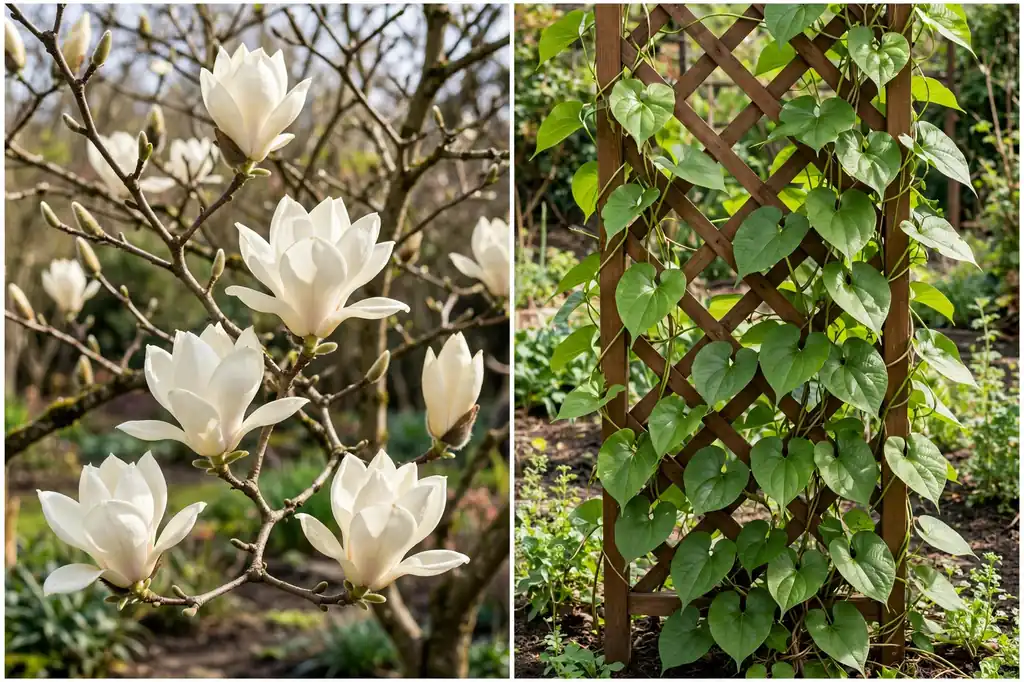
Long before saucer magnolias existed, there was the yulan — one of the parents of those famous hybrids and a breathtaking tree in its own right. In very early spring, before a single leaf appears, its branches carry dozens of large, ivory-white, goblet-shaped flowers with a clean lemony fragrance. Planted in Chinese temple gardens for over a thousand years, it brings an unmatched elegance to the late-winter landscape.
Growing tips: Plant in full sun to partial shade in rich, moist, well-drained, slightly acidic soil, and mulch to keep roots cool. The main enemy is a late frost browning the early blooms, so site it in a sheltered spot rather than a frost pocket — an east-facing position that warms slowly on spring mornings helps. Prune only right after flowering if shaping is needed, since next year’s buds form in summer. Hardy in zones 6–9.
10. Yam (Dioscorea alata)
True yams are not sweet potatoes — they are tropical vines in the genus Dioscorea, and the winged yam (Dioscorea alata) is the most widely grown, producing enormous starchy tubers that feed millions across the tropics. In the garden it is a vigorous, twining vine with attractive heart-shaped leaves, sometimes grown ornamentally for its foliage alone. Gardeners in warm climates can harvest real, homegrown yams after a single long season.
Growing tips: Plant tuber pieces in spring in full sun and very rich, deeply loosened soil, with a strong trellis — the vines climb 20 feet or more. Yams need a long, hot growing season (at least 8 months frost-free) and consistent moisture; they are hardy only in zones 9–11, though the related Chinese yam (D. polystachya) survives colder zones. Harvest after the vines die back in fall. Note: some Dioscorea species have escaped cultivation in Florida and the Gulf states, so check local invasive lists before planting.
11. Yellow Wax Bells (Kirengeshoma palmata)
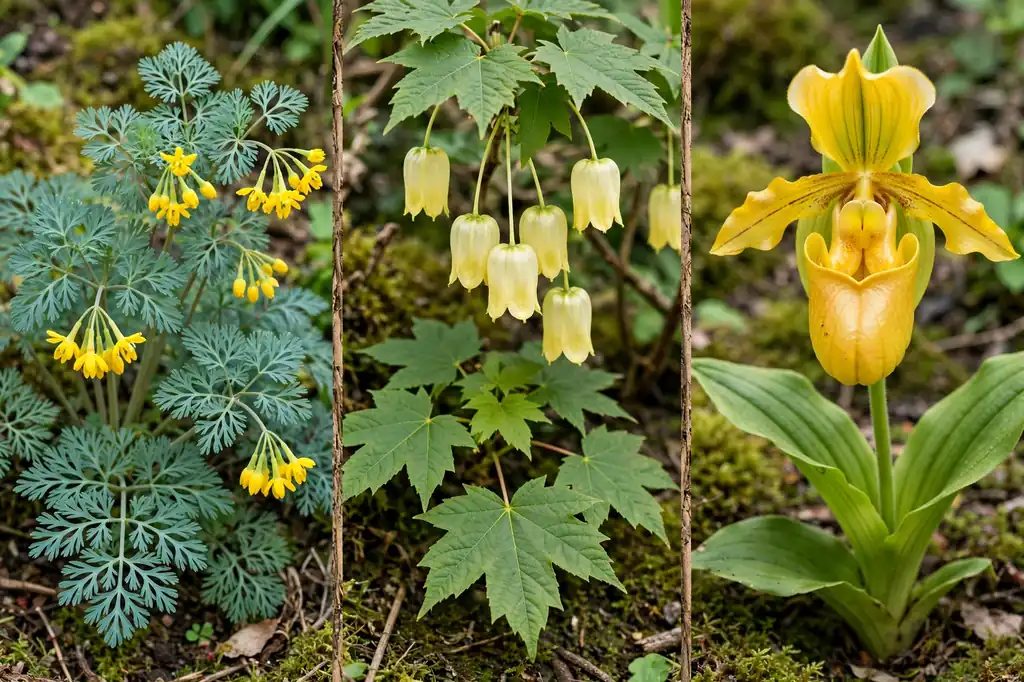
Shade gardeners know the late-summer struggle: everything has bloomed, and the shade border goes quiet. Yellow wax bells solve it. This Japanese and Korean native sends up three- to four-foot stems topped with dangling, waxy, pale-yellow bell flowers in late summer to early fall, floating above big, maple-like leaves. It is unusual, elegant, and a genuine conversation piece — few visitors will have seen it before.
Growing tips: Plant in partial to full shade in rich, humus-heavy, consistently moist soil — drought is the fastest way to kill it. Shelter from strong wind, which shreds the large leaves. Do not move established plants; they resent root disturbance. Cut the stems to the ground after frost. Pair it with fall-blooming companions — our mum care guide will keep the chrysanthemums beside it blooming at the same time. Watch for slugs on young spring growth. Hardy in zones 5–8.
12. Yellow Corydalis (Corydalis lutea)
Yellow corydalis is the plant that colonizes the cracks in old stone walls and makes them beautiful. Mounds of lacy, blue-green ferny foliage carry sprays of small, tubular yellow flowers from spring straight through fall — one of the longest bloom seasons of any shade perennial. It self-sows gently into gravel, wall crevices, and shady corners, and somehow never becomes a nuisance about it.
Growing tips: Plant in partial to full shade in well-drained, even gritty soil — it loves limestone and mortar rubble. It dislikes hot, wet summers, so give it afternoon shade and sharp drainage in warm climates. Let it self-sow where you want more; pull seedlings where you don’t. Deadheading is unnecessary — spent flowers simply give way to more buds. Cut back tired foliage in midsummer for a fresh flush. Hardy in zones 5–7.
13. Yellow Lady’s Slipper (Cypripedium parviflorum)
The yellow lady’s slipper is North America’s most beloved native orchid — a pouch-like golden flower (often with burgundy-flecked petals) rising above pleated green leaves in late spring. It grows wild in rich woodlands and fens across much of the continent, and it is a holy-grail plant for native-garden enthusiasts. Few garden sights feel more like a small miracle than finding one blooming.
Growing tips: Buy only nursery-propagated plants — never dig lady’s slippers from the wild, where many populations are protected and all are fragile. Plant in partial shade in humus-rich, well-drained but moisture-retentive soil, mimicking a woodland floor. Do not fertilize heavily and never move an established plant; lady’s slippers depend on specific soil fungi and resent disturbance. Mulch lightly with leaf mold. Be patient — nursery plants can take a few years to settle and bloom strongly. Hardy in zones 3–7.
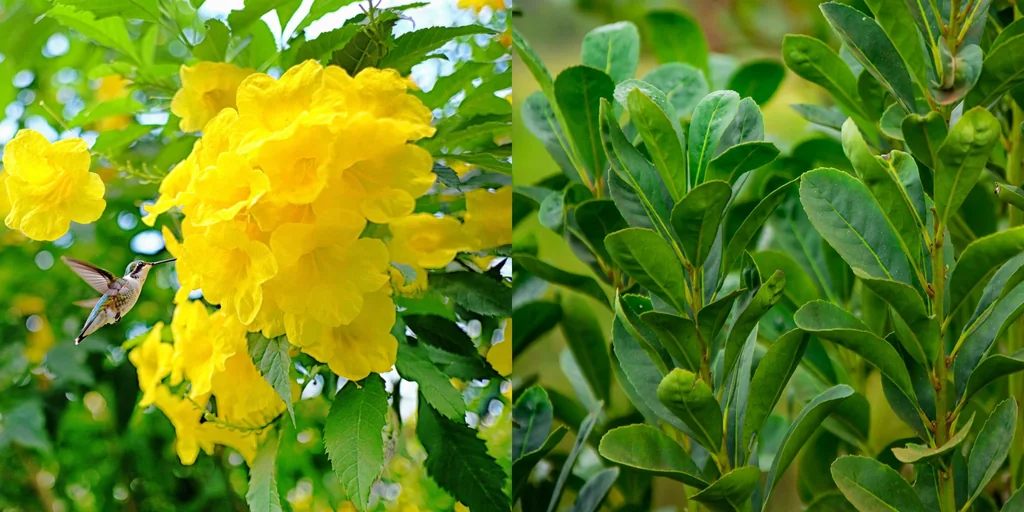
14. Yellow Bells (Tecoma stans)
When summer heat wilts everything else, yellow bells just hit their stride. This rugged shrub (small tree in frost-free climates) covers itself in clusters of bright yellow, trumpet-shaped flowers from summer into fall, humming with bees and hummingbirds. It is a staple of Southwestern and Gulf Coast landscaping for good reason: almost nothing blooms this hard in this much heat with this little water.
Growing tips: Plant in blazing full sun in well-drained soil — lean soil is fine. Water deeply but infrequently once established; overwatering causes lanky growth. Cut back hard in late winter to keep it shrubby and floriferous. In zones 8–9 it may die to the ground in hard freezes and return from the roots; in zone 7 and colder, grow the compact cultivars in pots and overwinter indoors. Deadhead or shear after the first flush for rebloom. Hardy in zones 8–11.
15. Yerba Mate (Ilex paraguariensis)
The national drink of Argentina, Uruguay, and Paraguay grows on a tree — an evergreen holly whose leaves, dried and steeped, make the earthy, caffeinated infusion called mate. Yerba mate is a handsome plant in its own right, with glossy deep-green leaves and small white flowers followed by red berries, and it makes a fascinating edible-landscaping specimen for warm-climate gardeners who like their ornamentals to earn their keep.
Growing tips: Plant in full sun to partial shade in acidic, well-drained soil in zones 9–11; it tolerates light frost but not hard freezes. Elsewhere, grow it in a large container and overwinter indoors in bright light. Harvest mature leaves, dry them, and steep — homegrown mate is milder than commercial. Prune to keep it shrub-sized for easy harvesting, since unpruned trees reach 30 feet or more. Keep soil evenly moist but not soggy.
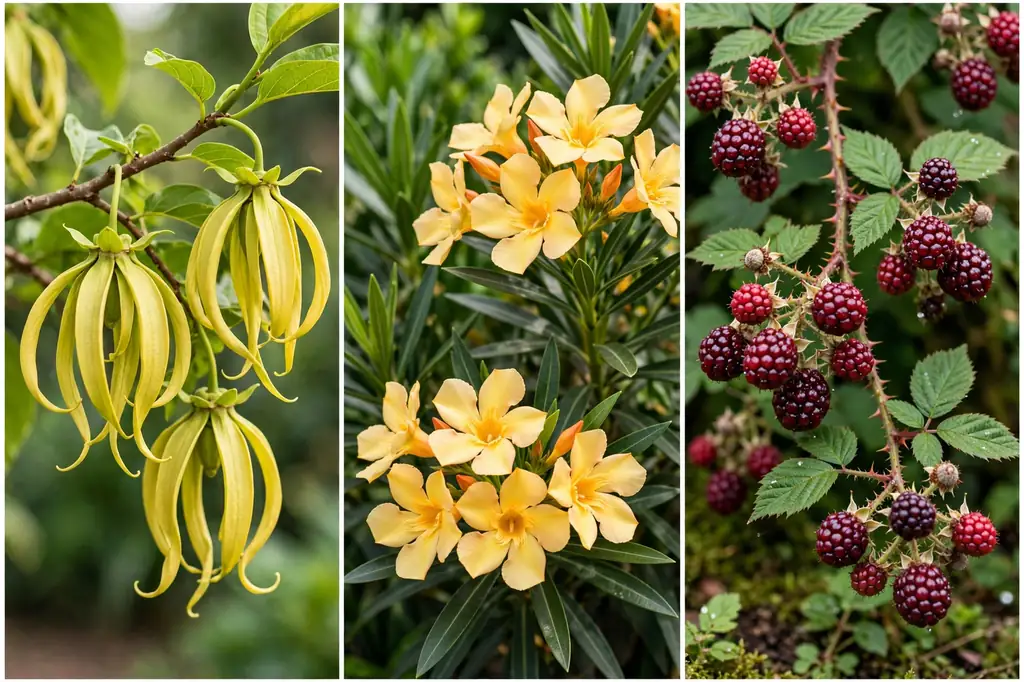
16. Ylang-Ylang (Cananga odorata)
Ylang-ylang’s flowers are not much to look at — drooping, greenish-yellow ribbons — but their perfume is legendary: deep, sweet, and narcotic, the signature note in Chanel No. 5 and countless tropical fragrances. This fast-growing tree from Southeast Asia and the Pacific perfumes entire neighborhoods when it blooms, and its essential oil remains one of the world’s most valuable floral extracts.
Growing tips: This is strictly a tropical plant — hardy only in zones 10–12, needing warmth, humidity, and full sun to partial shade. Plant in rich, well-drained soil and water generously; young trees grow astonishingly fast. In marginal zones, try it in a large greenhouse or conservatory. Prune to manage its size, since it can reach 40 feet or more. Pick flowers in the early morning when the fragrance is strongest, and dry them for potpourri.
17. Yellow Oleander (Cascabela thevetia)
Do not let the sweet name fool you — yellow oleander is one of the most poisonous common ornamentals in warm climates. It is undeniably beautiful: glossy evergreen foliage, fragrant peachy-yellow trumpet flowers nearly year-round, and an elegant small-tree form that anchors tropical landscapes from Florida to Southern California. But every part of the plant — leaves, flowers, sap, and especially the seeds — contains potent cardiac glycosides.
Growing tips: Plant only where you can guarantee no unsupervised children or pets will chew the plant — never near schools, playgrounds, or vegetable gardens. It needs full sun, well-drained soil, and zones 9–11; established plants are drought-tolerant. Wear gloves when pruning, and never burn the trimmings, since the smoke is toxic too. Honestly assess whether the beauty is worth the risk in your household — in many family gardens, the answer is no, and that is a perfectly good gardening decision. Hardy in zones 9–11.
18. Youngberry (Rubus ‘Youngberry’)
The youngberry is a berry with a pedigree — a three-way hybrid of blackberry, raspberry, and dewberry developed in Louisiana in the early 1900s. The result is a large, dark, wine-red berry with an intense sweet-tart flavor that old-timers swear beats every modern blackberry for pies and jam. The trailing canes are vigorous and productive, and the fruit ripens earlier than most blackberries.
Growing tips: Plant bare-root canes in late winter in full sun and rich, well-drained soil, with a sturdy trellis — the canes trail and need support. Like all brambles, youngberries fruit on second-year canes: tie up the new primocanes, harvest from the floricanes, then cut the fruited canes to the ground after harvest. Water consistently while fruit ripens. Hardy in zones 7–9; in colder zones, lay the canes down and mulch heavily for winter.
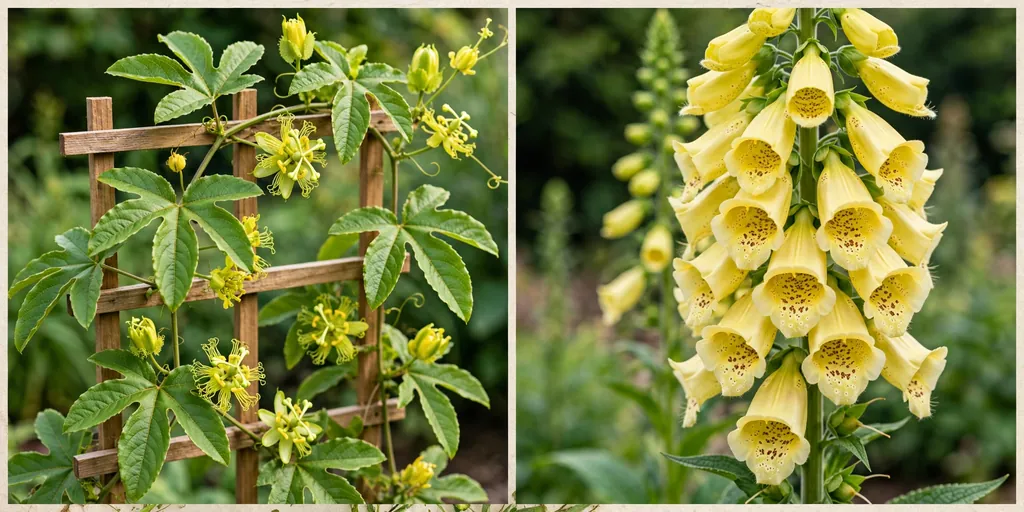
19. Yellow Passionflower (Passiflora lutea)
Most gardeners know the flamboyant purple passionflower, but its shy yellow cousin deserves attention too. Yellow passionflower is a dainty native vine with small, intricate chartreuse-yellow blooms and three-lobed leaves, climbing modestly through shrubs and fences across the eastern United States. It is a host plant for gulf fritillary and other butterfly caterpillars, making it a quiet powerhouse for wildlife gardens.
Growing tips: Plant in partial shade to full sun in average, well-drained soil, with a small trellis or shrub to climb. It dies back to the ground each winter and returns late in spring — mark its spot so you don’t dig it up thinking it died. It self-sows politely; thin seedlings if they wander. Unlike its aggressive purple relative, yellow passionflower stays manageable, making it the better choice for small gardens. Hardy in zones 6–9.
20. Yellow Foxglove (Digitalis grandiflora)
Purple foxgloves get all the glory, but the yellow foxglove is the better garden plant in many ways — a true perennial (not a biennial), with spikes of soft yellow, brown-speckled bells that return reliably for years. It brings the classic cottage-garden spire to partly shaded borders, blooms in early summer, and deer won’t touch it.
Growing tips: Plant in partial shade in rich, moist, well-drained soil; it tolerates full sun only where summers are cool. The honest caveat, shared with all foxgloves: every part contains digitalis glycosides that affect the heart — toxic if ingested, and dangerous around grazing animals and small children. Wear gloves when handling if you have sensitive skin. Deadhead after flowering to prevent excessive self-sowing, though a few volunteers are welcome. Hardy in zones 3–8.
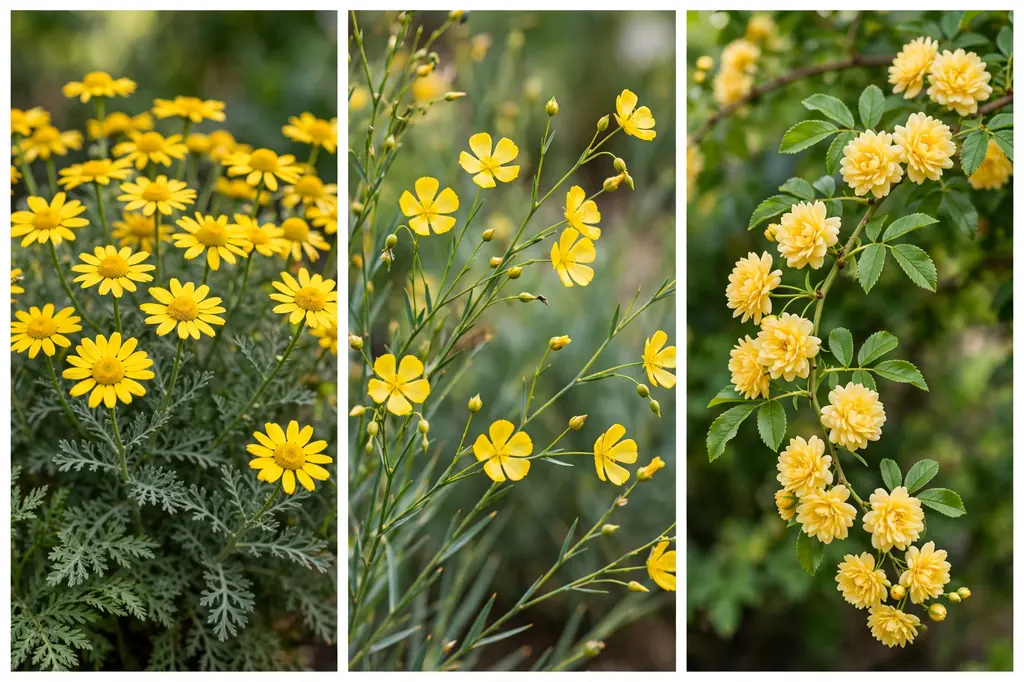
21. Yellow Chamomile (Anthemis tinctoria)
Also sold as golden marguerite or dyer’s chamomile, this is the workhorse daisy for hot, dry gardens. Clouds of bright golden-yellow, daisy-like flowers cover ferny gray-green foliage all summer, thriving in poor soil and drought that would finish fussier perennials. The “dyer’s” name is literal — the flowers yield a lasting yellow dye — and the blooms are excellent, long-lasting cut flowers.
Growing tips: Plant in full sun in average to poor, sharply drained soil — rich soil makes it floppy. Shear back by half after the first flush for rebloom, and deadhead regularly to keep flowers coming into fall. Divide every two to three years to keep clumps vigorous. It self-sows modestly; the cultivar ‘Kelwayi’ is a particularly fine deep-yellow form. Hardy in zones 3–7.
22. Yellow Flax (Linum flavum)
Blue flax is the famous one, but yellow flax is arguably prettier — wiry stems topped with clusters of clear golden-yellow, saucer-shaped flowers from late spring into summer, set against blue-green needle-like foliage. It has a delicate, airy look that weaves beautifully through perennial borders and rock gardens, and it asks for almost nothing.
Growing tips: Plant in full sun in well-drained, even poor or sandy soil — yellow flax dislikes winter wetness more than anything. Sow seeds directly in spring or fall where you want them, since flax resents transplanting. Deadhead to extend bloom, or leave the attractive seed capsules for texture. It self-sows gently. Hardy in zones 5–8.
23. Kerria — Japanese Yellow Rose (Kerria japonica)
Kerria is the shrub that makes April feel like a celebration — arching green stems studded with bright yellow, rose-like flowers, blooming generously in partial shade where most flowering shrubs demand full sun. The double-flowered ‘Pleniflora’ looks like tiny golden pom-poms, while the single form has a simple, cheerful charm. Even in winter, the bright green stems add color to the dormant garden.
Growing tips: Plant in partial shade in average, well-drained soil — kerria scorches in hot afternoon sun and flowers best with some shade. Prune right after flowering, cutting back a third of the oldest stems to the ground to keep it from getting leggy; it blooms on the previous year’s wood. It suckers to form colonies, so give it room or remove unwanted suckers in spring. Remarkably tough and pest-free. Hardy in zones 4–9.
Bloom, Water & Hardiness Comparison
Use this table to compare flowering seasons, watering needs, and cold hardiness across all 23 plants at a glance.
| Plant | Bloom / Harvest Season | Water Needs | USDA Zones |
|---|---|---|---|
| Yucca | Summer (tall white flower spikes) | Very low; drought-tolerant | 4–10 |
| Yarrow | Early summer to fall | Low; drought-tolerant | 3–9 |
| Yellow Archangel | Late spring | Moderate; tolerates dry shade | 4–9 |
| Yesterday-Today-and-Tomorrow | Spring to fall (waves) | Moderate–high; keep moist | 9–11 (pot elsewhere) |
| Yew | Spring (inconspicuous); red arils in fall | Moderate; no waterlogging | 4–8 (by species) |
| Yellow Jessamine | Early to mid-spring | Moderate | 6–9 |
| Yellowwood | May (fragrant white panicles) | Moderate | 4–8 |
| Yaupon Holly | Spring flowers; red berries in winter | Low–moderate; drought-tolerant | 7–10 |
| Yulan Magnolia | Very early spring | Moderate; keep evenly moist | 6–9 |
| Yam | Harvest tubers in fall | High; long hot season | 9–11 |
| Yellow Wax Bells | Late summer to early fall | High; never dry out | 5–8 |
| Yellow Corydalis | Spring to fall | Moderate; sharp drainage | 5–7 |
| Yellow Lady’s Slipper | Late spring | Moderate; woodland-moist | 3–7 |
| Yellow Bells | Summer to fall | Low; drought-tolerant | 8–11 (root-hardy in 7) |
| Yerba Mate | Spring flowers; harvest leaves year-round | Moderate | 9–11 (pot elsewhere) |
| Ylang-Ylang | Year-round in tropics | High | 10–12 |
| Yellow Oleander | Nearly year-round | Low–moderate; drought-tolerant | 9–11 |
| Youngberry | Fruit ripens early summer | Moderate; steady while fruiting | 7–9 |
| Yellow Passionflower | Summer | Moderate | 6–9 |
| Yellow Foxglove | Early summer | Moderate; moist soil | 3–8 |
| Yellow Chamomile | Summer to fall | Low; drought-tolerant | 3–7 |
| Yellow Flax | Late spring to summer | Low; dislikes winter wet | 5–8 |
| Kerria | Mid-spring | Moderate | 4–9 |
Frequently Asked Questions
What are the easiest plants that start with Y for beginners?
Start with yarrow (tough native that thrives on neglect), yucca (nearly indestructible in hot, dry spots), kerria (blooms generously in shade with almost no care), yellow chamomile (drought-proof summer daisies), or youngberry (forgiving bramble with delicious fruit). All five forgive the mistakes beginners inevitably make.
Are any plants that start with Y poisonous?
Yes — this list has more toxic plants than most letters, so read carefully. Yew is the most dangerous: every part except the fleshy red aril contains taxine and can be fatal. Yellow oleander contains cardiac glycosides in all parts, especially the seeds. Yellow foxglove contains digitalis compounds. Yellow jessamine is toxic if eaten, and yesterday-today-and-tomorrow (Brunfelsia) is poisonous to dogs and cats. Plant these with full awareness, and keep them away from children, pets, and grazing animals.
Are any plants that start with Y invasive?
The one to watch is yellow archangel: the unimproved species spreads aggressively by stolons and seed, is listed as a noxious weed in Washington State (where its sale is banned), and is invasive in parts of the Northeast and Mid-Atlantic. If you grow it, choose a named, less aggressive cultivar like ‘Hermann’s Pride’, contain it, and never plant it near natural areas. True yam species (Dioscorea) have also naturalized aggressively in Florida and the Gulf states, so check local invasive lists before planting.
Which plants starting with Y are best for shade?
Shade is where the Y list shines. Yellow archangel and yellow corydalis handle even dry shade, yellow wax bells lights up moist shade in late summer, kerria blooms best in partial shade, yew tolerates deep shade, and yellow lady’s slipper thrives in dappled woodland light. Between them you can fill a shade garden from groundcover to small tree.
Can I grow plants that start with Y in containers?
Several adapt well to pots. Yesterday-today-and-tomorrow and yerba mate are the classic container candidates in cold climates — grow them outside in summer and overwinter indoors in bright light. Yucca makes a dramatic container specimen, yellow corydalis thrives in shady pots and troughs, and youngberry fruits well in a large container with a small trellis. Just remember that containers dry out faster than garden beds, so water more attentively.
Which Y plants are best for attracting pollinators?
Yarrow is a top-tier pollinator plant, feeding bees, butterflies, and beneficial insects for months. Yellow bells and yellow jessamine are hummingbird magnets, yellow archangel offers early spring bee forage, and yellow passionflower hosts gulf fritillary caterpillars. Planting yarrow alongside other sun-lovers from our full sun perennials guide builds a border that buzzes all season. When you finish the Y list, keep going with our guides to plants that start with X and plants that start with Z.
References
- Missouri Botanical Garden — Plant Finder — detailed botanical profiles and growing requirements for garden plants.
- Royal Horticultural Society — Find a Plant — hardiness ratings and cultivation advice from the RHS.
- The Old Farmer’s Almanac — planting calendars, frost dates, and vegetable and herb growing guides.
- Gardening Know How — practical how-to articles on flowers, edibles, and houseplant care.
- NC State Extension Plant Toolbox — research-based plant profiles including toxicity and landscape use.