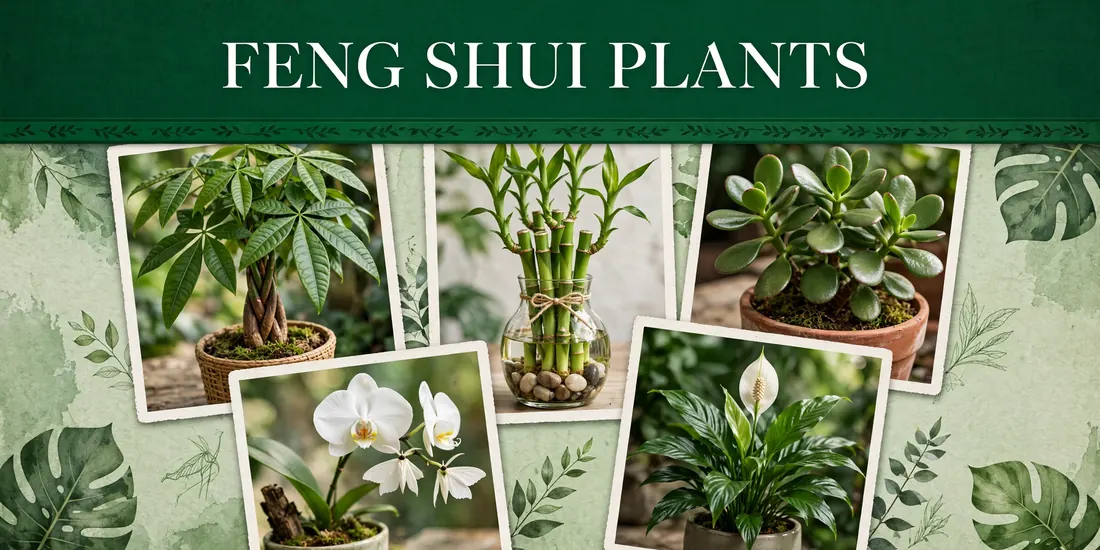
Feng Shui Plants: The Complete Guide to Lucky Plants & Placement
Walk into a home that has been arranged with feng shui in mind and you feel it before you can name it: the air seems lighter, the rooms seem to breathe, and the plants look less like decorations and more like quiet residents. That feeling is not an accident. In feng shui, the ancient Chinese art of arranging spaces to support the people in them, plants are living energy — and the right plant in the right place is believed to shift the energy of an entire home toward wealth, health, love, and calm.
But not every plant carries the same energy, and placement matters as much as the plant itself — a money tree in the wealth corner invites prosperity, while the same tree blocking a hallway blocks the energy it should invite. This guide covers what feng shui plants are, the ten best plants to grow, exactly where to place them using the bagua map, which plants to avoid, and how to keep their energy vibrant.
Quick Answer
What are the best feng shui plants? The top feng shui plants are the money tree (Pachira aquatica), lucky bamboo (Dracaena sanderiana), jade plant (Crassula ovata), peace lily (Spathiphyllum), moth orchid (Phalaenopsis), golden pothos (Epipremnum aureum), rubber plant (Ficus elastica), snake plant, Chinese money plant (Pilea peperomioides), and kumquat tree. Look for plants with soft, rounded, upward-growing leaves — they carry gentle, nourishing energy. Place wealth plants like the money tree and jade plant in the southeast (wealth area) of your home or room, love-supporting orchids in the southwest (partnership area), and health-supporting plants in the east (family and health area). Avoid cacti, dried flowers, and dying plants indoors, since spiky or lifeless plants are said to project draining energy.
Table of Contents
- Quick Answer
- What Are Feng Shui Plants?
- Plants and the Five Elements: How the Energy Works
- The Best Feng Shui Plants at a Glance
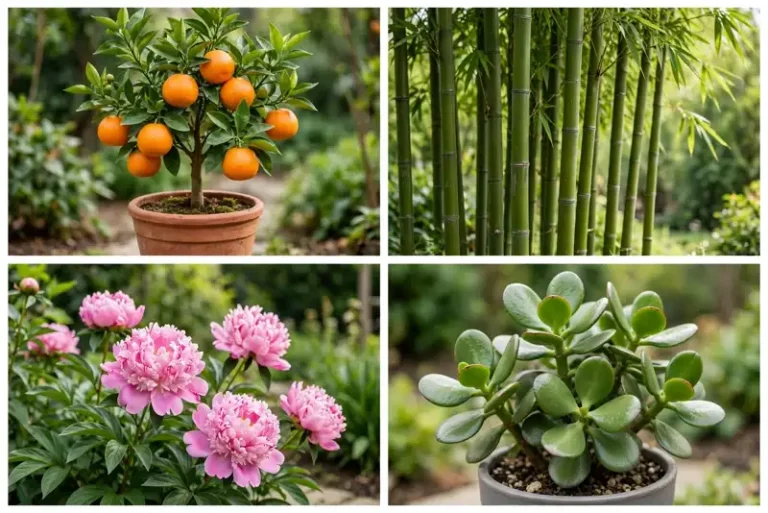
- The 10 Best Feng Shui Plants
- Bagua Map: Which Plant Goes Where
- Placing Plants by Bagua Area
- Plants to Avoid in Feng Shui
- Keeping the Energy Vibrant: Care Tips
- Frequently Asked Questions
- References
What Are Feng Shui Plants?
Feng shui plants are houseplants chosen and placed according to feng shui principles — the 3,000-year-old Chinese practice of arranging environments so that energy, or qi, flows freely and nourishes the people living there. The term “feng shui” literally means “wind and water,” and its goal is harmony between people and their surroundings. In that framework, plants are not just decor: they are living things that grow, change, and respond to care, which makes them one of the most powerful tools for moving stagnant energy and inviting vitality into a space.
In feng shui, every plant belongs to the Wood element, one of five elements (Wood, Fire, Earth, Metal, Water) that describe different qualities of energy. Wood energy is the energy of growth, new beginnings, compassion, flexibility, and upward movement — think of a seedling pushing through soil in spring. Adding a healthy plant to a room literally adds Wood energy to that space. But the plant’s shape, color, condition, and location all refine what that energy does: round leaves suggest coins and wealth, upward growth suggests ambition and career momentum, soft foliage suggests calm and harmony, while sharp spikes or a dying plant suggest the opposite — energy that drains or attacks.
It is worth saying plainly: feng shui is a cultural and spiritual tradition, not a science, and no plant guarantees wealth or love. But the underlying gardening advice is sound regardless of belief — choose healthy plants, give them good light and water, remove dead leaves promptly, and place them where they thrive. The result is a home full of thriving greenery, and if you are open to the symbolism, one that feels more intentional too.
Plants and the Five Elements: How the Energy Works
To choose and place feng shui plants with confidence, it helps to understand the five-element cycle, because plants interact with every element in your home:
Wood feeds Fire. Plants (Wood) placed in the south, the fame and reputation area, feed the Fire energy there. A tall, upward-growing plant in the south is said to fuel visibility and recognition.
Water feeds Wood. Watering your plants, growing lucky bamboo in water, or placing plants near a small fountain nourishes their Wood energy. This is one reason water-grown lucky bamboo is considered so potent — it combines the Water and Wood elements in a single arrangement.
Wood controls Earth. Too many plants in an Earth-ruled area (the center, southwest, and northeast) can overwhelm it. Balance matters: one or two plants in the partnership corner (southwest) is supportive; a jungle there is not.
Metal controls Wood. A metal pot or metal wind chime near plants tempers Wood energy — useful if a room already feels chaotic or overgrown.
Shape and color carry meaning too. Round, coin-like leaves (jade plant, Chinese money plant) symbolize wealth. Upward growth (lucky bamboo, snake plant) symbolizes ambition. Heart-shaped leaves (pothos) symbolize love, while soft, arching foliage (fern, peace lily) brings calming yin energy. Red pots or ribbons tied around a money plant activate Fire energy — you will often see red ribbons on money trees sold for Lunar New Year.
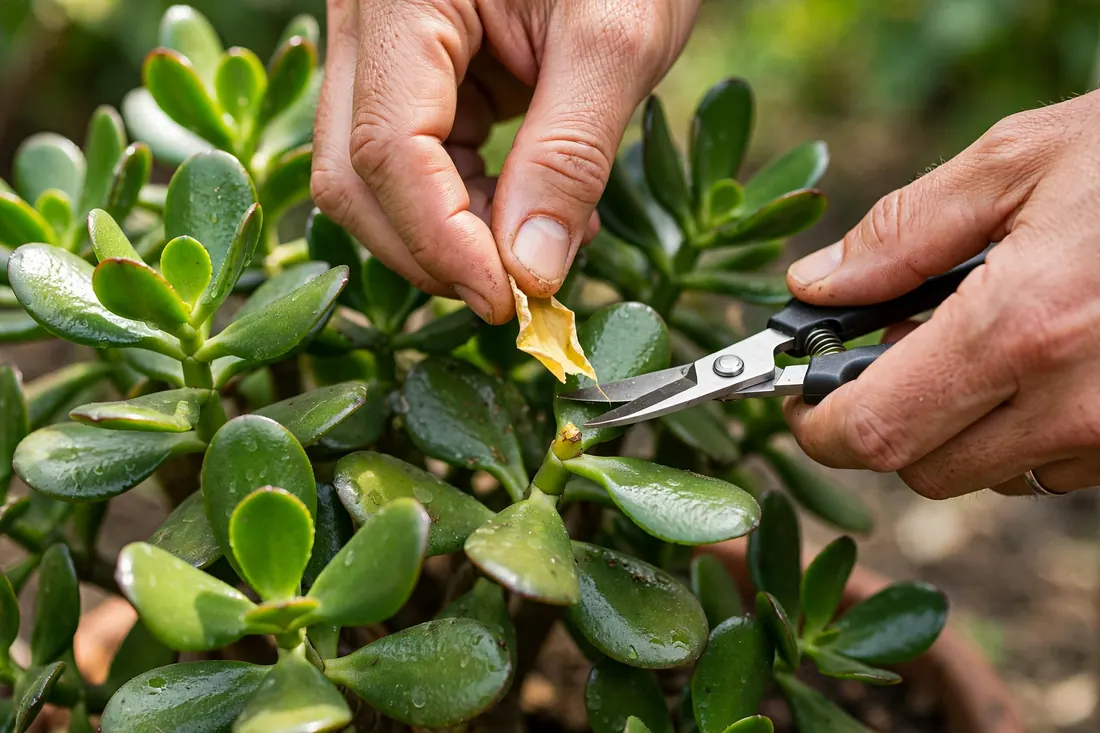
One of the most practical feng shui plant rules has nothing to do with symbolism at all: the plant must be healthy. A thriving plant radiates living, growing energy; a brown, dusty, half-dead plant radiates neglect. Feng shui practitioners are unanimous on this — remove yellowed leaves promptly, dust broad leaves so they can breathe, and if a plant is beyond saving, replace it without guilt. An empty spot with good potential beats a dying plant every time.
The Best Feng Shui Plants at a Glance
Here is a side-by-side comparison of the ten best feng shui plants — what each one symbolizes, what it needs to thrive, and where it works hardest. Scan this table first, then read the detailed profiles below for the plants that fit your space.
| Plant | Scientific Name | Symbolism | Light | Care Level | Best Placement |
|---|---|---|---|---|---|
| Money Tree | Pachira aquatica | Wealth, prosperity, good fortune | Bright indirect | Easy–moderate | Southeast (wealth corner), office, entryway |
| Lucky Bamboo | Dracaena sanderiana | Growth, adaptability, resilience | Bright indirect | Very easy | East (health), desk, kitchen |
| Jade Plant | Crassula ovata | Wealth, longevity, steady growth | Bright direct | Easy | Southeast (wealth corner), business entrance |
| Peace Lily | Spathiphyllum spp. | Harmony, purification, calm | Low to medium | Easy | Bedroom, bathroom, office |
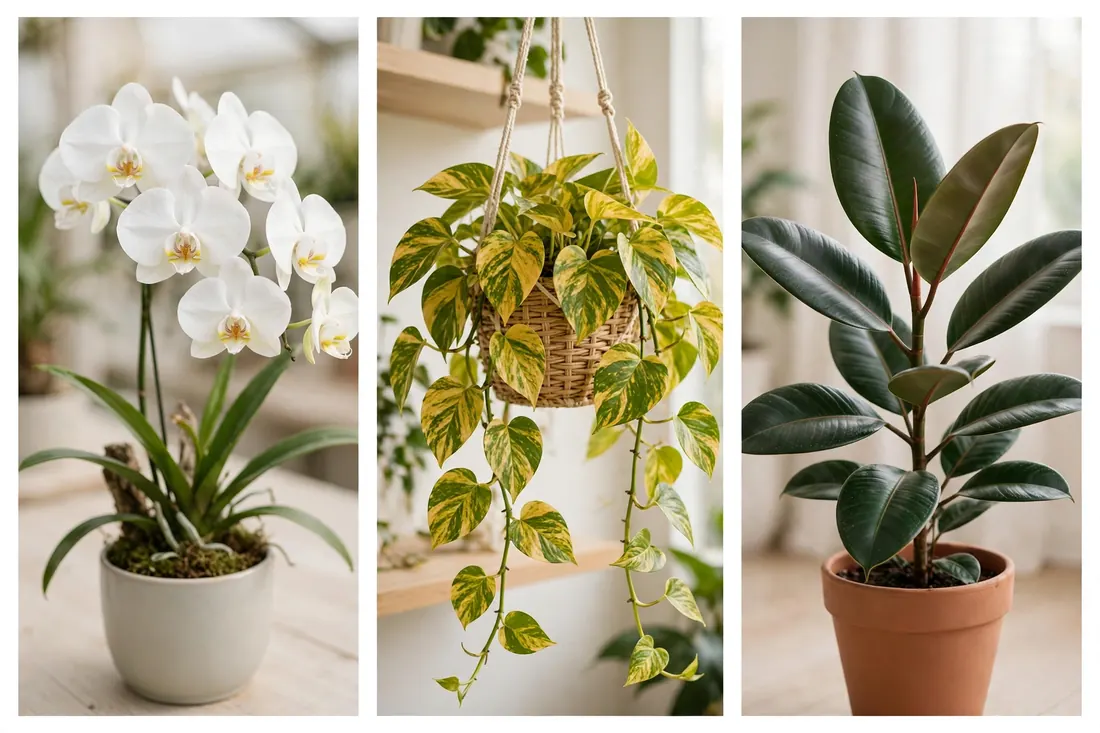
| Moth Orchid | Phalaenopsis spp. | Love, refinement, fertility | Bright indirect | Moderate | Southwest (partnership corner), bedroom |
| Golden Pothos | Epipremnum aureum | Prosperity, cleansing, resilience | Low to bright indirect | Very easy | High shelves, sharp corners, office |
| Rubber Plant | Ficus elastica | Stability, abundance, growth | Bright indirect | Easy | Living room, office, ground-floor corner |
| Snake Plant | Dracaena trifasciata | Protection, strength, focus | Low to bright | Very easy | Entryway, study (avoid bedrooms) |
| Chinese Money Plant | Pilea peperomioides | Wealth, generosity, sharing | Bright indirect | Easy | Southeast (wealth corner), living room |
| Kumquat Tree | Citrus japonica | Gold, abundance, celebration | Full sun | Moderate | Entryway, sunny window, balcony |
The 10 Best Feng Shui Plants
These are the plants feng shui practitioners reach for again and again. Each profile includes what the plant symbolizes, where to place it, and the real-world care it needs to stay healthy — because a plant only carries good energy when it is genuinely thriving.
1. Money Tree (Pachira aquatica)
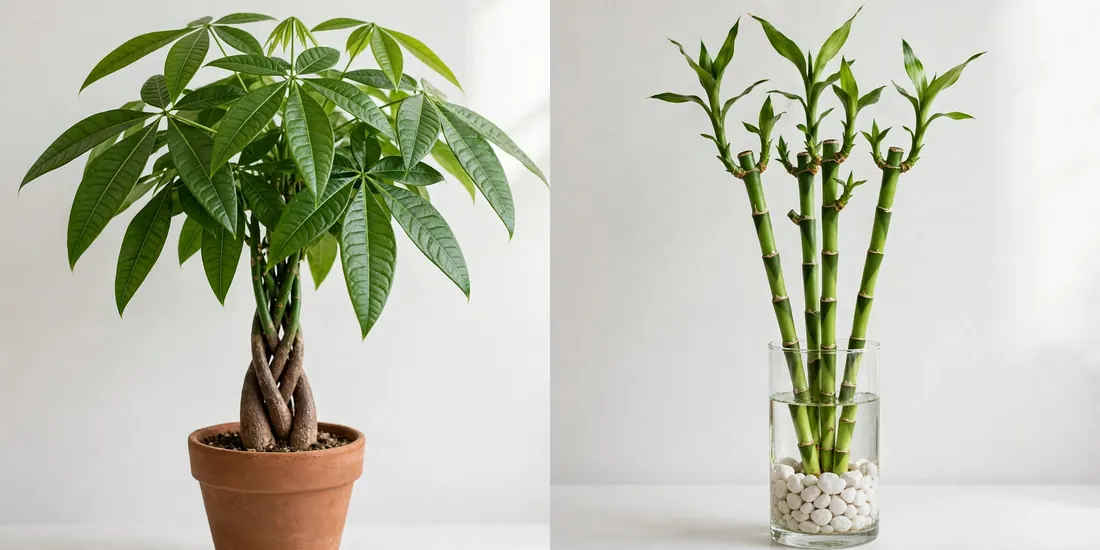
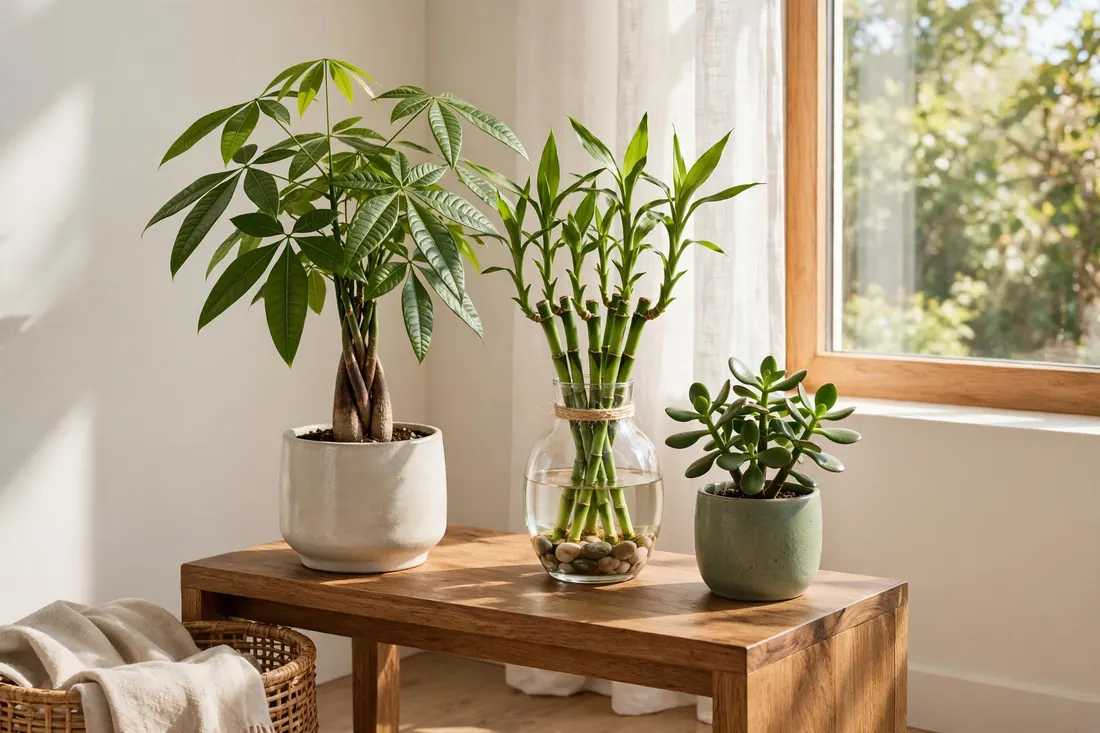
The money tree is the single most famous feng shui plant in the world, and its symbolism runs deep. Each leaf is a hand of five glossy leaflets — and five is an auspicious number in Chinese tradition, representing the five elements. Young trees are sold with their flexible trunks braided together, a braid said to “lock in” the fortune the plant attracts. According to the legend behind the name, a poor man prayed for wealth, found this unusual tree, and grew rich selling plants grown from its seeds; the Missouri Botanical Garden’s plant profile notes this same tale as the origin of the “money tree” common name.
Placement: The classic spot is the southeast corner of your home or office — the wealth area of the bagua map. It also works beautifully near the front entrance, where it greets arriving energy, or on a desk where you handle money and business. Many practitioners tie a red ribbon around the pot to activate the wealth intention, especially around Lunar New Year.
Care: Money trees want bright, indirect light and a thorough watering when the top two inches of soil dry out — then let the pot drain completely, because soggy roots are their main enemy. They dislike cold drafts and sudden moves, which cause leaf drop. Rotate the pot a quarter turn each month for even growth. If your climate is humid and bright, you may be surprised how fast they grow — see our roundup of plants that start with P for its relative peace lily and pothos, which share similar easy-care temperaments.
2. Lucky Bamboo (Dracaena sanderiana)
Despite the name, lucky bamboo is not a bamboo at all — it is a dracaena, a close relative of the plants sold as ribbon plants and corn plants. But in feng shui it hardly matters, because lucky bamboo’s power comes from its form: straight, segmented stalks rising with unstoppable upward momentum, symbolizing resilience, adaptability, and the steady climb of a career. It is the plant most often given as a gift for new homes, new jobs, and new years, because it carries wishes of good fortune in its very shape.
The number of stalks is the whole message. Two stalks nourish love; three bring happiness, wealth, and longevity; five support health; eight attract prosperity (eight sounds like the Chinese word for “fortune”); and nine represent great overall luck. Four stalks are avoided, because four sounds like the word for “death.” Most gift arrangements use two, three, five, or eight stalks for exactly this reason.
Placement: Lucky bamboo is endlessly flexible. Place three stalks on a desk for happiness and career luck, five in the east for family health, or eight in the southeast for wealth. Because it grows in water, it is one of the few feng shui plants that naturally combines the Water and Wood elements — a combination said to multiply its effect.
Care: Keep stalks in a few inches of clean water with pebbles for support, changing the water every 7–10 days to prevent algae and rot. Use filtered or distilled water if your tap water is heavily chlorinated, since lucky bamboo is sensitive to fluoride and chlorine — yellow leaf tips are the classic warning sign. Bright, indirect light is ideal; direct sun scorches the leaves. The Old Farmer’s Almanac’s lucky bamboo care guide is an excellent reference for keeping stalks healthy for years.
3. Jade Plant (Crassula ovata)
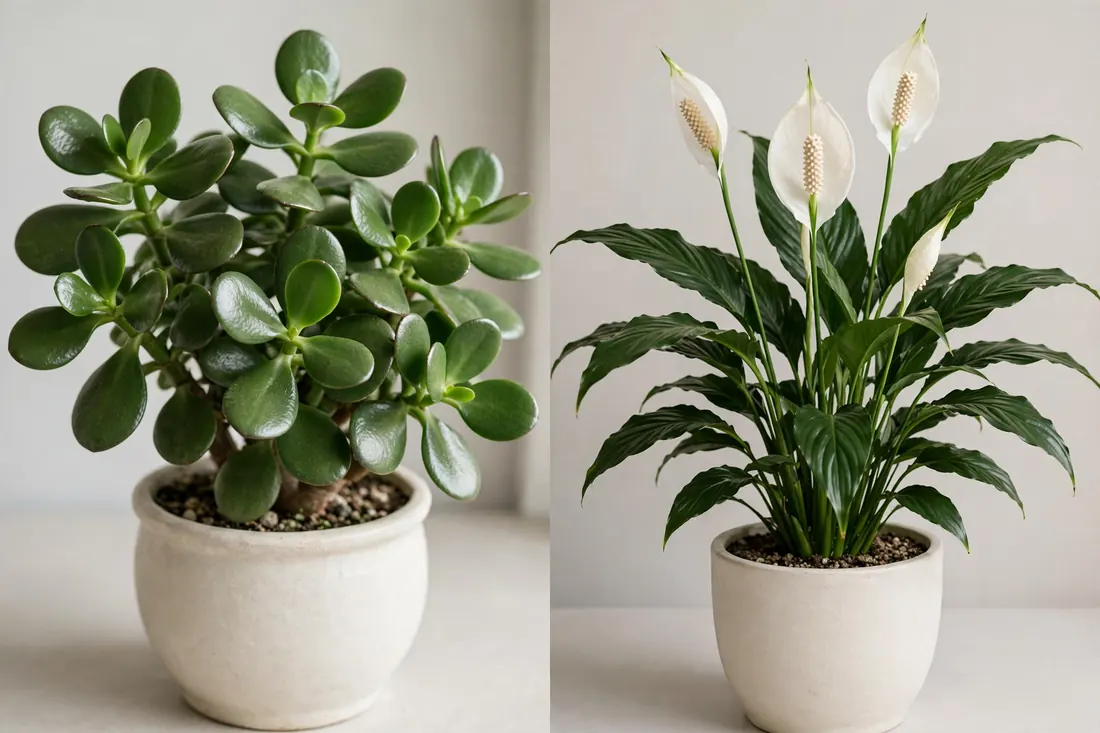
If the money tree is feng shui’s flashiest wealth plant, the jade plant is its steadiest. Its thick, fleshy, oval leaves are the color of jade stone — a gemstone long associated with purity, protection, and prosperity in Chinese culture — and their rounded, coin-like shape reads instantly as money. Where the money tree promises fortune, the jade plant promises something arguably better: slow, stable, compounding growth, the kind of wealth that lasts. It is also called the friendship tree and the money plant, and it is the traditional housewarming gift for new businesses across Asia. If you love its succulent form, our list of plants that start with J includes jade alongside other easy-care favorites.
Placement: The southeast wealth corner is the jade plant’s natural home, but it is equally traditional flanking a front door or sitting in a shop window — anywhere wealth is meant to enter. Because jade plants can live for decades and grow into small trees, an old, large jade is itself a symbol of longevity and established fortune.
Care: Jade is a succulent, so treat it like one: bright light (it tolerates direct sun), gritty fast-draining soil, and water only when the soil is completely dry — then water deeply. Overwatering is the only reliable way to kill it. In winter, cut back on water and keep it cool; the slight stress of cool nights and short days can even coax out clusters of tiny pink-white star flowers, which feng shui reads as a sign of particularly strong friendship energy.
4. Peace Lily (Spathiphyllum spp.)
The peace lily brings a different kind of energy than the wealth plants — not ambition, but harmony. Its deep green, arching leaves and elegant white spathes (the “flowers” are actually modified leaves) symbolize purity, healing, and the smoothing-over of conflict, which is why feng shui practitioners recommend it for rooms where people need to get along: bedrooms, family rooms, and shared offices. It is also one of the few feng shui plants backed by NASA’s famous clean-air research, which found peace lilies effective at filtering common indoor pollutants like benzene and formaldehyde.
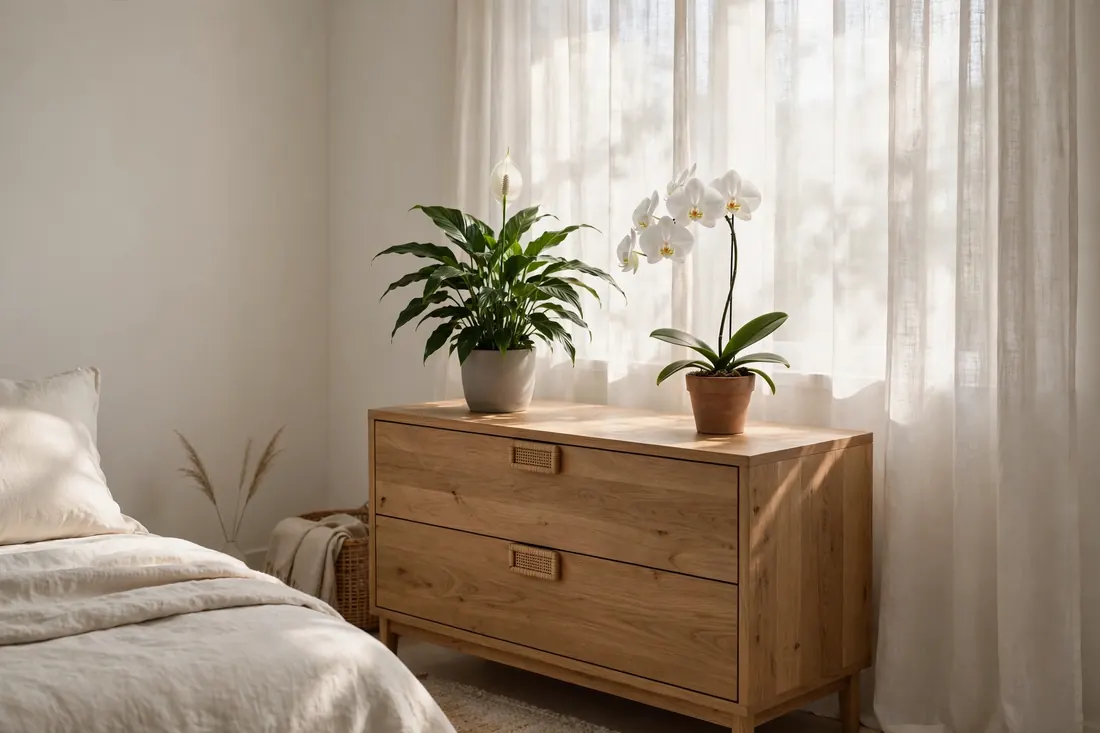
Placement: Peace lilies tolerate low light better than almost any flowering houseplant, so they suit north-facing rooms, bathrooms, and bedrooms — places other feng shui plants sulk. A peace lily in the bedroom is one of the few plants traditional practitioners approve of for sleep spaces, since its soft, yin energy is calming rather than stimulating. Keep it away from strong drafts and heating vents, which brown the leaf tips.
Care: Water when the top inch of soil feels dry — the plant will dramatically droop when thirsty and perk back up within hours of watering, making it one of the most communicative houseplants you can own. It prefers humidity, so mist the leaves or set the pot on a pebble tray in dry homes. Wipe the broad leaves free of dust monthly so they can breathe and photosynthesize. Note: peace lilies are toxic to cats and dogs if chewed, so place them out of pets’ reach. Curious how it compares to its P-letter cousins? Our plants that start with P guide covers peace lily and pothos side by side.
5. Moth Orchid (Phalaenopsis spp.)
In feng shui, the orchid is the plant of love, refinement, and cultivated beauty — and the moth orchid (Phalaenopsis), with its long-lasting, butterfly-like blooms, is the variety you will see most often. Orchids symbolize fertility, creativity, and the kind of romance that is tended carefully rather than rushed. Their blooms last for months, which makes them powerful symbols of enduring rather than fleeting affection. In Chinese culture, orchids have been admired by scholars and poets for over two thousand years as emblems of integrity and noble character.
Placement: The southwest corner — the partnership and love area of the bagua — is the orchid’s classic home. A single orchid on a bedroom dresser is the traditional prescription for supporting a relationship; pairs of orchids (two plants, or one plant with paired blooms) symbolize the couple. Keep orchids out of the kitchen, where the heat and bustle clash with their refined energy, and avoid placing them where they will be knocked or brushed constantly.
Care: Moth orchids are far easier than their reputation suggests. Give them bright, indirect light (an east window is perfect), water once a week by soaking the bark medium and letting it drain fully, and never let the roots sit in water. After the blooms fade, cut the flower spike above a node and keep caring for the plant — with patience, it will rebloom from the same spike or a new one within months. A blooming orchid in the partnership corner is considered an especially auspicious sign.
6. Golden Pothos (Epipremnum aureum)
Golden pothos is feng shui’s great problem-solver: cheap, nearly indestructible, fast-growing, and happy in almost any light. Its heart-shaped leaves — symbols of love and warmth — cascade in generous vines that soften whatever they touch. Practitioners use trailing pothos specifically to soften sha qi, the “attacking energy” of sharp architectural corners, protruding columns, and awkward angles: drape a pothos over the offending corner and its harshness dissolves into greenery. It is also a proven air purifier, which gives its “cleansing energy” reputation a solid foundation.
Placement: High shelves, the tops of cabinets, and hanging baskets are pothos territory — anywhere its vines can trail downward and soften the room’s edges. It is excellent in offices and study areas, where its vigorous growth symbolizes thriving projects. One caution: avoid letting vines trail directly over a bed or a dining table, where the downward energy is said to feel heavy and restless.
Care: Water when the top two inches of soil are dry, and give it anything from low light to bright indirect light (variegation fades in dim spots, so move it brighter for more gold marbling). Trim long vines to keep the plant bushy, and root the cuttings in water — free plants you can gift, which in feng shui terms spreads the good energy outward. Like the peace lily, it is toxic to pets if eaten.
7. Rubber Plant (Ficus elastica)
With its large, glossy, rounded leaves and substantial woody stems, the rubber plant reads as solidity: wealth that is established, growth that is steady, a household that is rooted. Feng shui values the plant’s sheer Wood-element mass — a big, healthy rubber plant anchors a room the way a good foundation anchors a house. Its round leaves (no sharp points) give it gentle, welcoming energy despite its size, and variegated cultivars add a touch of brightness to dim corners.
Placement: Rubber plants suit the living room and home office, where their presence signals stability and abundance. A large rubber plant in a ground-floor corner fills dead space where energy stagnates. The southeast wealth corner welcomes one too, especially in a large room where a small jade plant would be visually lost.
Care: Bright, indirect light keeps the leaves glossy and the growth compact; too little light makes it leggy. Water when the top two to three inches of soil dry out, and wipe the big leaves with a damp cloth every few weeks — dusty leaves cannot photosynthesize well, and in feng shui terms, dust is literally stagnant energy sitting on your plant. The milky sap can irritate skin, so wear gloves when pruning.
8. Snake Plant (Dracaena trifasciata)
The snake plant is feng shui’s fascinating exception: its stiff, sword-like leaves break the “soft and rounded” rule, yet practitioners value it highly as a protector. Those sharp, upright blades are said to cut through negative energy and guard the home — like a set of green sentries. Modern practitioners also love it for the bedroom, because unlike most plants it releases oxygen at night, supporting restful sleep. The Spruce’s feng shui plant guide by certified consultant Anjie Cho lists it among the best plants for positive energy, noting its protective quality.
Placement: Flank the front door with snake plants to “guard” the entrance, or place one in a study or home office where its upward, focused energy supports concentration. Because its energy is strong and yang (active), keep it out of spaces meant for deep rest or romance — one in a bedroom corner is fine, but it should not dominate a small sleep space.
Care: This is the plant for people who kill plants: it tolerates low light, bright light, missed waterings, and general neglect. Water only when the soil is completely dry — every two to four weeks is plenty — and use a pot with drainage. Overwatering causes the base to turn to mush, the one thing that reliably kills it. Note that some traditionalists still avoid sharp-leaved plants indoors entirely; if that guidance resonates with you, choose the rounder-leaved plants on this list instead.
9. Chinese Money Plant (Pilea peperomioides)
The Chinese money plant looks like it was designed by a feng shui master: perfectly round, coin-shaped leaves on slender stems, each leaf like a little green coin held up to catch the light. Native to China, it carries a lovely tradition — the plant constantly produces offsets (“pups”) around its base, which are separated and given to friends, so wealth and luck are literally shared outward. Passing along a pup is said to multiply the giver’s own good fortune.
Placement: The southeast wealth corner, a bright living-room shelf, or a desk where you want prosperity energy with a playful, modern feel. Its small size (rarely over a foot tall) makes it perfect for spaces where a money tree would overwhelm. A pilea in a gold or yellow pot doubles down on the wealth symbolism, since yellow and gold are the colors of the wealth area.
Care: Bright, indirect light and water when the top inch of soil dries out. Rotate the pot regularly — pilea famously leans toward the light, and a lopsided plant reads as unbalanced energy. Remove pups when they are a few inches tall by cutting the connecting rhizome, root them in water or soil, and gift them. This is also a wonderful terrarium-style candidate while young, though it eventually outgrows enclosed glass.
10. Kumquat Tree (Citrus japonica)
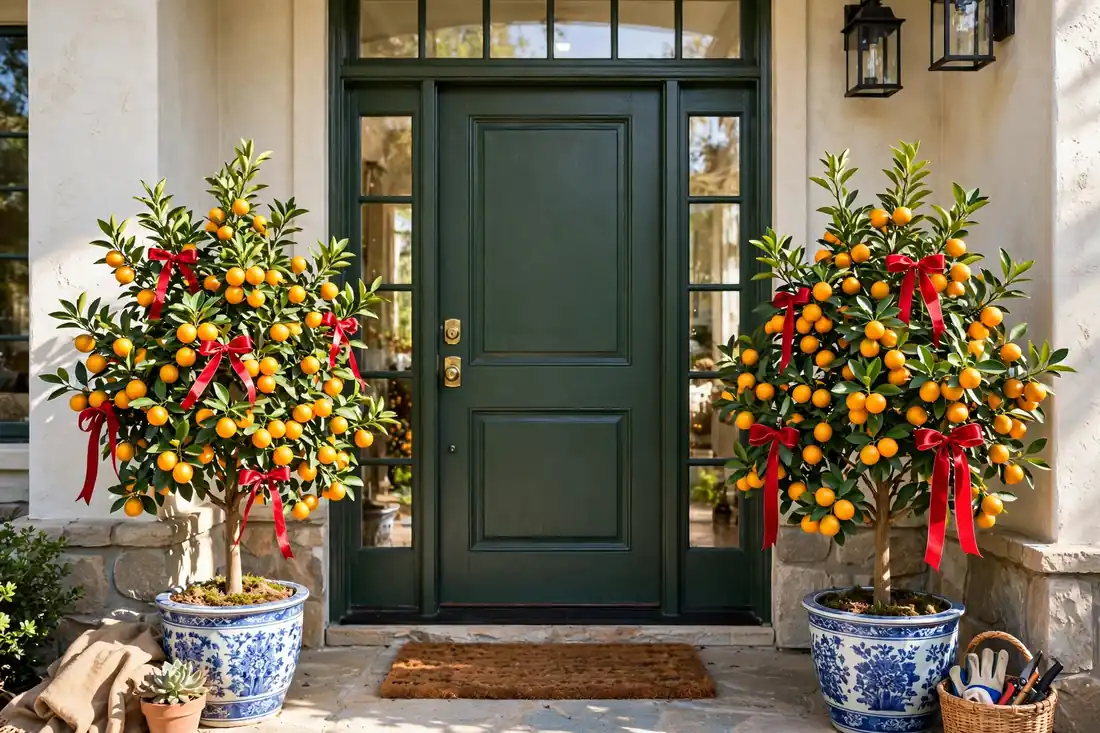
The kumquat is feng shui’s celebration plant. Its name sounds like the Cantonese words for “gold” and “good luck,” and a small tree heavy with round, golden-orange fruit is about as literal a picture of abundance as a plant can offer. Kumquat trees are the traditional Lunar New Year gift across southern China — homes and businesses display them at the entrance to welcome prosperity for the coming year, often decorated with red envelopes and ribbons. Unlike cut flowers, a kumquat keeps giving: fragrant blossoms, then fruit you can actually eat.
Placement: Flanking the front door (inside or out) is the classic position — a pair of kumquats frames an entrance with golden abundance. A sunny windowsill or balcony works too. Indoors for the winter and outdoors for the summer is a fine rhythm in temperate climates.
Care: Citrus needs what most houseplants do not: as much direct sun as you can give it (a south window or grow light), consistent moisture without sogginess, and regular feeding during the growing season. Watch for scale insects and spider mites, which love indoor citrus — wipe leaves and treat early. Hand-pollinate indoor blossoms with a soft brush if you want fruit to set. For gardeners in warm zones, a kumquat can also live outdoors year-round and join your full-sun plantings as a structural evergreen.
Bagua Map: Which Plant Goes Where
The bagua is feng shui’s energy map — a grid of nine areas laid over your home (or a single room), each governing a different part of life. In the modern BTB (Black Sect) school, you align the bottom of the map with your front door wall; in the classical compass school, the areas follow actual compass directions. Either way, the pairings below show which plants support each life area and the one-line logic behind each match. For a quick refresher on reading the full map, The Spruce’s guide to the best and worst feng shui plants includes a clear bagua overview from a certified consultant.
| Bagua Area | Life Aspect | Best Plant | Placement Tip |
|---|---|---|---|
| Southeast (Xun) | Wealth & abundance | Money tree, jade plant, Chinese money plant | The #1 wealth corner — group 3 or 5 plants, add a red ribbon |
| East (Zhen) | Family & health | Lucky bamboo (5 stalks), Boston fern | Wood-area plants here double the growth energy |
| Southwest (Kun) | Love & partnership | Moth orchid, anthurium | Use pairs — two orchids or paired blooms symbolize the couple |
| South (Li) | Fame & reputation | Tall snake plant, bird of paradise | Upward growth feeds the Fire element; red pot boosts it |
| North (Kan) | Career & life path | Lucky bamboo (upright stalks), pothos | Water-grown bamboo here merges Water + Wood perfectly |
| Center (Tai Qi) | Health & overall balance | One lush, round plant (pilea, fern) | Keep it single and healthy — the center anchors the whole home |
| West (Dui) | Children & creativity | Flowering plant, citrus | White or metallic pots suit this Metal-ruled area |
| Northwest (Qian) | Helpful people & mentors | Round-leaf plant in a metal pot | Metal pot tempers Wood — balanced support energy |
| Northeast (Gen) | Knowledge & self-cultivation | Small jade, succulent, study plant | One calm plant on the desk — focus, not jungle |
Placing Plants by Bagua Area
You do not need to fill all nine bagua areas with plants — in fact, you should not. Feng shui favors intention over abundance: choose the two or three life areas that matter most to you right now, and place one healthy, well-chosen plant in each. A single thriving money tree in the wealth corner does more than a dozen struggling plants scattered everywhere.
Wealth (southeast). This is where the famous feng shui plants earn their reputation. A money tree, jade plant, or Chinese money plant in the southeast corner of your living room or office is the classic prosperity arrangement. Odd numbers (3 or 5) are considered more dynamic than even numbers. Add a red ribbon or a gold-colored pot to activate the intention, keep the plant immaculate — dusty or yellowing leaves in the wealth corner send exactly the wrong message — and avoid letting anything thorny or spiky share this space.
Health and family (east). The east is Wood’s home direction, so plants here are doubly at home. Five stalks of lucky bamboo (five for health) in a glass vase is the textbook choice, and a soft Boston fern adds gentle, cleansing yin energy. This area also governs family harmony, so choose plants everyone in the household likes — a plant nobody tends will slowly decline, and a declining plant in the health area is the last thing you want.
Love and partnership (southwest). The southwest belongs to Earth and to relationships. A blooming moth orchid here is the traditional love activator — and pairs matter: two orchids, or one orchid with paired flower spikes, symbolize the couple growing together. Keep this corner clean, warm, and inviting rather than crowded. If you are single and hoping to change that, practitioners suggest making space in this corner (clearing clutter is as important as adding the plant) and choosing a plant with soft, rounded, welcoming energy rather than anything spiky or severe.
Career (north). The north is ruled by Water, and water-grown lucky bamboo is the elegant answer — it literally unites the area’s element with the plant’s Wood energy. Place it on or near your desk, where you can see it while you work; the upward thrust of the stalks is a daily visual metaphor for rising in your career. A small pothos trailing from a shelf above the workspace works too, softening the hard lines of office furniture.
West (children and creativity). The west is ruled by Metal, so white or metallic pots suit this area. A cheerful flowering plant supports creative projects — in Chinese tradition, chrysanthemums symbolize longevity and joy (see our mum care guide). The northwest welcomes a round-leafed plant in a metal pot; the northeast wants one calm desk plant — focus, not jungle.
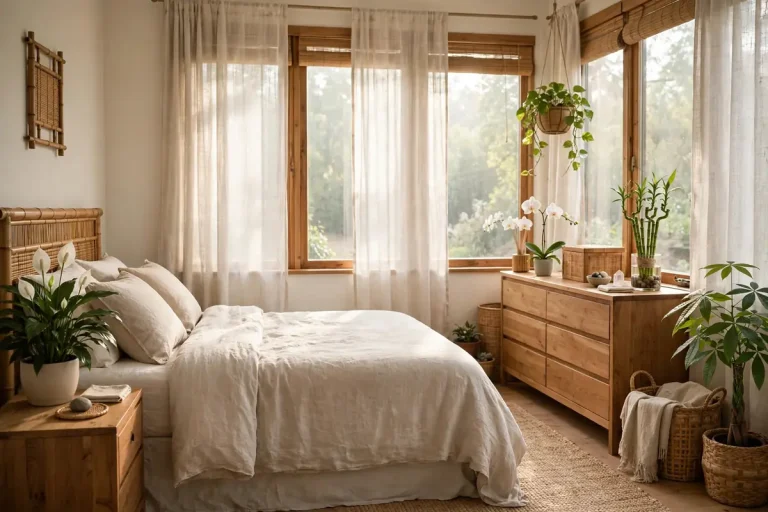
Beyond the bagua: the rooms themselves. The entryway deserves one healthy plant flanking the door — it tells arriving energy that life thrives here. The living room can carry the most plants; distribute them so energy flows through the room. In the bedroom, modern practice allows one or two calm plants — a peace lily or a single orchid — while spiky growers stay in a supporting role. Bathrooms benefit from a pothos or fern on a shelf, adding life to a room that otherwise only drains energy away.
Plants to Avoid in Feng Shui
Feng shui’s “avoid” list is shorter than most people expect — and every item on it follows from the same logic as the recommendations. If good feng shui plants are alive, soft, upward, and well-tended, the plants to avoid are the opposite in one way or another:
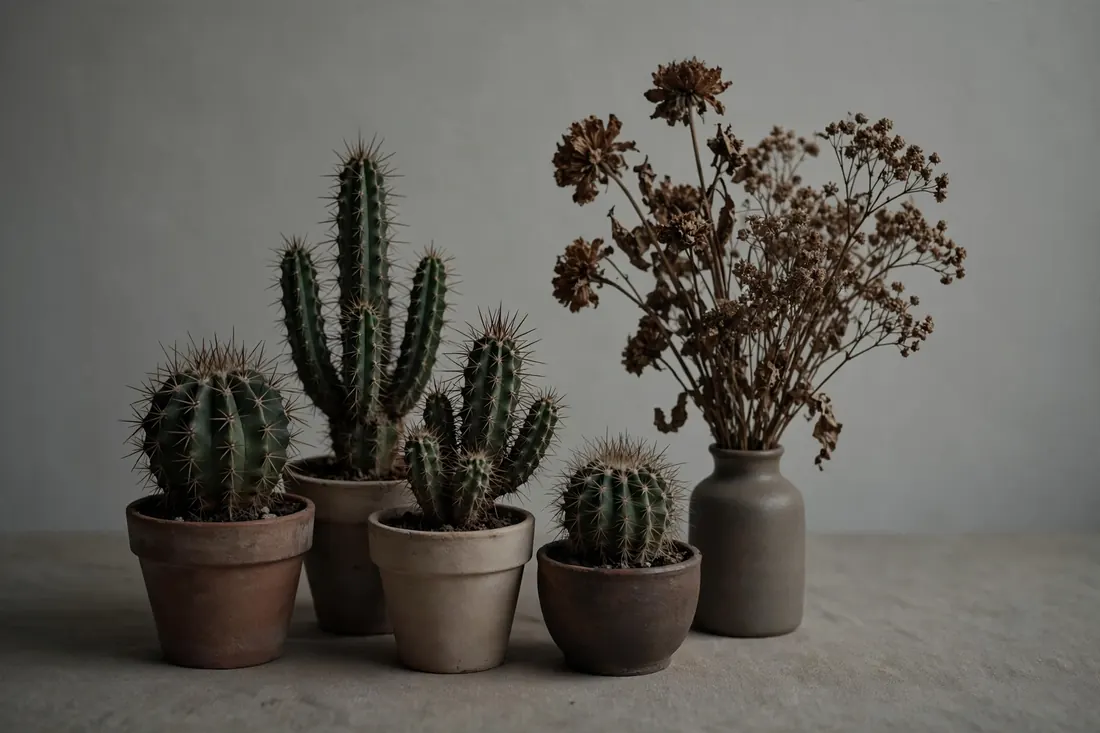
Cacti and spiky succulents (indoors). Sharp points project sha qi — attacking, draining energy — at whoever sits near them. A cactus on a sunny balcony or outdoor corner is fine as a perimeter guard, but the spiky cluster on your desk or nightstand works against the room. Love succulents? Choose soft, rounded ones like jade plants, echeverias, or haworthias instead.
Bonsai (inside the home). This one surprises people: bonsai are beautiful, so why avoid them? Because a bonsai is a tree that has been deliberately kept small — and in feng shui symbolism, stunted growth in the home suggests stunted growth in life. Traditional practitioners keep bonsai in outdoor viewing areas, not living rooms. One small bonsai in a study is a minor matter; a collection of them as your main houseplants is not.
Dried flowers and dead or dying plants. This is the single most common feng shui plant mistake. Dried bouquets, dead leaves left on stems, and plants that are clearly beyond saving all represent finished, stagnant energy — and the home tends to match what it displays. Compost the dead bouquet, prune the brown leaves today, and replace a dead plant promptly. An empty, clean spot holds potential; a dead plant holds a message you do not want.
Thorny or weeping plants. Roses with prominent thorns near seating areas, and strongly weeping or drooping plants (whose energy pours downward), are both considered draining indoors. Enjoy fragrant cut flowers in a vase instead — gardenias are a classic choice (see our flowers that start with G guide) — and choose upward or mounding habits for your permanent houseplants.
Fake plants (mostly). Artificial plants carry no living qi — they are decor, not a feng shui adjustment. Most practitioners say skip them. If a spot cannot support a real plant, choose an extremely tough live one (snake plant, ZZ plant, or pothos) rather than a plastic imitation.
Keeping the Energy Vibrant: Care Tips
Here is the open secret of feng shui plants: the “energy” of a plant is, in practical terms, its health. Every care tip below is standard good horticulture — and in feng shui language, each one keeps qi vibrant.
Light first, always. The number one reason houseplants decline is wrong light, and a declining plant is a feng shui liability. Match the plant to the window you actually have: jade plants and kumquats for your brightest south or west windows, money trees and orchids for bright indirect east light, peace lilies and pothos for dimmer north-facing rooms. A plant in the right light mostly takes care of itself; a plant in the wrong light becomes a chore, and chores do not radiate good energy.
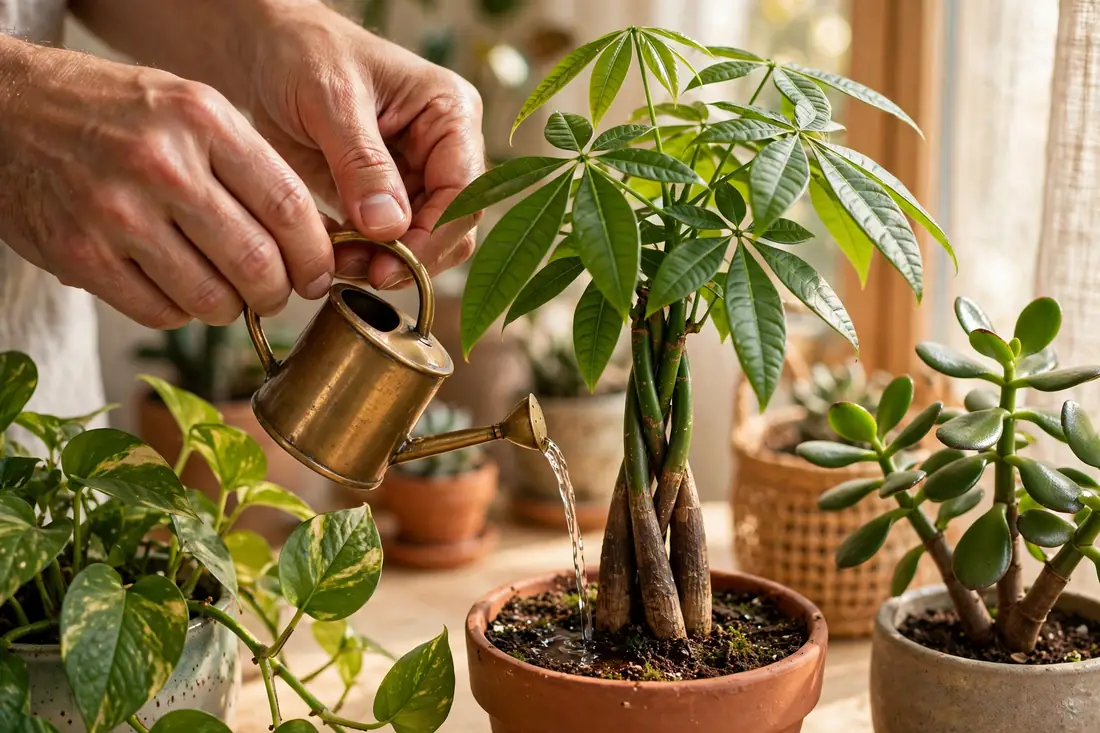
Water with attention, not on a schedule. Check the soil with your finger before watering — most feng shui favorites (money tree, jade, pothos, rubber plant) want the top inch or two dry between waterings. When you water, water thoroughly until it drains from the bottom, then empty the saucer. For lucky bamboo in water, change the water every week or so and rinse the pebbles. Mindful watering is practically a meditation, and it is also the single best thing you can do for plant health.
Prune, dust, and rotate. Remove yellow or brown leaves the moment you see them — in feng shui terms, you are clearing stagnant energy; in gardening terms, you are preventing disease and redirecting the plant’s resources to healthy growth. Dust broad leaves (peace lily, rubber plant) monthly with a damp cloth so they can photosynthesize. Rotate pots a quarter turn every few weeks so growth stays even and balanced — a lopsided plant literally leans its energy to one side.
Feed lightly and repot when needed. A half-strength balanced liquid fertilizer monthly through spring and summer keeps growth lush; skip feeding in winter when most houseplants rest. Repot when roots circle the bottom or water runs straight through — usually every one to two years. Fresh soil is fresh energy, and a plant with room to grow is the whole point.
Choose pots with intention. Pot color is part of the feng shui toolkit: red or purple pots for the wealth corner (Fire activates), green or brown for the east (Wood supports Wood), white or metallic for the west and northwest (Metal), black or deep blue for the north (Water). Make sure every pot has drainage — a beautiful pot that drowns the roots helps no one. And quarantine new plants for a week or two before placing them in their bagua position, so hitchhiking pests never reach your established collection.
Replace without guilt. Sometimes a plant fails despite good care — wrong microclimate, a pest you caught too late, or simply its time. Feng shui is unambiguous here: thank it, compost it, and replace it with a healthy new plant. Clinging to a dying plant out of guilt keeps dying energy in the room. The practice is about living, growing things, and there is always another healthy plant waiting at the nursery.
Frequently Asked Questions
Where should I put a money tree for good feng shui? The southeast corner of your home or office — the wealth area of the bagua map — is the classic spot. Near the front entrance or on a work desk are strong alternatives. Keep it healthy, dust-free, and out of cold drafts; a struggling money tree in the wealth corner sends the opposite of the intended message.
How many lucky bamboo stalks should I get? It depends on your intention: 2 stalks for love, 3 for happiness, 5 for health, 8 for wealth and prosperity, 9 for great overall luck. Avoid 4 stalks, since four sounds like the word for “death” in Chinese. Most gift arrangements use 2, 3, 5, or 8 stalks.
Are snake plants bad feng shui because of their sharp leaves? Opinions differ. Traditionalists avoid sharp-leaved plants indoors because spikes project harsh energy. Modern practitioners widely accept the snake plant as a protector whose upright blades cut through negativity. If the sharp look bothers you, choose a rounded-leaf plant instead — your own comfort matters more than any rule.
Can I keep feng shui plants in the bedroom? Yes, with restraint. Old guidance said no plants in bedrooms, but modern practice allows one or two calm plants — a peace lily, a single orchid, or a small pothos. Avoid strongly fragrant flowers (they can disturb sleep), spiky plants near the bed, and large collections that make the room feel like a greenhouse rather than a restful retreat.
Do fake plants work for feng shui? Not really. Feng shui is about living energy, and an artificial plant has none — it is decoration, not a feng shui adjustment. If a spot cannot support a real plant, choose an extremely tough live one (snake plant, ZZ plant, or pothos survive almost anything) rather than a silk imitation.
What should I do when a feng shui plant dies? Do not panic and do not read it as an omen — plants die for ordinary reasons like overwatering or poor light. Remove it promptly, since dead plants represent stagnant energy, and replace it with a healthy new plant. If several plants die in the same spot, check the conditions there (light, drafts, heating vents) before replanting.
References
- The 15 Best Feng Shui Plants to Use In Your Home — The Spruce (bagua overview and plant recommendations from certified feng shui consultant Anjie Cho)
- Pachira aquatica — Missouri Botanical Garden Plant Finder (botanical profile of the money tree, including the origin of its common name)
- Lucky Bamboo Plant Care — The Old Farmer’s Almanac (watering, light, and stalk-meaning guidance for Dracaena sanderiana)
- 9 Office Plants That Will Boost Your Mood and Productivity — Gardening Know How (money tree as a feng shui office plant)
- Money Tree Propagation — Gardening Know How (propagating Pachira, whose braided trunks “lock in” fortune)
Related reading: setting up a sleeping space specifically? See our guide to bedroom feng shui plants for the best picks for restful energy.