
Australian Native Flowers: 35 Iconic Species, Names and Growing Tips
Australia’s flowering plants are among the most distinctive on Earth. Isolated for millions of years, the continent developed an extraordinary flora found almost nowhere else — the flora of Australia includes roughly 20,000 native vascular plant species, about 85 per cent of them endemic.
These blooms evolved for poor, dry soils, hot sun and pollinators such as honeyeaters and native bees. This guide covers 35 iconic Australian native flowers, with scientific names, colours, bloom seasons, the official floral emblems, and practical growing tips.
Quick Answer
The most famous Australian native flowers are the golden wattle, Australia’s national flower, along with kangaroo paw, waratah, banksia, bottlebrush, Sturt’s desert pea, the Cooktown orchid and the flannel flower. Most are hardy, sun-loving and drought-tolerant once established.
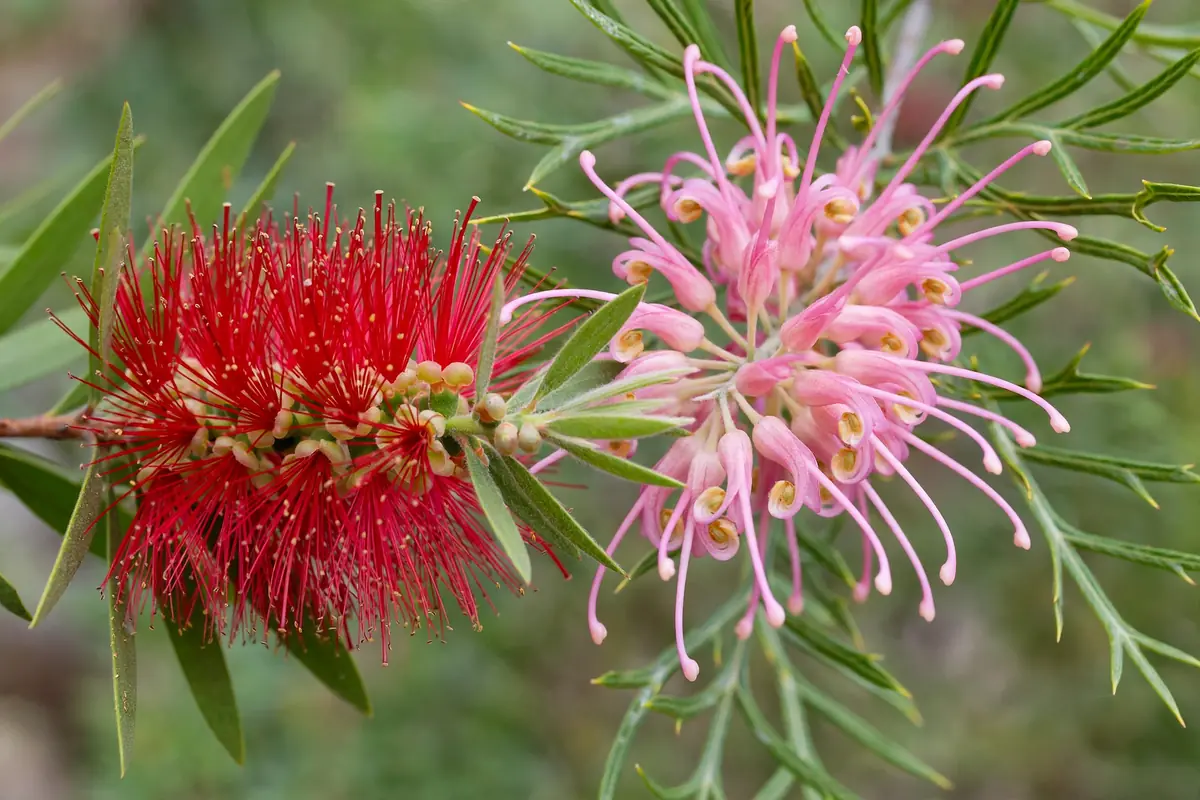
Table of Contents
- Australia’s Floral Emblems
- 35 Australian Native Flowers
- 23 More Native Flowers at a Glance
- How to Grow Australian Native Flowers
- Frequently Asked Questions
Australia’s Floral Emblems
Every state and territory has an official floral emblem, and Australia has a national flower. Learn these nine first:
| Region | Floral Emblem | Scientific Name |
|---|---|---|
| Australia (national) | Golden Wattle | Acacia pycnantha |
| New South Wales | Waratah | Telopea speciosissima |
| Victoria | Pink Heath | Epacris impressa |
| Queensland | Cooktown Orchid | Dendrobium bigibbum |
| South Australia | Sturt’s Desert Pea | Swainsona formosa |
| Australian Capital Territory | Royal Bluebell | Wahlenbergia gloriosa |
| Western Australia | Mangles Kangaroo Paw | Anigozanthos manglesii |
| Tasmania | Tasmanian Blue Gum | Eucalyptus globulus |
| Northern Territory | Sturt’s Desert Rose | Gossypium sturtianum |
Waratah, banksia and bottlebrush also make superb cut flowers — simple habits help you make cut flowers last longer in the vase.
35 Australian Native Flowers
Twelve best-known species in detail, then 23 more at a glance — 35 in total, in flower across the whole year.
1. Kangaroo Paw (Anigozanthos manglesii)
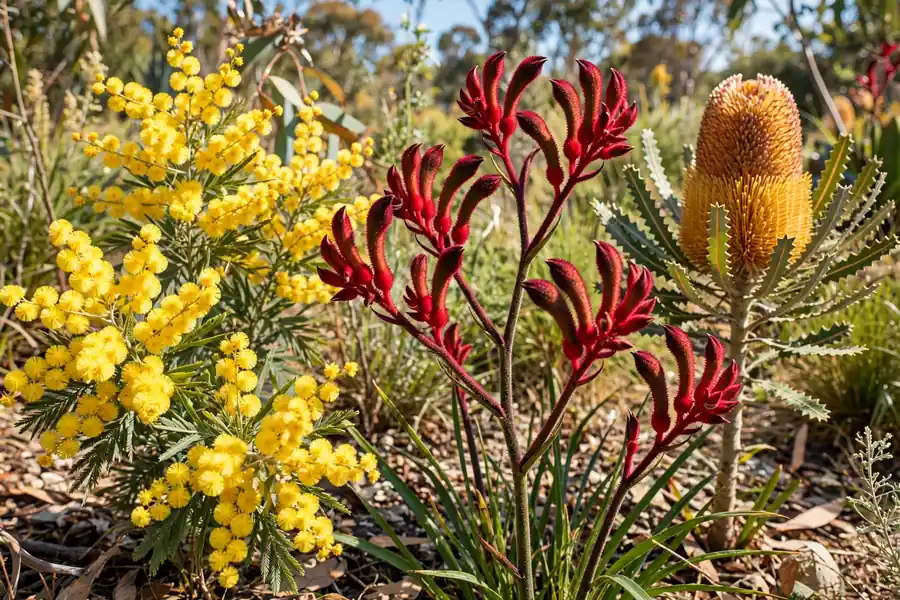
Velvety, paw-shaped flowers make kangaroo paw one of Australia’s most recognisable garden plants. The red-and-green Mangles form is Western Australia’s emblem; cultivars add yellow, orange and pink, flowering late spring to summer. Grow in full sun and very free-draining soil. Its sculptural blooms belong among the unusual blooms that make you look twice.
2. Waratah (Telopea speciosissima)
New South Wales’ emblem bears a spectacular spring dome of crimson florets, up to 15 cm across, above leathery leaves on the east coast. It needs excellent drainage, shelter from hard frost, and pruning after flowering. Few natives reward gardeners who love red flowers for bold garden colour quite like it.
3. Banksia (Banksia spinulosa)
Banksias carry bold cylindrical spikes in gold, orange, red or cream, rich in nectar for honeyeaters. Hairpin banksia suits gardens across the east and south, flowering mainly autumn to spring. Plant in full sun, avoid phosphorus-rich fertiliser, and enjoy the sculptural cones left behind.
4. Bottlebrush (Callistemon citrinus)
Its spikes of bright red stamens look exactly like a bottle brush. Now classified with the melaleucas, these tough, bird-attracting shrubs flower in spring and often again in autumn. They tolerate heavier soils than most natives, given full sun and a prune behind spent flowers.
5. Golden Wattle (Acacia pycnantha)
Australia’s national flower covers itself in fluffy, golden, sweetly scented balls in late winter and spring — the source of the national green and gold. A fast-growing small tree from the south-east, it suits new gardens. Plant its perfume alongside other fragrant flowers near paths, in full sun with good drainage.
6. Grevillea (Grevillea banksii)
Grevilleas bring spider-like or toothbrush flowers in red, pink, orange, cream and yellow, adored by honeyeaters. Red silky oak flowers much of the year in warm climates; smaller cultivars suit pots. Plant in full sun, prune lightly and often, and use only low-phosphorus native fertiliser.
7. Sturt’s Desert Pea (Swainsona formosa)
South Australia’s emblem is one of the world’s most striking wildflowers: blood-red pea blooms with a glossy black centre, sprawling over red desert sand after rain, mainly in spring and summer. Grow it as a short-lived annual in a raised bed or pot of gritty mix, in full sun.
8. Flannel Flower (Actinotus helianthi)
Creamy-white bracts covered in soft, woolly hairs give this flower the feel of flannel cloth. It grows on sandstone around Sydney, flowering in spring and summer, often prolifically after fire. Give it sandy, sharply drained soil, full sun and dry winter feet.
9. Cooktown Orchid (Dendrobium bigibbum)
Queensland’s emblem is a tropical epiphyte from the far north, growing on trees and rocks and bearing sprays of mauve-purple flowers in the dry season, autumn to spring. Outside the tropics, grow it in open orchid bark, bright and frost-free, watered well in summer.
10. Billy Buttons (Craspedia globosa)
Cheerful golden drumsticks on long, leafless stems above silvery foliage. Native to south-eastern and Tasmanian grasslands, billy buttons flower spring to summer and dry beautifully for arrangements. Grow as easy annuals or short-lived perennials from seed, in full sun.
11. Royal Bluebell (Wahlenbergia gloriosa)
The ACT’s emblem is a delicate alpine perennial with deep violet-blue bells on slender stems, in subalpine grasslands of the ACT, Victoria and southern New South Wales. It flowers late spring to summer and suits rockeries and pots in moist, well-drained soil.
12. Hakea (Hakea laurina)
Pincushion hakea, from south-western Western Australia, bears round crimson heads studded with cream styles from autumn into winter — rich nectar for birds on a small tree to 5 metres. It demands sharp drainage and full sun, and must never get high-phosphorus fertiliser.
23 More Native Flowers at a Glance
| Flower | Scientific Name | Flower Colour | Bloom Season |
|---|---|---|---|
| Australian Daisy | Brachyscome iberidifolia | Blue/violet/white/pink | Spring–summer |
| Christmas Bells | Blandfordia grandiflora | Red/orange/yellow | Late spring–summer |
| Geraldton Wax | Chamelaucium uncinatum | Pink/white/mauve | Winter–spring |
| Pink Heath | Epacris impressa | Pink/white/red | Winter–spring |
| Tasmanian Blue Gum | Eucalyptus globulus | White/cream | Spring–summer |
| Sturt’s Desert Rose | Gossypium sturtianum | Lilac/purple | All year, peak winter–spring |
| Everlasting Daisy | Xerochrysum bracteatum | Yellow/orange/pink/white | Spring–autumn |
| Native Violet | Viola hederacea | Purple/white | Spring–autumn |
| Woolly Bush | Adenanthos sericeus | Red | All year |
| Rice Flower | Ozothamnus diosmifolius | White/pink | Spring |
| Fairy Fan Flower | Scaevola aemula | Purple/blue/white | Spring–autumn |
| Blue Lechenaultia | Lechenaultia biloba | Blue | Winter–spring |
| Feather Flower | Verticordia plumosa | Pink | Spring–summer |
| Crimson Kunzea | Kunzea baxteri | Red | Winter–spring |
| Mountain Devil | Lambertia formosa | Red/orange | All year |
| Sydney Boronia | Boronia ledifolia | Pink | Winter–spring |
| Grass Tree | Xanthorrhoea johnsonii | Cream | Winter–spring |
| Purple Coral Pea | Hardenbergia violacea | Purple | Winter–spring |
| Golden Guinea Flower | Hibbertia scandens | Yellow | Spring–summer |
| Coastal Rosemary | Westringia fruticosa | White/mauve | All year |
| Pigface (Karkalla) | Carpobrotus rossii | Purple/pink/yellow | Spring–summer |
| Silver Princess | Eucalyptus caesia | Red-pink | Winter–spring |
| Lemon Myrtle | Backhousia citriodora | White/cream | Summer |
How to Grow Australian Native Flowers
Start with drainage: wet, heavy soil kills more natives than anything else. Plant into free-draining soil, mound beds on clay, or use pots with native potting mix.
- Sun: At least six hours of direct sun for most; light shade suits royal bluebell, native violet and Cooktown orchid.
- Feeding: Use low-phosphorus native fertiliser only — ordinary feeds can kill banksias, hakeas and grevilleas.
- Water: Water deeply through the first summer, then ease off; most are drought-tolerant once established.
- Mulch and pruning: Mulch with gravel or coarse organic mulch, clear of stems, and prune lightly after flowering.
Local advice matters — a kangaroo paw thriving in Perth may sulk in humid Brisbane. Native plant communities such as r/AustralianPlants on Reddit show what growers in your climate succeed with.
Frequently Asked Questions
What is Australia’s national flower?
The golden wattle, Acacia pycnantha, proclaimed in 1988. Its blooms and foliage gave Australia its green and gold colours; Wattle Day is 1 September.
What is the most famous Australian native flower?
The waratah and kangaroo paw are the most recognised internationally; the golden wattle is the most symbolic at home, with banksia and bottlebrush close behind.
Are Australian native flowers easy to grow?
Most are, if matched to your soil and climate, with drainage, sun and low-phosphorus native fertiliser. Waratah and flannel flower are fussier, but rewarding.
When do Australian native flowers bloom?
Something native flowers every month. Many species peak in spring, but banksias, hakeas and many grevilleas bloom through autumn and winter.
Can you grow Australian native flowers outside Australia?
Yes — kangaroo paw, bottlebrush and grevillea thrive in Mediterranean-climate and mild coastal gardens in California, South Africa and southern Europe; use pots where winters are wet or frosty. Gardeners also discuss regional results in Q&A forums — see questions about Australian native flowers on Quora.
3 Comments