Spider Flower: Meaning, Types and How to Grow Cleome
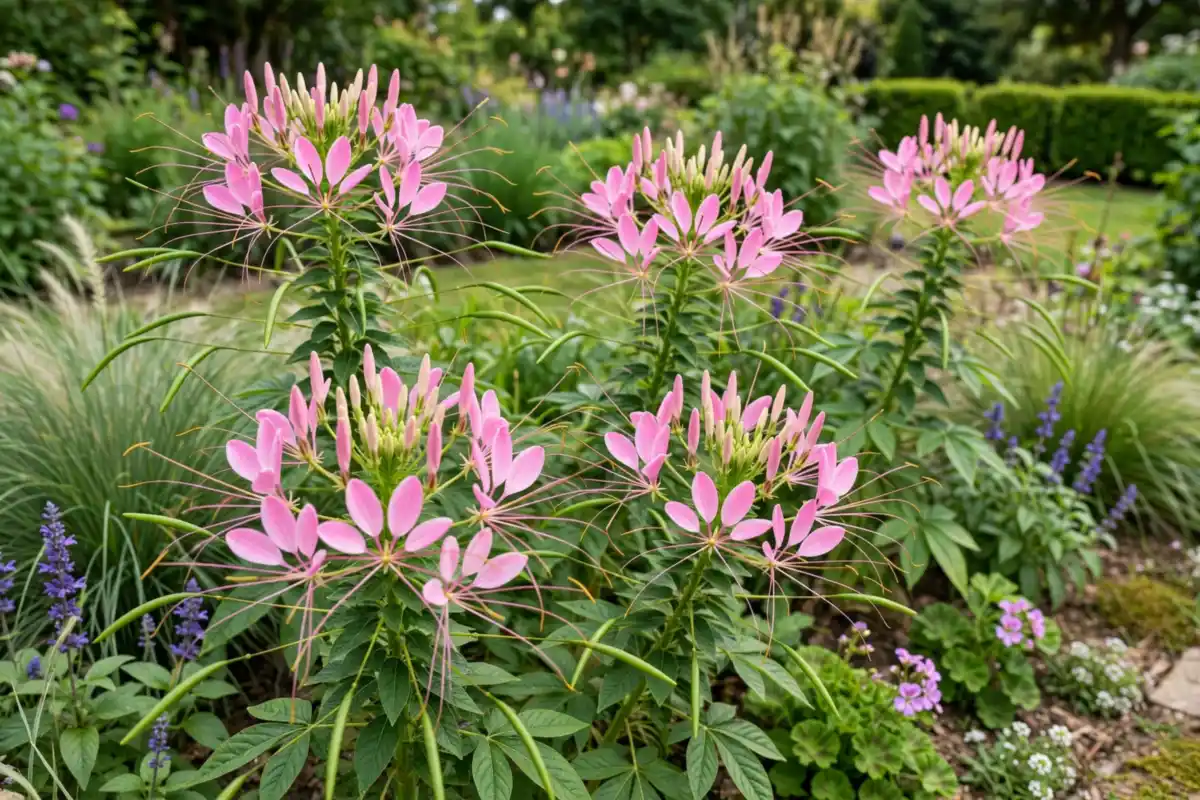
Five feet tall, flowering from midsummer to frost, and wearing whiskers. The spider flower — cleome — is the cottage garden’s firework: globe after globe of pink, white and violet blossoms whose stamens stream out like spider legs and Catherine wheels, opening fresh blooms at the top of the spike while the slender seed pods ripen below. It asks for almost nothing, seeds itself politely, and feeds hummingbirds at dusk.
This guide covers the garden cleome and its five relatives and rivals (including Australia’s entirely different “spider flower”), what it means (the Victorian invitation “elope with me”), and how to grow a stand of fireworks from a spring sowing.
Quick Answer
A spider flower is Cleome hassleriana (now often classified Tarenaya hassleriana), a tall South American annual in the caper family whose rounded flower heads carry long, streaming stamens that give it the spider look. It grows 3 to 6 feet tall, blooms from early summer until frost in all zones as an annual, self-seeds freely, and means “elope with me” in the Victorian language of flowers. Note for Australian readers: your “spider flower” is the grevillea, a different plant entirely — both are covered below.
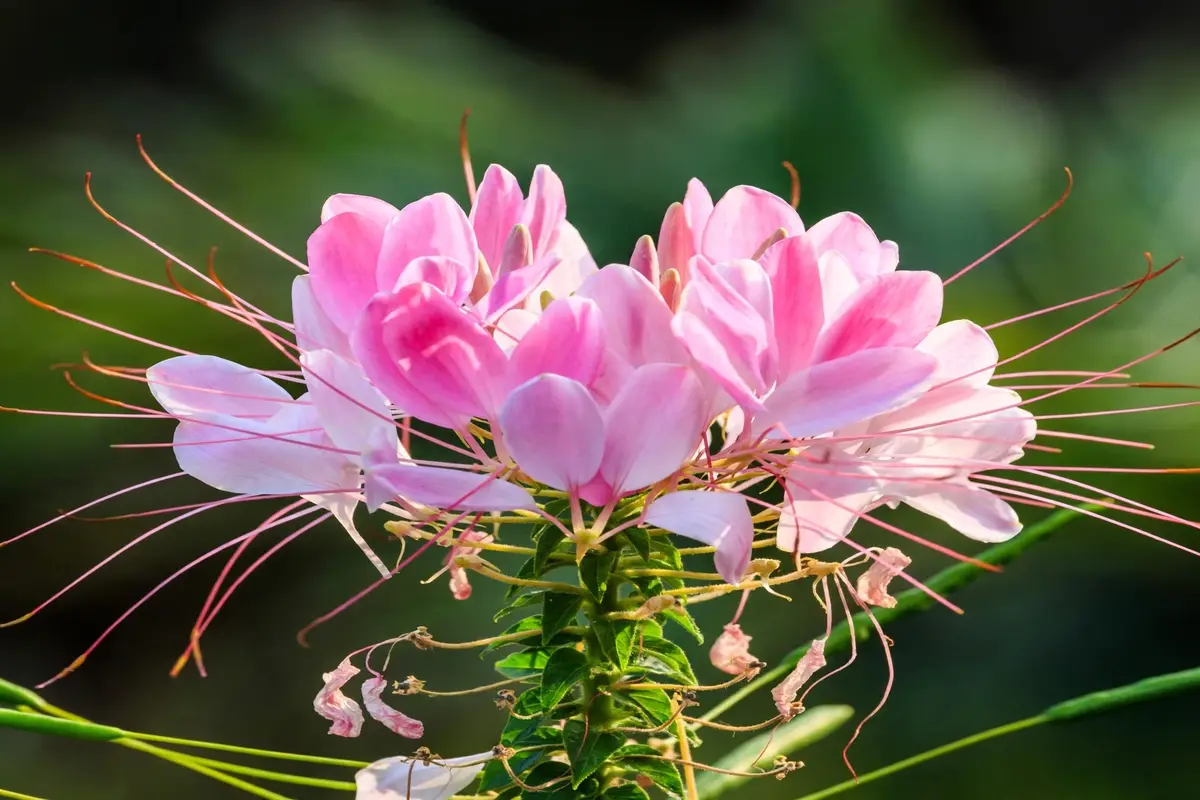
Table of Contents
- What Is a Spider Flower?
- Types of Spider Flower and 6 Kinds Worth Knowing
- Spider Flower Meaning and Symbolism
- Spider Flower Colours and Their Meanings
- How to Grow Spider Flowers
- Common Mistakes When Growing Spider Flowers
- Spider Flower vs Grevillea: the Name Across the World
- Frequently Asked Questions
What Is a Spider Flower?
Cleome hassleriana is a fast annual from the riverbanks and open ground of southern South America — Argentina, Paraguay, Uruguay, southern Brazil — in Cleomaceae, the caper family (cousin to the cabbages). The plant is engineered for a long show: a stout, slightly sticky stem climbs three to six feet, palmate leaves spread like fingers (five to seven leaflets, with a musky, skunky tang when brushed), and the flowering head is a slow firework — buds open in a ring at the head’s equator while new buds keep forming at the top for months, so a single spike carries fresh pink stars above a skirt of long, thin, dangling seed pods. Each flower throws out six stamens and a pistil on dramatic two-to-three-inch filaments: the spider’s legs, and the hawkmoth’s landing gear — the blossoms are built for dusk-flying moths and hummingbirds, which work the heads at twilight. You can read more on the Cleome hassleriana page on Wikipedia.
The trivia follows it everywhere: the leaves look, at a glance, like cannabis — enough that cleome has explained itself to neighbours and, occasionally, to the police — but the leaflets radiate from one point on a bristly, sticky, thorny-ish stem, the plant smells distinctly skunky rather than resinous, and the flowers settle the identification beyond argument. It is also a genuine working flower: the Rocky Mountain relative feeds bees through late summer, and the genus is studied for its C4 photosynthesis, the hot-climate engine it shares with maize. A firework with a day job.
Spider Flower Quick Facts
- Botanical name: Cleome hassleriana (syn. Tarenaya hassleriana).
- Family: Cleomaceae, the caper family.
- Type and hardiness: tender annual everywhere; perennial only in frost-free zones 10 to 11.
- Height: 3 to 6 feet by strain.
- Bloom time: early summer to frost, continuously.
- Sun and soil: full sun; average, well-drained soil; drought-tolerant once established.
- Good to know: self-seeds freely (sterile modern hybrids do not); foliage is musky-skunky and mildly irritating to some skins — handle with gloves if sensitive.
Types of Spider Flower and 6 Kinds Worth Knowing
The classic seed strains, the modern sterile hybrids, the native bee plant, and the Australian namesake. The table separates them; the profiles follow. For the full list of flower names, see our flower names A to Z guide.
| Type | Flowers | Height | Self-seeds? | Best use |
|---|---|---|---|---|
| ‘Royal Queen’ series | Rose, violet, cherry, white heads | 4–6 ft | Yes | Classic cottage stands |
| ‘Senorita Rosalita’ | Soft pink, continuous | 3–4 ft | No (sterile) | Tidy beds, no deadheading |
| ‘Senorita Blanca’ | White, continuous | 3–4 ft | No (sterile) | Moon gardens, mixing |
| ‘Sparkler’ series | Compact heads, mixed colours | 3–4 ft | Yes, less freely | Smaller gardens, pots |
| Rocky Mountain bee plant (C. serrulata) | Pink-purple bee magnets | 2–5 ft | Yes | Native and pollinator gardens (N. America) |
| Grevillea “spider flower” | Red/pink spidery clusters | Shrubs 3–10 ft | n/a (perennial shrub) | The Australian namesake |
1. ‘Royal Queen’ Series — the Classic Cottage Strain
The seed-grown standard for a century: tall plants in separated colours — Rose Queen, Violet Queen, Cherry Queen, White Queen (‘Helen Campbell’) — each a single-colour firework for planting in colour-blocked drifts. They germinate eagerly, grow like rockets in heat, and self-seed into next year’s free stand. If you want the old-fashioned back-of-border wall of spiders, this is the packet.
2. ‘Senorita Rosalita’ — the Sterile Modern Hybrid
The game-changer from Proven Winners: a sterile hybrid that flowers non-stop without setting seed — which means no deadheading, no seedlings in the path, no sticky seed pods, markedly less foliage odour, and softer, nearly thornless stems. Slightly shorter and much tidier than the Queens, it behaves like a modern bedding plant while keeping the firework silhouette. It cannot be grown from seed (cuttings only), so it is bought as plants.
3. ‘Senorita Blanca’ — the White Sister
The white-flowered twin of Rosalita, same sterile, tidy, odour-light breeding: ivory fireworks for moon gardens and for cooling hot colour schemes at the back of the border. Pair the two Senoritas for a pink-and-white stand that never needs a single deadhead all summer.
4. ‘Sparkler’ Series — the Compact Seed Strain
Seed-grown but shorter and bushier (3–4 feet) with larger individual florets, Sparkler suits smaller gardens and big containers where the Queens would loom. Colours come mixed or separated (Blush, Lavender, White). It still self-seeds, but its tidier frame drops fewer surprises at the border’s edge.
5. Rocky Mountain Bee Plant — the Native Original
Cleome serrulata is the North American wild species: pink-to-purple heads over western meadows and roadsides, a legendary bee and butterfly plant (a traditional food and dye plant for Indigenous peoples of the Southwest, whose cooked greens and black pottery paint both came from it). In native and pollinator gardens within its range it out-performs the South American garden flower ecologically — plant it where bees, not bouquets, are the brief.
6. Grevillea — Australia’s Spider Flower
Entirely different plant, same common name: Australia’s grevilleas carry curved, spidery red and pink flower clusters (styles looping out like spider legs), and “spider flower” is their everyday name — you will find them lighting up our Australian native flowers guide. Evergreen shrubs for frost-light climates and bird gardens, they share nothing with cleome but the metaphor. The comparison section below separates the names properly.
Spider Flower Meaning and Symbolism
In the Victorian language of flowers, the spider flower carried one of the boldest messages in the whole dictionary: “elope with me”. The tall, wild, slightly unruly firework was floriography’s romantic escape plan — a bouquet that proposed leaving everything and running. Modern lists soften it toward industry and creativity (the plant works all summer and invents flowers daily), but the elopement gloss survives in every serious source, and it suits the plant: nothing about cleome is demure.
Give it (as a plant, ideally, since the cut heads are fleeting) for daring romance, for housewarmings in first gardens, for the friend starting over — the flower of bold beginnings. In its native range, the bee plant carries older meanings still: sustenance and resourcefulness, a flower that fed people, bees and potters at once.
Spider Flower Colours and Their Meanings
- Pink — daring affection: Rosalita and Rose Queen, the romantic default.
- White — bold innocence: Blanca and Helen Campbell gleaming at dusk for the moths.
- Violet and purple — creativity and enchantment: Violet Queen’s dusk-deep heads.
- Cherry and red-pink — passion and adventure: Cherry Queen, the elopement colour at full volume.
How to Grow Spider Flowers
Warmth, sun, and almost no fuss thereafter. Gardeners on r/gardening on Reddit summarise cleome in one line: “the easiest five feet of flowers you’ll ever grow — if you get the seed started cold and the plants out late.”
Sowing — the Cold Trick
Cleome seed germinates best after a chill and with alternating temperatures: sow in trays in early spring, keep them somewhere that swings cool at night (a cold frame, an unheated porch), or refrigerate the sown tray for a week before bringing it to warmth. Seedlings sulk in cold soil, so plant out only when nights are reliably warm — cleome planted into a cold May stands still for a month. Alternatively sow direct in late spring where they are to flower; in established gardens, last year’s self-sown volunteers do the whole job for you (thin them to 12–18 inches apart, and transplant the spares while small — they move happily when young).
Growing On
Full sun, average soil, water until established, then mostly leave alone: established cleome is properly drought-tolerant, laughs at heat and humidity, and needs no feeding (rich soil makes leaves at the flowers’ expense). Tall Queen strains may want one stake or a neighbour to lean on in windy sites. Pair the stand with other dusk performers — its twilight shift-mates are the hummingbirds and hawkmoths it shares with our cardinal flower in wetter ground. Deadhead seed strains only if you are rationing next year’s volunteers; the Senorita hybrids need nothing at all.
Common Mistakes When Growing Spider Flowers
The first mistake is impatience at sowing: warm, constant-temperature trays germinate cleome poorly, and cold-soil planting stalls the seedlings — chill the seed, wait for warm nights. The second is planting the tall Queens at the front: five feet of firework belongs at the back, with the Sparks and Senoritas for smaller stages. The third is over-watering and over-feeding established plants, which trades flowers for sticky foliage.
The fourth is a surprise rather than a mistake: discovering the foliage’s skunky tang (and its look-alike leaves) after planting it beside the patio door. Site seed strains where brushing past is rare, wear gloves if the sap bothers your skin, and let the Senoritas — bred nearly odour-free — take the high-traffic spots.
Spider Flower vs Grevillea: the Name Across the World
Two continents, two plants, one spider. The garden spider flower (Cleome hassleriana): a fast annual herb, 3–6 feet, from South America; soft pink-white-violet globes of flowers with streaming stamens; grown from seed each year; summer-to-frost; feeds moths and hummingbirds at dusk. The Australian spider flower (Grevillea species and hybrids): evergreen shrubs in the protea family, 3–10 feet; hard, curved red-pink flower clusters whose long styles loop like legs; perennial in frost-light climates; grown from nursery plants; feeds honeyeaters and other birds by day. If your spider flower is a shrub that winters, it is grevillea; if it rockets up from spring seed and dies at frost, it is cleome. Both earn the name honestly — the spider, as usual, is in the eye of the beholder.
Frequently Asked Questions
Is the spider flower a perennial?
Only in frost-free climates (zones 10–11). Everywhere else it is a true annual — but its eager self-seeding makes it a returning resident: plant it once, and volunteers usually keep the stand going for years. The sterile Senorita hybrids are the exception, needing new plants each spring. If your question is not answered here, the questions about the spider flower on Quora cover most of the rest.
Does the spider flower smell?
The flowers are lightly sweet at dusk (for the moths), but the foliage carries a musky, skunky odour when brushed — the plant’s defence, and strongest in the old seed strains. Modern hybrids (Senorita series) are bred to be nearly odourless. Site accordingly: Queens at the back, Senoritas by the path.
Is spider flower the same as spider plant?
No — the spider plant is Chlorophytum comosum, the striped houseplant with dangling babies; it shares only half a name. The spider flower is cleome in the garden (or grevillea in Australia). The spider lily is a third plant again (Hymenocallis) — spider names attach to anything with long, leggy flower parts.
Do hummingbirds like spider flowers?
Yes — hummingbirds and hawkmoths work the heads heavily at dusk, when the flowers’ nectar and pale colours are aimed at them, and butterflies visit by day. Few annuals support a longer daily pollinator shift.
Why is my cleome not germinating?
Usually the temperature pattern: cleome wants a chill first and day-night swings after. Refrigerate the sown tray for a week, then give it warmth by day and cool nights; fresh seed also matters, and old packets fail quietly. Once one plant sets seed in your garden, germination problems become volunteer management instead.
Can spider flowers grow in pots?
The compact strains can: Sparkler and the Senoritas thrive in large (5-gallon-plus) containers in full sun with regular water. The tall Queens are border plants — a pot that holds them upright in August wind is a project, not a container. For more flowers under the same letter, see our guide to flowers that start with S.