
Azalea Flower: Types, Meaning, Symbolism and How to Grow Azaleas
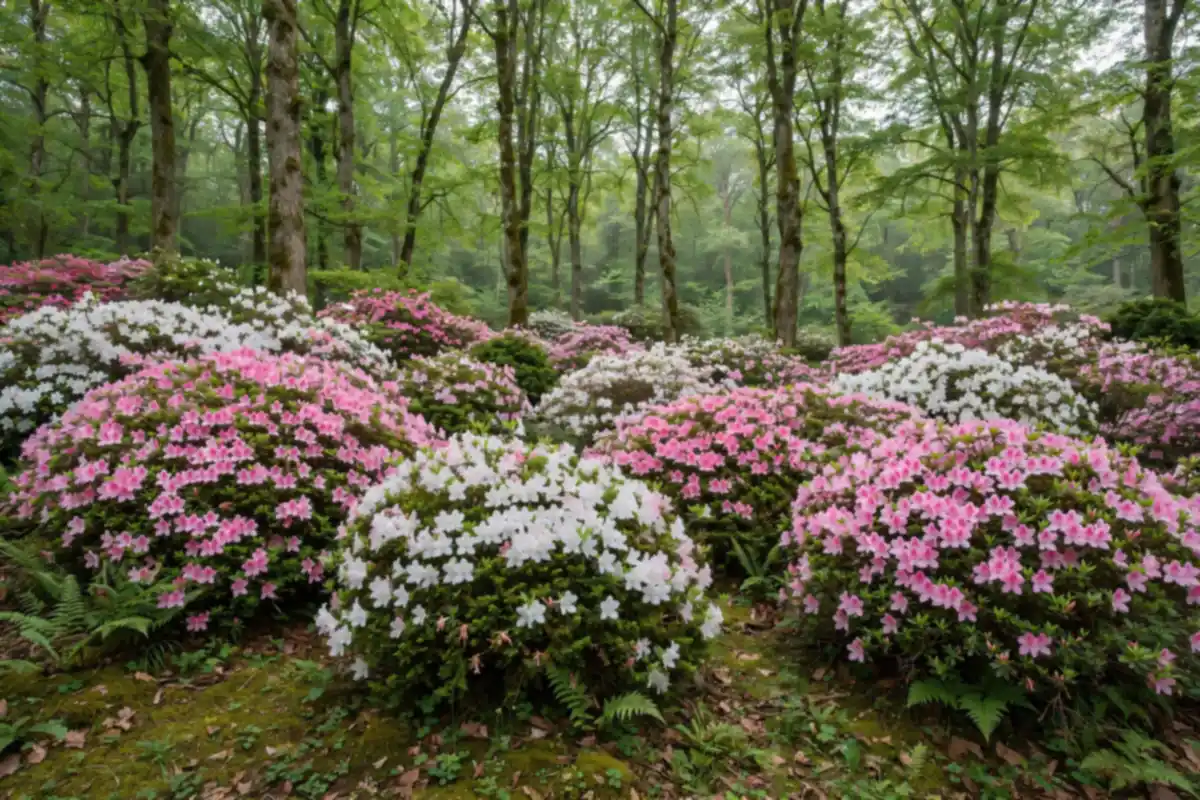
An azalea in full bloom does not look like a shrub with flowers on it. It looks like a shrub made of flowers — a mound of pink, red, white or purple so solid that the leaves disappear underneath it. Gardeners wait all year for the two or three weeks when it happens, and whole festivals are built around it, from the azalea trails of the American South to the temple gardens of Japan.
An azalea is also one of the most generous shrubs you can plant: it asks for shade instead of fighting for sun, it flowers before most summer plants have started, and a happy plant will bloom for decades with almost no pruning. This guide covers the main types of azalea flower, what each colour means, and how to grow them — including the one thing azaleas demand above all else, acid soil, and the one pruning mistake that quietly removes a whole year of flowers.
Quick Answer
An azalea flower is a spring bloom on a flowering shrub in the genus Rhododendron, in the heath family Ericaceae. Azaleas are rhododendrons bred for smaller leaves and masses of funnel-shaped flowers; some are evergreen and some drop their leaves in autumn. They flower in spring — a few modern kinds repeat in autumn — grow 1 to 8 feet tall depending on the type, and do best in part shade and moist, well-drained, acid soil (pH 4.5 to 6.0), in USDA zones 4 to 9 depending on the kind. All parts of the plant are toxic if eaten, because they contain grayanotoxins, so azaleas are not edible for people or pets.
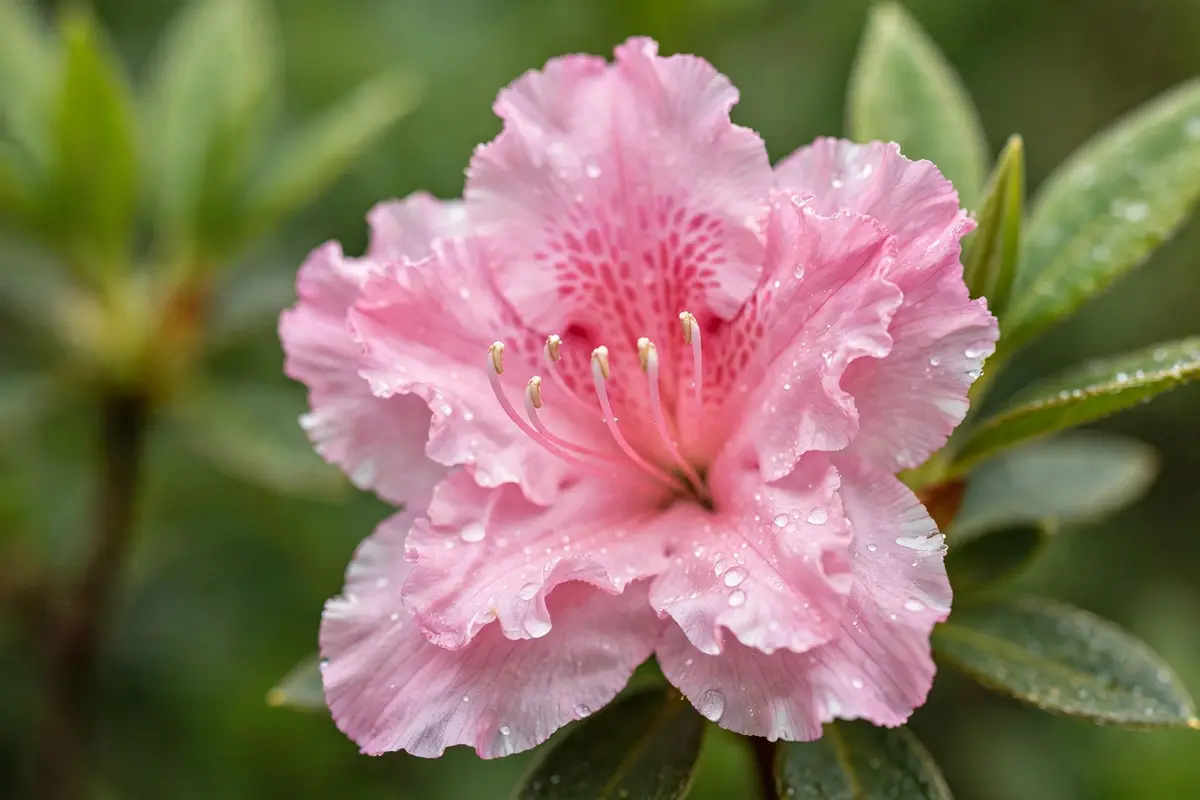
Table of Contents
- What Is an Azalea Flower?
- Types of Azalea and 6 Popular Varieties
- Azalea Flower Meaning and Symbolism
- What Each Azalea Colour Means
- How to Grow Azaleas
- Common Mistakes When Growing Azaleas
- Azaleas in Gardens, Festivals and Bonsai
- Frequently Asked Questions
What Is an Azalea Flower?
An azalea belongs to the genus Rhododendron, in the family Ericaceae, which it shares with heathers, blueberries and mountain laurel. Botanists once kept azaleas in their own genus, but modern classification places them inside Rhododendron, in two groups: the mostly evergreen Tsutsusi azaleas, bred for centuries in Japan, and the mostly deciduous Pentanthera azaleas, which include the wild honeysuckle azaleas of North America. You can read more on the azalea page on Wikipedia.
So what is the difference between an azalea and a rhododendron? Gardeners use a simple rule: azaleas have smaller, thinner leaves, smaller flowers, and usually five stamens inside each flower, while the plants sold as rhododendrons have large, leathery evergreen leaves, big trusses of flowers, and ten stamens. Every azalea is a rhododendron, but not every rhododendron is called an azalea. In the garden the difference matters because azaleas take lighter shade, lighter pruning and smaller spaces than their big cousins.
The wild azaleas come from three corners of the world: the mountains of Japan, China and Korea, which gave us the evergreen kinds; the woodlands of eastern North America, home to flame azaleas in orange and gold; and the Caucasus and Black Sea coast, home of the fragrant yellow Pontic azalea. Centuries of breeding have crossed these into thousands of named garden varieties, so there is now an azalea for almost every climate from Minnesota to Florida.
One fact to know before you plant: every part of an azalea contains grayanotoxins, the same poisons found in a few other heath-family plants. Eating the leaves or flowers causes nausea, vomiting and worse, the plant is listed as toxic to dogs, cats and horses, and honey made from some rhododendron nectar — the famous “mad honey” — is toxic too. It is a plant to admire, not to eat, and not to plant where livestock browse.
Azalea Quick Facts
- Family: Ericaceae, the heath family.
- Genus: Rhododendron (azaleas sit in the Tsutsusi and Pentanthera groups).
- Life cycle: long-lived woody shrub; some plants bloom for 50 years or more.
- Height: 1 to 3 feet for dwarf kinds; 4 to 8 feet for Southern Indica and native kinds.
- Bloom time: spring, usually April to May; Encore types repeat in summer and autumn.
- Sun: part shade or dappled light; morning sun with afternoon shade is ideal.
- Soil: acid, pH 4.5 to 6.0, moist but well-drained, rich in organic matter.
- Zones: USDA 4 to 9 depending on the type — deciduous natives are the hardiest.
- Good to know: azaleas have shallow, fibrous roots and hate being planted too deep.
Types of Azalea and 6 Popular Varieties
Garden azaleas fall into a few great breeding groups, and knowing the group tells you more than knowing the variety name: it tells you the size, the hardiness and whether the plant keeps its leaves in winter. The table below compares six kinds worth knowing, and each one is described in detail underneath. Our flower names A to Z guide lists the azalea alongside every other flower name if you want to compare it with the rest of the alphabet.
| Variety / Group | Type | Height | Hardiness | Best For |
|---|---|---|---|---|
| Kurume azaleas | Evergreen | 2 to 4 ft | Zones 6 to 9 | Masses of small flowers, hedges |
| Southern Indica azaleas | Evergreen | 4 to 8 ft | Zones 7 to 10 | Big shrubs, warm climates |
| Satsuki azaleas | Evergreen | 1 to 3 ft | Zones 6 to 9 | Late flowers, bonsai, pots |
| Encore azaleas | Evergreen, repeat-blooming | 2 to 5 ft | Zones 6 to 10 | Spring plus autumn flowers |
| Flame azalea | Deciduous native | 4 to 8 ft | Zones 5 to 8 | Orange flowers, woodland gardens |
| Exbury hybrids | Deciduous | 4 to 6 ft | Zones 5 to 8 | Fragrant flowers, cold climates |
1. Kurume Azaleas
The Kurume azaleas come from the city of Kurume in Japan, where they have been bred since the early 1800s, and they are the classic evergreen azalea of spring gardens. The plants are compact and twiggy, 2 to 4 feet tall, with small leaves and an extraordinary number of small flowers — a mature plant in bloom can carry thousands of blooms at once, in pink, red, white, salmon and lilac. Famous kinds include ‘Hinodegiri’, a deep red, and ‘Coral Bells’, a soft pink. Kurume azaleas are the ones to plant for a low hedge, a bank of colour under trees, or a row along a shaded path.
2. Southern Indica Azaleas
The Southern Indicas are the giants of the evergreen azaleas, growing 4 to 8 feet tall and just as wide, and they are the backbone of spring in the American South, where whole towns hold azalea festivals around them. The flowers are large — 2 to 3 inches across — in white, pink, red, salmon and purple, and a mature plant in a warm garden is an unforgettable sight. The best-known kind is ‘George Lindley Taber’, pale pink with a deeper throat, and ‘Formosa’, a strong magenta-purple. They need warmth — zones 7 to 10 — space, and part shade, and in return they ask for almost nothing else.
3. Satsuki Azaleas
Satsuki means “fifth month” in Japanese, and these late-flowering evergreen azaleas bloom in May and June, after the Kurume kinds have finished. They are low, spreading plants, 1 to 3 feet tall, bred in Japan for hundreds of years for their flower patterns: a single plant can carry solid, striped and speckled flowers all at once, in pink, red, white and purple. That variety on one plant is exactly why Satsuki azaleas are the classic azalea for bonsai, where each flower can be studied up close. In the garden they suit the front of a border, a rock garden, or a pot on a shaded patio.
4. Encore Azaleas
The Encore azaleas are the modern answer to the azalea’s one short season. Bred in the United States from the 1980s onwards, these evergreen azaleas flower heavily in spring like the others — and then flower again in summer and autumn, sometimes right up to the first frost. The group now includes kinds like ‘Autumn Rouge’ (deep pink-red), ‘Autumn Lily’ (white) and ‘Autumn Royalty’ (purple), in sizes from 2 to 5 feet, hardy in zones 6 to 10. The repeat flowers are fewer than the spring flush, but on a plant beside a front door, where you pass it every day, an azalea in flower in October is a small delight. Give Encore azaleas a little more sun than other kinds — they flower best with four to six hours of it.
5. Flame Azalea (Rhododendron calendulaceum)
The flame azalea is the wild azalea of the Appalachian mountains, and it breaks every rule people learn from the evergreen kinds. It is deciduous, dropping its leaves in autumn; it grows tall and open, 4 to 8 feet; and its flowers are flame-coloured — orange, gold, apricot and red-orange — opening in late spring, often just as the new leaves unfurl. It is hardy in zones 5 to 8, far hardier than the Southern Indicas, and it is one of the great sights of an eastern woodland in May. Plant it in a woodland garden or at the back of a shady border, and let it grow the way it grows in the wild: loosely, and without pruning.
6. Exbury Hybrids
The Exbury hybrids are deciduous azaleas bred at Exbury Gardens in England from the 1920s, crossing the flame azalea and other American species with the fragrant Pontic azalea. The result is a race of hardy, upright shrubs, 4 to 6 feet tall, with large, often scented flowers in cream, yellow, apricot, pink, orange and red, blooming in late spring. Kinds like ‘Gibraltar’ (orange) and ‘Homebush’ (pink) are still among the best deciduous azaleas sold. Exbury azaleas are the choice for cold climates — zones 5 to 8 — and for gardeners who want scent as well as colour, since many of them are sweetly fragrant on a warm evening.
Azalea Flower Meaning and Symbolism
The azalea’s classic meaning in the Victorian language of flowers is temperance — self-restraint, moderation, staying calm and in control. It was a thoughtful flower rather than a passionate one, the bloom you sent to someone you admired for their steadiness. Victorian lists also gave the azalea the message “take care of yourself for me”, a gentle instruction to a loved one who was ill, far away, or working too hard — and that caring meaning is the one most often quoted today.
In Asia, where azaleas have been grown for far longer, the meanings run deeper. In China the azalea is the flower of thinking of home: the poet Du Fu wrote of azaleas blooming on distant hillsides, and the flower still stands for homesickness, for the place and the people you have left behind. In Korea, the pink azalea — jindalrae — is a beloved spring flower that appears in folk songs and is even cooked into rice cakes, a symbol of spring’s arrival and of patience through hardship. In Japan, azalea festivals draw crowds to shrines and parks each spring, and the flower stands for patience and modesty.
Putting the traditions together, the azalea is a flower of quiet feelings: care, patience, self-control and longing for home. It is a good flower for a friend who is recovering, for someone who has moved away, or for a parent you want to thank — messages that warmer, louder flowers do not say as well.
What Each Azalea Colour Means
Azalea colour carries its own messages. Pink azaleas mean femininity, gentleness and soft love — the classic colour, and the one most often given to a mother or a close friend. Red azaleas mean passion, romance and strong feeling, and they are the boldest colour in the group. White azaleas mean purity, innocence and temperance, and they glow in shade; if you are building a white planting, our guide to white flowers has companions that flower around the same season. Purple azaleas mean royalty, dignity and admiration. Yellow and orange azaleas — mostly the deciduous kinds — mean friendship, joy and warmth, and they suit a cheerful gift better than a romantic one. A mixed planting reads as its own message: care, love and friendship in a single shrub.
How to Grow Azaleas
Azaleas are easy shrubs once you respect their three firm preferences: acid soil, part shade, and moisture that never turns to swamp. Get those right and they largely look after themselves, growing slowly into plants that can outlive the gardener. Gardeners on r/gardening on Reddit often call them one of the best shrubs for shade, and the steps below are what works in real gardens.
Light
Give azaleas part shade or dappled sunlight — a few hours of morning sun, then shade through the hot afternoon, is perfect. Under tall pine or oak trees is the classic spot, because the high canopy gives moving light all day. In cool climates they take more sun, and the repeat-flowering Encore kinds want four to six hours for their autumn show. In hot climates, full afternoon sun scorches the leaves and fades the flowers within days.
Soil — the acid rule
This is the rule that decides everything: azaleas need acid soil, pH 4.5 to 6.0. In neutral or alkaline soil the leaves turn yellow between green veins — a condition called chlorosis — because the plant cannot take up iron, and no amount of feeding fixes it until the soil is acid. Test the soil before planting. Dig in plenty of compost, leaf mould or composted pine bark, and if your soil is alkaline, grow azaleas in raised beds or pots filled with ericaceous (acid-loving) compost instead. Never add lime near an azalea, and keep wood ash away from them too.
Planting
Plant azaleas shallow — this is the second rule. The roots are fine, fibrous and near the surface, and a plant set even two inches too deep will sulk and can die. Set the top of the root ball level with the soil, or an inch above it in heavy ground, water deeply, and mulch with 2 to 3 inches of pine needles, bark or leaf mould, keeping the mulch a few inches away from the stem. Plant in spring or autumn, spacing dwarf kinds 2 feet apart and the big Southern Indicas 5 to 6 feet apart.
Watering and Feeding
Keep the soil evenly moist, especially in the first two summers while the roots spread, and water deeply in dry spells rather than sprinkling daily — azalea roots sit near the surface, so a long soak that reaches them matters. Once established, most azaleas need water only in drought. Feed lightly, once, just after flowering, with a slow-release fertiliser made for acid-loving plants. Overfeeding pushes soft leaf growth at the expense of flowers, and feeding late in summer produces tender growth that winter kills.
Pruning — right after the flowers
Azaleas set next year’s flower buds in summer, a few weeks after this year’s flowers fade. That single fact decides when to prune: if you must prune, do it within three weeks after flowering, and never in autumn, winter or spring, or you will cut off a whole year of bloom. Most azaleas need almost no pruning at all — just remove dead wood, crossing branches and the odd leggy shoot. Old, overgrown plants can be cut back hard right after flowering and will usually sprout again from the base.
Growing Azaleas in Pots
Azaleas do very well in pots, which is the answer for alkaline soil and small gardens alike. Use a pot at least 12 inches wide, ericaceous compost, and water with rainwater if your tap water is hard, since hard water slowly raises the soil pH. Keep the pot in part shade, never let it dry out, and feed lightly after flowering. Satsuki and Kurume kinds are the best pot azaleas, and in Japan they are carried indoors for a few days at flowering time to be admired, then returned outside — they are not houseplants and will fade quickly in a warm, dry room.
Good companions share the same shade and acid soil: hostas, ferns and astilbes at their feet, and other shade shrubs beside them. Our guide to purple perennials for shade lists plants that thrive in exactly the light an azalea prefers.
Common Mistakes When Growing Azaleas
The most common mistake is planting an azalea in alkaline soil and then blaming the plant for its yellow leaves. Chlorosis is a soil problem, not a plant problem: test the soil, acidify it, or grow the plant in a pot of ericaceous compost. The second mistake is planting too deep. Azalea roots live near the surface, and a buried root ball slowly suffocates — always plant high, with the top of the root ball at or above soil level, and mulch over it.
The third mistake is pruning at the wrong time. A shrub trimmed into shape in autumn or early spring has had its flower buds removed, and it will leaf out beautifully and bloom hardly at all — prune only in the few weeks right after flowering. The fourth mistake is planting in the wrong light: an azalea in deep, dry shade under a dense tree flowers thinly, and one in blazing afternoon sun in a hot climate scorches. If your garden is all sun, choose a different shrub — our guide to the best shrubs for sun covers kinds that thrive where an azalea would struggle. The fifth mistake is overwatering heavy soil: azaleas want moisture, but roots sitting in cold, wet clay rot, so improve drainage with compost and plant on a slight mound.
Azaleas in Gardens, Festivals and Bonsai
In the garden, azaleas are at their best planted the way they grow in the wild: in drifts under tall trees, along a shaded path, or in a group of mixed kinds chosen so the flowering runs from April into June. A classic planting mixes evergreen Kurume kinds in front, taller Southern Indicas or deciduous kinds behind, with the same acid soil and dappled light for all. Because they flower before most perennials wake up, azaleas carry the spring garden almost alone, and their evergreen foliage keeps the border dressed for the rest of the year.
Few flowers have so many festivals. In the American South, towns such as Charleston, Wilmington and Mobile celebrate azalea season with garden tours and trails. In Japan, the Nezu Shrine in Tokyo and hillsides in Gunma draw thousands of visitors to azalea festivals each spring. In Korea, azalea-covered mountainsides mark the true start of spring. Gardeners plan holidays around these displays, which tells you what a healthy azalea planting is worth in April.
As a cut flower, the azalea is honest about its limits: stems cut in flower last only a few days in water, so a small jug of azalea branches is a treat for the week it flowers, not a long-lasting bouquet — florists more often use whole potted plants for spring displays. In bonsai, though, the Satsuki azalea is a star: trained for decades into miniature trees, they are exhibited in Japan each June covered in flowers almost as big as the plant itself, one of the great sights of the bonsai world.
Frequently Asked Questions
What is the difference between an azalea and a rhododendron?
Botanically, azaleas are rhododendrons — both sit in the genus Rhododendron. Gardeners tell them apart by size and leaf: azaleas have smaller, thinner leaves, smaller flowers with usually five stamens, and a smaller, twiggier habit, while the plants sold as rhododendrons have big, leathery evergreen leaves, large trusses of flowers with ten stamens, and a bolder shrub. In the garden, azaleas suit smaller spaces, lighter shade and pots; rhododendrons suit large, shady borders.
Are azaleas perennial?
Yes — an azalea is a woody shrub, not a seasonal flower, and a well-planted one lives and blooms for decades. Evergreen kinds keep their leaves through winter; deciduous kinds drop theirs and flower on bare wood or as the new leaves open in spring. The azaleas sold as flowering pot plants at Easter and Mother’s Day are usually florist kinds bred for forcing; they can be planted outside in mild climates but are less hardy than garden kinds.
When do azaleas bloom?
Most azaleas bloom in spring, usually April to May, for two to four weeks. Satsuki kinds bloom later, in May and June, and the deciduous flame and Exbury kinds flower in late spring. Encore azaleas are the exception: they bloom in spring and then repeat in summer and autumn, sometimes until the first frost. Bloom time slips earlier in warm climates and later in cold ones — in the far South, azalea season can start in March.
Are azaleas poisonous?
Yes. All parts of the azalea contain grayanotoxins and are toxic if eaten, causing nausea, vomiting, drooling and, in larger amounts, dangerous heart effects. The ASPCA lists azaleas as toxic to dogs, cats and horses, and livestock have been poisoned by browsing the leaves. Do not use azalea flowers in food or drinks, plant them out of reach of grazing animals, and if you have questions about the azalea flower and its safety, you will find plenty of discussion in the questions about the azalea flower on Quora.
Why are my azalea leaves turning yellow?
Almost always chlorosis: the soil is not acid enough, so the plant cannot absorb iron, and the leaves yellow while the veins stay green. Test the soil pH — azaleas want 4.5 to 6.0 — and treat with an ericaceous feed or sulphur, or move the plant to a pot of ericaceous compost if the soil is very alkaline. Leaves yellowing all over, including the veins, can instead mean drought, waterlogged roots, or a plant set too deep; check the moisture and the planting depth before reaching for feed.
Can I grow azaleas in pots?
Yes, and pots are the best solution on alkaline soil. Use a pot at least 12 inches wide, ericaceous compost, rainwater if your tap water is hard, and a spot in part shade. Keep the compost moist, feed lightly after flowering, and repot every two or three years as the plant grows. Kurume and Satsuki kinds are the best pot azaleas. For more flowers whose names begin with the same letter, see our guide to flowers that start with A.

One Comment