Bleeding Heart Flower: Types, Meaning, Symbolism and How to Grow Bleeding Hearts
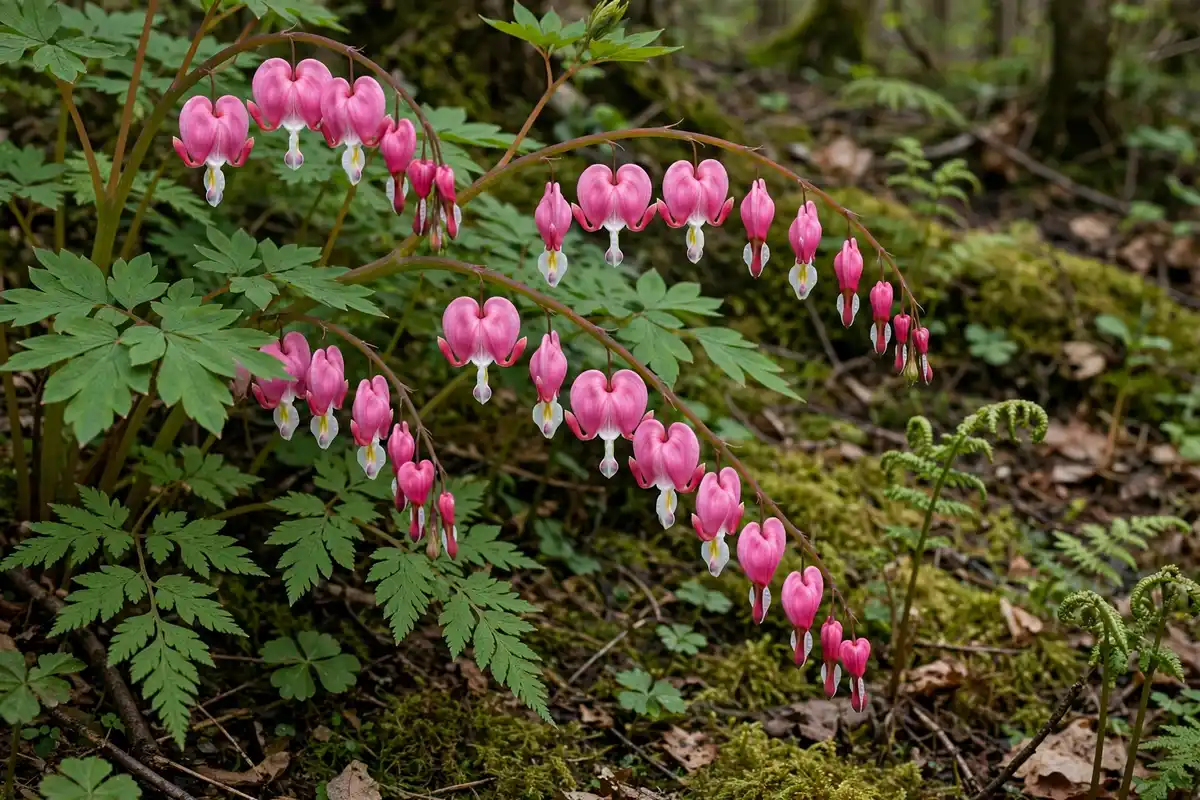
A bleeding heart does not bloom the way other spring flowers do. It hangs its flowers in a neat row along an arching stem, each one shaped like a perfect little pink heart with a white drop falling from its tip — as if the heart itself were weeping. Gardeners have loved it for that shape for almost two hundred years, and it is still one of the easiest ways to fill a shady corner with colour in spring, when most showy flowers still want full sun.
The bleeding heart flower is also a flower of love and heartbreak in the language of flowers, a plant that goes quietly dormant in summer heat, and a perennial that comes back bigger every year if you leave it alone. This guide covers the main types of bleeding heart flower, what each colour means, and how to grow them — including the one habit that worries new gardeners every year, the plant disappearing completely by midsummer.
Quick Answer
A bleeding heart flower is a spring perennial, Lamprocapnos spectabilis (formerly Dicentra spectabilis), in the poppy family Papaveraceae. It grows 2 to 3 feet tall in part shade to full shade, with arching stems carrying rows of pink, heart-shaped flowers tipped with white, blooming from late spring into early summer. It prefers moist, humus-rich, well-drained soil and is hardy in USDA zones 3 to 9. The plant goes dormant in summer heat — the foliage yellows and dies back, which is normal, not a sign it has died. All parts are toxic if eaten and can irritate skin, and the plant is listed as toxic to dogs, cats and horses, so it is not edible for people or pets.
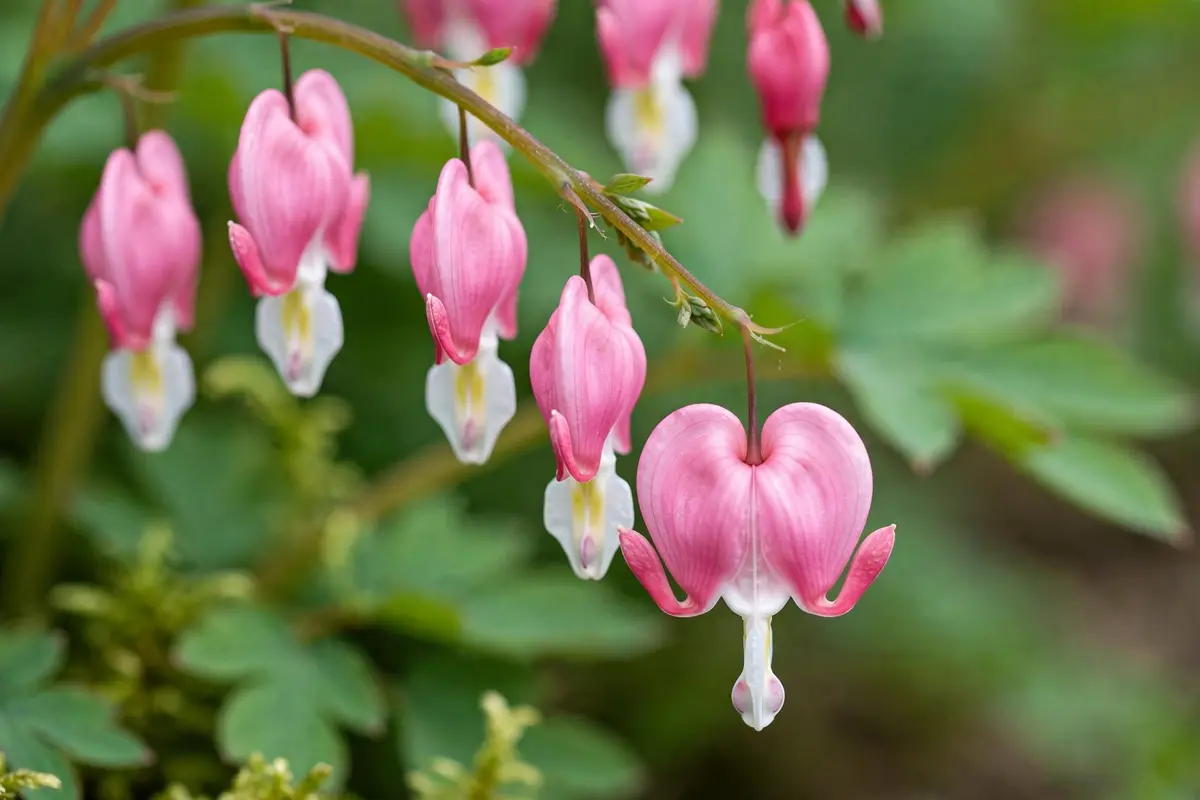
Table of Contents
- What Is a Bleeding Heart Flower?
- Types of Bleeding Heart and 6 Popular Varieties
- Bleeding Heart Flower Meaning and Symbolism
- What Each Bleeding Heart Colour Means
- How to Grow Bleeding Hearts
- Common Mistakes When Growing Bleeding Hearts
- Bleeding Hearts in Gardens, Cut Flowers and Bouquets
- Frequently Asked Questions
What Is a Bleeding Heart Flower?
A bleeding heart belongs to the genus Lamprocapnos, in the family Papaveraceae — the poppy family. Its botanical name is Lamprocapnos spectabilis, though gardeners knew it for most of its history as Dicentra spectabilis, and many seed packets and old books still use the old name. The plant is native to Siberia, northern China, Korea and Japan, where it grows in moist woodland, and it was brought to English gardens in the 1840s, from where it spread around the world. You can read more on the Lamprocapnos spectabilis page on Wikipedia.
The flower most people picture is the common bleeding heart: a clump of soft, divided, blue-green leaves, with leafless arching stems rising above them in spring. Along each stem hang ten to twenty flowers, each about an inch long. The outer petals are rosy pink and form the two lobes of the heart; the inner petals are white and poke out below like a drop — or, as many gardeners say, like a tiny white tear. The effect is so clear that the plant barely needs its name explained. It flowers for four to six weeks, usually from April into June depending on climate, and bees and hummingbirds visit it for nectar, though the long flower shape means short-tongued bees sometimes chew a hole in the side to reach it.
There is a second group of bleeding hearts that gardeners often meet: the North American species in the genus Dicentra, such as the fringed bleeding heart and the western bleeding heart. They are smaller, with finely cut, fern-like leaves, and they flower for much longer — often from spring right into autumn — because they do not go dormant the way the common bleeding heart does. This guide covers both groups, since the choice between them decides whether your plant vanishes in July or flowers all summer.
One fact to know before you plant: every part of a bleeding heart contains isoquinoline alkaloids. Eating the leaves, stems or roots can cause stomach pain, vomiting and diarrhoea in people, and the sap can irritate skin, so wear gloves when you handle the roots. The plant is listed as toxic to dogs, cats and horses. It is not a food plant, and it should never be planted where a curious child or pet is likely to chew on it.
Types of Bleeding Heart and 6 Popular Varieties
All bleeding hearts share the heart-shaped flower, but they differ in size, leaf shape, colour and how long they flower. The table below gives the quick comparison; the profiles underneath it explain who each one suits.
| Variety | Species | Height | Flower colour | Flowering time | Best for |
|---|---|---|---|---|---|
| Common bleeding heart | Lamprocapnos spectabilis | 2–3 ft | Pink and white | Late spring | Classic shade borders |
| ‘Alba’ | Lamprocapnos spectabilis | 2–3 ft | Pure white | Late spring | White and moon gardens |
| ‘Gold Heart’ | Lamprocapnos spectabilis | 2–3 ft | Pink and white | Late spring | Brightening dark shade |
| ‘Valentine’ | Lamprocapnos spectabilis | 2–3 ft | Deep red and white | Late spring | Bold colour in shade |
| Fringed bleeding heart | Dicentra eximia | 12–18 in | Pink to rose | Spring to autumn | Long season, small spaces |
| ‘King of Hearts’ | Dicentra hybrid | 8–12 in | Rose-pink | Spring to autumn | Front of border, pots |
1. Common bleeding heart — Lamprocapnos spectabilis
This is the plant in the old cottage-garden photographs: a big, soft mound of blue-green leaves and tall arching stems loaded with pink hearts. It is the hardiest and most forgiving of the group, happy in zones 3 to 9, and a mature clump can be three feet wide. Its one quirk is dormancy — after flowering, the leaves yellow and the whole plant dies back to the ground in summer heat. Gardeners who do not expect this sometimes think they have killed it. They have not: the fleshy roots are simply resting, and fresh leaves appear the following spring. Plant something in front of it, such as hostas or ferns, and the gap never shows.
2. ‘Alba’ — the white bleeding heart
‘Alba’ is the same plant in pure white, with not a trace of pink. The white hearts glow in shade in a way pink never quite does, which makes it the favourite for white gardens and for planting against dark evergreen shrubs. Everything else is identical — same size, same spring flowering, same summer dormancy — so it is often planted beside the pink form for a two-tone display. If you are building a white-flower planting, our white flowers guide has companions that flower around the same time.
3. ‘Gold Heart’ — gold leaves, pink flowers
‘Gold Heart’ is grown as much for its leaves as for its flowers. In spring the foliage opens a bright, almost luminous gold, then settles to chartreuse, and the pink hearts hang against it like jewellery. It is the best choice for a dark corner, because the gold leaves light up shade where a green plant would vanish. It needs a little more shade than the pink form — too much sun scorches the gold leaves — and it is a touch slower to bulk up, but a mature clump is unforgettable.
4. ‘Valentine’ — the red bleeding heart
‘Valentine’ (sometimes sold as ‘Valentine Red’) keeps the classic shape but deepens the colour to a rich cherry red, with the same white drop underneath. The red form is slightly more compact than the pink species and the stems are a little sturdier, so it holds up better in a border that catches some wind. It flowers at the same time as the pink form and pairs well with it — red and pink together read as one plant with two moods.
5. Fringed bleeding heart — Dicentra eximia
The fringed bleeding heart is the North American native of the group, from the woodlands of the Appalachian mountains. It is a much smaller plant — a foot to eighteen inches tall — with finely divided, fern-like leaves that look good all season. Its flowers are smaller and more slender than the common bleeding heart’s, in shades of pink and rose, and they keep coming from spring into autumn because the plant does not go dormant. It tolerates more sun than the common form, provided the soil stays moist, and it self-seeds gently in friendly soil. Choose this one if you want flowers all summer rather than one big spring show.
6. ‘King of Hearts’ — the long-flowering dwarf
‘King of Hearts’ is a hybrid of the fringed bleeding heart and its Japanese relative, bred for flowers that never seem to stop. It forms a neat, low mound of blue-green fern-like foliage, only eight to twelve inches tall, and carries rose-pink hearts from late spring until the first frosts. It is the best bleeding heart for the front of a border, for edging a shady path, and for pots, where its small size is an advantage. Its close relative ‘Burning Hearts’ is similar but with deeper red flowers and a slightly taller habit, and ‘Ivory Hearts’ offers the same long season in white.
Bleeding Heart Flower Meaning and Symbolism
No flower wears its meaning on its shape quite like the bleeding heart. In the Victorian language of flowers, when lovers sent messages in bouquets because they could not say them out loud, the bleeding heart meant romantic love — and, more exactly, a heart that aches for someone: “my heart bleeds for you.” It was the flower for love that is deep, sincere and a little sorrowful, the flower you gave when words felt too small or too risky.
A popular legend explains the shape. A prince fell in love with a princess and tried to win her with gifts: first two white rabbits, then a pair of fine slippers, then a pair of earrings — each gift, the story says, is still visible in the flower, the rabbits in the two pink outer petals, the slippers in the white inner petals, the earrings in the stamens. When she refused him anyway, the prince took his own life, and where his blood fell, bleeding hearts grew. Like most flower legends, it is a story rather than history, but it is the reason the plant is still given as a symbol of a broken heart, of love that was offered and not returned.
The same flower carries a gentler meaning in other traditions. In parts of Asia, where the plant is native, it is linked with compassion and kindness — a heart that feels for others, not only for a lost love. Modern florists lean on both readings: the bleeding heart is given for Valentine’s Day and anniversaries as a sign of deep love, and it is also planted in remembrance gardens, where its quiet spring display suits a place for thinking about someone who is gone. If you are choosing flowers by their message, our flower names A to Z guide links to the other flowers in this series and their meanings.
There is also a practical side to the symbolism. The bleeding heart’s habit of dying back in summer has made it a small emblem of return and renewal for gardeners: the plant disappears, the bed looks empty, and then, without any help, it comes back the next spring, bigger than before. Few plants teach patience quite so plainly.
What Each Bleeding Heart Colour Means
The colour of a bleeding heart changes its message, just as it does with roses. The table gives the short version; the notes underneath explain where each colour is used.
| Colour | Meaning | Best use |
|---|---|---|
| Pink | Romantic love, affection, tenderness | Valentine’s gifts, spring borders, anniversaries |
| White | Purity, innocence, sympathy, remembrance | Memorial plantings, white gardens, sympathy gifts |
| Red | Passionate love, a heart on fire, courage | Bold statements, Valentine’s Day, red borders |
| Gold foliage | Joy, warmth, friendship | Brightening dark shade, cheerful corners |
Pink is the classic colour and the one the legend belongs to: love that is tender rather than showy. Pink bleeding hearts are the ones most often planted in cottage gardens and given as cut stems in spring, and they suit any message where affection is the point. White — the ‘Alba’ form — softens the message into sympathy and remembrance, which is why white bleeding hearts are often planted in memorial gardens and quiet corners. Red — the ‘Valentine’ form — turns the volume up: it reads as passionate love, a heart that is not just tender but burning. And the gold foliage of ‘Gold Heart’ is not about romance at all; it is about warmth and cheer, a plant that says the garden itself is happy to see you.
One warning about colour: the colours do not breed true from seed. A pink plant’s seedlings may come up pink, white or something in between, and a white plant’s seedlings often revert to pink. If you want a particular colour, buy a named plant or divide an existing clump — never rely on self-sown seedlings to match the parent.
How to Grow Bleeding Hearts
Bleeding hearts are easy plants once you give them what they want: shade, moisture and soil with plenty of humus. Get those three right and they largely look after themselves. The steps below follow the order a gardener actually does them, from choosing a spot to the first spring of flowers. If you are new to shade gardening, the gardeners on r/gardening on Reddit are a good place to ask about local soil and shade conditions.
1. Choose the right spot
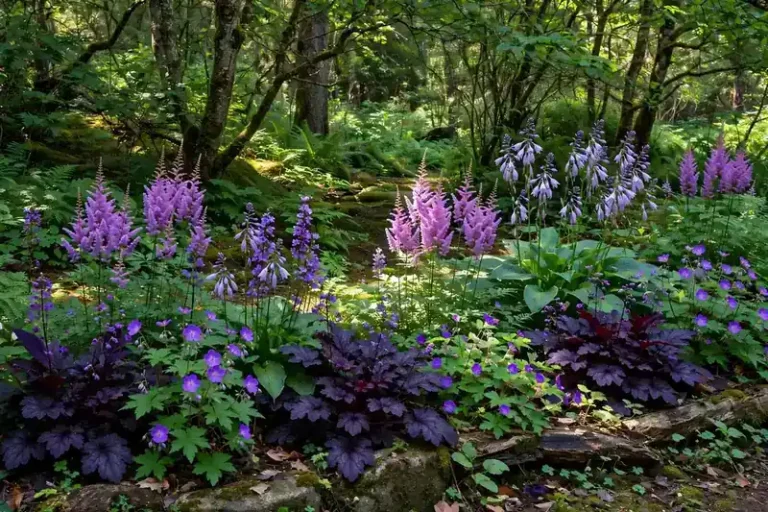
Part shade is ideal — morning sun and afternoon shade, or dappled light under a tree all day. Full shade works too, though flowering is lighter. The one thing to avoid is hot afternoon sun, which scorches the leaves and forces the plant into dormancy weeks early. The common bleeding heart needs about two to three feet of space, since a mature clump spreads wide; the dwarf Dicentra types need only a foot. Good companions are hostas, ferns, astilbe and brunnera, which fill the gap when the bleeding heart goes dormant — and columbine is another spring flower that thrives in the same light shade and flowers at the same time.
2. Prepare the soil
Bleeding hearts want moist, rich, well-drained soil — the kind of soil you find on a woodland floor. Dig in plenty of compost or well-rotted leaf mould before planting, and aim for a slightly acidic to neutral soil, roughly pH 6.0 to 7.5. The plant hates two things: soil that dries out in summer, and soil that stays waterlogged in winter, which rots the fleshy roots. If your soil is heavy clay, plant on a slight mound and mix in compost and grit so water drains away from the crown.
3. Plant at the right depth
Plant bare-root bleeding hearts in spring or autumn, with the crown — the point where the stems meet the roots — just at soil level, never buried deep. Potted plants go in at the same depth they were growing in the pot. Water well after planting and mulch with two inches of compost or bark, keeping the mulch a few inches away from the crown so it does not rot. Space common bleeding hearts two to three feet apart and the dwarf types twelve to eighteen inches apart.
4. Water and feed
Keep the soil evenly moist through spring, when the plant is growing and flowering — about an inch of water a week if rain does not provide it. A spring feed of compost or a balanced slow-release fertiliser is enough; the plant does not want rich feeding, which produces soft, floppy growth. Once the plant goes dormant in summer, stop watering it: the roots are resting and wet soil then is the fastest route to rot.
5. Know what dormancy looks like
When the weather warms up, the leaves yellow from the edges in and the stems collapse. This is normal. Do not cut the plant back while the leaves are still green — it is feeding the roots for next year — but once the foliage has yellowed fully, you can cut it to the ground and let the neighbouring plants take over. Mark the spot with a small stake so you do not dig into the roots by accident in autumn. The fringed bleeding heart and its hybrids do not go dormant; they stay green and keep flowering until frost.
6. Divide, and grow from seed if you are patient
Divide a mature clump every three to five years, in early spring as the shoots appear or in autumn after dormancy. Lift the whole clump, tease or cut it into pieces each with a shoot and some roots, and replant at once. Wear gloves — the sap irritates skin. Seed is slower: sow fresh seed in autumn or give stored seed six weeks of cold in the fridge before sowing in spring, and expect two to three years before the seedlings flower. Remember that seedlings will not match the parent’s colour.
Common Mistakes When Growing Bleeding Hearts
Most bleeding heart failures come from the same short list. The first is too much sun — a plant in full afternoon sun scorches, flowers briefly and vanishes by June. The second is dry soil: the plant wilts fast in a dry spring and may go dormant before it has flowered properly. The third is planting too deep, which rots the crown; the crown should sit at soil level. The fourth is cutting the leaves back too early, while they are still green, which starves next year’s growth. The fifth is overwatering in summer, after dormancy, when the roots are resting and wet soil rots them. And the sixth is digging the spot in autumn and spearing the roots because the plant had disappeared — always mark where it is.
Slugs and snails like the soft spring shoots, especially in wet weather, so check young growth in April and pick them off or use a barrier. Aphids sometimes cluster on the flower stems; a strong jet of water usually clears them. Deer generally leave bleeding hearts alone, which is one reason the plant is so popular in woodland gardens — the toxic compounds that make it unsafe to eat also make it unappealing to browsers.
Bleeding Hearts in Gardens, Cut Flowers and Bouquets
In the garden, the common bleeding heart is a spring anchor for shade: plant it at the back of a shady border, under a tree, or along a north-facing wall, with hostas and ferns in front to cover the summer gap. Our guide to purple perennials for shade lists plants that share the same conditions and flower around it. The dwarf Dicentra types belong at the front of the border, along a shady path, or in pots, where their long flowering season earns its keep. The plant’s name begins with B, so it sits naturally beside the other B flowers in our flowers that start with B guide.
As a cut flower, bleeding heart is beautiful and brief: cut the stems when about half the flowers on a stem are open, put them in water at once, and expect three to five days in a vase. The stems are soft and hollow, so handle them gently and do not expect them to last like a rose. They are best used as a short-lived spring arrangement — a small jug on a table for a few days — rather than a bouquet meant to last a week. For weddings and events, they work as a romantic accent flower in spring arrangements, paired with white roses or lilies, but the florist should be warned that the stems are delicate and the flowers bruise easily.
In a wildlife garden, bleeding hearts earn their place quietly: bees work the flowers in spring, and hummingbirds visit them where they occur. The plant is not a major nectar source, but in a shady garden in April, when little else is flowering, it is one of the few things on offer — and the pollinators notice.
Frequently Asked Questions
Do bleeding hearts come back every year?
Yes. Bleeding hearts are hardy perennials, and a healthy clump comes back bigger each spring for many years. The plant disappears in summer because it goes dormant, not because it has died — mark the spot and be patient, and fresh shoots will appear the following spring.
Why did my bleeding heart disappear in summer?
Summer dormancy is normal, especially for the common bleeding heart. Heat and dry soil trigger it: the leaves yellow and die back, and the plant rests underground until spring. It happens earlier in hot climates and in sunny spots. The fringed bleeding heart and its hybrids do not go dormant, so choose those if you want a plant that stays visible all summer.
Are bleeding hearts poisonous?
Yes — all parts contain isoquinoline alkaloids and are toxic if eaten, causing stomach pain, vomiting and diarrhoea, and the sap can irritate skin. The plant is listed as toxic to dogs, cats and horses. Wear gloves when handling the roots, and do not plant it where children or pets are likely to chew on it. It is not edible in any form.
Can bleeding hearts grow in full sun?
They can survive in full sun in cool climates if the soil stays constantly moist, but they flower for a shorter time and go dormant much earlier. In most gardens, part shade or dappled shade gives a longer display and healthier leaves. The fringed bleeding heart tolerates more sun than the common form, provided it never dries out.
How long do bleeding hearts bloom?
The common bleeding heart flowers for four to six weeks in late spring. The fringed bleeding heart and hybrids such as ‘King of Hearts’ and ‘Burning Hearts’ flower from late spring until the first frosts, with the heaviest flush in spring and lighter flowering through summer.
Should I cut back my bleeding heart after it flowers?
Wait until the foliage has yellowed fully, then cut the stems to the ground. Cutting while the leaves are still green removes the food the plant is storing for next year’s flowers. If the plant is a fringed type that stays green, just remove spent flower stems through the season and tidy the plant in late autumn. Gardeners asking the same question often discuss it on questions about the bleeding heart flower on Quora.