Dried Flower Bouquet: Best Flowers, How to Make One & Care
A dried flower bouquet is the bouquet that stays. Fresh flowers give you a week; a well-made dried bouquet gives you one to three years of colour — which is why dried bouquets have taken over weddings, gifts and home styling. They cost less than fresh, need no water, and can be ready months before the day they’re needed.
This guide covers the best flowers for drying, how to make a dried flower bouquet step by step (including drying your own flowers first), and how to care for it so it lasts for years.
Quick Answer
A dried flower bouquet is a bouquet made from flowers that have been dried to preserve them. The best drying flowers are lavender, strawflowers, statice, baby’s breath, craspedia (billy buttons), globe amaranth, roses and eucalyptus — they hold their shape and colour. To make one: dry or buy dried stems, arrange them with the spiral technique used for fresh bouquets, tie, and wrap. Kept dry and out of direct sun, a dried bouquet lasts 1–3 years.
Table of Contents
- What Is a Dried Flower Bouquet?
- The Best Flowers for a Dried Bouquet
- How to Dry Your Own Flowers
- How to Make a Dried Flower Bouquet Step by Step
- Care: How Long Dried Bouquets Last
- When to Choose a Dried Bouquet
- Frequently Asked Questions
What Is a Dried Flower Bouquet?
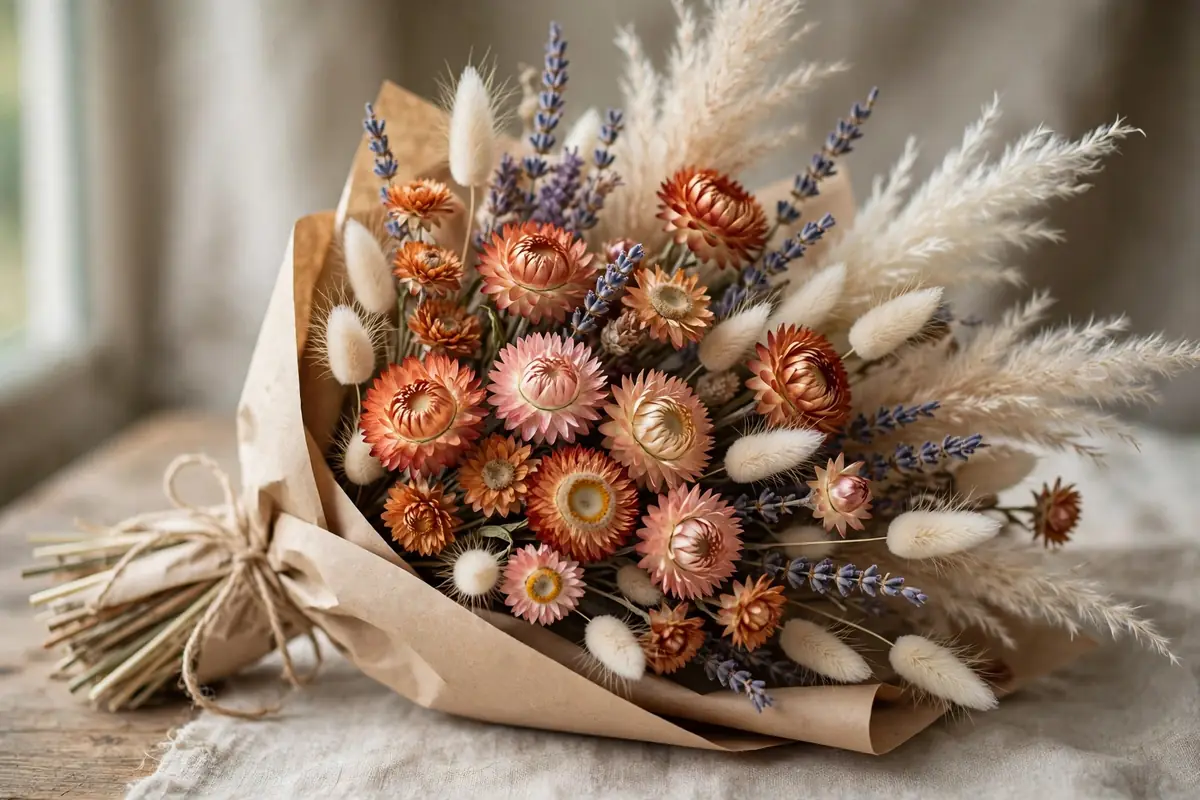
A dried flower bouquet is a bouquet built from preserved stems instead of fresh ones. The flowers are dried — usually by hanging them upside down in moving air — until their moisture is gone, keeping their form and most of their colour. The result looks softer and more muted than fresh flowers, in the cream, rust, blush and gold palette that suits rustic, boho and vintage styling so well.
Dried bouquets are not a compromise: they are chosen deliberately for weddings (make them months ahead, keep them forever after), for gifts that must travel or arrive early, and for homes where nobody wants to maintain a vase. The arranging skills from our flower arranging guide apply directly — with a gentler hand, because dried stems snap instead of bending.
The Best Flowers for a Dried Bouquet
| Flower / material | Dried colour | Role in the bouquet |
|---|---|---|
| Strawflowers | Red, orange, pink, yellow, white | The star — papery petals keep full colour for years |
| Lavender | Purple, fragrant | Accent spikes and scent |
| Statice | Purple, pink, white, yellow | Filler with reliable colour |
| Baby’s breath | White / cream clouds | Airy filler that hides every join |
| Craspedia (billy buttons) | Golden yellow balls | Playful focal pops |
| Globe amaranth | Purple, pink, white clover-like heads | Colour that barely fades at all |
| Roses | Deepened reds, blush, cream | Romantic focals — dry heads intact |
| Eucalyptus & grasses | Silver-green; pampas and bunny tails in cream | Structure, movement and the boho silhouette |
Avoid fleshy flowers that rot before they dry (lilies, tulips, daffodils) and seed-heavy flowers that shatter. When in doubt, the “everlasting” flowers — strawflower, statice, globe amaranth — were literally named for this job.
How to Dry Your Own Flowers
- Pick at the right moment. Harvest flowers just before full bloom, dry of dew, mid-morning. Flowers picked fully open often shatter as they dry.
- Strip and bunch. Remove leaves from the stems, group 5–8 stems, and tie the bunch firmly with string or an elastic band (elastic keeps gripping as stems shrink).
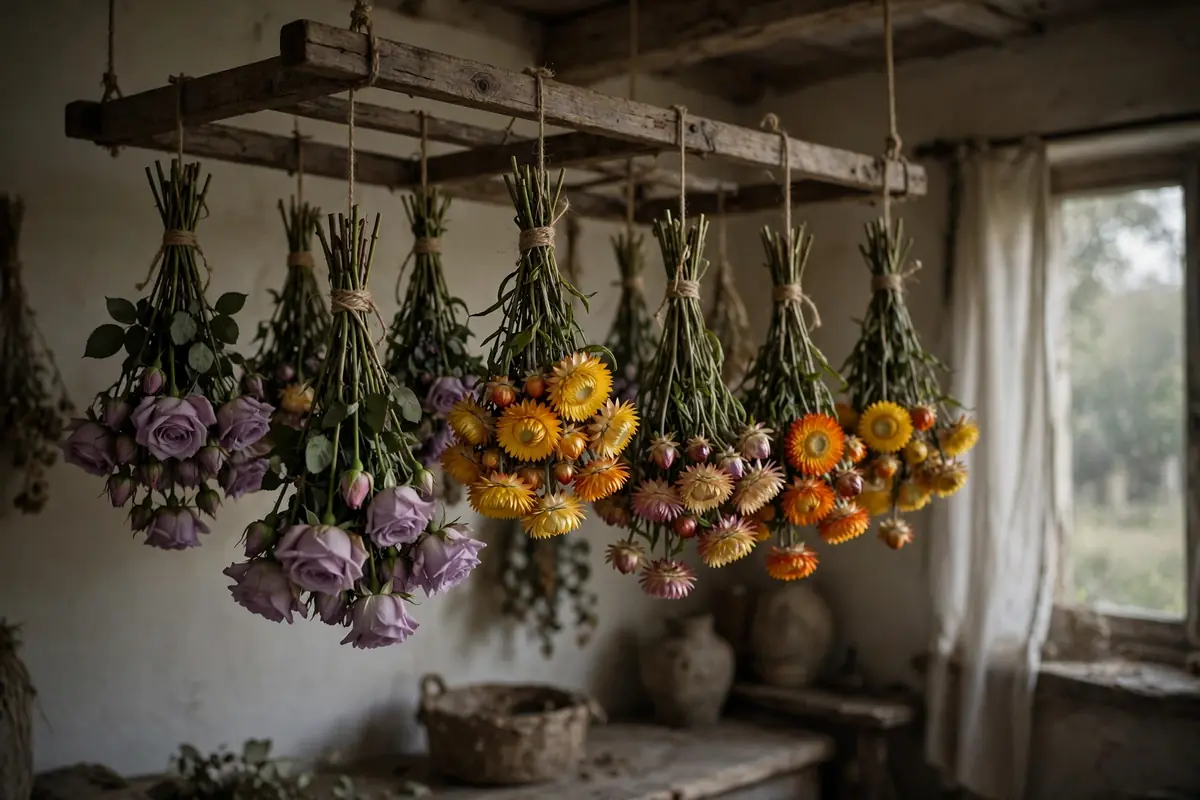
- Hang upside down. Hang bunches head-down in a dark, dry, airy place — a cupboard, garage or airing cupboard. Darkness protects colour; moving air prevents mould.
- Wait 2–3 weeks. Stems should snap crisply and petals feel papery before you arrange them. Rushing a bouquet with half-dry stems invites mould inside the wrap.
How to Make a Dried Flower Bouquet Step by Step
- Lay out and sort. Spread all stems on a table and sort by type: focals, fillers, grasses, greenery. Work gently — dried stems are brittle.
- Start with three focals. Cross three main stems (strawflowers or roses) in your hand at a slight angle.
- Build the spiral. Add stems one at a time, each at the same angle, rotating the bunch a quarter-turn between additions — exactly the spiral technique used for fresh hand-tied bouquets. Alternate focals, fillers and grasses to keep the mix even.
- Shape as you go. Keep the top a gentle dome: focals slightly lower in the centre, grasses and lavender standing a little taller at the edges for movement.
- Tie firmly. Bind the spiral at the binding point with twine or wire, tight enough that no stem slides. Trim the stem ends level.
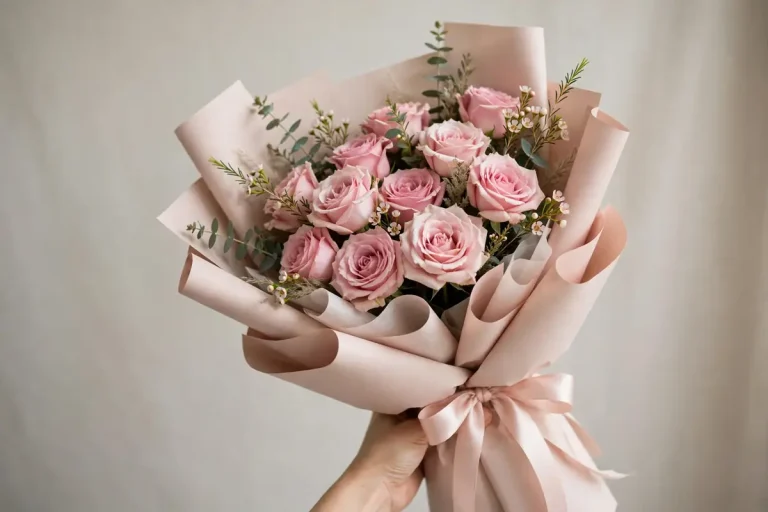
- Wrap it. Finish with paper, fabric or ribbon — the same wraps as our flower wrapping paper guide — and the bouquet is ready to gift, carry or vase (dry, no water).
Care: How Long Dried Bouquets Last
A dried bouquet lasts 1–3 years looking good, and keepsakes can last far longer. Three rules protect it: keep it dry (bathroom steam and damp rooms invite mould), keep it out of direct sunlight (UV fades colours within months), and dust it without touching — a hairdryer on cool, low, from 30 cm away, or a soft brush. Never put dried stems in water; a dry vase or no vase at all. A light mist of hairspray is an old florist trick to reduce shedding on fragile pieces, used sparingly.
When to Choose a Dried Bouquet
- Weddings — made months ahead, no wedding-morning stress, kept afterwards as the keepsake (pair with a dried flower crown for the full set).
- Gifts by post — light, unbreakable-ish, and indifferent to a weekend in a delivery van.
- Home styling — a year of arrangement for the price of two fresh bunches; the classic partner to a dried flower wall.
- Sympathy and remembrance — a bouquet that stays with the family instead of fading in a week.
Frequently Asked Questions
How long does a dried flower bouquet last?
One to three years looking its best, kept dry and out of direct sunlight. Strawflowers, statice and globe amaranth keep their colour longest; roses deepen and soften. Many wedding bouquets are kept for decades as keepsakes, colours gently fading.
Are dried flower bouquets cheaper than fresh?
Usually yes over their lifetime: the stems cost similar or a little more per bunch, but one dried bouquet replaces dozens of fresh ones. DIY drying garden or market flowers makes them cheaper still.
Can you dry a fresh bouquet you already have?
Yes — unpick it while the flowers are still fresh, re-bunch the stems and hang them upside down for 2–3 weeks. Wedding and gift bouquets are dried this way every day; flowers that were already wilting or in water for a week dry less well.
Do dried flower bouquets need water?
No — never. Water rehydrates the stems and causes mould and rot. Display them in a dry vase or tied as they are.
What is the difference between dried and preserved flowers?
Dried flowers are air-dried: matte, slightly brittle, muted colours. Preserved flowers are treated with a glycerin-based solution that keeps them soft and flexible with fresher-looking colour — and a higher price. Both last years; dried flowers are the DIY-friendly option.