Flower Art: Types, History and Ideas to Try Yourself
Flower art is any artwork that makes flowers its subject or its material — from the Dutch masters’ impossible bouquets to a pressed daisy in a frame, a resin paperweight holding a real bloom, or a paper peony built petal by petal. It is the oldest love affair in art: painters have been trying to keep flowers alive on canvas for at least 500 years.
This guide walks through the main types of flower art, the story in brief, and — most usefully — the forms you can start yourself this week, with a first pressed-flower project explained step by step.
Quick Answer
Flower art is artwork featuring or made from flowers. The main types are flower painting and drawing, pressed flower art, flower photography, paper flower art, resin flower art, and floral installation art. The easiest types to start at home are pressed flower art (flowers + a press + a frame) and paper flower art — both need only inexpensive materials and no drawing skill.
Table of Contents
- What Is Flower Art?
- A Short History of Flower Art
- Types of Flower Art
- Your First Flower Art Project: Pressed Flower Art Step by Step
- Flower Art Ideas to Try
- Tips for Better Flower Art
- Frequently Asked Questions
What Is Flower Art?
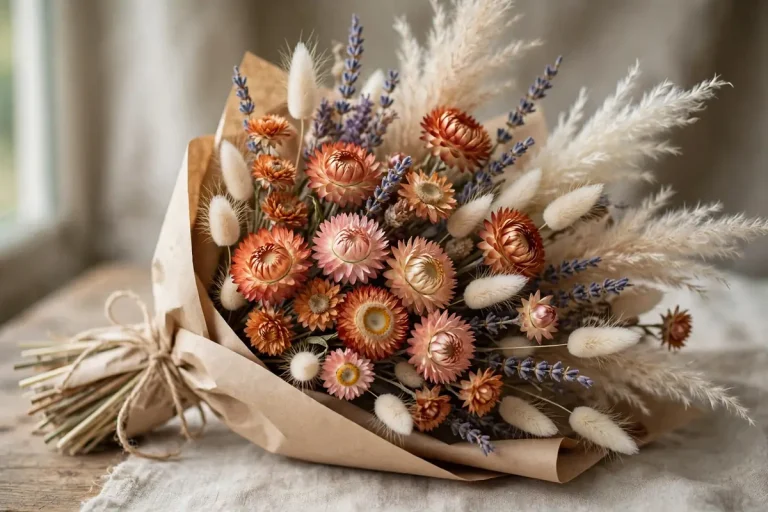
Flower art divides into two families: art about flowers (paintings, drawings, photographs) and art made of flowers (pressed, paper, resin and fresh-flower installations). Both exist for the same reason — flowers are beautiful and brief, and art is how we argue with the brief part. A painted bouquet never wilts; a pressed flower is a real bloom kept for decades.
Unlike flower design, which arranges living flowers for an occasion, flower art is made to last and to be looked at as a picture or object in its own right.
A Short History of Flower Art
Flowers appear in art from ancient Egyptian carvings onward, but flower painting became a genre of its own in the 1600s in the Netherlands, where artists like Jan Brueghel the Elder painted “impossible bouquets” — arrangements of flowers that bloom in different seasons and could never share a vase in real life. These still life paintings were luxury objects and quiet sermons at once: the wilting petals reminded viewers that everything fades (the vanitas theme). Later chapters include the Impressionists’ garden paintings (Monet’s water lilies are the most famous flower art on earth), Georgia O’Keeffe’s monumental close-up blooms, and today’s large-scale fresh-flower installations and botanical resin art.
Types of Flower Art
| Type | What it is | Skill to start |
|---|---|---|
| Flower painting & drawing | Watercolour, oil, acrylic, ink or pencil studies of flowers | Beginner-friendly in watercolour and ink |
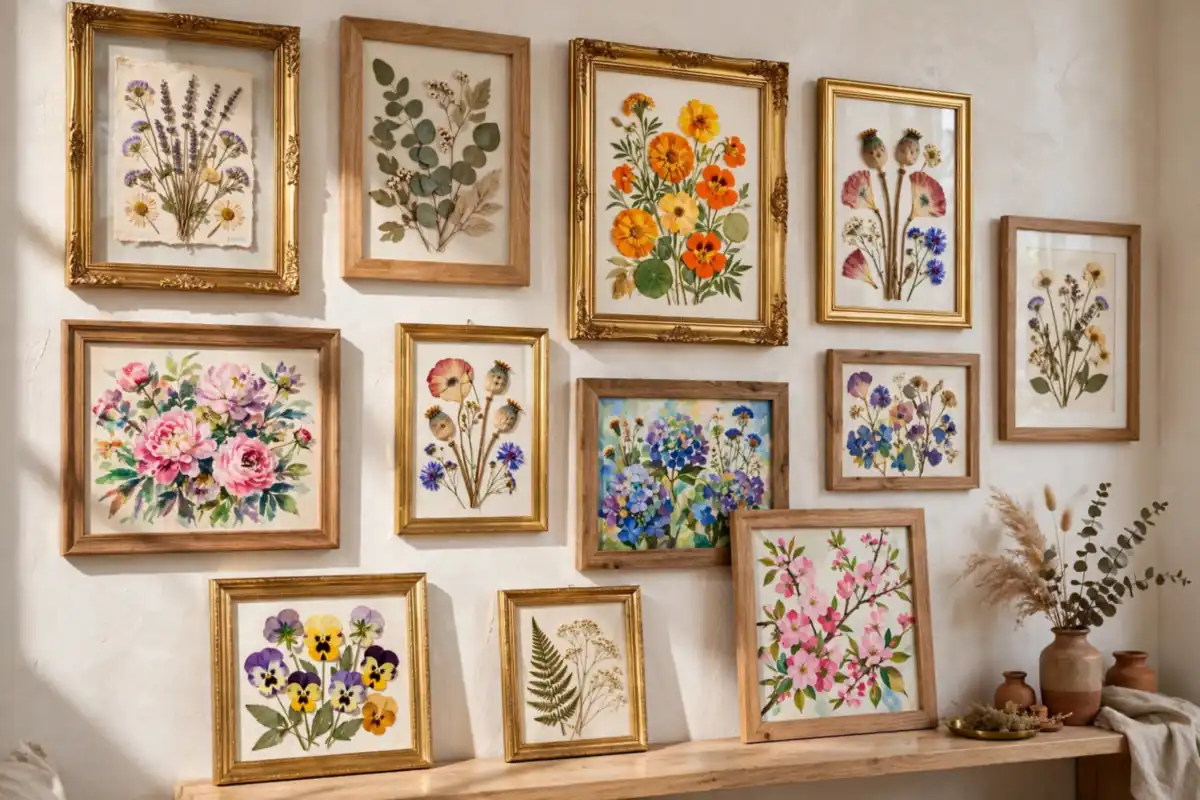
| Pressed flower art | Real flowers pressed flat and arranged in frames, cards, bookmarks | Easiest of all — patience, not drawing |
| Flower photography | Macro and still-life photography of blooms | A phone camera is enough to begin |
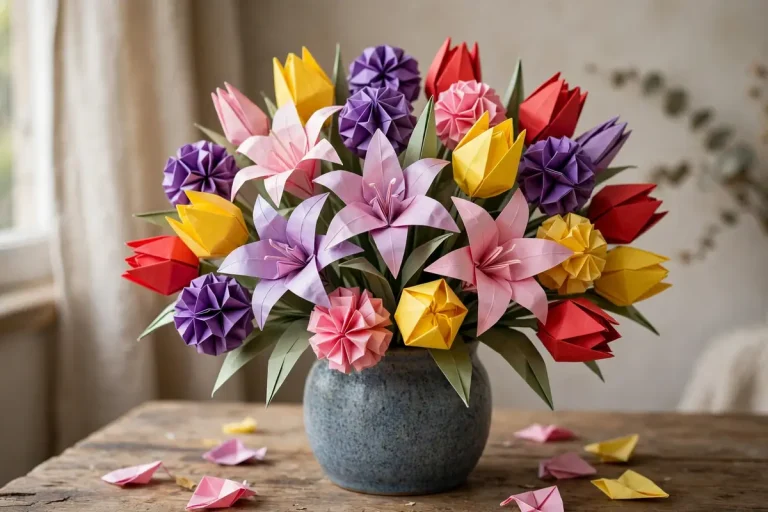
| Paper flower art | Crepe, tissue and origami flowers as sculpture and decor | Craft skills; see our origami flower guide |
| Resin flower art | Dried flowers cast in clear resin — jewellery, paperweights, trays | Needs dried flowers and safety care with resin |
| Floral installation art | Large fresh or dried flower sculptures and displays | Floristry skills at architectural scale |
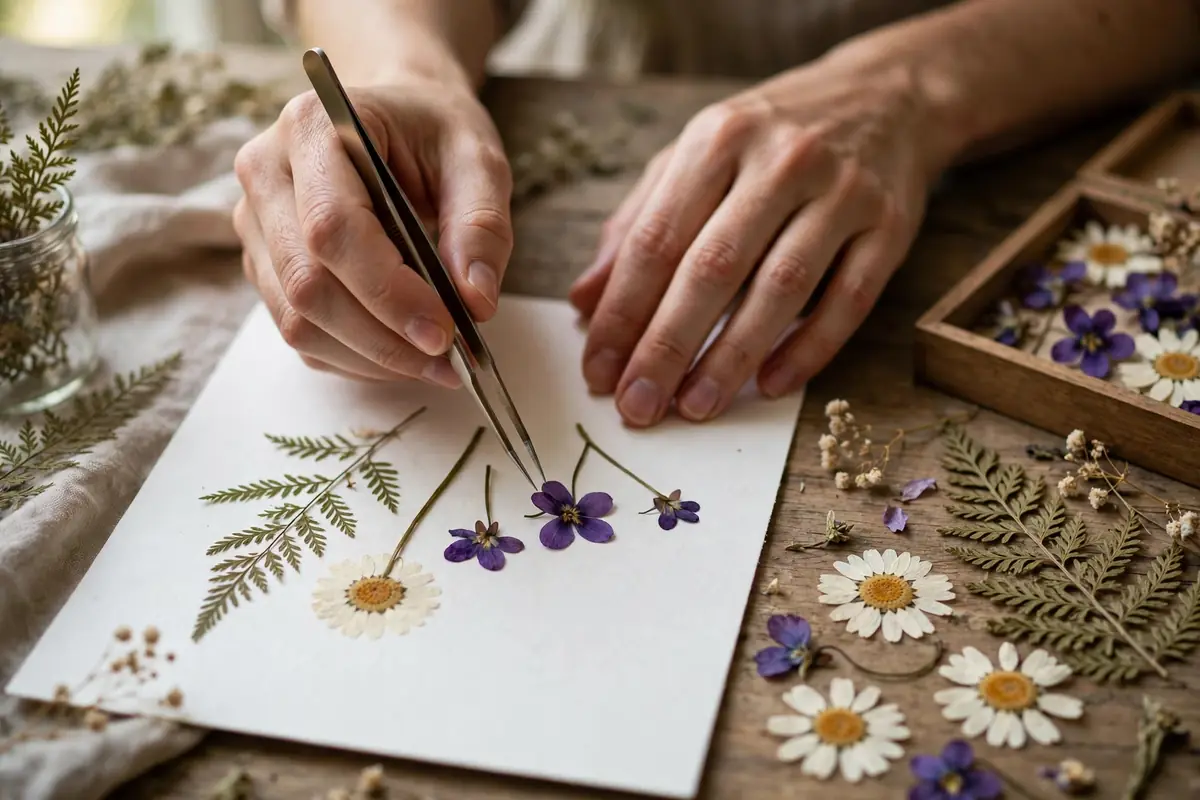
Your First Flower Art Project: Pressed Flower Art Step by Step
- Pick the right flowers. Flat-faced, thin-petalled flowers press best: daisies, violets, pansies, cosmos, ferns and single petals of larger blooms. Pick them dry, mid-morning, at their freshest.
- Press them. Lay each flower face-down between two sheets of blotting or parchment paper inside a heavy book or a flower press, spaced so nothing overlaps. Add weight and leave for 2–4 weeks, changing the paper after the first week if it feels damp.
- Design on paper first. When the flowers are papery-dry, arrange them on your backing card with tweezers — never fingers on the petals — until the composition pleases you. Photograph the layout before you glue anything.
- Glue sparingly. Lift each piece, touch the tiniest dot of clear craft glue to its thickest point, and set it back. Less is more: glue spots show through petals.
- Frame behind glass. Seal the finished piece in a frame (ideally UV glass) and hang it out of direct sun. Pressed colours fade slowly over years in bright light; in shade they last decades.
Flower Art Ideas to Try
- A birth-flower portrait: press or paint the flowers of a birth month as a personalised gift.
- Season wheel: one small pressed piece for each season, framed as a set of four.
- Pet portrait backdrop: photograph your dog wearing a flower crown in front of a flower wall — art, technically, and definitely fridge-worthy.
- Resin keepsakes: cast a wedding or funeral flower in a resin paperweight before it fades.
- Botanical sketchbook: one flower, drawn or painted weekly from your own garden — the practice that trained every flower painter in history.
- Giant paper blooms: oversized crepe-paper flowers as wall art for a nursery or party.
Tips for Better Flower Art
- Work from real flowers, not memory. Even masters kept blooms (or photographs) in front of them; petals have structure that imagination invents wrong.
- Limit the palette. Three flower colours plus green beats a rainbow in almost every medium.
- Odd numbers and asymmetry — the same composition rules as arranging apply on paper.
- Protect the finished work. Light is the enemy of both pressed flowers and watercolours; frame, shade and keep dry.
Frequently Asked Questions
What is flower art called?
Art centred on flowers is generally called floral art or flower art. Paintings of flowers fall under still life (historically “flower pieces”); the Japanese pressed-flower craft is called oshibana, and art made with living plants arranged decoratively overlaps with floral design and installation art.
What is the easiest flower art for beginners?
Pressed flower art. It needs no drawing skill — just flowers, a book or press, paper, glue and a frame — and the results look professional almost immediately. Paper flowers are the next easiest, with origami the simplest starting point.
Which flowers are best for pressed flower art?
Thin, flat flowers: daisies, pansies, violets, cosmos, buttercups, ferns and larkspur. Thick, fleshy flowers (roses whole, lilies, tulips) press poorly — press their petals separately instead.
How long does pressed flower art last?
Years to decades if framed behind glass and kept out of direct sunlight and damp. Colours soften gradually — reds and purples fade fastest, yellows and greens last longest.
What is the most famous flower art?
Monet’s Water Lilies series is the most famous, followed by Van Gogh’s Sunflowers and O’Keeffe’s close-up flower paintings. The Dutch Golden Age flower pieces of Jan Brueghel and Rachel Ruysch remain the technical peak of flower painting.