Flower Frog: What It Is, Types and How to Use One (Kenzan Guide)
A flower frog is the small, heavy secret under most beautiful low arrangements: a weighty holder that sits in the bottom of a bowl or vase and grips every stem exactly where you put it. Florists used them for centuries before floral foam existed — and now that foam is falling out of favour, the frog is back.
This guide explains what a flower frog is, the types (pin frogs, glass frogs, cage frogs), how to use one step by step, and how to choose and care for one that will outlast you.
Quick Answer
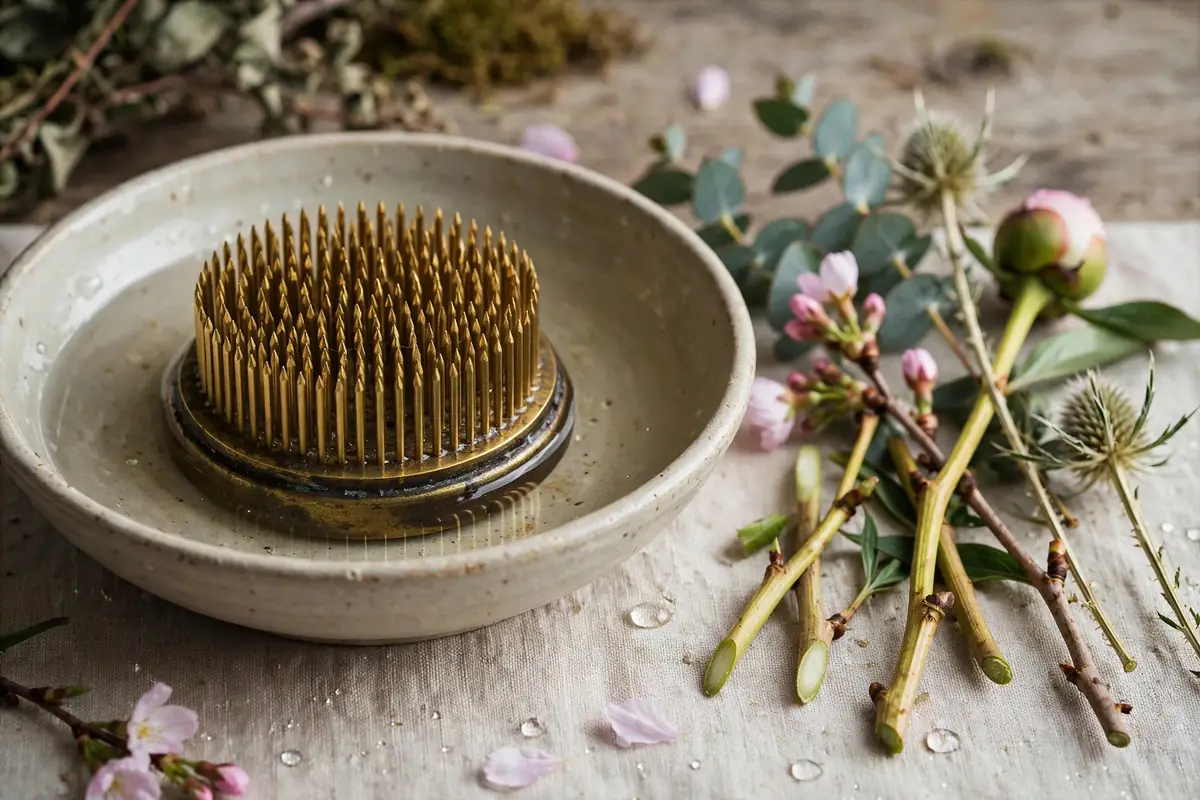
A flower frog is a heavy holder placed in a vase or bowl to support flower stems. The most common type is the pin frog (kenzan): a lead base covered in brass pins that stems are pushed onto. Other types are glass or ceramic frogs with holes, and wire cage frogs. To use one: fix it in a dry container with floral putty, add water, and press each cut stem firmly onto the pins at the angle you want. Frogs are reusable for decades and replace disposable floral foam.
Table of Contents
- What Is a Flower Frog?
- Types of Flower Frogs
- How to Use a Flower Frog Step by Step
- Flower Frog vs Floral Foam
- How to Choose the Right Flower Frog
- Cleaning and Care
- Frequently Asked Questions
What Is a Flower Frog?
A flower frog is a stem holder that sits inside a container and does the job your hand does in a bouquet: it holds stems at chosen angles so an arrangement keeps its shape in water. Nobody knows exactly why it is called a frog — the usual explanation is that it sits in water like one.
The frog is ancient technology in Japan, where the pin frog (kenzan) is the foundation tool of ikebana, and it was standard in Western floristry too — Victorian and Edwardian glass frogs are now collectibles — until single-use floral foam took over in the 1950s. As arrangers look for reusable tools again (see the supports section of our flower arranging guide), frogs have returned to the florist’s bench.
Types of Flower Frogs
| Type | How it holds stems | Best for |
|---|---|---|
| Pin frog (kenzan) | Stems pressed onto sharp brass pins on a heavy lead base | Ikebana, low bowls, precise angles; the all-rounder |
| Glass / ceramic frog | Stems threaded through holes in a glass dome or disc | Vases, vintage displays, small arrangements |
| Cage / coil frog | A dome of wire mesh or coiled wire stems slot into | Soft or hollow stems that pins would split |
| Hairpin frog | Bent wire loops grip stems | Light, delicate arrangements |
| Pin cup / suction frog | Small pin frog in a cup that sticks to the container | Glass vessels where putty marks would show |
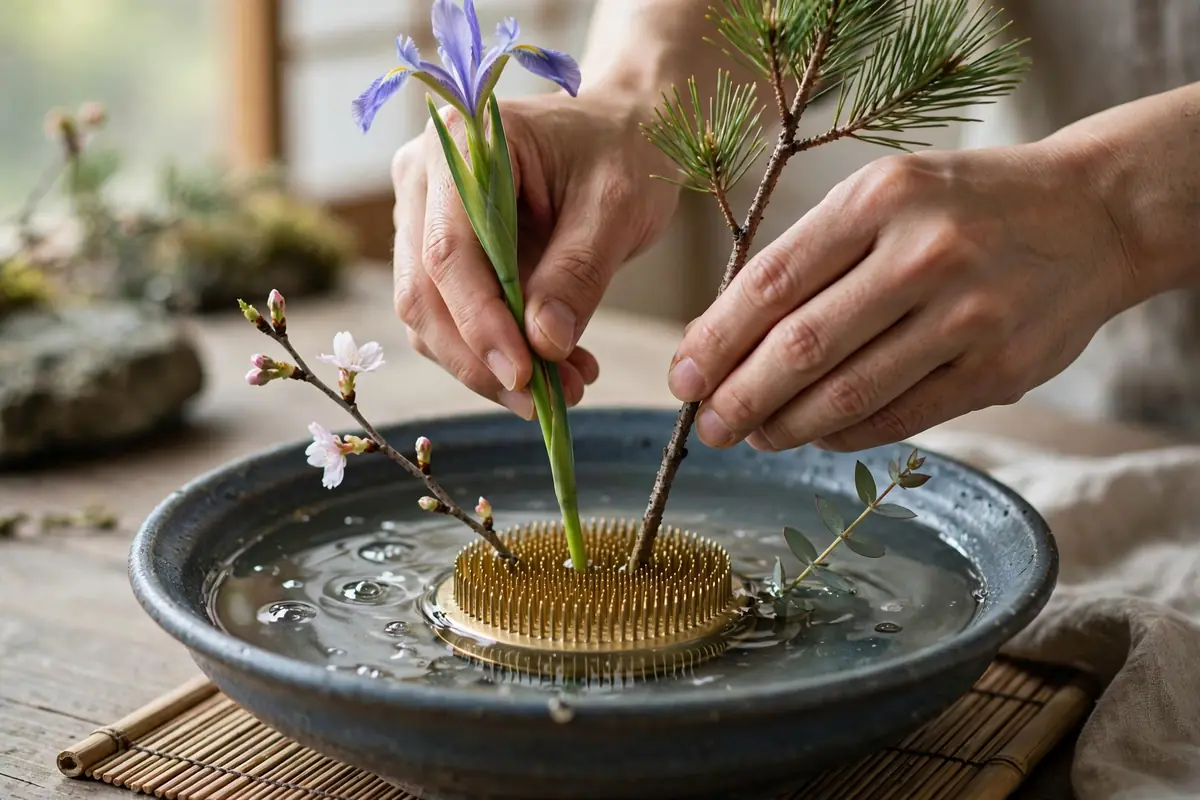
How to Use a Flower Frog Step by Step
- Fix the frog first. Dry the container, press a pea-sized ball of floral putty (or a museum-gel dot) onto the frog’s base, and press it firmly to the centre of the bowl. A heavy pin frog in a shallow bowl often stays put by weight alone; putty is insurance against knocks.
- Add water. Fill the container so the pins are covered. Stems drink through their cut ends — the waterline matters more than the frog.
- Cut stems under water or fresh. Cut each stem at an angle, then immediately place it — a fresh cut grips and drinks best.
- Press, don’t stab. Push the stem straight down onto the pins with a firm press (about 1–2 cm of stem on the pins). For a leaning stem, press it on at the angle you want — the pins hold angles beautifully, which is the whole point of the tool. Woody stems can be split up the base in a cross to seat them.
- Build in order. Place your tallest line stems first, then focals, then filler low around the base — the classic order from our flower design principles: line, then form, then fill.
- Top up daily. Frog arrangements drink from an open bowl, so water evaporates and is used faster than in a vase. Top up every day and the arrangement outlasts a foam one.
Flower Frog vs Floral Foam
| Flower frog | Floral foam | |
|---|---|---|
| Lifespan | Decades — buy once | Single use |
| Waste | None | Plastic-based, does not biodegrade; goes to landfill |
| Stem freedom | Stems removable and repositionable | Re-poking weakens the hold and the stem |
| Water | Open water — stems drink freely, easy top-ups | Foam holds water but dries from the top |
| Shapes | Low bowls and vases; gravity-friendly designs | Any shape, including hanging and tall designs |
| Cost | More upfront, free forever after | Cheap per block, endless repeat cost |
The honest summary: foam still wins for suspended and very tall work; for the 90% of arranging that happens in a bowl or vase on a table, the frog is better for the flowers, the wallet and the bin.
How to Choose the Right Flower Frog
- Weight first. A good pin frog is surprisingly heavy for its size (lead base). Light frogs tip under tall stems — heft is quality here.
- Size to the container. The frog should sit comfortably inside your favourite bowl with room for water around it; 5–7 cm diameter suits most low bowls, larger for urns.
- Pin density. Denser pins grip thin stems better; sparse, taller pins suit thick and woody stems.
- Material. Brass pins do not rust; check that the base is lead or another heavy, water-safe metal, and avoid painted frogs whose coating can flake into the water.
Cleaning and Care
After each arrangement: lift the frog out, pull off stem bits, and scrub the pins with an old toothbrush or a stiff brush under running water (a purpose-made kenzan brush or “frog cleaner” lifts debris from between pins). Dry it before storing — brass pins and lead bases tolerate water in use, but storing wet invites tarnish and smells. A well-kept pin frog is genuinely a lifetime tool; antique shops are full of century-old ones still in service.
Frequently Asked Questions
Why is it called a flower frog?
Nobody is certain. The most repeated explanation is that the holder sits in water at the bottom of the vase, like a frog. The name appears in the late 1800s–early 1900s as glass stem holders became popular; the Japanese pin version keeps its own name, kenzan (“sword mountain”).
What is a kenzan?
A kenzan is the Japanese pin frog: a heavy lead base set with upright brass needles, used in ikebana to hold stems at precise angles in a shallow container. It is the same tool Western florists call a pin frog or needle holder.
Do flower frogs damage stems?
The pins pierce the stem end, which is below the waterline and actually helps many stems drink. Very soft or hollow stems can split on pins — seat those in a cage frog instead, or bind a short piece of woody stem to them as a “splint” for the pins.
Can I use a flower frog in any vase?
In any container wide enough to fit it and heavy enough not to tip. Frogs excel in low, wide bowls; in tall narrow vases a glass frog that sits in the neck, or a cage of chicken wire, usually works better.
How do I stop a flower frog from moving?
Fix it with floral putty or museum gel on a dry container base before adding water, and choose a frog heavy enough for your stems. Once stems are placed, their combined grip stabilises the arrangement further.