Funeral Flower Arrangements: Types, Etiquette, Flowers & Costs
Funeral flower arrangements are how we say what words struggle to: sympathy, respect, and love for the person who has died and the family they leave behind. If you are arranging or sending flowers at a difficult time, this guide keeps the choices simple — the types of arrangement, who traditionally sends each one, the best flowers and colours, and what to write on the card.
Quick Answer
The main funeral flower arrangements are casket sprays (from the immediate family, placed on the coffin), standing sprays and wreaths (displayed at the service, from family, friends or colleagues), and sympathy bouquets and baskets (sent to the family’s home). Traditional flowers are lilies, roses, chrysanthemums and carnations in white, cream and soft colours. Order as early as you can — ideally 2–3 days before the service, though most florists manage next-day.
Table of Contents
- Types of Funeral Flower Arrangements
- Who Sends What? A Simple Etiquette Guide
- The Best Flowers and Colours for Funerals
- How to Order Funeral Flowers
- What to Write on the Card
- Typical Costs
- Frequently Asked Questions
Types of Funeral Flower Arrangements
| Arrangement | What it is | Traditionally from |
|---|---|---|
| Casket spray | A large arrangement laid across the coffin (full or half length) | Immediate family only |
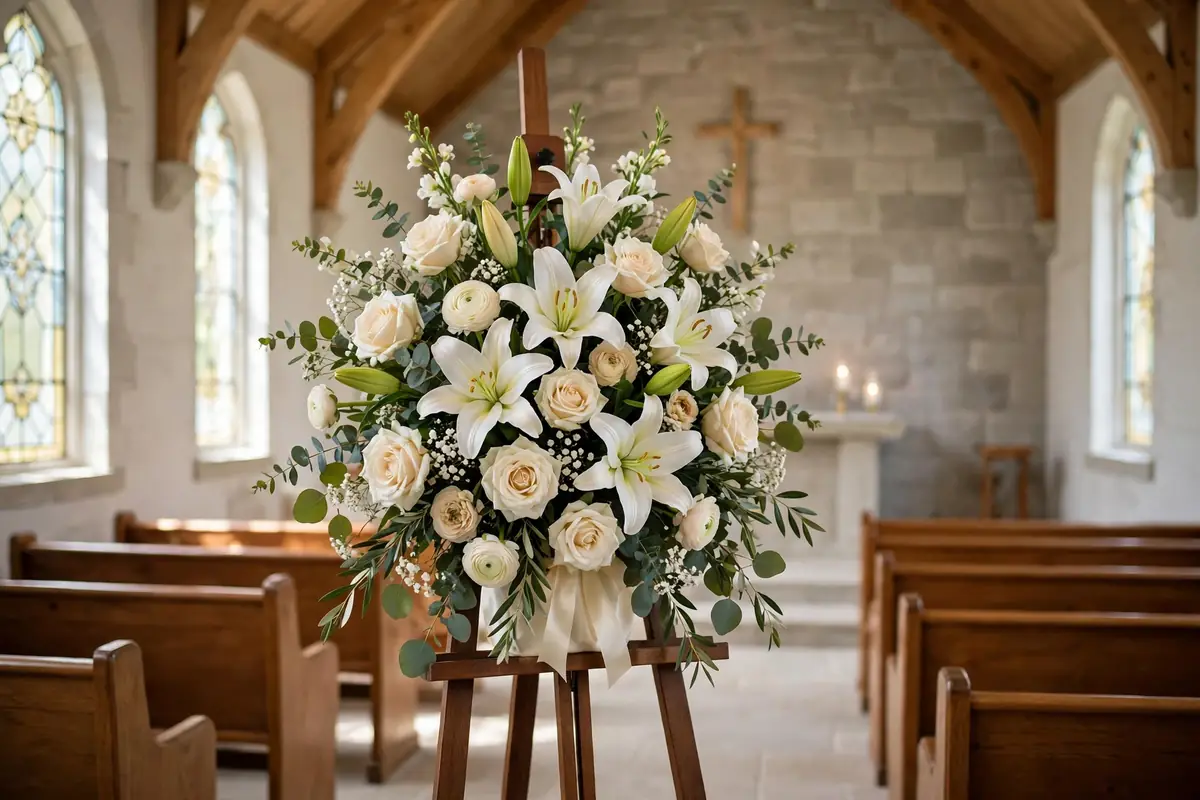
| Standing spray | Flowers on an easel, displayed beside the coffin | Family, close friends, organisations |
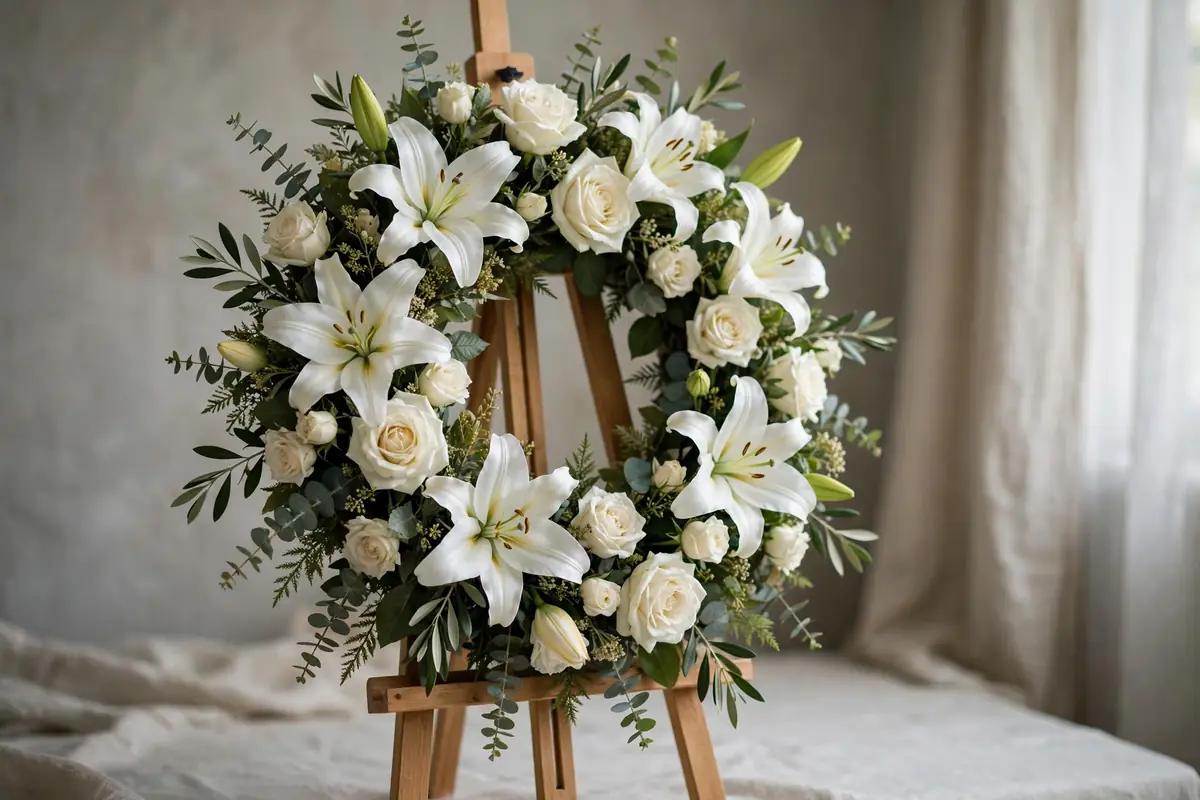
| Wreath | A circular arrangement symbolising eternal life | Family, friends, colleagues |
| Funeral basket / posy | A smaller arrangement in a basket or sheaf | Friends, neighbours, work colleagues |
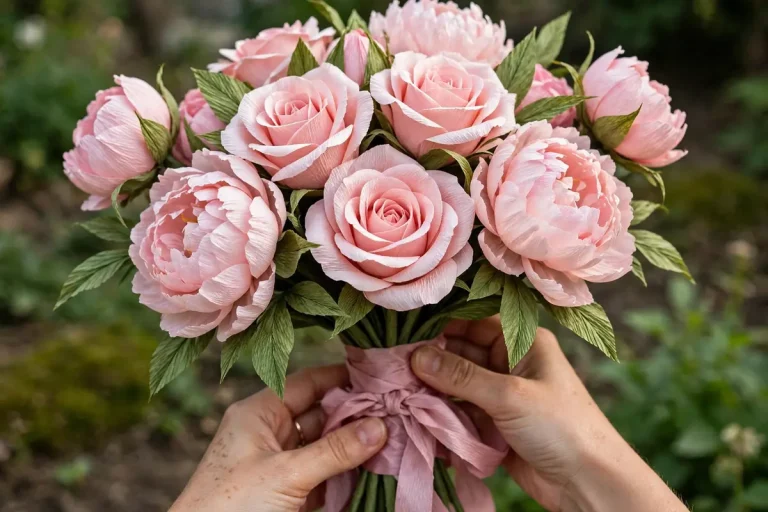
| Sympathy bouquet / vase | A hand-tied bouquet or vase for the family’s home | Anyone — the safest choice of all |
| Pillow, heart or cross tribute | Shaped arrangements, often with a name ribbon | Close family |
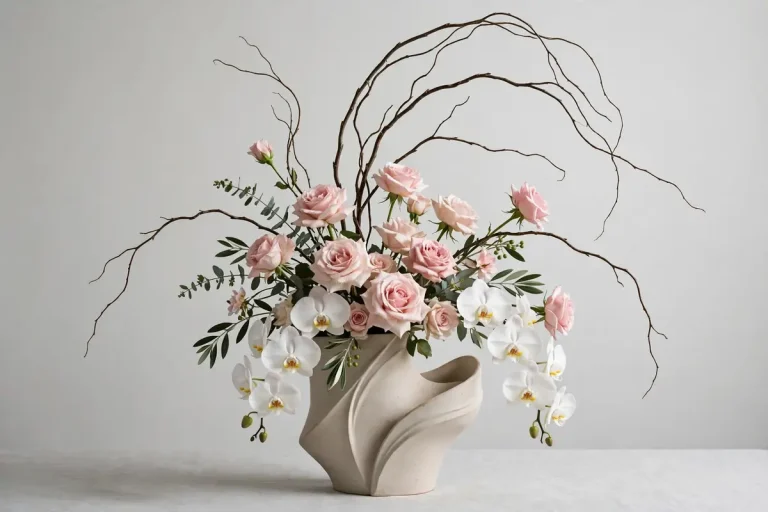
The shapes themselves come from classic flower design — the fan and radiating forms were developed for exactly these ceremonial settings, which is why standing sprays look the way they do.
Who Sends What? A Simple Etiquette Guide
- Immediate family usually provides the casket spray and the main tributes, often coordinated through the funeral director.
- Extended family, close friends, colleagues and organisations send standing sprays, wreaths or baskets to the funeral home or service venue — check the time with the funeral director so they arrive before the service.
- Anyone else — neighbours, acquaintances, your wider circle — sends a sympathy bouquet to the family’s home, either before the funeral or in the weeks after, when support quietly fades but grief has not. Home flowers are never wrong.
- Respect the family’s wishes: some families ask for charity donations instead of flowers (“family flowers only”). Always honour that notice — send a card and donate instead.
- Faith and culture vary: flowers are unwelcome at some services (for example, traditional Jewish funerals usually do not have flowers, and some Hindu and Muslim families prefer donations or simple gestures). If you are unsure, a sympathy card and a home bouquet a week later is the respectful path.
The Best Flowers and Colours for Funerals
Lilies are the classic funeral flower — white lilies symbolise purity and the restored innocence of the soul. Roses carry love and respect (white for reverence, deep red for grief and love, pink for gratitude). Chrysanthemums are the mourning flower across much of Europe and Asia. Carnations are long-lasting and traditional, and gladioli in a standing spray stand for strength of character. Our white flowers guide covers the traditional palette in depth — white and cream with soft green remains the most chosen scheme, with gentle pastels a close second. A favourite flower or colour of the person who died is always a thoughtful personal touch, and florists welcome the request.
How to Order Funeral Flowers
- Start with the funeral director or venue — confirm the service date, time and address, and any family wishes about flowers or donations.
- Choose the arrangement type using the table above, based on your relationship to the family.
- Order early — 2–3 days ahead is comfortable; most florists can do next-day or even same-day for standard designs, but shaped tributes and casket sprays need notice.
- Give the florist the details — the deceased’s name (for delivery labels and ribbons), the service time, the venue, and your card message exactly as you want it written.
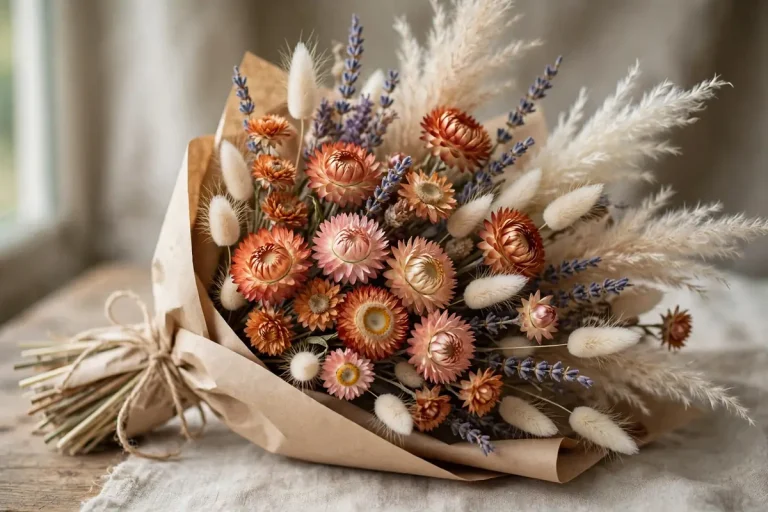
- Decide about afterwards — arrangements are usually left at the venue, taken to the cemetery, or donated to hospitals and care homes; the funeral director can arrange this. A dried flower bouquet sent to the home later is a keepsake alternative some families treasure.
What to Write on the Card
Short is right — the florist’s card is small, and sincerity beats eloquence. Reliable examples: “With deepest sympathy.” / “In loving memory of [name], forever in our hearts.” / “Thinking of you all at this sad time. With love, [your name].” / “Rest in peace.” For a colleague or formal relationship: “With sincere condolences from all of us at [organisation].” Always sign your full name (and family or group) so the family knows who sent them — they often write thank-you notes later.
Typical Costs
Prices vary by country and florist, but as a rough guide in the US/UK: a sympathy bouquet or basket typically runs about $40–$100 (£30–£80), a standing spray or wreath about $75–$250 (£60–£200), and a casket spray about $150–$400+ (£120–£350+). Fresh, seasonal flowers in a simple design are always the best value — and no family has ever measured love by the size of the tribute.
Frequently Asked Questions
What is the difference between funeral flowers and sympathy flowers?
Funeral flowers (casket sprays, standing sprays, wreaths) go to the service and are usually from family and close connections. Sympathy flowers (bouquets, vases, baskets) go to the family’s home and can be sent by anyone, before or after the funeral.
What colour flowers are appropriate for a funeral?
White and cream are the traditional, always-safe choice, often with soft greens and pastels. Brighter colours are increasingly accepted, especially to celebrate the person’s life or honour their favourite colour — follow the family’s tone.
Is it too late to send flowers after the funeral?
No — flowers sent to the home one to three weeks after the funeral are often the most appreciated of all, arriving when the house has gone quiet and support has faded. A bouquet with a simple card is a kind gesture at any point in the first months.
Should I send flowers if the family asked for donations?
Respect their wishes: donate to the named charity and send a sympathy card mentioning your donation if you like. If you are immediate family, “family flowers only” usually still includes you — the funeral director can confirm.
What flowers last longest in funeral arrangements?
Chrysanthemums, carnations, alstroemeria and gladioli are the longest-lasting cut flowers, which is one reason tradition settled on them. Lilies open over several days, so the arrangement often looks fuller on the day of the service than when it was made.