Flower Border: Design Rules, Best Flowers and How to Plant One
A flower border is the ribbon of colour that turns a plain fence, wall or lawn edge into a garden. Instead of a few lonely plants in a row, a good border layers flowers by height — tall at the back, medium in the middle, low and neat at the front — so something is in bloom from spring to autumn.
This guide explains the types of flower borders, the design rules that make them look professional, the best flowers for each layer, and how to plant a border step by step, even if your strip of soil is only a metre wide.
Quick Answer
A flower border is a planted strip of flowers along a fence, wall, path or lawn edge, arranged in height layers: tall flowers at the back (over 90 cm), medium flowers in the middle (45–90 cm), and low edging flowers at the front (under 45 cm). Plant in groups of 3, 5 or 7 of the same flower, mix spring, summer and autumn bloomers, and a border as narrow as 60–90 cm can still look full and deliberate.
Table of Contents
- What Is a Flower Border?
- Types of Flower Borders
- The 5 Design Rules Every Good Border Follows
- Best Flowers for Each Layer of the Border
- How to Plant a Flower Border Step by Step
- Keeping a Border Looking Good All Year
- Frequently Asked Questions
What Is a Flower Border?
A border is a bed with a backdrop — a fence, hedge, wall or the side of the house — planted mainly with flowers. Gardeners distinguish it from an island bed, which sits in open lawn and is viewed from all sides. The classic herbaceous border, perfected in English gardens, is planted entirely with perennial flowers that die back in winter and return each spring.
Borders earn their keep because they concentrate all your flowers where they are seen most — along paths, against the house, edging the patio — and because the backdrop shows off the colours and shelters the plants from wind.
Types of Flower Borders
| Border type | What it is | Best for |
|---|---|---|
| Herbaceous border | Perennial flowers only; dies back in winter, returns in spring | Classic cottage look, low yearly cost once planted |
| Mixed border | Perennials plus shrubs, grasses and bulbs | Year-round structure — the most practical modern border |
| Annual border | Replanted each year with bedding flowers | Maximum colour and easy theme changes; highest effort |
| Cottage border | Dense, informal mix of old-fashioned flowers | Romantic, relaxed gardens; very forgiving of mistakes |
| Low edging border | A narrow strip (30–60 cm) of short flowers only | Edging paths, driveways and lawns in small gardens |
The 5 Design Rules Every Good Border Follows
- Layer by height. Tall at the back, short at the front — the single rule that makes a border look designed instead of planted. Against a backdrop viewed from one side this is strict; a border along a path can relax it slightly.
- Plant in drifts and groups. One plant alone looks lost. Groups of 3, 5 or 7 of the same flower, in long loose drifts, read as one confident splash of colour.
- Plan the seasons, not just the flowers. For every month from spring to autumn, something should be opening. Spring bulbs and early perennials, summer’s main show, then late flowers and seed heads for autumn.
- Repeat a few stars. Repeating the same flower or colour every few metres ties a long border together and looks intentional.
- Leave room to grow. Plant at the spacing on the label, not the size in the pot. A border that looks slightly sparse in May looks perfect in July — and crowded plants invite mildew.
Best Flowers for Each Layer of the Border
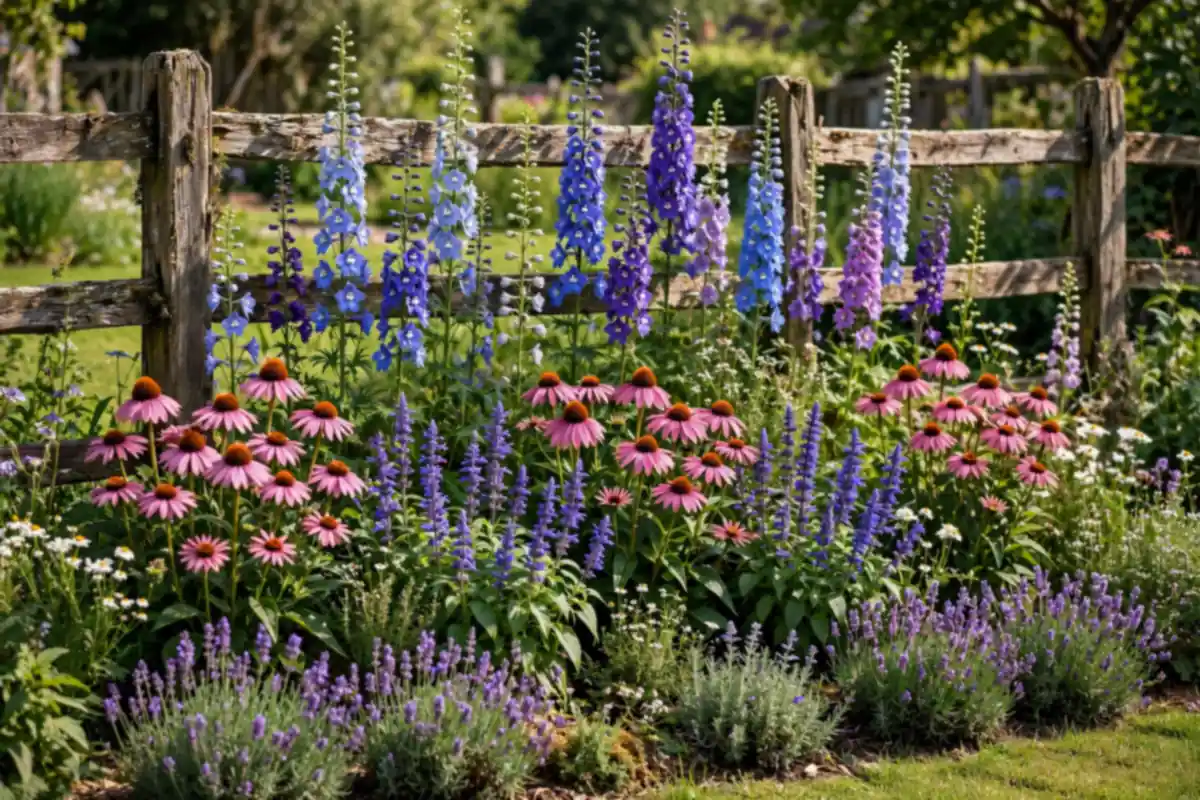
Back layer (tall, 90 cm+): delphiniums, hollyhocks, foxgloves and tall grasses give the border its skyline. Middle layer (45–90 cm): this is the workhorse layer — coneflowers bloom for months and feed bees, peonies anchor spring, and salvias and phlox carry the summer. Front layer (under 45 cm): low mounds that hide everyone’s bare legs — hardy geraniums, catmint, lavender and asters for a late-season finish. For evening enjoyment along a path, weave in choices from our fragrant flowers guide — scent at nose height is the border’s secret luxury.
| Layer | Reliable choices | Season of glory |
|---|---|---|
| Back | Delphinium, hollyhock, foxglove, tall verbena | Early–mid summer |
| Middle | Coneflower, peony, salvia, phlox, daylily | Summer |
| Front | Hardy geranium, catmint, lavender, aster, sedum | Spring edging to autumn colour |
How to Plant a Flower Border Step by Step
- Mark the shape. Lay a hose or rope along the edge. Gentle curves look natural and are easier to mow against than wiggles. Aim for at least 60–90 cm of depth — deeper (1.5 m+) if you want three full layers.
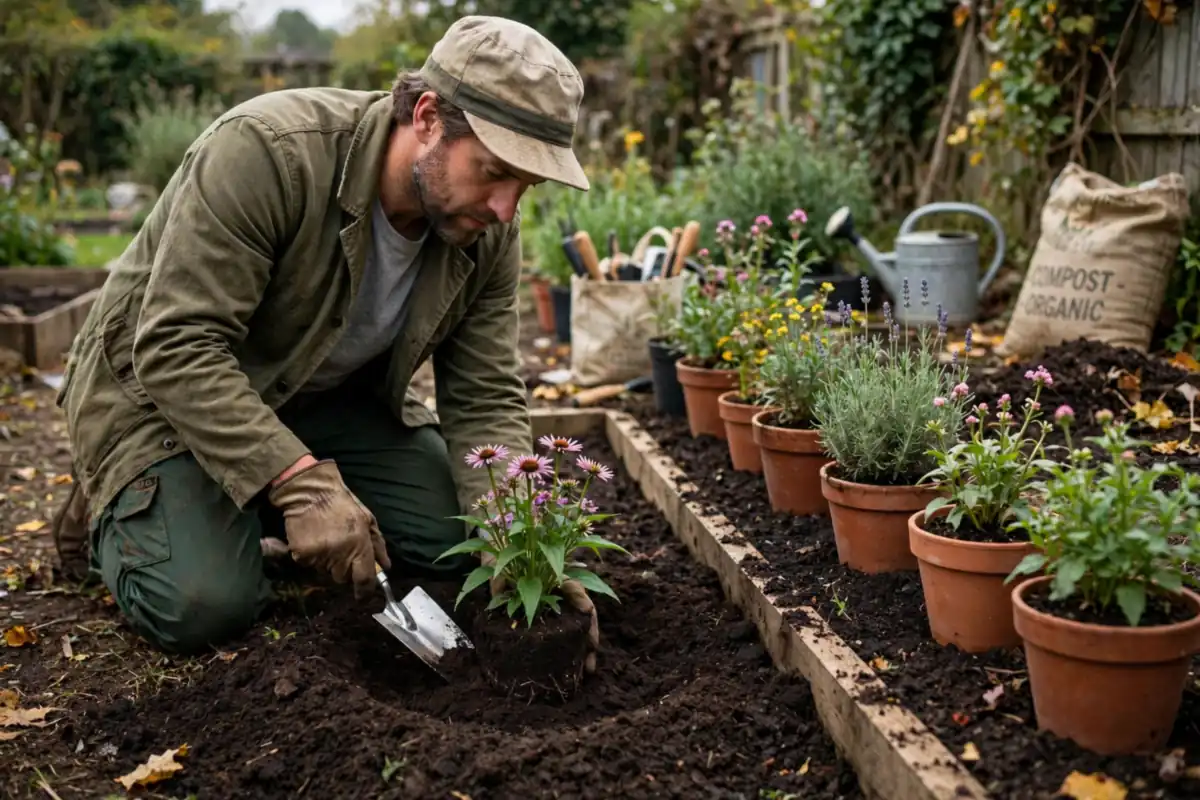
- Prepare the soil once, properly. Clear weeds, dig in compost or well-rotted manure, and improve drainage on heavy clay with grit. Borders are planted for years; this is the step that pays for all of them.
- Set out the plants in their pots first. Arrange the whole border standing in pots — backs, middles, fronts, in their groups — and view it from where you will actually look at it. Move things now, not after planting.
- Plant at the same depth as the pot, water each plant in well, and firm the soil. Plant bulbs in autumn between the perennials for spring colour before the main show wakes up.
- Mulch 5–7 cm deep with bark or compost, keeping it off the crowns. Mulch locks in moisture, suppresses weeds and makes the border look finished from day one.
Keeping a Border Looking Good All Year
Deadhead repeat bloomers (coneflowers excepted — their seed heads feed birds) to stretch the show. Stake early: tall flowers tied up before they flop look natural; rescued afterwards, never quite. Divide clumping perennials every 3–4 years in spring or autumn — it keeps them vigorous and gives you free plants to extend the border. And leave the autumn tidy-up until late winter where you can: seed heads and stems shelter insects and look beautiful in frost.
Frequently Asked Questions
How wide should a flower border be?
At least 60–90 cm for two layers (middle + front). For the full three-layer classic border, 1.5–3 m is ideal — but a narrow border planted in bold groups still looks far better than a wide one planted in single rows.
What is the difference between a flower border and a flower bed?
A border has a backdrop (fence, wall, hedge) and is viewed mainly from the front; a bed is usually freestanding and viewed from several sides. The planting rules are the same — layers, groups and seasons.
Which flowers bloom longest in a border?
Coneflowers, salvias, hardy geraniums and catmint are among the longest-blooming border perennials, flowering for months especially with deadheading. Annuals like cosmos can out-bloom them all but must be replanted yearly.
Can I plant a flower border in shade?
Yes — swap the sun-lovers for shade-tolerant layers: foxgloves and hostas at the back, astilbe and bleeding hearts in the middle, and primroses and lungwort at the front. A north-facing border against a wall can be lush, just leafier and softer in colour.
How do I keep a border flowering all season?
Choose deliberately by season: bulbs and early perennials for spring, the big perennials for summer, and asters, sedums and Japanese anemones for autumn — then repeat two or three long-bloomers through all three layers as the thread that ties it together.