Wolfsbane Flower: Meaning, Types and How to Grow It Safely
Every garden has one plant with a reputation, and wolfsbane’s is the darkest of all: the hooded blue flower that Greek myth says sprang from the foam of Cerberus, the bait-poison of wolf-hunters, the werewolf’s bane of folklore, and — by a comfortable margin — the most poisonous plant most gardeners will ever grow. It is also, awkwardly for its reputation, a beautiful and willing border perennial. Both facts deserve their full telling.
This guide explains what wolfsbane actually is (one name shared by two aconites), covers the six kinds worth knowing, gives its meanings — misanthropy and caution in the old language, protection in the folklore — and states the one safety rule that outranks all other growing advice in this series: gloves, always.
Quick Answer
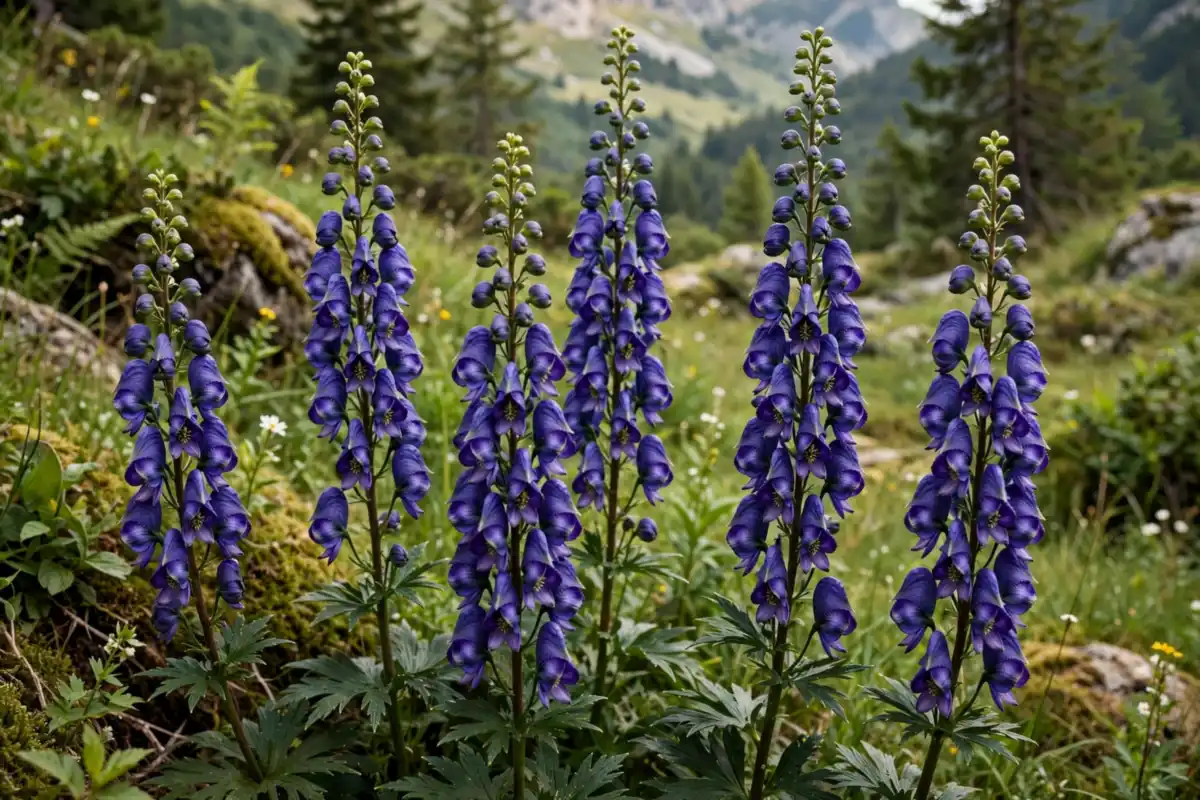
Wolfsbane is the common name of Aconitum species — above all Aconitum lycoctonum (whose name literally means “wolf-killing”) and the garden monkshood Aconitum napellus — tall perennials in the buttercup family bearing spikes of hooded, helmet-shaped blue-purple flowers in summer. It grows 3 to 5 feet tall in USDA zones 3 to 7, in moist, partially shaded ground. Every part of the plant contains aconitine and is seriously poisonous to people and animals; it has been handled for centuries with gloves and respect, and folklore made it the werewolf’s weakness. It is not a flower for households where toddlers or grazing pets roam unsupervised.
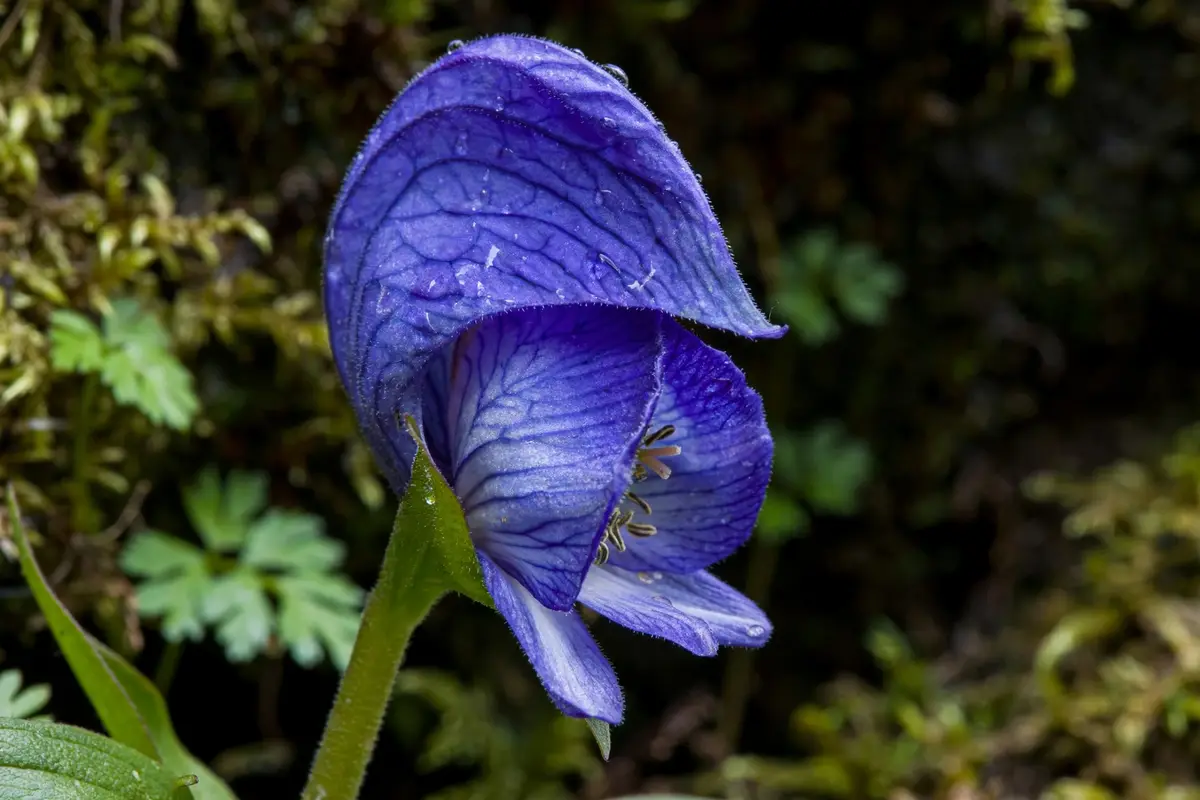
Table of Contents
- What Is a Wolfsbane Flower?
- Types of Wolfsbane and 6 Kinds Worth Knowing
- Wolfsbane Flower Meaning and Symbolism
- Wolfsbane Flower Colours and Their Meanings
- How to Grow Wolfsbane (Safely)
- Common Mistakes When Growing Wolfsbane
- Wolfsbane vs Monkshood: Two Names, One Plant
- Frequently Asked Questions
What Is a Wolfsbane Flower?
Aconitum is a genus of more than 250 species in Ranunculaceae, the buttercup family — close cousins of the delphiniums, which share their alkaloid chemistry. The flower is unmistakable: five sepals form a tall hood or helmet (the “monk’s cowl” that gives monkshood its name) sheltering two curious nectar-bearing petals like tiny cornucopiae, which long-tongued bumblebees work from beneath. Wolfsbane’s two name-bearers are Aconitum napellus, the deep-blue European monkshood of gardens, and Aconitum lycoctonum, the northern wolfsbane of the old herbals — lycoctonum from Greek lykos (wolf) and kteino (to kill): the plant was mashed into bait and smeared on arrows and spears for wolf-hunting across Europe and Asia, which is precisely how it earned the name. You can read more on the Aconitum page on Wikipedia.
The mythology kept pace with the use. In Greek myth aconite sprang from the dripping foam of Cerberus, the three-headed hound Hercules dragged from the underworld; Medea was said to have tried it on Theseus; it became the emblem of Hecate, goddess of witchcraft. The werewolf layer is folklore’s own: wolfsbane was believed to repel, reveal or cure werewolves depending on the region’s telling — the belief so durable that it flowed straight into modern fiction, from classic horror films to the Wolfsbane Potion in Harry Potter, which lets a werewolf keep a human mind through the full moon. The pharmacology under the legend is real: aconitine, concentrated in the roots, is one of the fastest plant alkaloids known, historically used (in minute, expert doses) in traditional medicines and never safely at home. Grow it as the gardeners of centuries have — for its hooded summer blue, at the back of the border, with gloves and respect.
Wolfsbane Flower Quick Facts
- Botanical names: Aconitum napellus (monkshood); A. lycoctonum (true wolfsbane); A. carmichaelii (autumn).
- Family: Ranunculaceae, the buttercup family.
- Hardiness: zones 3 to 7 (carmichaelii to zone 8 in cool summers).
- Height: 3 to 5 feet.
- Bloom time: midsummer for napellus; September–October for carmichaelii.
- Sun and soil: partial shade; moist, humus-rich soil; hates hot dry summers.
- SAFETY: all parts seriously poisonous, roots most of all. Gloves for every task; never ingest; keep away from children, pets and livestock; wash hands and tools after handling.
Types of Wolfsbane and 6 Kinds Worth Knowing
The garden monkshoods, the folklore original, and the autumn-flowering gift. The table separates them; the profiles follow. For the full list of flower names, see our flower names A to Z guide.
| Type | Flowers | Bloom time | Height | Best use |
|---|---|---|---|---|
| Common monkshood (A. napellus) | Deep violet-blue hoods | June–July | 3–5 ft | The classic border aconite |
| Northern wolfsbane (A. lycoctonum) | Pale yellow hoods | June–July | 4–6 ft | The folklore original |
| Autumn monkshood (A. carmichaelii) | Rich blue hoods | Sept–Oct | 3–4 ft | Late-season blue |
| ‘Bicolor’ (A. × cammarum) | Blue-and-white hoods | July | 3–4 ft | Two-tone showpiece |
| Azure monkshood (A. fischeri) | Glossy azure hoods | Aug–Sept | 2–3 ft | Compact, mildew-free |
| ‘Spark’s Variety’ (A. henryi) | Deep blue, climbing habit | July–Aug | 4–6 ft | Scrambling through shrubs |
1. Common Monkshood — Aconitum napellus, the Garden Classic
The wolfsbane of gardens: dense spikes of deep violet-blue helmets in early to midsummer, glossy divided leaves, and a century of border service — it is also the July birth flower season’s darkest blue, flowering at the height of its month. Cultivars run to the white ‘Album’ and the pink-tinged forms. Give it the cool, moist corner and it will stand for years with almost no attention beyond the glove rule.
2. Northern Wolfsbane — Aconitum lycoctonum, the Name Itself
The species that owns the word: a taller, looser plant with pale yellow hoods, native across northern Europe and Asia, and the aconite of the wolf-bait tradition that named the whole group. Less showy than napellus but historically the real thing — grow it where the story matters as much as the flower, in the same cool moisture, with the same respect.
3. Autumn Monkshood — Aconitum carmichaelii, the Late Blue
The gardener’s favourite for one reason: timing. Carmichaelii (the ‘Arendsii’ group above all) flowers in September and October, when true blue is nearly extinct in the border — rich hooded spikes on glossy, mildew-resistant foliage that looks good all season. If you plant one aconite for the garden (rather than the legend), the autumn one earns its place latest and longest.
4. ‘Bicolor’ — the Two-Tone Showpiece
Aconitum × cammarum ‘Bicolor’ wears each hood in blue and white at once — blue-edged helmets with white hearts — the most decorative aconite in cultivation and a show-bench favourite. Its sterile hybrid vigour also means no self-seeding surprises: all of the display, a little less of the worry.
5. Azure Monkshood — Aconitum fischeri, the Compact One
A shorter, later species (2–3 feet) with exceptionally glossy leaves that shrug off the mildew that can spot napellus, and clear azure hoods in late summer. The aconite for smaller borders and for gardeners who want the flower without the five-foot commitment — same poison, same gloves, tidier plant.
6. ‘Spark’s Variety’ — the Scrambler
Aconitum henryi ‘Spark’s Variety’ breaks the family’s posture: a twining, scrambling aconite that hauls itself through shrubs and over fences, flowering deep blue in late summer along the way. Use it as you would a clematis with a past — beautiful at a distance of one hedge, and the one aconite whose support is another plant.
Wolfsbane Flower Meaning and Symbolism
The old language of flowers gave wolfsbane — listed as monkshood — the meanings misanthropy and caution: a hooded figure that does not welcome approach, and a warning in flower form, “beware”. It is one of the very few flowers whose floriography is a safety notice. Folklore balanced the ledger with protection: a plant so feared by wolves and (in the tales) werewolves became a threshold guardian, hung and planted to keep darker things at bay, and an emblem of Hecate’s watchful power. Modern readings add the obvious third meaning — respect for wild things: beauty that is not yours to handle carelessly.
Nobody sends wolfsbane in a bouquet, and that is its meaning too: it is the flower you plant, not give — a statement of seriousness in the garden, a midnight-blue exclamation mark for gardeners who like their beauty with a history. In fiction its symbolism inverts once more: the Wolfsbane Potion is mercy in a goblet, the plant of control over one’s darkest transformation.
Wolfsbane Flower Colours and Their Meanings
- Deep violet-blue — caution and mystery: napellus, the classic hooded midnight.
- Pale yellow — the old magic: lycoctonum, the folklore original’s strange, wan gold.
- Azure blue — late loyalty: fischeri and carmichaelii carrying blue into autumn, cousins in colour to our blue flowers.
- Blue and white — duality: ‘Bicolor’, the wolf and the monk in one hood.
- White — the hooded ghost: ‘Album’, purity with the same warning attached.
How to Grow Wolfsbane (Safely)
Easy plant, serious rules. Growers on r/gardening on Reddit repeat the wolfsbane protocol in every thread: “gloves on before you touch anything, plant it at the back where nobody brushes past, and label it — aconite is not a plant you surprise a guest with.”
Siting — Safety First, Then Soil
Choose the spot for people before plants: the back of a border, behind lower planting, away from paths, play areas, vegetable beds and anywhere livestock lean over fences — and tell everyone in the household what it is. Horticulturally it wants what its delphinium cousins want, minus the fuss: partial shade (full sun only with reliably moist soil), cool humus-rich ground that never fully dries, and shelter from the worst wind. Plant in spring or autumn, wearing gloves, and water in well; aconites resent transplanting once established, so choose the place once.
Care — Almost None, Carefully Done
Established wolfsbane asks little: moisture in drought, a spring mulch (gloves), and deadheading after flowering — both for tidiness and to stop self-seeding near paths. Stems flop only in rich soil and shade too deep; stake the tall kinds if your border is exposed. Divide rarely, in early spring, with gloves and a fork, and wash tools and hands afterwards. Then leave it alone for a decade: a happy aconite is one of the longest-lived perennials in the border, and every handling it does not need is a handling avoided.
Common Mistakes When Growing Wolfsbane
Mistake one is forgetting the gloves — for planting, dividing, deadheading, even clearing the stems in autumn. Aconitine is absorbed through broken skin and mucous membranes; the garden rule is identical to the herbalists’ rule of five hundred years ago: never handle it barehanded, never rub your eyes, wash after. Mistake two is siting: wolfsbane beside the herb garden, the play area or the gate latch is a hazard wearing a flower, and in households with toddlers or plant-chewing pets the honest decision is not to grow it at all.
Mistake three is a dry, hot spot: aconites sulk and scorch in droughty sun, flowering small and dying young — cool moisture is their whole climate. Mistake four is frequent moving: they hate disturbance and take years to forgive it. And mistake five is complacency after years of safe handling — the plant does not get safer as you get familiar. The gardeners who grow wolfsbane longest are the ones whose respect never becomes routine.
Wolfsbane vs Monkshood: Two Names, One Plant
Same plants, two costumes. Monkshood is the gardener’s name, from the flower’s shape — a cowl or hood, like a monk’s — and belongs to the whole genus in the border, above all Aconitum napellus. Wolfsbane is the folklorist’s name, from the use — the wolf-poison of the old herbals — and belongs most precisely to Aconitum lycoctonum, the yellow-flowered northern species whose very name means wolf-killer. In nurseries the words are used interchangeably and both labels mean Aconitum, blue-hooded and poisonous; in old herbals and werewolf lore, wolfsbane is the specific one. If it matters which you own, read the Latin: lycoctonum is the wolf’s, napellus is the garden’s, carmichaelii is autumn’s. The hood, the poison and the glove rule are common to all three.
Frequently Asked Questions
Is wolfsbane a real plant?
Completely real — Aconitum, the monkshoods, grown in gardens for centuries. The folklore around it (werewolves, Cerberus, Hecate) is legend built on a genuinely dangerous plant: the poison came first, the stories followed. If your question is not answered here, the questions about the wolfsbane flower on Quora cover most of the rest.
How poisonous is wolfsbane?
Seriously poisonous — among the most toxic garden plants in cultivation. All parts contain aconitine and related alkaloids, the roots most concentrated of all; ingestion of even small amounts is a medical emergency for people and animals. It is grown safely in countless gardens under the glove-and-placement rules in this guide, but it should never be eaten, brewed, or handled barehanded, and it does not belong where unsupervised children or grazing animals can reach it.
Does wolfsbane really repel werewolves?
In folklore, yes — in reality, there are no werewolves to test it on. The belief runs from early-modern Europe through Gothic fiction to modern film and Harry Potter’s Wolfsbane Potion. What the plant genuinely repelled was wolves, as a bait poison — which is how the legend got its teeth.
Is wolfsbane the same as monkshood?
Essentially yes: monkshood is the shape-name, wolfsbane the use-name, for Aconitum. Strictly, wolfsbane belongs to A. lycoctonum and monkshood to the garden species led by A. napellus — see the comparison section above. Either way, the plant in front of you wants gloves.
When does wolfsbane flower?
Napellus and lycoctonum flower in early to midsummer (June–July); fischeri follows in late summer; and carmichaelii closes the aconite year in September–October. Planted together, the three give a garden hooded blue from June to the first frosts — one of the longest shows of any perennial genus, from the plant that asks the least care in return.
Can wolfsbane grow in pots?
It can, but think before you do: a potted aconite sits at hand height on the patio, which is exactly where this plant should not be within reach of children and pets. If you grow it in a container, use a large pot in a quiet, out-of-the-way corner, keep the soil moist, and label it unmistakably. Most growers are wiser to give it the back of the border and let safer flowers take the pots. For more flowers under the same letter, see our guide to flowers that start with W.