40 Flowers That Start With C: Names, Pictures & Growing Tips
40 Flowers That Start With C: Names, Pictures & Growing Tips
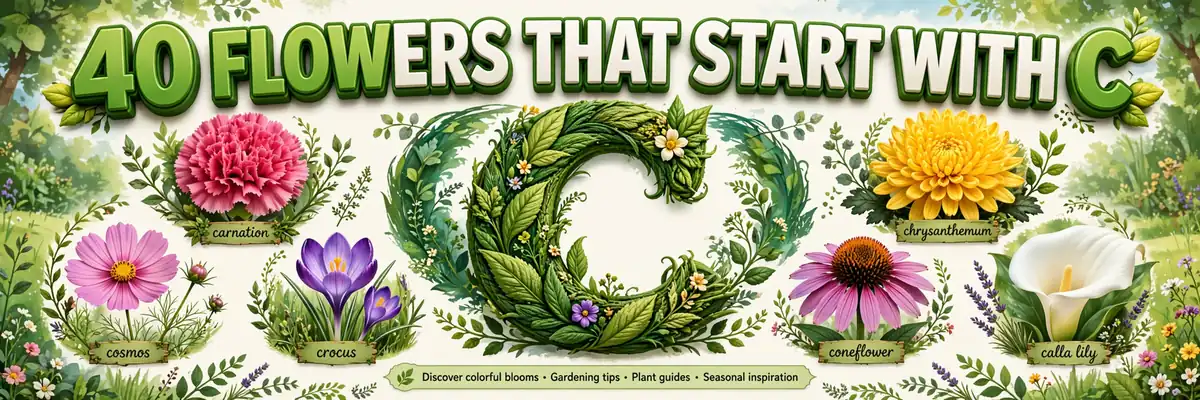
Looking for flower names that start with C? You are in the right place. The letter C opens the garden gate to some of the most loved blooms in America — the spicy-scented carnation, fall chrysanthemums, cheerful cosmos, native purple coneflowers, and the first brave crocus of spring. From cottage-garden classics to tropical showstoppers like canna and calla lilies, C-flowers cover every season, color, and style. Whether you are planning a new flower bed, choosing bouquet flowers, or helping a child with an alphabet garden project, this guide walks you through 40 real flowers that start with C, each with a description and practical growing advice.
Every entry below includes the flower’s scientific name, bloom season, sun needs, and USDA hardiness zone, so you can tell at a glance which C-flowers will thrive in your yard. You will also find two quick comparison tables, beginner-friendly growing tips, and answers to the most common questions gardeners ask — including the prettiest pink, white, purple, red, and yellow C-flowers, plus the best annual and perennial picks. Let’s dig in.
Quick Answer
Popular flowers that start with C include Carnation, Chrysanthemum, Cosmos, Coneflower, Crocus, Canna Lily, Clematis, California Poppy, Cornflower, Calla Lily, and Camellia. They range from spring bulbs and summer annuals to perennials and tropicals, covering USDA zones 3–11 — a C-flower for nearly every US garden.
Table of Contents
C-Flowers at a Glance
Use this table to compare all 40 flowers that start with C side by side, from botanical names to native regions.
| Flower name | Scientific name | Type | Color | Native region |
|---|---|---|---|---|
| Carnation | Dianthus caryophyllus | Tender perennial | Pink, red, white, yellow | Mediterranean |
| Chrysanthemum | Chrysanthemum × morifolium | Herbaceous perennial | Pink, red, yellow, white, purple, bronze | China, Japan |
| Coneflower | Echinacea purpurea | Herbaceous perennial | Purple, pink, white, orange | Central and eastern North America |
| Cosmos | Cosmos bipinnatus | Annual | Pink, white, red | Mexico |
| Crocus | Crocus vernus | Cormous perennial | Purple, yellow, white | Europe |
| Canna Lily | Canna × generalis | Rhizomatous perennial | Red, orange, yellow, pink | Tropical Americas |
| Clematis | Clematis spp. | Deciduous vine | Purple, pink, white, blue, red | Northern Hemisphere |
| California Poppy | Eschscholzia californica | Annual (tender perennial) | Orange, yellow, white, pink | Western North America |
| Cornflower | Centaurea cyanus | Annual | Blue, pink, white, purple | Europe |
| Calla Lily | Zantedeschia aethiopica | Rhizomatous perennial | White; hybrids in pink, yellow, orange, purple | South Africa |
| Canterbury Bells | Campanula medium | Biennial | Blue, pink, white | Southern Europe |
| Candytuft | Iberis sempervirens | Evergreen perennial | White, pink | Southern Europe |
| Coral Bells | Heuchera spp. | Herbaceous perennial | Pink, red, white bells; colorful foliage | North America |
| Coreopsis | Coreopsis grandiflora | Herbaceous perennial | Yellow, gold, red | North America |
| Cyclamen | Cyclamen persicum | Tender tuberous perennial | Pink, red, white, purple | Eastern Mediterranean |
| Camellia | Camellia japonica | Evergreen shrub | Pink, red, white | East Asia |
| Clarkia | Clarkia amoena | Annual | Pink, red, white, purple | Western North America |
| Cleome | Cleome hassleriana | Annual | Pink, white, purple | South America |
| Cockscomb | Celosia argentea var. cristata | Annual | Red, orange, yellow, pink | Africa, Asia |
| Creeping Phlox | Phlox subulata | Evergreen perennial | Pink, purple, white, blue | Eastern North America |
| Crown Imperial | Fritillaria imperialis | Bulb | Orange, red, yellow | Middle East, Central Asia |
| Checkered Lily | Fritillaria meleagris | Bulb | Purple checkered, white | Europe |
| Cardinal Flower | Lobelia cardinalis | Herbaceous perennial | Red | Eastern North America |
| Chocolate Cosmos | Cosmos atrosanguineus | Tender perennial | Dark maroon | Mexico |
| Clivia | Clivia miniata | Tender rhizomatous perennial | Orange, red, yellow | South Africa |
| Cattleya Orchid | Cattleya labiata | Epiphytic orchid | Pink, purple, white, yellow | South America |
| Crape Myrtle | Lagerstroemia indica | Deciduous shrub/small tree | Pink, red, white, purple | China, Korea |
| Carolina Jasmine | Gelsemium sempervirens | Evergreen vine | Yellow | Southeastern United States |
| Cherry Blossom | Prunus serrulata | Deciduous tree | Pink, white | Japan, China |
| Crabapple | Malus spp. | Deciduous tree | Pink, white, red | Northern Hemisphere |
| Cushion Spurge | Euphorbia polychroma | Herbaceous perennial | Yellow bracts | Central and eastern Europe |
| Catmint | Nepeta × faassenii | Herbaceous perennial | Blue, purple | Europe, Asia (hybrid origin) |
| Chamomile | Matricaria chamomilla | Annual | White with yellow centers | Europe, Asia |
| Cup-and-Saucer Vine | Cobaea scandens | Annual vine | Purple, white | Mexico |
| Cypress Vine | Ipomoea quamoclit | Annual vine | Red, pink, white | Tropical America |
| Corn Poppy | Papaver rhoeas | Annual | Red, pink, white | Europe, Asia, North Africa |
| Crimson Flag Lily | Hesperantha coccinea | Tender rhizomatous perennial | Red, pink, white | South Africa |
| Cigar Plant | Cuphea ignea | Tender perennial | Orange-red tubular flowers | Mexico, Jamaica |
| California Fuchsia | Epilobium canum | Herbaceous perennial | Red-orange | Western North America |
| Chinese Wisteria | Wisteria sinensis | Deciduous vine | Purple, blue, white, pink | China |
Bloom Season, Sun Needs & Hardiness Zones
Planning your garden calendar? This second table shows when each C-flower blooms, how much sun it wants, and the USDA zones where it grows outdoors year-round.
| Flower name | Bloom season | Sun needs | Hardiness zone |
|---|---|---|---|
| Carnation | Summer | Full sun | 5–9 |
| Chrysanthemum | Fall | Full sun | 5–9 |
| Coneflower | Summer to fall | Full sun | 3–9 |
| Cosmos | Summer to fall | Full sun | Grown as annual |
| Crocus | Early spring | Full sun to part shade | 3–8 |
| Canna Lily | Summer | Full sun | 7–10 |
| Clematis | Spring to fall | Full sun to part shade | 4–9 |
| California Poppy | Spring to summer | Full sun | 6–10 |
| Cornflower | Summer | Full sun | Grown as annual |
| Calla Lily | Spring to summer | Full sun to part shade | 8–10 |
| Canterbury Bells | Late spring | Full sun to part shade | 4–8 |
| Candytuft | Spring | Full sun | 3–9 |
| Coral Bells | Late spring to summer | Part shade | 4–9 |
| Coreopsis | Summer to fall | Full sun | 4–9 |
| Cyclamen | Winter to spring (indoors) | Bright indirect light | 9–11 outdoors; houseplant elsewhere |
| Camellia | Late winter to spring | Part shade | 7–9 |
| Clarkia | Summer | Full sun | Grown as annual |
| Cleome | Summer to fall | Full sun | Grown as annual |
| Cockscomb | Summer to fall | Full sun | Grown as annual |
| Creeping Phlox | Spring | Full sun | 3–9 |
| Crown Imperial | Spring | Full sun to part shade | 5–8 |
| Checkered Lily | Spring | Full sun to part shade | 3–8 |
| Cardinal Flower | Summer to fall | Full sun to part shade | 3–9 |
| Chocolate Cosmos | Summer to fall | Full sun | 7–9 |
| Clivia | Late winter to spring | Bright indirect light | 9–11; houseplant elsewhere |
| Cattleya Orchid | Spring and fall | Bright indirect light | Houseplant (10–12 outdoors) |
| Crape Myrtle | Summer | Full sun | 7–10 |
| Carolina Jasmine | Late winter to spring | Full sun to part shade | 7–10 |
| Cherry Blossom | Spring | Full sun | 5–8 |
| Crabapple | Spring | Full sun | 4–8 |
| Cushion Spurge | Spring | Full sun | 4–8 |
| Catmint | Summer | Full sun to part shade | 3–8 |
| Chamomile | Summer | Full sun | Grown as annual |
| Cup-and-Saucer Vine | Summer to fall | Full sun | Grown as annual |
| Cypress Vine | Summer to fall | Full sun | Grown as annual |
| Corn Poppy | Late spring to summer | Full sun | Grown as annual |
| Crimson Flag Lily | Late summer to fall | Full sun to part shade | 7–9 |
| Cigar Plant | Summer to fall | Full sun | 9–11; annual elsewhere |
| California Fuchsia | Late summer to fall | Full sun | 8–10 |
| Chinese Wisteria | Spring | Full sun | 5–9 |
40 Flowers That Start With C: The Complete List
Here they are — 40 beautiful, real flowers beginning with C, each with growing notes so you can pick the right ones for your garden.
1. Carnation (Dianthus caryophyllus)
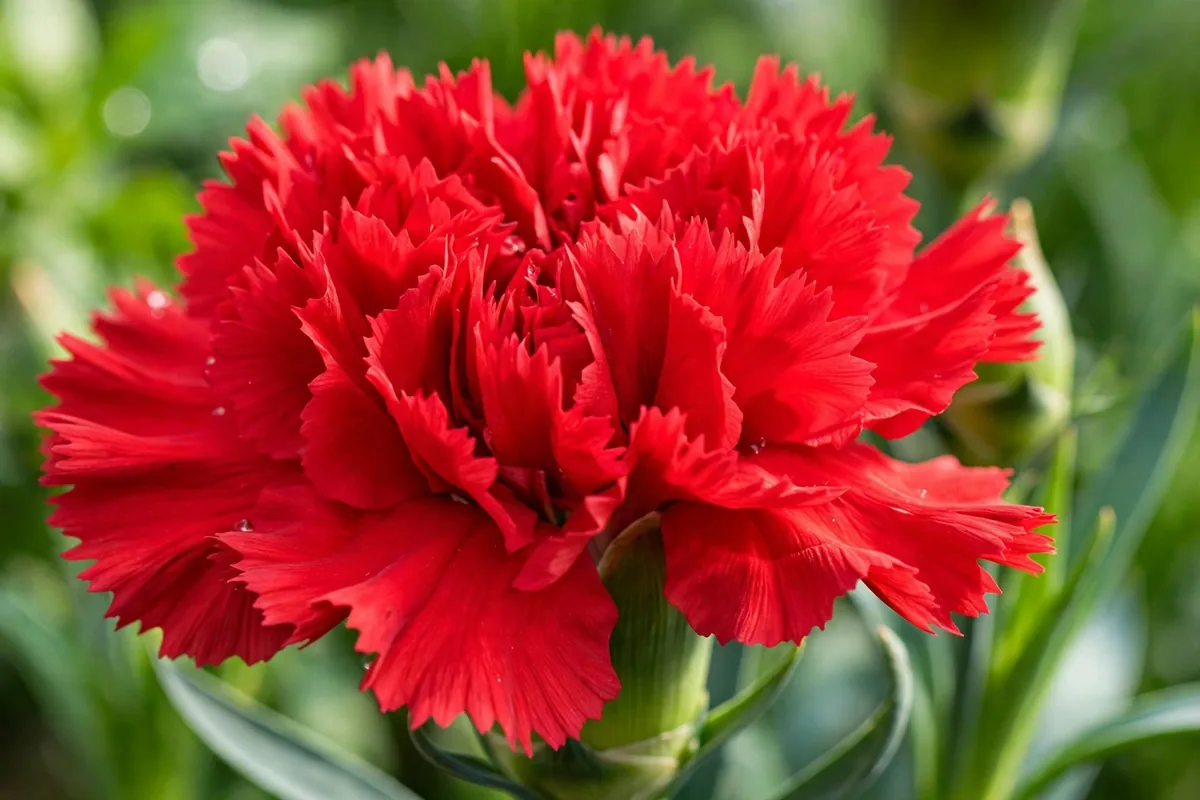
Carnation is the classic florist flower — ruffled, clove-scented blooms on sturdy stems that last up to two weeks in a vase. Garden varieties come in pink, red, white, yellow, and striped forms, flowering all summer in full sun. Hardy in zones 5–9, though many gardeners grow them as annuals. Deadhead regularly, and never let the crown sit in soggy soil.
Bloom: Summer | Sun: Full sun | Zone: 5–9 | Best for: Cut flowers, fragrant borders
2. Chrysanthemum (Chrysanthemum × morifolium)
Chrysanthemums are the grand finale of the garden year, exploding into cushions of pink, bronze, yellow, red, and purple just as other flowers fade. Hardy garden mums return in zones 5–9 when planted in spring, while florist types are best treated as annuals. Pinch stems until midsummer for bushier plants, and give them full sun with well-drained soil.
Bloom: Fall | Sun: Full sun | Zone: 5–9 | Best for: Fall color, autumn containers
3. Coneflower (Echinacea purpurea)
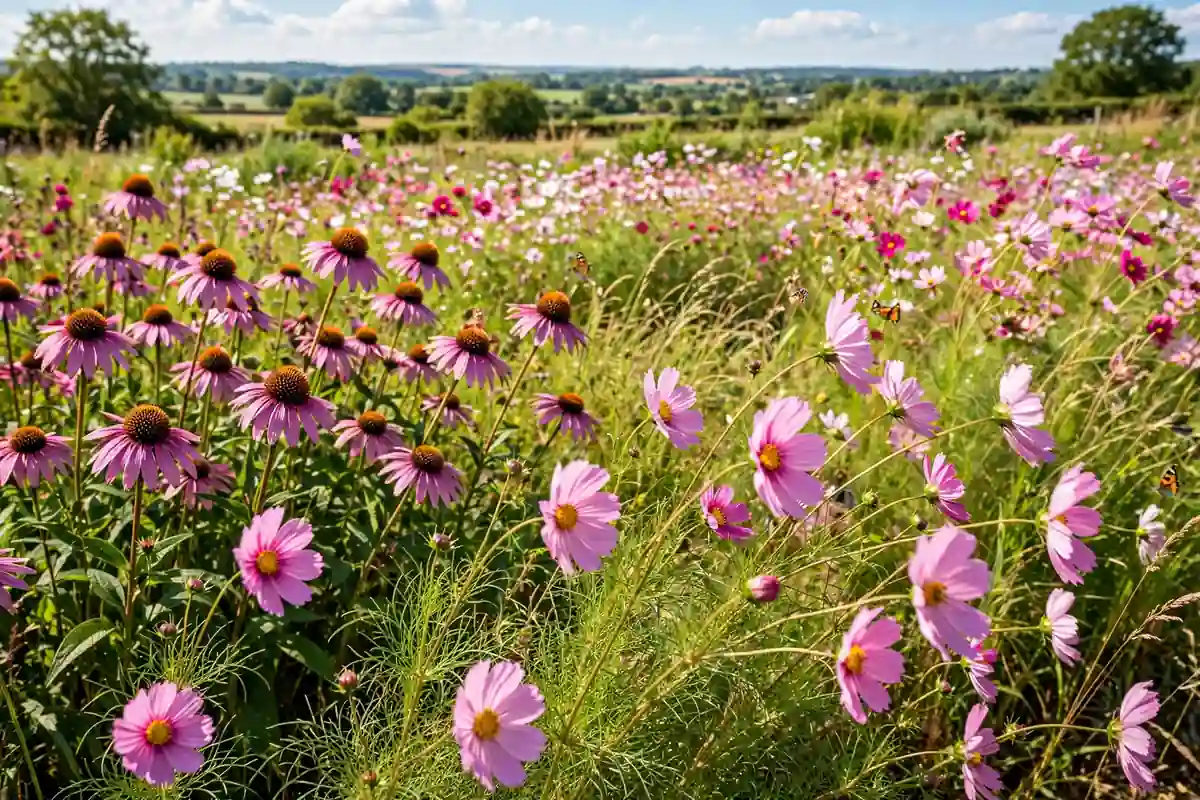
Purple coneflower is a native powerhouse — daisy-like blooms with raised orange cones that butterflies, bees, and goldfinches all fight over. Modern hybrids add orange, white, pink, and even green. This drought-tolerant perennial thrives in zones 3–9 with full sun and poor soil. Leave the seed heads standing through winter for the birds.
Bloom: Summer to fall | Sun: Full sun | Zone: 3–9 | Best for: Pollinator gardens, low-maintenance borders
4. Cosmos (Cosmos bipinnatus)
Cosmos is the easiest flower on this list to grow from seed — sow it once and enjoy feathery foliage and daisy-like pink, white, or red blooms from summer to frost. It actually flowers best in poor soil; rich ground grows leaves instead of flowers. Deadhead for nonstop color, or let it self-sow for free plants next year.
Bloom: Summer to fall | Sun: Full sun | Zone: Grown as annual | Best for: Beginner gardens, wildflower meadows
5. Crocus (Crocus vernus)
Crocus is spring’s first brave messenger, pushing purple, yellow, and white cups through late-winter snow. Plant the corms in fall, 3–4 inches deep, in drifts of 25 or more for real impact. Squirrels love the corms, so consider planting inside wire baskets in problem areas. Let the foliage ripen naturally after bloom — it feeds next year’s flowers.
Bloom: Early spring | Sun: Full sun to part shade | Zone: 3–8 | Best for: Early spring color, lawn naturalizing
6. Canna Lily (Canna × generalis)
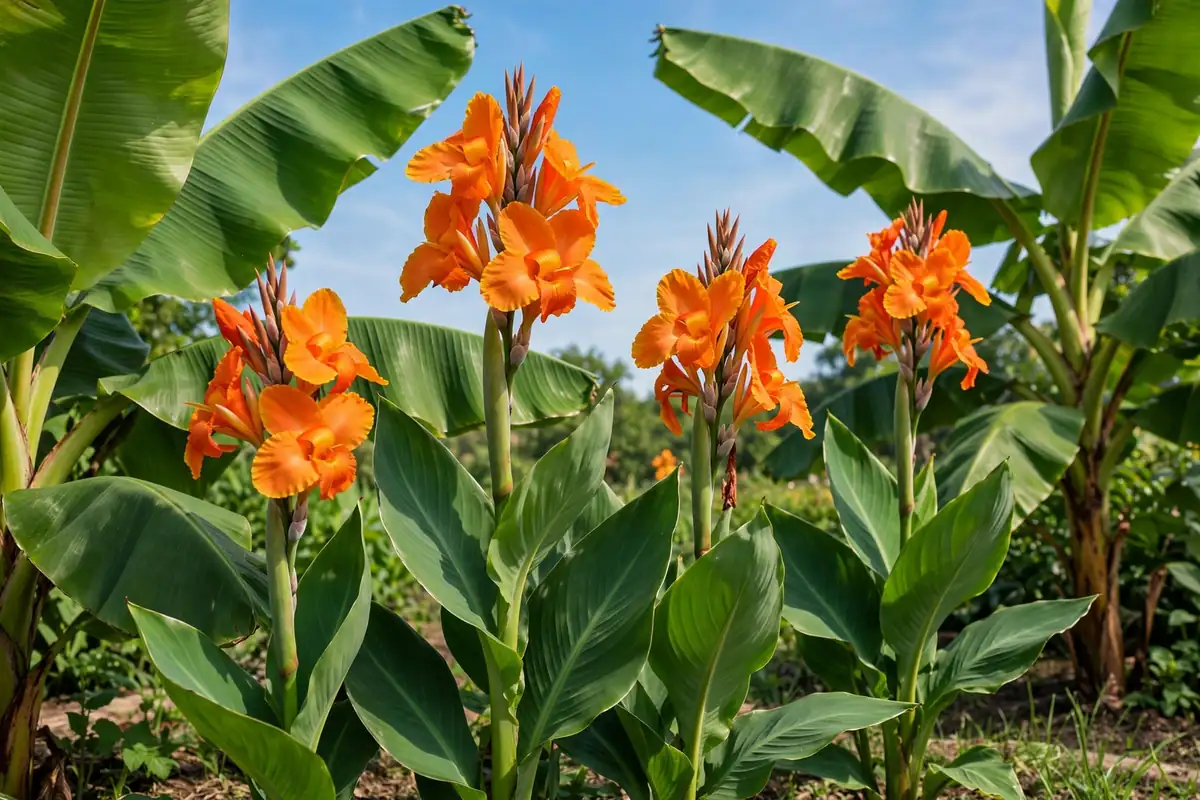
Canna lilies bring tropical drama to temperate gardens — 3- to 6-foot stems with huge paddle-shaped leaves and bold red, orange, yellow, or pink flowers all summer. In zones 7–10 the rhizomes overwinter in the ground; in colder zones, dig them up after the first frost and store in a cool basement. Give them full sun, rich soil, and plenty of water.
Bloom: Summer | Sun: Full sun | Zone: 7–10 | Best for: Tropical borders, bold foliage
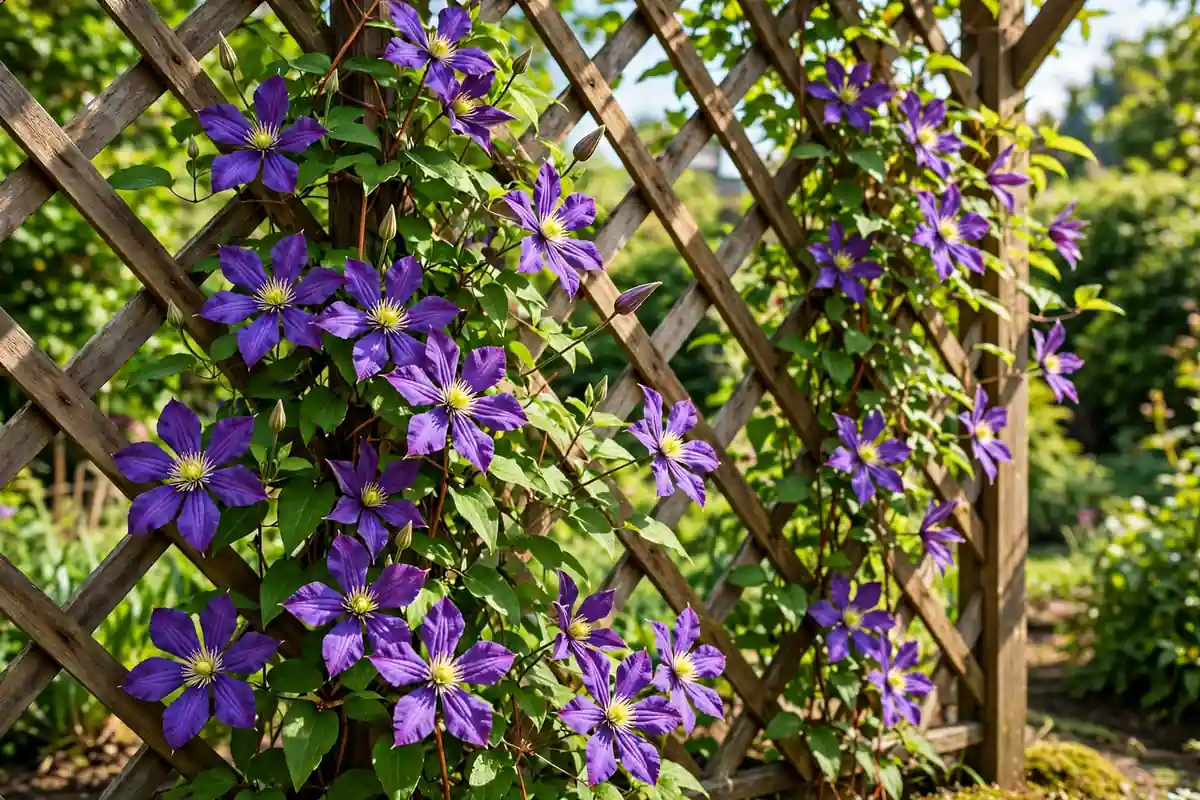
7. Clematis (Clematis spp.)
Clematis is the queen of flowering vines, climbing trellises and arbors with starry blooms in purple, pink, white, blue, and red. The golden rule: heads in the sun, feet in the shade — mulch the roots well. Pruning depends on the bloom group (early, repeat, or late), so keep the plant tag. Established plants in zones 4–9 can live for decades.
Bloom: Spring to fall | Sun: Full sun to part shade | Zone: 4–9 | Best for: Trellises, arbors, vertical color
8. California Poppy (Eschscholzia californica)
The California poppy — the state flower of California — carpets western hillsides in silky orange each spring. In gardens it self-sows freely, blooming from spring to summer in orange, yellow, white, and pink. It demands full sun and sharp drainage and sulks in rich, wet soil. A tender perennial in zones 6–10, it is usually grown as an annual elsewhere.
Bloom: Spring to summer | Sun: Full sun | Zone: 6–10 | Best for: Wildflower gardens, dry slopes
9. Cornflower (Centaurea cyanus)
Cornflowers (bachelor’s buttons) are old-fashioned cottage charmers with fringed blue blooms — plus pink, white, and purple forms. They flower all summer from a spring sowing, shrug off poor soil, and make excellent cut flowers. Deadhead to extend the show. Bees love the nectar-rich centers. One of the best annual flowers that start with C for beginners.
Bloom: Summer | Sun: Full sun | Zone: Grown as annual | Best for: Cut flowers, cottage gardens
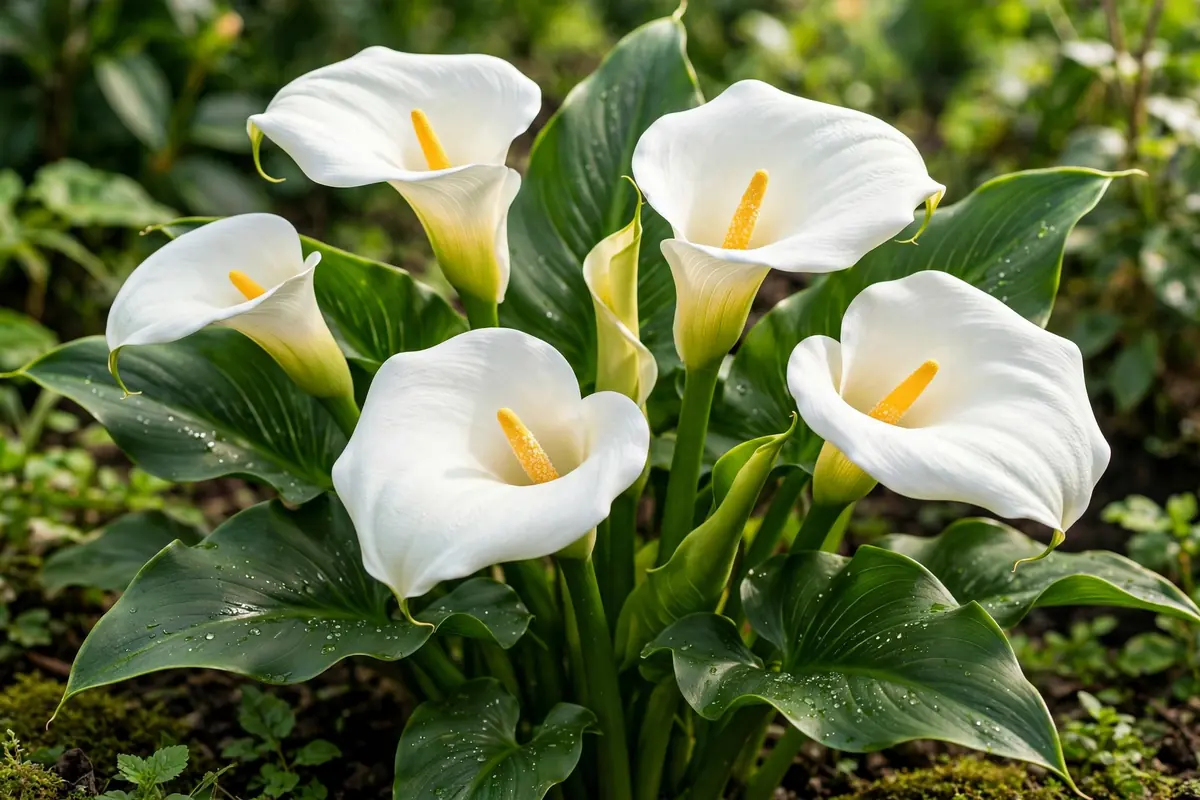
10. Calla Lily (Zantedeschia aethiopica)
Calla lilies are elegance itself — sculptural white spathes wrapped around a golden spadix, rising from lush arrow-shaped leaves. Modern hybrids add pink, yellow, orange, and deep purple. In zones 8–10 they are perennial; in colder zones, lift the rhizomes for winter or grow them in pots. Give them rich, moist soil and full sun to part shade.
Bloom: Spring to summer | Sun: Full sun to part shade | Zone: 8–10 | Best for: Elegant borders, wedding flowers

11. Canterbury Bells (Campanula medium)
Canterbury bells are classic cottage-garden biennials, sending up 2- to 3-foot spires of bell-shaped blue, pink, or white flowers in late spring. Sow seed in summer for blooms the next year — they need a winter chill to set buds. Plant in full sun to part shade in zones 4–8, and stake tall stems in windy spots.
Bloom: Late spring | Sun: Full sun to part shade | Zone: 4–8 | Best for: Cottage borders, vertical accents
12. Candytuft (Iberis sempervirens)
Candytuft is a spring workhorse — low evergreen mounds smothered in white (sometimes pink) flower clusters that spill beautifully over walls and path edges. It thrives in full sun and well-drained soil in zones 3–9, tolerating drought once established. Shear lightly after bloom to keep it tidy. A reliable groundcover for the front of sunny borders.
Bloom: Spring | Sun: Full sun | Zone: 3–9 | Best for: Edging, rock walls
13. Coral Bells (Heuchera spp.)
Coral bells earn their keep twice: airy wands of tiny pink, red, or white bell flowers in late spring, plus stunning foliage in purple, lime, caramel, and silver that lasts all season. They prefer part shade and rich, well-drained soil in zones 4–9. Plant the crown slightly high — buried crowns rot. A shade-garden staple.
Bloom: Late spring to summer | Sun: Part shade | Zone: 4–9 | Best for: Shade borders, colorful foliage
14. Coreopsis (Coreopsis grandiflora)
Coreopsis is sunshine in plant form — masses of yellow and gold daisies (plus red and bicolor forms) blooming from summer to fall with almost no care. This North American native laughs at heat, drought, and poor soil, thriving in zones 4–9. Shear plants back by half in midsummer for a fresh flush. One of the easiest perennial flowers that start with C.
Bloom: Summer to fall | Sun: Full sun | Zone: 4–9 | Best for: Low-maintenance borders, mass plantings
15. Cyclamen (Cyclamen persicum)
Cyclamen brings color to the darkest days — heart-shaped leaves marbled with silver and upswept pink, red, white, or purple flowers blooming through winter indoors. Florist’s cyclamen wants cool rooms (50–65°F), bright indirect light, and water from the saucer, never the crown. Outdoors it is hardy only in zones 9–11. Let it rest dry in summer.
Bloom: Winter to spring (indoors) | Sun: Bright indirect light | Zone: 9–11 outdoors; houseplant elsewhere | Best for: Winter houseplants, gifts
16. Camellia (Camellia japonica)
Camellias are the roses of winter in the South — glossy evergreen shrubs covered in layered pink, red, or white blooms from late winter to spring. They demand acidic soil (pH 5.5–6.5), part shade, and consistent moisture in zones 7–9. Mulch well and avoid late-season fertilizing. Sasanqua types bloom in fall for an extended season.
Bloom: Late winter to spring | Sun: Part shade | Zone: 7–9 | Best for: Evergreen shrubs, winter flowers
17. Clarkia (Clarkia amoena)
Clarkia (farewell-to-spring) is a western wildflower that fills the early-summer gap with satiny pink, red, white, or purple blooms on 1- to 3-foot stems. Sow seed directly in spring where it is to grow — it dislikes transplanting. Give it full sun and ordinary soil, and deadhead for more flowers. Bees work the blossoms eagerly.
Bloom: Summer | Sun: Full sun | Zone: Grown as annual | Best for: Wildflower plantings, cut flowers
18. Cleome (Cleome hassleriana)
Cleome (spider flower) is a statuesque annual with airy pink, white, or purple flower clusters on 3- to 5-foot stems, each bloom trailing long spider-like stamens. It flowers from summer to frost, tolerates heat and drought, and self-sows generously. Give it full sun and room to show off at the back of the border. Hummingbirds visit regularly.
Bloom: Summer to fall | Sun: Full sun | Zone: Grown as annual | Best for: Back-of-border height, heat-tolerant beds
19. Cockscomb (Celosia argentea var. cristata)
Cockscomb stops visitors in their tracks with velvety, brain-like crests in red, orange, yellow, and pink — plus plume and wheat forms in the same species. This heat-loving annual blooms from summer to frost in full sun with almost no care. The flowers dry beautifully for everlasting arrangements. Sow after all frost danger has passed.
Bloom: Summer to fall | Sun: Full sun | Zone: Grown as annual | Best for: Statement plants, dried flowers
20. Creeping Phlox (Phlox subulata)
Creeping phlox turns spring slopes into rivers of color — dense mats of pink, purple, white, or blue flowers over needle-like evergreen foliage. It needs full sun and excellent drainage in zones 3–9, making it perfect for rock gardens, slopes, and cascading over retaining walls. Shear after bloom to keep mats dense and tidy.
Bloom: Spring | Sun: Full sun | Zone: 3–9 | Best for: Groundcover, slopes, rock gardens
21. Crown Imperial (Fritillaria imperialis)
Crown imperial is spring’s most dramatic bulb — a 3-foot stem topped with a ring of orange, red, or yellow bell flowers crowned by a tuft of leaves. Plant the large bulbs in fall, 6–8 inches deep on their sides (to shed water), in zones 5–8. The musky scent reputedly repels moles and voles. A true garden conversation piece.
Bloom: Spring | Sun: Full sun to part shade | Zone: 5–8 | Best for: Dramatic spring accents
22. Checkered Lily (Fritillaria meleagris)
Checkered lily (snake’s head fritillary) is a woodland jewel — nodding bells in a purple-and-white checkerboard pattern, each one unique. This European native naturalizes in damp meadows and lawn edges in zones 3–8, blooming in spring. Plant bulbs in fall in soil that stays moist, leave undisturbed, and it will multiply into colonies.
Bloom: Spring | Sun: Full sun to part shade | Zone: 3–8 | Best for: Naturalized meadows, woodland edges
23. Cardinal Flower (Lobelia cardinalis)
Cardinal flower is a hummingbird magnet — spikes of intense scarlet tubular blooms from summer to fall that no hummer can resist. This eastern North American native wants consistently moist soil and full sun to part shade in zones 3–9. It is short-lived but self-sows in happy spots. Pair with great blue lobelia for a red-and-blue native show.
Bloom: Summer to fall | Sun: Full sun to part shade | Zone: 3–9 | Best for: Hummingbird gardens, rain gardens
24. Chocolate Cosmos (Cosmos atrosanguineus)
Chocolate cosmos is pure garden novelty — velvety dark-maroon flowers that genuinely smell like chocolate on warm evenings. This tender Mexican perennial blooms from summer to fall in full sun, hardy in zones 7–9. Elsewhere, lift the tubers like dahlias. Plant it near a patio or path where the scent can be enjoyed.
Bloom: Summer to fall | Sun: Full sun | Zone: 7–9 | Best for: Fragrance, novelty borders
25. Clivia (Clivia miniata)
Clivia is the patient houseplant — strappy dark-green leaves and, in late winter, a stunning umbel of orange, red, or yellow trumpet flowers. The secret to blooms: a cool (50°F), dry rest in fall, then warmth and water. Keep it pot-bound in bright indirect light. Outdoors it is hardy in zones 9–11. A spectacular long-lived indoor plant.
Bloom: Late winter to spring | Sun: Bright indirect light | Zone: 9–11; houseplant elsewhere | Best for: Indoor winter color, low-light rooms
26. Cattleya Orchid (Cattleya labiata)
Cattleya — the classic corsage orchid — produces huge, ruffled, fragrant blooms in pink, purple, white, and yellow, often with a contrasting lip. These epiphytes want bright indirect light, a chunky bark mix, and a distinct wet-dry watering rhythm. Most bloom in spring or fall. Grow as a houseplant; it is hardy only in zones 10–12 outdoors.
Bloom: Spring and fall | Sun: Bright indirect light | Zone: Houseplant (10–12 outdoors) | Best for: Orchid collections, showy indoor blooms
27. Crape Myrtle (Lagerstroemia indica)
Crape myrtle is the South’s signature summer shrub — months of crepe-paper blooms in pink, red, white, and purple on handsome cinnamon-barked branches. It needs full sun, heat, and zones 7–10. Resist “crape murder” — severe topping ruins its form; instead, choose a variety sized for your space. Newer mildew-resistant cultivars stay healthier.
Bloom: Summer | Sun: Full sun | Zone: 7–10 | Best for: Summer shrubs, small trees
28. Carolina Jasmine (Gelsemium sempervirens)
Carolina jasmine drapes fences and arbors in sweetly fragrant yellow trumpets in late winter — one of the earliest bloomers in the Southeast. This evergreen vine climbs 20 feet in zones 7–10 with full sun to part shade. Important: all parts are toxic if eaten, so admire the flowers and fragrance from a safe spot away from pets and livestock.
Bloom: Late winter to spring | Sun: Full sun to part shade | Zone: 7–10 | Best for: Fragrant vines, early color
29. Cherry Blossom (Prunus serrulata)
Cherry blossom season is pure magic — flowering cherries like Prunus serrulata cloud their branches in pink and white each spring before the leaves emerge. These ornamental trees need full sun, well-drained soil, and zones 5–8. Most are grown for flowers, not fruit. Give them room: mature trees reach 20–30 feet wide.
Bloom: Spring | Sun: Full sun | Zone: 5–8 | Best for: Spring spectacle, specimen trees
30. Crabapple (Malus spp.)
Crabapples earn their place with a double show: clouds of pink, white, or red blossoms in spring, then colorful fruit that feeds birds into winter. Modern disease-resistant varieties stay healthy with minimal spraying. Plant in full sun in zones 4–8 with good air circulation. Choose a variety with persistent fruit for the best wildlife value.
Bloom: Spring | Sun: Full sun | Zone: 4–8 | Best for: Spring trees, wildlife gardens
31. Cushion Spurge (Euphorbia polychroma)
Cushion spurge lights up the spring border with chartreuse-yellow bracts that look like flowers for weeks. This tidy European perennial forms neat 12- to 18-inch mounds in zones 4–8, thriving in full sun and poor soil. Note: the milky sap irritates skin, so wear gloves when handling. It pairs beautifully with spring bulbs and purple foliage.
Bloom: Spring | Sun: Full sun | Zone: 4–8 | Best for: Spring color, dry borders
32. Catmint (Nepeta × faassenii)
Catmint is the blue haze of the summer border — clouds of lavender-blue flowers over fragrant gray-green foliage from early summer on. Shear it back after the first flush for a full rebloom. It thrives in zones 3–8 with full sun to part shade and shrugs off drought, deer, and neglect. Bees cover it; cats may roll in it.
Bloom: Summer | Sun: Full sun to part shade | Zone: 3–8 | Best for: Long-blooming borders, pollinators
33. Chamomile (Matricaria chamomilla)
German chamomile is as useful as it is pretty — ferny foliage topped with daisy-like white-and-yellow flowers that make the classic calming tea. Sow seed in spring in full sun; it blooms all summer and self-sows freely. Harvest flower heads on dry mornings for the strongest scent. A charming addition to herb and cottage gardens.
Bloom: Summer | Sun: Full sun | Zone: Grown as annual | Best for: Herb gardens, tea gardens
34. Cup-and-Saucer Vine (Cobaea scandens)
Cup-and-saucer vine is a speed demon — this Mexican climber can grow 20–30 feet in one season, covering trellises in large purple (or white) cup-shaped flowers from summer to fall. Start seed indoors early for the longest show. Give it full sun and sturdy support. A fantastic fast screen for fences and pergolas.
Bloom: Summer to fall | Sun: Full sun | Zone: Grown as annual | Best for: Fast-growing screens, trellises
35. Cypress Vine (Ipomoea quamoclit)
Cypress vine combines feathery, fern-like foliage with star-shaped red, pink, or white flowers that hummingbirds fight over. This tropical American annual climbs 10–15 feet from summer to frost in full sun. Sow directly after frost danger — it resents transplanting. Let it self-sow and it will return yearly in warm climates.
Bloom: Summer to fall | Sun: Full sun | Zone: Grown as annual | Best for: Hummingbird vines, delicate texture
36. Corn Poppy (Papaver rhoeas)
Corn poppy (Flanders poppy) is the wildflower of remembrance — silky red cups (plus pink and white forms) dancing on wiry stems in late spring. Sow seed directly in fall or early spring; poppies hate transplanting. It wants full sun and poor soil and self-sows freely. Let the ornamental seed heads stand for texture.
Bloom: Late spring to summer | Sun: Full sun | Zone: Grown as annual | Best for: Wildflower meadows, remembrance gardens
37. Crimson Flag Lily (Hesperantha coccinea)
Crimson flag lily extends the season with spikes of scarlet, pink, or white gladiolus-like flowers from late summer into fall. This South African rhizome loves moisture — it even tolerates boggy spots — and full sun to part shade in zones 7–9. Mulch crowns in borderline zones. A graceful choice for pond edges.
Bloom: Late summer to fall | Sun: Full sun to part shade | Zone: 7–9 | Best for: Late-season color, pond edges
38. Cigar Plant (Cuphea ignea)
Cigar plant earns its name from orange-red tubular flowers tipped with a dark “ash” — like tiny lit cigars. This Mexican tender perennial blooms nonstop from summer to frost in full sun, adored by hummingbirds. Hardy in zones 9–11; grow it as an annual elsewhere. Heat and drought don’t faze it.
Bloom: Summer to fall | Sun: Full sun | Zone: 9–11; annual elsewhere | Best for: Hummingbirds, hot containers
39. California Fuchsia (Epilobium canum)
California fuchsia is a late-summer lifeline for hummingbirds — brilliant red-orange tubular flowers blaze from late summer into fall when little else blooms. This western native perennial thrives in zones 8–10 with full sun and sharp drainage, tolerating serious drought. Cut back in late winter for a tidy, floriferous plant.
Bloom: Late summer to fall | Sun: Full sun | Zone: 8–10 | Best for: Hummingbirds, drought-tolerant gardens
40. Chinese Wisteria (Wisteria sinensis)
Chinese wisteria is spring’s purple waterfall — foot-long fragrant flower clusters draping from a vigorous woody vine. It needs full sun, zones 5–9, and a very sturdy support; mature vines are heavy. Prune twice yearly (summer and winter) to control its enthusiasm and boost blooms. Train it on pergolas, never near gutters.
Bloom: Spring | Sun: Full sun | Zone: 5–9 | Best for: Pergolas, dramatic spring displays
Growing Tips for C-Flowers
With 40 different C-flowers on this list, a few universal rules will set you up for success no matter which ones you choose.
Match the plant to your zone first. Check the hardiness zones in the tables above before you buy. Tropical C-flowers like canna, calla lily, and cigar plant simply cannot survive a freezing winter outdoors — lift the rhizomes in fall, grow them in pots you can move inside, or treat them as annuals.
Map your sun. Watch your garden for a day and note which spots get 6+ hours of direct sun (full-sun lovers like coneflower, cosmos, coreopsis, cornflower, and catmint go there) and which stay shady (coral bells, camellia, cyclamen, and clivia will thank you). Most flowering plants bloom poorly in too much shade.
Drainage beats fertilizer. More C-flowers die from soggy roots than from hunger. Crocus, crown imperial, California poppy, and California fuchsia demand sharp drainage — mix grit or perlite into heavy clay. When planting, set the crown at the same depth it grew in the pot; burying stems invites rot.
Deadhead for more blooms. Snipping spent flowers off cosmos, cornflower, coreopsis, catmint, and clarkia redirects energy into new buds instead of seeds, stretching the show by weeks. Leave the seed heads on coneflower and corn poppy if you enjoy winter structure, self-sown seedlings, or feeding the birds.
Feed lightly, mulch well. A 2- to 3-inch layer of mulch keeps roots cool, holds moisture, and suppresses weeds around clematis (whose roots must stay shaded), camellias, and most perennials. Go easy on nitrogen-heavy fertilizer — it grows leaves at the expense of flowers. A balanced slow-release feed in spring is plenty for most C-flowers.

Explore More Flowers
Which C-Flowers Will You Grow?
From the first crocus of spring to the last chrysanthemum of fall, flowers that start with C carry your garden through every season. Start with easy winners matched to your conditions — coneflower and coreopsis for a sunny border, coral bells and camellia for shade, cosmos and cornflowers for instant annual color, or a cattleya orchid for the windowsill. Add the hummingbird magnets — cardinal flower, cigar plant, and California fuchsia — and your garden will buzz with life. Pick three or four favorites from this list, give them the right spot, and the letter C will fill your yard with color from March to November.
Frequently Asked Questions
What flowers start with C?
Dozens of garden favorites start with C, including carnation, chrysanthemum, cosmos, coneflower, crocus, canna lily, clematis, California poppy, cornflower, calla lily, camellia, creeping phlox, coreopsis, catmint, and crown imperial. This guide covers 40 of them with growing details for each.
What are some popular flowers that start with C for a garden?
For an easy-care garden, start with coneflower, coreopsis, cosmos, cornflower, catmint, and creeping phlox — they are widely available, adapt to many US climates, and bloom reliably with basic care. Add camellia or crape myrtle for bigger shrub impact, and a clematis for vertical color.
What pink flowers start with C?
Lovely pink flowers that start with C include carnation, chrysanthemum, cosmos, coneflower, clematis, camellia, cherry blossom, crabapple, clarkia, cleome, creeping phlox, candytuft (pink forms), and crimson flag lily. Cattleya orchids and cyclamen also come in gorgeous pink shades for indoor growing.
What white flowers start with C?
White C-flowers include calla lily, candytuft, clematis (white varieties), camellia, cherry blossom, crabapple, cosmos, cornflower, corn poppy, clarkia, cleome, chamomile, and checkered lily (white form). White crimson flag lilies and cup-and-saucer vines glow beautifully in evening gardens, making them perfect choices for moon gardens and wedding plantings.
What purple flowers start with C?
Top purple choices are clematis, crocus, coneflower, cornflower, catmint, creeping phlox, Chinese wisteria, checkered lily, crape myrtle, and cup-and-saucer vine. For deep, moody color, look for dark cockscomb varieties and near-black chocolate cosmos. Purple C-flowers pair beautifully with yellow companions like coreopsis for high-contrast borders.
What yellow flowers start with C?
Yellow flowers that start with C include coreopsis, California poppy, Carolina jasmine, cushion spurge, crown imperial, crocus (yellow forms), chrysanthemum, canna lily, and cattleya orchid (yellow varieties). Clivia and calla lily hybrids also offer cheerful yellow blooms that brighten shade plantings and cut-flower arrangements alike.
What red flowers start with C?
Striking red C-flowers include cardinal flower, carnation, California fuchsia, crimson flag lily, corn poppy, chrysanthemum, canna lily, cockscomb, cosmos (red forms), crape myrtle, and clivia. The cigar plant’s orange-red tubes and cypress vine’s starry red blooms are hummingbird favorites, drawing pollinators to summer borders.
Which perennial flowers start with C?
Reliable perennial flowers that start with C include coneflower, coreopsis, catmint, creeping phlox, candytuft, coral bells, carnation, chrysanthemum, cardinal flower, cushion spurge, California fuchsia, and checkered lily. Most return bigger and better each year with minimal care in zones 3–9.
What annual flowers start with C?
Favorite annual flowers that start with C are cosmos, cornflower, clarkia, cleome, cockscomb, chamomile, corn poppy, California poppy (grown as annual in cold zones), and the vines cup-and-saucer and cypress vine. They are cheap to grow from seed and bloom for months.
What flowers that start with C bloom in spring?
Spring bloomers include crocus, camellia, cherry blossom, crabapple, candytuft, creeping phlox, crown imperial, checkered lily, Carolina jasmine, cushion spurge, California poppy, corn poppy, and Chinese wisteria. Plant a mix for continuous spring color from March through May, starting with crocus and ending with the dramatic wisteria show.
Which flowers starting with C are best for beginners?
Cosmos, cornflower, coneflower, coreopsis, catmint, and California poppy are nearly foolproof — they germinate or transplant easily, bloom for months, and forgive missed waterings. For containers, try cigar plant or clarkia. New gardeners should avoid the fussy ones until they gain confidence: clematis pruning and cattleya orchid care take practice.
Which C-flowers attract hummingbirds and butterflies?
Cardinal flower, cigar plant, California fuchsia, and cypress vine are top hummingbird magnets. Butterflies flock to coneflower, cosmos, cornflower, catmint, cleome, coreopsis, and crape myrtle. Planting several together creates a buffet that supports pollinators from spring through fall — leave some coneflower seed heads standing for winter birds too.