
February Birth Flower: Violet and Primrose Meaning, Symbolism and Facts
February is the shortest month of the year. Winter is still here, but the days grow longer. The first small flowers push through the cold soil, and spring starts to feel close.
February has two birth flowers. The violet is the main one. The primrose is the second. Most February birthdays are Aquarius. The last part of the month moves into Pisces. Valentine’s Day, February 14, the biggest flower day of the year, also sits in this month.
Quick Answer
The February birth flowers are the violet and the primrose. The violet means faithfulness, loyalty, and modesty. The primrose means young love and first love. Together, they bring soft colour and a sweet, hopeful message to a winter birthday.
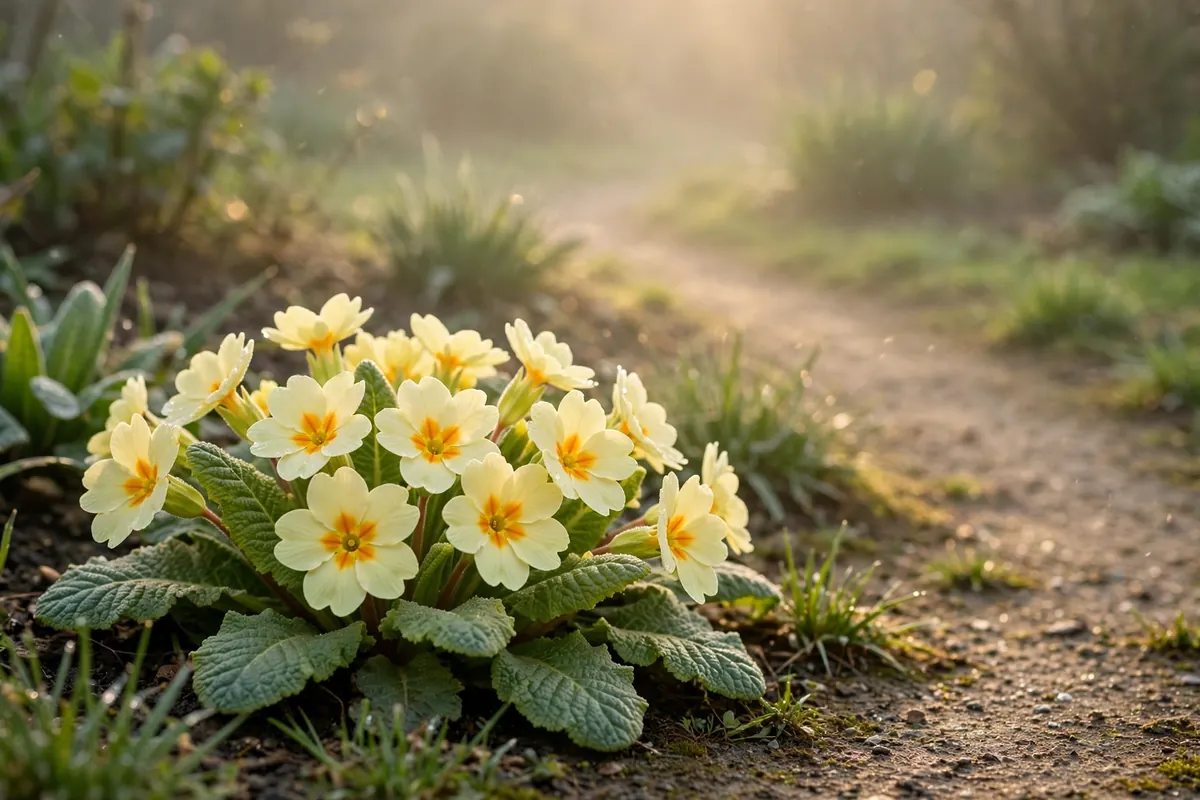
Table of Contents
- Violet: The Primary February Birth Flower
- Primrose: February’s Second Birth Flower
- Violet vs Primrose
- Birth Flowers by Month
- How to Grow February Birth Flowers
- Gift Ideas for a February Birthday
- Frequently Asked Questions
Violet: The Primary February Birth Flower
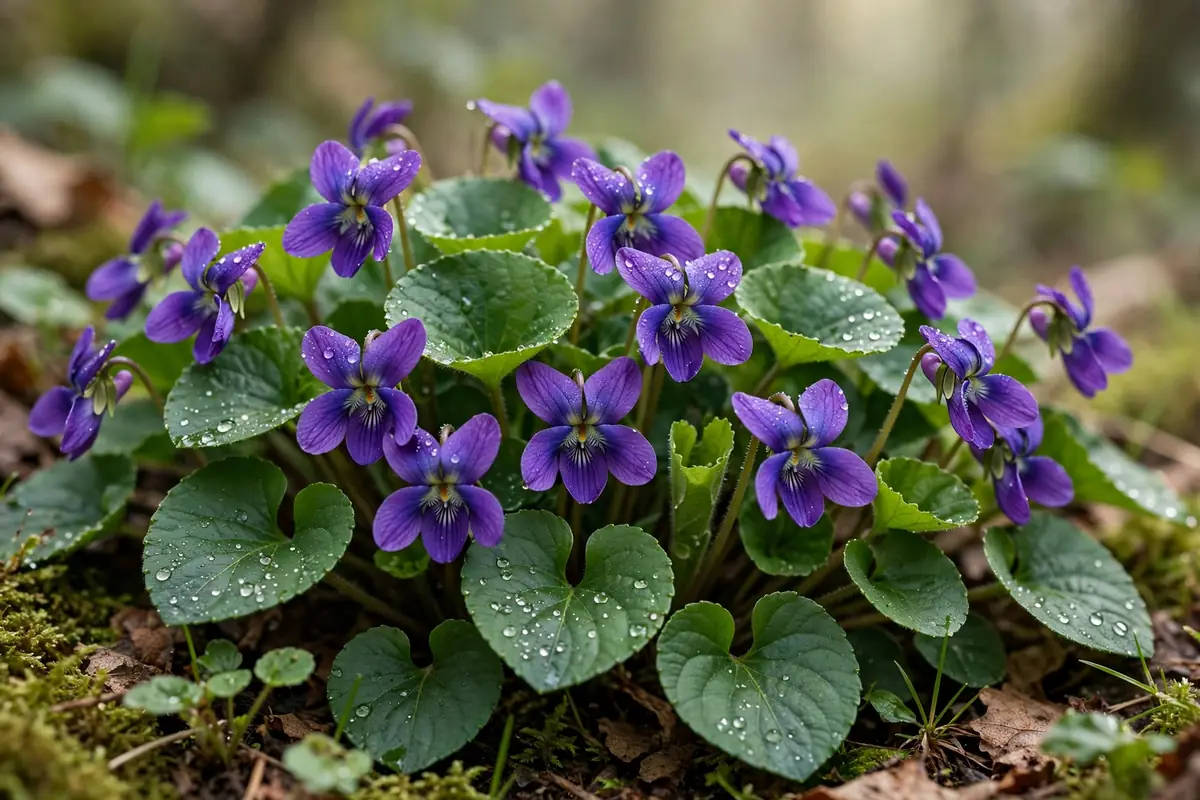
The violet is a small, shy flower. Its soft purple blooms sit low among heart-shaped green leaves. It does not shout for attention. You often smell its sweet scent before you see the flowers.
The violet stands for faithfulness and loyalty. It also means modesty and humility. Long ago, giving a violet was a quiet promise: I will stay true to you. You can read more about the plant on the violet page on Wikipedia, or explore flowers that start with V.
There is a famous old legend about violets and Saint Valentine. The story says that violets bloomed near the place where the saint was held, and later near his grave. It is only a legend, not a proven fact. But it is a lovely one, and it ties the violet to February forever.
Writers loved the violet too. In Shakespeare’s play Hamlet, Ophelia speaks of violets as a sign of faithfulness. The link between violets and true hearts is very old.
The sweet violet has a soft, powdery perfume. People have loved this scent for hundreds of years. It still earns the flower a place on any list of fragrant flowers. Violets are useful in the kitchen too. Cooks dip the blooms in sugar to make crystallised violets, a pretty and edible topping for cakes.
Most violets are purple, the classic colour. But they also bloom in white, blue, and even yellow. The purple kinds fit in well with other purple perennial flowers in a shady garden corner.
Violet Quick Facts
- Type: hardy perennial. It comes back year after year.
- Bloom time: late winter into spring.
- Colours: purple, violet, white, blue, and yellow.
- Light: happy in shade or part shade.
- Habit: spreads gently into a low, green carpet.
Primrose: February’s Second Birth Flower
The primrose is one of the very first flowers of spring. Its soft blooms open when most of the garden is still asleep. The classic colour is a pale, creamy yellow, like early morning light.
The primrose stands for young love and first love. In the old language of flowers, its message is strong and sweet: “I can’t live without you.” Few flowers say so much in such a small bloom. You can browse more early bloomers among flowers that start with P.
The name has a neat story. Primrose comes from the Latin words “prima rosa,” which mean “first rose.” But the primrose is not a true rose at all. It simply blooms so early, like the first rose of the year, that people gave it the name.
Old country folklore adds a little magic. People once said primroses were loved by fairies, and that a bunch of primroses at the door kept the home safe. It is a gentle tale for a gentle flower.
Today, primroses come in many more colours. You can find them in pink, red, purple, white, and bright yellow, as well as the classic pale yellow.
Primrose Quick Facts
- Type: perennial, grown for its early spring blooms.
- Bloom time: late winter and early spring, one of the first flowers of the year.
- Classic colour: pale yellow, with many modern colours too.
- Light: part shade suits it best.
- Soil: moist soil. It does not like to dry out.
Violet vs Primrose
Both flowers are small and modest. But their messages are different. The violet speaks of loyalty that lasts. The primrose speaks of young love that is just beginning.
| Flower | Type | Where It Grows | Meaning | Best For |
|---|---|---|---|---|
| Violet | Hardy perennial | Shade and woodland edges | Faithfulness, loyalty, modesty | Shady corners, scent, ground cover |
| Primrose | Perennial | Part shade, moist soil, path edges | Young love, first love | Early spring colour, pots, gifts |
Birth Flowers by Month
Want the full year at a glance? Here is the birth flower chart for all twelve months.
| Month | Birth Flower(s) |
|---|---|
| January | Carnation & Snowdrop |
| February | Violet & Primrose |
| March | Daffodil & Jonquil |
| April | Daisy & Sweet Pea |
| May | Lily of the Valley & Hawthorn |
| June | Rose & Honeysuckle |
| July | Larkspur & Water Lily |
| August | Gladiolus & Poppy |
| September | Aster & Morning Glory |
| October | Marigold & Cosmos |
| November | Chrysanthemum & Peony |
| December | Narcissus & Holly |
For the full chart with every month in one place, see our birth flowers chart and guide.
How to Grow February Birth Flowers
Both February flowers are easy, quiet plants. They like cool weather, gentle light, and soil that stays moist.
Growing Violets
- Plant them in shade or part shade, under trees or along a wall.
- Give them rich, moist soil. Leaf mould or compost helps a lot.
- Let them spread in their own time. They form a pretty ground cover.
- Divide big clumps in fall and replant the pieces for more flowers.
Growing Primroses
- Choose part shade. Hot afternoon sun can scorch the leaves.
- Keep the soil moist. Never let it go bone dry.
- Add a mulch of leaves or compost to hold the water in.
- Pick off dead blooms to keep new ones coming. Divide the clumps after flowering.
Home growers in r/gardening on Reddit share what works in hot, cool, and dry climates.
Gift Ideas for a February Birthday
A small pot of violets is a sweet February gift. February birthdays sit right next to Valentine’s Day, so a violet plant feels romantic and personal at the same time. It says faithfulness, which is a deeper message than a rose.
February’s birthstone is the amethyst, a rich purple gem. The pairing here is perfect: purple stone, purple flower. An amethyst gift with a bunch of fresh violets looks made to go together.
For a first love or a new romance, give a primrose plant. Its old message, “I can’t live without you,” does the talking for you. It is a soft, brave gift for a young heart.
Frequently Asked Questions
What is the February birth flower?
February has two birth flowers. The violet is the main one, and the primrose is the second. The violet stands for faithfulness and loyalty. The primrose stands for young love.
What does the violet symbolise?
The violet symbolises faithfulness, loyalty, modesty, and humility. A sweet old legend links it with Saint Valentine, and Shakespeare used it as a sign of a true heart.
What is February’s birthstone?
February’s birthstone is the amethyst. Its deep purple colour matches the classic violet bloom, so stone and flower make a natural pair.
Is the primrose a rose?
No. The primrose is not a true rose. Its name comes from the Latin “prima rosa,” meaning “first rose,” because it blooms so early in the year, before the real roses start.
Are violets edible?
Yes, sweet violets are edible. Cooks crystallise the blooms in sugar and use them to decorate cakes and desserts. For more views, see questions about the February birth flower on Quora.
3 Comments