40 Flowers That Start With M: Names, Pictures & Growing Tips
40 Flowers That Start With M: Names, Pictures & Growing Tips
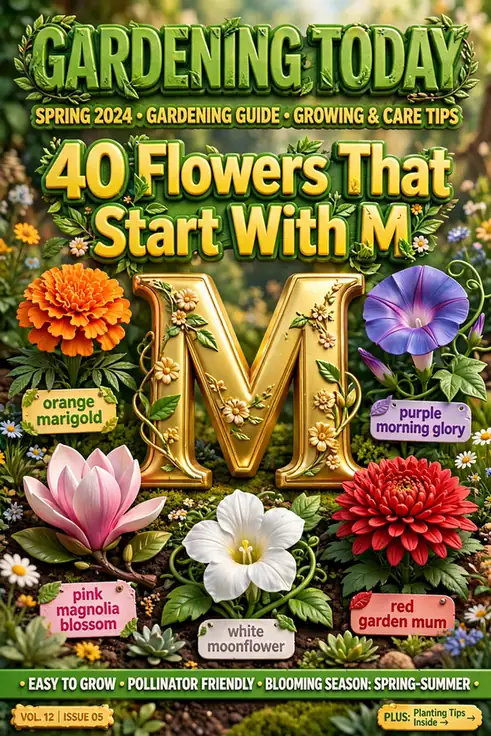
Searching for flower names that start with M? You have found them. The letter M is one of the most generous in the gardener’s alphabet, giving us the sunny faces of marigolds, the climbing trumpets of morning glories, the spring grandeur of magnolias, and the fall fireworks of garden mums. Whether you are designing a new border, picking bouquet flowers, or working on an alphabet garden project with the kids, this guide lists 40 real flowers that start with M — with pictures, names, and honest growing advice for each one.
Every entry below includes the flower’s scientific name, bloom season, sun needs, and USDA hardiness zone, so you can spot at a glance which M-flowers will thrive in your yard. You will also find two quick comparison tables, beginner-friendly growing tips, and answers to the most common questions gardeners ask about flowers beginning with M. So grab your trowel, and let’s get planting.
Quick Answer
Popular flowers that start with M include Marigold, Morning Glory, Magnolia, Garden Mum, Moonflower, Mock Orange, Bee Balm, Milkweed, Monkshood, and Mandevilla. They span spring bulbs, summer perennials, tropical vines, and flowering trees, covering USDA zones 3–11, so there is an M-flower for nearly every US garden.
Table of Contents
M-Flowers at a Glance
Use this table to compare all 40 flowers that start with M side by side, from botanical names to native regions.
| Flower name | Scientific name | Type | Color | Native region |
|---|---|---|---|---|
| Marigold | Tagetes spp. | Annual | Orange, yellow, red, cream | Mexico, Central America |
| Morning Glory | Ipomoea purpurea | Annual vine | Blue, purple, pink, white | Central America |
| Saucer Magnolia | Magnolia × soulangeana | Deciduous tree | Pink, white, purple | Hybrid (Chinese parentage) |
| Garden Mum | Chrysanthemum × morifolium | Herbaceous perennial | Red, pink, yellow, white, orange, purple | Asia (hybrid origin) |
| Monkshood | Aconitum napellus | Herbaceous perennial | Blue, purple, white | Europe, Asia |
| Common Milkweed | Asclepias syriaca | Herbaceous perennial | Pink-mauve | North America |
| Moonflower | Ipomoea alba | Annual vine | White | Tropical Americas |
| Mountain Laurel | Kalmia latifolia | Evergreen shrub | Pink, white, red | Eastern North America |
| Mock Orange | Philadelphus coronarius | Deciduous shrub | White | Southern Europe |
| Bee Balm | Monarda didyma | Herbaceous perennial | Red, pink, purple, white | Eastern North America |
| Grape Hyacinth | Muscari armeniacum | Bulb | Blue, purple, white | Turkey, Mediterranean |
| Maltese Cross | Lychnis chalcedonica | Herbaceous perennial | Scarlet red, pink, white | Russia, Central Asia |
| Meadow Rue | Thalictrum aquilegiifolium | Herbaceous perennial | Lilac-purple, white | Europe, Asia |
| Queen of the Prairie | Filipendula rubra | Herbaceous perennial | Pink | Central and eastern North America |
| Michaelmas Daisy | Symphyotrichum novi-belgii | Herbaceous perennial | Purple, pink, blue, white | Eastern North America |
| Moth Orchid | Phalaenopsis hybrids | Tropical houseplant | White, pink, purple, yellow | Southeast Asia (hybrid) |
| Mandevilla | Mandevilla sanderi | Tropical vine | Pink, red, white | Brazil |
| Marguerite Daisy | Argyranthemum frutescens | Tender perennial | White, pink, yellow | Canary Islands |
| Common Mallow | Malva sylvestris | Biennial/short-lived perennial | Mauve-pink, purple | Europe, North Africa, Asia |
| Musk Mallow | Malva moschata | Herbaceous perennial | Pink, white | Europe |
| Honesty | Lunaria annua | Biennial | Purple, white | Southern Europe |
| Myrtle | Myrtus communis | Evergreen shrub | White | Mediterranean |
| Stock | Matthiola incana | Annual/biennial | Pink, purple, white, red, yellow | Mediterranean |
| Four O’Clock | Mirabilis jalapa | Tender perennial | Pink, yellow, red, white, striped | Peru, Mexico |
| Monkey Flower | Mimulus ringens | Herbaceous perennial | Lavender-blue, pink | North America |
| Missouri Primrose | Oenothera macrocarpa | Herbaceous perennial | Yellow | Central North America |
| Mexican Sunflower | Tithonia rotundifolia | Annual | Orange, red, yellow | Mexico, Central America |
| Mexican Heather | Cuphea hyssopifolia | Tender perennial | Pink, purple, white | Mexico, Guatemala |
| Mealy-Cup Sage | Salvia farinacea | Tender perennial | Blue, purple, white | Texas, Mexico |
| Mountain Bluet | Centaurea montana | Herbaceous perennial | Blue, purple, pink, white | European mountains |
| Moss Phlox | Phlox subulata | Evergreen groundcover | Pink, purple, blue, white | Eastern North America |
| Moss Rose | Portulaca grandiflora | Annual succulent | Pink, red, yellow, orange, white | South America |
| Common Mullein | Verbascum thapsus | Biennial | Yellow | Europe, Asia |
| Magic Lily | Lycoris squamigera | Bulb | Pink | Japan, Korea |
| Himalayan Blue Poppy | Meconopsis baileyi | Herbaceous perennial | Blue | Himalayas |
| Marsh Marigold | Caltha palustris | Herbaceous perennial | Yellow | Northern Hemisphere wetlands |
| Million Bells | Calibrachoa × hybrida | Tender perennial | Pink, purple, red, yellow, orange, white | South America (hybrid) |
| Bells of Ireland | Moluccella laevis | Annual | Green | Turkey, Syria, Caucasus |
| Spanish Flag | Ipomoea lobata | Annual vine | Red, orange, yellow | Mexico |
| Masterwort | Astrantia major | Herbaceous perennial | White, pink, red | Central and eastern Europe |
Bloom Season, Sun Needs & Hardiness Zones
Planning your garden calendar? This second table shows when each M-flower blooms, how much sun it wants, and the USDA zones where it grows outdoors year-round.
| Flower name | Bloom season | Sun needs | Hardiness zone |
|---|---|---|---|
| Marigold | Summer to frost | Full sun | Grown as annual |
| Morning Glory | Summer to fall | Full sun | Grown as annual; self-sows |
| Saucer Magnolia | Spring | Full sun to part shade | 4–9 |
| Garden Mum | Fall | Full sun | 5–9 |
| Monkshood | Late summer to fall | Part shade | 3–7 |
| Common Milkweed | Summer | Full sun | 3–9 |
| Moonflower | Summer to fall | Full sun | 10–11; annual elsewhere |
| Mountain Laurel | Late spring to early summer | Part shade | 4–9 |
| Mock Orange | Late spring to early summer | Full sun to part shade | 4–8 |
| Bee Balm | Summer | Full sun to part shade | 4–9 |
| Grape Hyacinth | Spring | Full sun to part shade | 4–9 |
| Maltese Cross | Summer | Full sun | 3–9 |
| Meadow Rue | Early to midsummer | Part shade | 5–8 |
| Queen of the Prairie | Summer | Full sun to part shade | 3–8 |
| Michaelmas Daisy | Fall | Full sun | 4–8 |
| Moth Orchid | Winter to spring (indoors) | Bright indirect light | Houseplant (10–12 outdoors) |
| Mandevilla | Summer to fall | Full sun | 10–11; annual elsewhere |
| Marguerite Daisy | Spring to fall | Full sun | 10–11; annual elsewhere |
| Common Mallow | Summer to fall | Full sun | 4–8 |
| Musk Mallow | Summer | Full sun | 3–8 |
| Honesty | Spring | Part shade | 4–8 |
| Myrtle | Summer | Full sun | 8–10 |
| Stock | Spring (cool season) | Full sun | Grown as annual |
| Four O’Clock | Summer to fall | Full sun to part shade | 9–11; annual elsewhere |
| Monkey Flower | Summer | Full sun to part shade | 4–8 |
| Missouri Primrose | Summer | Full sun | 4–8 |
| Mexican Sunflower | Summer to fall | Full sun | Grown as annual |
| Mexican Heather | Summer to fall | Full sun to part shade | 9–11; annual elsewhere |
| Mealy-Cup Sage | Summer to fall | Full sun | 8–10; annual elsewhere |
| Mountain Bluet | Late spring to summer | Full sun to part shade | 3–8 |
| Moss Phlox | Spring | Full sun | 3–9 |
| Moss Rose | Summer to fall | Full sun | Grown as annual |
| Common Mullein | Summer (second year) | Full sun | 3–9 |
| Magic Lily | Late summer | Full sun to part shade | 5–10 |
| Himalayan Blue Poppy | Early summer | Part shade | 5–8 |
| Marsh Marigold | Spring | Full sun to part shade | 3–7 |
| Million Bells | Spring to fall | Full sun | 9–11; annual elsewhere |
| Bells of Ireland | Summer | Full sun | Grown as annual |
| Spanish Flag | Summer to fall | Full sun | Grown as annual |
| Masterwort | Summer | Part shade | 4–9 |
40 Flowers That Start With M: The Complete List
Here they are — 40 beautiful, real flowers beginning with M, each with growing notes so you can pick the right ones for your garden.
1. Marigold (Tagetes spp.)
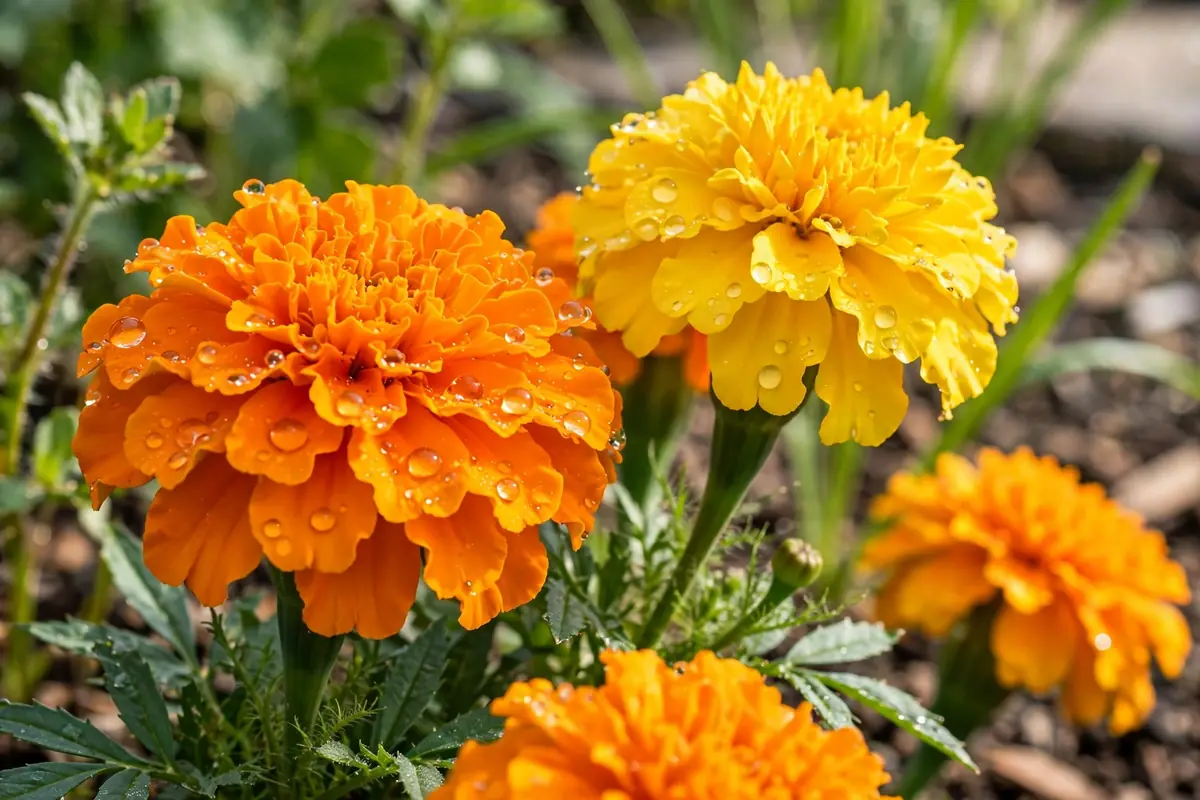
Marigolds are the cheerful workhorses of summer gardens, pumping out orange, yellow, red, and cream blooms from planting until frost. African types (Tagetes erecta) grow tall with giant pompom heads, while French marigolds (T. patula) stay compact for edging. They repel some garden pests, tolerate heat and poor soil, and deadheading keeps new buds coming for months.
Bloom: Summer to frost | Sun: Full sun | Zone: Grown as annual | Best for: Bedding, borders, pest-deterring companions
2. Morning Glory (Ipomoea purpurea)
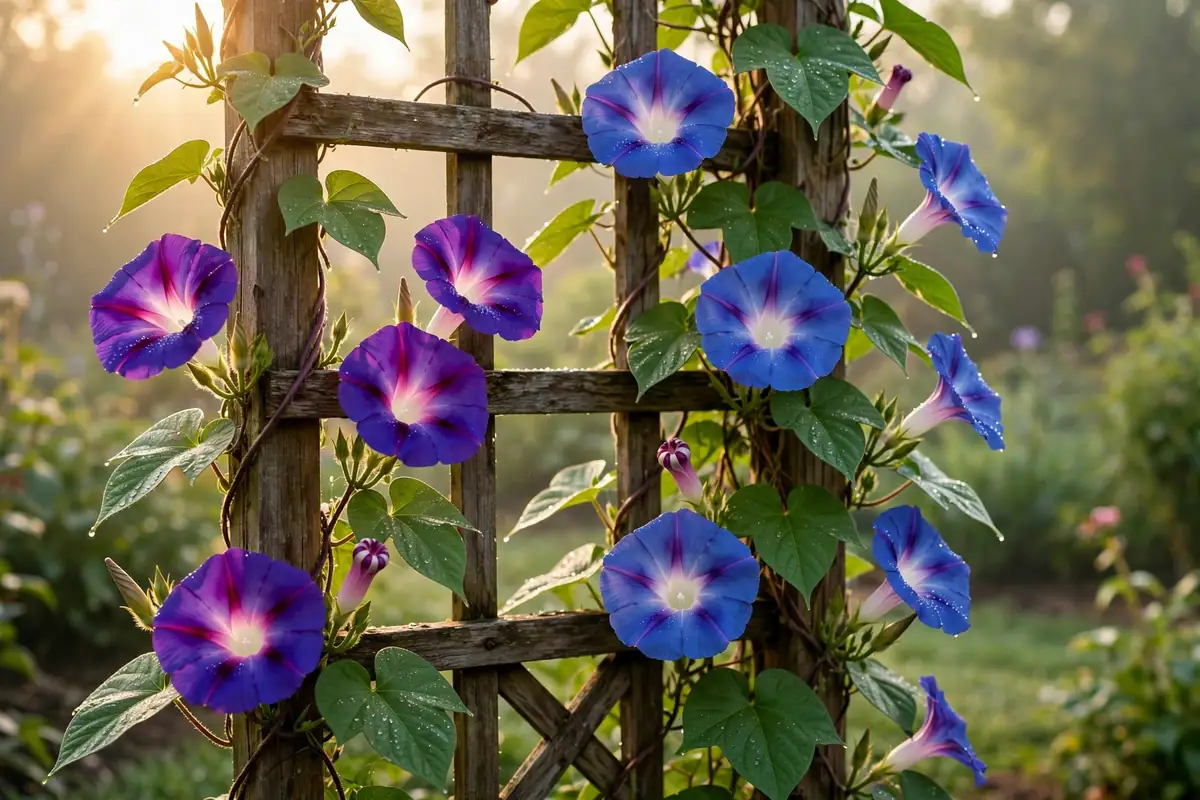
Few vines open the day like morning glory, unfurling trumpet-shaped blue, purple, pink, or white blooms at dawn that fade by afternoon — replaced by fresh flowers daily. This fast annual climber covers trellises, fences, and arbors in a single season. Nick the hard seed coats and soak seeds overnight for quick germination, and give it lean soil; too much fertilizer means leaves instead of flowers.
Bloom: Summer to fall | Sun: Full sun | Zone: Grown as annual; self-sows | Best for: Trellises, fences, quick coverage
3. Saucer Magnolia (Magnolia × soulangeana)
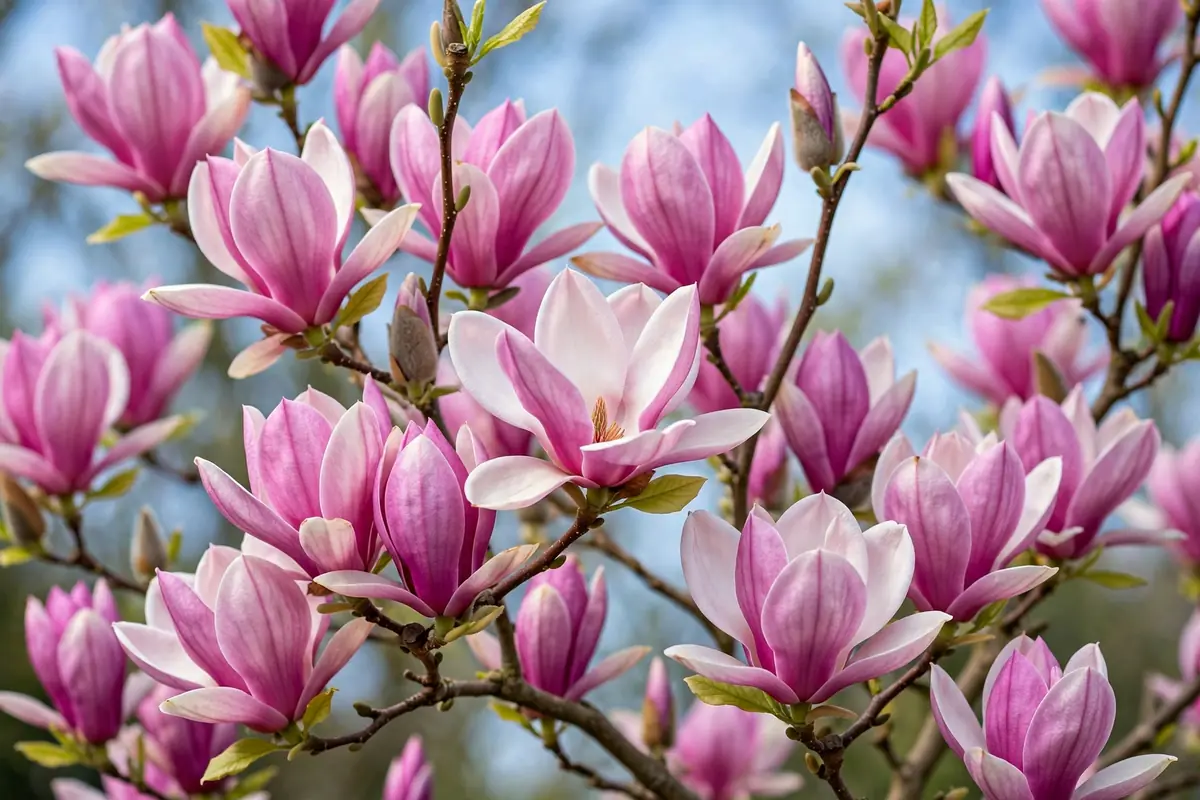
Saucer magnolia is spring’s showstopper, covering bare branches with huge cup-shaped pink-and-white blooms before the leaves appear. Growing 20–30 feet tall, it makes a breathtaking specimen tree for front yards. Plant it in a sheltered spot — late frosts can brown the early flowers. It needs no pruning beyond removing dead wood, and its summer foliage stays clean and attractive.
Bloom: Spring | Sun: Full sun to part shade | Zone: 4–9 | Best for: Specimen trees, spring impact
4. Garden Mum (Chrysanthemum × morifolium)
Garden mums are the undisputed stars of fall, exploding into mounds of daisy-like blooms in every color except true blue just as summer fades. For perennial mums, plant in spring so roots establish before winter, and pinch stems until early July for bushy plants loaded with buds. Mulch crowns after the ground freezes in cold zones to help them return each year.
Bloom: Fall | Sun: Full sun | Zone: 5–9 | Best for: Fall color, containers, cut flowers
5. Monkshood (Aconitum napellus)
Monkshood brings rare true-blue height to the late garden, with hooded flowers on 3- to 5-foot spires from late summer into fall. It thrives in part shade with rich, moist soil — a classic for the back of shady borders. A serious caution: every part of this plant is highly toxic if eaten, so wear gloves when handling and site it away from vegetable beds and play areas.
Bloom: Late summer to fall | Sun: Part shade | Zone: 3–7 | Best for: Shade borders, late-season blue (with caution)
6. Common Milkweed (Asclepias syriaca)
Common milkweed is the plant monarch butterflies cannot live without — it is the sole food of their caterpillars. Beyond its ecological fame, it offers sweetly fragrant pink-mauve flower clusters in summer followed by intriguing warty pods. Give it full sun and poor-to-average soil, and let it spread where it can; it travels by underground runners. Leave fall stems standing for winter insect shelter.
Bloom: Summer | Sun: Full sun | Zone: 3–9 | Best for: Monarch habitat, native gardens
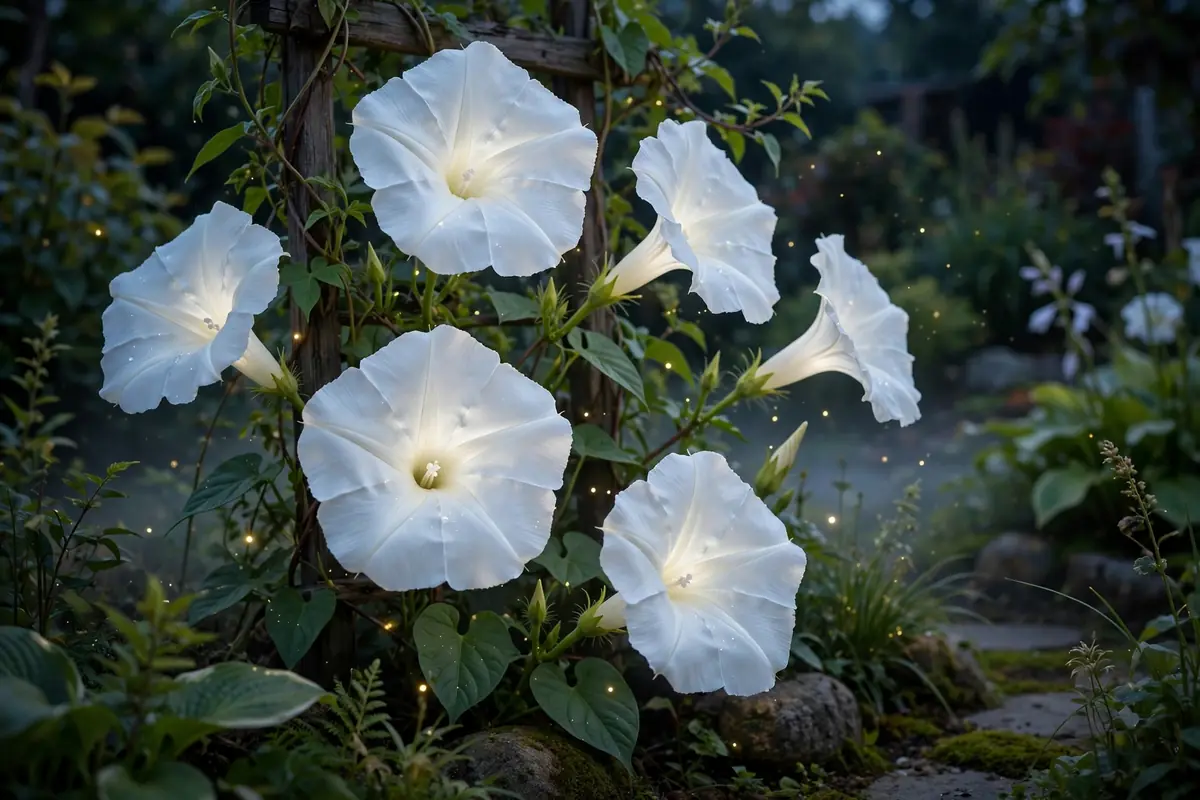
7. Moonflower (Ipomoea alba)
Moonflower is morning glory’s night-shift cousin, opening enormous 5- to 6-inch white trumpets at dusk with a sweet lemony perfume. The glowing blooms attract night-flying moths and make moon gardens magical. Grow it on a trellis near a patio or bedroom window where you can enjoy the evening show. Like morning glory, nick and soak the large seeds before sowing after frost danger passes.
Bloom: Summer to fall | Sun: Full sun | Zone: 10–11; annual elsewhere | Best for: Evening gardens, night fragrance
8. Mountain Laurel (Kalmia latifolia)
Mountain laurel is an eastern North American treasure, smothering evergreen shrubs with intricate pink, white, or red cup-shaped flowers in late spring. It demands acidic soil and part shade — plant it with rhododendrons and azaleas, never in alkaline clay. Do not move established plants; they resent root disturbance. Note: all parts are toxic if ingested, so admire this beauty from the path.
Bloom: Late spring to early summer | Sun: Part shade | Zone: 4–9 | Best for: Woodland edges, evergreen structure
9. Mock Orange (Philadelphus coronarius)
Mock orange earns its name with white, citrus-scented blossoms that smell remarkably like orange flowers. This unfussy deciduous shrub blooms in late spring to early summer and asks for almost nothing — full sun to part shade and average soil. Prune right after flowering to shape it, since it blooms on old wood. Doubles like ‘Minnesota Snowflake’ offer extra-lush, rose-like flowers.
Bloom: Late spring to early summer | Sun: Full sun to part shade | Zone: 4–8 | Best for: Fragrance gardens, hedges
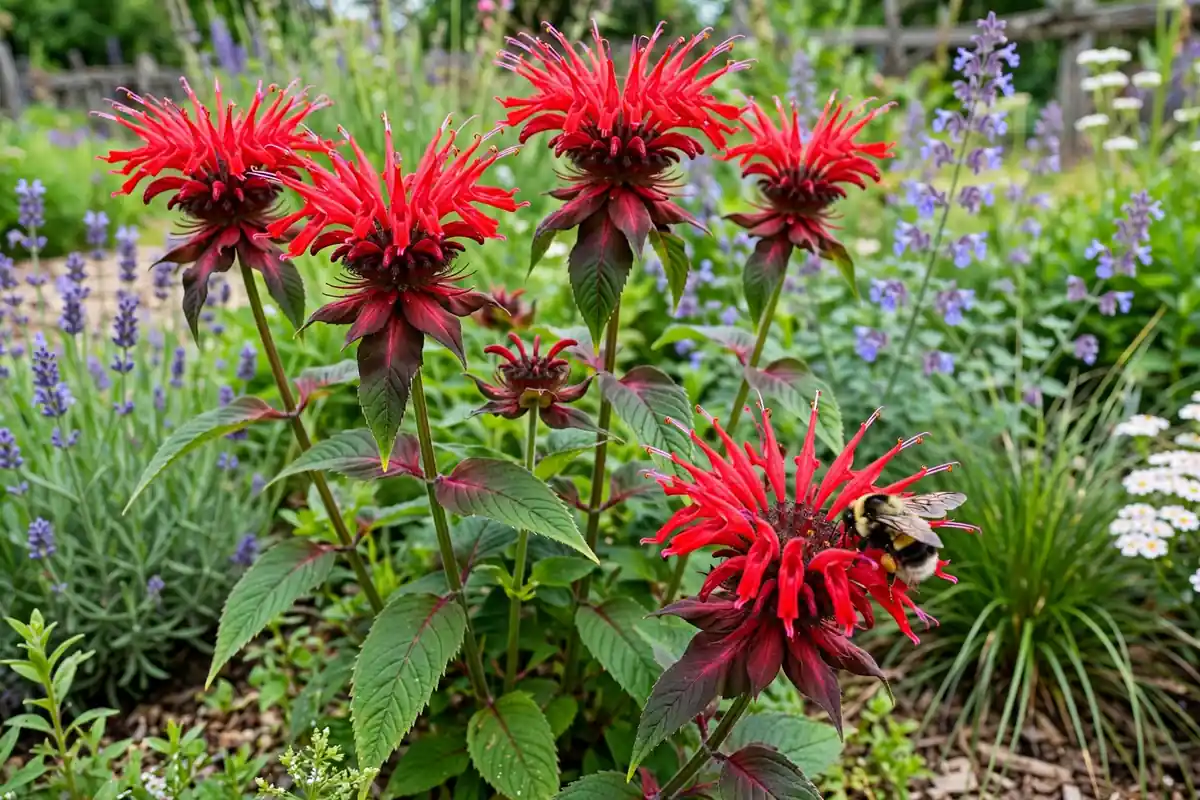
10. Bee Balm (Monarda didyma)
Bee balm is a hummingbird and butterfly magnet, topping 2- to 4-foot stems with shaggy red, pink, purple, or white flower heads in summer. The aromatic foliage makes a pleasant Oswego tea, and the blooms are edible garnishes. Give it full sun, good air circulation, and consistent moisture to fend off powdery mildew — resistant varieties like ‘Jacob Cline’ stay handsome all season.
Bloom: Summer | Sun: Full sun to part shade | Zone: 4–9 | Best for: Pollinator gardens, hummingbirds
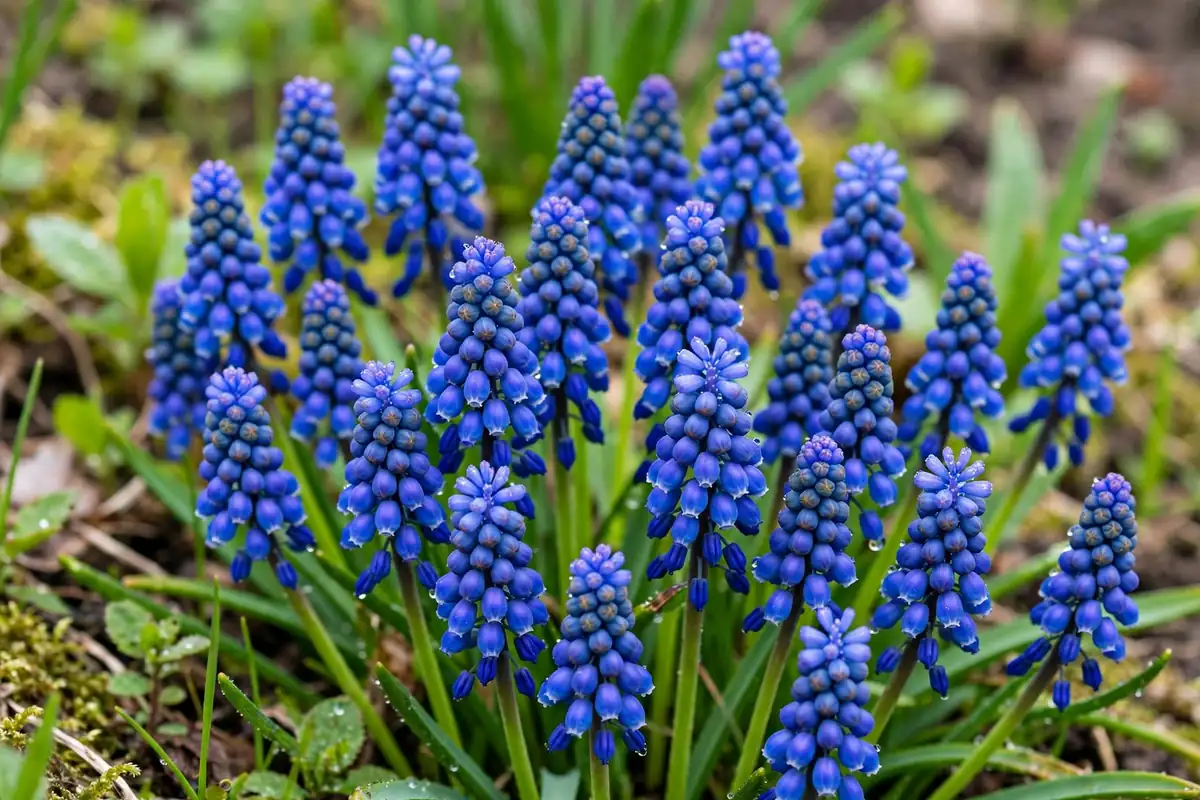
11. Grape Hyacinth (Muscari armeniacum)
Grape hyacinths are spring’s sweetest small bulbs, pushing up dense spikes of cobalt-blue, urn-shaped flowers that really do look like tiny grape clusters. Plant dozens of bulbs in fall, 3 inches deep, under trees, along paths, or in lawns where they naturalize freely. The grassy foliage appears in fall and persists through winter — leave it alone, because it feeds next spring’s blooms.
Bloom: Spring | Sun: Full sun to part shade | Zone: 4–9 | Best for: Naturalizing, spring borders, lawns
12. Maltese Cross (Lychnis chalcedonica)
Maltese cross blazes in the summer border with dense clusters of scarlet-red, cross-shaped flowers on stiff 3- to 4-foot stems — a color so intense it seems to glow. This old-fashioned perennial shrugs off heat, poor soil, and neglect, and its blooms attract butterflies and hummingbirds. Stake tall stems in windy spots, and deadhead to encourage a lighter second flush in fall.
Bloom: Summer | Sun: Full sun | Zone: 3–9 | Best for: Hot colors, cottage gardens
13. Meadow Rue (Thalictrum aquilegiifolium)
Columbine meadow rue is grown for its clouds of fluffy lilac-purple or white flowers that float above columbine-like foliage in early summer, like a pastel mist in the border. It prefers part shade and cool, moist soil — perfect for woodland edges. Leave the attractive seed heads standing after bloom; they extend the season of interest well into fall.
Bloom: Early to midsummer | Sun: Part shade | Zone: 5–8 | Best for: Woodland edges, soft texture
14. Queen of the Prairie (Filipendula rubra)
Queen of the prairie is a statuesque North American native, sending 5- to 6-foot plumes of cotton-candy pink flowers skyward in summer above deeply cut foliage. It loves moist soil and even tolerates wet feet, making it ideal for rain gardens and pond edges. Give it room to shine at the back of the border, and divide clumps every few years to keep them floriferous.
Bloom: Summer | Sun: Full sun to part shade | Zone: 3–8 | Best for: Rain gardens, back-of-border drama
15. Michaelmas Daisy (Symphyotrichum novi-belgii)
Michaelmas daisies — New York asters — light up the fall garden with masses of purple, pink, blue, or white daisy flowers just as summer perennials call it quits. Blooming around late September (near the feast of St. Michael, hence the name), they feed late butterflies and bees. Plant in full sun with good air flow, and pinch back until midsummer for compact, mildew-free plants.
Bloom: Fall | Sun: Full sun | Zone: 4–8 | Best for: Fall color, late pollinators
16. Moth Orchid (Phalaenopsis hybrids)
Moth orchids are the most forgiving orchids for beginners, sending up arching sprays of white, pink, purple, or yellow butterfly-like blooms that can last three months or more. They want bright indirect light, warm temperatures, and a coarse bark mix that dries between waterings — soak and drain thoroughly instead of the ice-cube trick. After flowers fade, cut the spike above a node for a possible rebloom.
Bloom: Winter to spring (indoors) | Sun: Bright indirect light | Zone: Houseplant (10–12 outdoors) | Best for: Indoor displays, gifts
17. Mandevilla (Mandevilla sanderi)
Mandevilla brings tropical drama to patios with glossy evergreen foliage and trumpet-shaped pink, red, or white flowers all summer. This Brazilian vine climbs trellises eagerly in heat and humidity. In zones 10–11 it is evergreen; elsewhere grow it in a large pot and bring it indoors before frost. Feed regularly and provide sturdy support — happy vines can grow 10 feet in a season.
Bloom: Summer to fall | Sun: Full sun | Zone: 10–11; annual elsewhere | Best for: Tropical containers, trellises
18. Marguerite Daisy (Argyranthemum frutescens)
Marguerite daisies shower plants with cheerful white, pink, or yellow daisy blooms from spring until frost, far outlasting the classic Shasta season. Native to the Canary Islands, they love full sun and cool summers, sulking in extreme heat. Shear plants back by a third in midsummer for a fresh fall flush. In zones 10–11 they are perennial; elsewhere enjoy them as annuals.
Bloom: Spring to fall | Sun: Full sun | Zone: 10–11; annual elsewhere | Best for: Long-blooming containers, edging
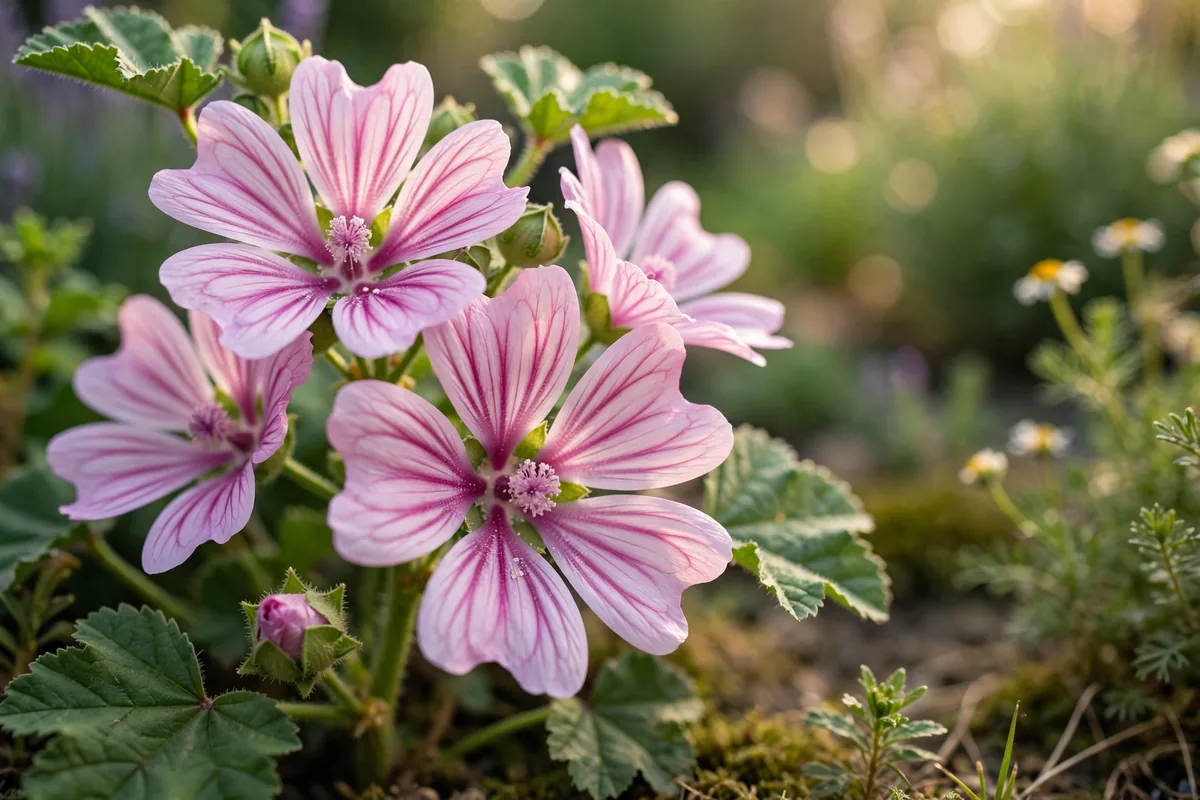
19. Common Mallow (Malva sylvestris)
Common mallow is a cottage-garden charmer with saucer-shaped mauve-pink flowers delicately veined in purple, blooming for months on 3- to 4-foot stems. Tough as nails, it self-sows freely and thrives in poor soil where fussier plants fail. The flowers and young leaves are edible. Deadhead to limit self-seeding, or let it naturalize for a romantic wildflower-meadow effect.
Bloom: Summer to fall | Sun: Full sun | Zone: 4–8 | Best for: Cottage gardens, tough spots
20. Musk Mallow (Malva moschata)
Musk mallow forms tidy 2-foot mounds of cupped pink or white flowers with a subtle musky scent, blooming all summer above finely cut foliage. Unlike its taller cousin, it stays compact and well-behaved — excellent for the front of borders. It self-sows gently but never becomes a nuisance. Deadhead regularly and it will flower from June until frost.
Bloom: Summer | Sun: Full sun | Zone: 3–8 | Best for: Front of borders, long bloom season
21. Honesty (Lunaria annua)
Honesty — also called the money plant or silver dollar plant — is grown as much for its seed pods as its spring flowers. Purple or white blooms appear in its second year, followed by the famous translucent silver discs prized in dried arrangements. Sow directly where it is to grow; as a biennial, it flowers the year after sowing, then self-sows to keep the cycle going.
Bloom: Spring | Sun: Part shade | Zone: 4–8 | Best for: Dried arrangements, woodland edges
22. Myrtle (Myrtus communis)
Common myrtle is a classic Mediterranean evergreen shrub with glossy aromatic leaves and sweet white flowers in summer, followed by blue-black berries. A traditional wedding flower with timeless elegance, it suits warm-climate gardens and clipped hedges. Give it full sun and sharp drainage in zones 8–10; in colder regions, grow it in a pot and overwinter indoors like a tender bay.
Bloom: Summer | Sun: Full sun | Zone: 8–10 | Best for: Warm-climate hedges, patio pots
23. Stock (Matthiola incana)
Stock is the old-fashioned flower grown for scent above all — its pink, purple, white, red, and yellow spikes smell of cloves and spice on cool spring evenings. Sow in late summer for fall bloom in mild climates, or start indoors for spring flowers elsewhere; it fades in summer heat. The double-flowered forms are the most fragrant and make superb cut flowers.
Bloom: Spring (cool season) | Sun: Full sun | Zone: Grown as annual | Best for: Fragrance, spring cut flowers
24. Four O’Clock (Mirabilis jalapa)
Four o’clocks live up to their name, opening pink, yellow, red, white, or striped trumpet flowers in late afternoon and perfuming the evening garden. One plant can even bear different-colored flowers on the same bush. The tuberous roots are perennial in zones 9–11; elsewhere, lift them like dahlias or simply replant each spring. They self-sow readily, so deadhead if you want control.
Bloom: Summer to fall | Sun: Full sun to part shade | Zone: 9–11; annual elsewhere | Best for: Evening fragrance, easy color
25. Monkey Flower (Mimulus ringens)
Allegheny monkey flower brightens wet spots where little else blooms, with snapdragon-like lavender-blue or pink flowers on 2- to 3-foot stems all summer. It thrives in soggy soil, rain gardens, and pond margins — even standing water. The whimsical blooms supposedly resemble grinning monkey faces. Divide every few years to keep clumps vigorous, and let it self-sow along water features.
Bloom: Summer | Sun: Full sun to part shade | Zone: 4–8 | Best for: Rain gardens, pond edges
26. Missouri Primrose (Oenothera macrocarpa)
Missouri primrose is a prairie native with enormous lemon-yellow, tissue-paper blooms up to 5 inches wide that open in late afternoon and glow at dusk. The low, sprawling plants are perfect for the front of sunny, well-drained borders and rock gardens. Extremely drought-tolerant once established, it asks for nothing but sun and sharp drainage. A stellar native alternative to fussy exotics.
Bloom: Summer | Sun: Full sun | Zone: 4–8 | Best for: Native gardens, drought-tolerant borders
27. Mexican Sunflower (Tithonia rotundifolia)
Mexican sunflower is pure summer energy — velvety orange-red daisy flowers on 4- to 6-foot branching plants that butterflies mob from midsummer to frost. This heat-loving annual germinates fast in warm soil and blooms within two months of sowing. Deadhead for continuous flowers, and stake in windy sites. Leave some seed heads standing; goldfinches adore the seeds.
Bloom: Summer to fall | Sun: Full sun | Zone: Grown as annual | Best for: Butterflies, bold summer color
28. Mexican Heather (Cuphea hyssopifolia)
Mexican heather is a fine-textured charmer, forming 1- to 2-foot mounds smothered in tiny pink, purple, or white star-shaped flowers from summer to frost. Despite its name, it is no heather at all — just a tireless tropical that loves heat and shrugs off humidity. Use it for edging, containers, and knot gardens. In zones 9–11 it is evergreen; elsewhere it is a top-tier annual.
Bloom: Summer to fall | Sun: Full sun to part shade | Zone: 9–11; annual elsewhere | Best for: Edging, containers
29. Mealy-Cup Sage (Salvia farinacea)
Mealy-cup sage — often sold as Victoria blue salvia — packs intense violet-blue flower spikes on 1- to 3-foot plants all summer. A Texas native, it takes blazing heat, humidity, and drought in stride while feeding bees and butterflies nonstop. Deadhead spent spikes for rebloom. In zones 8–10 it returns as a perennial; elsewhere it is one of the most reliable bedding annuals.
Bloom: Summer to fall | Sun: Full sun | Zone: 8–10; annual elsewhere | Best for: Heat-proof bedding, pollinators
30. Mountain Bluet (Centaurea montana)
Mountain bluet brings true-blue flowers to the late-spring border, with fringed cornflower-like blooms on 1- to 2-foot stems above silvery-green foliage. Native to European mountains, it loves cool summers and well-drained soil. Deadhead after the first flush for sporadic rebloom, and divide every 2–3 years. Unlike annual bachelor’s buttons, this perennial returns faithfully each year.
Bloom: Late spring to summer | Sun: Full sun to part shade | Zone: 3–8 | Best for: True-blue flowers, cool climates
31. Moss Phlox (Phlox subulata)
Moss phlox turns spring slopes into living carpets, smothering needle-like evergreen mats with pink, purple, blue, or white star-shaped flowers. It is the classic plant for rock walls, cascading over retaining walls, and edging sunny paths. Give it full sun and sharp drainage — it rots in soggy soil. Shear lightly after bloom to keep mats dense and encourage a possible fall encore.
Bloom: Spring | Sun: Full sun | Zone: 3–9 | Best for: Rock walls, slopes, cascading edges
32. Moss Rose (Portulaca grandiflora)
Moss rose is the annual that laughs at drought, opening silky rose-like blooms in neon pink, red, yellow, orange, and white above succulent foliage. It thrives in blazing sun, sandy soil, and utter neglect — perfect for hot curbsides, rock gardens, and containers. Flowers close on cloudy days and at night. It self-sows freely, so one planting often returns for years.
Bloom: Summer to fall | Sun: Full sun | Zone: Grown as annual | Best for: Hot dry spots, containers
33. Common Mullein (Verbascum thapsus)
Common mullein is a biennial with old-world charm, forming a rosette of fuzzy silver leaves the first year, then launching a 6-foot spire of yellow flowers the second. It self-sows in poor, gravelly soil where nothing else will grow — a pioneer plant for tough spots. Leave the dried stalks standing; goldfinches harvest the seeds and the silhouettes look striking against winter skies.
Bloom: Summer (second year) | Sun: Full sun | Zone: 3–9 | Best for: Tough poor soils, wildflower look
34. Magic Lily (Lycoris squamigera)
Magic lily performs the garden’s best disappearing act: strappy leaves emerge in spring and vanish by summer, then bare 2-foot stalks topped with fragrant pink trumpets appear in August as if by magic — hence “resurrection lily.” Plant bulbs in summer, 5–6 inches deep, and never move them; they bloom best when left undisturbed for years. An unforgettable late-summer surprise.
Bloom: Late summer | Sun: Full sun to part shade | Zone: 5–10 | Best for: Surprise late-summer color
35. Himalayan Blue Poppy (Meconopsis baileyi)
The Himalayan blue poppy is the holy grail of shade gardening — enormous sky-blue, poppy-like flowers with golden centers that look almost unreal. It demands cool summers, humus-rich moist soil, and part shade; it sulks where summers are hot. Often short-lived, it self-sows where happy. If your climate suits it, no flower earns more gasps per square foot.
Bloom: Early summer | Sun: Part shade | Zone: 5–8 | Best for: Cool-climate shade gardens
36. Marsh Marigold (Caltha palustris)
Marsh marigold is spring’s golden goblet for wet places, opening glossy butter-yellow flowers in early spring where water stands — pond edges, bog gardens, and soggy low spots. It is one of the first native wildflowers to bloom, feeding early pollinators. Give it constantly moist soil; it goes dormant if it dries out in summer. Do not confuse it with true marigolds — it is a buttercup relative.
Bloom: Spring | Sun: Full sun to part shade | Zone: 3–7 | Best for: Pond edges, bog gardens
37. Million Bells (Calibrachoa × hybrida)
Million bells look like miniature petunias and bloom like they mean it — hundreds of small trumpet flowers in every color imaginable, cascading from baskets and containers from spring to frost without deadheading. They want full sun, consistent water, and regular feeding to keep the show going. In zones 9–11 they overwinter as perennials; elsewhere they are premium annuals.
Bloom: Spring to fall | Sun: Full sun | Zone: 9–11; annual elsewhere | Best for: Hanging baskets, containers
38. Bells of Ireland (Moluccella laevis)
Bells of Ireland are grown for their unusual apple-green, bell-shaped calyxes stacked along 2- to 3-foot spikes — the tiny white flowers inside are almost an afterthought. A St. Patrick’s Day favorite, they add striking vertical accents to cutting gardens and fresh arrangements. Sow directly in cool soil; they dislike transplanting and heat. Handle with gloves — the stems are spiny.
Bloom: Summer | Sun: Full sun | Zone: Grown as annual | Best for: Cut flowers, vertical accents
39. Spanish Flag (Ipomoea lobata)
Spanish flag is a conversation-piece vine, sending up 6-inch spikes packed with tubular flowers that open red, fade through orange, and mature to yellow — all three colors glowing on one spike like a tiny flag. This fast annual climber covers trellises by midsummer from a spring sowing. Give it full sun and something to climb, and stand back.
Bloom: Summer to fall | Sun: Full sun | Zone: Grown as annual | Best for: Trellises, conversation pieces
40. Masterwort (Astrantia major)
Masterwort is the florist’s secret weapon, producing intricate pincushion-like flowers — white, pink, or deep red bracts surrounding a dome of tiny florets — on 2-foot stems all summer. It loves part shade and moist soil, thriving where many sun-lovers fail. The blooms last for weeks in the vase and dry beautifully. Divide every 3–4 years to maintain vigor.
Bloom: Summer | Sun: Part shade | Zone: 4–9 | Best for: Cut flowers, shade borders
Growing Tips for M-Flowers
With 40 different M-flowers on this list, a few universal rules will set you up for success no matter which ones you choose.
Match the plant to your zone first. Check the hardiness zones in the tables above before you buy. Tropical M-flowers like mandevilla, moth orchid, and moonflower simply cannot survive a freezing winter outdoors — grow them in pots you can move inside, or treat them as annuals.
Map your sun. Watch your garden for a day and note which spots get 6+ hours of direct sun (full sun lovers like marigold, Mexican sunflower, and moss rose go there) and which stay shady (monkshood, masterwort, and meadow rue will thank you). Most flowering plants bloom poorly in too much shade.
Respect the water needs. Marsh marigold, monkey flower, and queen of the prairie want consistently moist or even soggy soil, while moss rose, Missouri primrose, and mealy-cup sage demand sharp drainage and hate wet feet. Grouping plants with similar water needs together makes watering simple and keeps everyone happy.
Deadhead for more blooms. Snipping spent flowers off marigolds, Mexican heather, million bells, and mealy-cup sage redirects energy into new buds instead of seeds, stretching the show by weeks. Leave seed heads on milkweed and mullein if you want self-sown seedlings or winter interest for birds.
Feed lightly, mulch well. A 2- to 3-inch layer of mulch keeps roots cool, holds moisture, and suppresses weeds around magnolias, mums, and most perennials. Go easy on nitrogen-heavy fertilizer — it grows leaves at the expense of flowers, especially on morning glories. A balanced slow-release feed in spring is plenty for most M-flowers.
Explore More Flowers
Which M-Flowers Will You Grow?
From the spring blossoms of magnolias to the fall daisies of garden mums and Michaelmas daisies, flowers that start with M cover every season, every sun level, and every USDA zone from 3 to 11. Start with easy winners matched to your conditions — perhaps marigolds and Mexican sunflowers for a sunny border, masterwort and meadow rue for shade, or a moth orchid for the windowsill. Pick three or four favorites from this list, give them the right spot, and the letter M will fill your garden with color for months. Even a single pot of marigolds or a trellis of morning glories counts — start small, watch what thrives, and expand your M-flower collection next season.
Frequently Asked Questions
What flowers start with M?
Dozens of garden favorites start with M, including marigold, morning glory, magnolia, garden mum, moonflower, mock orange, bee balm, milkweed, monkshood, mandevilla, moss phlox, moss rose, Maltese cross, and masterwort. This guide covers 40 of them with pictures and growing details for each.
What are some common flower names that start with M for a beginner garden?
For an easy-care garden, start with marigolds, morning glories, garden mums, moss rose, Mexican sunflower, and bee balm. They are widely available at nurseries, germinate or transplant easily, and bloom reliably with basic care. Add million bells or Mexican heather for nonstop container color.
What pink flowers start with M?
Beautiful pink M-flowers include saucer magnolia, bee balm, queen of the prairie, magic lily, common mallow, musk mallow, mandevilla, Marguerite daisy, Michaelmas daisy, and moss phlox. Monkey flower and meadow rue add softer lavender-pink tones for shady spots. Deadhead spent blooms to keep the pink show going all season.
What white flowers start with M?
White M-flowers include moonflower, mock orange, myrtle, and white forms of garden mum, mandevilla, musk mallow, mountain laurel, monkshood, Michaelmas daisy, moss phlox, and stock. White moonflowers glowing at dusk are especially magical, so plant them where you can see the evening show from a window or patio.
What purple or blue flowers start with M?
Top purple and blue choices are morning glory, monkshood, mealy-cup sage, mountain bluet, grape hyacinth, Michaelmas daisy, and Himalayan blue poppy. For deep violet bedding color, look for Victoria blue mealy-cup sage and dark morning glory cultivars like ‘Grandpa Ott’.
Which perennial flowers start with M?
Reliable perennial M-flowers include garden mum, bee balm, milkweed, monkshood, mountain laurel, mock orange, Maltese cross, meadow rue, queen of the prairie, Michaelmas daisy, masterwort, moss phlox, mountain bluet, and marsh marigold. Most return bigger and better each year with minimal care.
What types of flowers that start with M bloom in spring?
Spring bloomers include saucer magnolia, grape hyacinth, moss phlox, honesty, marsh marigold, mountain laurel, mock orange, stock, and meadow rue. Plant a mix of bulbs, groundcovers, and shrubs for continuous spring color from March through June. Drift grape hyacinths between shrubs for extra spring impact.
What flowers that start with M bloom in fall?
Fall stars are garden mum, Michaelmas daisy, monkshood, marigold, Mexican sunflower, morning glory, moonflower, four o’clock, and mealy-cup sage. Together they carry the garden from late summer right up to frost. Pinch mums and Michaelmas daisies until midsummer for bushier plants and more buds.
What flowers that begin with M grow well in shade?
Shade-tolerant M-flowers include monkshood, masterwort, meadow rue, Himalayan blue poppy, honesty, mountain laurel, and mock orange (which tolerates part shade). Moth orchid thrives as an indoor plant in bright indirect light. Keep shade soil rich with compost and mulch for the best blooms.
Are there fragrant flowers that start with M?
Yes! Mock orange smells of citrus blossoms, stock carries a spicy clove scent, moonflower and four o’clock perfume the evening garden, and magic lily is sweetly fragrant. Moth orchids and many garden mums are lightly scented too. Site fragrant M-flowers near patios, paths, and open windows to enjoy their perfume.
What flowers that start with M make good cut flowers?
Garden mums, stock, bells of Ireland, masterwort, Maltese cross, bee balm, and marigolds all make excellent cut flowers. Cut stems early in the morning, strip the lower leaves, and condition them in cool water for the longest vase life. Recut stems every few days to extend their vase life further.
Which M-flowers attract butterflies, bees, and hummingbirds?
Mexican sunflower, bee balm, milkweed (a monarch host plant), mealy-cup sage, Maltese cross, Michaelmas daisy, and mountain bluet are pollinator magnets. Planting several together creates a buffet that supports butterflies, bees, and hummingbirds from spring through fall. Skip pesticides on pollinator plantings so every visiting insect stays safe.