35 Plants That Start With F: Names, Pictures & Growing Tips
Looking for plants that start with F? You are in the right place. The letter F covers an impressive slice of the plant kingdom — from the sculptural fiddle-leaf fig and glossy rubber plant that anchor living rooms worldwide, to the towering foxglove spires and golden forsythia branches that define cottage gardens, to useful workhorses like figs, flax, and feverfew. Whether you are furnishing a bright windowsill, planting a pollinator border, or helping a young gardener with an alphabet planting project, this guide gives you 35 real, botanically verified plants beginning with F.
Every entry below includes the plant’s scientific name plus practical growing notes on light, soil, water, and USDA hardiness zone, so you can match each plant to your conditions. You will also find two comparison tables — one covering plant type, light, and native region, the other covering bloom season, water, hardiness, and mature size — along with growing tips and answers to the questions gardeners ask most about F-plants. Let’s dig in.
Quick Answer
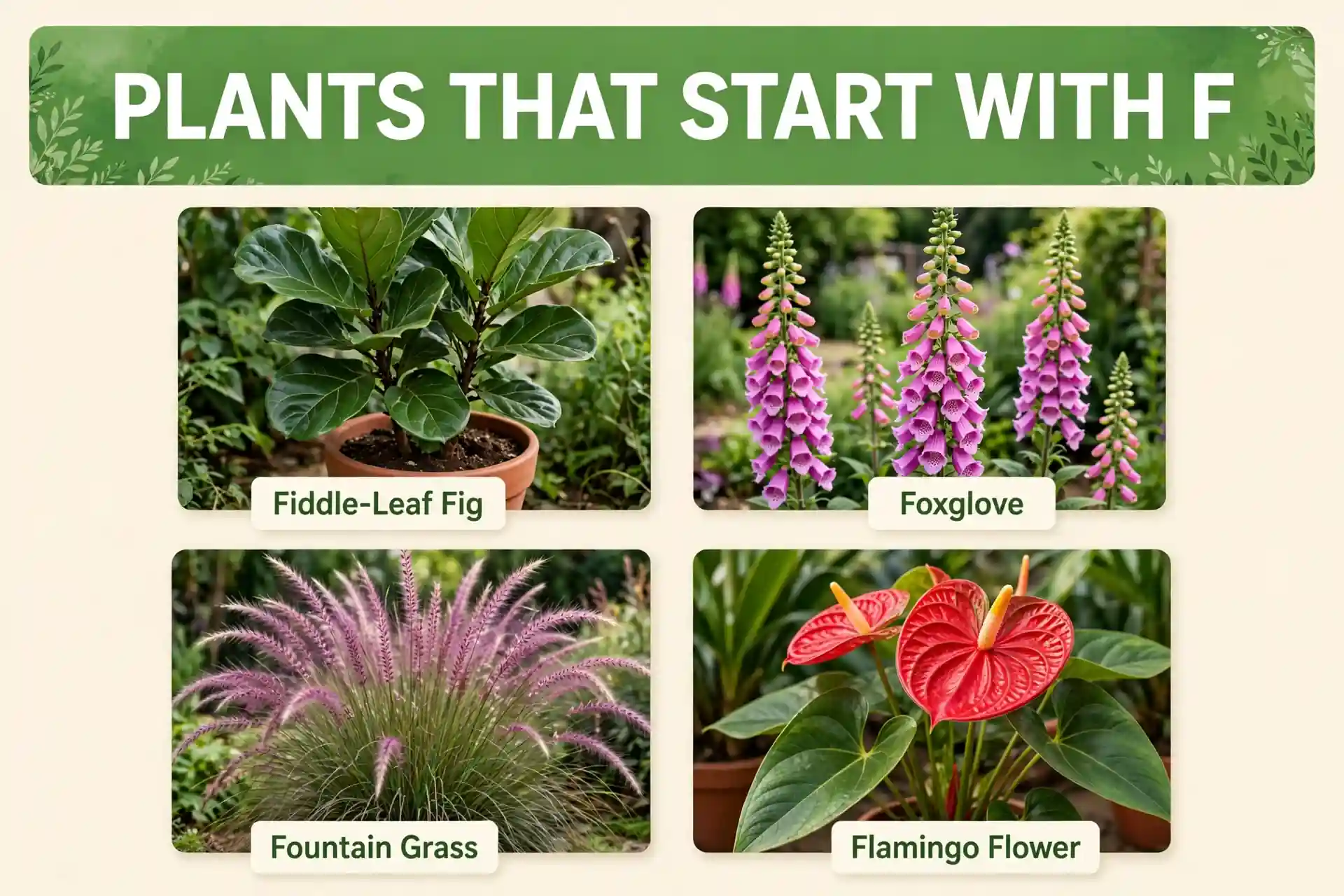
Popular plants that start with F include Fiddle-Leaf Fig, Rubber Plant, Boston Fern, Forsythia, Foxglove, Flamingo Flower, Freesia, Fuchsia, Fountain Grass, Forget-Me-Not, Four O’Clock, Frangipani, False Indigo, Fireweed, Feverfew, Fig Tree, and Flax. They range from tropical houseplants and spring bulbs to hardy shrubs and ornamental grasses across USDA zones 2–12, so there is an F-plant for nearly every home and garden.
Table of Contents
F-Plants at a Glance
Use this table to compare all 35 plants that start with F side by side — botanical names, plant types, light needs, and native regions.
| Plant name | Scientific name | Type | Light | Native region |
|---|---|---|---|---|
| Fiddle-Leaf Fig | Ficus lyrata | Evergreen houseplant tree | Bright indirect | Western Africa |
| Rubber Plant | Ficus elastica | Evergreen houseplant tree | Bright indirect to medium | Southeast Asia |
| Weeping Fig | Ficus benjamina | Evergreen houseplant tree | Bright indirect | South & Southeast Asia, Australia |
| Common Fig | Ficus carica | Deciduous fruit tree/shrub | Full sun | Western Asia, Mediterranean |
| Foxtail Fern | Asparagus densiflorus ‘Myersii’ | Tender perennial | Part shade to full sun | South Africa |
| Fernleaf Yarrow | Achillea filipendulina | Herbaceous perennial | Full sun | Central Asia, Caucasus |
| Feverfew | Tanacetum parthenium | Short-lived herbaceous perennial | Full sun to part shade | Balkans, Caucasus |
| Foxglove | Digitalis purpurea | Biennial | Part shade | Western Europe |
| Foxglove Beardtongue | Penstemon digitalis | Herbaceous perennial | Full sun to part shade | Eastern North America |
| Fireweed | Chamerion angustifolium | Herbaceous perennial | Full sun to part shade | Northern Hemisphere (circumboreal) |
| False Indigo | Baptisia australis | Herbaceous perennial | Full sun | Eastern & central North America |
| Flamingo Flower | Anthurium andraeanum | Tropical evergreen perennial | Bright indirect | Colombia, Ecuador |
| Fountain Grass | Pennisetum alopecuroides | Ornamental grass | Full sun | East Asia, Australia |
| Feather Reed Grass | Calamagrostis × acutiflora ‘Karl Foerster’ | Ornamental grass | Full sun | Hybrid (European/Asian parentage) |
| Floss Flower | Ageratum houstonianum | Tender annual | Full sun to part shade | Mexico, Central America |
| Forsythia | Forsythia × intermedia | Deciduous shrub | Full sun to part shade | Hybrid (Chinese/Japanese parentage) |
| Forget-Me-Not | Myosotis sylvatica | Biennial / short-lived perennial | Part shade | Europe |
| Four O’Clock | Mirabilis jalapa | Tender perennial (grown as annual) | Full sun | Tropical Americas (Peru, Mexico) |
| Fleabane | Erigeron speciosus | Herbaceous perennial | Full sun | Western North America |
| Freesia | Freesia × hybrida | Tender cormous perennial | Full sun | Hybrid (South African parentage) |
| Flame Azalea | Rhododendron calendulaceum | Deciduous shrub | Part shade | Eastern North America (Appalachians) |
| Flax | Linum usitatissimum | Annual | Full sun | Mediterranean region |
| False Sunflower | Heliopsis helianthoides | Herbaceous perennial | Full sun | Central & eastern North America |
| Fuchsia | Fuchsia × hybrida | Tender shrub | Part shade | Hybrid (Central/South American parentage) |
| Fringe Tree | Chionanthus virginicus | Deciduous small tree | Full sun to part shade | Eastern North America |
| Firebush | Hamelia patens | Tender shrub | Full sun | Florida, Mexico, Central & South America |
| Boston Fern | Nephrolepis exaltata ‘Bostoniensis’ | Evergreen fern (houseplant) | Bright indirect | Tropical Americas (US cultivar) |
| Firethorn | Pyracantha coccinea | Evergreen shrub | Full sun | Southern Europe to western Asia |
| False Spirea | Astilbe × arendsii | Herbaceous perennial | Part to full shade | Hybrid (East Asian parentage) |
| Fetterbush | Leucothoe fontanesiana | Evergreen shrub | Part to full shade | Southeastern US |
| Foamflower | Tiarella cordifolia | Evergreen perennial groundcover | Part to full shade | Eastern North America |
| Frangipani | Plumeria rubra | Tropical deciduous tree/shrub | Full sun | Mexico, Central America |
| Crown Imperial | Fritillaria imperialis | Spring bulb | Full sun to part shade | Turkey, Iran, Himalayas |
| Snake’s Head Fritillary | Fritillaria meleagris | Spring bulb | Full sun to part shade | Europe, western Asia |
| Fan Flower | Scaevola aemula | Tender perennial (grown as annual) | Full sun | Australia |
Bloom Season, Water & Hardiness Zones
Planning when to plant and how to care for each one? This second table shows bloom seasons, water needs, USDA hardiness zones, and mature sizes for all 35 F-plants.
| Plant name | Bloom season | Water | Hardiness zone | Mature size |
|---|---|---|---|---|
| Fiddle-Leaf Fig | Foliage plant | Let soil dry between waterings | Houseplant (10–12 outdoors) | 6–10 ft indoors |
| Rubber Plant | Foliage plant | Let top inch dry out | Houseplant (10–12 outdoors) | 6–10 ft indoors |
| Weeping Fig | Foliage plant | Even moisture, never soggy | Houseplant (10–11 outdoors) | 3–6 ft indoors |
| Common Fig | Summer (breba + main crop) | Regular, deep watering | 7–10 | 10–30 ft |
| Foxtail Fern | Insignificant flowers | Average; drought-tolerant | 9–11; annual elsewhere | 2–3 ft |
| Fernleaf Yarrow | Early to midsummer | Low once established | 3–8 | 3–4 ft |
| Feverfew | Summer to fall | Average | 5–9 | 1–3 ft |
| Foxglove | Late spring to early summer | Average, evenly moist | 4–8 | 2–5 ft |
| Foxglove Beardtongue | Early to midsummer | Average to dry | 3–8 | 2–4 ft |
| Fireweed | Midsummer to fall | Average to moist | 2–7 | 3–5 ft |
| False Indigo | Late spring to early summer | Low once established | 3–9 | 3–4 ft |
| Flamingo Flower | Year-round indoors | Even moisture, high humidity | Houseplant (11–12 outdoors) | 1–3 ft |
| Fountain Grass | Late summer to fall | Average | 6–9 | 2–4 ft |
| Feather Reed Grass | Early summer | Average | 5–9 | 5–6 ft |
| Floss Flower | Summer to frost | Average, consistent | Grown as annual | 6–30 in |
| Forsythia | Early spring | Average | 5–8 | 8–10 ft |
| Forget-Me-Not | Spring | Consistently moist | 3–8 | 6–12 in |
| Four O’Clock | Summer to frost | Average | 9–11; annual elsewhere | 2–4 ft |
| Fleabane | Early to midsummer | Average | 2–8 | 1–2 ft |
| Freesia | Spring | Regular in growth; dry when dormant | 9–10; lift corms elsewhere | 1–2 ft |
| Flame Azalea | Late spring | Consistent; acidic soil | 5–7 | 4–8 ft |
| Flax | Early summer | Average | Grown as annual | 2–3 ft |
| False Sunflower | Midsummer to fall | Average to dry | 3–9 | 3–6 ft |
| Fuchsia | Summer to frost | Consistent, never soggy | 9–11; annual elsewhere | 1–4 ft |
| Fringe Tree | Late spring | Average | 3–9 | 12–20 ft |
| Firebush | Summer to frost | Average to moist | 9–11; annual elsewhere | 3–5 ft (to 15 ft frost-free) |
| Boston Fern | Foliage plant | Even moisture, high humidity | Houseplant (9–11 outdoors) | 2–3 ft spread |
| Firethorn | Spring flowers; fall berries | Average | 6–9 | 6–10 ft |
| False Spirea | Summer | Consistently moist | 4–8 | 2–4 ft |
| Fetterbush | Spring | Consistently moist; acidic soil | 5–8 | 3–6 ft |
| Foamflower | Spring | Consistently moist | 3–8 | 6–12 in |
| Frangipani | Summer to fall | Low; drought-tolerant | 10–11; pots elsewhere | 10–20 ft |
| Crown Imperial | Mid-spring | Average; dry summer dormancy | 5–9 | 2–3 ft |
| Snake’s Head Fritillary | Mid-spring | Moist in spring | 4–8 | 12–18 in |
| Fan Flower | Summer to frost | Average, consistent | 9–11; annual elsewhere | 6–12 in |
35 Plants That Start With F: The Complete List
Here they are — 35 real plants beginning with F, from beloved houseplants to hardy garden perennials, each with growing notes so you can pick the right ones for your space.
1. Fiddle-Leaf Fig (Ficus lyrata)
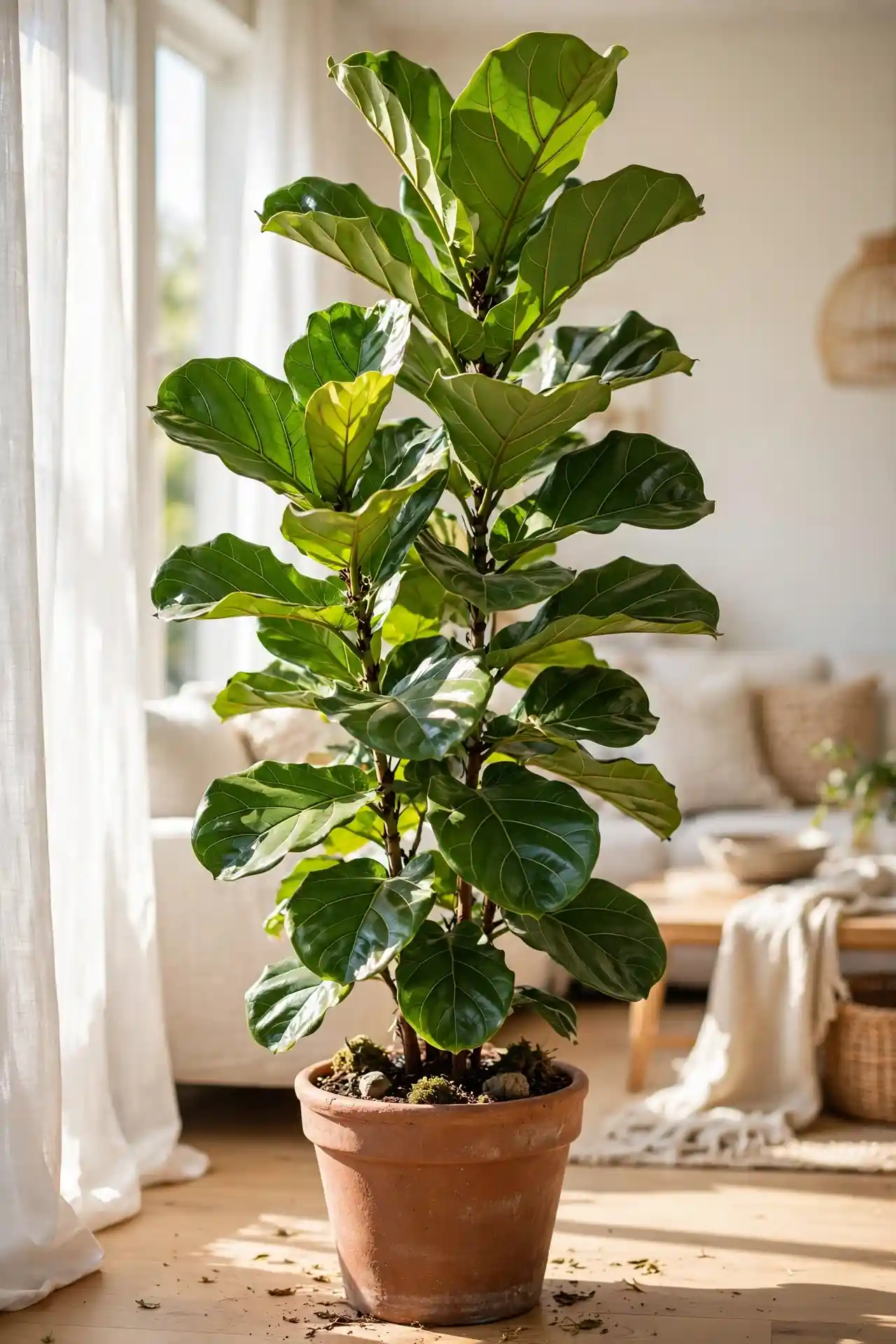
The fiddle-leaf fig is the interior-design icon of the houseplant world, famous for its huge, violin-shaped glossy leaves on a sculptural trunk. Native to the rainforests of western Africa, it wants the brightest indirect light you can give it — a spot near an east or south window is ideal — and it sulks in dark corners or harsh direct sun that scorches the leaves.
Water when the top two inches of soil dry out, and keep the routine consistent: fiddle-leaf figs drop leaves when watering swings wildly. They dislike being moved, so pick a spot and leave it. Wipe leaves monthly so they photosynthesize efficiently, and rotate the pot a quarter-turn every few weeks for even growth. Toxic to pets if chewed.
Light: Bright indirect | Water: Let dry between waterings | Zone: Houseplant (10–12 outdoors) | Best for: Statement indoor trees, bright living rooms
2. Rubber Plant (Ficus elastica)
Rubber plant is the forgiving cousin of the fiddle-leaf fig, with thick, leathery oval leaves in deep green — or burgundy, variegated cream, or pink-tinged in popular cultivars like ‘Burgundy’, ‘Tineke’, and ‘Ruby’. It tolerates lower light and missed waterings far better than most ficuses, making it one of the best large houseplants for beginners.
Give it bright indirect to medium light and let the top inch of soil dry between waterings; it hates wet feet. Wipe the broad leaves to keep them dust-free and glossy. It can reach the ceiling over time — prune the top in spring to encourage branching, and wear gloves since the milky sap can irritate skin. Toxic to pets.
Light: Bright indirect to medium | Water: Let top dry out | Zone: Houseplant (10–12 outdoors) | Best for: Beginner-friendly large houseplants
3. Weeping Fig (Ficus benjamina)
Weeping fig is the classic indoor tree, with graceful drooping branches of small glossy leaves that form an elegant canopy. It has a reputation for dropping leaves at the slightest change — a draft, a move, a missed watering — but once it settles into a stable spot with bright indirect light, it grows into a magnificent long-lived specimen.
The secret is consistency: same spot, same watering rhythm (evenly moist, never soggy), no cold drafts. It appreciates humidity, so mist occasionally or group it with other plants. Prune in spring to shape, and repot only when truly root-bound, since it prefers slightly snug pots. Toxic to pets if ingested.
Light: Bright indirect | Water: Even moisture, never soggy | Zone: Houseplant (10–11 outdoors) | Best for: Classic indoor trees, patient plant parents
4. Common Fig (Ficus carica)
Common fig is one of humanity’s oldest cultivated fruits, grown for thousands of years for its honey-sweet breba and main-crop figs. This deciduous tree or large shrub thrives in full sun and heat, and many varieties — ‘Brown Turkey’, ‘Chicago Hardy’, ‘Celeste’ — are surprisingly cold-tolerant once established.
Plant in the sunniest, warmest spot you have, ideally against a south-facing wall in cooler zones. Figs fruit best with some root restriction and deep, infrequent watering rather than constant moisture. Prune in late winter to an open shape. In zone 6 and colder, grow in a large pot and overwinter in an unheated garage, or wrap the tree for winter protection.
Light: Full sun | Water: Regular, deep | Zone: 7–10 (sheltered 6) | Best for: Edible landscaping, Mediterranean-style gardens
5. Foxtail Fern (Asparagus densiflorus ‘Myersii’)
Foxtail fern is not a true fern at all, but an asparagus relative with dense, bottlebrush-like plumes of needle foliage that look like a fox’s tail. The upright, architectural fronds make it a standout in containers, hanging baskets, and warm-climate borders, and it is far more drought- and sun-tolerant than real ferns.
Grow it in part shade to full sun with average, well-drained soil, and let the soil dry slightly between waterings — its tuberous roots store water. In zones 9–11 it is perennial outdoors; elsewhere bring pots inside before frost or grow it as an annual. Note: the small red berries are toxic if eaten, so keep it away from curious pets and children.
Light: Part shade to full sun | Water: Average; drought-tolerant | Zone: 9–11; annual elsewhere | Best for: Containers, architectural texture
6. Fernleaf Yarrow (Achillea filipendulina)
Fernleaf yarrow brings bold, flat-topped clusters of golden-yellow flowers on sturdy 3- to 4-foot stems above ferny, aromatic foliage. Tougher and taller than common yarrow, it is a mainstay of hot, dry borders, and its long-lasting blooms are excellent fresh or dried — the cultivar ‘Coronation Gold’ is a cut-flower classic.
Plant in full sun and lean, well-drained soil; rich soil and excess water make it floppy. Deadhead after the first flush for possible rebloom, and divide clumps every 2–3 years to keep them vigorous. Butterflies love the flowers, and deer usually leave the aromatic foliage alone. Hardy in zones 3–8.
Light: Full sun | Water: Low once established | Zone: 3–8 | Best for: Hot dry borders, cut and dried flowers
7. Feverfew (Tanacetum parthenium)
Feverfew is a charming old-fashioned herb with daisy-like white flowers with yellow centers blooming from summer to fall above ferny, citrus-scented foliage. Long used in traditional herbal medicine, it is equally at home in cottage gardens, herb beds, and pollinator plantings, where its cheerful blooms attract beneficial insects.
Grow in full sun to part shade with average, well-drained soil. It is short-lived but self-sows generously, so you will rarely need to replant — just let a few flower heads go to seed. Deadhead to extend blooming. Hardy in zones 5–9. Note: the foliage can cause skin irritation in sensitive people, so wear gloves when handling large amounts.
Light: Full sun to part shade | Water: Average | Zone: 5–9 | Best for: Herb gardens, cottage borders, self-sowing charm
8. Foxglove (Digitalis purpurea)
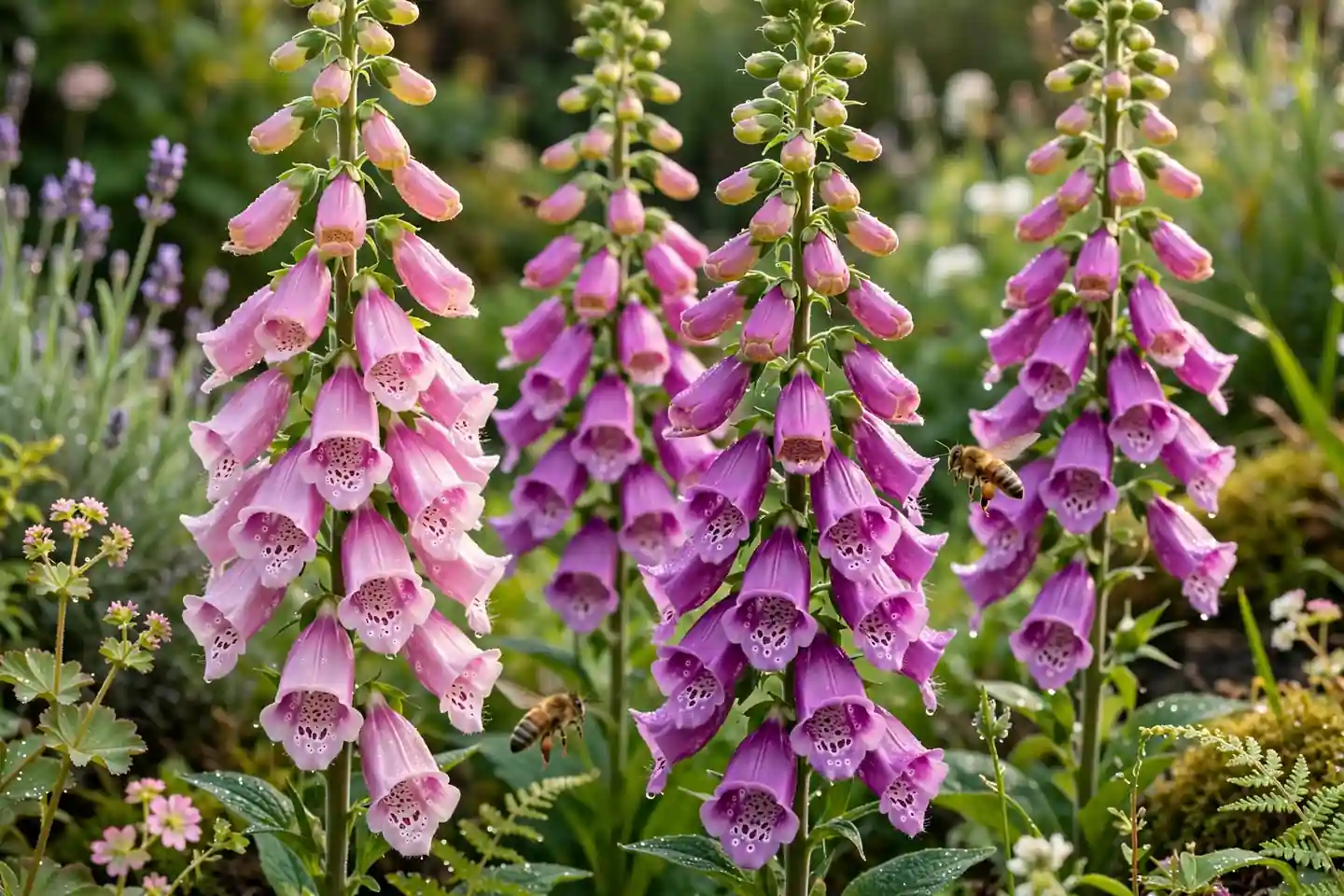
Foxglove is the quintessential cottage-garden biennial, sending up 2- to 5-foot spires of thimble-shaped blooms in purple, pink, white, and rose, each throat speckled like a tiny orchid. Bumblebees adore it, and a drift of foxgloves in part shade is one of gardening’s great sights in late spring.
Sow seeds in early summer for flowers the following year — foxgloves need a cold period to bloom. They prefer part shade and rich, moist, well-drained soil, and they self-sow politely once established. Important: all parts are highly toxic if ingested (they contain digitalis heart compounds), so plant away from vegetable beds and supervise children and pets around them.
Light: Part shade | Water: Average, evenly moist | Zone: 4–8 | Best for: Cottage gardens, woodland edges, bumblebees
9. Foxglove Beardtongue (Penstemon digitalis)
Foxglove beardtongue is the native, perennial answer to foxglove — its white tubular flowers look strikingly similar, but the plant returns reliably year after year and tolerates far more sun and drought. A standout eastern North American native, it feeds bumblebees and hummingbirds in early summer and its seed heads add winter interest.
Plant in full sun to part shade with average to dry, well-drained soil; it dislikes wet winter soil. The cultivar ‘Husker Red’ adds dramatic burgundy foliage to the mix. Leave seed heads standing for birds and winter structure, cutting back in early spring. Hardy in zones 3–8 and wonderfully low-maintenance once established.
Light: Full sun to part shade | Water: Average to dry | Zone: 3–8 | Best for: Native gardens, pollinators, low-maintenance perennials
10. Fireweed (Chamerion angustifolium)
Fireweed is nature’s great healer — the first tall pink flower to colonize burned ground, clearings, and disturbed soil across the northern hemisphere, painting whole hillsides magenta in midsummer. Its 3- to 5-foot spikes of rose-purple blooms feed bees and hummingbirds, and young shoots and flowers are edible (a traditional tea and honey source).
In gardens, give it full sun to part shade and average to moist soil, but be warned: it spreads aggressively by rhizomes and fluffy wind-borne seed, so it suits wildflower meadows and naturalized areas better than tidy borders. Deadhead before seeds ripen to limit its wanderings. Extremely hardy, thriving in zones 2–7.
Light: Full sun to part shade | Water: Average to moist | Zone: 2–7 | Best for: Wildflower meadows, naturalized areas, northern gardens
11. False Indigo (Baptisia australis)
False indigo is a long-lived prairie aristocrat — a 3- to 4-foot mound of blue-green, clover-like foliage topped in late spring with lupine-like spires of indigo-blue flowers, followed by attractive charcoal seed pods that rattle in the breeze. Once established, a single plant can live for decades with zero division.
Plant it in full sun with well-drained soil and then leave it alone: baptisia develops a deep taproot and resents transplanting, so choose the spot carefully. It is extremely drought-tolerant once settled and deer-resistant. Cut back in late fall or leave the handsome seed pods for winter interest. Hardy in zones 3–9.
Light: Full sun | Water: Low once established | Zone: 3–9 | Best for: Prairie plantings, long-lived low-care perennials
12. Flamingo Flower (Anthurium andraeanum)
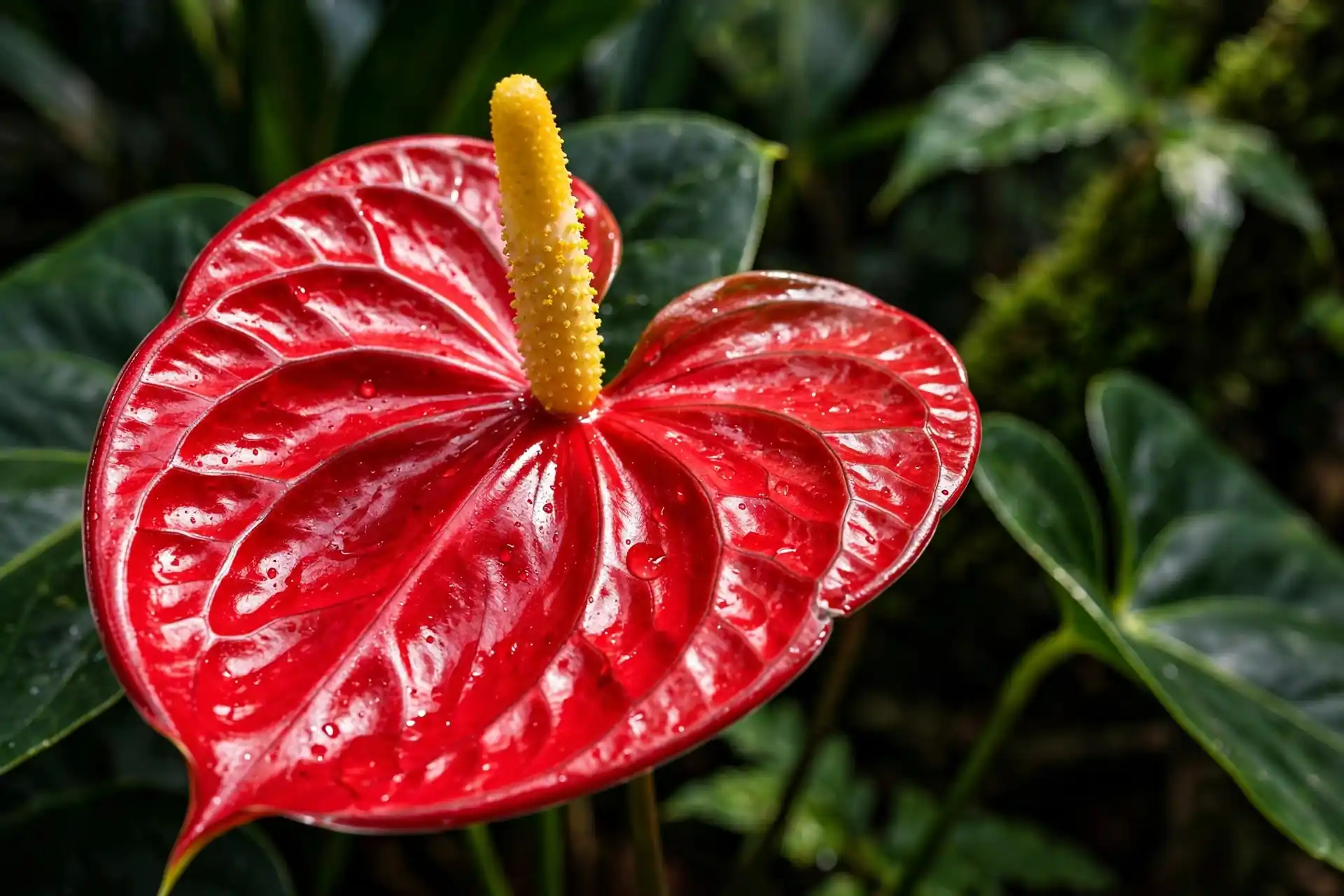
Flamingo flower is the supermodel of houseplants — glossy, heart-shaped “flowers” (actually waxy spathes) in red, pink, white, or orange that can last for months, rising above dark, leathery leaves. A single plant can bloom almost year-round indoors, which is why it is a favorite gift and office plant.
Give it bright indirect light, consistent moisture (let the top inch dry out), and high humidity — a pebble tray or humidifier keeps the spathes pristine. Use a chunky, orchid-like mix rather than dense potting soil, and feed lightly during the growing season. Toxic to pets and people if chewed, so place it out of nibbling reach.
Light: Bright indirect | Water: Even moisture, high humidity | Zone: Houseplant (11–12 outdoors) | Best for: Long-lasting indoor blooms, gifts
13. Fountain Grass (Pennisetum alopecuroides)
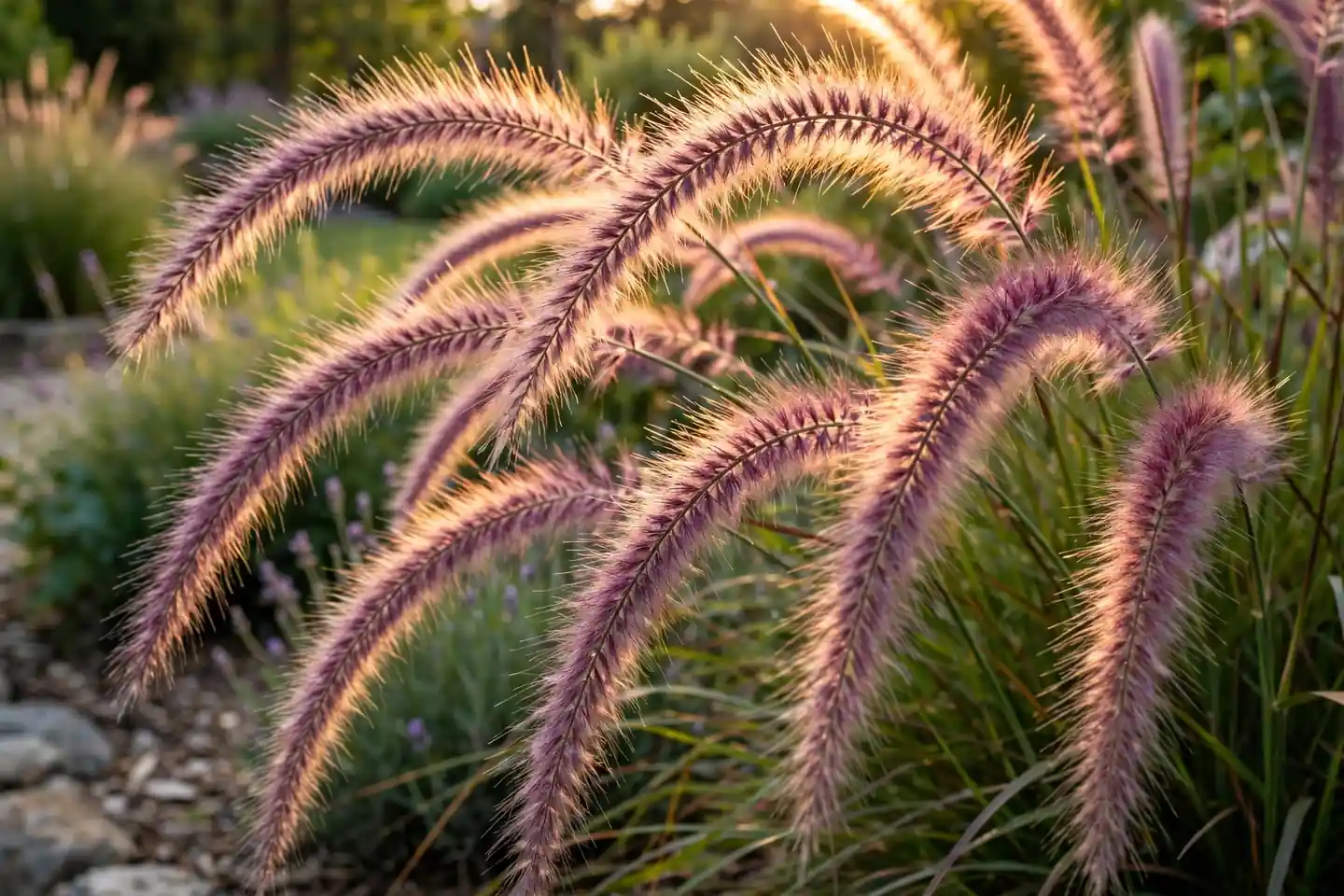
Fountain grass is one of the most graceful ornamental grasses, forming tidy mounds of arching green foliage topped in late summer with soft, bottlebrush-like plumes that catch the light beautifully. Cultivars like ‘Hameln’ (compact) and ‘Cassian’ add reliable garden performance, and the plumes persist into fall for extended interest.
Plant in full sun with average, well-drained soil; it dislikes wet winter feet. Unlike invasive purple fountain grass (P. setaceum ‘Rubrum’), the species P. alopecuroides is clump-forming and well-behaved in most regions — though gardeners in warm areas should still check local guidance. Cut back to a few inches in late winter before new growth starts. Hardy in zones 6–9.
Light: Full sun | Water: Average | Zone: 6–9 | Best for: Ornamental grass borders, fall texture
14. Feather Reed Grass (Calamagrostis × acutiflora ‘Karl Foerster’)
‘Karl Foerster’ feather reed grass is arguably the most famous ornamental grass in the world — the Perennial Plant Association’s Plant of the Year in 2001 — prized for its strictly upright habit and wheat-like flower plumes that emerge green, mature to golden-tan, and stand handsome through winter. It is one of the first grasses to green up in spring and the tidiest of them all.
Grow in full sun with average soil; it tolerates clay and seasonal wetness better than most grasses. Cut back to 4–6 inches in late winter. Unlike many grasses it stays in a neat clump and never flops or self-sows aggressively (it is sterile). Hardy in zones 5–9. Superb for modern plantings, screens, and mass plantings.
Light: Full sun | Water: Average | Zone: 5–9 | Best for: Vertical accents, modern landscapes, winter structure
15. Floss Flower (Ageratum houstonianum)
Floss flower is the bedding plant for true blue — its fluffy, powder-puff blooms come in shades of blue, lavender, pink, and white that are rare in the annual world. Blooming nonstop from summer to frost with no deadheading required, it is a workhorse for edging, containers, and children’s gardens.
Plant after frost in full sun to part shade with average, consistently moist soil. Taller varieties (up to 30 inches) suit cutting; dwarf types (6 inches) edge paths beautifully. It attracts butterflies and is generally pest-free. Note: all parts are toxic if ingested, so it is not for edible gardens. Grown as an annual everywhere except the warmest zones.
Light: Full sun to part shade | Water: Average, consistent | Zone: Grown as annual | Best for: True-blue annual color, edging, containers
16. Forsythia (Forsythia × intermedia)
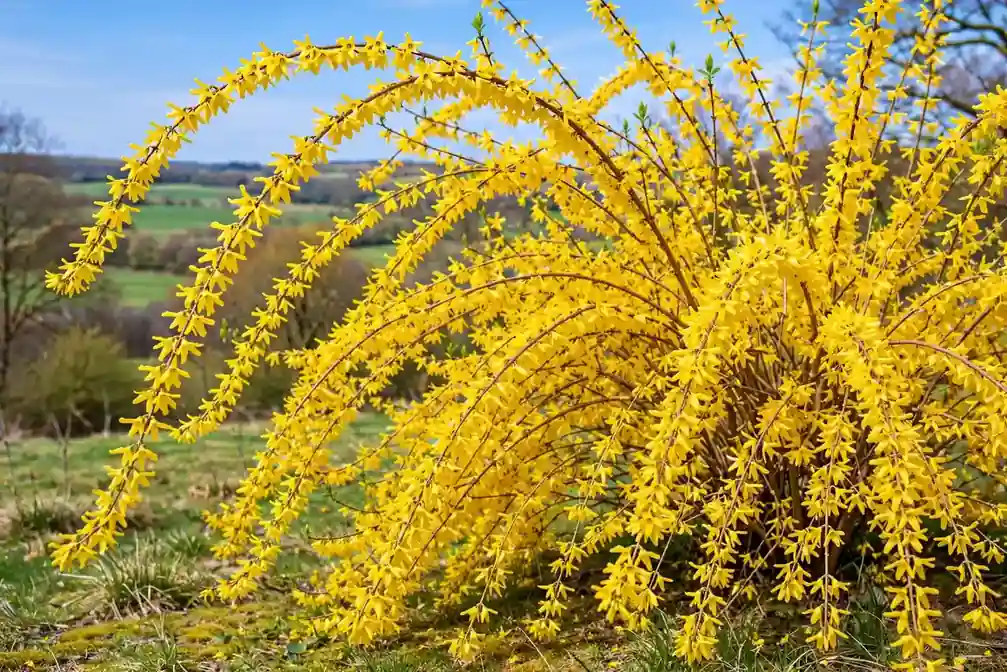
Forsythia is spring’s golden alarm clock — arching branches that erupt in brilliant yellow flowers before a single leaf appears, often while snow still lingers. These fast-growing deciduous shrubs are among the easiest flowering shrubs to grow, shrugging off neglect, poor soil, and urban conditions.
Plant in full sun to part shade with average soil; more sun means more flowers. The one essential task is pruning: cut back a third of the oldest stems right after flowering (never in fall or winter, or you remove next year’s buds). Forsythia branches also force beautifully indoors — cut stems in late winter and bring them inside for early blooms. Hardy in zones 5–8.
Light: Full sun to part shade | Water: Average | Zone: 5–8 | Best for: Early spring color, hedges, forcing indoors
17. Forget-Me-Not (Myosotis sylvatica)
Forget-me-not is pure spring nostalgia — clouds of tiny sky-blue flowers with yellow eyes floating over fresh green foliage, carpeting the ground beneath spring bulbs and along shady paths. These biennials bloom in their second spring and then self-sow so reliably that a single planting can naturalize for years.
Grow in part shade with consistently moist, humus-rich soil; they fade fast in hot, dry sun. Sow seeds in summer for blooms the following spring, and let plants self-seed — pull spent plants after flowering if you want to limit their spread. They pair beautifully with tulips, daffodils, and bleeding hearts. Hardy in zones 3–8.
Light: Part shade | Water: Consistently moist | Zone: 3–8 | Best for: Spring groundcover, naturalizing, sentimental gardens
18. Four O’Clock (Mirabilis jalapa)
Four o’clock is the old-fashioned charmer that opens its trumpet flowers in late afternoon — hence the name — releasing a sweet fragrance into the evening garden. Flowers come in magenta, pink, yellow, white, and striped combinations, often several colors on the same plant, blooming from summer until frost.
Grow in full sun with average soil; it is remarkably heat- and drought-tolerant. In zones 9–11 the tuberous roots survive winter and return each year (growing larger and more floriferous); in colder zones, lift the tubers like dahlias or simply grow it as an annual — it blooms the first year from seed. All parts are toxic if eaten, so site it thoughtfully.
Light: Full sun | Water: Average | Zone: 9–11; annual elsewhere | Best for: Evening fragrance, old-fashioned gardens, heat tolerance
19. Fleabane (Erigeron speciosus)
Fleabane (showy fleabane) is an underused native daisy with 2-inch lavender-blue flowers with golden centers blooming in early summer above tidy mounds of foliage. Despite the odd common name (a folk belief that it repelled fleas), it is a cheerful, easy perennial that butterflies visit constantly.
Plant in full sun with average, well-drained soil. Deadhead or shear after the first flush for a possible second bloom, and divide every 2–3 years to keep plants vigorous. It is cold-hardy to zone 2 and tolerates poor soil, making it a great choice for cottage borders, rock gardens, and naturalized plantings in tough climates.
Light: Full sun | Water: Average | Zone: 2–8 | Best for: Cold climates, cottage borders, native daisies
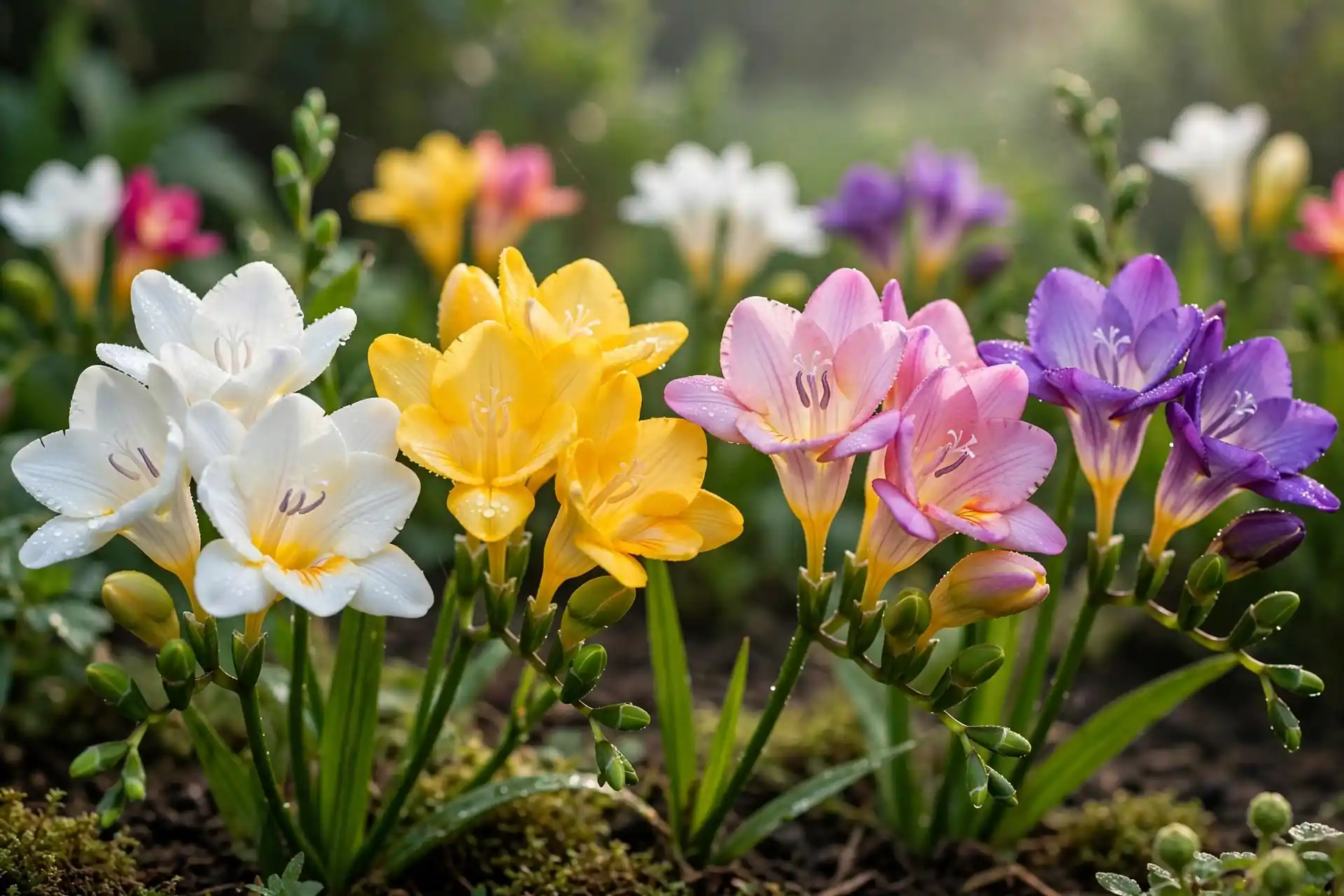
20. Freesia (Freesia × hybrida)
Freesia is the sweetest-smelling spring bulb you can grow — its funnel-shaped blooms in white, yellow, pink, red, and purple release an intense, citrusy perfume that made it a florist staple. A single stem can scent a whole room, and the flowers last well in vases.
Plant corms in fall (zones 9–10) or early spring (colder zones) in full sun with rich, well-drained soil, setting them 2 inches deep. Water regularly while growing, then let the soil dry as foliage yellows — freesias need a dry dormancy. In cold climates, lift corms in fall and store dry and frost-free, or grow them in pots. Staking keeps the slender stems upright.
Light: Full sun | Water: Regular in growth; dry when dormant | Zone: 9–10; lift corms elsewhere | Best for: Fragrant cut flowers, spring containers
21. Flame Azalea (Rhododendron calendulaceum)
Flame azalea is one of North America’s most spectacular native shrubs — a deciduous azalea that ignites Appalachian hillsides in late spring with huge clusters of funnel-shaped flowers in blazing orange, scarlet, and gold. Unlike evergreen azaleas, it drops its leaves in winter and puts all its energy into that fiery display.
Grow in part shade with acidic (pH 4.5–6.0), humus-rich, well-drained but consistently moist soil — it will not tolerate lime or waterlogged roots. Mulch with pine needles or bark to keep roots cool. It is slow to establish but very long-lived. Hardy in zones 5–7. A must for native woodland gardens in the eastern US.
Light: Part shade | Water: Consistent; acidic soil | Zone: 5–7 | Best for: Native woodland gardens, spectacular spring color
22. Flax (Linum usitatissimum)
Flax is one of humanity’s most useful plants — the source of linen fiber and linseed oil — and it is also quietly beautiful, with slender stems topped by delicate sky-blue flowers that open in the morning and drop their petals by afternoon, replaced by new blooms daily through early summer.
Sow seeds directly in spring in full sun with average, well-drained soil; flax dislikes transplanting. It needs little care beyond watering during dry spells. Leave the round seed capsules to ripen if you want to harvest linseed, or let them self-sow. Blue flax (Linum perenne), a perennial relative, is an even easier garden plant in zones 5–8.
Light: Full sun | Water: Average | Zone: Grown as annual | Best for: Heritage gardens, useful plants, delicate blue flowers
23. False Sunflower (Heliopsis helianthoides)
False sunflower looks like a sunflower’s well-mannered cousin — bright golden-yellow daisies on sturdy 3- to 6-foot stems from midsummer to fall, but in a clump-forming perennial that stays put instead of flopping everywhere. Cultivars like ‘Summer Nights’ (red stems, orange-centered blooms) add extra flair.
Plant in full sun with average to dry soil; it tolerates drought, clay, and heat once established. Deadhead for extended bloom and to prevent self-sowing, or leave seed heads for goldfinches. Divide every 3–4 years to maintain vigor. Hardy in zones 3–9. Butterflies and bees mob the flowers, making it a pollinator-garden essential.
Light: Full sun | Water: Average to dry | Zone: 3–9 | Best for: Pollinator gardens, long summer-to-fall color
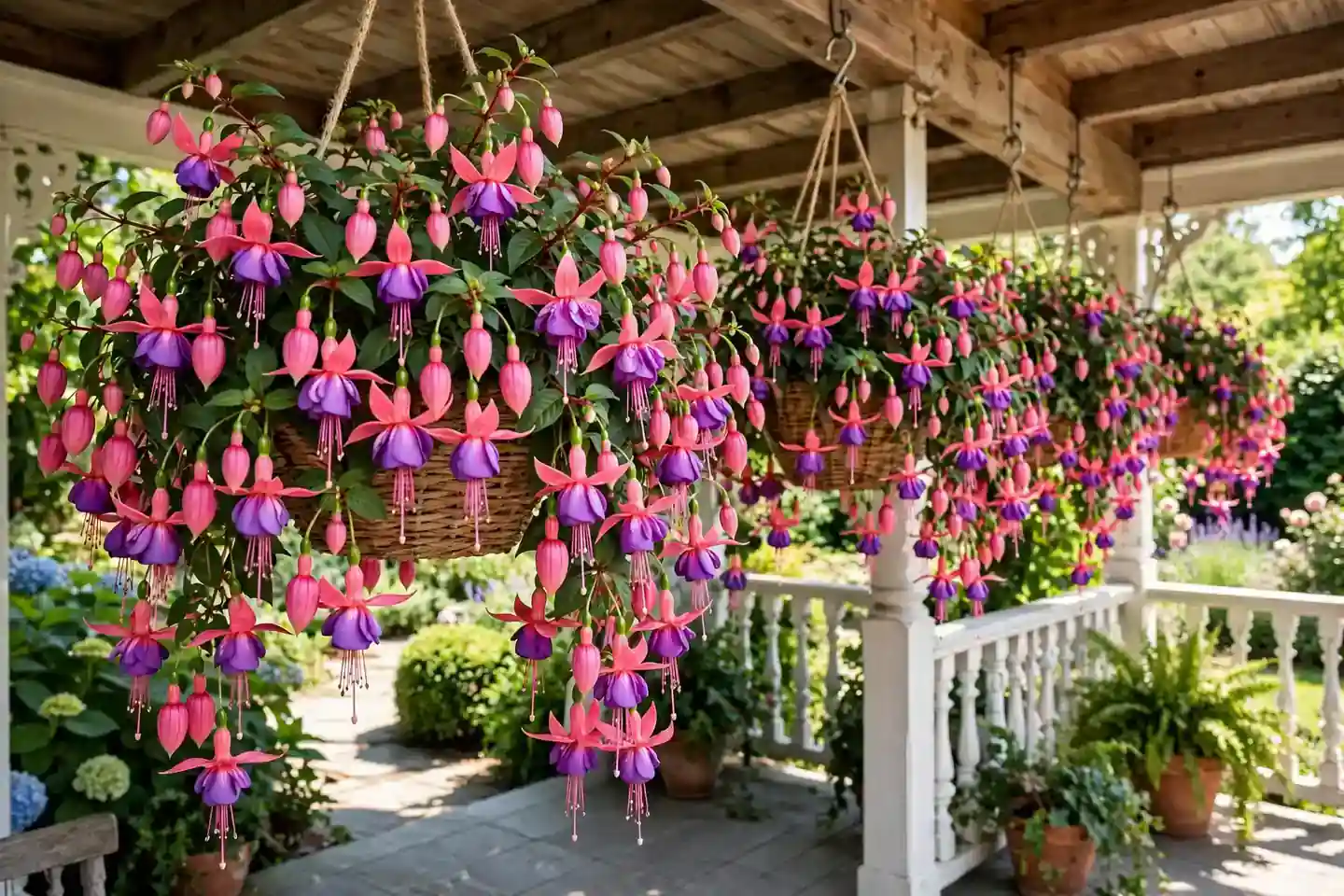
24. Fuchsia (Fuchsia × hybrida)
Fuchsia’s pendulous, two-toned teardrop flowers — pink, purple, red, and white combinations dangling like earrings — are among the most exotic-looking blooms a temperate gardener can grow. Trailing types cascade spectacularly from hanging baskets, while upright forms make fine container specimens, all blooming from summer to frost.
Grow in part shade with rich, consistently moist (never soggy) soil; fuchsias hate hot afternoon sun and drying out. Pinch young plants for bushiness and deadhead to keep blooms coming. In zones 9–11 many are perennial shrubs; elsewhere overwinter pots in a cool, frost-free spot or grow as annuals. Hummingbirds find the tubular blooms irresistible.
Light: Part shade | Water: Consistent, never soggy | Zone: 9–11; annual elsewhere | Best for: Hanging baskets, hummingbirds, shade containers
25. Fringe Tree (Chionanthus virginicus)
Fringe tree is a native treasure that stops traffic in late spring, when its branches are draped in clouds of fragrant, fringe-like white flowers — as if the tree were hung with lace. Male trees flower most heavily, and female trees follow up with dark blue berries that birds devour.
Plant this slow-growing small tree (12–20 feet) in full sun to part shade with average, moist, well-drained soil; it adapts to both wet and dry conditions once established. It needs almost no pruning — just remove crossing branches in winter. Remarkably pest- and disease-free and hardy in zones 3–9. Give it a prominent spot where the spring show can be savored.
Light: Full sun to part shade | Water: Average | Zone: 3–9 | Best for: Specimen trees, native gardens, spring fragrance
26. Firebush (Hamelia patens)
Firebush earns its name twice: tubular orange-red flower clusters blaze from summer to frost, and the foliage often turns fiery red-purple in fall. In frost-free zones it becomes a 15-foot shrub or small tree; elsewhere it is grown as a fast annual that still blooms its heart out — and hummingbirds and butterflies treat it like a fueling station.
Give it full sun and average to moist soil. It grows astonishingly fast — up to 4 feet in a season — and blooms on new wood, so cut it back hard in spring. In zones 9–11 it is evergreen to semi-evergreen; in zone 8 it dies back and resprouts. North of that, grow it as a summer annual or overwinter pots indoors.
Light: Full sun | Water: Average to moist | Zone: 9–11; annual elsewhere | Best for: Hummingbirds, butterflies, tropical summer color
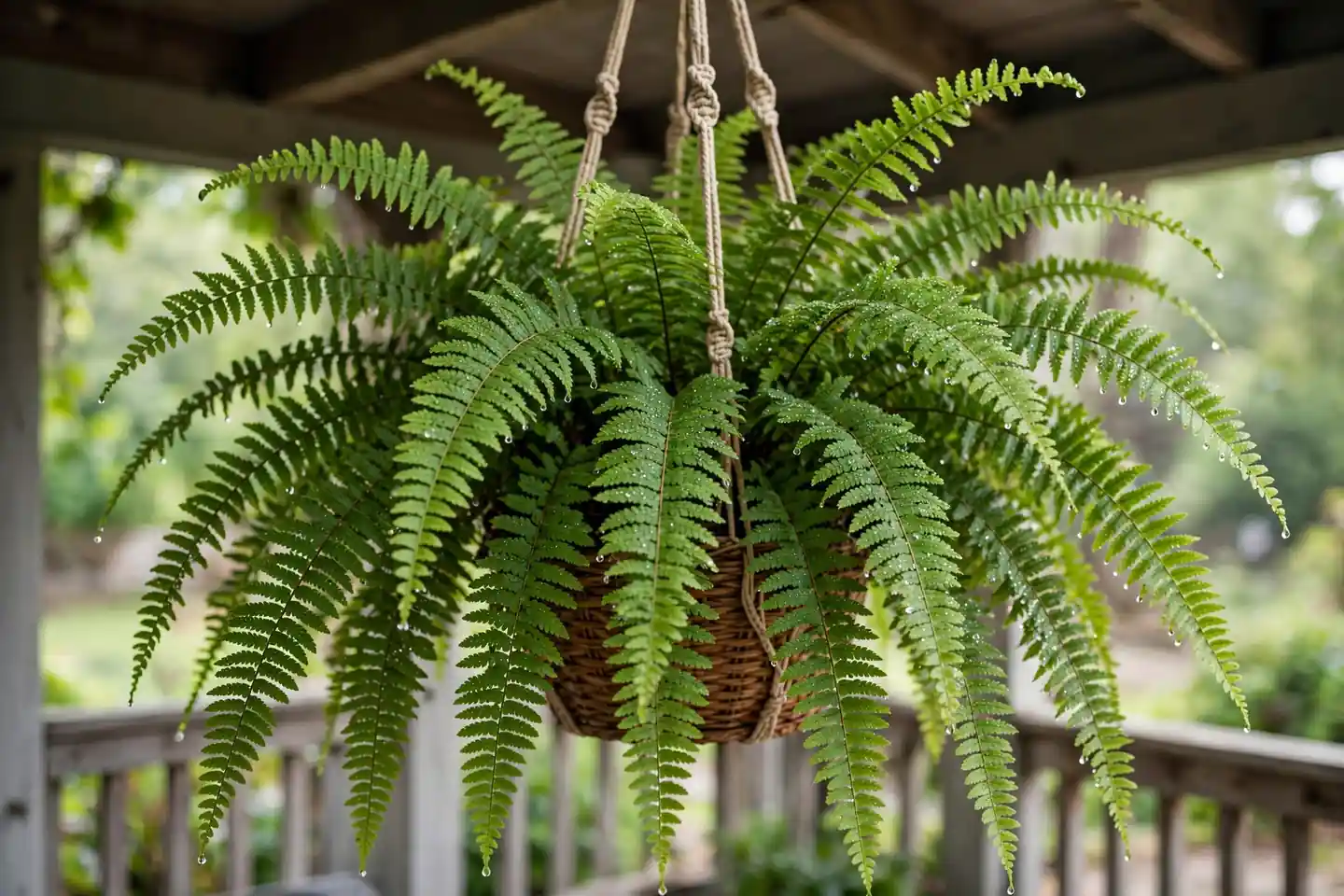
27. Boston Fern (Nephrolepis exaltata ‘Bostoniensis’)
Boston fern is the timeless hanging-basket fern, with gracefully arching fronds up to 3 feet long that have graced porches and parlors since the Victorian era. The cultivar ‘Bostoniensis’, discovered in a Boston shipment of sword ferns in 1894, launched the great American fern craze — and it is still one of the lushest foliage plants you can grow.
Indoors, give it bright indirect light, even moisture, and humidity — dry indoor air browns the frond tips, so mist regularly or run a humidifier. Outdoors it thrives in shaded, humid spots in zones 9–11. Water when the top inch dries out, and feed lightly in the growing season. Divide overgrown plants in spring. Non-toxic to pets.
Light: Bright indirect | Water: Even moisture, high humidity | Zone: Houseplant (9–11 outdoors) | Best for: Hanging baskets, pet-safe houseplants, classic style
28. Firethorn (Pyracantha coccinea)
Firethorn is a dual-season evergreen shrub: frothy white flower clusters in spring, then masses of brilliant orange-red berries in fall that persist into winter, feeding birds when little else is available. Its thorny branches also make it one of the best living security hedges and nesting shelters for songbirds.
Plant in full sun with average, well-drained soil; more sun means more berries. Prune right after flowering to shape — wear thick gloves against the formidable thorns. Choose disease-resistant cultivars like ‘Mohave’ or ‘Teton’ to avoid fireblight and scab. Hardy in zones 6–9. Train it against a wall as an espalier for a stunning effect.
Light: Full sun | Water: Average | Zone: 6–9 | Best for: Winter berries, security hedges, bird habitat
29. False Spirea (Astilbe × arendsii)
False spirea (astilbe) is the queen of shade perennials, sending up feathery plumes of pink, red, lavender, or white flowers in summer above fern-like foliage. Arendsii hybrids are the backbone of the group — vigorous, long-lived, and available in every shade from ‘Fanal’ red to ‘Bridal Veil’ white.
Give astilbes part to full shade and consistently moist, humus-rich soil; they sulk in dry shade. Mulch to retain moisture and water during dry spells. Deadhead or leave the dried plumes for winter interest — they look lovely frosted. Divide every 3–4 years in spring or fall. Deer-resistant and hardy in zones 4–8.
Light: Part to full shade | Water: Consistently moist | Zone: 4–8 | Best for: Shade gardens, moist borders, cut flowers
30. Fetterbush (Leucothoe fontanesiana)
Fetterbush is an elegant southeastern native evergreen shrub with gracefully arching stems of glossy, lance-shaped leaves that often bronze in winter, plus drooping clusters of fragrant white urn-shaped flowers in spring. It brings year-round structure to shady, acidic gardens where few broadleaf evergreens thrive.
Plant in part to full shade with acidic, humus-rich, consistently moist soil — it is a natural for woodland edges and stream banks. The cultivar ‘Rainbow’ adds cream-variegated foliage. Prune lightly after flowering if needed. Note: all parts are toxic if ingested, so keep it away from livestock and curious pets. Hardy in zones 5–8.
Light: Part to full shade | Water: Consistently moist; acidic soil | Zone: 5–8 | Best for: Evergreen shade structure, native woodlands
31. Foamflower (Tiarella cordifolia)
Foamflower is a native groundcover that earns its name in spring, when airy spikes of tiny white or pink flowers rise like foam above a carpet of maple-like evergreen leaves — often with dramatic dark central markings in cultivars like ‘Oakleaf’ and ‘Sugar and Spice’. It spreads politely by runners into weed-suppressing mats.
Grow in part to full shade with consistently moist, humus-rich soil; it struggles in dry shade. Plant 12 inches apart for coverage within two seasons. Evergreen in mild winters, it provides year-round interest under trees and along shady paths. Combine with ferns, hostas, and wild ginger for a classic native woodland floor. Hardy in zones 3–8.
Light: Part to full shade | Water: Consistently moist | Zone: 3–8 | Best for: Native groundcovers, shady paths, woodland gardens
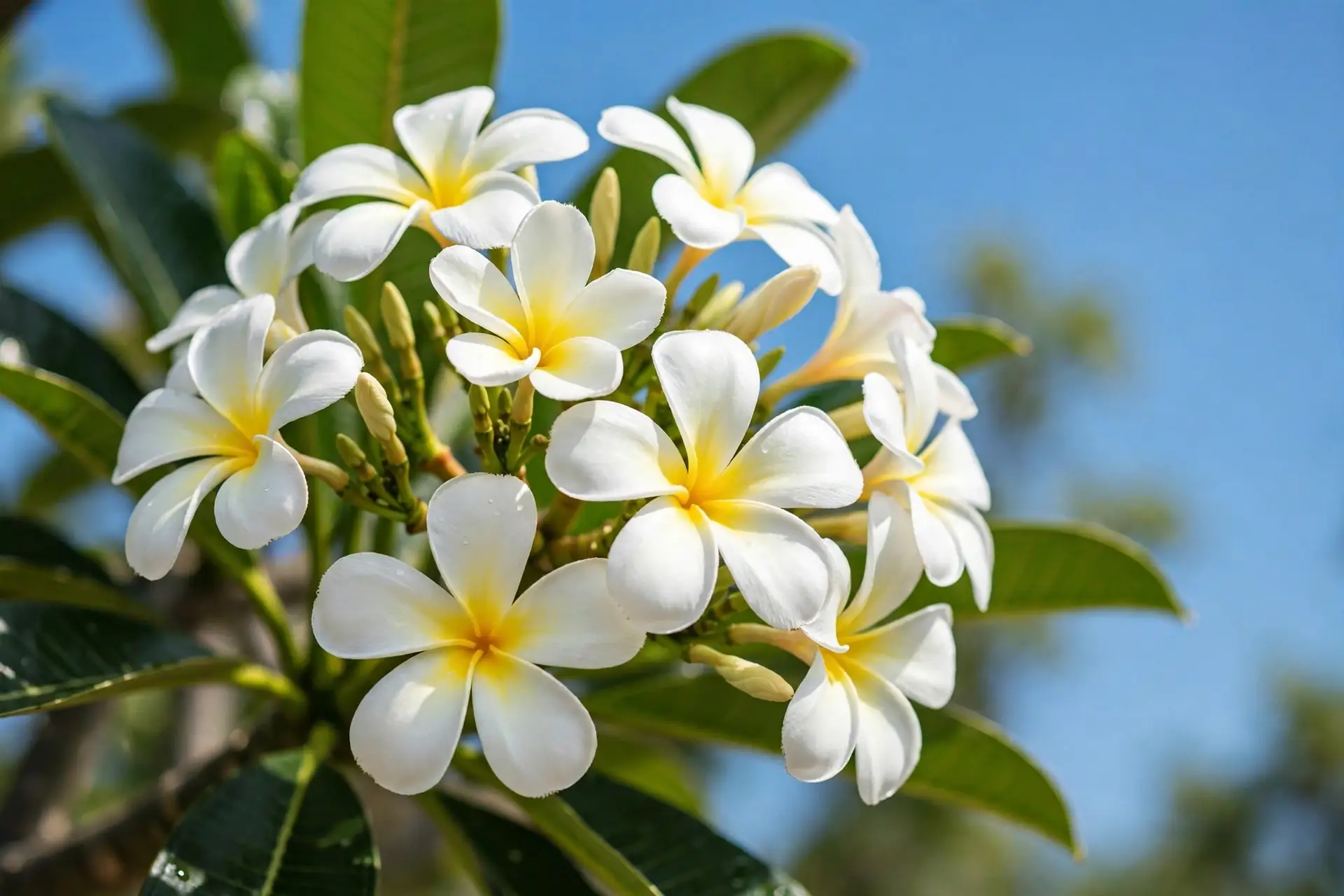
32. Frangipani (Plumeria rubra)
Frangipani (plumeria) is the scent of the tropics — thick, waxy flowers in white, yellow, pink, and rainbow blends with an intoxicating perfume, blooming on sculptural bare branches through summer and fall. The flowers are the classic Hawaiian lei bloom, and a single tree can perfume an entire yard.
Give it full sun and extremely well-drained soil; frangipani rots in wet winter soil. It is drought-tolerant once established and stores water in its thick stems. Hardy only in zones 10–11 — elsewhere grow it in a pot, bring it inside before frost, and let it go dormant (leafless and dry) for winter. All parts are toxic if ingested, and the sap can irritate skin.
Light: Full sun | Water: Low; drought-tolerant | Zone: 10–11; pots elsewhere | Best for: Tropical fragrance, patio specimens, lei flowers
33. Crown Imperial (Fritillaria imperialis)
Crown imperial is the drama queen of spring bulbs — a 2- to 3-foot stem topped with a ring of large orange, red, or yellow bell flowers crowned by a tuft of leaves, looking like something from a royal garden. It blooms in mid-spring and its musky scent is said to repel moles and rodents (gardeners debate this, but the show is undeniable).
Plant the large bulbs in fall, 8 inches deep, on their sides (to prevent water collecting in the hollow crown) in full sun to part shade with very well-drained soil. Crown imperials need a dry summer dormancy — perfect for spots under deciduous shrubs. They can take a few years to settle, so be patient. Hardy in zones 5–9.
Light: Full sun to part shade | Water: Average; dry summer dormancy | Zone: 5–9 | Best for: Dramatic spring bulbs, statement plantings
34. Snake’s Head Fritillary (Fritillaria meleagris)
Snake’s head fritillary is one of the most enchanting spring bulbs — nodding, bell-shaped flowers in purple and white with a distinctive checkerboard pattern, like tiny snakeskin lanterns, on slender 12- to 18-inch stems. Naturalized drifts of them in damp meadows are a beloved sight in their native Europe.
Plant bulbs 4 inches deep in fall in full sun to part shade with soil that stays moist in spring — they thrive in damp meadows, rain gardens, and beside ponds, and they tolerate the summer dryness that follows. They naturalize beautifully and need no care once established. Hardy in zones 4–8. Lovely with daffodils and primroses.
Light: Full sun to part shade | Water: Moist in spring | Zone: 4–8 | Best for: Naturalizing, damp meadows, unique spring bulbs
35. Fan Flower (Scaevola aemula)
Fan flower is the Australian annual that laughs at heat — its charming fan-shaped blooms (each flower looks like half a daisy) come in blue, purple, pink, and white, covering trailing 6- to 12-inch mounds from summer to frost with no deadheading needed. It thrives in the blazing conditions that melt fussier annuals.
Grow in full sun with average, well-drained soil; it tolerates drought, heat, and humidity once established. It is perfect for hanging baskets, window boxes, and the edges of containers, where its trailing habit spills beautifully. Pinch young plants for extra branching. Grown as an annual in most climates (perennial in zones 9–11).
Light: Full sun | Water: Average, consistent | Zone: 9–11; annual elsewhere | Best for: Heat-proof containers, hanging baskets, trailing color
Growing Tips for F-Plants
With 35 very different F-plants on this list, grouping them by their needs makes care simple. Here are the key rules for each group.
Houseplant ficuses and tropicals want stability. Fiddle-leaf fig, rubber plant, weeping fig, flamingo flower, and Boston fern all punish sudden change — moving the pot, irregular watering, or cold drafts. Give them bright indirect light, water on a consistent rhythm, and keep them away from heating vents and drafty doors. Grouping humidity-lovers (anthurium, Boston fern) together on a pebble tray keeps everyone happier.
Match sun-lovers to your hottest spots. Forsythia, foxglove beardtongue, false indigo, fountain grass, feather reed grass, fleabane, false sunflower, flax, four o’clock, and fan flower all want full sun and most tolerate poor or dry soil once established. Rich soil actually makes many of them floppy — lean soil and tough love produce sturdier plants and more flowers.
Shade perennials need moisture, not just darkness. False spirea, foamflower, fetterbush, forget-me-not, and foxglove all grow in shade, but they still need consistently moist, humus-rich soil — dry shade under eaves or thirsty tree roots will defeat them. Mulch 2–3 inches deep and water during dry spells.
Respect the toxic ones. Several F-plants are poisonous if eaten: foxglove (highly toxic), floss flower, four o’clock, fetterbush, frangipani, and the berries of foxtail fern. Site them away from vegetable beds and play areas, supervise pets and children, and wear gloves when pruning frangipani or handling large amounts of feverfew foliage.
Time bulbs and self-sowers right. Plant crown imperial and snake’s head fritillary bulbs in fall; sow foxglove and forget-me-not seeds in early summer for blooms the following spring. Let feverfew, forget-me-not, and fireweed self-sow where you want colonies — and deadhead them where you don’t, since enthusiastic self-sowers can take over.
Which F-Plants Will You Grow?
From the sculptural leaves of the fiddle-leaf fig to the spring fireworks of forsythia, the bee-magnet spires of foxglove, and the sweet perfume of freesia and frangipani, plants that start with F span every garden situation — sunny borders, deep shade, containers, pondsides, and windowsills across zones 2 through 12. Start with easy winners matched to your conditions: a rubber plant or Boston fern for indoors, forsythia or false indigo for a sunny border, astilbe or foamflower for shade, and a pot of fan flowers or fuchsias for instant summer color. Pick three or four favorites from this list, give them the right spot, and the letter F will fill your garden with life from the first spring bulb to the last fall berry.
Frequently Asked Questions
What plants start with the letter F?
Real plants that start with F include fiddle-leaf fig, rubber plant, Boston fern, forsythia, foxglove, flamingo flower, freesia, fuchsia, fountain grass, forget-me-not, four o’clock, frangipani, false indigo, fireweed, feverfew, fig tree, flax, fleabane, foxglove beardtongue, feather reed grass, and fan flower. This guide covers 35 of them with growing details for each.
What are the easiest plants that start with F for beginners?
Rubber plant and Boston fern are nearly foolproof houseplants; forsythia, false indigo, false sunflower, and fountain grass are tough, low-maintenance outdoor plants that thrive on neglect once established. Floss flower and fan flower are easy annuals that bloom all summer with almost no care.
Which F plants make good houseplants?
The best F houseplants are fiddle-leaf fig, rubber plant, weeping fig (all need bright indirect light), Boston fern and flamingo flower (both love humidity), and foxtail fern for bright spots. In warm zones (9–11), frangipani and firebush can also grow outdoors year-round.
Are foxgloves poisonous?
Yes — all parts of foxglove (Digitalis purpurea) are highly toxic if ingested, containing cardiac glycosides used in heart medicine. Plant foxgloves away from edible gardens and play areas, and supervise children and pets around them. The related foxglove beardtongue (Penstemon digitalis) is a safe, non-toxic native alternative with a similar look.
Which plants that start with F attract pollinators?
Foxglove, foxglove beardtongue, and fireweed are bumblebee favorites; fuchsia and firebush are hummingbird magnets; and false sunflower, fleabane, fernleaf yarrow, and feverfew draw butterflies and beneficial insects. Planting several together creates a pollinator buffet from spring through fall.
What F plants grow well in shade?
Great shade-tolerant F-plants include foxglove, forget-me-not, false spirea (astilbe), foamflower, fetterbush, and flame azalea outdoors, plus Boston fern, flamingo flower, and the ficus houseplants indoors. Give shade plants consistently moist, humus-rich soil for the best results.