November Birth Flower Tattoo: Chrysanthemum & Peony Designs and Meanings
November’s birth flower is the most tattooed bloom in Asia and the most misunderstood in Europe — the same flower, two opposite reputations, and a design catalogue a thousand years deep. The chrysanthemum is November’s primary birth flower: loyalty, honesty and long life woven into hundreds of petals, sacred enough to sit on Japan’s imperial crest. November’s second flower, the peony, brings the counterweight — prosperity, romance and lush good fortune. A November birth flower tattoo can be a fine-line sprig the size of a coin or a full Japanese kiku rolling down a back with wind and water: few birth months offer a range this wide.
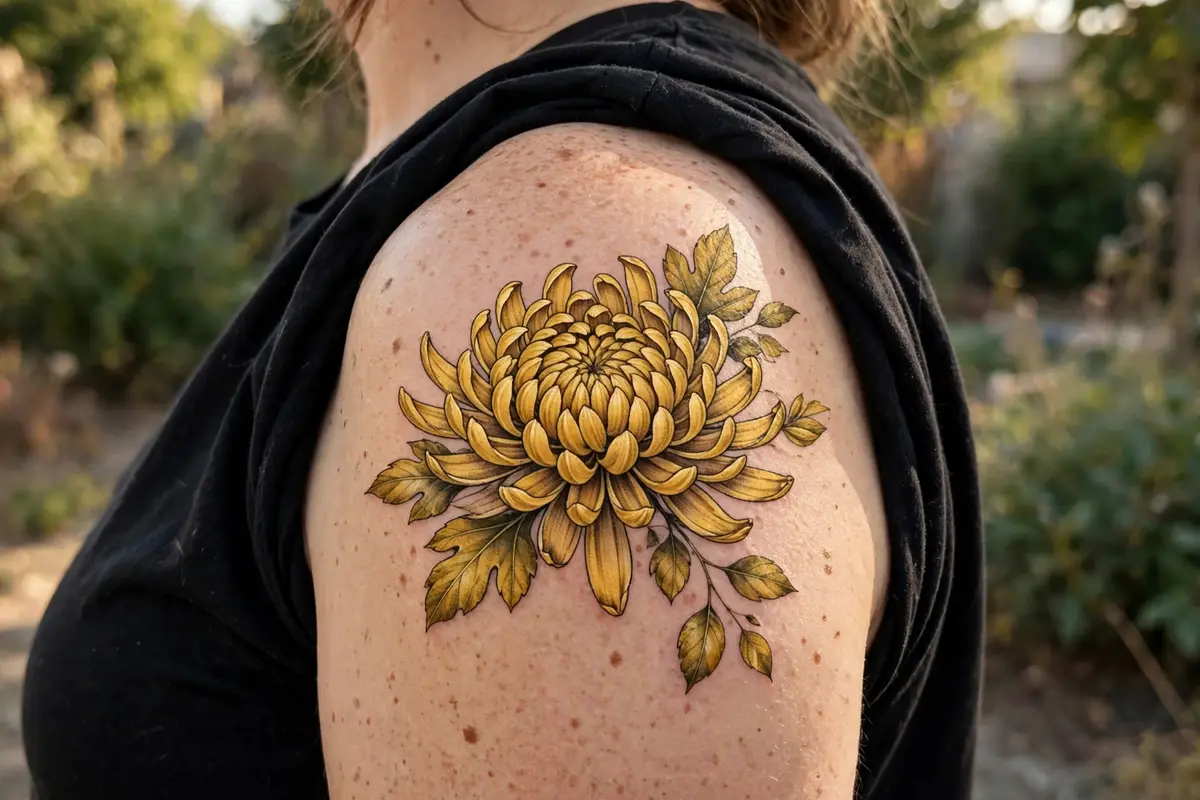
This guide covers both November flowers and their meanings, the chrysanthemum’s double reputation (and whether it should matter to you), its colour meanings, six design ideas, the best placements, and the practical notes for autumn ink.
Quick Answer
A November birth flower tattoo uses November’s birth flowers: the chrysanthemum and the peony. Chrysanthemum means loyalty, honesty, joy and long life — in Japan it is the imperial flower of longevity; peony means prosperity, romance and honour. Chrysanthemum tattoos range from fine-line single blooms to large Japanese kiku pieces with wind bars and waves; peony tattoos fill shoulders, thighs and backs. November’s birthstones are topaz and citrine, so golden-yellow accents are the classic signature of the month.
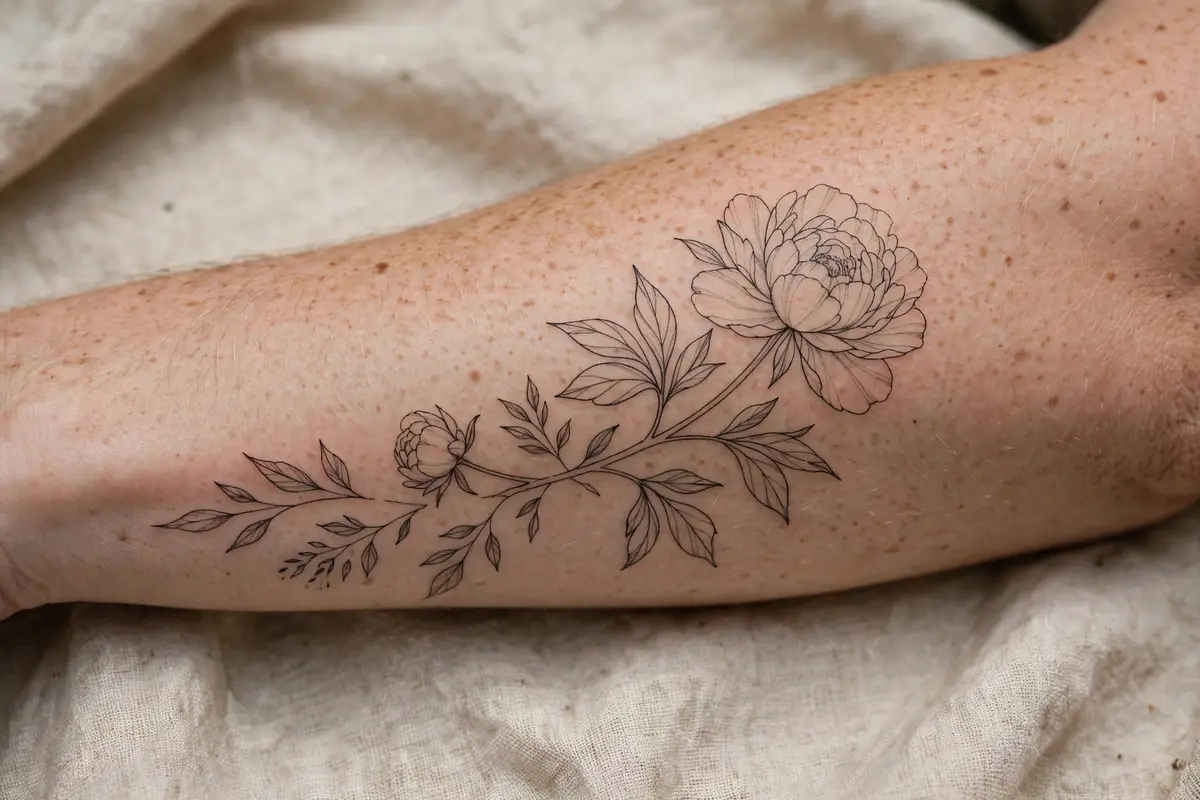
Table of Contents
- November’s Birth Flowers: Chrysanthemum and Peony
- What a November Birth Flower Tattoo Means
- One Flower, Two Reputations: Japan and Europe
- Chrysanthemum Colours and Their Meanings
- 6 November Birth Flower Tattoo Design Ideas
- Best Placements, Pain and Aftercare
- Frequently Asked Questions
November’s Birth Flowers: Chrysanthemum and Peony
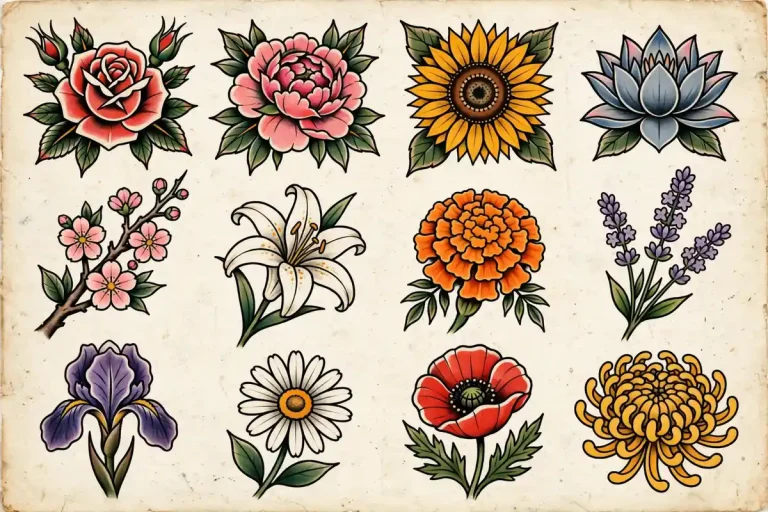
The chrysanthemum is autumn engineered into a flower: a pompon or starburst of petals — sometimes hundreds — in gold, russet, burgundy, pink, cream and white, blooming when almost everything else in the garden has quit. Cultivated in China for over 3,000 years and refined in Japan into an art form of its own, it is the flower of the year’s reflective season. You can read its story on the chrysanthemum page on Wikipedia. The peony, November’s second flower, is spring’s luxury arriving as autumn’s promise: huge, layered, fragrant blooms meaning wealth and romance — in tattooing, the chrysanthemum’s oldest partner, the two paired in Japanese work for centuries. Our November birth flower guide covers both flowers’ meanings, history and growing in full; this page puts them on skin.
November Birth Flower Tattoo Quick Facts
- November flowers: chrysanthemum (loyalty, honesty, long life) and peony (prosperity, romance, honour).
- Signature designs: Japanese kiku with wind or waves; fine-line single mum; chrysanthemum mandala; mum-and-peony autumn duo.
- The imperial link: a 16-petal chrysanthemum is Japan’s Imperial Seal — the flower is quite literally royal.
- November signature: birthstones topaz and citrine — golden accents sign the month.
- Size range: 4 cm sprigs to full back pieces; the mum’s layered petals reward medium-to-large sizes most.
- Good to know: in parts of Europe (notably France and Belgium) chrysanthemums are the funeral flower — read the section below before choosing, not after.
What a November Birth Flower Tattoo Means
A November birth flower tattoo says November is mine — and November people tend to say it with unusual depth, because both of the month’s flowers are meaning-heavyweights. The chrysanthemum carries the reflective November: loyalty that outlasts seasons, honesty, and a long, well-kept life — the flower of people who have become the family’s historians, the friends who stay. In Asia it adds joy and longevity, the birthday flower of emperors. The peony carries the generous November: prosperity shared, romance honoured, good fortune worn openly. Together they sketch the month exactly — depth with warmth, reflection with appetite — and, as everywhere in our birth flowers guide, the tattoo doubles as a tribute: a mum or peony for a November-born parent, partner or child is a portrait in petals.
One Flower, Two Reputations: Japan and Europe
No birth flower asks for a smarter conversation than this one. In Japan, the kiku is the highest flower in the culture: emblem of the Emperor and the Imperial House, symbol of longevity and rejuvenation, celebrated each autumn at festivals of happiness. A chrysanthemum tattoo there — and in Japanese-style tattooing everywhere — reads as honour, endurance and a life fully lived. In parts of Europe, the same flower took the opposite road: in France, Belgium and several neighbouring countries, chrysanthemums are the flowers of cemeteries and funerals, placed on graves on All Saints’ Day — 1 November, fittingly — and read by many as a symbol of grief. What should a November wearer do with this? Know it, then choose knowingly. Meanings in tattooing belong to the wearer and their world: if your life runs through Tokyo, the kiku is royalty; if it runs through Paris, some grandmothers will read mourning into your mum, and you may decide the loyalty meaning is worth the occasional explanation — or that the peony is your November flower after all.
Chrysanthemum Colours and Their Meanings
| Colour | Meaning | Tattoo character |
|---|---|---|
| Gold / yellow | Longevity, joy, imperial honour | The classic November — pairs with the topaz/citrine signature |
| Red / burgundy | Deep love, devotion | Autumn’s richest shade — superb in Japanese and neo-traditional work |
| White | Truth, loyalty, honesty | Drawn as fine line or negative space; the “honest November” choice |
| Pink / purple | Affection, nobility, a long life | The gentle reading — softens big petal pieces beautifully |
| Black / grey | Endurance, remembrance | Blackwork mums: the meaning, kept; the season, honoured |
6 November Birth Flower Tattoo Design Ideas
1. Japanese Kiku Piece — the Imperial Classic
The chrysanthemum as a thousand years of Japanese art refined it: great layered blooms with wind bars, waves or maple leaves, flowing down an arm, a back or a thigh. It is the grandest November option and the most committed — multi-session, bold, immortal. If November’s flower means royalty to you, this is its throne room.
2. Fine-Line Single Mum — the Quiet November
One chrysanthemum, petals counted in fine lines, at 6–9 cm on a forearm, shoulder or ankle. The mum’s natural geometry stays readable small if your artist simplifies the petal count — twenty honest petals beat sixty hopeful ones. The minimalist’s route into a flower that is anything but minimal in meaning.
3. Chrysanthemum Mandala — the Built-In Geometry
No flower is a readier mandala: rings of petals radiating from a heart, dotwork extending the pattern outward. Centred on a sternum, between the shoulders or on a thigh, it merges November’s flower with the meditative geometry of our lotus flower tattoo designs — symmetry the flower itself invented.
4. Mum and Peony Duo — Both of November
The month, complete: one chrysanthemum and one peony in a single composition — autumn’s pompon beside spring’s great bowl, loyalty beside prosperity. Japanese-inspired pairing makes it classic; fine-line pairing makes it modern. Thighs, upper arms and backs give the two blooms room to share.
5. Mum with a Golden Accent — the Signed November
A mostly monochrome chrysanthemum — black, grey or deep red — with one golden element: the flower’s heart, a single falling petal, a dot of citrine light beneath. November’s birthstones are topaz and citrine, and the single gold note signs the piece as November’s exactly the way July’s ruby accent signs July’s (the trick this series began with — see the July birth flower tattoo designs).
6. Spider Mum Sleeve Element — the Dramatic Petals
The spider chrysanthemum — long, curling, tubular petals exploding outward — is the drama cultivar, built for movement: trailing down an arm or curling over a shoulder, its petals read like fireworks or sea anemones. Artists love it because no two can match; wearers love it because it turns November’s neat pompon into weather.
Best Placements, Pain and Aftercare
Placements: the chrysanthemum scales by petal count. Fine-line singles live on forearms, shoulders and ankles; mandalas centre on sternums and backs; kiku pieces claim arms, thighs and backs wholesale; the duo wants a thigh or upper arm’s width. Pain follows the standard map — outer arm and thigh mild (3–4), forearm and calf moderate (4–5), ribs and sternum sharp (7–9). Cost: small singles at studio minimums to a short sitting; mandalas and duos at a few hours; full Japanese work by the session across months — it is a wardrobe piece, priced like one. Aftercare is the universal fortnight shared on r/tattoos on Reddit: gentle washing, thin balm, flakes untouched, no soaking or sun, then lifetime sunscreen. November’s scheduling gift runs opposite to July’s: autumn ink heals under sleeves, away from pools and peak sun — the easiest healing season of the year. The one caution is dry winter air ahead: moisturise healed skin through the cold months and the petals keep their edges.
Frequently Asked Questions
What is a November birth flower tattoo?
A tattoo of November’s birth flowers — the chrysanthemum or the peony — worn by November-born people or in honour of one. The chrysanthemum means loyalty, honesty and long life; the peony means prosperity, romance and honour. Golden accents sign the month, for November’s birthstones: topaz and citrine. If your question is not answered here, the questions about November birth flower tattoos on Quora cover most of the rest.
Is a chrysanthemum tattoo a symbol of death?
In some European cultures, partly — in France and Belgium the chrysanthemum is the traditional grave flower, associated with grief and All Saints’ Day. In Japan and China, by contrast, it means the opposite pole of the same seriousness: longevity, honour and joy, worn by emperors. A chrysanthemum tattoo means what its wearer’s culture — and intention — says it means; the full story is in the reputations section above, and plenty of November wearers choose the flower because it holds both ends of a life.
What does a chrysanthemum tattoo mean in Japanese culture?
Longevity, rejuvenation and imperial honour. The sixteen-petal chrysanthemum is the Imperial Seal of Japan, the flower crowns the Order of the Chrysanthemum (the nation’s highest honour), and kiku festivals each autumn celebrate long life. In Japanese tattooing the kiku pairs classically with water, wind and peonies — endurance drawn beautifully.
Chrysanthemum or peony — which November flower should I choose?
Chrysanthemum for loyalty, honesty and the long game — and for fine-line, mandala or Japanese design directions. Peony for prosperity, romance and lushness — and for big soft colour. The duo design (idea 4) refuses the choice altogether, and November’s generous pair makes refusing easy.
Can a November birth flower tattoo include other months?
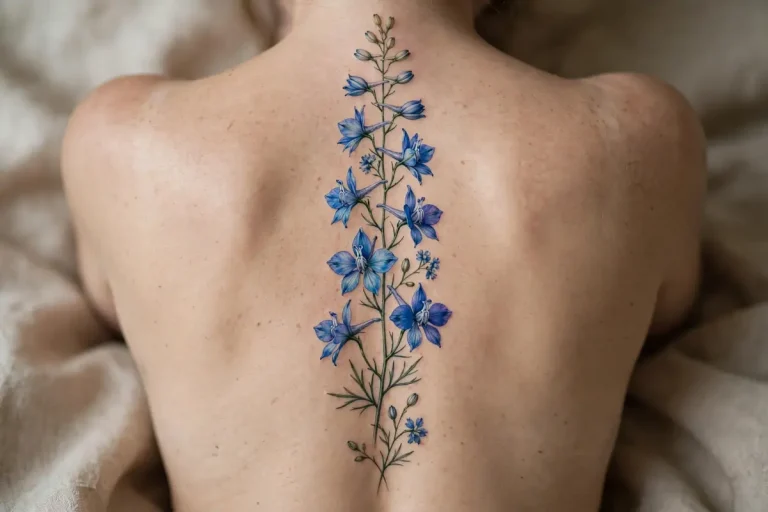
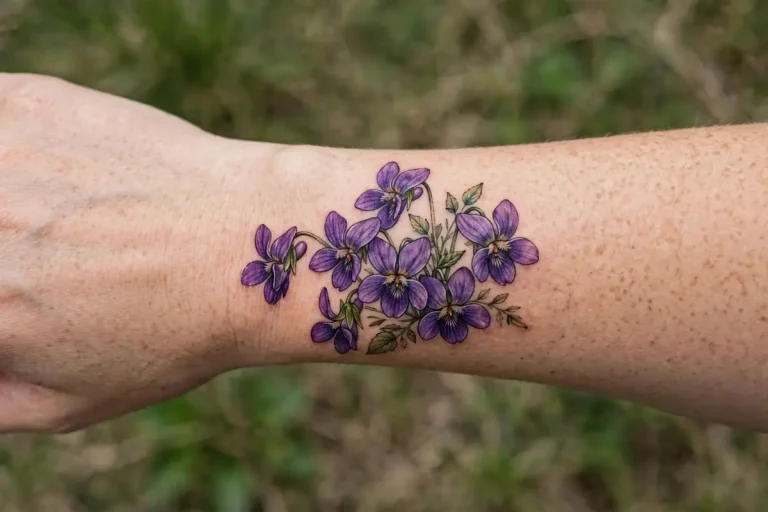
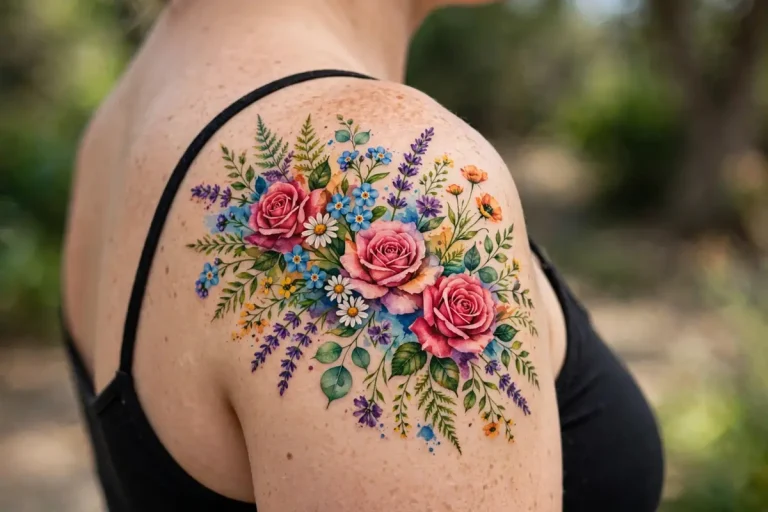
It is one of the most requested combinations in the series: a bouquet where each person’s birth flower joins — a child’s February violet beside your November mum, a partner’s July larkspur behind it. Artists design these as family bouquets constantly; keep the styles unified (all fine line, or all Japanese) so the months sit together gracefully.
How much does a November birth flower tattoo cost?
Small fine-line mums sit at studio minimums or short sittings; mandalas and duos at a few hours’ rate; large Japanese kiku work by the session, over multiple appointments. As always, the finished drawing sets the price — have it quoted at consultation, stencil on skin, at the size you will wear.