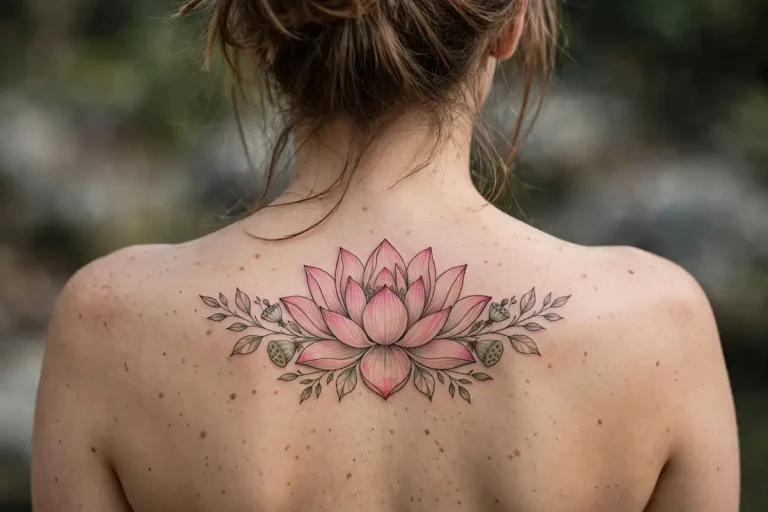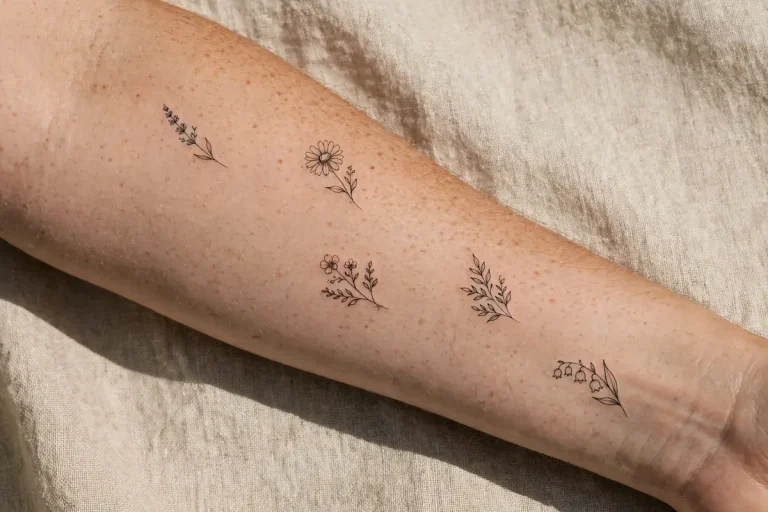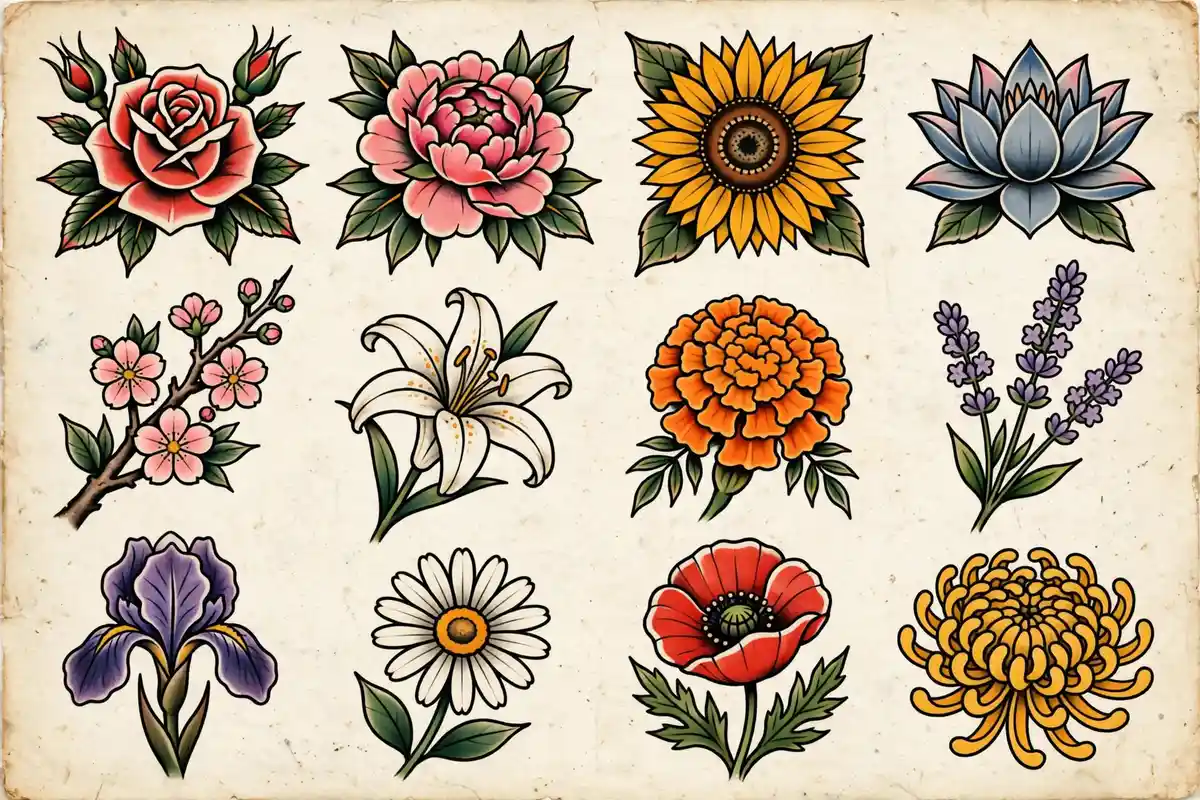
Flower Tattoo Designs: Styles, Elements & How to Design Yours
Ideas are where a flower tattoo starts; design is where it becomes yours. A flower tattoo design is the finished drawing — the flower chosen, the style settled, the size, placement and details composed for your body — and it is the difference between a tattoo that ages like a garden and one that blurs into a rumour. This guide is the design companion to our flower tattoo coverage: the seven design styles explained with the flowers each suits best, the elements that turn a flower into a composition, the design rules that decide how a piece looks in ten years, and the step-by-step of getting a design drawn for you.
If you are still browsing possibilities, start with our flower tattoo ideas collection; when a favourite emerges, come back here and design it properly.
Quick Answer
The best flower tattoo designs are built in four decisions: the flower (and its meaning), the style (fine line, blackwork, watercolour, neo-traditional, realism, dotwork or minimalist), the composition (companions, frames, script, symmetry), and the scale-and-placement fit. Designs that respect the ageing rules — bold-enough lines, honest detail size, contrast that survives — still read clearly decades on. Custom designs are drawn by your artist from references; flash designs are pre-drawn and faster. Every design in our cluster’s guides, from the lotus flower tattoo to the birth-month series, follows the same four decisions.
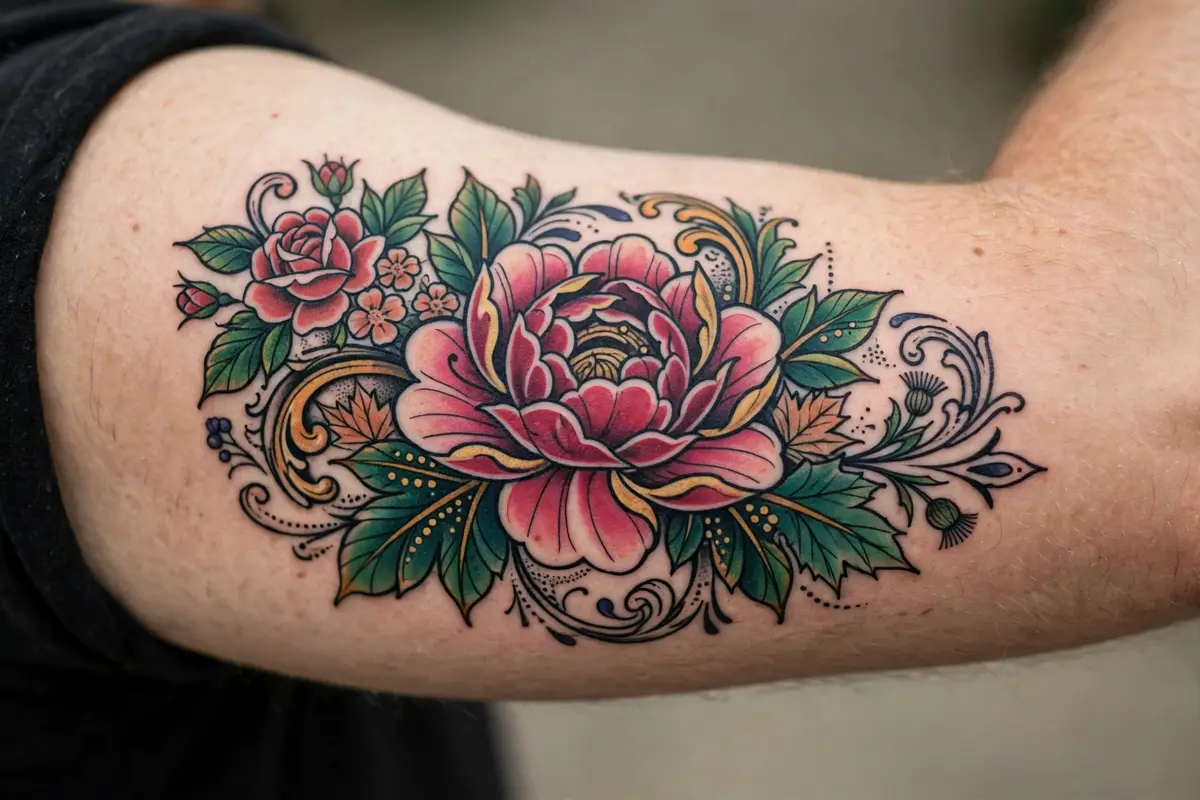
Table of Contents
- The Four Decisions in Every Flower Tattoo Design
- 7 Design Styles and the Flowers They Suit
- Design Elements That Build the Composition
- Design Rules That Decide How It Ages
- Getting Your Design Drawn: Custom, Flash and the Process
- Frequently Asked Questions
The Four Decisions in Every Flower Tattoo Design
Strip any admired flower tattoo down and you find the same four choices, made well. 1. The flower and its meaning — a lotus for rebirth, a poppy for remembrance, your birth flower for identity; meaning first, because it outlasts fashion. 2. The style — the visual language (next section), which must match both the flower’s structure and your tolerance for upkeep. 3. The composition — what joins the flower: leaves, companions, frames, words, symmetry. 4. Scale and placement fit — the design redrawn for the exact ground it will occupy, because a design that ignores the body’s curves fights them forever. Our full flower tattoo guide walks the same path from the meaning side; this page walks it from the drawing board.
Flower Tattoo Design Quick Facts
- The four decisions: flower + meaning, style, composition, scale-and-placement fit.
- The longevity rule of thumb: details smaller than a grain of rice merge over time — design above that line.
- Most forgiving styles: neo-traditional and blackwork age slowest; watercolour and fine line ask for touch-ups.
- Custom vs flash: custom is drawn for you (weeks, deposit); flash is the artist’s pre-drawn sheet (same-week, fixed price).
- The stencil test: the design is final only when you have seen it on your skin, at size, in a mirror.
- Good to know: a good artist will redesign a reference, not copy it — expect (and welcome) their changes.
7 Design Styles and the Flowers They Suit
| Style | Character | Best-suited flowers |
|---|---|---|
| Fine line | Single-needle delicacy, minimal shading | Lily of the valley, cosmos, violet, lavender stems |
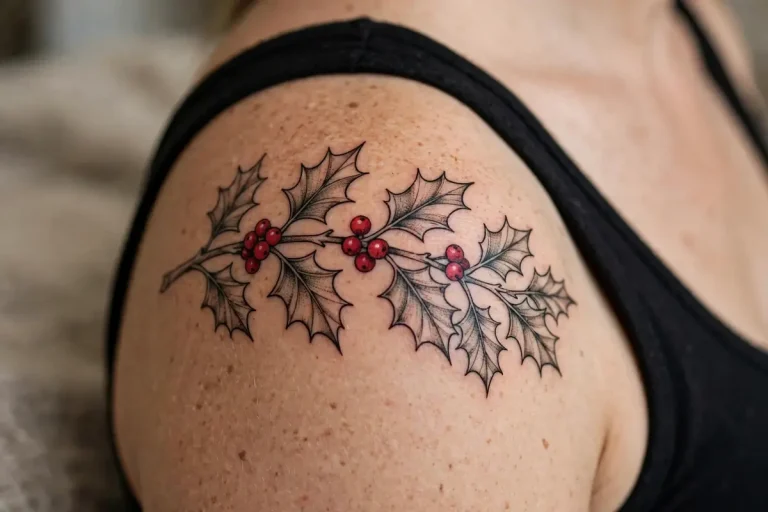
| Blackwork | Bold black, silhouette and dotwork shading | Poppy, holly, sunflower, any flower as silhouette |
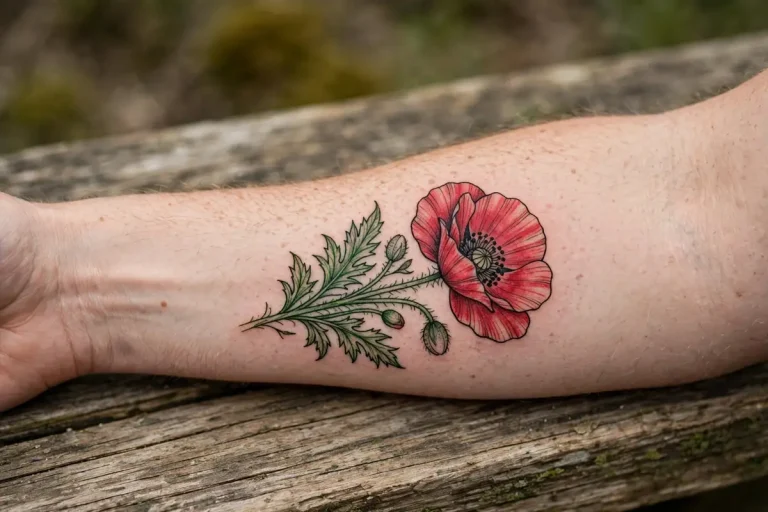
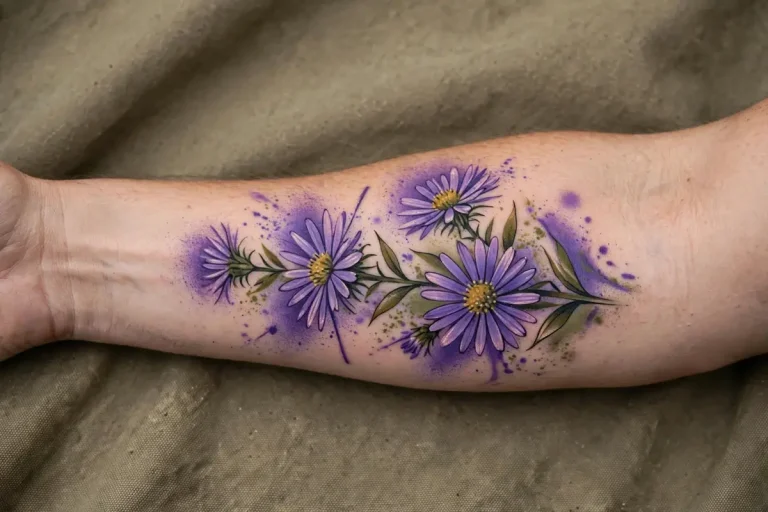
| Watercolour | Painterly washes, soft or absent outlines | Poppy sprays, peony, wildflower meadows |
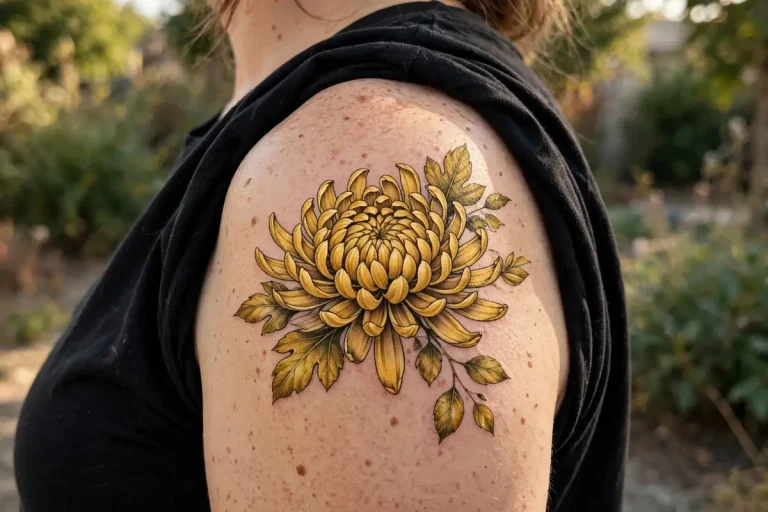
| Neo-traditional | Bold lines, rich controlled colour, stylisation | Marigold, chrysanthemum, rose, dahlia |
| Realism | Photographic colour or black-and-grey | Rose, peony, hydrangea portraits |
| Dotwork / geometric | Stippled shading, symmetry, sacred geometry | Lotus, chrysanthemum mandalas, sunflower heads |
| Minimalist | Three lines and courage; tiny scale | Single-stem anything: daisy, tulip, sprig designs |
The matching logic is structural: fine line needs flowers built from elegant lines (stems, bells, petals in outline); blackwork needs flowers whose silhouette is unmistakable (the poppy’s cup, the sunflower’s disc); watercolour needs petals that behave like pigment (the poppy again, the peony’s wash of pink); realism needs flowers with enough petal architecture to reward scrutiny. Choose the style against the flower, never just the trend.
Design Elements That Build the Composition
Leaves and vines are the composition’s grammar — they give a single bloom direction, length and flow (the morning glory vine is an entire design system by itself). Companions — a butterfly for transformation, a bee for devotion, a moon for cycles — add a second sentence of meaning; one companion per design is plenty. Frames and geometry — circles, wreaths, mandala rings, diamond outlines — contain small designs and give them architecture on flat skin. Script works best woven into stems or set beneath in a single short line; whole quotations belong to larger pieces. Symmetry is the sternum-and-spine tool: mirrored flower pairs (two lotuses, twin sprigs) turn anatomy into design. Birthstone colour accents — the device our birth flower tattoos series uses month after month — sign a design’s meaning with one note of jewel colour in an otherwise restrained piece.
Design Rules That Decide How It Ages
Tattoos age by physics, not opinion: ink spreads slightly, fine lines soften, pale colours retire first. Four rules follow. Rule one — size the detail to the decade: petal separations, stamen dots and letter strokes need honest width; if a detail matters, draw it bigger. Rule two — contrast is longevity: designs with real darks in them (outlines, hearts, shadows) keep their readability; all-pastel pieces are touch-up subscriptions. Rule three — flow with the body: stems along limbs, sprays across shoulders, symmetry on the centre line; a design placed against the body’s grain looks restless forever. Rule four — leaves are not filler: the green (or black) structure around a bloom is what keeps its shape legible at distance and at age — budget the foliage its full share of the design. The artists’ discussions on r/tattoos on Reddit return to these four rules in every “will this age well?” thread; they are the closest thing tattooing has to settled law.
Getting Your Design Drawn: Custom, Flash and the Process
Flash designs are the artist’s own pre-drawn sheets: you point, they tattoo, usually within days, at a set price — the fastest honest route to a proven design. Custom work starts with a consultation: bring your flower, your meaning, two or three references (photos of tattoos whose quality you admire, not copies to clone), the placement, and your size range. The artist draws — expect a deposit, a drawing timeline of days to weeks, and one round of reasonable revisions. On the day, the stencil goes on your skin and you check it in the mirror, moving the limb it will live on; this is the last free moment to shift size or position, and good artists insist you take it. Price follows size, detail and colour, quoted from the final drawing. If your question is not answered here, the questions about flower tattoo designs on Quora cover most of the rest.
Frequently Asked Questions
What makes a good flower tattoo design?
Four decisions made well: a flower whose meaning you actually hold; a style matched to the flower’s structure; a composition with breathing room (companions and frames in ones, not handfuls); and a scale-and-placement fit drawn for your body. Then the ageing rules: honest detail size, real contrast, flow with the limb, and foliage given its share.
What is the difference between flower tattoo ideas and designs?
Ideas are possibilities — the flower, the vibe, the rough direction (our ideas collection gathers twelve). A design is the finished drawing: exact flower, style, size, composition and placement, ready to stencil. Ideas are browsing; design is deciding — and every tattoo appointment begins where the design is settled.
Should I choose a custom design or flash?
Flash for speed, proven results and a known price — ideal for classic single flowers and first tattoos. Custom for anything personal: birth-flower combinations, memorial pieces, family bouquets, unusual placements. Most flower tattoos in this cluster’s guides (duos, bouquets, accent designs) are inherently custom work.
Which flower tattoo design ages best?
Bold neo-traditional and blackwork designs with strong outlines and real contrast — marigolds, chrysanthemums, poppies and sunflowers in those styles — hold their readability longest. Fine-line and watercolour pieces age softer and plan on touch-ups. The flower matters less than the structure: contrast and detail size decide the decade.
Can I bring a design I found online to my artist?
Bring it as a reference — artists welcome knowing your taste — but expect a redraw, not a copy: reputable artists will not tattoo another artist’s custom design line-for-line, and the redraw usually improves the piece for your body anyway. Photographs of real flowers are the other great reference, and nobody owns those.
How big should a flower tattoo design be?
As big as its smallest important detail demands. Single blooms live happily at 5–8 cm; anything with petal separation, companions or script wants 8–12 cm or more; sprays, duos and bouquets take the fields they need. If you love a detailed design at a tiny size, the honest fix is simplifying the design, not shrinking it.