Flower Seeds: How to Choose, Sow and Grow Flowers From Seed
Flower seeds are the cheapest magic in gardening: one small packet, costing less than a coffee, can fill a whole bed with blooms. But packets carry a code of dates, depths and Latin names that puts many beginners off — this guide translates it.
Here you will find how to choose good flower seeds, when and how to sow them (indoors and straight into the ground), the easiest flowers to grow from seed, and how to store and save seeds so next year’s garden is nearly free.
Quick Answer
To grow flowers from seed: buy fresh seed from a reputable supplier, sow at the depth on the packet (usually 2× the seed’s width), keep the compost moist and warm (18–21°C for most), and give seedlings strong light the moment they emerge. Tender flowers (zinnias, cosmos, sunflowers) sow outdoors after the last frost; hardy flowers (poppies, cornflowers, sweet peas) can sow direct in autumn or early spring. The easiest seeds for beginners: sunflower, zinnia, cosmos, marigold, nasturtium and sweet pea.
Table of Contents
- How to Choose Flower Seeds
- When to Sow: Indoors vs Direct
- How to Sow Flower Seeds Step by Step
- The Easiest Flowers to Grow From Seed
- Storing and Saving Your Own Seeds
- Frequently Asked Questions
How to Choose Flower Seeds
| On the packet | What it means | Why it matters |
|---|---|---|
| Sow-by / packed date | Freshness of the seed batch | Germination falls with age — fresh seed, full packet results |
| Hardy / half-hardy / tender | Frost tolerance | Decides whether you sow outdoors or start indoors |
| F1 hybrid | Bred from two parent lines | Uniform, vigorous plants — but saved seed won’t come true |
| Open-pollinated / heirloom | Traditional varieties | You can save seed and get the same flower next year |
| Days to germination | Expected sprouting time | Stops you digging up “failed” seed that is just slow (parsley-slow petunias can take 2–3 weeks) |
| Height and spread | Mature plant size | Plan the bed before the plants plan it for you |
Buy from suppliers who store seed cool and dry, and be suspicious of implausibly cheap mixed lots online — old or mislabelled seed is the most common cause of “nothing came up”. For a whole-garden plan built around seed-grown flowers, start with our flower garden guide.
When to Sow: Indoors vs Direct
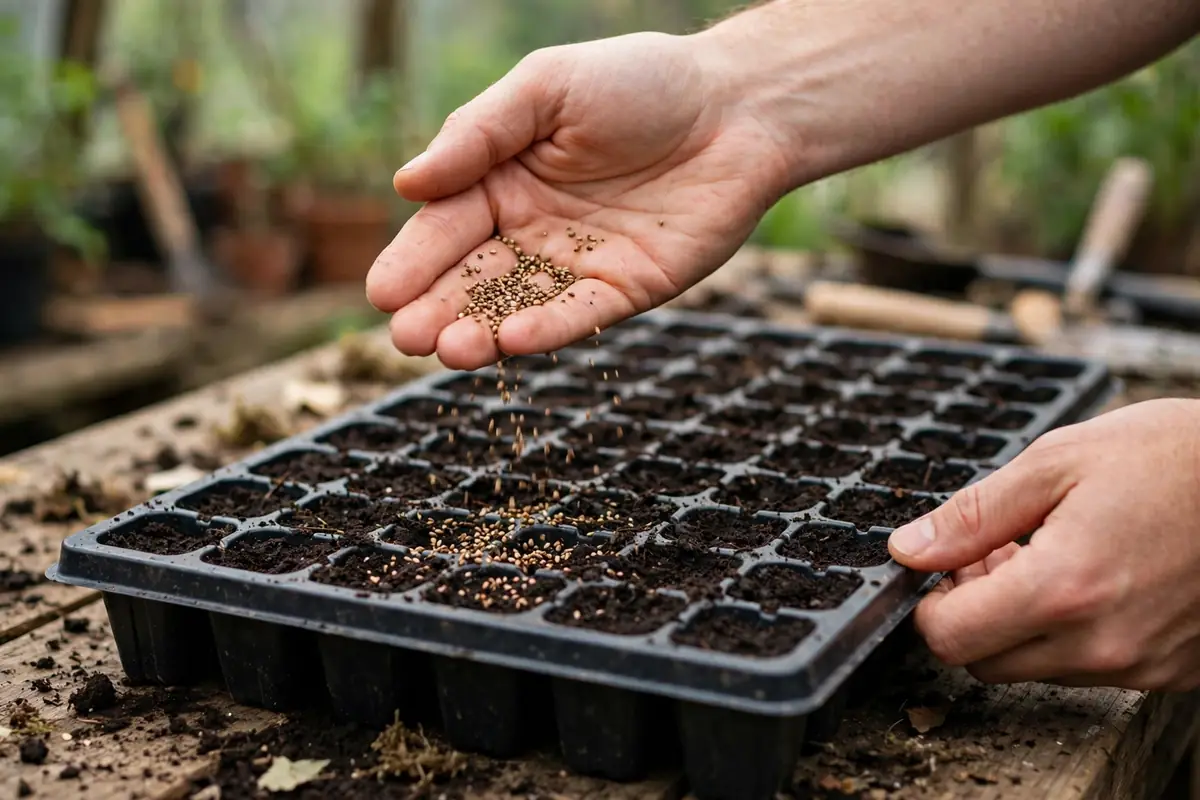
Sow indoors (late winter–spring) for tender and slow flowers — petunias, snapdragons, dahlias from seed, impatiens. Starting 6–8 weeks before the last frost gives them a head start so they flower in early summer instead of late. Sow direct outdoors for flowers that hate root disturbance or grow fast — sunflowers, poppies, cornflowers, nasturtiums, zinnias, cosmos (our cosmos flower guide shows how forgiving they are). Autumn sowing of hardy annuals (sweet peas, cornflowers, calendula) produces earlier, stronger plants than spring sowing where winters are mild. The technique itself — sowing — has barely changed in centuries; only the seed trays have improved.
How to Sow Flower Seeds Step by Step
- Fill a tray or pots with fine seed compost, level it, and water it before sowing so seeds are not washed around.
- Sow thinly. Tip seed into your palm, not straight from the packet. Crowded seedlings compete, stretch and damp off.
- Cover by the rule of two: compost to about twice the seed’s thickness. Fine seed (petunia, snapdragon) sits on the surface — it needs light to germinate.
- Label everything. Variety and date, in pencil or a marker that survives watering. All seedlings look alike; your memory is lying when it says you will remember.
- Keep warm and moist. A clear lid or plastic bag holds humidity; 18–21°C suits most flowers. Remove the cover the moment shoots appear.
- Give maximum light immediately. A sunny sill turned daily, or grow lights 5 cm above the leaves. Leggy, pale seedlings are light-starved seedlings.
- Prick out and harden off. Move seedlings to individual pots at the first true leaves, then acclimatise them outdoors over 7–10 days before planting out after the last frost.
The Easiest Flowers to Grow From Seed
| Flower | Sow | Germination | Why it is easy |
|---|---|---|---|
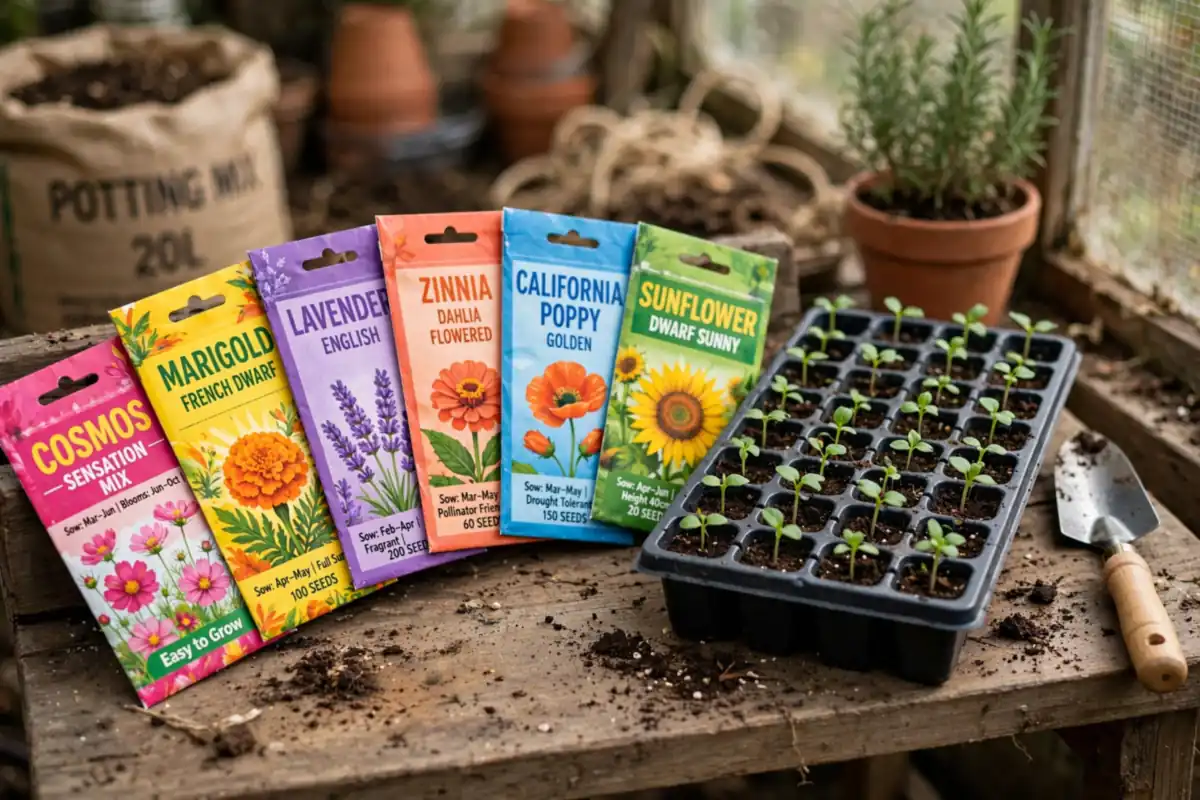
| Sunflower | Direct, spring | 7–14 days | Big seed, fast growth, huge reward — varieties in our sunflower varieties guide |
| Zinnia | Direct or indoors | 5–10 days | Sprouts fast, blooms till frost |
| Cosmos | Direct, late spring | 7–14 days | Thrives on neglect and poor soil |
| Marigold | Indoors or direct | 5–10 days | Reliable germination, pest-deterring roots |
| Nasturtium | Direct | 10–14 days | Big pea-like seeds children can handle |
| Sweet pea | Autumn or early spring | 10–20 days | Hardy, and the scent is worth the wait |
| California poppy | Direct, autumn/spring | 14–21 days | Self-seeds forever after year one |
Storing and Saving Your Own Seeds
Storing bought seed: keep packets cool, dark and dry — a sealed jar with a silica sachet in a drawer is ideal. Most flower seed stays viable 2–3 years (pansies and delphiniums are short-lived at 1–2; sunflowers and zinnias last longer), with germination dropping each year. Saving your own: let seed heads dry fully on the plant, collect on a dry day, clean off the chaff, and store in labelled paper envelopes. Save only from open-pollinated varieties, and from your healthiest plants — you are breeding your garden’s future, one envelope at a time. F1 hybrids will not come true, but even their seedlings are a free lottery.
Frequently Asked Questions
How long do flower seeds take to germinate?
Most sprout in 5–21 days at 18–21°C. Fast ones (zinnia, marigold) show in under a week; slow ones (petunia, snapdragon, parsley-family flowers) can take 2–3 weeks. If nothing has appeared after twice the packet’s stated time, the usual causes are old seed, soil too cold, or seed buried too deep.
Can I plant flower seeds directly in the ground?
Yes — many flowers prefer it. Sunflowers, poppies, cornflowers, nasturtiums, zinnias and cosmos all sow happily direct once the soil warms in spring, and tap-rooted flowers (poppies, sweet peas) actually resent transplanting. Prepare a fine, weed-free seedbed and keep it moist until they are up.
Do flower seeds expire?
Gradually. Seed is alive but ageing: viability drops a little each year, faster in warm or damp storage. A simple test — fold 10 seeds in a damp paper towel inside a bag for a week — tells you the germination rate before you waste a tray on dead seed.
Why did my flower seeds not germinate?
The big five: seed too old, sown too deep (the most common), soil too cold, compost dried out at the critical moment, or birds/mice ate surface-sown seed outdoors. Work through that list and you will find nearly every failure.
How many seeds are in a packet?
It varies enormously — from 10–20 for large or F1 seed (sunflowers, sweet peas, pelargoniums) to 500+ for dust-fine seed (poppies, petunias). Check the count before comparing prices: a “cheap” packet of 15 F1 seeds may be worse value than a generous open-pollinated packet.