Cut Flower Garden: How to Plan and Grow Flowers for the Vase
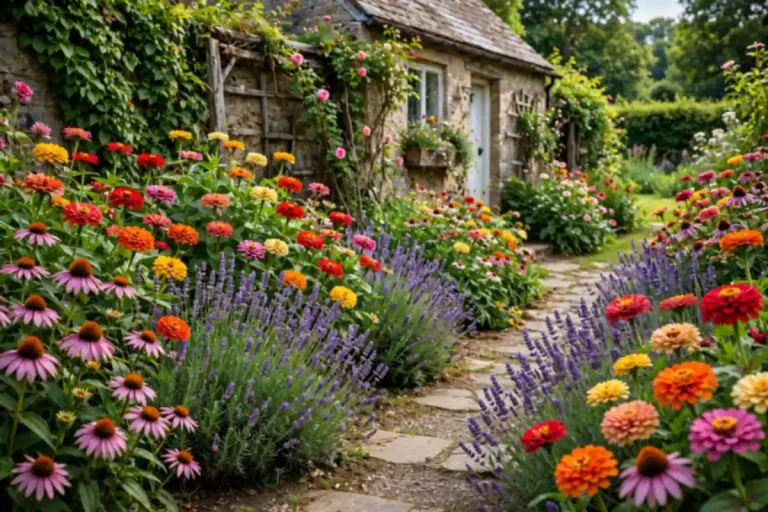
A cut flower garden is a patch of ground grown for the vase instead of the view — rows of flowers planted to be picked, week after week, all season long. It is the most productive square metres in most gardens: a bed the size of a parking space can fill a house with bouquets from June to October.
This guide covers how to plan and plant a cutting garden, the best flowers for cutting (with vase life), succession sowing so the supply never stops, and how to cut and condition flowers so they last.
Quick Answer
To start a cut flower garden: choose a sunny spot, plant in straight rows you can reach across (beds about 1 m wide), grow proven cutting flowers — zinnias, cosmos, dahlias, sunflowers, snapdragons, sweet peas — and sow or plant in small batches every 2–3 weeks so new flowers keep coming as old ones finish. Cut in the cool of morning, straight into water, and most flowers will last 5–10 days in the vase.
Table of Contents
- What Is a Cut Flower Garden?
- Planning Your Cutting Garden
- Best Flowers for a Cut Flower Garden
- Succession: Flowers All Season
- How to Cut and Condition Flowers
- Frequently Asked Questions
What Is a Cut Flower Garden?
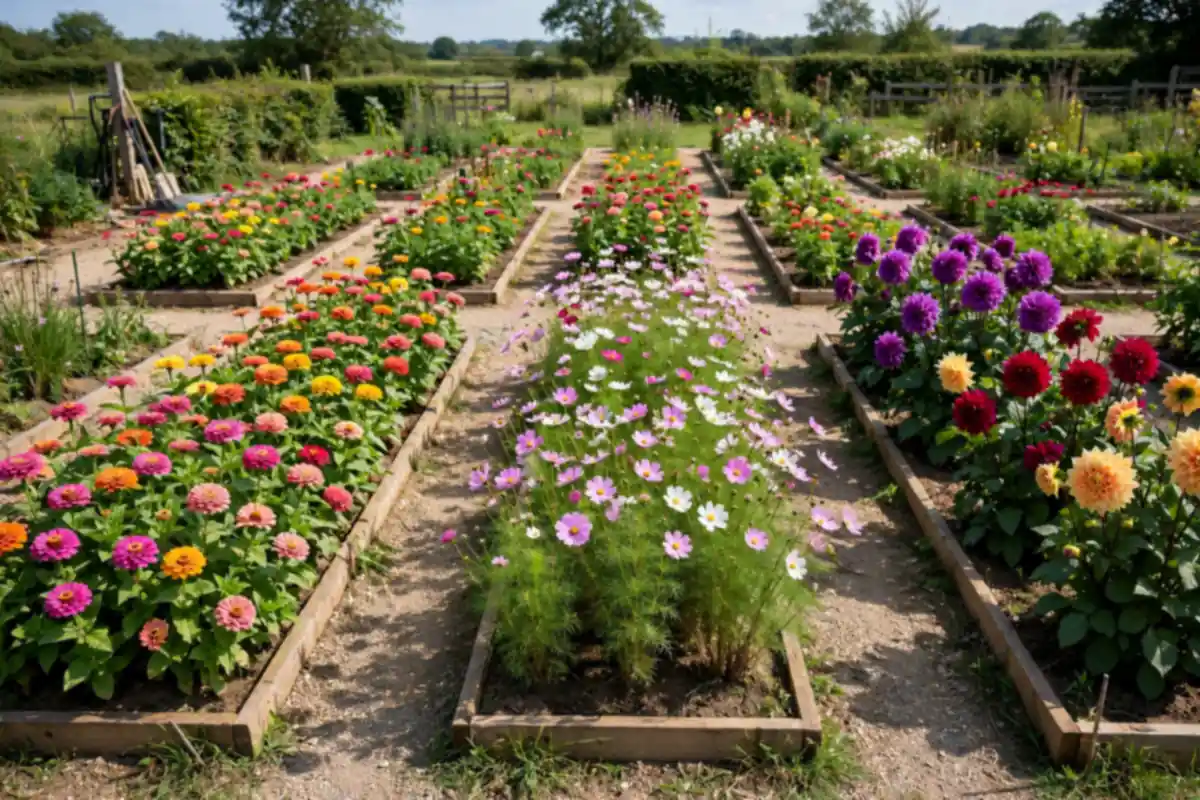
A cut flower garden (or cutting garden) is an area planted specifically for harvesting flowers for indoor arrangements. Unlike a display border — where every bloom is part of the picture — a cutting garden is a crop: plants are grown in rows, often packed tightly, and picked hard, which for most annuals simply means more flowers. Historically every big house had one tucked out of sight; today it is usually a corner of the flower garden or a few raised beds. The flowers themselves are the same species florists use — cut flowers are a global industry — just grown at garden scale, picked at dawn, and in a vase within the hour. What you do with the harvest is covered by our flower arranging guide.
Planning Your Cutting Garden
- Site: the sunniest, most sheltered spot you have — 6–8+ hours of sun, protected from wind that snaps tall stems.
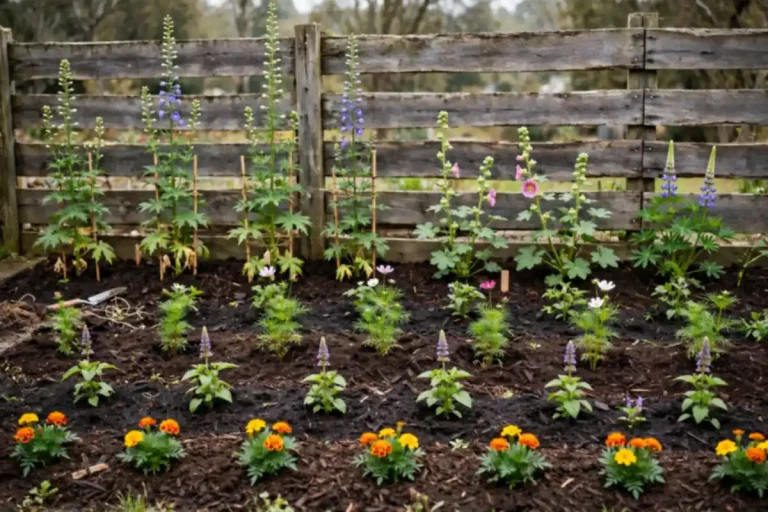
- Layout: straight rows or 1 m-wide beds with paths between, so you can reach every stem without treading on soil. Cutting gardens are working gardens; beauty is a bonus.
- Soil: rich and moisture-retentive — cutting flowers are hungry and thirsty. Dig in compost before planting and mulch after.
- Support: tall growers (dahlias, sunflowers, delphiniums) need staking or horizontal netting laid over the bed for stems to grow through.
- Mix: plan in three parts — focal flowers (dahlias, zinnias, sunflowers), filler (cosmos, feverfew, baby’s breath), and foliage (basil, mint, grasses, eucalyptus if you have the climate). Bouquets need all three.
Best Flowers for a Cut Flower Garden
| Flower | Season | Vase life | Notes |
|---|---|---|---|
| Zinnia | Summer–frost | 7–10 days | The cutting-garden backbone; cut-and-come-again |
| Dahlia | Midsummer–frost | 5–7 days | The showstopper; more you cut, more they flower |
| Cosmos | Summer–autumn | 5–7 days | Feathery filler and focal in one |
| Sunflower | Summer | 7–10 days | Branching varieties give stem after stem — see sunflower varieties |
| Snapdragon | Spring & autumn | 7–10 days | Cool-season spikes; succession-sow |
| Sweet pea | Spring–early summer | 4–6 days | Short life, unbeatable scent |
| Scabiosa | Summer | 7–10 days | Pincushion flowers, then sculptural seed heads |
| Ammi & feverfew | Summer | 7 days | The lacy fillers that make bouquets look florist-made |
Succession: Flowers All Season
The beginner’s cutting garden flowers in one glorious glut, then stops. Professionals avoid this with succession planting: sow or plant fast annuals (zinnias, cosmos, sunflowers) in small batches every 2–3 weeks from spring to midsummer, so a fresh row is always coming into bloom as another finishes. Pair them with the season’s natural acts — spring: sweet peas, snapdragons, ranunculus; summer: zinnias, cosmos, dahlias; autumn: late dahlias, asters, and the seed heads and dried flowers that close the year. Keep a simple sowing diary; next year’s you will be grateful.
How to Cut and Condition Flowers
- Cut early or late — morning is best, when stems are full of water. Never cut in midday heat.
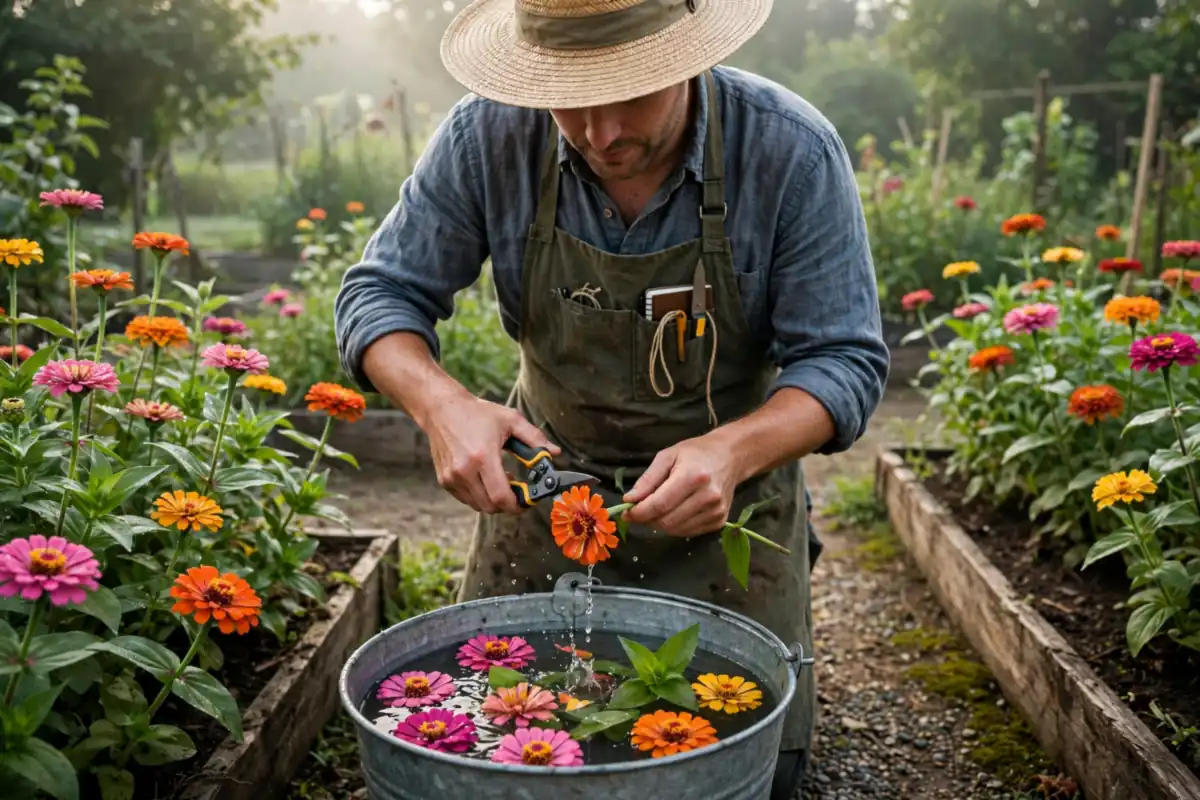
- Use clean, sharp snips and cut into a bucket of cool water carried to the bed — flowers should never travel dry.
- Cut at the right stage: zinnias fully open (they do not open after cutting — test by shaking the stem; if it flops, it is not ready), dahlias just opening, sweet peas when half the flowers on the stem are open.
- Strip lower leaves that would sit below the waterline — submerged foliage rots and poisons the vase.
- Condition before arranging: rest the bucket somewhere cool and dark for a few hours (overnight is ideal) before the flowers go into a vase.
- Vase basics: scrupulously clean vase, fresh water every 2 days, re-cut stems at an angle, keep away from fruit bowls (ripening fruit releases ethylene, which ages flowers fast).
Frequently Asked Questions
How big should a cut flower garden be?
Smaller than you think. Two beds of 3 × 1 m, planted intensively and succession-sown, supply a vase or two a week all summer. Start there; cutting gardens expand naturally because they earn their space.
What is the difference between a cut flower garden and a normal flower garden?
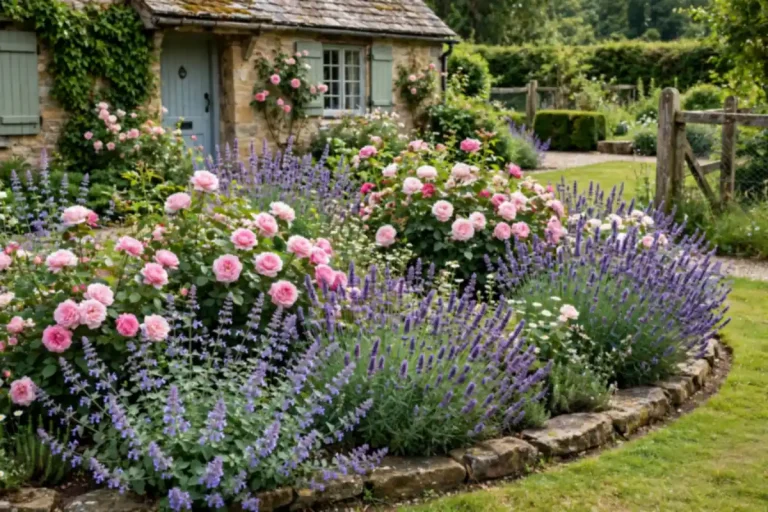
Intent and layout. A display garden is planted for how it looks in the ground, in drifts and layers; a cutting garden is planted in rows for how much it yields, with varieties chosen for stem length and vase life. Many gardens do both — display beds out front, cutting rows behind.
What flowers last longest in a vase?
Zinnias, snapdragons, sunflowers, scabiosa and chrysanthemums commonly reach 7–10 days with clean water and conditioning. Alstroemeria and carnations can pass two weeks. At the other end, sweet peas and poppies give 3–5 glorious days — worth it for the scent and colour.
When should I start a cut flower garden?
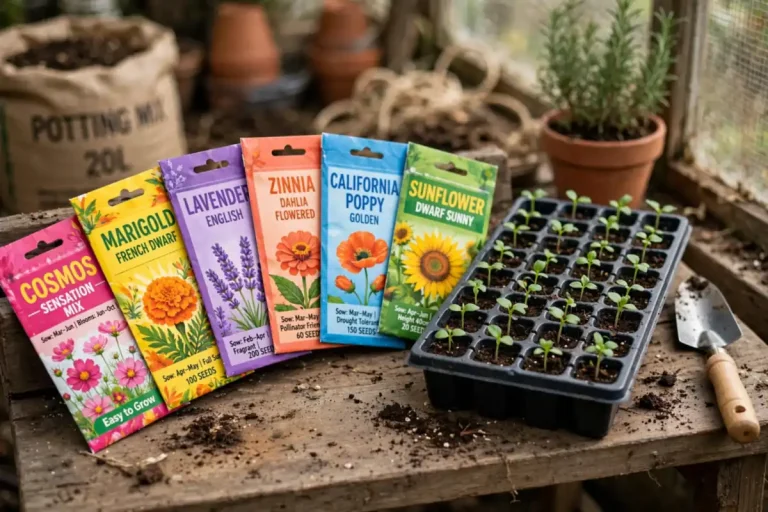
Prepare beds and sow hardy annuals in autumn or early spring in mild climates; start tender annuals (zinnias, cosmos, dahlias) indoors 6 weeks before the last frost or sow direct after it. The planning — varieties, layout, supports — is a winter job.
Do cut flowers grow back after cutting?
The right ones do. “Cut-and-come-again” flowers — zinnias, cosmos, dahlias, scabiosa, sweet peas — produce new flowering stems after each cut, and picking actually extends their season. Single-stem flowers (most sunflowers, tulips) give one stem per plant, so succession sowing matters more for them.