Flower Pot: How to Choose and Plant the Right Pot for Flowers
A flower pot is the smallest possible garden — one container, one plant (or a cheerful crowd), anywhere you put it. Pots flower on balconies, doorsteps, windowsills and patios where no bed could ever go, and they let you grow tender plants you could never plant in the ground.
This guide covers choosing the right flower pot (materials, sizes, drainage), planting one properly step by step, the best flowers for pots, and the watering routine that keeps container flowers blooming all season.
Quick Answer
Choose a flower pot with drainage holes, at least 20–30 cm wide for most flowering plants, in a material that suits your climate — terracotta breathes and suits dry-lovers, glazed ceramic and plastic hold moisture longer. Fill with quality potting mix (never garden soil), plant at the same depth as the nursery pot, water thoroughly, and feed fortnightly in season: pots are small worlds, and everything in them comes from you.
Table of Contents
- Types of Flower Pot: Materials Compared
- Choosing the Right Size and Drainage
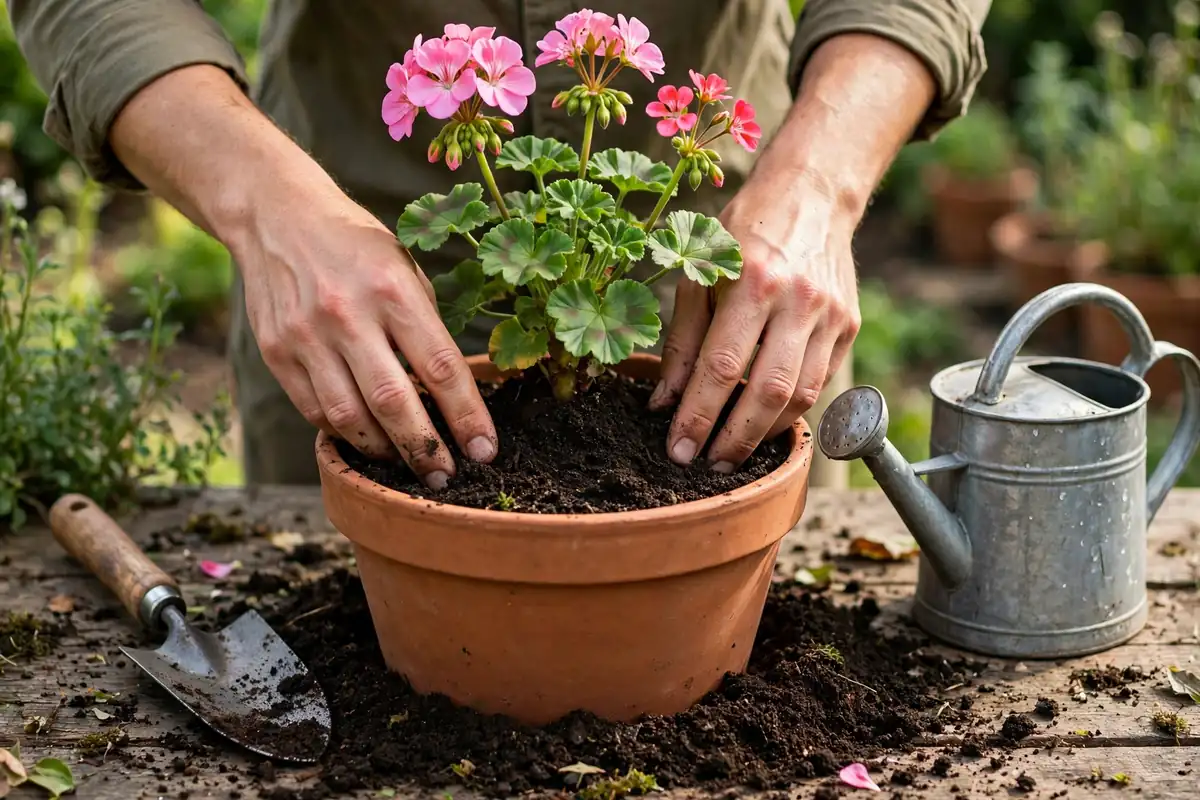
- How to Plant a Flower Pot Step by Step
- Best Flowers for Pots
- Watering and Feeding Potted Flowers
- Frequently Asked Questions
Types of Flower Pot: Materials Compared
| Material | Strengths | Watch out for |
|---|---|---|
| Terracotta (clay) | Breathes, stable, classic look; roots stay cool and healthy | Dries out fast; can crack in hard frosts |
| Glazed ceramic | Holds moisture, huge colour range, decorative | Heavy; check it actually has a drainage hole |
| Plastic | Light, cheap, holds moisture, easy to move | Can look cheap; degrades in strong sun over years |
| Metal | Modern look, durable | Heats up in sun and can cook roots; needs a liner |
| Wood | Natural, insulates roots well | Rots eventually; line the inside |
| Fabric grow pots | Air-prune roots, feather-light, fold away | Dry out fastest of all; informal look |
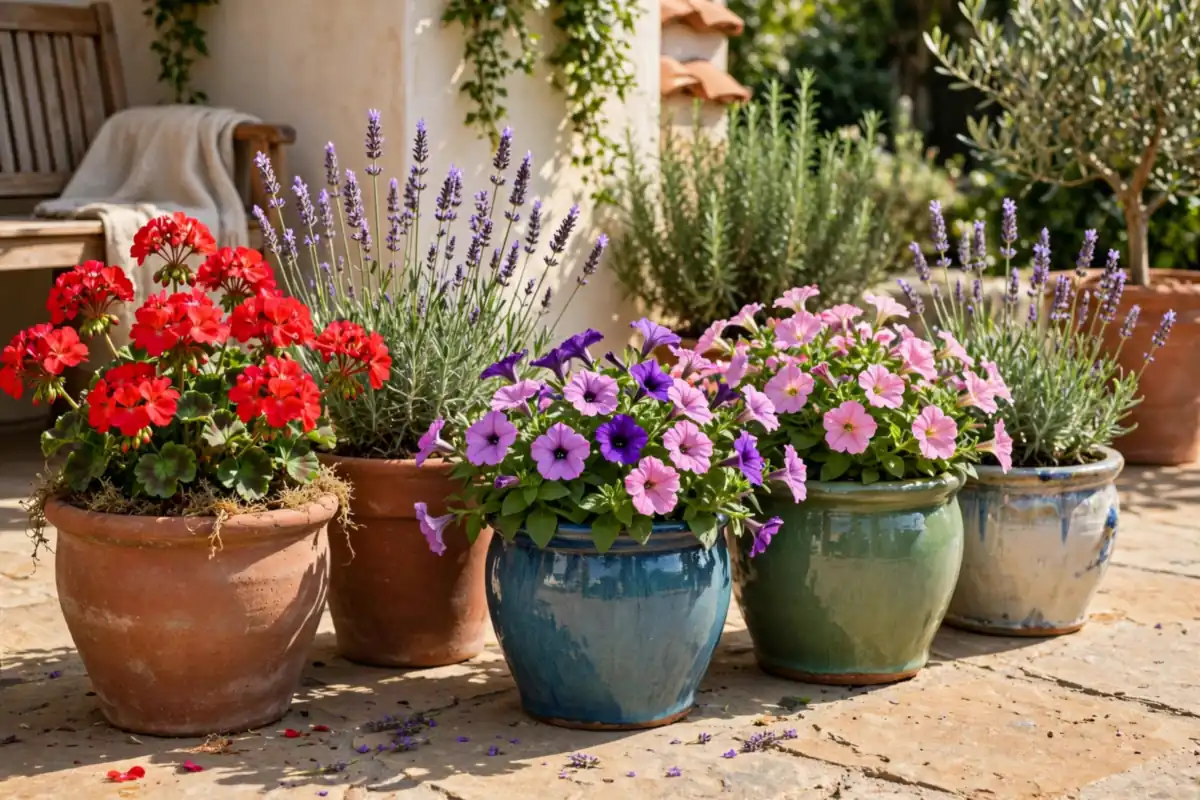
The humble flowerpot has barely changed in centuries because the design works: a tapered pot with a hole in the bottom. Everything else is material and taste. In a full flower garden, pots are also the finishing touch — a pair flanking a door or steps lifts the whole scene.
Choosing the Right Size and Drainage
- Size up. A pot that is too small dries out daily and stunts the plant. For most annual flowers choose 20–30 cm diameter minimum; shrubs and roses want 40 cm+.
- Drainage holes are non-negotiable. No hole = a swamp = rotting roots. If a decorative pot has no hole, drill one, or use it as a cachepot with a drained inner pot inside.
- Skip the gravel layer. The old advice to put stones in the bottom does not improve drainage — it just steals soil depth. Fill with potting mix throughout.
- Raise pots off the ground on feet or a saucer so holes drain freely and frost air circulates.
How to Plant a Flower Pot Step by Step
- Soak the plant first. Water the nursery pot well an hour before planting — dry rootballs repel water for days afterwards.
- Fill the pot two-thirds with fresh potting mix (choose one with slow-release fertiliser if you are a forgetful feeder).
- Position the plant at the same depth it grew in its pot, with the top of the rootball 2–3 cm below the rim so water pools instead of running off.
- Backfill and firm gently around the rootball, removing air pockets.
- Water deeply until it runs from the drainage holes — this settles the mix around the roots.
- Mulch the surface with fine bark or gravel: it keeps moisture in and soil off the leaves when you water.
Best Flowers for Pots
| Flower | Why it suits pots | Sun |
|---|---|---|
| Geranium (pelargonium) | The classic pot flower; blooms for months, tolerates missed waterings | Full sun |
| Petunia | Trailing waves of colour for pots and baskets | Full sun |
| Lavender | Loves terracotta’s dry warmth; scent by a doorway is unbeatable — see our fragrant flowers guide | Full sun |
| Marigold | Compact, non-stop flowers, unfussy | Full sun |
| Fuchsia | Dangling bells made for elevated pots | Part shade |
| Begonia | Flowers bravely where sun barely reaches | Shade to part shade |
| Dahlia (dwarf) | Big-show blooms in a 30 cm pot | Full sun |
| Pansy and viola | Cool-season colour when little else flowers | Sun to part shade |
The professional formula for a mixed pot is thriller, filler, spiller: one upright star in the centre, mounding flowers around it, and a trailer spilling over the edge.
Watering and Feeding Potted Flowers
- Water by need, not by schedule. Push a finger 3 cm into the mix — dry means water. In summer heat, small pots may need water daily; big pots every few days.
- Feed little and often. Watering washes nutrients out of pots, so a half-strength liquid feed every 1–2 weeks in the growing season keeps flowers coming.
- Deadhead weekly. Potted annuals bloom until they set seed; snipping spent flowers keeps the show running.
- Turn pots a quarter-turn weekly so all sides get light and growth stays even.
- Refresh yearly. Each spring, knock off the top 5 cm of old mix and replace with fresh, or repot one size up if roots circle the bottom.
Frequently Asked Questions
What size flower pot do I need?
For most flowering annuals, 20–30 cm (8–12 in) diameter with at least 20 cm depth. Perennials and small shrubs need 30–40 cm, roses 45 cm+. When in doubt, go bigger: larger pots hold more water and feed, grow bigger plants, and need watering half as often.
Do flower pots need drainage holes?
Yes — always. Roots sitting in waterlogged mix suffocate and rot within weeks. If you love a pot without a hole, either drill one (a masonry bit for ceramic/terracotta) or keep the plant in a plain drained pot slipped inside it, emptying any collected water after watering.
Can I use garden soil in a flower pot?
No. Garden soil compacts in containers, drains poorly, and often carries weed seeds and disease. Bagged potting mix is engineered for pots — open, free-draining, and sterile. It is the one input not worth economising on.
How often should you water flowers in pots?
It depends on pot size, material and weather: terracotta and small pots in summer sun can need water every day, while a large glazed pot in spring may go 4–5 days. The finger test (dry 3 cm down = water now) beats any fixed schedule.
Why are my potted flowers wilting even though I water them?
Usually one of three causes: the rootball dried out so completely that water runs down the sides without soaking in (fix: stand the pot in a bucket of water for 30 minutes), the pot is rootbound and needs a bigger home, or — paradoxically — overwatering has rotted the roots. Check the mix moisture before adding more water.