Butterfly Pea Flower: Tea, Benefits, Colour Change & How to Grow It
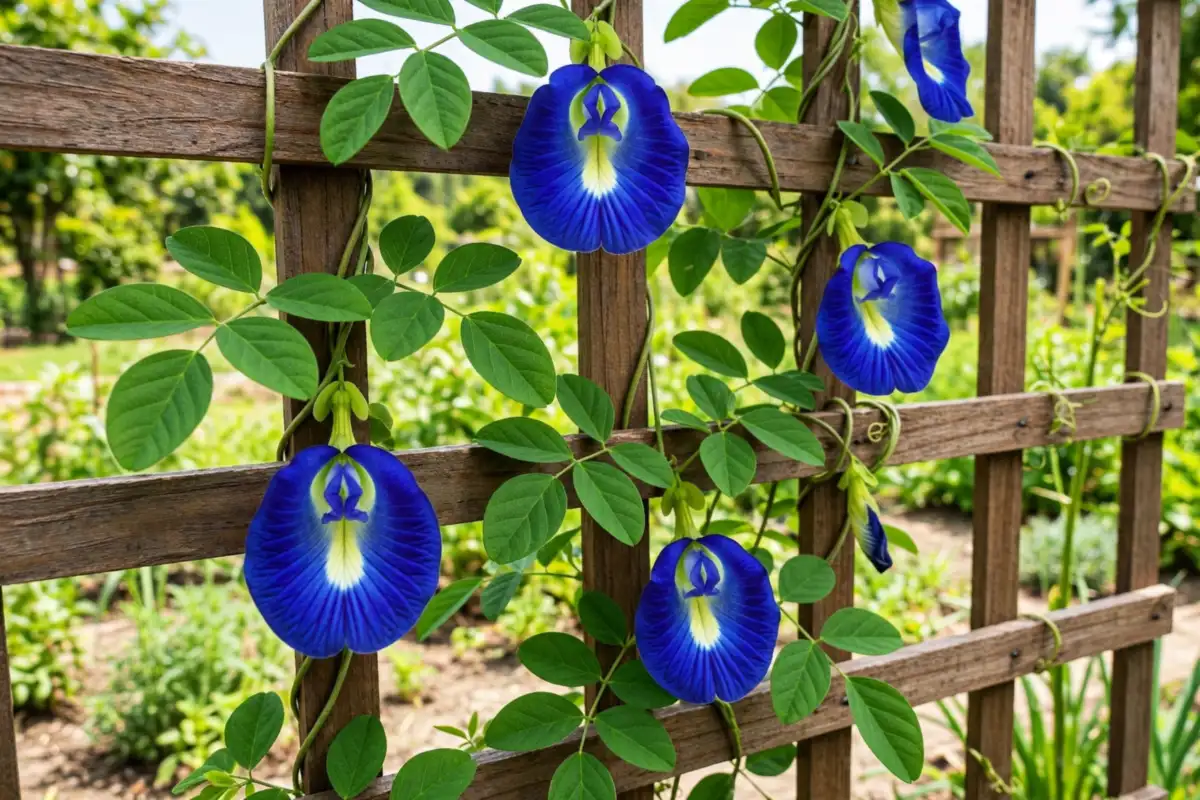
A butterfly pea flower is hard to forget once you have seen it. The bloom is a deep, true blue with a pale yellow-white centre, shaped a little like a butterfly with its wings open. Drop a few dried petals into hot water and the cup turns sapphire blue — then squeeze in lemon and watch it turn purple, then pink, right in front of you.
That colour trick is why this flower has become famous far beyond the gardens of Southeast Asia, where it comes from. It is a climbing vine, a cousin of the pea, and it is grown both as an ornamental flower and as a natural blue colour for teas, rice dishes and drinks. This guide covers what it is, how to grow it, how to make the tea, and what is actually known about its benefits — in plain terms, with no miracle claims.
Quick Answer
A butterfly pea flower is the vivid blue bloom of Clitoria ternatea, a tropical climbing vine in the pea family. Its petals get their colour from anthocyanin pigments, which change with pH — so butterfly pea tea is blue on its own, turns purple or pink when you add lemon juice, and turns green if the drink is made alkaline. Grow it in full sun with something to climb on, treat it as an annual where frosts come, and pick the flowers fresh or dry them for tea.
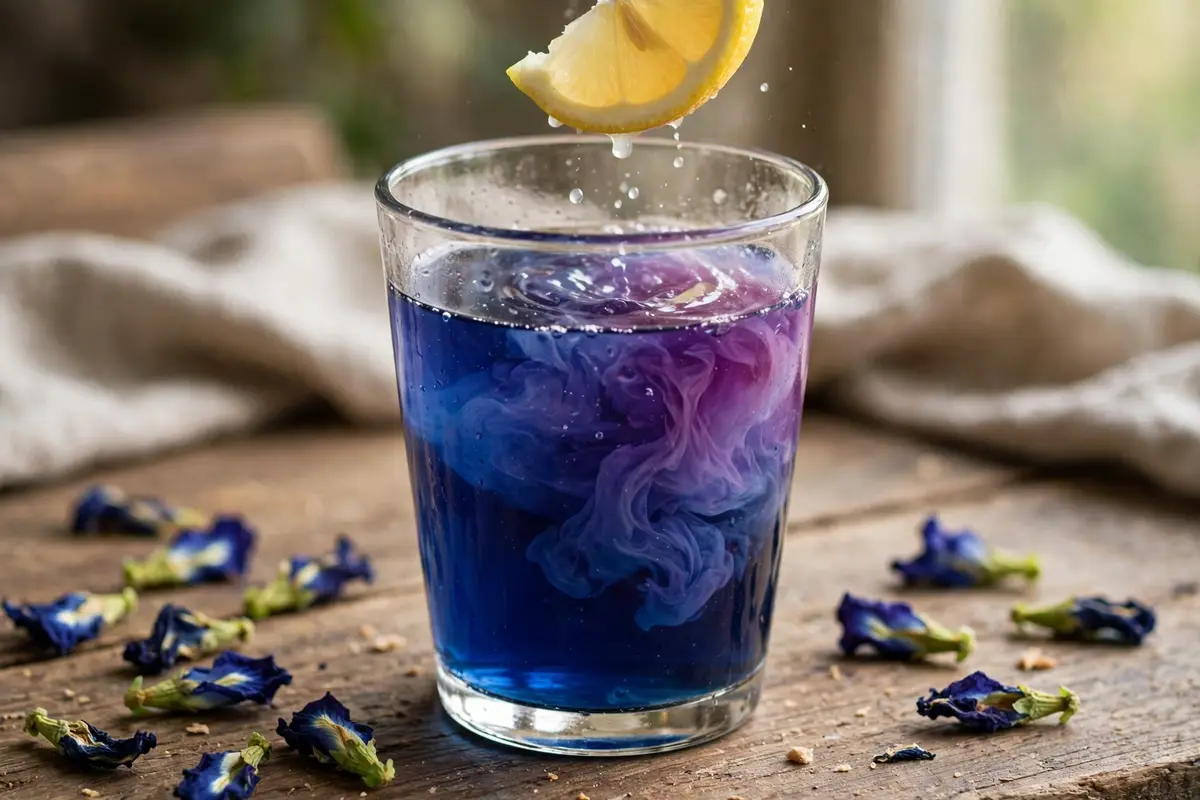
Table of Contents
- What Is a Butterfly Pea Flower?
- Blue, White and Purple: The Colours
- Butterfly Pea Flower Meaning and Symbolism
- How to Grow Butterfly Pea
- Butterfly Pea Flower Tea: How to Make It
- Why the Tea Changes Colour
- Butterfly Pea in Food and Drinks
- Butterfly Pea Flower Benefits: What Is Actually Known
- Common Mistakes When Growing Butterfly Pea
- Frequently Asked Questions
What Is a Butterfly Pea Flower?
Butterfly pea (Clitoria ternatea) is a fast-growing tropical vine native to Southeast Asia, and now grown in warm gardens all over the world. It is a true legume, in the Fabaceae family — the same family as peas and beans — so, like other legumes, it fixes nitrogen in the soil through bacteria in its root nodules. You can read more in the butterfly pea page on Wikipedia.
The plant is named for the shape of its flowers, which look like a butterfly at rest. Each bloom is about 4 to 5 cm long, hangs a little upside down, and is usually a rich blue with a white and yellow centre. After flowering it sets slender seed pods, 5 to 8 cm long, just like a pea plant. A single vine can reach 3 to 5 metres long in one warm season if it has something to climb.
It is one of the few flowers that is grown as much for the kitchen as for the garden. The fresh flowers can be scattered over salads, and the dried petals are steeped for tea or used as a natural blue dye for rice, desserts and drinks. That is what sets it apart from most ornamental flowers: it earns its place twice.
Butterfly Pea Quick Facts
- Scientific name: Clitoria ternatea.
- Family: Fabaceae, the legume or pea family.
- Plant type: fast-growing climbing vine, 3–5 metres in a season.
- Flowers: vivid blue (also white and purple forms), about 4–5 cm, with a yellow-white centre.
- Sun: full sun, 6–10 hours a day.
- Soil: moist, well-drained soil, pH about 6.0–8.0.
- Cold: very frost-sensitive; perennial only where winters stay warm, grown as an annual elsewhere.
- Best temperature: about 24–32 °C (75–90 °F).
- Good for the garden: fixes nitrogen in the soil, like other legumes, and bees visit the flowers.
Blue, White and Purple: The Colours
Blue is the famous colour, and it is a genuine rarity. True blue is one of the hardest colours for a flower to make — only about 1 in 10 flowering plants can do it — which is why our guide to blue flowers counts butterfly pea among the most useful blues a gardener can grow. The blue comes from anthocyanins, the same pigment family that colours blueberries and red wine, in forms called ternatins that are special to this plant.
There are also white and purple forms. The white-flowered variety makes no blue anthocyanin at all, so its tea stays pale and it never does the colour-change trick. The purple forms sit between the two. If you are buying seed for the tea, check the packet says blue — white butterfly pea is still a pretty vine, but it will not give you a blue cup.
Flower colour can look a little different through the season: blooms are deepest in strong sun and warm weather, and paler in shade or cool spells. That is normal, and the tea colour follows the petals you pick.
Butterfly Pea Flower Meaning and Symbolism
In its home region the flower carries a quiet, sacred meaning. In India the blue form is traditionally linked with the worship of Shiva, and the white form with Durga, and the plant has names in many languages — gokarn in Marathi, sankupuspam in Tamil, aparajita in Hindi and Bengali, where the name means “the undefeated one”.
In the language of flowers, blue stands for trust, peace and calm — the same meanings our blue flowers guide gives the colour as a whole. A butterfly pea vine over a doorway or fence is simply a friendly, generous plant: it flowers for months, feeds the soil, and asks for little more than sun and something to climb.
How to Grow Butterfly Pea
Butterfly pea is an easy vine in warm weather and a lost cause in frost, so timing matters more than technique. Start it after the last frost, give it sun and support, and it mostly looks after itself.
Sun and Soil
Choose the sunniest spot you have — at least six hours of direct sun a day, more if you can. The soil should be moist but well-drained; the plant tolerates a wide range of soils and even mild dry spells once established, but it sulks in waterlogged ground. Like other legumes it enriches the soil with nitrogen as it grows, so it is a kind neighbour in a mixed bed. In a full flower garden, give it the sunny fence or trellis at the back, where its height works for you instead of shading smaller plants.
Starting from Seed
Grow it from seed — it is the usual way, and seed is easy to collect in autumn from the dried pods. Soak the seeds in water for 12 to 24 hours first, then sow them about 15 to 20 cm apart, either straight into warm soil after the frost has passed, or indoors six to eight weeks before the last frost and moved out once nights stay above about 15 °C. Seeds sprout in one to two weeks in warm soil. Gardeners on r/gardening on Reddit often report their best results from direct sowing, since the young plants dislike root disturbance.
Support and Training
This is a twining climber, so it needs something to wrap around: a trellis, a fence, a pergola post, or strings run up a sunny wall. Without support it will sprawl along the ground, which still works — it makes a fast groundcover — but you get fewer flowers and they sit in the dirt. Tie the first shoots loosely to the support and the vine will take over from there. Pinch out the growing tip once or twice early on if you want a bushier plant with more flowering stems.
Water, Feeding and Pots
Water regularly while the plant is young, then ease off: established vines are fairly drought-tolerant, though they flower best with steady moisture in hot weather. Feed very little — a legume that fixes its own nitrogen rarely needs fertiliser, and rich feeding grows leaves at the expense of flowers. A handful of compost at planting is plenty.
In cold climates, grow it in a large pot and bring it indoors before the first frost. Our flower pot guide covers the setup: a deep container (at least 30 cm) with drainage holes, free-draining potting mix, and a small trellis or tripod of canes in the pot. Keep it in the sunniest window, water when the top few centimetres dry out, and it will often survive winter indoors to go out again in spring.
Harvesting the Flowers
Pick flowers in the morning, when they are fresh and fully open. Use them the same day, or dry them: spread them in a single layer in a warm, airy spot out of direct sun until they are crisp, then store in a sealed jar away from light. Dried petals keep their colour for months, which is how most tea drinkers keep a supply through winter. Leave a few pods to dry on the vine at the end of the season and you will have next year’s seed for free.
Butterfly Pea Flower Tea: How to Make It
Butterfly pea tea is the plant’s most famous use, and making it is simple. It is an herbal infusion, not a true tea — there is no tea leaf in it — and the taste is mild and earthy, a little like green tea, which is why people usually serve it with lemon, honey or mint.
- Measure the flowers. Use about a quarter of a cup of dried butterfly pea flowers for one to two cups of water. Fresh flowers work too — use a small handful.
- Boil the water, then take it off the heat. Pour it over the flowers in a cup or teapot.
- Steep until the colour is deep. Give it up to eight minutes. The water turns a rich indigo blue as the colour comes out of the petals.
- Strain and serve. Drink it hot, or pour it over ice. Add sweetener if you like.
- Do the colour trick. Squeeze in lemon juice and watch the blue turn purple, then pink, as you add more. A few drops give violet; a good squeeze gives a bright pink.
For a party trick, freeze the blue tea into ice cubes and drop them into lemonade: the cubes melt into pink swirls in the glass. For more drinkers’ experiences and variations, see questions about butterfly pea flower tea on Quora.
Why the Tea Changes Colour
The trick is chemistry you can see. The blue pigment is delphinidin, one of the anthocyanins, and its shape changes with the acidity (pH) of the liquid around it. Each shape absorbs light differently, so the colour we see changes too.
- Blue: the plain infusion, near neutral pH.
- Purple to pink: add an acid — lemon juice, lime juice, vinegar or tonic water — and the blue shifts through violet to magenta and pink as more acid goes in.
- Green: add something alkaline, such as a pinch of baking soda, and the blue moves toward green.
It is the same family of pigments that makes red cabbage turn pink in vinegar and blue in baking soda — only here the starting colour is a much more striking blue. The change is a property of the pigment, not a sign that anything has gone wrong with the drink.
Butterfly Pea in Food and Drinks
Beyond tea, the flower is mostly used as a natural blue colour. In Malaysia and Thailand, the blue infusion colours nasi kerabu, a herbed rice dish, and it is used the same way in desserts, jellies, ice cream, bread and cocktails or mocktails — anywhere a vivid, natural blue is wanted without artificial dye. Fresh flowers are also scattered over salads and rice for colour, and the leaves, young shoots and tender pods are eaten in some cuisines too.
A practical note for cooks: the colour is happiest in neutral or mildly acidic food. Very acidic dishes will push it toward purple-pink, which can be a feature rather than a flaw if you plan for it. And the petals stain — blue fingers and blue cloths wash out, but wipe up spills while they are fresh. Cut stems of any flower keep best with the same care as other blooms; our guide on how to make cut flowers last longer covers the basics if you are bringing sprays indoors for the table.
Butterfly Pea Flower Benefits: What Is Actually Known
This is the section to read carefully, because butterfly pea tea is often sold with big promises. Here is what can honestly be said, and what cannot.
What is in it: the flowers contain anthocyanins (including ternatins), plus flavonols such as kaempferol and quercetin. Anthocyanins are antioxidants — they can neutralise free radicals, the by-products of normal metabolism. That is a real chemical property, shared with blueberries and red wine, and it is the reason the flower is studied at all.
What tradition says: in Ayurvedic and Southeast Asian practice the plant has a long history as a medicinal herb, used for memory, calm and general wellbeing. That history is genuine, and it is part of why people are interested — but traditional use is not the same as proof from modern clinical trials.
What is not proven: there is no reliable evidence that butterfly pea tea treats, cures or prevents any disease, improves memory, or causes weight loss. Laboratory and animal studies exist, and they are interesting, but they are not the same as tested effects in people. Any product or post that promises those results is going too far.
The honest summary: enjoy butterfly pea as a beautiful, caffeine-free herbal drink and a natural food colour. Do not use it as medicine, and if you are pregnant, breastfeeding, or taking medication, ask a clinician before drinking it regularly — the same caution that applies to any herbal infusion taken daily. This guide is general information, not medical advice.
Common Mistakes When Growing Butterfly Pea
- Sowing too early. The seed needs warm soil and dies in frost. Wait until after the last frost, or start indoors and move out when nights are warm.
- No support. Without a trellis or fence the vine sprawls on the ground, flowers less, and rots in wet weather.
- Overfeeding. Rich fertiliser grows a jungle of leaves and few flowers. Compost at planting is enough.
- Waterlogged soil. The roots need air as much as water. Heavy, soggy ground causes rot — the most common killer.
- Buying white seed for blue tea. White butterfly pea has no blue pigment. Check the variety on the packet if the tea is the point.
- Expecting it to survive winter outdoors in a cold climate. It will not. Grow it as an annual, save seed, or keep it in a pot indoors.
Frequently Asked Questions
Is butterfly pea flower safe to eat?
The flowers are widely eaten and drunk as tea and food colouring, and the flowers, leaves, young shoots and tender pods are all used as food in Southeast Asia. As with any herb, use it in normal food and drink amounts, buy it from a reputable food-grade source, and ask a clinician first if you are pregnant, breastfeeding or on medication.
What does butterfly pea tea taste like?
Mild and earthy, a little like green tea, with almost no sweetness of its own. Most people add lemon and honey or mint. The colour is the star — the flavour is deliberately quiet, which is why it works in so many drinks.
Why does butterfly pea tea change colour with lemon?
The blue pigment, delphinidin, changes shape as the pH changes. Lemon juice makes the drink acidic, and the pigment shifts from blue to purple, then pink. Add a base instead and it moves toward green. See the colour-change section above for the full range.
Can I grow butterfly pea in a pot?
Yes — in a deep pot (30 cm or more) with drainage holes, a small trellis or cane tripod, and the sunniest spot you have. Pots are also the easiest way to keep the plant alive through winter indoors in cold climates.
Is butterfly pea a perennial?
Only where winters stay warm and frost-free — in warm parts of Florida, for example, it can live for years. Everywhere else, treat it as an annual: grow it from seed each spring and save seed from the pods in autumn.
Does butterfly pea need a trellis?
It needs something to climb for the best flowering — a fence, trellis or pergola. It will sprawl as a groundcover without one, but you will get fewer flowers and more mess in wet weather.
How is butterfly pea different from a poppy?
Both are famous blue-to-red flowers, but they are unrelated: poppy is a Papaver with cup-shaped blooms on upright stems, while butterfly pea is a pea-family vine whose blue comes from a different pigment trick — the pH colour change. Read our full poppy flower guide to compare them side by side.