Banana Flower: What It Is, How to Cook It & How to Grow It
Most people know the banana as a sweet yellow fruit. Far fewer know that the same plant grows a large purple flower — and that in kitchens across South and Southeast Asia, that flower is a vegetable in its own right. It hangs below the young fruit like a teardrop, purple-red and heavy in the hand, and once it is cleaned and cooked it tastes mild, a little nutty, and a little like artichoke.
This guide covers what a banana flower is, how it grows, how to clean and cook it without the bitterness, and what is actually known about its nutrition — in plain terms, with no miracle claims.
Quick Answer
A banana flower, also called a banana blossom or banana heart, is the large purple bud that hangs at the end of a banana plant’s flowering stalk, below the developing fruit. It is the blossom of Musa acuminata and its relatives. The tough outer bracts are peeled away, the bitter stamen is removed from each small floret, and the tender heart is soaked in lemon water and then cooked — in salads, stir-fries, curries and soups. Grow bananas in full sun, rich moist soil and frost-free warmth, and harvest the flower only after the fruit hands have formed.
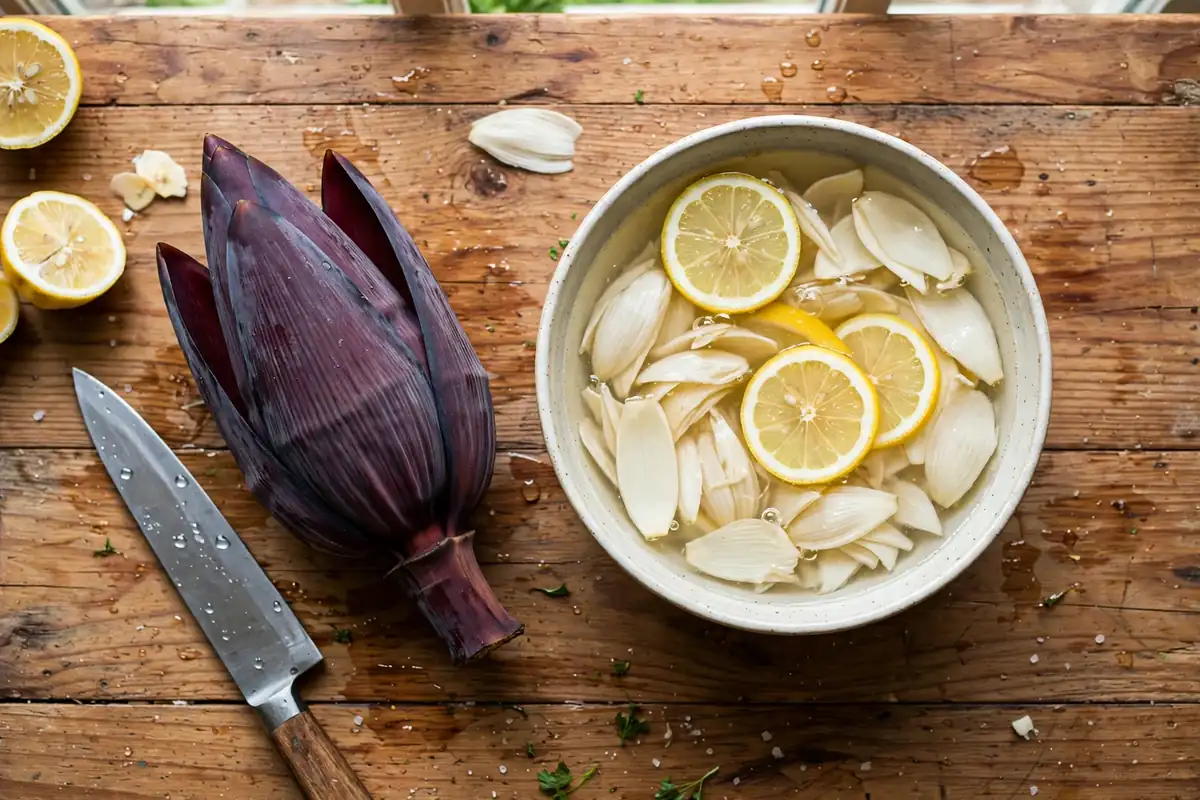
Table of Contents
- What Is a Banana Flower?
- Banana Flower vs Banana Fruit — and Banana Leaves
- What Does a Banana Flower Taste Like?
- How to Grow Banana for the Flower
- When and How to Harvest a Banana Flower
- How to Prepare a Banana Flower
- How to Cook Banana Flower
- Banana Flower Benefits: What Is Actually Known
- Common Mistakes With Banana Flower
- Frequently Asked Questions
What Is a Banana Flower?
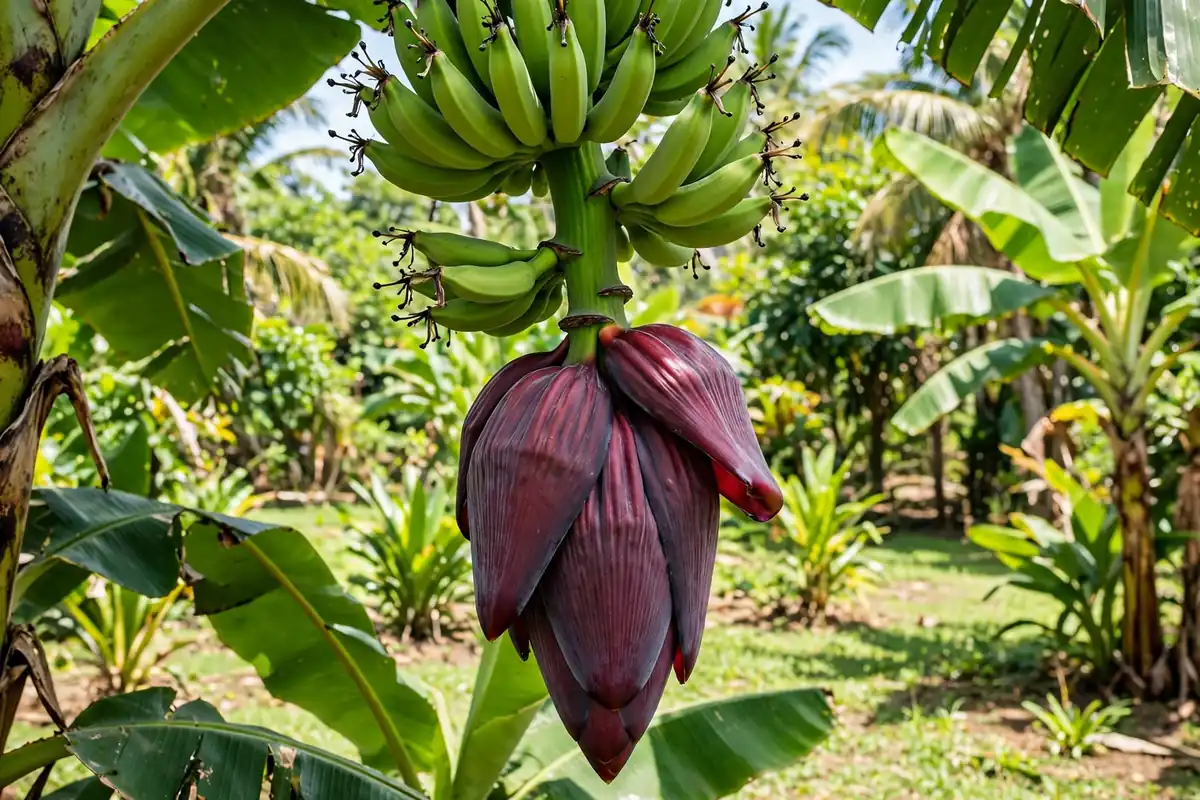
A banana flower is the flowering bud of the banana plant, the same plant that gives us the fruit. It is not a separate species and it is not a decoration: it is the end of the true flower stalk, and it opens bract by bract as the fruit forms above it. You can read more in the Musa acuminata page on Wikipedia.
The plant itself is a surprise to many gardeners. A banana is not a tree at all — it is a giant herbaceous perennial. What looks like a trunk is a pseudostem, a tight roll of leaf bases, and inside it the true stem rises until it emerges at the top as a long flower spike. The spike first shows rows of small flowers that become the hands of fruit, and at its tip hangs the large purple bud we call the banana flower.
The bud is teardrop-shaped, usually deep purple-red, and heavy for its size. Its outer layers are thick, waxy bracts. Lift one bract and you find a row of small pale florets, each with a hard, stick-like pistil. Peel deeper and the bracts turn paler and more tender, until you reach the soft heart in the middle. That heart, plus the cleaned florets, is the part people eat.
Bananas come from Southeast Asia, where wild Musa acuminata grew in wet forests and people gathered its fruit and its flower thousands of years ago. The flower has been eaten ever since in Vietnam, Thailand, the Philippines, Malaysia and South India — in salads, curries, soups and fritters — and it is now sold in Asian markets and health-food shops around the world, fresh or canned.
Banana Flower vs Banana Fruit — and Banana Leaves
It helps to keep the three parts of the plant straight, because they are used very differently.
The fruit is sweet, soft and eaten raw or cooked. The flower is a savoury vegetable: mild, firm and a little bitter until it is prepared properly, and almost always eaten cooked. The leaves are thick, tough and not pleasant to eat — they are used as plates, wrappers and serving trays, not as food.
The flower is also not the same as a banana blossom sold as a meat substitute in a tin. Canned banana blossom is the same flower, already cleaned and packed in brine, and it is a handy shortcut — but a fresh bud, prepared at home, has a firmer texture and a fresher taste. If you buy canned, rinse it well before cooking, because the brine is salty.
What Does a Banana Flower Taste Like?
A prepared banana flower tastes mild and a little nutty, with a faint bitterness and a flavour often compared to artichoke heart. The texture is the interesting part: fleshy, flaky and slightly fibrous, it shreds into strands that hold up in a stir-fry and soak up sauces and spices easily.
On its own it is deliberately plain — that is why it works so well in strongly flavoured dishes. In a Vietnamese salad it is shredded raw after soaking, tossed with lime, chilli, herbs and peanuts. In a South Indian curry it is simmered in coconut and spices. In a Thai soup it adds body without stealing the flavour of the broth. And in plant-based cooking it is shredded and seasoned into fritters, cutlets and burgers, where its flaky texture stands in for meat — though it is low in protein on its own, so a good recipe pairs it with chickpeas, beans or tofu.
One thing to expect: the flower leaks a dark, sticky sap when you cut it, and it can stain your hands and your chopping board. Rubbing a little cooking oil on your hands and knife first keeps the sap from sticking, and the lemon-water soak described below stops the cut pieces turning brown.
How to Grow Banana for the Flower
You cannot grow a banana flower without growing a banana plant first — the flower only appears on a mature plant, usually in its second season. That makes it a warm-climate plant: bananas fruit reliably in frost-free regions, roughly USDA zones 10–11, and grow as a seasonal plant elsewhere. In a sunny flower garden, give a banana the warmest, most sheltered corner you have.
Give it full sun — six to eight hours a day or more — and rich, moist, well-drained soil with a pH around 5.5 to 7.0. Bananas are heavy feeders that love organic matter, so dig in plenty of compost before planting and mulch thickly to hold moisture. Water deeply and often; a banana in dry soil grows slowly and flowers poorly. In a flower bed, space plants generously — a mature plant can reach 8 to 12 feet tall, and dwarf types 5 to 8 feet — and leave room for the suckers, or pups, that sprout from the base.
Most garden bananas are grown from those pups, not from seed. Dessert bananas are naturally seedless and set fruit without pollination, so the usual way to start a new plant is to separate a pup with roots from the mother plant and replant it. Growing from flower seeds is possible for wild species, but it is slow and unreliable for the fruiting types most people grow. Gardeners on r/gardening on Reddit often say the same thing: start with a pup from a plant that already fruits in your climate, and you will wait far less time for a flower.
Feed through the growing season with compost or a balanced fertiliser, stake or prop the stem once fruit is heavy, and cut the spent pseudostem to soil level after fruiting — it will not flower again, and a new pup takes its place. In a cold climate, grow a dwarf type in a large container and bring it in before frost; our flower pot guide covers the deep container, drainage and sunny spot a potted banana needs.
When and How to Harvest a Banana Flower
Harvest the flower only after the fruit hands have formed. The bud keeps opening and setting fruit as it grows down the stalk, and cutting it too early can stop the last hands forming. Wait until the hands are set and the remaining bud is clearly no longer needed for fruit — the bud will still be firm, heavy and tightly closed, with deep purple-red bracts and no browning or wilting.
Choose a bud that feels heavy and firm, with bracts packed tight. A light, loose or browning bud is past its best. Cut it with a clean, sharp knife, leaving a short piece of stalk attached so you have something to hold. Use it the same day if you can; a fresh flower keeps a day or two in the fridge, wrapped, but it dries out and darkens quickly once cut.
Only harvest from a plant you know is an edible banana type and that has not been sprayed with anything unsuitable for food crops. Ornamental bananas and plants treated with garden chemicals are not for the kitchen. If you are unsure of the variety, buy the flower from a market instead — it is sold there precisely because growers know which plants it came from.
How to Prepare a Banana Flower
Preparation is the most important part of cooking banana flower. Skip it and the dish tastes bitter; do it properly and the flower is mild and pleasant. Set aside about half an hour, a sharp knife, a large bowl of water, and lemon juice or vinegar.
First, oil your hands and knife lightly — the sap stains. Trim off the conical stem at the top and peel away the tough, dark outer bracts until you reach the paler, tender ones inside. The dark bracts are discarded.
Next, the step that matters most: inside each bract is a row of small florets, and each one has a hard, stick-like pistil (the stamen) poking out of it. Pull that pistil out of every floret and throw it away. The pistil is the main source of bitterness, and a single one left in can spoil a whole dish. Work through the bracts one by one until you reach the tender heart, then chop the heart and the cleaned florets.
Drop the chopped pieces straight into acidulated water — cold water with lemon juice or vinegar, about a quarter cup per four to five cups of water — and soak for at least 30 minutes. This draws out bitterness and stops the pieces browning in the air. Rinse well under cold water, and the flower is ready to cook. If you are short of time, ten minutes in lemon water is better than none, but the full soak gives the mildest flavour.
How to Cook Banana Flower
Once it is prepared, a banana flower cooks like any firm vegetable. Boil it for 10 to 15 minutes until tender, steam it for 15 to 20 minutes, or stir-fry it straight from the soak. Raw is possible in a shredded salad after a good soak, but cooking improves both the flavour and the texture, and most recipes cook it.
A simple first dish is a stir-fry: heat oil, fry garlic, chilli and onion, add the drained flower and cook for five to eight minutes, then finish with soy sauce, lime and herbs. For a salad, shred the soaked heart finely, toss with lime juice, fish sauce or soy, shredded carrot, mint, coriander and crushed peanuts. For a curry, simmer the prepared flower in coconut milk with turmeric, cumin and mustard seeds until tender. And for fritters, mix the chopped flower with chickpea flour, onion and spices, shape into patties and fry until golden — the same idea as the plant-based burger that has made banana blossom popular beyond Asia.
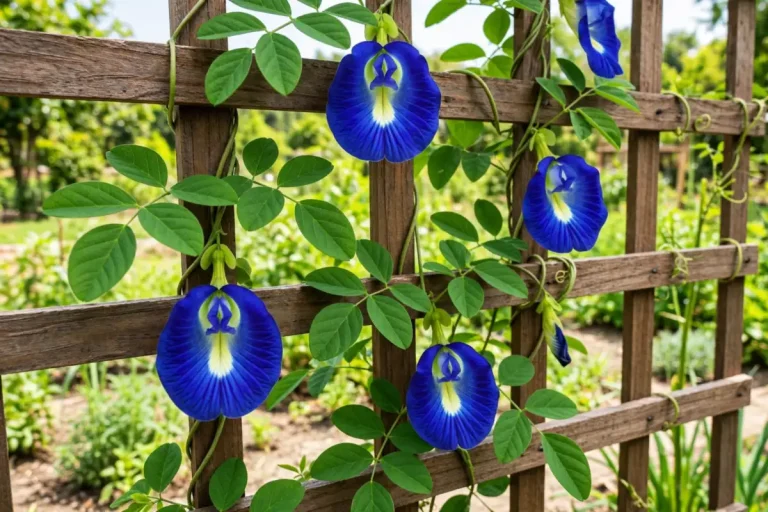
Like the butterfly pea flower in our butterfly pea flower guide, banana flower is one of the few blooms grown as much for the kitchen as for the garden — and it is the second article in our Edible Flowers series, after that 56,000-a-month opener.
Banana Flower Benefits: What Is Actually Known
Banana flower is a low-calorie vegetable with a useful nutritional profile: it is rich in dietary fibre, which supports digestion, and it contains vitamin C, vitamin E and B vitamins, along with potassium, calcium, magnesium and iron, plus antioxidant plant compounds. Those are the nutrients that show up in food-composition data, and they are the reason the flower is described as a nutritious vegetable rather than a health food with special powers.
You will also see traditional claims about it — that it helps digestion, steadies blood sugar, or supports women’s health — and some small studies have looked at these ideas. The honest position is that the evidence is early and limited, and none of it makes banana flower a treatment for anything. Eat it because it is a tasty, fibrous vegetable, not because it cures a condition.
This section is general information only, not medical advice. If you are pregnant, breastfeeding, or taking medication — especially for blood sugar — ask a clinician before eating banana flower regularly or in large amounts.
Common Mistakes With Banana Flower
The most common mistake is skipping the pistil step. The tough stamen in each floret is bitter, and no amount of seasoning hides it once it is cooked in. Take the time to remove every one.
The second is skipping the soak. Cut banana flower browns within minutes in air, and the lemon-water soak is what keeps it pale and mild. Chop straight into the bowl, not onto a dry board.
The third is harvesting too early. Cutting the bud before the fruit hands have formed costs you bananas for a flower you could have had a few weeks later. Wait for the hands, then take the bud.
The fourth is eating it from an unknown or sprayed plant. Only use a flower from an edible banana variety that has not been treated with chemicals unsuitable for food. When in doubt, buy it — markets in South and Southeast Asia sell it fresh, and canned blossom is a safe fallback.
Frequently Asked Questions
Is a banana flower the same as a banana blossom?
Yes — banana flower, banana blossom and banana heart are the same thing: the large purple bud at the end of a banana plant’s flowering stalk.
Can you eat banana flower raw?
It is technically edible raw after cleaning and soaking, and shredded raw flower is used in some salads. But it is bitter and tough raw, and cooking improves the flavour and texture a lot, so most recipes cook it.
What part of a banana flower do you eat?
The tender inner bracts, the cleaned florets with their pistils removed, and the soft heart in the middle. The tough dark outer bracts and the hard pistils are discarded.
Why is my banana flower bitter?
Almost always because a pistil was left in, or the soak was skipped. Remove every stamen, soak the chopped flower in lemon water for at least 30 minutes, rinse well, and the bitterness mostly disappears.
How long does banana flower take to grow?
A banana plant usually flowers in its second season in warm, frost-free conditions. The flower appears after the plant is mature, below the hands of fruit, and the bud is ready to harvest once those hands have formed.
Is banana flower good for you?
It is a nutritious, low-calorie vegetable — high in fibre, with vitamin C and E, B vitamins, potassium and antioxidants. That makes it a good addition to a varied diet; it is not a medicine, and traditional health claims about it are not proven.
For more on the Edible Flowers series, see our banana flower recipes on Quora for how other cooks use it, and the butterfly pea guide linked above for the series opener.