Bedroom Feng Shui Plants: Best Picks for Restful Energy
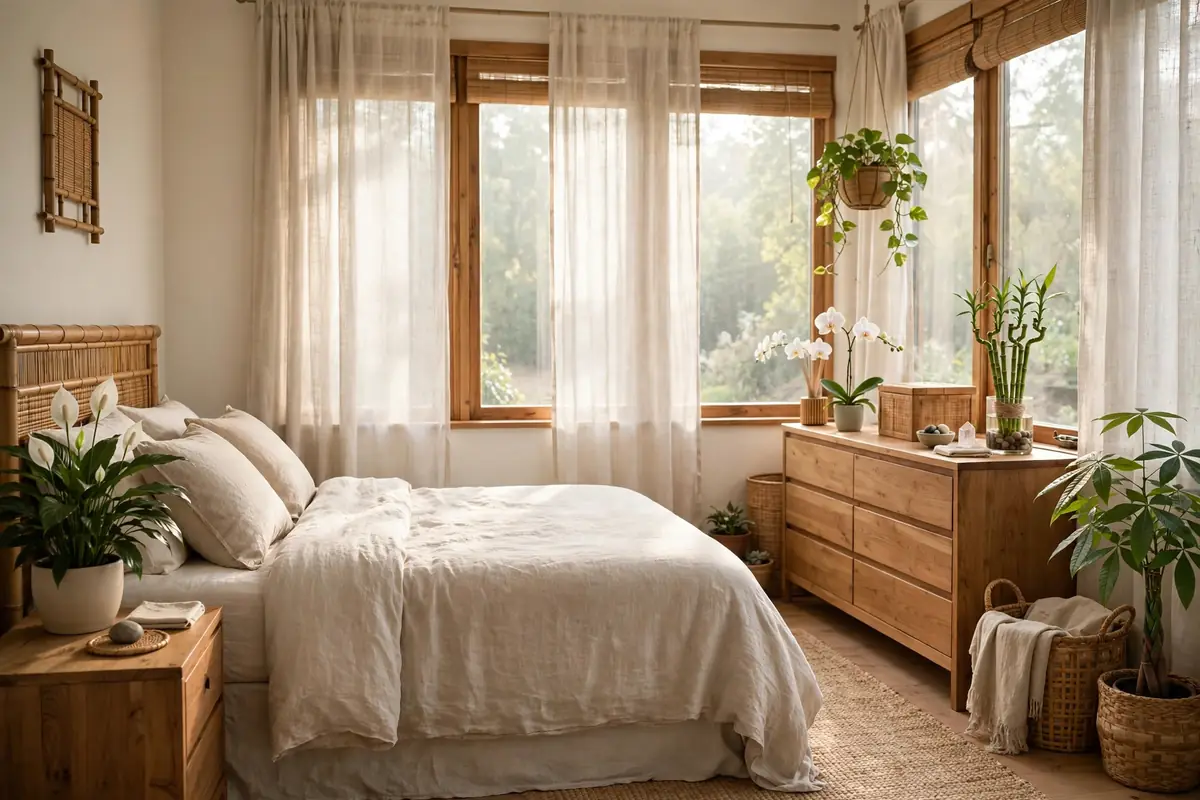
Old feng shui books often banned plants from the bedroom entirely. The reasoning was sound for its time: a bedroom should be a yin space — quiet, soft, restorative — and a room full of vigorous, fast-growing greenery was thought to stir up yang energy that keeps the mind alert when it should be winding down. Modern practitioners have softened the rule rather than dropped it: one or two calm, healthy plants, chosen and placed with care, support rest instead of disturbing it.
The difference is in the details. A single peace lily on the dresser softens the room; a jungle on every shelf makes the bedroom feel like a project. Strong night fragrance, spiky leaves beside the pillow, and a dying plant on the nightstand all work against the room’s purpose. This guide covers the plants that genuinely suit a bedroom, where the bagua map says to put them, and the mistakes that turn a restful idea into restless energy. It builds on our complete guide to feng shui plants — here, everything is filtered through one question: will this plant help you sleep?
Quick Answer
The best plants for bedroom feng shui are the peace lily, moth orchid, lavender, lucky bamboo, jade plant, and golden pothos — soft-leaved, calm-growing plants that carry gentle energy without overwhelming the room. Keep it to one or two plants, placed on a dresser or in the far corners of the room rather than crowded around the bed. Orchids belong in the southwest (partnership) area for relationships, a peace lily suits the east (health) area, and lucky bamboo works in the southeast (wealth). Avoid cacti and other spiky plants near the bed, strongly scented flowers at night, dried arrangements, and any plant that is visibly struggling — in feng shui, a neglected plant in the room where you restore yourself sends exactly the wrong message.
Table of Contents
Feng Shui Rules for Bedroom Plants
Three principles decide whether a plant belongs in a bedroom. First, softness: rounded, drooping, or gently arching leaves (peace lily, pothos, orchid) match the room’s yin character, while upright spikes and thorns project a defensive, alert energy better suited to a doorway or office. Second, restraint: plants represent growth and activity, so the bedroom gets a smaller dose than the living room — the same logic behind our outdoor feng shui plants guide, where placement and quantity do as much work as the species itself. Third, health: a thriving plant is the whole point. Dusty, leggy, or half-dead greenery in the room where you sleep reads as stagnant energy, and no bagua placement fixes a plant that needs water.
There is also a practical layer feng shui teachers rarely mention but gardeners should know: plants release oxygen by day, and while a single houseplant’s nighttime respiration is trivial — you would need hundreds of plants to measurably affect bedroom air — very heavy fragrance is a real sleep issue. Keep scented plants small, or enjoy them on the windowsill rather than the nightstand.
Bedroom Feng Shui Plants at a Glance
| Plant | Feng Shui Role | Light | Care Level | Best Spot |
|---|---|---|---|---|
| Peace lily | Harmony, purification | Low–medium indirect | Easy, thirsty | East corner / dresser |
| Moth orchid | Love, partnership | Medium indirect | Moderate | Southwest corner |
| Lavender | Calm, relaxation | Bright, sunny sill | Moderate, dislikes wet soil | Sunny windowsill |
| Lucky bamboo | Luck, flexible growth | Low–medium indirect | Very easy | Southeast corner / shelf |
| Jade plant | Prosperity, friendship | Bright indirect | Easy, drought-tolerant | Southeast, on a stand |
| Golden pothos | Gentle flowing energy | Low–medium indirect | Very easy | High shelf, trailing down |
| English ivy | Softening sharp corners | Medium indirect | Easy–moderate | Atop a wardrobe or shelf |
The 7 Best Plants for a Bedroom
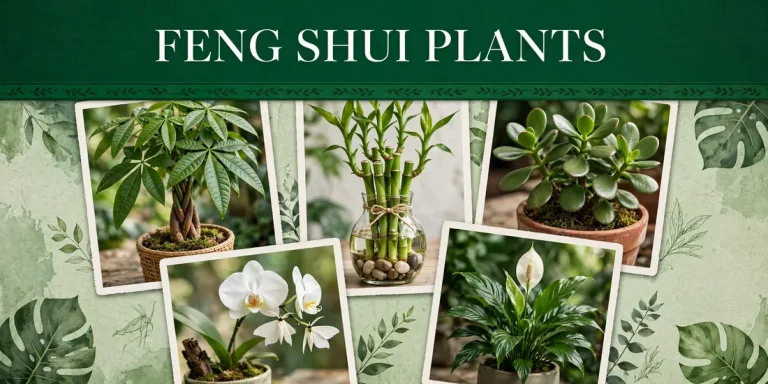
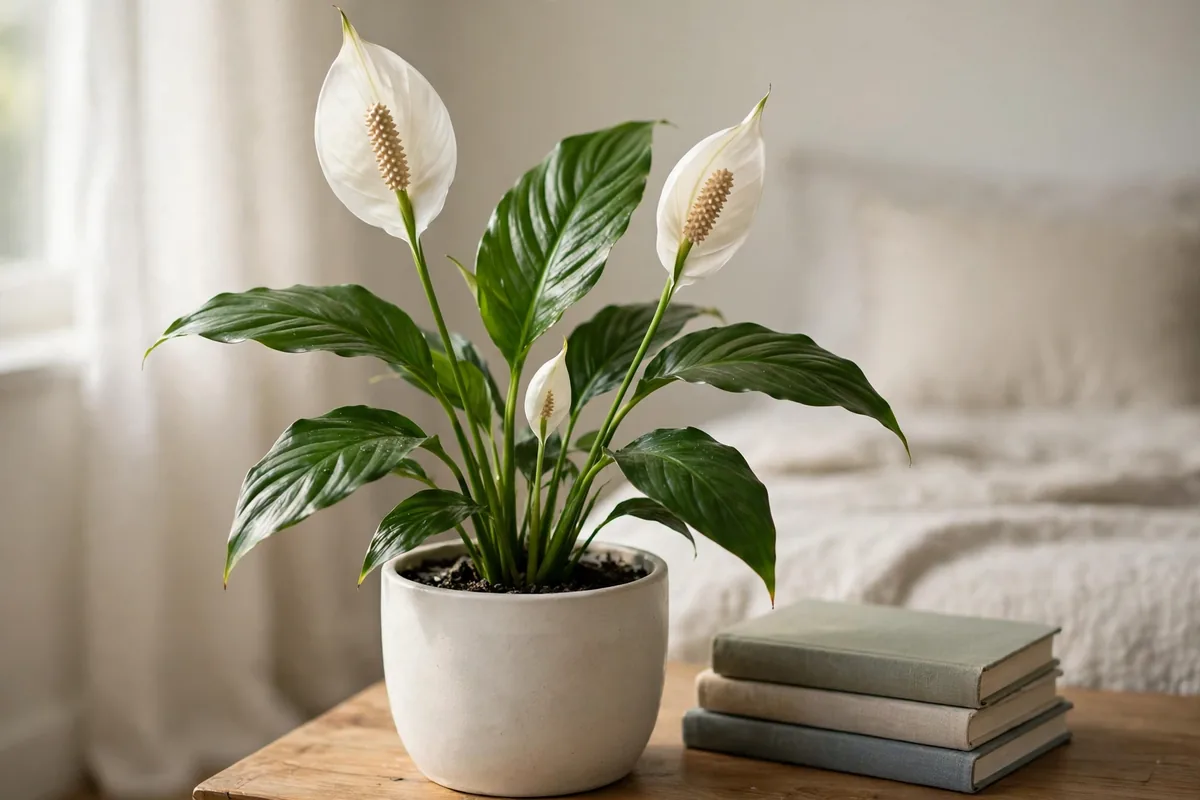
1. Peace lily (Spathiphyllum spp.). The most recommended bedroom plant in modern feng shui, and the easiest to defend as a gardener: it tolerates the low light most bedrooms offer, its white spathes and broad soft leaves are the opposite of spiky, and it tells you plainly when it is thirsty by drooping — then recovers within hours of watering. One honest caution: it is toxic if eaten, so keep it out of reach of curious pets. Zones are irrelevant indoors, but it sulks below 60°F (16°C) and hates cold drafts.
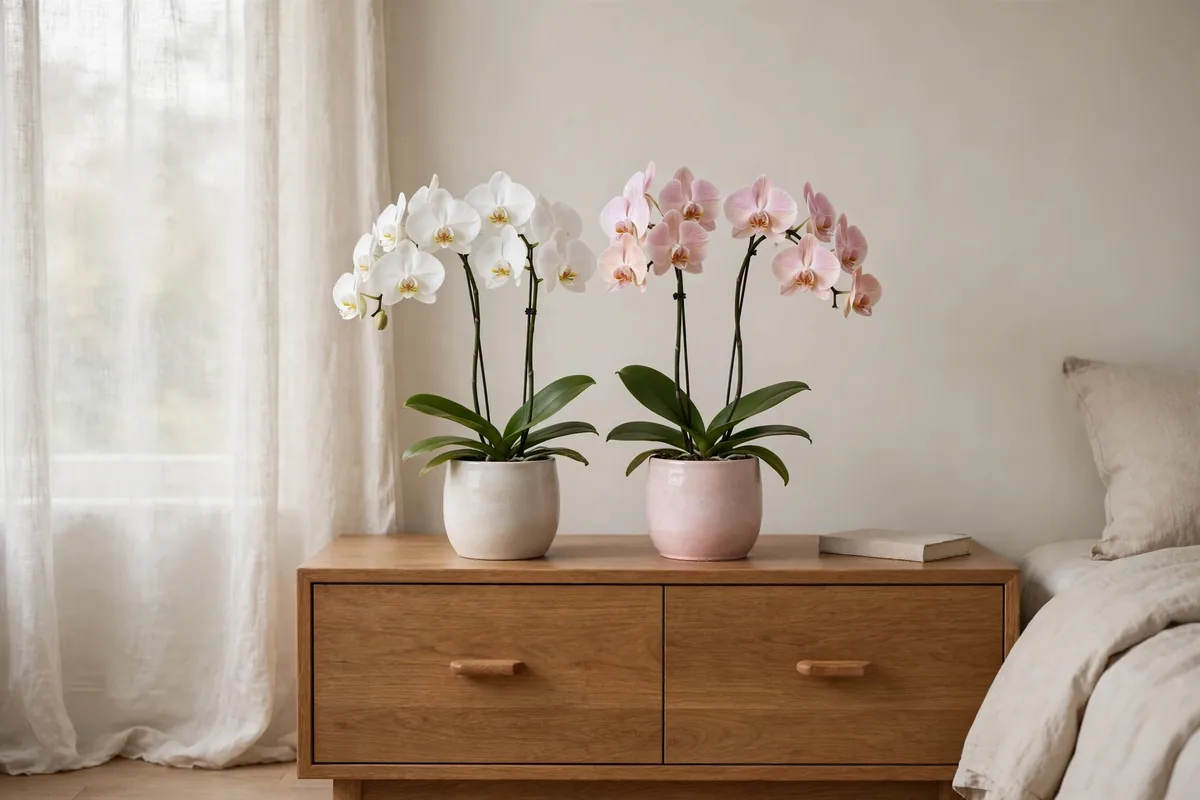
2. Moth orchid (Phalaenopsis spp.). The partnership plant. In the bagua, orchids symbolize love and fertility, and a pair of them in the southwest area of the bedroom is the classic placement for a couple. Their blooms last two to three months on almost no care — a few ice cubes’ worth of water weekly, or a proper soak-and-drain every 7–10 days. Choose soft colors for a bedroom: white, blush, pale pink. A magenta orchid under warm lamplight can be a lot of visual energy at bedtime.
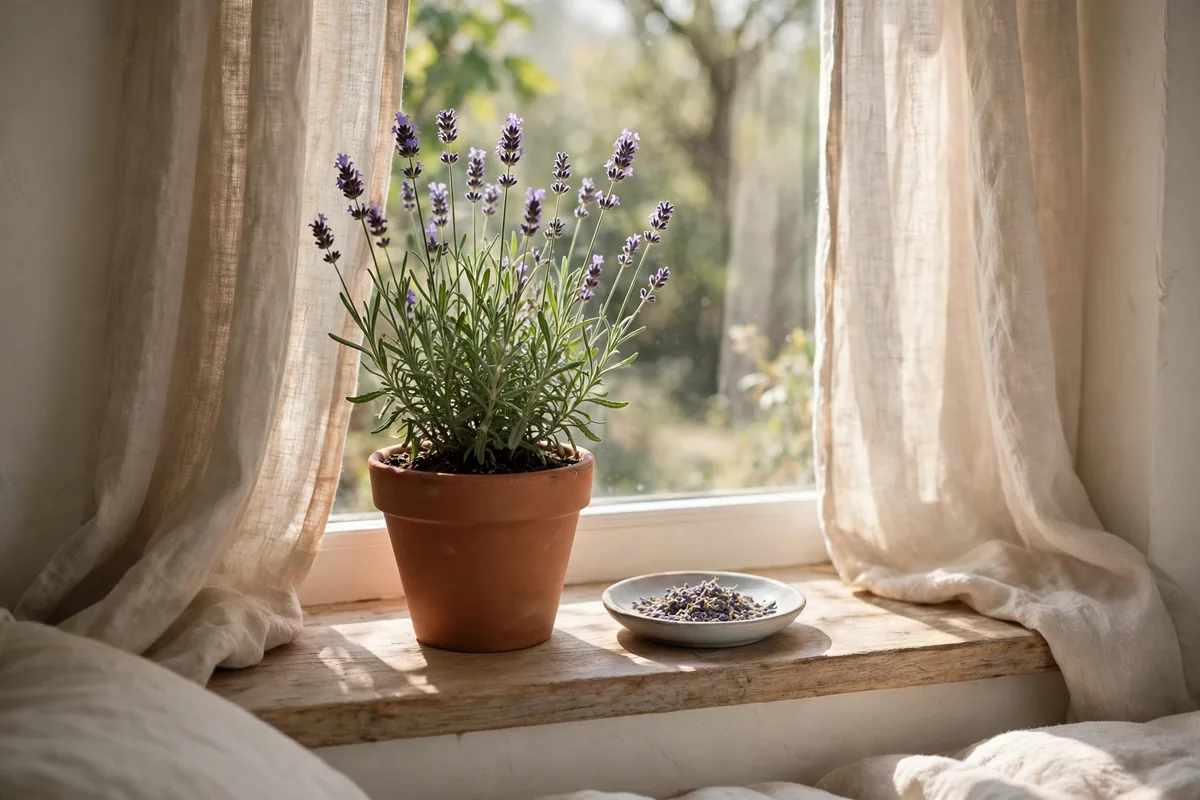
3. Lavender (Lavandula angustifolia). The one fragrant plant that earns a bedroom pass, because its scent is associated with relaxation rather than stimulation — but dose matters. A small pot on a sunny windowsill, or a sachet of dried buds in a drawer, gives the benefit without perfuming the whole room. Lavender is genuinely fussy indoors: it wants the brightest sill you have, a gritty soil mix, and restraint with the watering can. If your bedroom faces north, grow lavender outdoors and bring the dried buds in instead — no plant benefits the room by slowly dying in it.
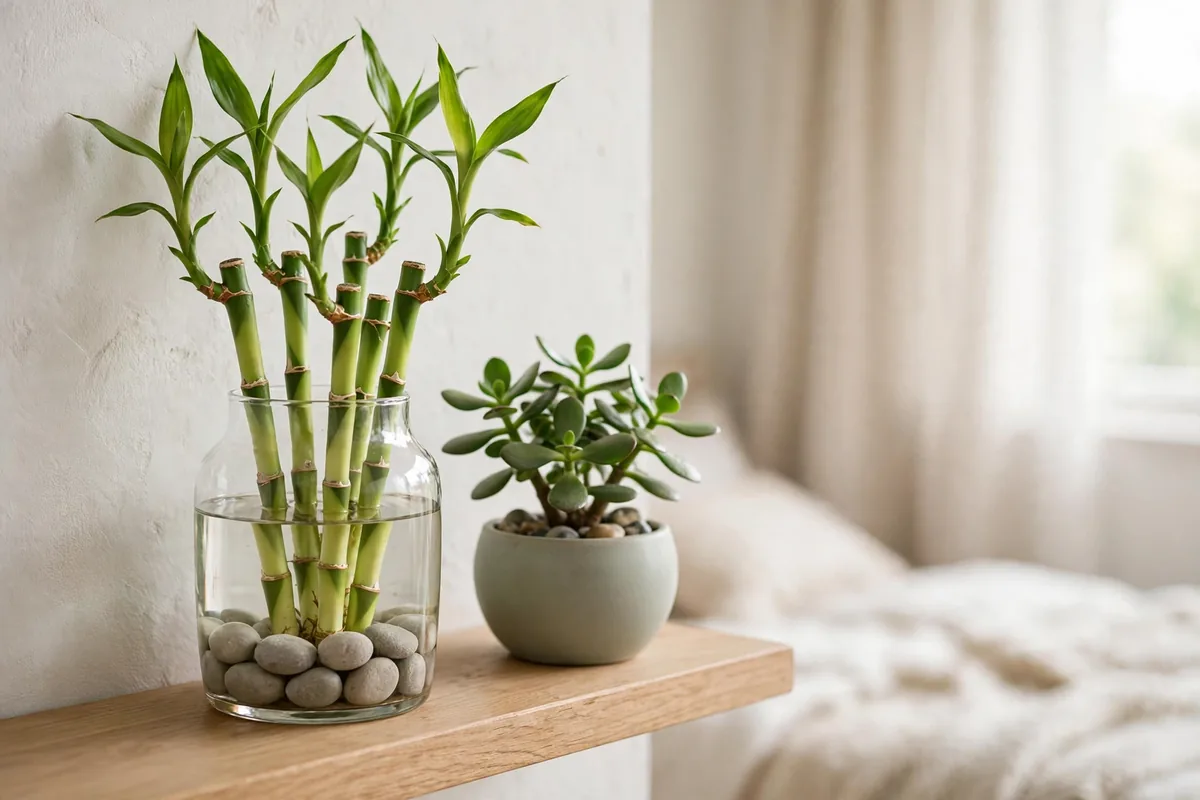
4. Lucky bamboo (Dracaena sanderiana). Not a true bamboo and not demanding: it grows in a vase of water with pebbles, tolerates dim corners, and its segmented stalks symbolize steady, flexible growth. For a bedroom, a 2-stalk arrangement (love) or 3-stalk (happiness) fits the room’s purpose better than the big 8-stalk wealth towers meant for an office. Change the water every one to two weeks and keep it out of direct sun, which scorches the leaves.
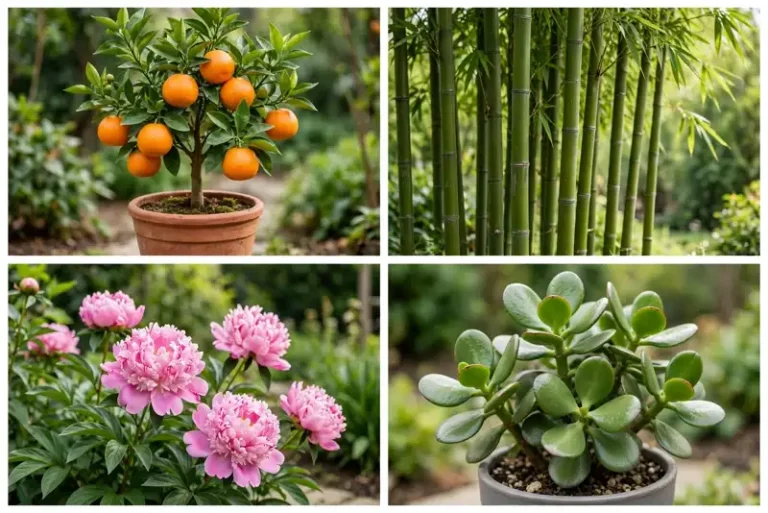
5. Jade plant (Crassula ovata). Rounded, coin-like leaves are textbook feng shui — soft shape, stored abundance. Jade is a succulent, so it forgives a forgotten watering for weeks, which makes it a kind choice for anyone whose plants suffer during travel. It needs the brightest spot of the plants on this list short of lavender; a pale, stretching jade is asking for more light, and in feng shui terms a struggling plant forfeits its meaning anyway.
6. Golden pothos (Epipremnum aureum). Trailing vines soften hard furniture lines and the sharp corners feng shui calls “poison arrows.” Put a pothos on top of a wardrobe or a high shelf and let it drape. It roots in water, tolerates low light, and asks only for a trim when the vines get leggy. It is also one of the plants that start with P in our plants that start with P index — a useful list if you want to compare calm trailing options.
7. English ivy (Hedera helix). Another softener of corners, traditionally used where a beam or sharp furniture edge points at the bed. Ivy prefers cooler rooms than most houseplants, which suits many bedrooms, but it is the most pest-prone plant here — check the leaf undersides for spider mites monthly, especially in heated winter rooms.
Where to Place Plants in the Bedroom
Use the bagua areas of the bedroom itself, standing at the door and looking in: the far-left corner is wealth (southeast in the compass school), the far-right is partnership (southwest), the middle-left is family and health (east). Practical translation:
- Partnership (far right / southwest): a pair of orchids, or two matching small plants. Pairs are the language of this area — two of the same plant in matching pots, not a random assortment.
- Health (middle left / east): the peace lily belongs here, or your single healthiest green plant.
- Wealth (far left / southeast): jade plant or lucky bamboo, on a stand so it sits at a confident height rather than on the floor.
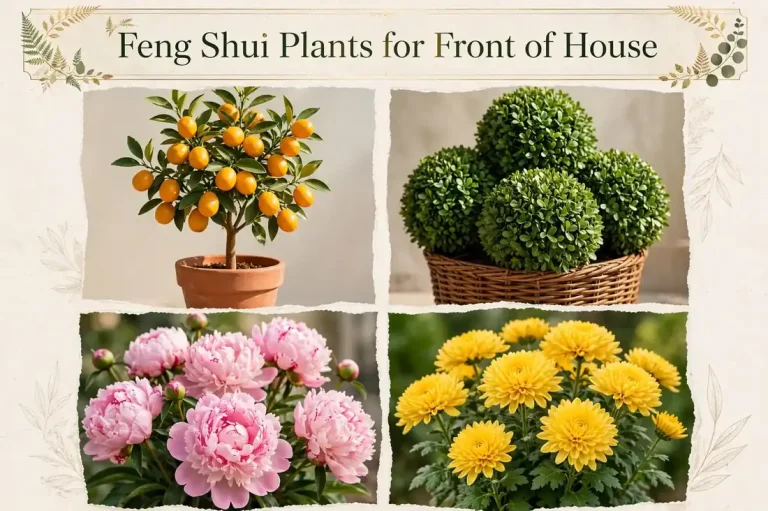
- Near the door: keep it clear. A plant crowding the doorway is the bedroom version of the blocked-hallway problem described in our guide to feng shui plants for the front of the house — energy, and people, should enter without squeezing past foliage.
- Never: hanging directly over the bed, on the headboard shelf above your head, or in a line between the bed and an en-suite bathroom door. Overhead plants feel precarious rather than restful, and bathroom doors are where feng shui says energy drains away.
How Many Plants Should a Bedroom Have?
One or two. Three if the room is large and one of them is small. The test is simple: if you notice the plants as a collection when you walk in, there are too many; if you notice one calm green presence, the number is right. Size matters too — a single 10-inch peace lily on the dresser does more for the room than six small succulents lined up on the sill. If you love the idea of more greenery, a small closed terrarium on a dresser concentrates it into one tidy object; our guide to the best terrarium plants covers compact plants that thrive in that contained format.
Plants to Avoid and Common Bedroom Mistakes
Cacti and spiky plants beside the bed. The snake plant debate runs through every feng shui forum: strict traditionalists ban upright blades from the bedroom entirely, while many modern teachers accept a snake plant across the room as a protector. The workable compromise — keep spiky plants out of the bed’s immediate zone, in the far corner if you want one at all.
Strongly fragrant night bloomers. Jasmine, tuberose, and hyacinth smell wonderful at 7 p.m. and oppressive at 3 a.m. Enjoy them in the living room.
Dried flowers and dead plants. In feng shui these are spent energy, full stop — and in gardening terms a dead plant on the dresser usually means the living ones are being neglected too. Compost, and replace.
Fake plants. A silk orchid is decoration, not a feng shui adjustment; it gathers dust and contributes nothing living. If a corner is truly too dark, move a real plant there in rotation for a few weeks at a time rather than faking it.
The most common mistake: buying the plant before checking the light. Most bedroom plant deaths are light deaths. North-facing bedrooms get peace lily, pothos, and lucky bamboo. Lavender and jade need a south- or west-facing sill and will quietly decline anywhere else.
Keeping Bedroom Plants Healthy
Bedroom plants fail quietly because the room is out of the daily traffic pattern. Build the care into an existing habit: water on the morning you change the sheets. Dust leaves monthly with a damp cloth — dusty leaves are both a feng shui complaint (blocked energy) and a botanical one (blocked photosynthesis). Rotate each pot a quarter turn weekly so growth stays even instead of leaning toward the window, and check drainage saucers after watering; roots sitting in water are the fastest route to the dying-plant problem this room cannot afford. If you travel often, choose from the forgiving end of the list — jade, lucky bamboo, pothos — and set them in the bathtub on a wet towel while you are away.
Frequently Asked Questions
Is it bad feng shui to have plants in the bedroom?
No — the old blanket ban has been replaced by a more specific rule: a few calm, soft-leaved, healthy plants support a bedroom, while many vigorous plants, spiky plants near the bed, or neglected plants work against it. One or two peace lilies, orchids, or trailing pothos are welcome in modern practice.
Which plant is best for a couple’s bedroom?
A pair of moth orchids in the partnership area (the far-right corner from the door, the southwest in compass feng shui). Orchids symbolize love and fertility, bloom for months, and a matched pair reinforces the symbolism. Peonies are the traditional alternative but are impractical as houseplants, which is why orchids get the job.
Where should lucky bamboo go in a bedroom?
In the wealth area — the far-left corner as you stand at the door — on a shelf or stand rather than the floor, in indirect light. Choose 2 stalks for love or 3 for happiness in a bedroom; the larger wealth arrangements belong in a home office.
Can a snake plant stay in the bedroom?
It depends on the school. Traditional feng shui avoids its sharp, upright blades in restful rooms; modern practitioners often allow one as a protective plant. If you keep one, place it in a far corner away from the bed — not on the nightstand — and if its look makes the room feel less soft to you, that reaction is the answer.
What should I do if my bedroom plant keeps dying?
Treat it as a light problem first, not a feng shui verdict. Most bedrooms are dimmer than the plant tags assume. Move the plant to the brightest spot in the room, switch to a genuinely low-light species (peace lily, pothos, lucky bamboo), and check that you are not overwatering — more houseplants die from kindness with a watering can than from neglect.
References
- Plant Finder — Missouri Botanical Garden (care profiles, light and water requirements for peace lily, orchid, jade plant, and pothos)
- Houseplants — Royal Horticultural Society (choosing and caring for indoor plants, including low-light positioning)