Low Maintenance Garden Beds: Easy Ideas for a Beautiful Garden
A low maintenance garden bed is not a bed you ignore. It is a bed you design once, properly, so that the weekly chores most gardeners complain about — weeding, watering, staking, dividing, replanting — mostly disappear. The difference between a bed that needs an hour a month and one that needs an hour a week is rarely effort. It is four decisions made at the start: how you cover the soil, how water reaches the roots, which plants you choose, and how much bare ground you leave for weeds to colonize.
Get those four decisions right and a bed can carry itself from spring frost to fall frost with little more than a spring tidy, a mulch top-up, and the occasional deadhead. Get them wrong — thin mulch, thirsty annuals, plants that outgrow their space in two seasons — and no amount of weekend effort will keep the bed looking deliberate. This guide covers the designs that work, the plants that hold up their end of the bargain, and the exact build sequence, in order.
Quick Answer
The lowest-maintenance garden bed is a perennial bed with 3–4 inches of mulch, drip irrigation on a timer, and plants chosen to fill their space exactly at maturity. Perennials and small shrubs do the work annuals cannot: they return every year, shade out weeds with their own foliage, and need cutting back once, not replanting every spring. Add steel or stone edging to stop lawn grass creeping in, group plants by water needs, and the bed settles into roughly one hour of care a month. The five designs below — mulched perennial bed, gravel garden, groundcover bed, raised bed, and evergreen foundation bed — all follow that formula with different looks and budgets.
Table of Contents
- What Makes a Garden Bed Low Maintenance?
- Low Maintenance Bed Designs at a Glance
- The 5 Best Low Maintenance Garden Bed Designs
- Best Plants for a Low Maintenance Garden Bed
- How to Build a Low Maintenance Garden Bed: Step by Step
- The One-Hour-a-Month Care Calendar
- Common Mistakes That Create Work
- Frequently Asked Questions
- References
What Makes a Garden Bed Low Maintenance?
Four things, and none of them is “plastic plants.” First, covered soil. Bare soil is an open invitation: weed seeds need light and contact with soil to germinate, and a 3–4 inch layer of bark mulch or a living carpet of groundcover removes both. Mulch also holds moisture, which cuts watering roughly in half in summer.
Second, water delivered to roots, not leaves. A soaker hose or drip line under the mulch waters deeply and slowly, keeps foliage dry (which discourages fungal disease), and — on a battery timer — works while you are on holiday. Overhead sprinklers waste water to wind and evaporation and wet the leaves of everything in the bed.
Third, plants sized to their space. Most bed maintenance is really size management: shrubs pruned twice a year because they were planted where a smaller plant belonged, perennials divided because they swamp their neighbors. Read the mature width on the label and plant for that number, not for how the pot looks today.
Fourth, permanent structure. Evergreen shrubs, ornamental grasses, and a small tree give the bed a skeleton that looks intentional in January, so the bed never has a “dead season” you feel pressured to fill with short-lived bedding. If you are planning beds around the house, the same skeleton-first logic applies to the sunny borders in our guide to full sun perennials that return reliably year after year.
Low Maintenance Bed Designs at a Glance
| Design | Monthly Care | Water Needs | Upfront Cost | Best For |
|---|---|---|---|---|
| Mulched perennial bed | ~1 hour | Medium (drip) | Medium | Most gardens, classic look |
| Gravel garden | ~30 minutes | Very low once established | Medium–high | Hot, dry, sunny sites |
| Groundcover bed | ~30 minutes after year 2 | Low | Low–medium | Slopes, under trees, large areas |
| Raised bed | ~45 minutes | Medium–high | High | Poor soil, bad backs, small yards |
| Evergreen foundation bed | ~20 minutes | Low | Medium | Front of house, year-round curb appeal |
The 5 Best Low Maintenance Garden Bed Designs
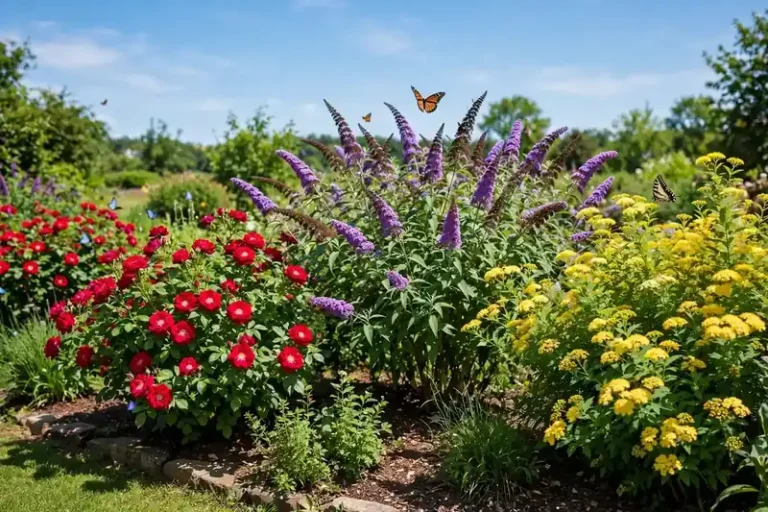
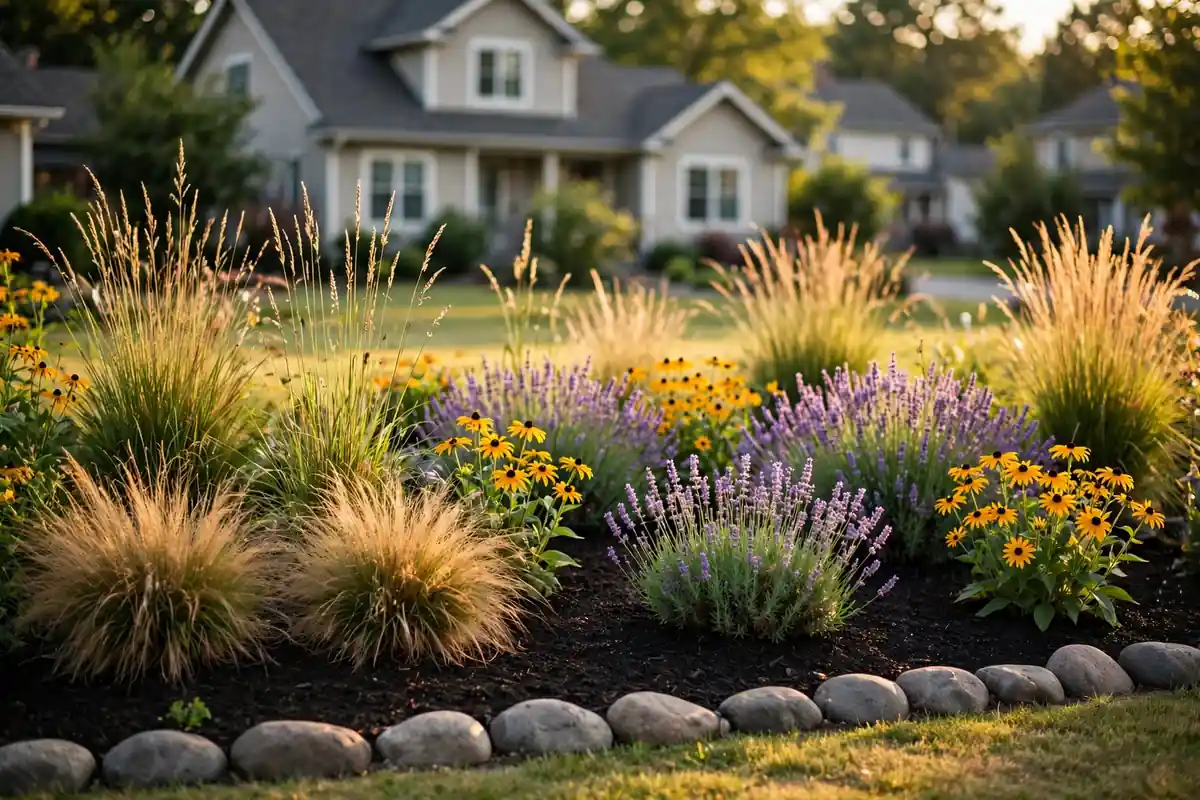
1. The mulched perennial bed. The default choice, and the one to pick if you are unsure. A backbone of two or three compact shrubs, drifts of long-lived perennials (daylilies, catmint, hardy geraniums, coneflowers), ornamental grasses for late-season structure, and 3–4 inches of bark mulch over drip lines. It asks for one cutback in late winter, one mulch top-up a year, and almost nothing else. The honest downside: it looks sparse the first season while perennials fill in. Resist the urge to overplant — year three is when the spacing math pays off.
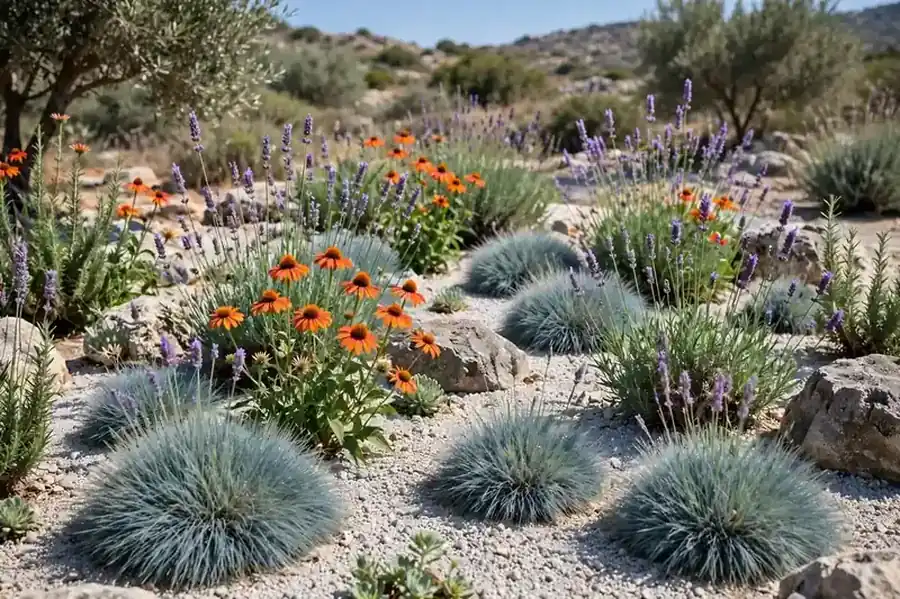
2. The gravel garden. Plants grow through a 2–3 inch layer of gravel over free-draining, low-fertility soil — the method made famous at Beth Chatto’s garden in England. Lavender, sedums, blue fescue (Festuca glauca), catmint, and verbascums thrive in it, and after the first year it needs no watering in most climates and no mulch deliveries ever. The trade-offs are real: gravel is expensive to haul, weeds that do seed in must be pulled by hand (a hori-hori knife helps), and the style suits sunny, dry sites only. In shade or wet soil it turns miserable.
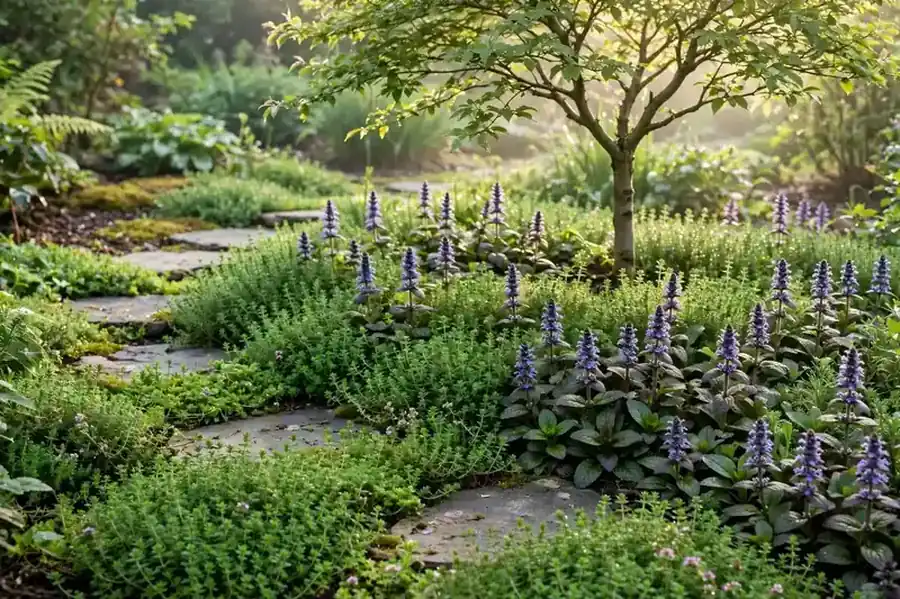
3. The groundcover bed. Instead of mulch doing the weed-suppression job, living plants do it. Creeping thyme (Thymus serpyllum) between stepping stones, ajuga under shrubs, pachysandra or vinca on banks, creeping juniper on hot slopes. Years one and two need patience — you weed between young plants while they knit together — but once the carpet closes, care drops to an occasional edge trim. This is the only sensible answer for a slope too steep to mow or mulch safely.
4. The raised bed. Not just for vegetables. A 12–18 inch raised border filled with good soil drains well, warms early, and puts every task at a comfortable height — no kneeling in wet soil to weed. Timber, stone, or corten steel all work. The cost is the catch: soil and materials for a large raised bed run several times a mulched bed, and raised soil dries faster, so drip irrigation is close to mandatory. For a small yard or a gardener with a bad back, the trade is worth it.
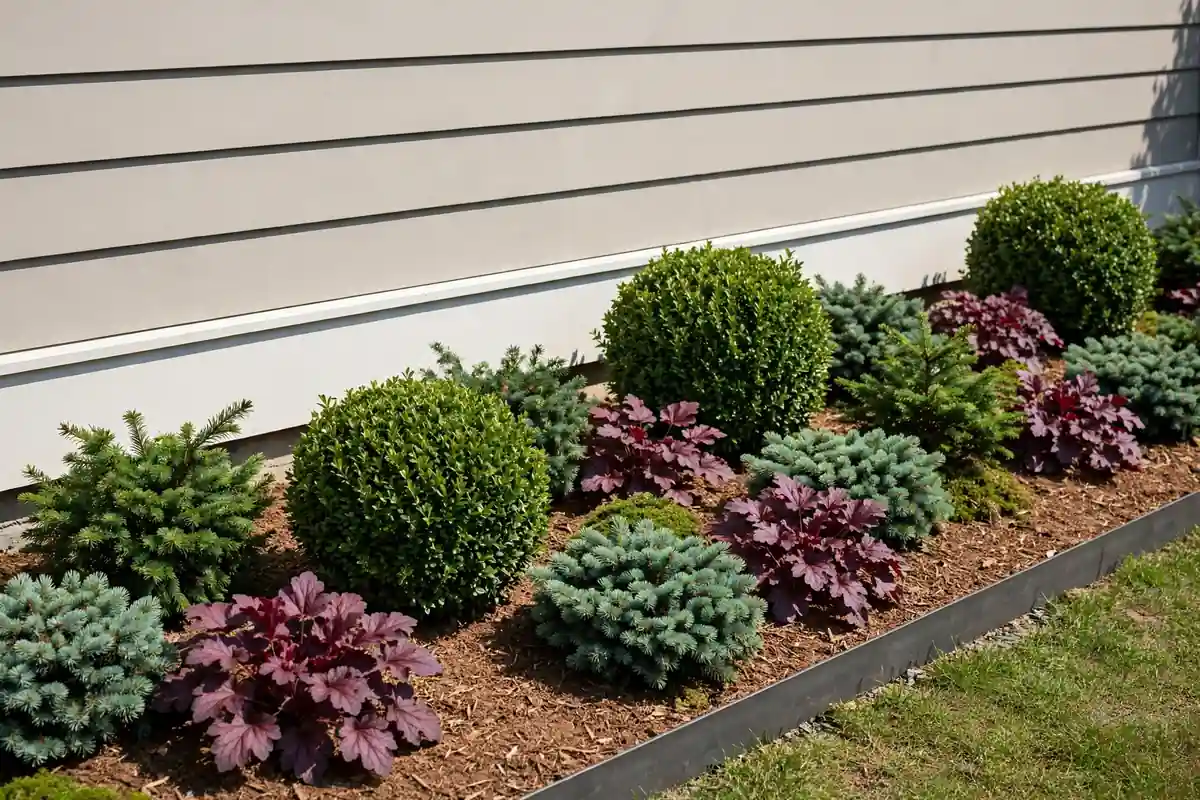
5. The evergreen foundation bed. The bed against the house gets judged all winter, so plant it for January: dwarf boxwood or inkberry holly (Ilex glabra ‘Compacta’), a dwarf conifer or two, heuchera for leaf color, and one small specimen tree such as a weeping eastern redbud at the corner. Evergreens need one light shaping a year at most, never get divided, and never leave the front of the house bare. Add a handful of spring bulbs between them and the bed is finished.
Best Plants for a Low Maintenance Garden Bed
The plant list matters more than the design. A low maintenance plant is one that lives for years without dividing, resists disease without spraying, holds a tidy shape without staking, and does not self-seed through the whole garden. These earn their place:
- Catmint (Nepeta × faassenii ‘Walker’s Low’) — zones 3–8, 18–24 in. Lavender-blue flowers for months; one shear after the first flush brings a second. Ignore the common name confusion — it is a true perennial workhorse, and lavender itself, covered in our list of flowers that start with L, is its equally tough partner for dry beds.
- Daylily (Hemerocallis ‘Stella d’Oro’ and reblooming types) — zones 3–9, 12–24 in. Divides every 4–5 years at most, shrugs off drought once established.
- Hardy geranium (Geranium ‘Rozanne’) — zones 5–8, 18–24 in. Flowers from June to frost and forms a weed-smothering mound.
- Hosta — zones 3–9, sizes from 8 in. to 3 ft. The shade bed’s anchor; the thick-leaved blue types (‘Halcyon’, ‘Patriot’) resist slugs best. More shade plants that start with H are in plants that start with H.
- Ornamental grasses — switchgrass (Panicum virgatum, zones 4–9) and fountain grass (Pennisetum alopecuroides, zones 5–9). One cut to the ground in late winter is their entire annual care.
- Landscape roses — modern shrub roses bred for disease resistance need no spray program; see the landscape types in our rose types and names guide before choosing.
- Sedum / stonecrop (Hylotelephium ‘Autumn Joy’) — zones 3–9, 18–24 in. Flowers feed late pollinators; seedheads stand through winter.
What to leave at the nursery: thirsty annual bedding by the tray (petunias, impatiens) unless you genuinely enjoy replanting, aggressive spreaders like mint and lily-of-the-valley in open beds, and anything whose label promises a mature size larger than the space you have. Odd-looking does not mean high-maintenance, either — plenty of the plants in our collection of unusual and beautiful flowers, like baptisia and hellebores, are plant-once perennials that resent being disturbed and reward being left alone.
How to Build a Low Maintenance Garden Bed: Step by Step
Step 1 — Kill the existing growth properly. Smother lawn with cardboard overlapped 6 inches, wetted, and weighted, for 6–8 weeks, or strip turf with a sod cutter. Skipping this step is the single biggest cause of “low maintenance” beds that need constant weeding — grass regrowing through mulch never stops.
Step 2 — Edge it. Cut a clean trench edge or install steel/plastic edging sunk level with the soil. Edging is what stops lawn grass rhizomes invading the bed; re-cut a trench edge once each spring.
Step 3 — Fix the soil once. Spread 2–3 inches of compost and fork it in. You will never have easier access to the whole bed than today, before planting.
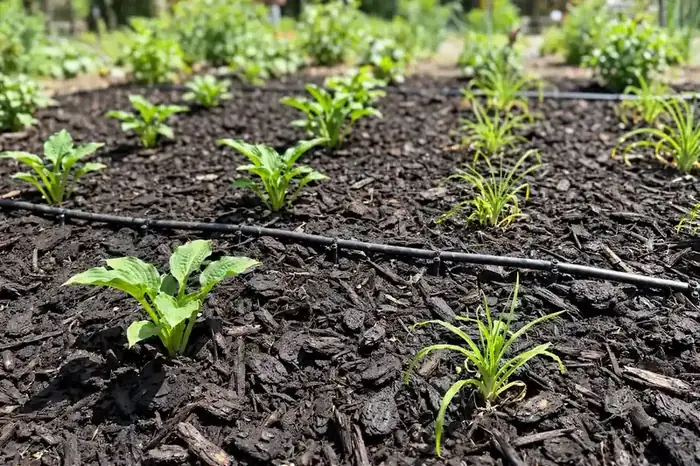
Step 4 — Lay drip lines before planting. Run a soaker hose or drip grid across the bed, test it, and connect a battery timer at the faucet. Thirty minutes now saves hundreds of hand-watering sessions.
Step 5 — Plant for mature size. Set shrubs and the structural plants first, then perennials in drifts of 3–5, spaced at their mature width. Water each plant in well.
Step 6 — Mulch deep. 3–4 inches of shredded bark, kept 2–3 inches away from stems and trunks. Less than 2 inches does not suppress weeds; more than 5 can shed water.
Step 7 — Water deeply for one season. Even drought-tolerant plants need regular water while roots establish. After the first full season, the drip timer drops to once or twice a week in dry spells, and the bed is on its own.
The One-Hour-a-Month Care Calendar
- Late winter: Cut back perennials and grasses, remove winter debris (30–40 min per bed).
- Spring: Top up mulch where it has thinned below 2 inches, re-cut the edge, check the drip timer battery.
- Early summer: Shear catmint and geraniums after first flowering; pull the handful of weeds that appear while they are small.
- Midsummer: Mostly watching. Deadhead rebloomers like ‘Stella d’Oro’ if you want the second flush.
- Fall: Leave seedheads and grasses standing for winter structure and wildlife; plant bulbs for spring.
- Winter: Nothing. That is the point.
Common Mistakes That Create Work
Mulch volcanoes. Bark piled against trunks rots bark and invites pests. Mulch wide and flat, like a donut, never a cone.
Landscape fabric under mulch. It works for one season, then weeds root in the mulch on top of it while the fabric blocks earthworms and water below. Cardboard under a new bed rots away harmlessly; fabric does not. Gravel beds are the one exception where a quality woven membrane earns its keep.
Planting for today’s size. A 6-inch pot of miscanthus is a 6-foot grass in three years. Every hour of “maintenance” spent hacking back an oversized plant is a planting-day decision coming back to collect.
Mixing thirsty and drought-tolerant plants. Lavender beside hostas means one of them is always unhappy and you are always adjusting the watering. Group by water needs — hydrozoning — from the start.
Too many species, one of each. A collector’s bed of single specimens needs individual attention for each. Drifts of a few proven plants can be cut back, fed, and divided on one schedule.
Frequently Asked Questions
What is the lowest maintenance garden bed of all?
An evergreen foundation bed or a groundcover bed, once established. Both replace seasonal tasks with a living or permanent cover: evergreens need one light trim a year, and a closed groundcover carpet needs only edging. A mulched perennial bed is close behind at about an hour a month and gives far more flowers.
How deep should mulch be in a low maintenance bed?
Three to four inches of shredded bark or wood chips. Below two inches, light reaches the soil and weed seeds germinate; above five inches, mulch can mat and shed rain. Keep it two to three inches clear of stems and trunks.
Are raised beds lower maintenance than in-ground beds?
For weeding and working comfort, yes — good soil, defined edges, and no bending. For watering, no: raised soil drains and dries faster, so a raised bed without drip irrigation can need more attention in summer than an in-ground bed. Budget for drip lines if you choose raised beds.
What plants should I avoid in a low maintenance bed?
Aggressive spreaders (mint, goutweed, lily-of-the-valley in open ground), thirsty annuals that need replanting each year, disease-prone roses that need spraying, and any shrub whose mature size exceeds its space. Also be wary of plants sold as “fast-growing groundcover” with no named variety — that phrase usually means it will not stop.
Do I still need to water a low maintenance bed?
Yes, but far less. All plants need regular water in their first season while roots establish. After that, a well-mulched perennial bed with drip irrigation typically needs one deep watering a week only during dry spells, and a gravel or groundcover bed in a suitable climate may need none at all outside droughts.
References
- Low Maintenance Garden Design — Royal Horticultural Society (design principles and plant choices for gardens that need less upkeep)
- North Carolina Extension Gardener Plant Toolbox — NC State Extension (mature sizes, zones, and growing conditions for the perennials and shrubs named above)